- Published on
From Fleet to Joint: Inside Humanoid’s KinetIQ "Physical AI" Framework
One tap, and our reporting appears more often in your Google Top Stories. It makes a real difference to a small newsroom.

Supported by RoboStrategySupport for Humanoids Daily comes from RoboStrategy
Sponsored


Investing involves risk, including possible loss of principal. Read the prospectus before investing.
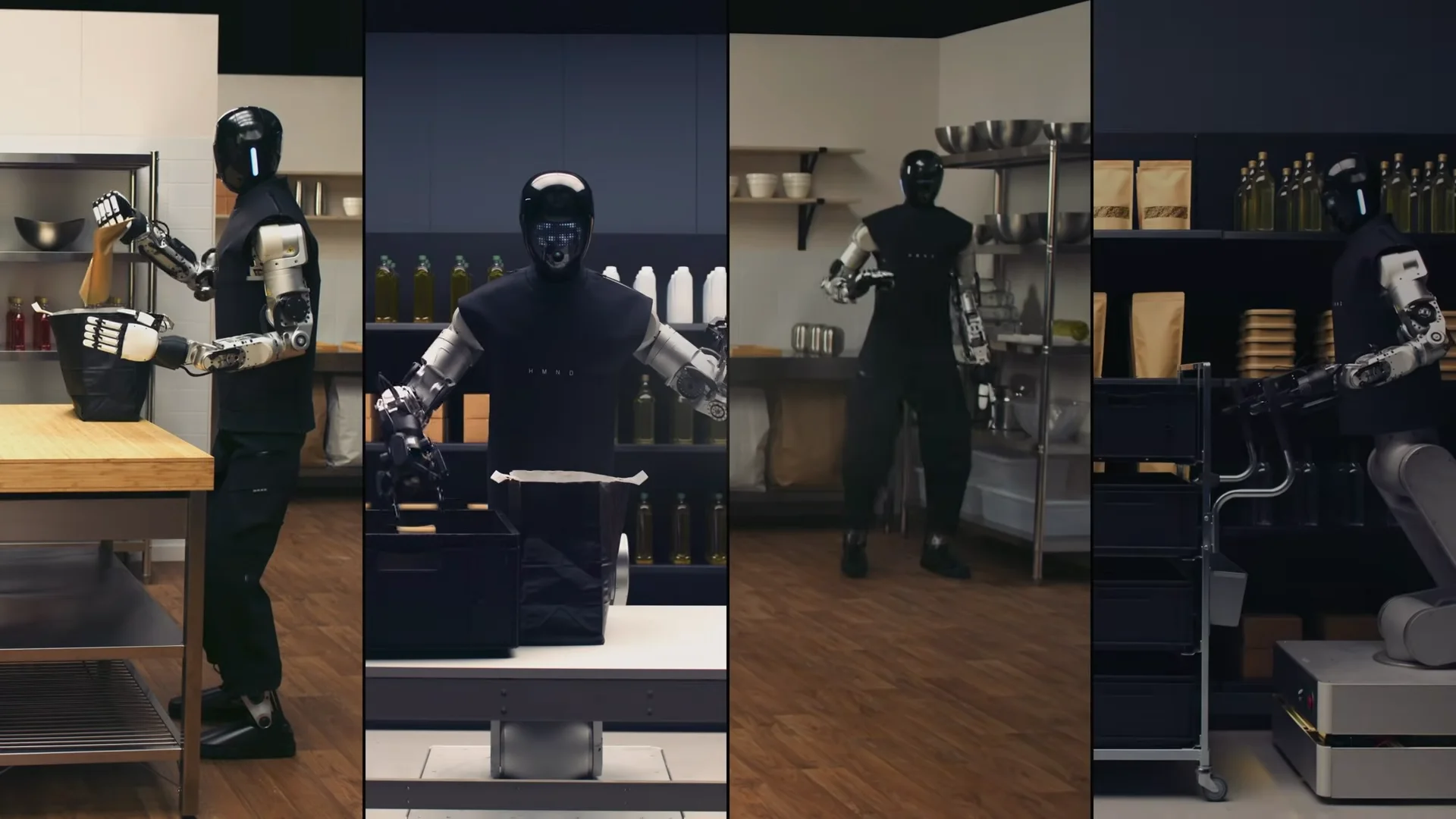
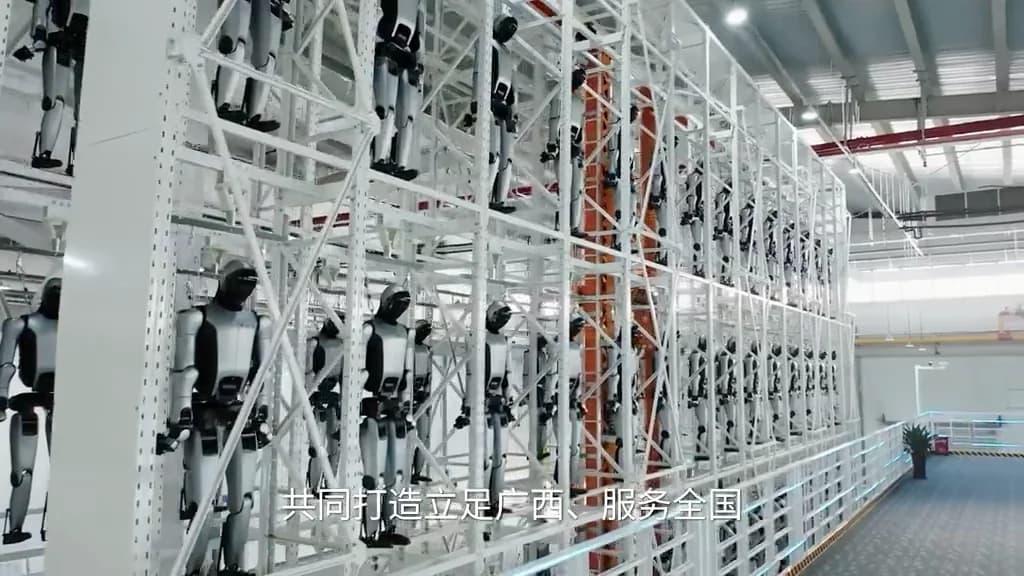
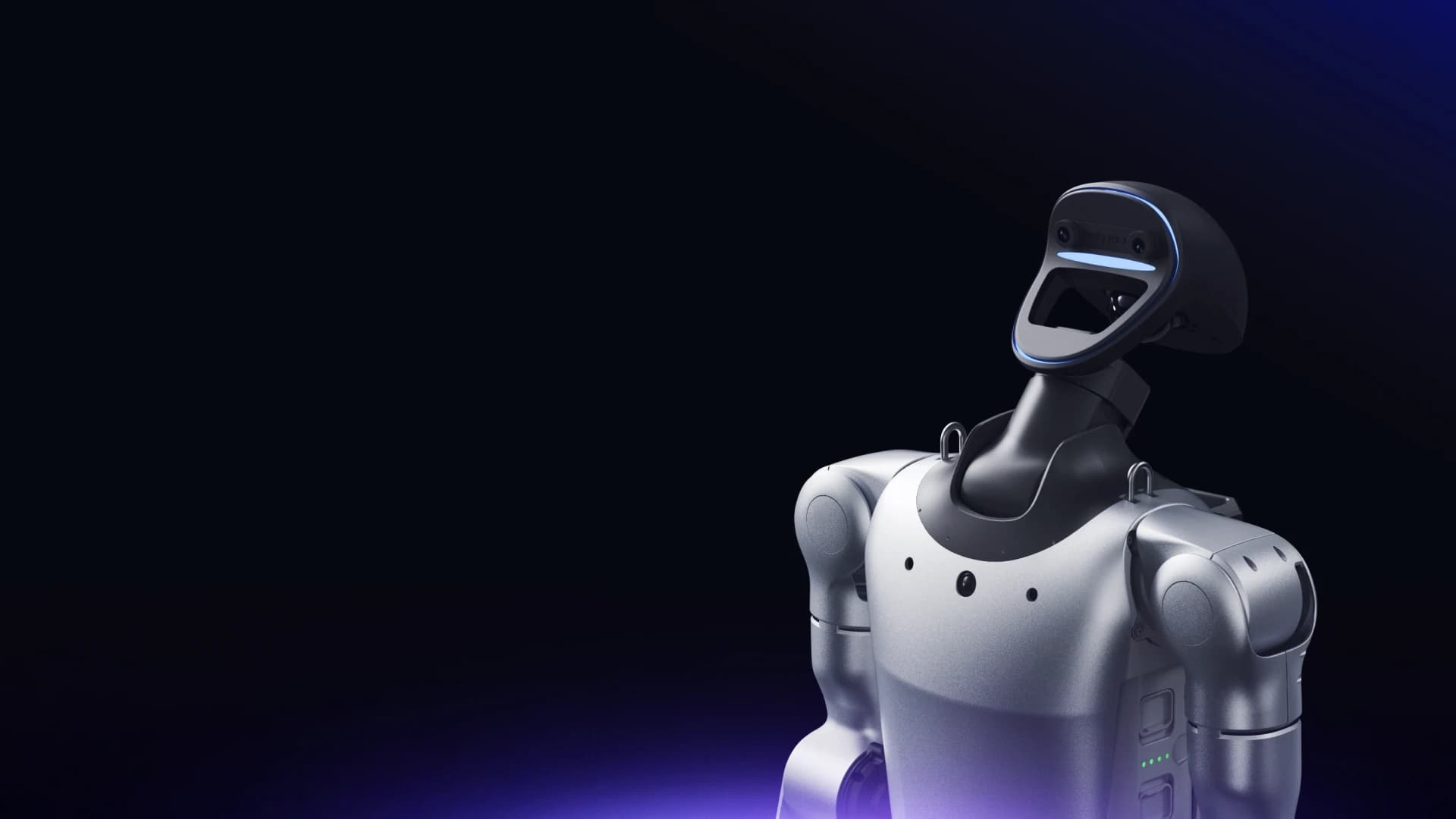
In a move to consolidate its lead as the "fastest-moving western industrial humanoid co," the UK-based startup Humanoid has introduced KinetIQ. This end-to-end AI framework aims to solve the "Physical AI" challenge by orchestrating robot fleets across diverse embodiments—ranging from wheeled industrial models to bipedal R&D platforms.
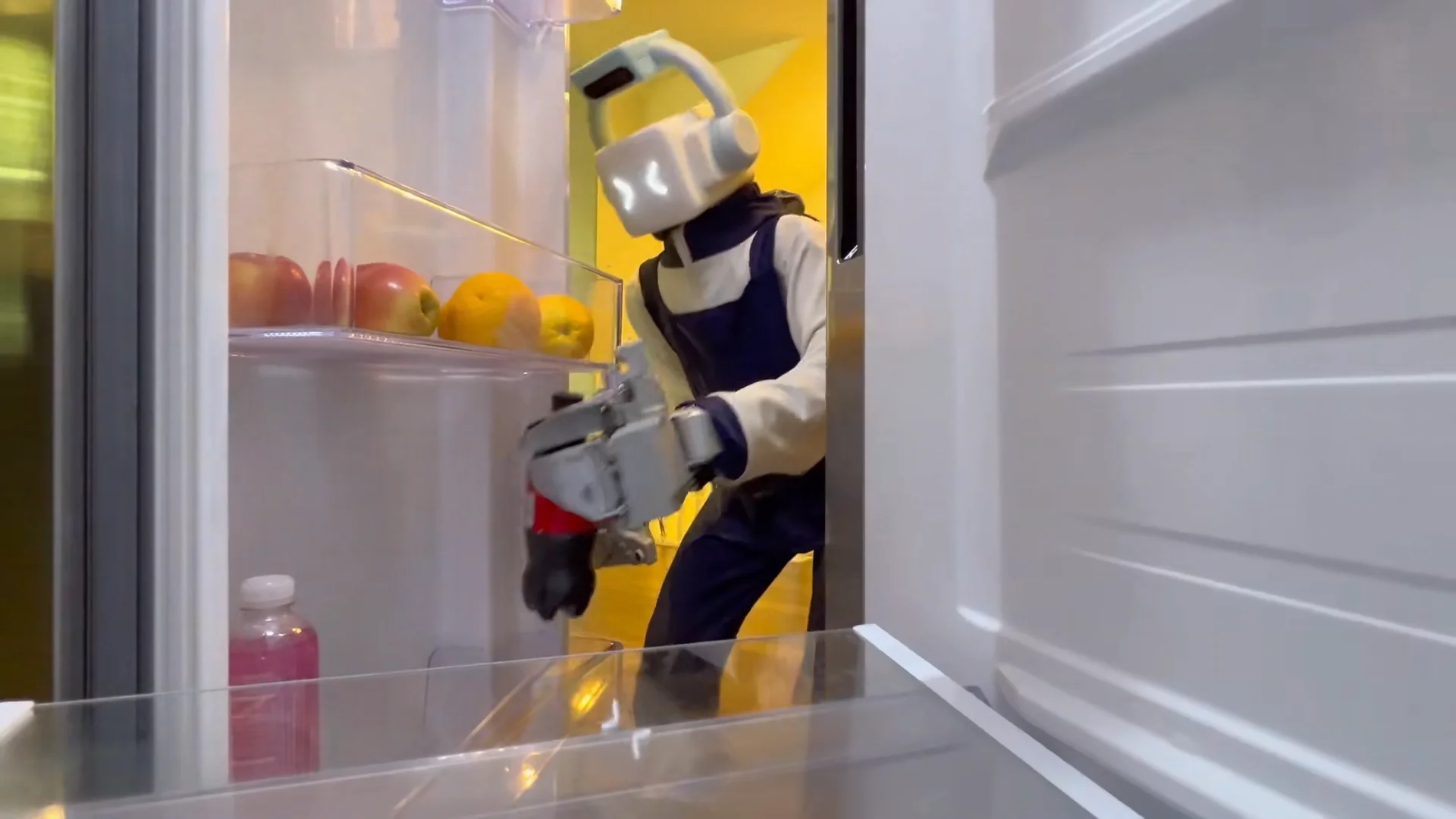
The system represents a shift from laboratory prototypes to a unified software stack capable of controlling robots in retail aisles, factory floors, and eventually, private homes.
The Architecture: A Four-Layered "Cognitive Nervous System"
KinetIQ operates through a cross-timescale architecture. Rather than relying on a single, massive model to handle everything from logistics planning to joint torque, Humanoid has bifurcated the "brain" into four distinct layers that operate simultaneously.
System 3: The Fleet Agent
At the highest level, the KinetIQ Fleet Agent functions as the orchestrator for the entire facility. Operating on a timescale of seconds, it treats individual robots as "tools" to optimize throughput.
The weekly humanoid robotics briefing
One email a week: the launches, funding and research that mattered, with context from Humanoids Daily.
Read recent issues- Integration: It hooks directly into facility management systems to ingest Standard Operating Procedures (SOPs) and real-time task requests.
- Coordination: It manages "robot swaps" at workstations and allocates tasks between wheeled and bipedal models to maximize uptime.
System 2: Robot-Level Reasoning
This layer acts as the individual robot’s executive function. It uses an omni-modal language model to decompose high-level instructions from System 3 into sub-tasks. Unlike traditional pre-programmed sequences, System 2 updates its plans dynamically based on visual context, allowing it to navigate "unstructured" environments like retail stores.
System 1: VLA-Based Task Execution
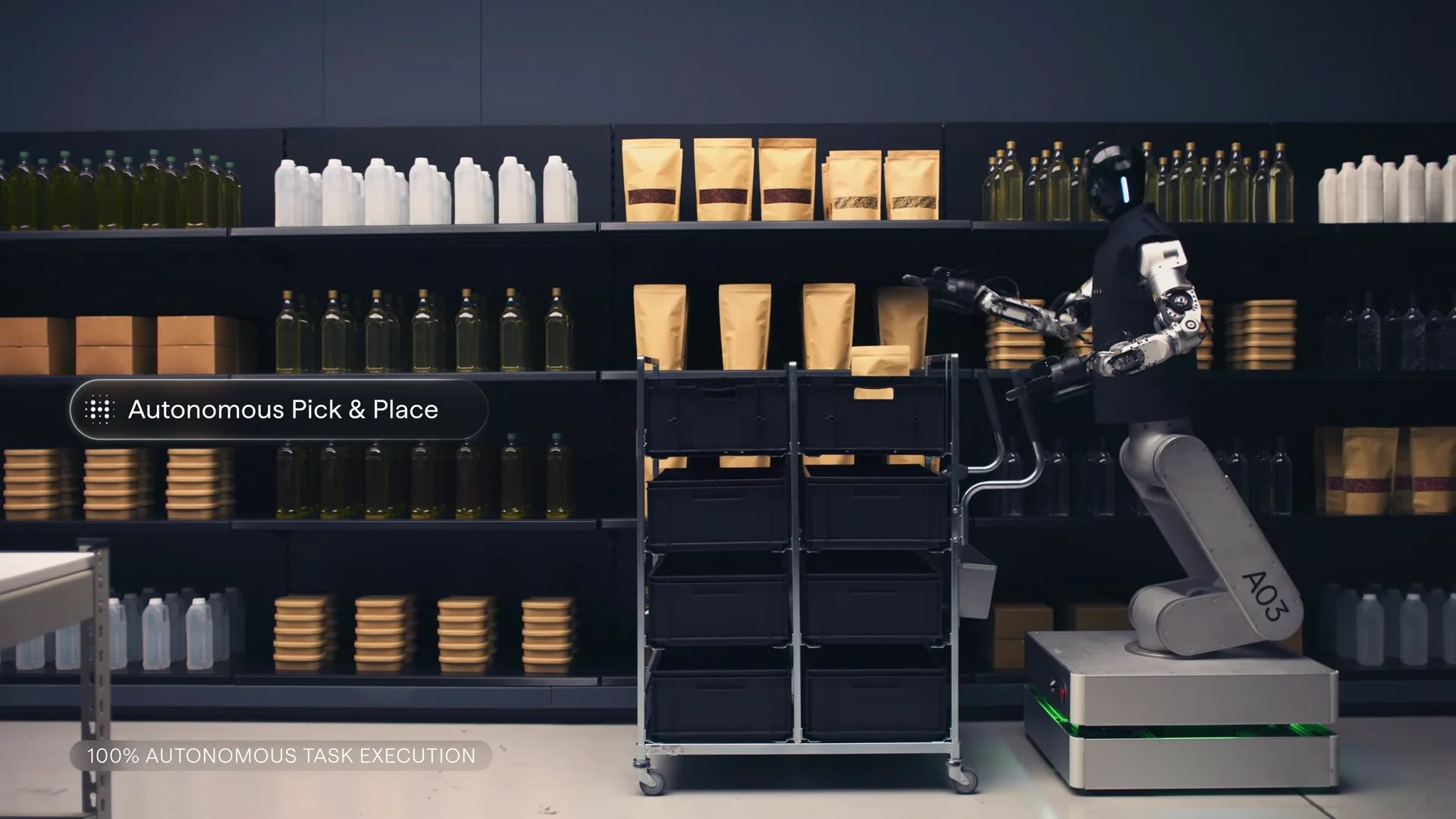
The Vision-Language-Action (VLA) layer commands target poses for specific body parts (hands, torso, etc.) at a sub-second timescale (5–10Hz).
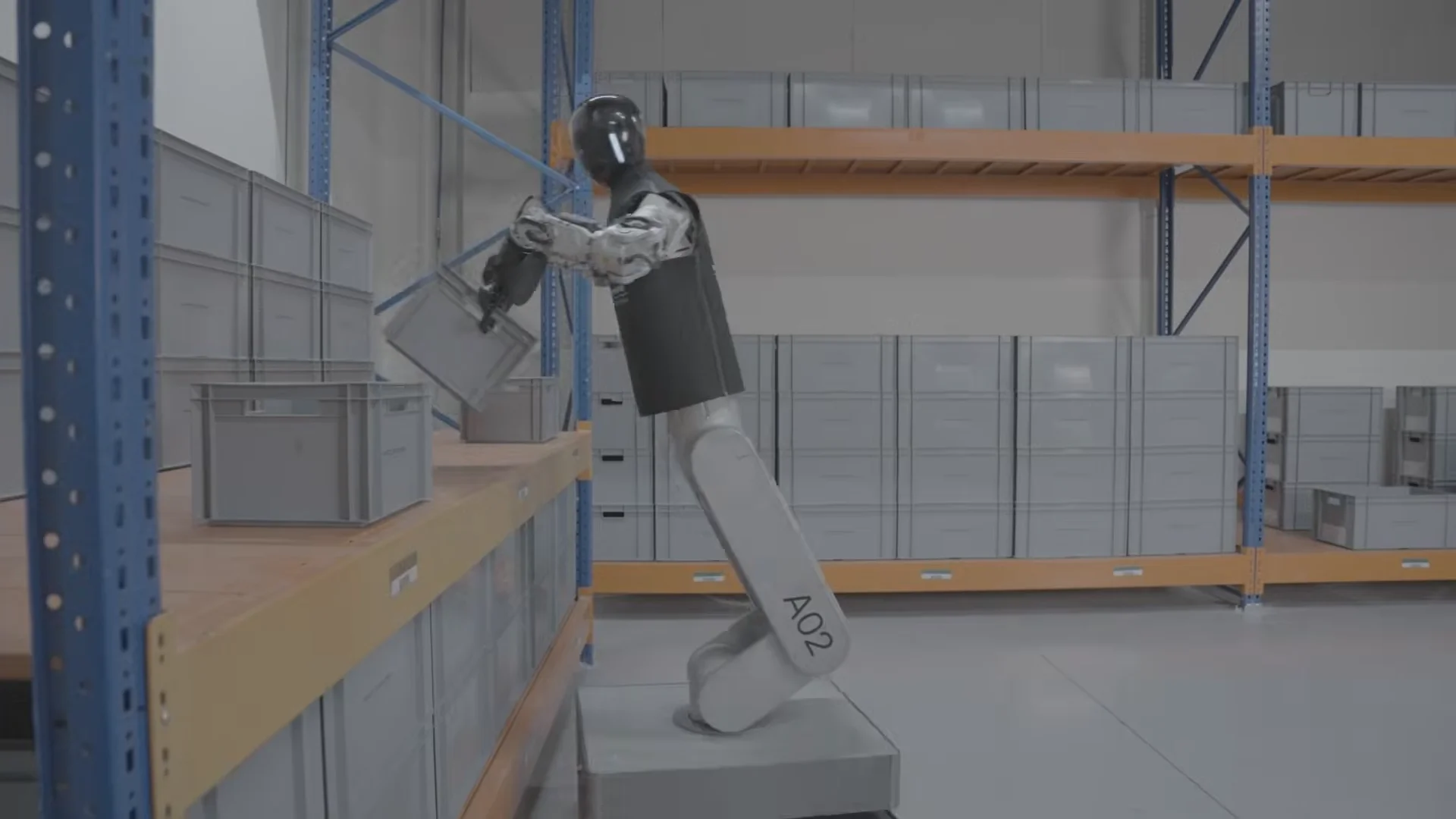
- Capabilities: It handles immediate objectives such as "pick and place" or "container handling."
- Asynchronous Execution: To maintain fluid motion, KinetIQ uses a prefix conditioning technique, preparing new "action chunks" while the previous ones are still being executed to ensure the robot doesn't pause between movements.
System 0: Whole-Body Control
Running at 50Hz, System 0 is the foundation of the stack. It uses Reinforcement Learning (RL) to ensure dynamic stability, solving for all robot joints simultaneously. This layer allows the same controller to be utilized across different morphologies, exploiting the synergy between wheeled and bipedal platforms.
Validated Performance in the Real World
The announcement of KinetIQ follows a string of industrial milestones that Humanoid achieved in early 2026. The framework's efficiency was recently demonstrated in several high-stakes trials:
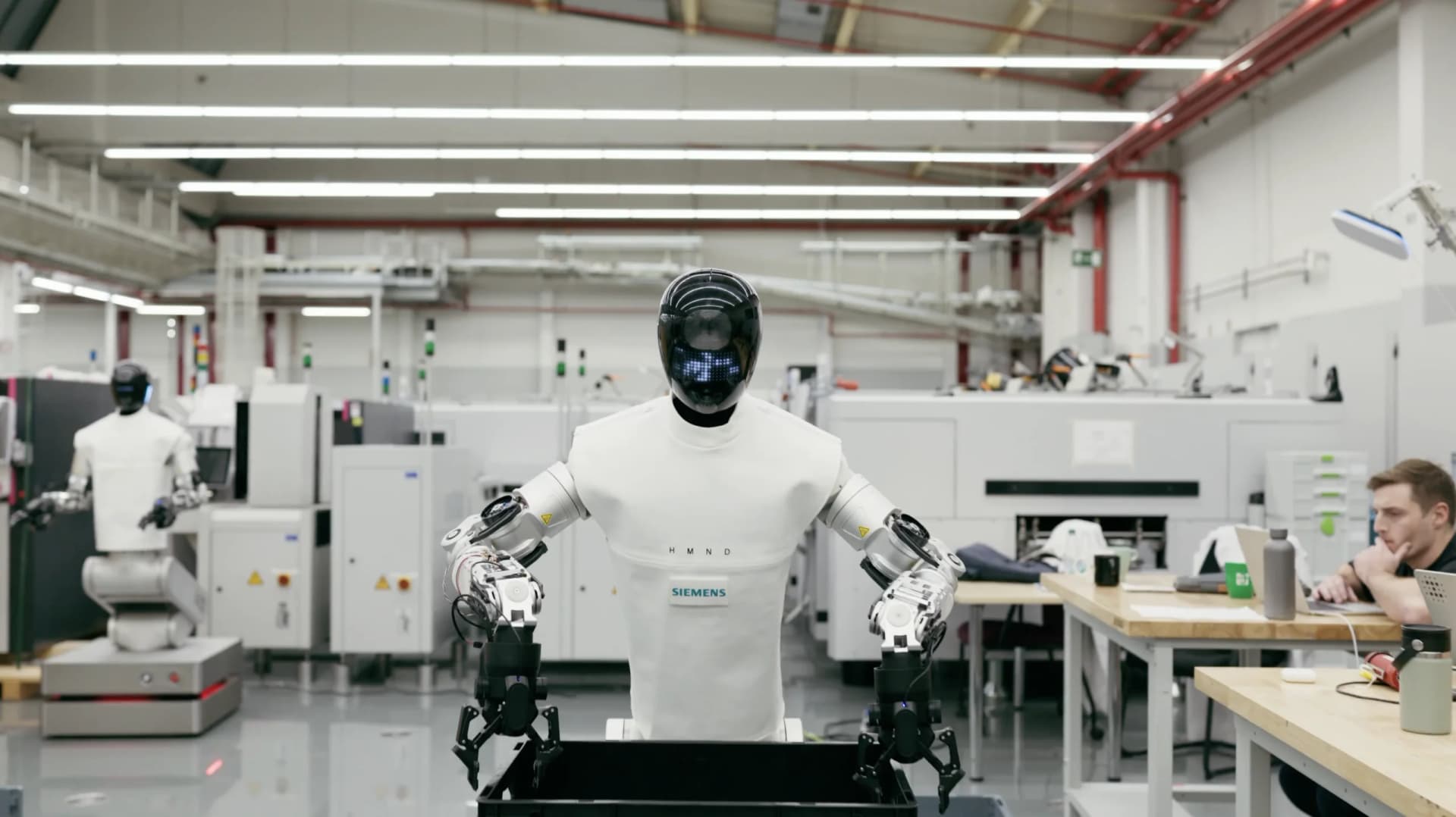
| Metric | Siemens Electronics Factory (Erlangen) | Ford Innovation Centre (Cologne) |
|---|---|---|
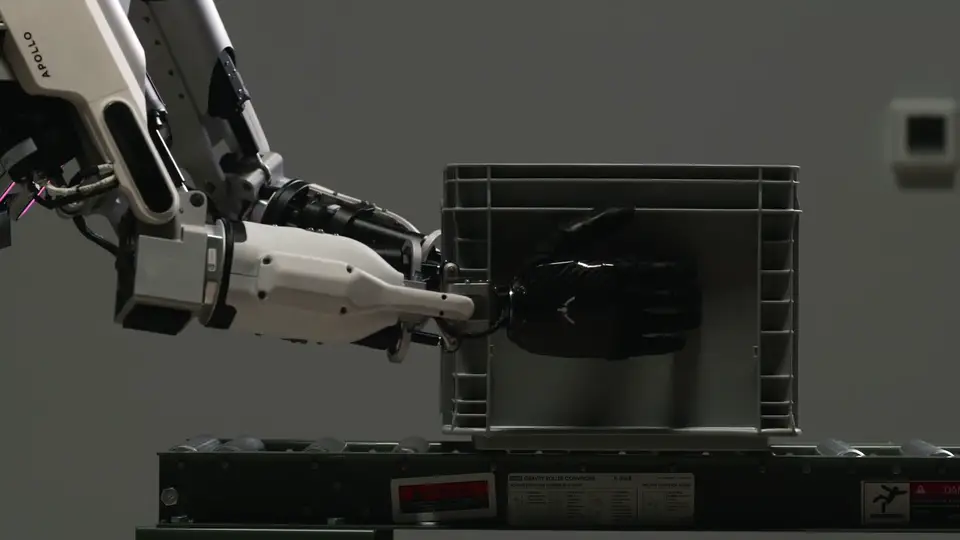
| Primary Task | Tote-to-conveyor destacking | Dual-arm manipulation of sheet metal |
| Throughput | 60 tote moves per hour | 83 units per hour (60% above target) |
| Reliability | 90% autonomous success | 97% autonomous success |
| Uptime | 8+ hours of continuous operation | N/A |
Cross-Embodiment and Strategic Scaling
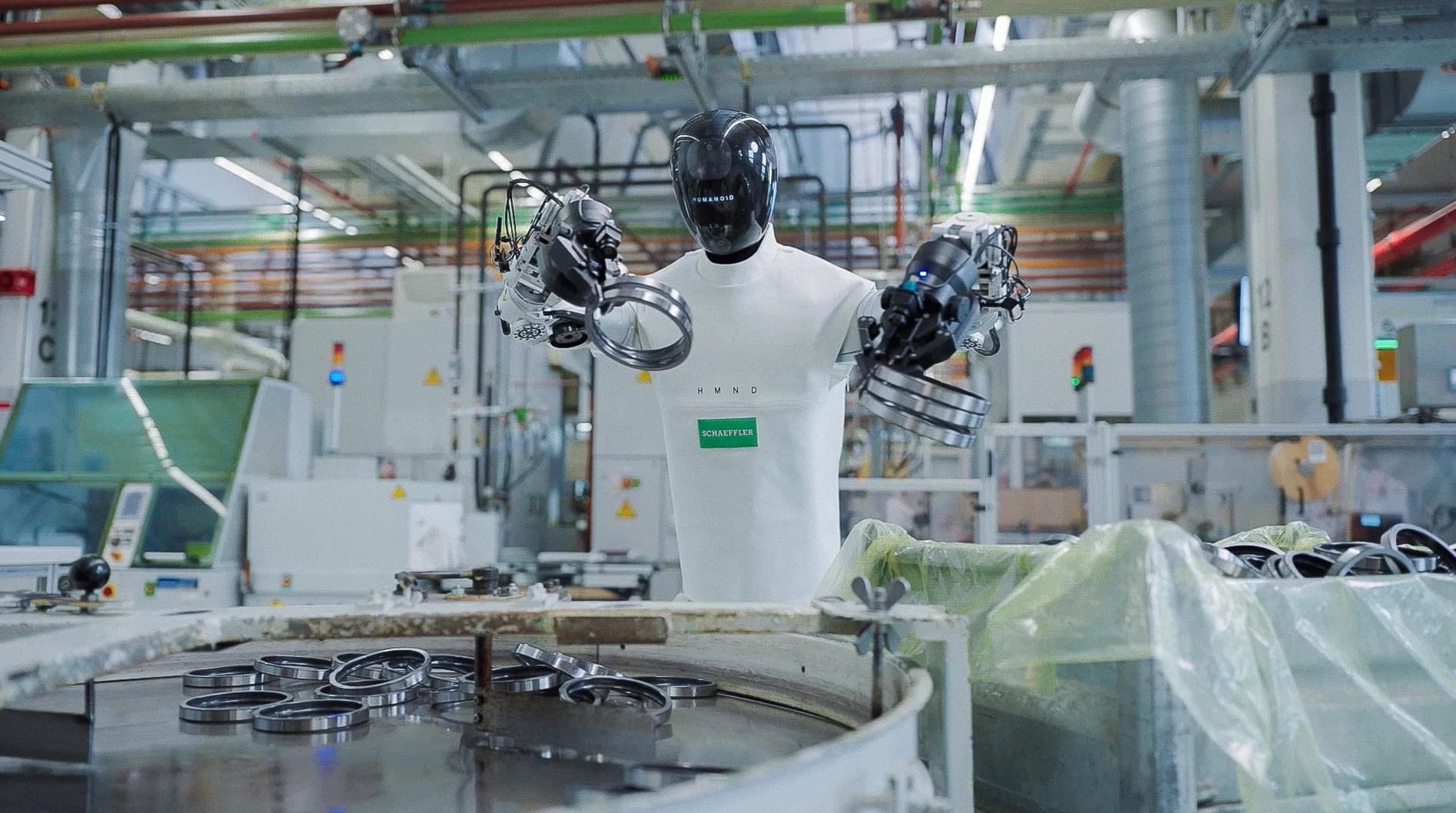
A core feature of KinetIQ is its cross-embodiment capability. Data collected by a wheeled robot in a warehouse can be used to improve the performance of a bipedal robot in a retail environment. This is particularly relevant as Humanoid moves forward with its strategic partnership with Schaeffler, which involves the deployment of "hundreds" of robots.
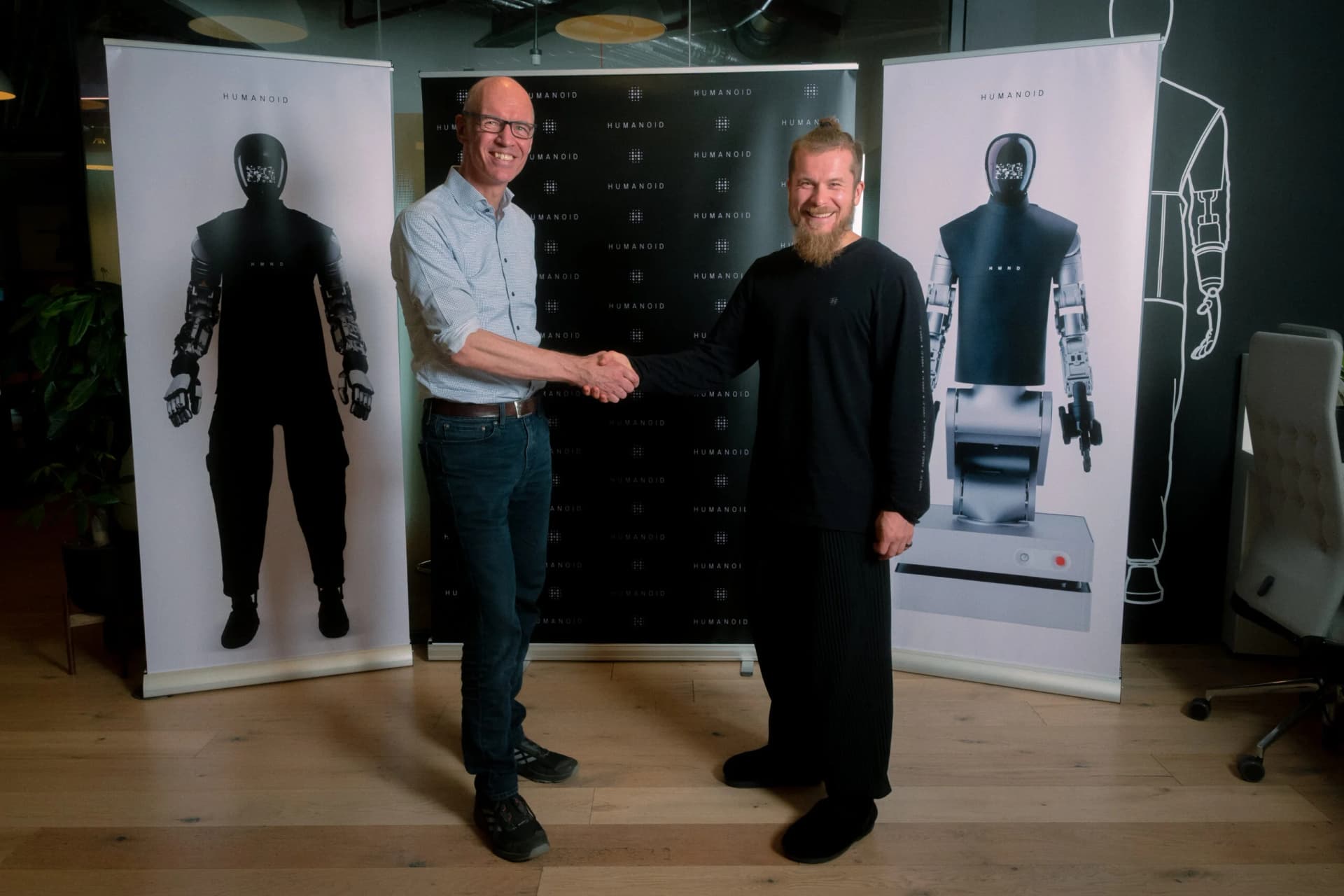
Under the Schaeffler agreement, Humanoid will provide the "cognitive" labor through KinetIQ, while Schaeffler acts as the preferred supplier for joint actuators. This "simulation-first" and "agentic" approach has already led to a reported 20,500 pre-orders, signaling significant market confidence in Humanoid’s pragmatic, tool-like approach to robotics.
Humanoid is positioning KinetIQ not just as a software update, but as the operating system for the next generation of industrial labor.
Share this article
Read next
- Published on
- Reading time
- 25 min read
The Humanoids of Europe: Built by Their Customers
- Published on
- Reading time
- 5 min read
Europe’s First Pure-Play Humanoid Unicorn: Humanoid Raises $152M at $1.35B Valuation
- Published on
- Reading time
- 4 min read
From Prototype to Production: Humanoid Taps Bosch for European Manufacturing Push
- Published on
- Reading time
- 4 min read
Scale at Speed: Humanoid and Schaeffler Move to Massive Multi-Thousand Unit Rollout
- Published on
- Reading time
- 4 min read
Siemens and Humanoid Formalize Partnership Following Successful "Physical AI" Trials in Erlangen
- Published on
- Reading time
- 3 min read
From ERP to the Edge: Humanoid and SAP Bridge the Gap in Martur Fompak Logistics Trial

The weekly humanoid robotics briefing
One email a week: the launches, funding and research that mattered, with context from Humanoids Daily.
Read recent issues