- Published on
Velocity Over Hype: Inside Humanoid’s Month of Massive Industrial Milestones
One tap, and our reporting appears more often in your Google Top Stories. It makes a real difference to a small newsroom.

Supported by RoboStrategySupport for Humanoids Daily comes from RoboStrategy
Sponsored


Investing involves risk, including possible loss of principal. Read the prospectus before investing.

In the hyper-competitive world of general-purpose robotics, speed is often measured in years of R&D. But for the UK-based startup Humanoid, the calendar seems to move differently. Recently described by robotics expert and influencer Chris Paxton as the "fastest-moving western industrial humanoid co," the firm is backing up that reputation with a relentless cadence of real-world deployments.
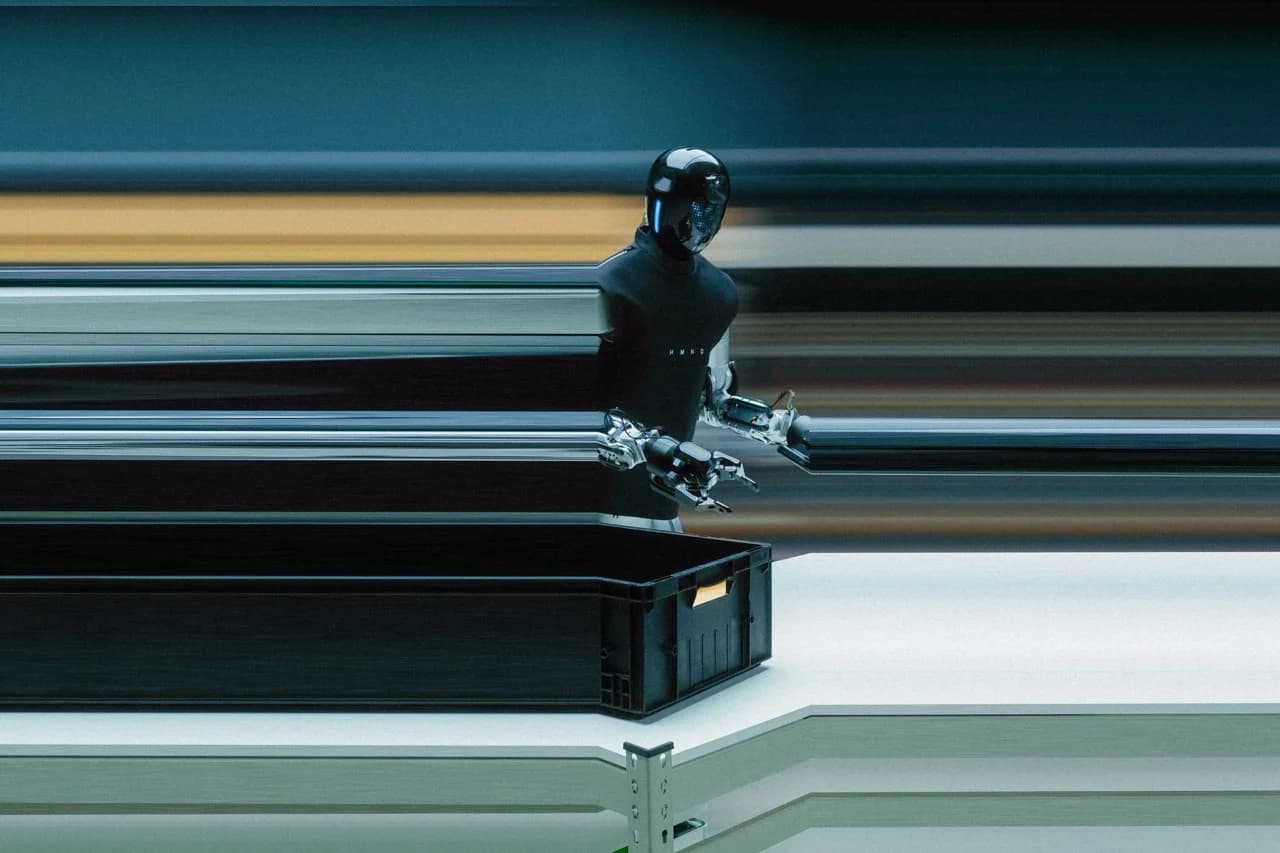
Today, the company teased another "exciting" development on social media, showcasing the HMND 01 Alpha maneuvering through what appears to be retail and industrial environments. The teaser comes on the heels of four major announcements in January alone that signal a transition from laboratory "pre-alpha" prototypes to high-stakes industrial validation.
The Silicon Foundation: NVIDIA and the 24-Hour Policy
A core driver of this velocity is the company’s deep integration with NVIDIA’s robotics stack. Humanoid recently confirmed it is utilizing NVIDIA Jetson Thor—a high-performance edge computer designed specifically for humanoid platforms—to run its Vision-Language-Action (VLA) foundation models.
By leveraging NVIDIA Isaac Sim and Isaac Lab, the team has moved toward a "simulation-first" development cycle. This approach allowed them to evaluate six different leg configurations for their bipedal model before a single bolt was tightened. Perhaps most impressively, Humanoid claims that their current pipeline can train a new behavioral policy from scratch and deploy it to a physical robot within just 24 hours. This software agility likely explains the company’s staggering report of 20,500 pre-orders to date.
The weekly humanoid robotics briefing
One email a week: the launches, funding and research that mattered, with context from Humanoids Daily.
Read recent issuesValidation on the Factory Floor: Siemens and Ford
While many robotics firms focus on controlled "hero videos," Humanoid has spent the last month in the noise and dust of active factories.
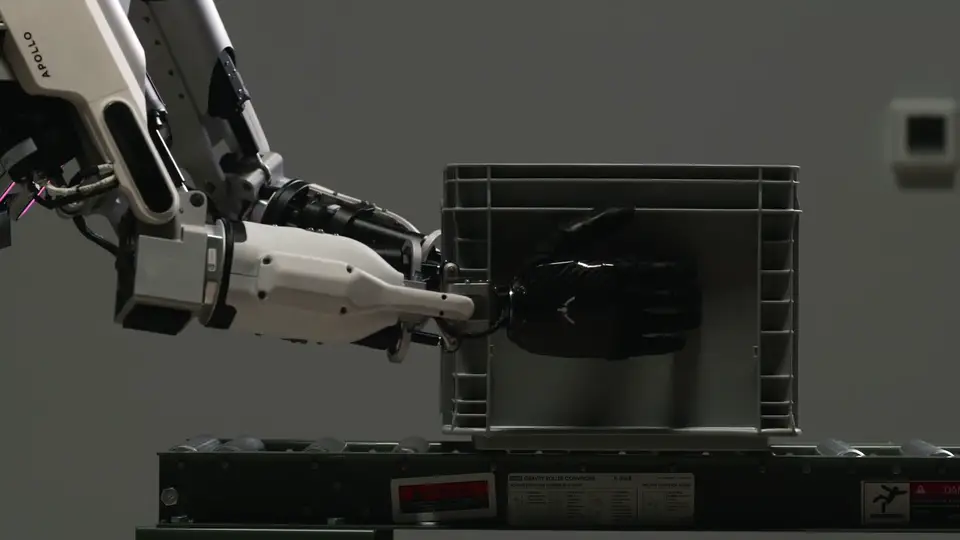
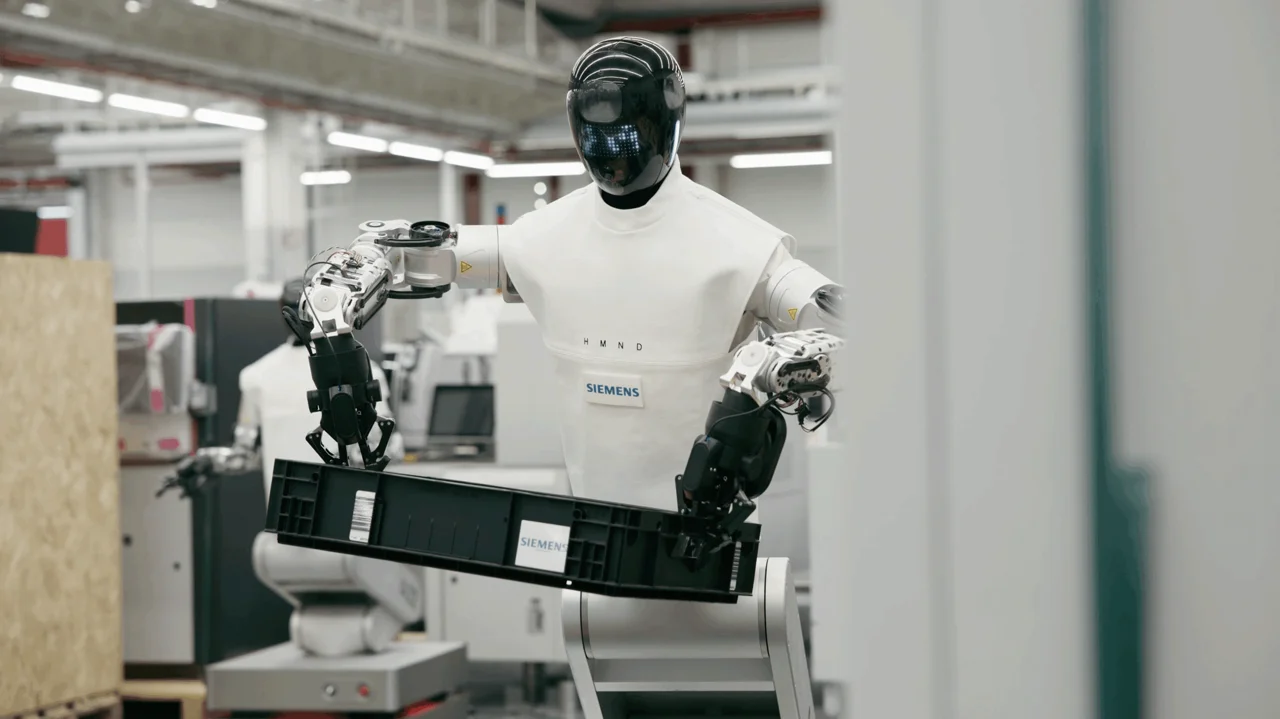
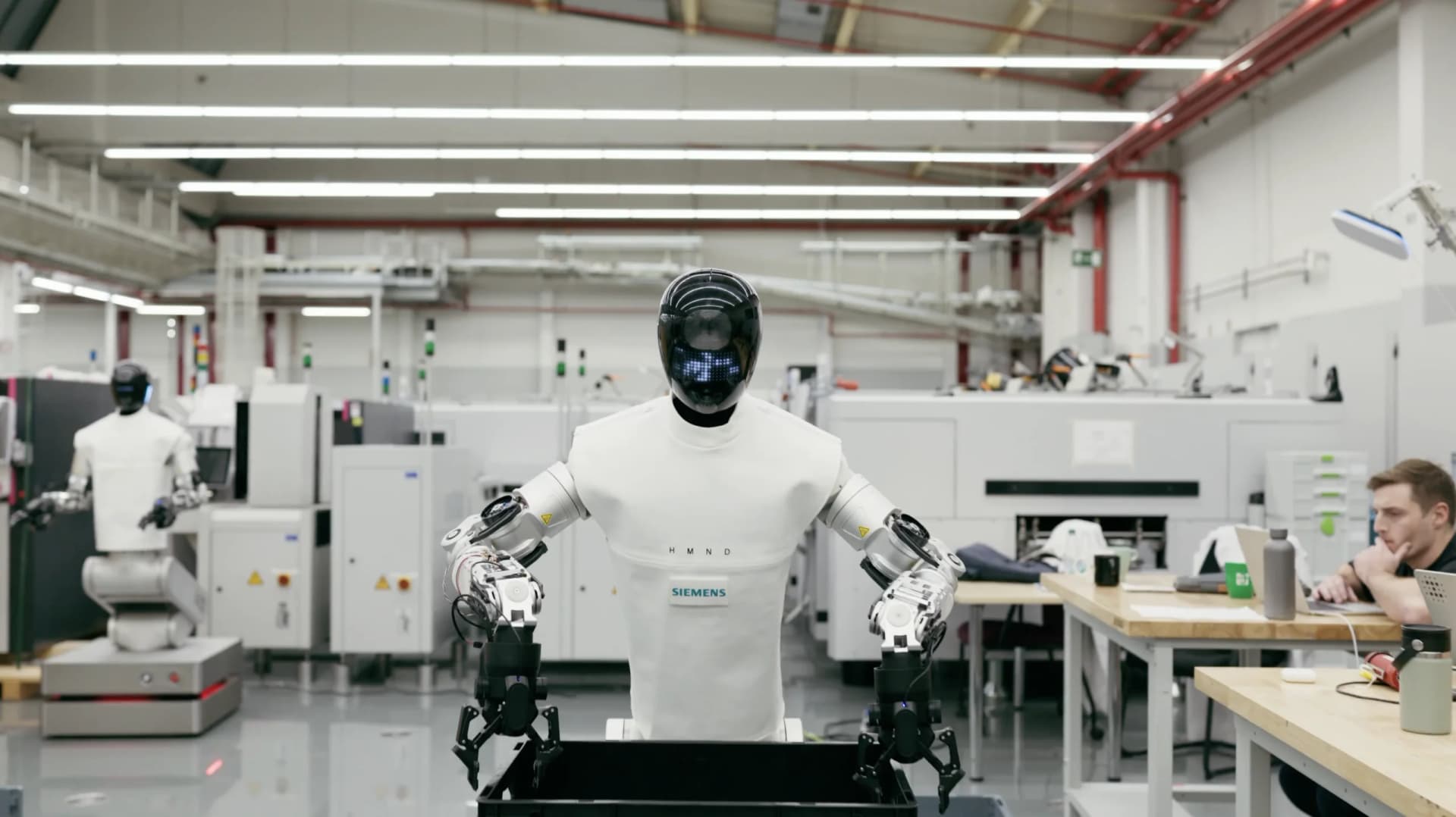
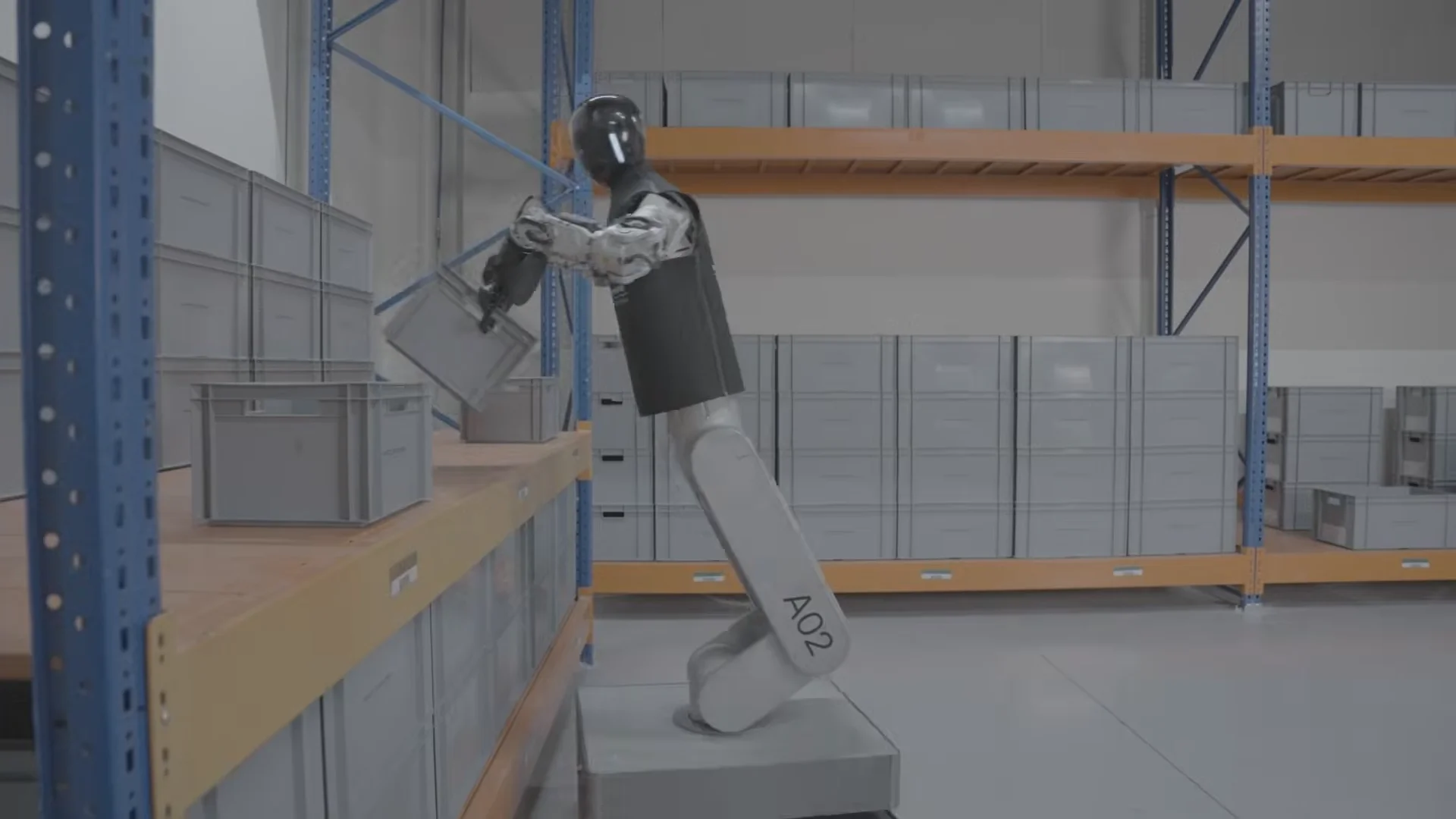
In mid-January, the company completed a successful Proof of Concept (POC) at the Siemens Electronics Factory in Erlangen, Germany. The HMND 01 wheeled Alpha was tasked with a tote-to-conveyor destacking operation. The results met all target metrics:
- Throughput: 60 tote moves per hour.
- Uptime: Exceeding 8 hours of operation.
- Success Rate: Over 90% for autonomous pick-and-place tasks.
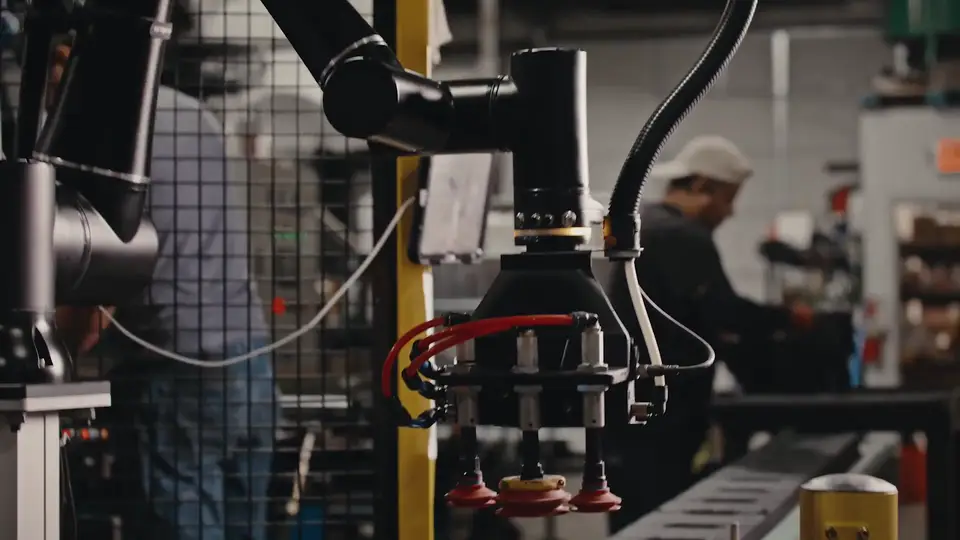
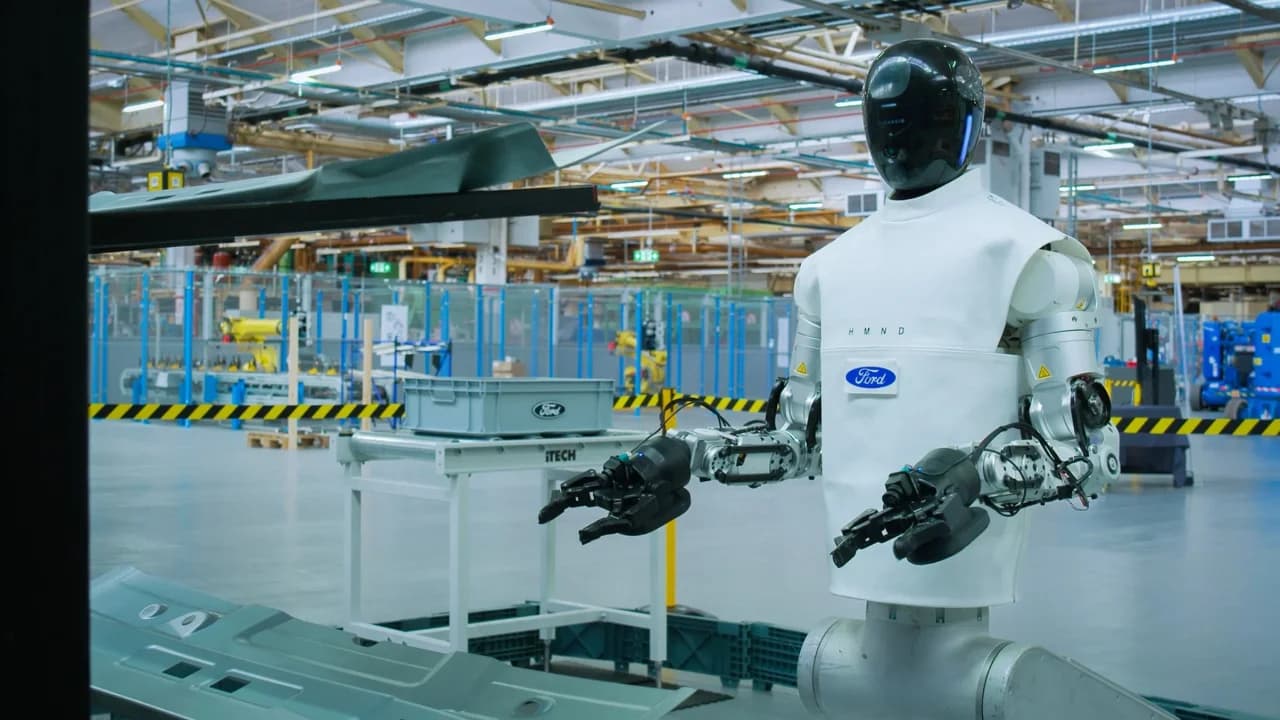
Simultaneously, at the Ford Innovation Centre in Cologne, the robot tackled even more complex workflows, including dual-arm manipulation of thin sheet-metal car body parts—a task traditionally difficult for autonomous systems due to the flexibility and sharp edges of the components. Ford’s trials saw the robot exceed its pick-per-hour target by 60%, achieving 83 units per hour with 97% reliability.
Scaling Up: The Schaeffler Strategic Partnership
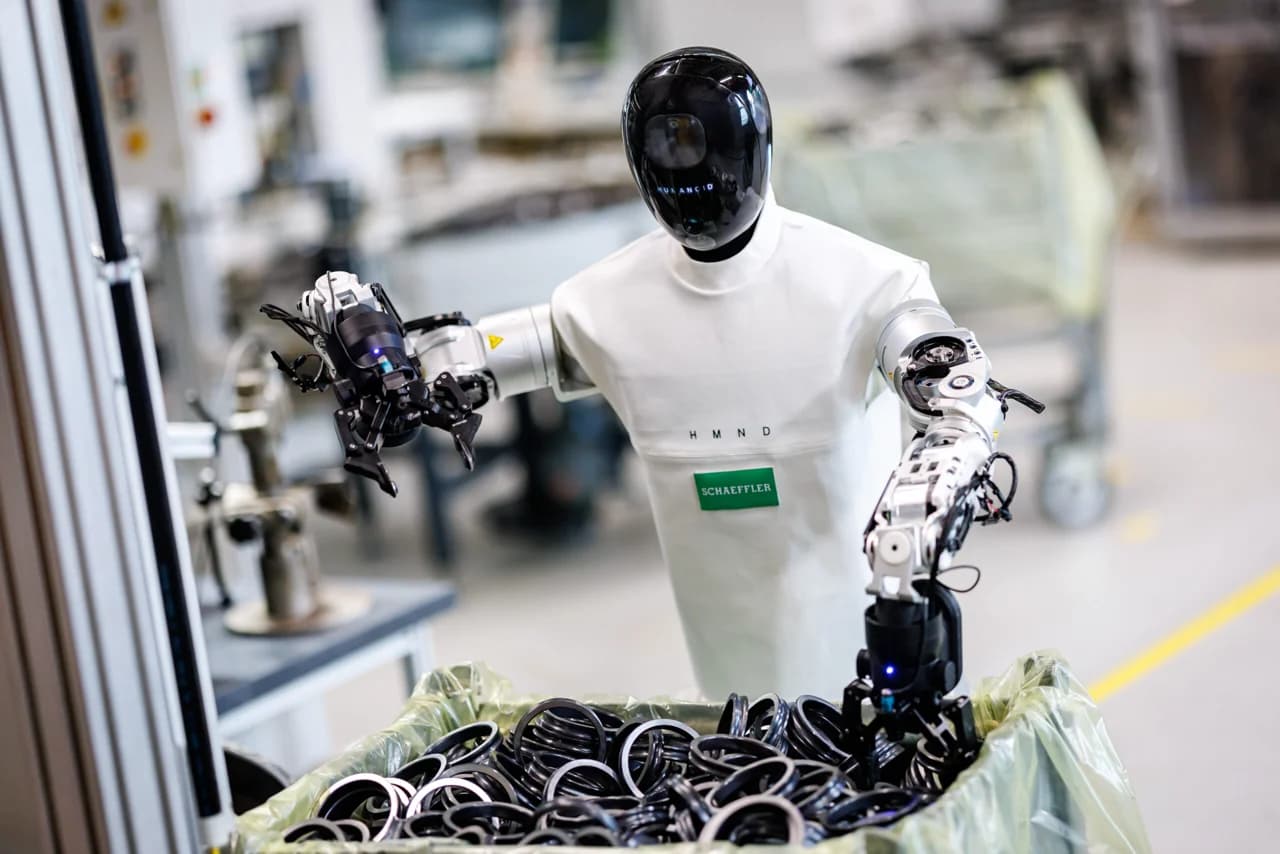
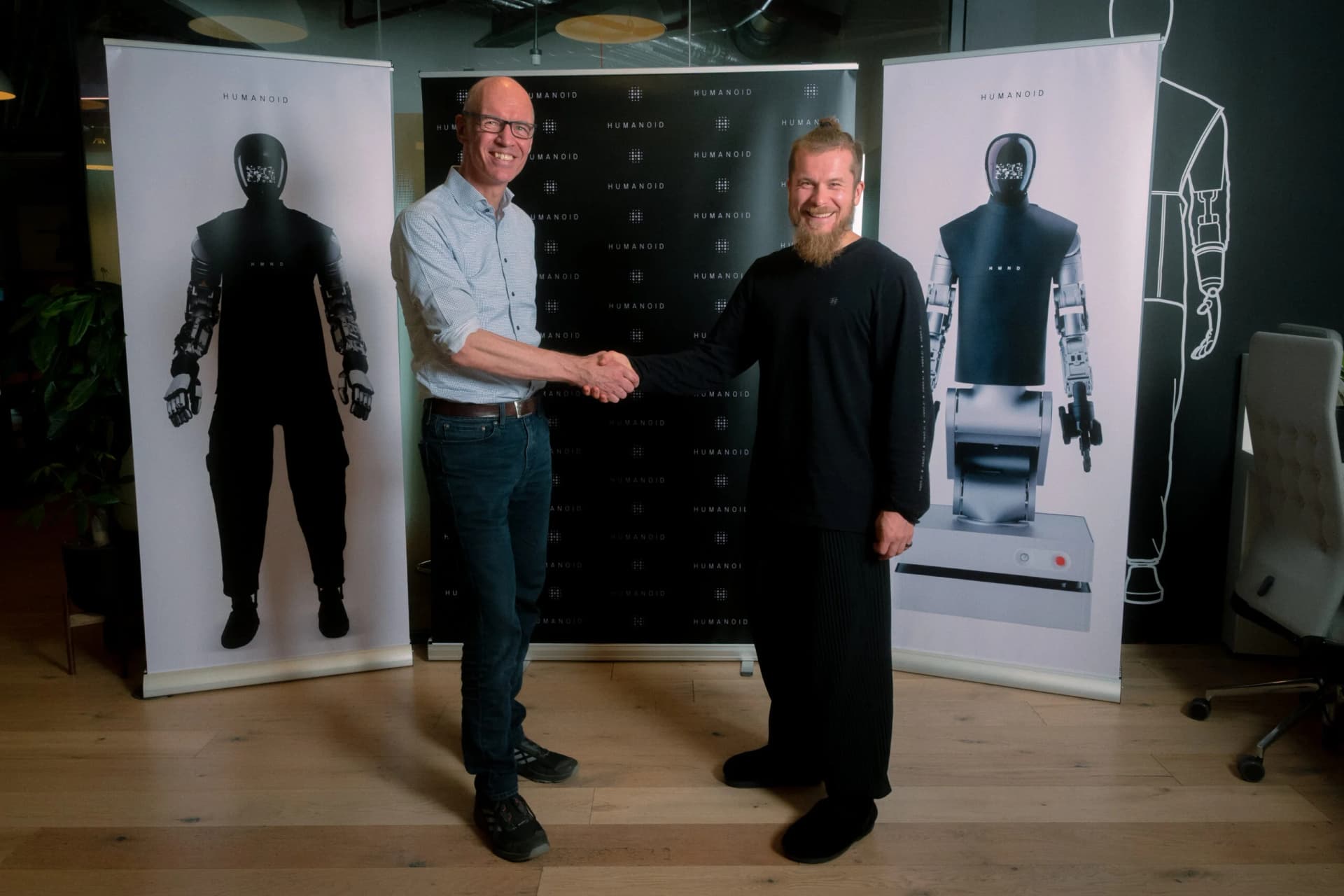
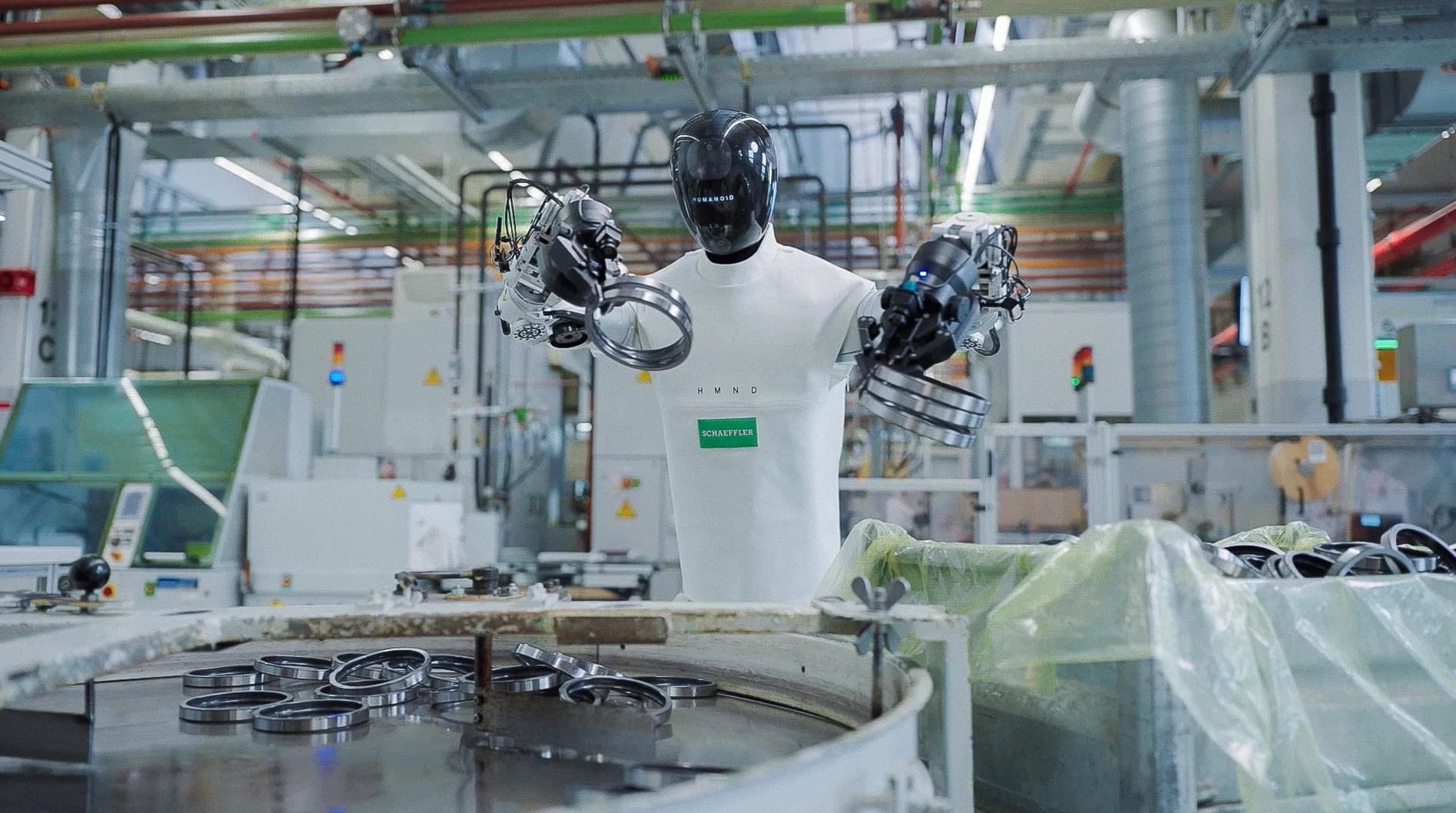
These pilots are no longer isolated experiments. On January 13, Humanoid and motion technology giant Schaeffler announced a five-year strategic partnership. Building on a previous bin-picking trial, this new agreement plans for the deployment of "hundreds" of robots across Schaeffler’s global production facilities.
The partnership is symbiotic: Schaeffler will become the preferred supplier for joint actuators for the wheeled platform, while Humanoid provides the "cognitive" labor needed to address workforce shortages. Initial beta-stage deployments are scheduled for 2026, with the company eventually offering a Robot-as-a-Service (RaaS) model to lower the barrier for industrial entry.
In November last year, Schaeffler announced a similar partnership with German firm Neura Robotics.
A Pragmatic Pivot
Humanoid’s strategy remains centered on a "clothed" aesthetic and modular end-effectors, moving away from the "uncanny valley" toward a tool-like reliability. This pragmatism—prioritizing wheeled stability for logistics while iterating on bipedal agility for "brownfield" environments—appears to be winning over investors and industrial partners alike.
Whether the company can maintain this pace as it moves from the hundreds of units in Europe to the 10,000-unit framework established in Saudi Arabia remains the industry's big question. However, if the January metrics are any indication, Humanoid isn't just running the race; they are setting the tempo.
Share this article
Read next
- Published on
- Reading time
- 25 min read
The Humanoids of Europe: Built by Their Customers
- Published on
- Reading time
- 5 min read
Europe’s First Pure-Play Humanoid Unicorn: Humanoid Raises $152M at $1.35B Valuation
- Published on
- Reading time
- 4 min read
From Prototype to Production: Humanoid Taps Bosch for European Manufacturing Push
- Published on
- Reading time
- 4 min read
Scale at Speed: Humanoid and Schaeffler Move to Massive Multi-Thousand Unit Rollout
- Published on
- Reading time
- 4 min read
Siemens and Humanoid Formalize Partnership Following Successful "Physical AI" Trials in Erlangen
- Published on
- Reading time
- 3 min read
From ERP to the Edge: Humanoid and SAP Bridge the Gap in Martur Fompak Logistics Trial

The weekly humanoid robotics briefing
One email a week: the launches, funding and research that mattered, with context from Humanoids Daily.
Read recent issues