- Published on
The "Infinite Money Glitch": Elon Musk Outlines the Roadmap to a Billion Robots
One tap, and our reporting appears more often in your Google Top Stories. It makes a real difference to a small newsroom.

Supported by RoboStrategySupport for Humanoids Daily comes from RoboStrategy
Sponsored
Investing involves risk, including possible loss of principal. Read the prospectus before investing.
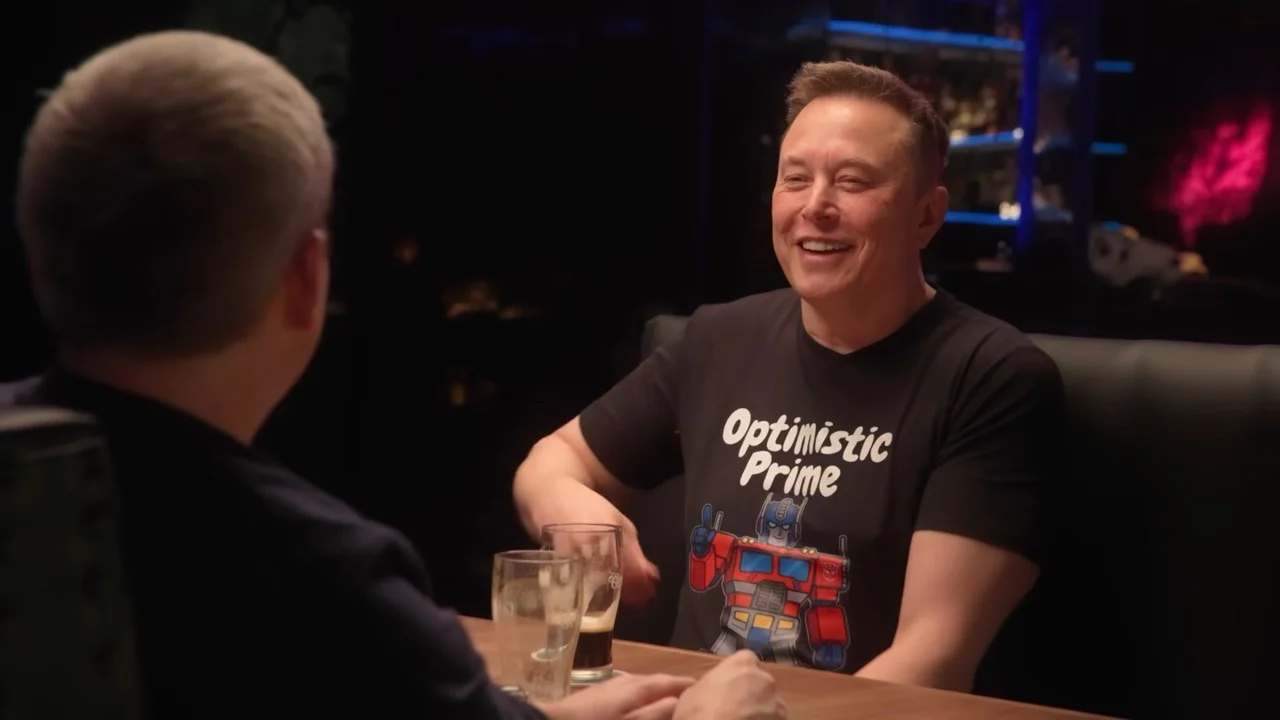
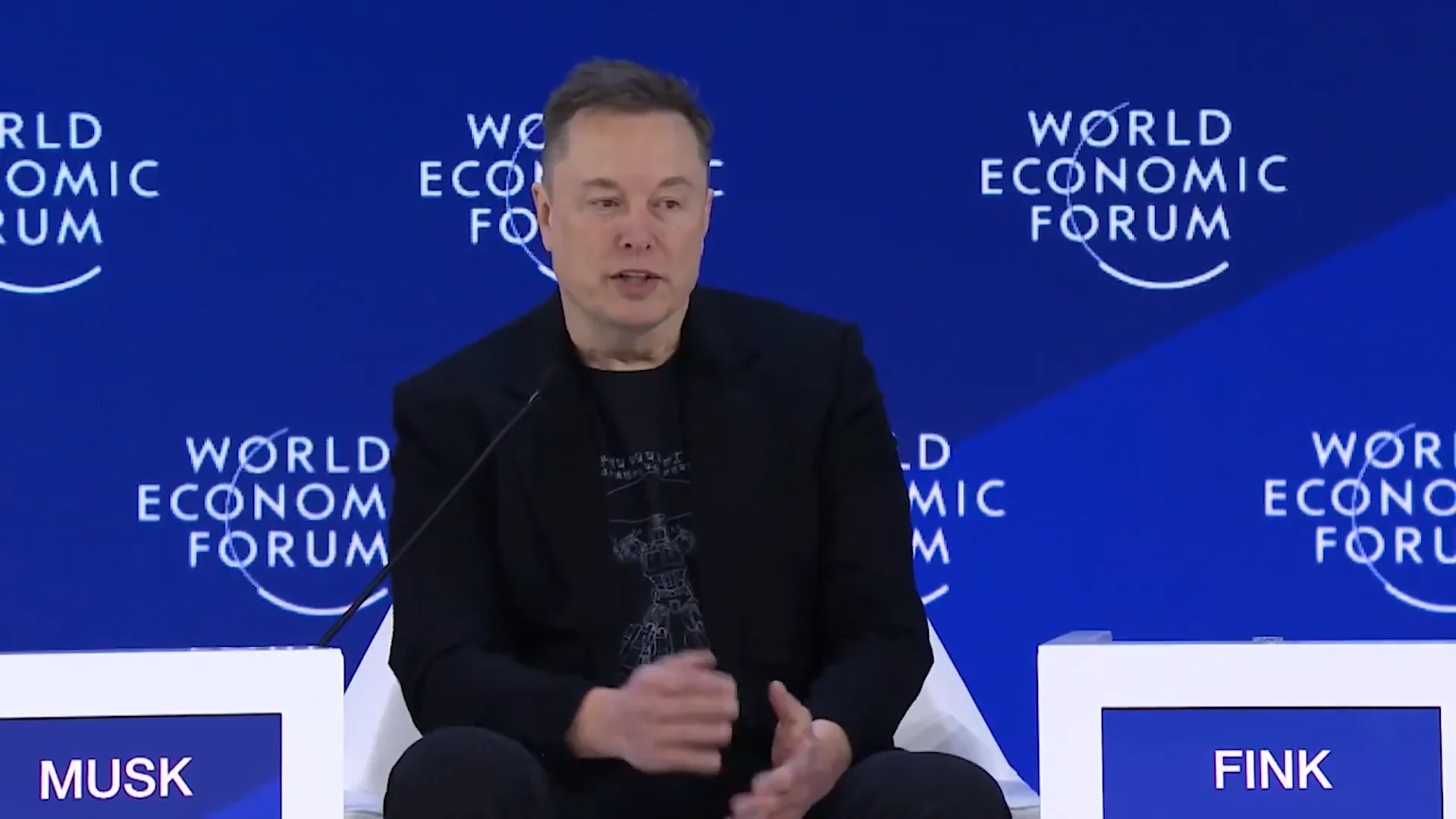
In a sweeping interview with Dwarkesh Patel and John Collison, Elon Musk provided his most detailed look yet at the manufacturing and AI philosophy driving Tesla’s Optimus program. Describing the humanoid robot as an "infinite money glitch," Musk outlined a future where recursive multiplicative growth—driven by exponential increases in digital intelligence, chip capability, and electromechanical dexterity—could expand the global economy by orders of magnitude.
However, the path to this "Sustainable Abundance" is currently facing a "hardware wall" on Earth, forcing a strategy that spans from domestic "Terafabs" to solar-powered data centers in orbit.
Scaling the "Agonizing" S-Curve
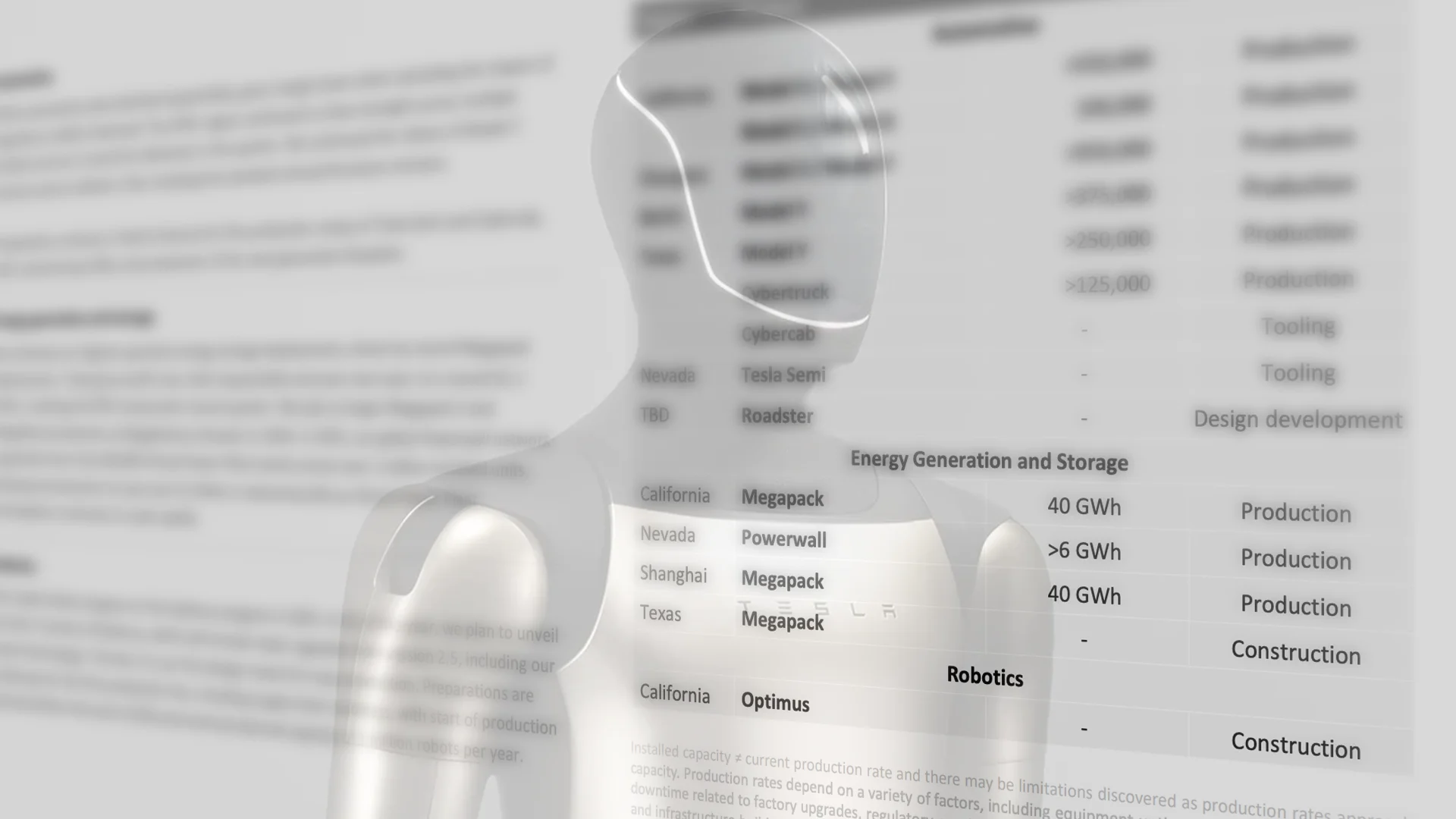
Musk reiterated that the production ramp for Optimus will follow a "stretched out" S-curve. Because the robot relies on a "non-existent" supply chain designed from physics first principles, the initial output will be "agonizingly slow". Tesla is currently clearing floor space at its Fremont factory—notably phasing out the Model S and Model X —to make room for a 1-million-unit-per-year production line.
While the Optimus Gen 3 is the target for the Fremont million-unit milestone, Musk suggested that a "Gen 4" iteration would likely be required to hit the 10-million-unit annual target envisioned for Giga Texas. The ultimate goal is to bring the production cost down to roughly $20,000 per unit.
The weekly humanoid robotics briefing
One email a week: the launches, funding and research that mattered, with context from Humanoids Daily.
Read recent issuesThe Hardware Bottleneck: The Hand and the "Terafab"
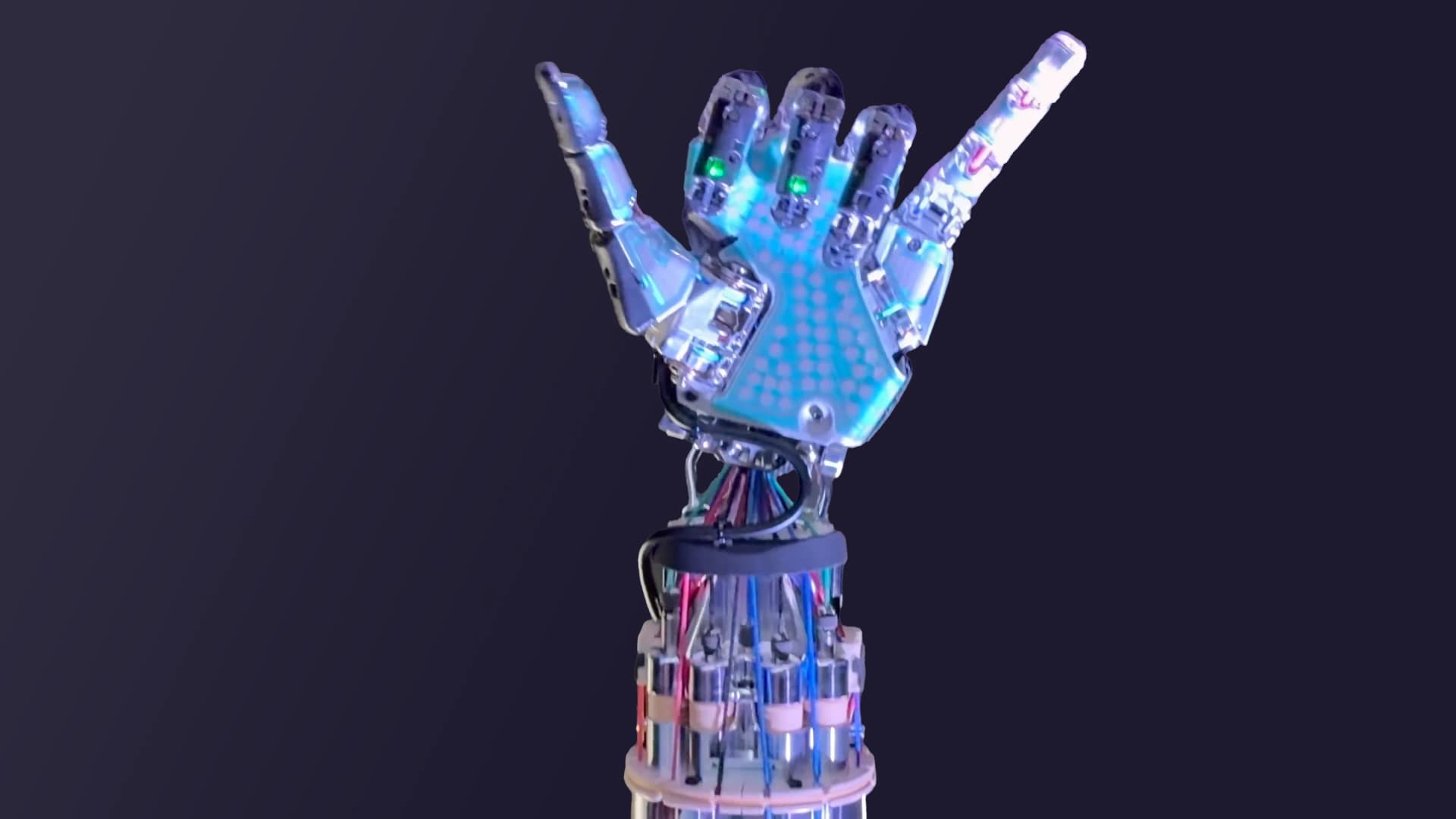
Musk identified three primary hurdles for humanoid robotics: real-world AI, scale manufacturing, and the dexterity of the hand. He described the human hand as the "single greatest electromechanical challenge". To address this, Tesla is developing a next-generation hand, aiming for "superhuman" precision.
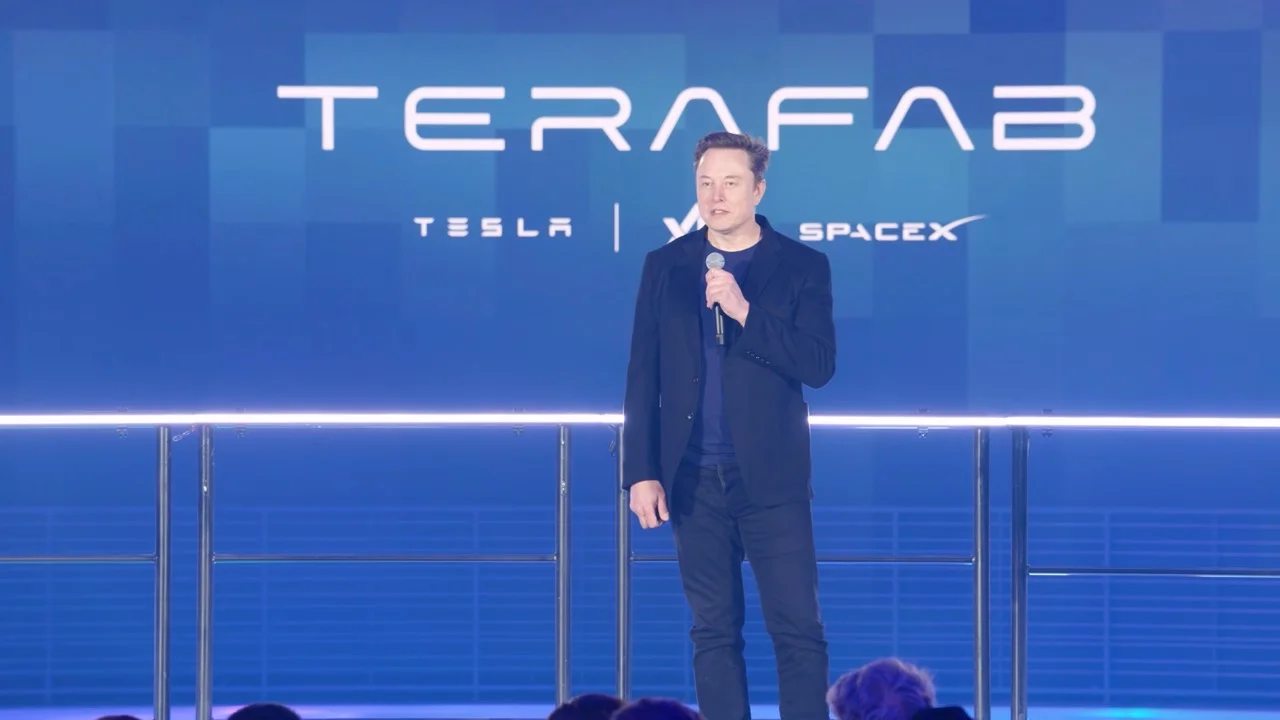
To support the massive compute requirements of these robots, Musk revealed plans for a "Terafab". This facility would move beyond traditional gigafactory scales to produce north of a million wafers per month, integrating logic, memory, and packaging internally to bypass backlogged global suppliers.
Moving AI into the "Always Sunny" Orbit
One of the most provocative revelations was Musk’s 36-month timeline for moving significant AI compute into space. On Earth, the primary bottleneck is electricity; while chip production is growing exponentially, electrical grid expansion remains flat. Musk argued that space-based data centers are the "most economically compelling" solution due to several factors:
- Solar Efficiency: Solar panels are five times more effective in space without atmospheric interference or day-night cycles.
- Thermal Management: The vacuum of space provides an efficient cooling environment for high-performance chips.
- Regulatory Speed: Avoiding the "permitting hell" of terrestrial power plant construction.
Musk predicted that within five years, SpaceX could be launching more AI capacity into space every year than the cumulative total existing on Earth.
The Software Strategy: From Simulation to Grok
The intelligence of Optimus will leverage Tesla's unified 'world simulator', a neural network trained on massive video datasets that allows robots to "imagine" tasks before executing them. Musk revealed that Tesla is currently building an "Optimus Academy," a physical training ground where tens of thousands of robots will perform "self-play" in reality to master different tasks.
Tesla plans to deploy 10,000 to 30,000 robots in the real world specifically to close the "sim-to-real gap," using data from these physical units to refine the physics-accurate "reality generator" used for virtual training. Musk also clarified the synergy between his companies, noting that xAI’s Grok will likely serve as the high-level orchestration layer for Optimus fleets. While the motor policies handle low-level balance and movement, Grok would assign and organize complex tasks, such as building factories or managing domestic chores.
Geopolitics and the "Next Level" Competition
While Musk remains dismissive of domestic humanoid startups, he characterized Chinese firms as the "toughest competition" due to their prowess in scaling manufacturing and real-world AI. He noted that China’s manufacturing work ethic and massive electrical output—projected to be three times that of the U.S. this year—give it a significant advantage in scaling physical AI.
The conversation turned specifically to the pricing gap between Tesla and Chinese manufacturers like Unitree, which currently market their R1 humanoid for as low as $4,900. Musk argued that these are not equivalent products, noting that Optimus is a "big robot" standing 5'11" and designed for high-power industrial tasks, such as carrying heavy objects for long periods without overheating.
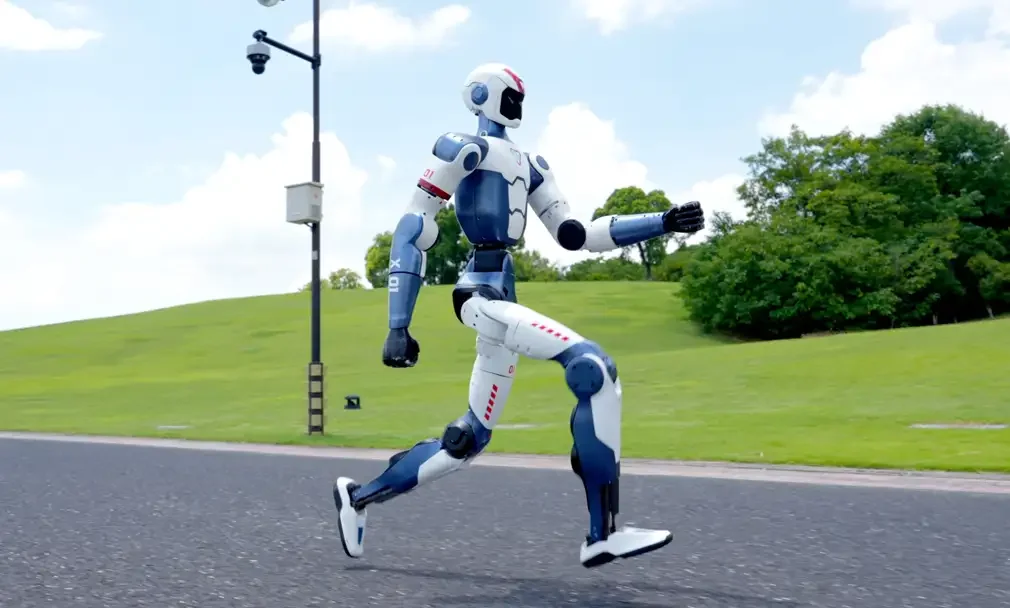
Despite the higher complexity, Musk stated that Optimus will "not be a lot more" expensive than its lower-cost rivals once production scales. "The thing is, over time as Optimus robots build Optimus robots, the cost will drop very quickly," Musk explained.
"We definitely can’t win with just humans," Musk remarked, citing the U.S. birth rate and labor shortages in sectors like ore refining. In his view, the only path for the U.S. to remain competitive is to "close the recursive loop" quickly, using early generations of Optimus to build the very refineries and factories needed to scale the robot population into the hundreds of millions.
As Tesla prepares for the formal unveiling of the Gen 3 prototype in Q1 2026, the industry remains focused on whether Musk can overcome the "agonizing" phase of the ramp in time to meet his 2027 public sales target.
Share this article
Read next
- Published on
- Reading time
- 5 min read
The Terafab Manifesto: Tesla and Intel Join Forces to Power Musk’s "Galactic" AI Ambitions
- Published on
- Reading time
- 3 min read
Optimus Hits the Ledger: Tesla Formally Lists Humanoid Production Line in Q4 Results
- Published on
- Reading time
- 4 min read
Abundance or Agony? Elon Musk Maps Out the Optimus Production S-Curve in Davos
- Published on
- Reading time
- 3 min read
Tesla’s Next Optimus Hand to Feature 50 Actuators, Musk Says, Eclipsing Current Prototype
- Published on
- Reading time
- 3 min read
Tesla Optimus Shows Off Kung Fu Moves, as AI Lead Highlights Unified Self-Driving Brain
- Published on
- Reading time
- 3 min read
Meet Ashok Elluswamy, The AI Architect Now Leading Tesla's Optimus Program
The weekly humanoid robotics briefing
One email a week: the launches, funding and research that mattered, with context from Humanoids Daily.
Read recent issues