- Published on
Waymo Leverages Genie 3 to Launch "Waymo World Model" for Hyper-Realistic Simulation
One tap, and our reporting appears more often in your Google Top Stories. It makes a real difference to a small newsroom.

Supported by RoboStrategySupport for Humanoids Daily comes from RoboStrategy
Sponsored

Investing involves risk, including possible loss of principal. Read the prospectus before investing.
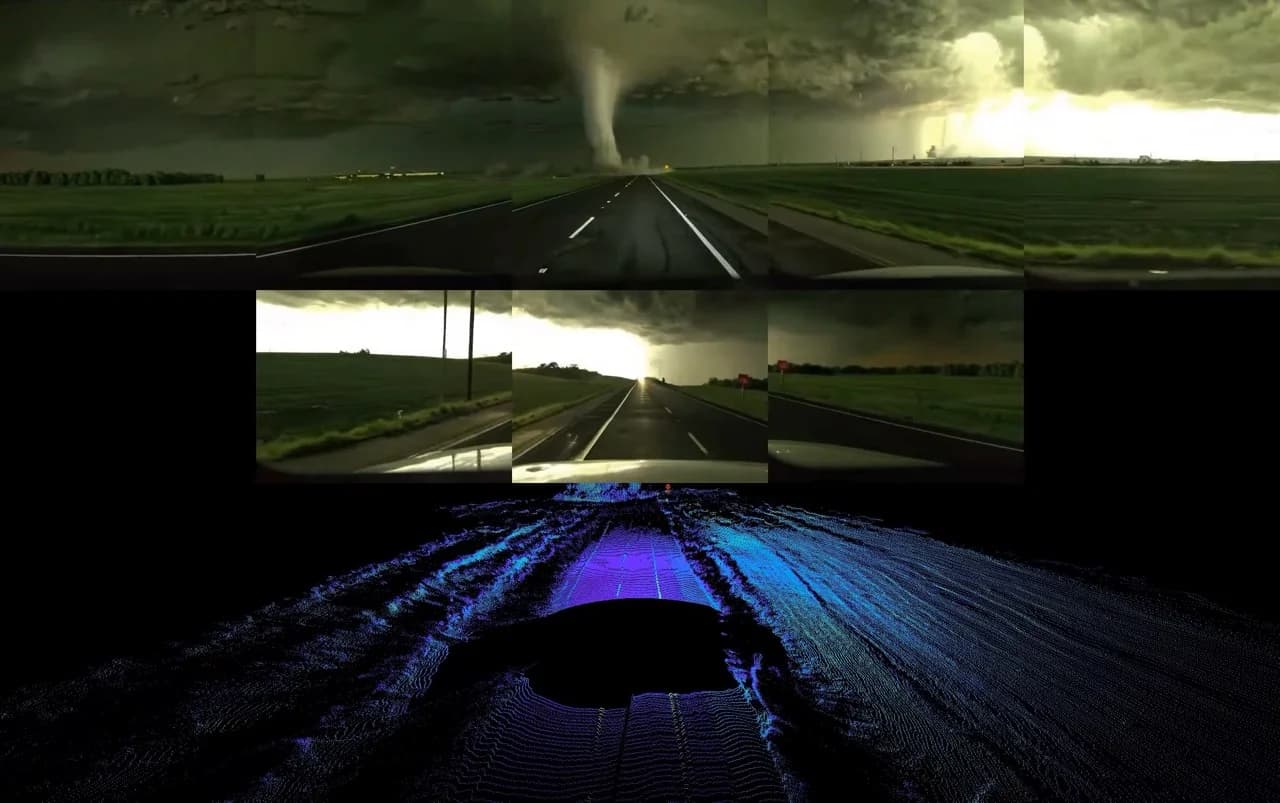
In the quest to master the "messy" reality of the physical world, Waymo has turned to the same generative powerhouses fueling the next generation of humanoid robots. Yesterday, the company introduced the Waymo World Model, a frontier generative system built upon Genie 3—Google DeepMind’s most advanced general-purpose world model.
While Waymo’s primary focus remains autonomous driving, the launch marks a significant convergence in the robotics industry. By utilizing Genie 3—a model that generates photorealistic and interactive 3D environments—Waymo is adopting a "Physical AI" roadmap that many in the industry believe is the key to general-purpose intelligence. While Google DeepMind has highlighted the model’s immediate applications in generative media and gaming, leadership views these world-building capabilities as a foundational step toward Artificial General Intelligence (AGI) by providing the "intuitive physics" necessary for agents to understand and interact with the real world.
Simulating the "Impossible"
The core challenge for any autonomous agent—whether a robot or a car—is the "data bottleneck." Real-world interaction data is scarce compared to the internet-scale text available to LLMs. Waymo’s solution is to generate its own data by simulating "long-tail" events that are nearly impossible to capture at scale in reality.
By leveraging Genie’s pre-training on diverse video datasets, the Waymo World Model can "dream" up scenarios such as:
The weekly humanoid robotics briefing
One email a week: the launches, funding and research that mattered, with context from Humanoids Daily.
Read recent issues- Extreme Weather: Driving through tornadoes, stagnant flood waters, or raging fires.
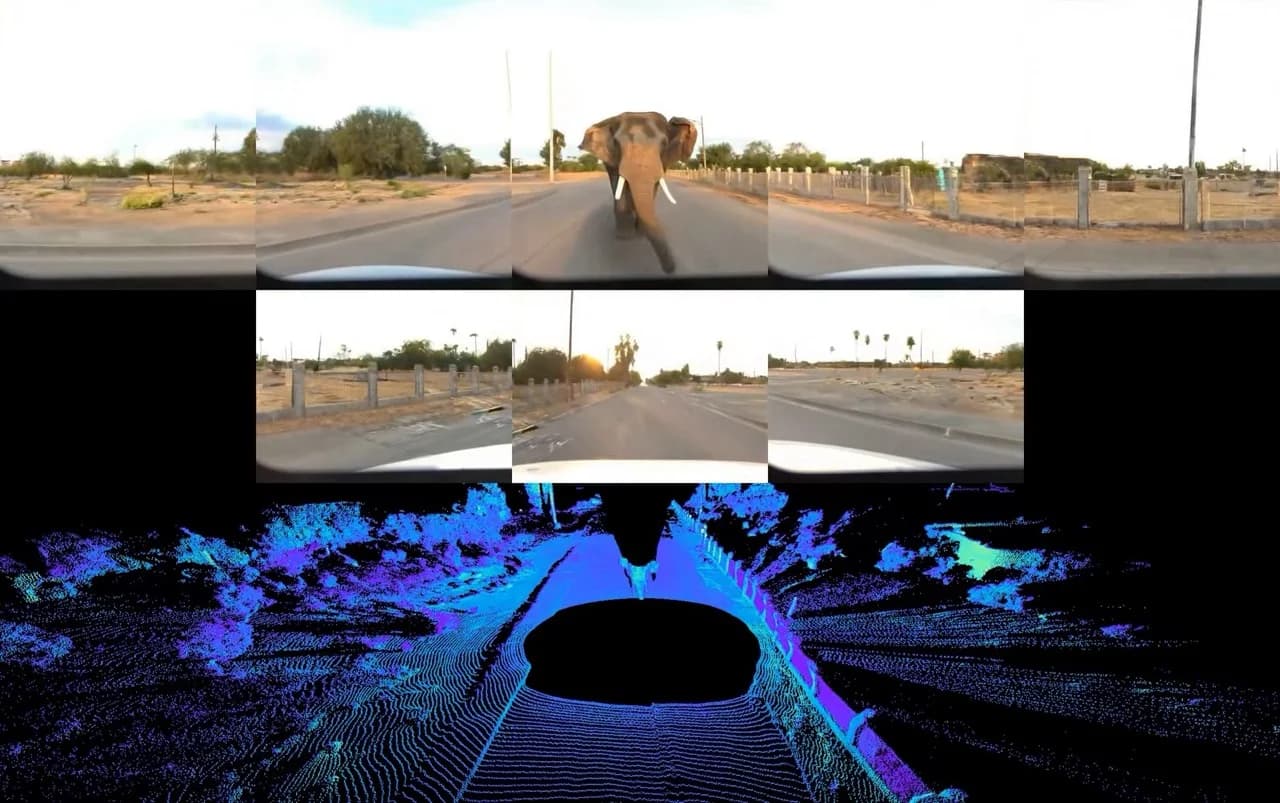
- Rare Obstacles: Encounters with elephants, lions, or even pedestrians dressed as T-rexes.
- Safety-Critical Events: Reckless drivers going off-road or vehicles with precariously positioned furniture.
This approach mirrors DeepMind’s Infinite Training Loop strategy, where a world model acts as a "Teacher" to create a virtual boot camp for an AI "Student."
Technical Leap: Controllability and Multimodal Realism
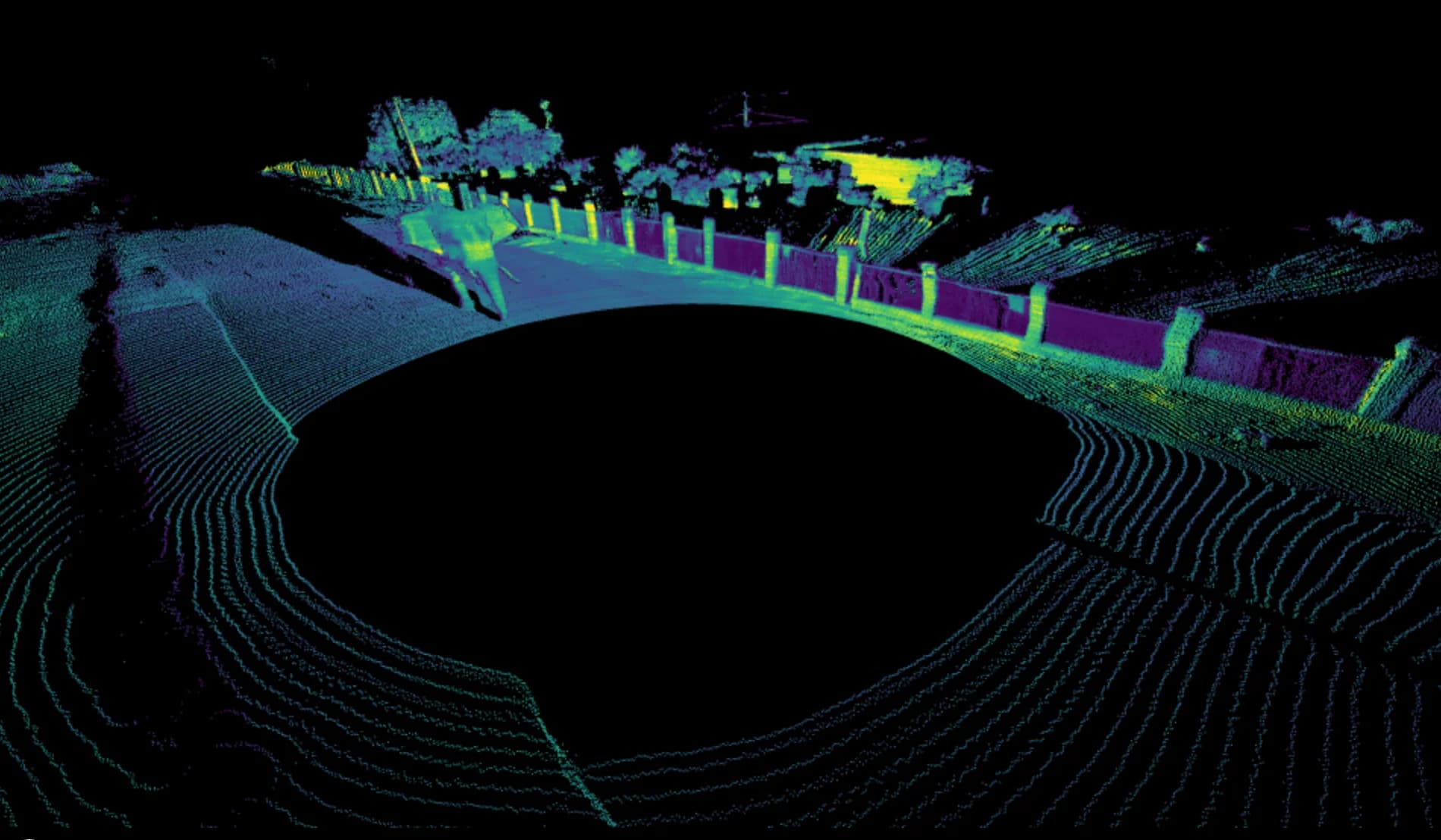
The Waymo World Model distinguishes itself from standard video generators by offering high-fidelity, multi-sensor outputs. It doesn't just generate camera footage; it produces 4D lidar point clouds, providing precise depth signals essential for safe navigation.
Waymo engineers can manipulate these simulations through three primary mechanisms:
- Driving Action Control: Simulating "what if" counterfactuals to see how the Driver would react to different inputs.
- Scene Layout Control: Mutating road layouts, traffic signal states, and the behavior of other road users.
- Language Control: Using simple text prompts to adjust time-of-day, weather, or to generate entirely synthetic scenes.
Unlike purely reconstructive methods, such as 3D Gaussian Splats, this fully learned world model maintains realism even when the simulated route deviates significantly from original recorded data.
Industry Convergence: The Shift Toward World Models
Waymo’s announcement signals a broader industry alignment of approaches. Leading players are increasingly converging on generative world models as the primary architecture for physical intelligence.
- Tesla’s Unified Simulator: Tesla continues to scale its "Neural World Simulator" an end-to-end system trained on video data that serves as the foundation for both its vehicles and the Optimus humanoid robot.
- 1X’s Video-to-Action: Humanoid developer 1X Technologies has integrated its 1X World Model (1XWM) as a "cognitive core," allowing the NEO robot to "imagine" and visualize tasks through video generation before attempting them physically.
- NVIDIA’s DreamZero: NVIDIA GEAR Lab recently unveiled DreamZero, a "World Action Model" that shifts the focus from text-based reasoning to visual imagination, which researchers describe as a "GPT-2 moment" for robotics.
This shared trajectory represents a move away from the "LLM-pilled" consensus that dominated earlier years. Instead of treating robotic actions like text tokens, these companies are prioritizing "intuitive physics"—the ability for an AI to predict the next physical state of its environment based on high-bandwidth visual data.
Why This Matters for Humanoids
The Waymo World Model serves as a massive validation of the world model thesis. If a system trained on "internet-scale" video can teach a car to navigate a flooded street it has never seen, the same logic applies to a humanoid learning to scrub a dish or fold laundry.
As DeepMind’s Carolina Parada noted, the goal is to build a universal assistant that understands the physical world. By perfecting these simulations in the high-stakes environment of urban driving, Waymo and DeepMind are building the foundation for robots that can "think" and "imagine" their way through any environment—whether it's a busy intersection or a cluttered living room.
Share this article
Read next
- Published on
- Reading time
- 7 min read
Google DeepMind Unveils Gemini Robotics 2, Bringing Whole-Body Intelligence and Multi-Robot Teams to Physical AI
- Published on
- Reading time
- 4 min read
Agile Robots and Google DeepMind Partner to Bring Gemini to the Factory Floor
- Published on
- Reading time
- 4 min read
Google DeepMind Opens the Portal: Project Genie and the Quest for the "Infinite Training Loop"
- Published on
- Reading time
- 4 min read
DeepMind CEO Demis Hassabis: World Models and 'Infinite Training Loops' are the Keys to AGI
- Published on
- Reading time
- 4 min read
Google DeepMind Unveils Gemini Robotics-ER 1.6: A Leap in Spatial Reasoning and Industrial Utility
- Published on
- Reading time
- 3 min read
Cartwheel Robotics Founder Scott LaValley Joins Google DeepMind


The weekly humanoid robotics briefing
One email a week: the launches, funding and research that mattered, with context from Humanoids Daily.
Read recent issues