- Published on
Tesla Targets 1 Million Unit Optimus Production Line, V3 Prototype Set for Q1
One tap, and our reporting appears more often in your Google Top Stories. It makes a real difference to a small newsroom.


Your guide
Rich Robinson
Jee Chee Ren · Executive tour
See China’s AI and robotics ecosystem first-hand.
Six days exploring AI, robotics and advanced manufacturing.
With Rich Robinson, Clinical Professor of Entrepreneurship at Peking University
Beijing · Guangzhou · Shenzhen
29 November–4 December 2026
Referral partnership · We earn a commission on referred bookings.
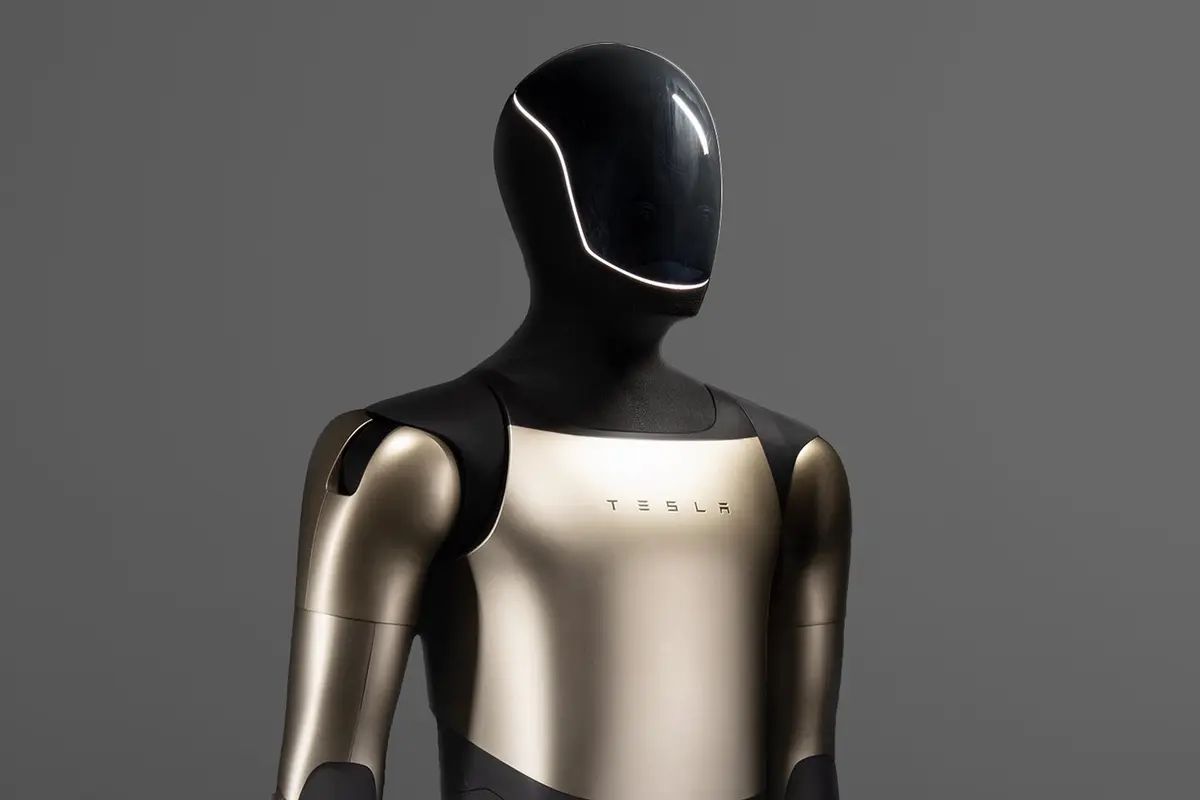
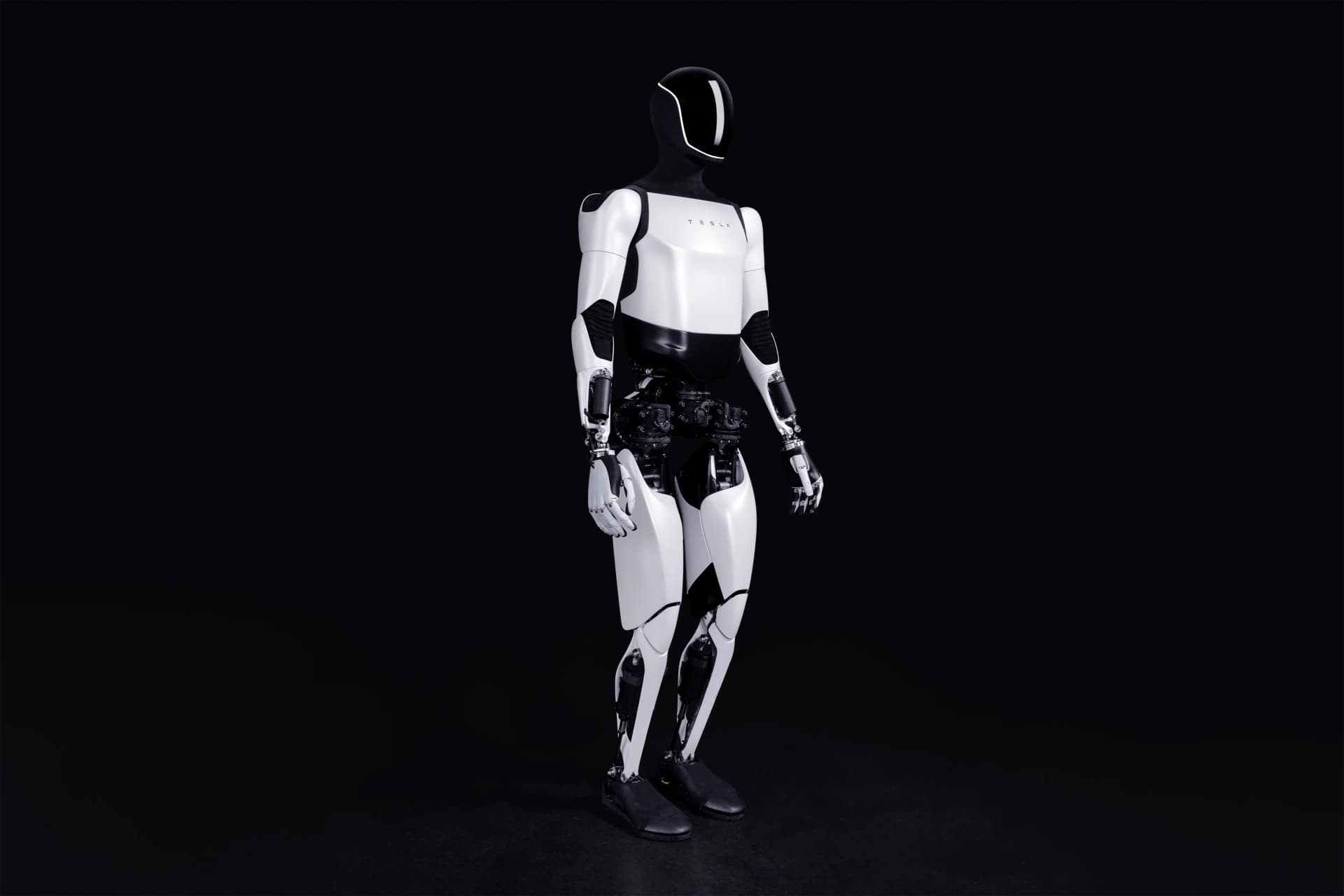
Tesla's Q3 2025 update provided the first official confirmation that its Optimus humanoid robot is transitioning to a manufactured product, with the company's update deck noting, "First generation production lines for Optimus are being installed in anticipation of volume production".
While that statement, released Wednesday, lacked specifics on scale or timeline, the subsequent earnings call with CEO Elon Musk provided that missing context, revealing a manufacturing ambition that dwarfs previous industry speculation.
"We're going to be building a million-unit Optimus production line, hopefully with the production start towards the end of next year," Musk stated during the call. He cautioned, however, that the ramp-up would "take a while" to reach that annualized rate.
The V3 Prototype and an Iterative Ramp
Musk set high expectations for the robot's next iteration, confirming a "production-intent prototype" would be ready to show off in Q1 2026, "probably February or March".
The weekly humanoid robotics briefing
One email a week: the launches, funding and research that mattered, with context from Humanoids Daily.
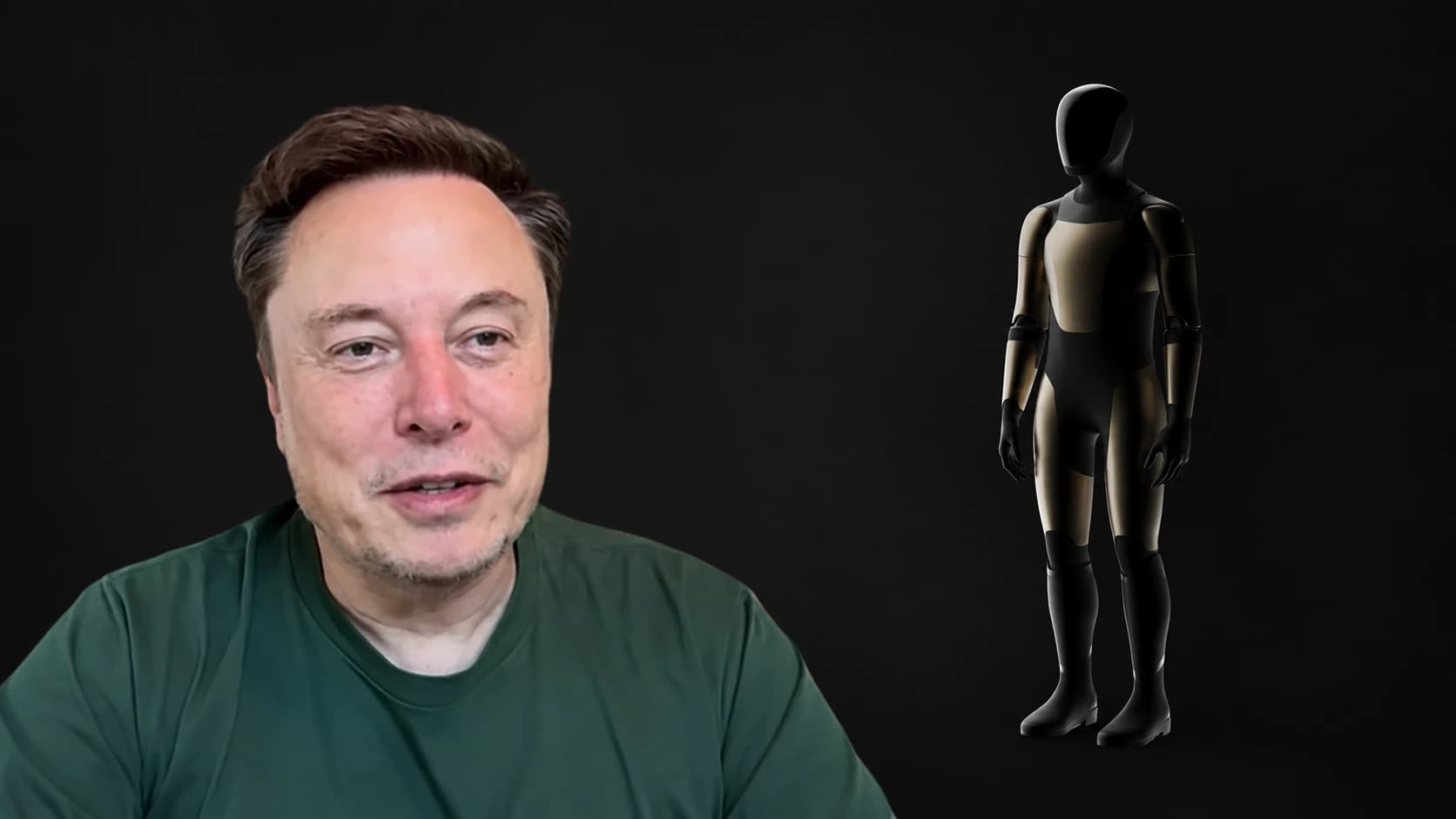
Read recent issuesThis "Optimus V3" is the version expected to demonstrate a significant leap in capability. "It won't even seem like a robot," Musk claimed. "It'll seem like a person in a robot suit... so real that you'll need to poke it, I think, to believe that it's actually a robot".
Crucially, Musk detailed a manufacturing strategy of continuous iteration. Unlike traditional automotive ramps where designs are "frozen" years in advance, the Optimus plan involves agility.
"The hardware design will not actually be frozen even through the start of production," Musk explained. "We'll be doing rolling changes for the Optimus design even after the start of production".
'There Is No Supply Chain'
A major portion of the call focused on why Tesla believes it is uniquely positioned to build a humanoid robot at scale. Musk's answer centered on manufacturing and vertical integration.
"The manufacturing challenge is immense considering that the supply chain doesn't exist," Musk said. "With cars, you've got an existing supply chain... With a humanoid robot, there is no supply chain".
This lack of third-party suppliers, he argued, forces Tesla to "manufacture very deep into the supply chain", a strategy it honed building its vehicles. Chief Financial Officer Vaibhav Taneja reinforced this, noting that Tesla's car is seen internally as "a robot on wheels" and that "most of the engineering team working on Optimus has come from the vehicle side".
Musk identified the hand and forearm as the single greatest electromechanical challenge, describing them as "more difficult than the entire rest of the robot" to achieve human-level dexterity.
The Long-Term Vision: From 1M to 100M
While the 1-million-unit annual target is already ambitious, Musk outlined a far grander long-term vision, calling Optimus at scale the "infinite money glitch".
He sketched out a future roadmap beyond the initial production line. "Ultimately, we'll do Optimus four," he projected. "That'll be 10 million units. Optimus five, maybe 50 to 100 million units. It's really pretty nutty".
This staggering scale provides context for recent supply chain rumors, such as a speculated (though unconfirmed) large order for actuators that was estimated to be for approximately 180,000 units. In light of Musk's 1-million-unit target, such an order would represent only an initial batch for the production ramp.
With production lines being installed and a clear (if immensely difficult) manufacturing strategy laid out, all eyes now turn to Q1 2026 for the unveiling of the production-intent Optimus V3.
Share this article
Read next
- Published on
- Reading time
- 3 min read
Tesla Confirms Optimus Production Lines Are Being Installed; 'V3' Unveil Eyed for Q1
- Published on
- Reading time
- 4 min read
Supply Chain Rumors Hint at Massive Optimus Order as Fremont Production Line Ramps Up
- Published on
- Reading time
- 6 min read
Why Ningbo Matters to Tesla’s Optimus Ambitions
- Published on
- Reading time
- 3 min read
Tesla Reportedly Begins New Optimus Supplier Audits in China
- Published on
- Reading time
- 3 min read
Tesla’s Optimus Factory Nears a Steel-Frame Milestone in Texas
- Published on
- Reading time
- 5 min read
Apptronik CEO Warns America Is Missing the Parts to Build Humanoids

The weekly humanoid robotics briefing
One email a week: the launches, funding and research that mattered, with context from Humanoids Daily.
Read recent issues