
Generalist AI
Generalist AI is a US robotics software company training embodied foundation models (GEN-0, GEN-1, GEN-1.5) on large-scale real-world manipulation data, intended to run across multiple robot form factors rather than a single proprietary machine.
- Founded
- 2024
- Headquarters
- San MateoUnited States
- Employees
- 43
- Valuation
- $3B
- Products
- 3
- Our coverage
- 7stories
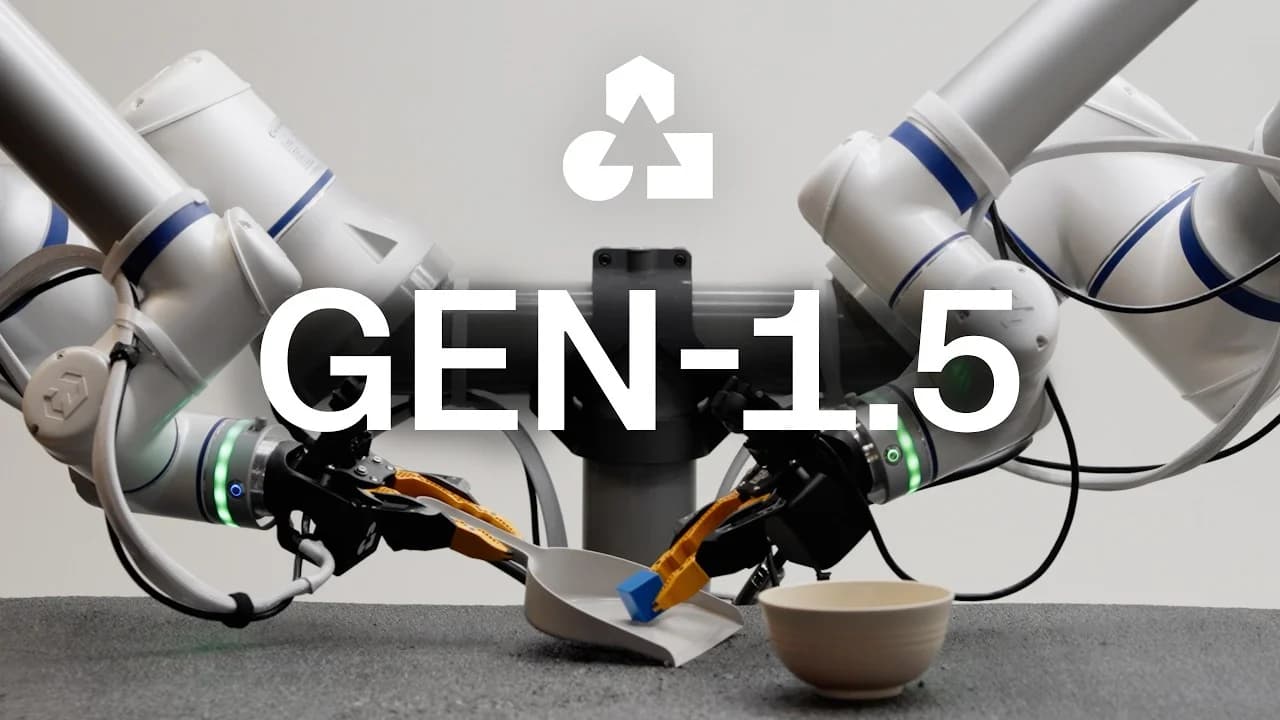
Generalist AI Unveils GEN-1.5: One-Shot Robot Learning and the End of Heavy Fine-Tuning 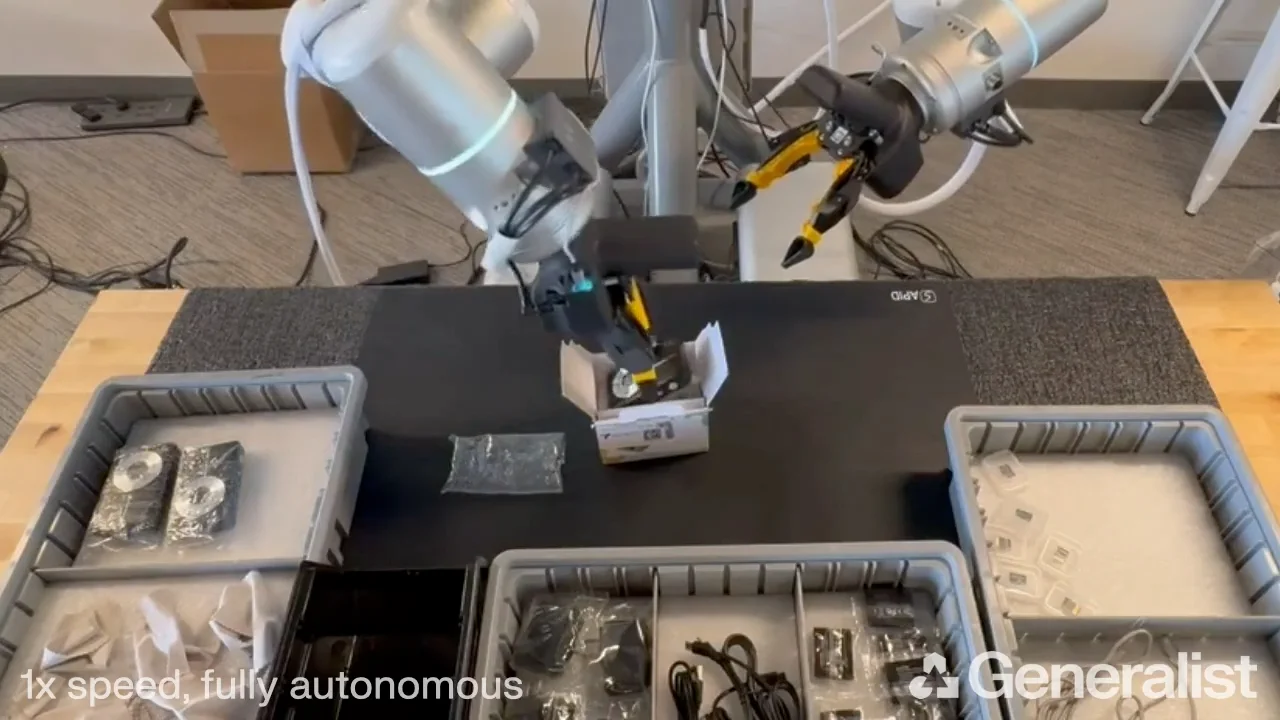
Generalist AI Unveils GEN-0, Claims Scaling Laws for Robotics Backed by 270,000 Hours of Real-World Data 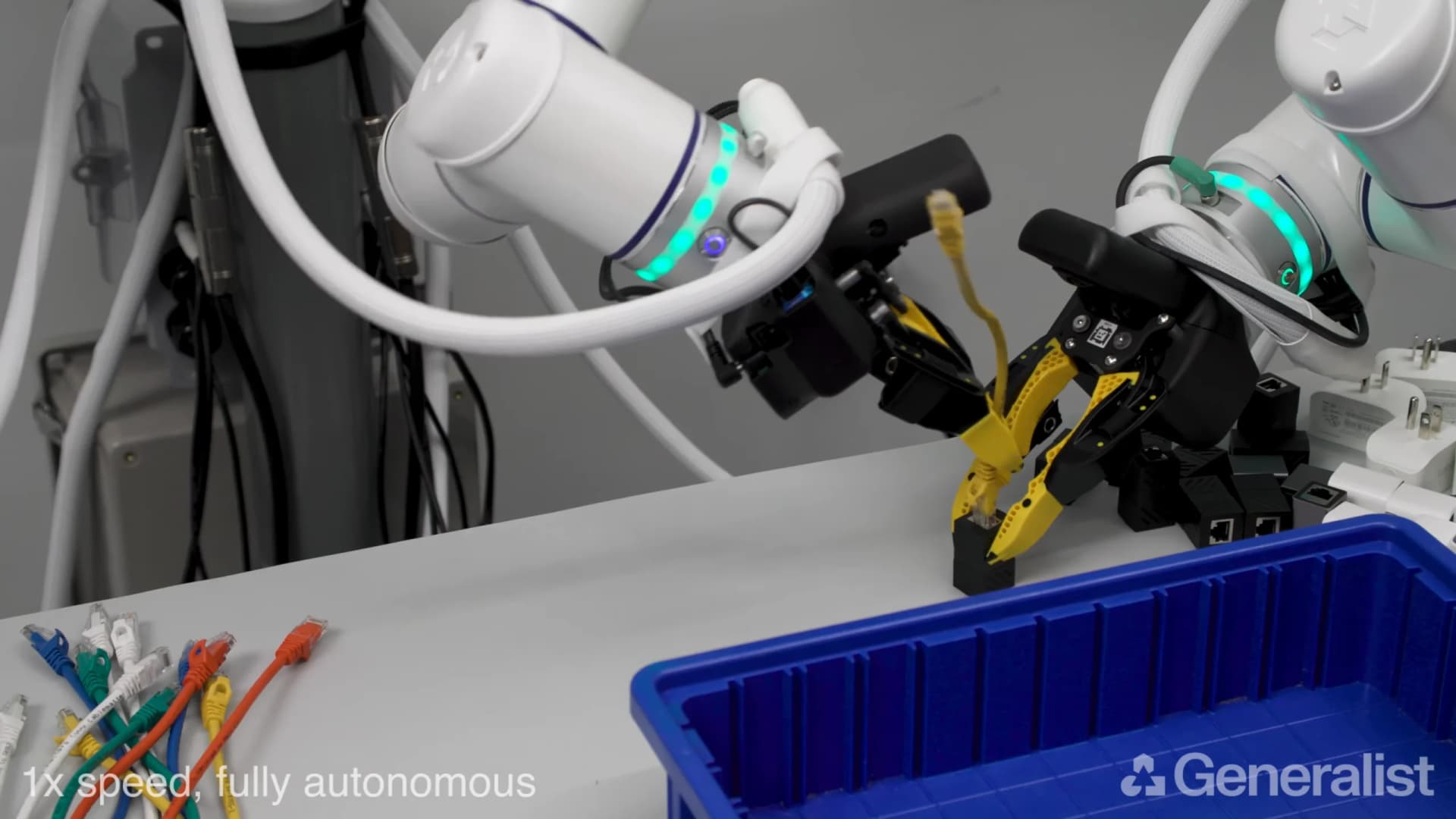
The Death of the Label: Generalist AI Rejects 'World Models' in Favor of First-Class Physical Foundation 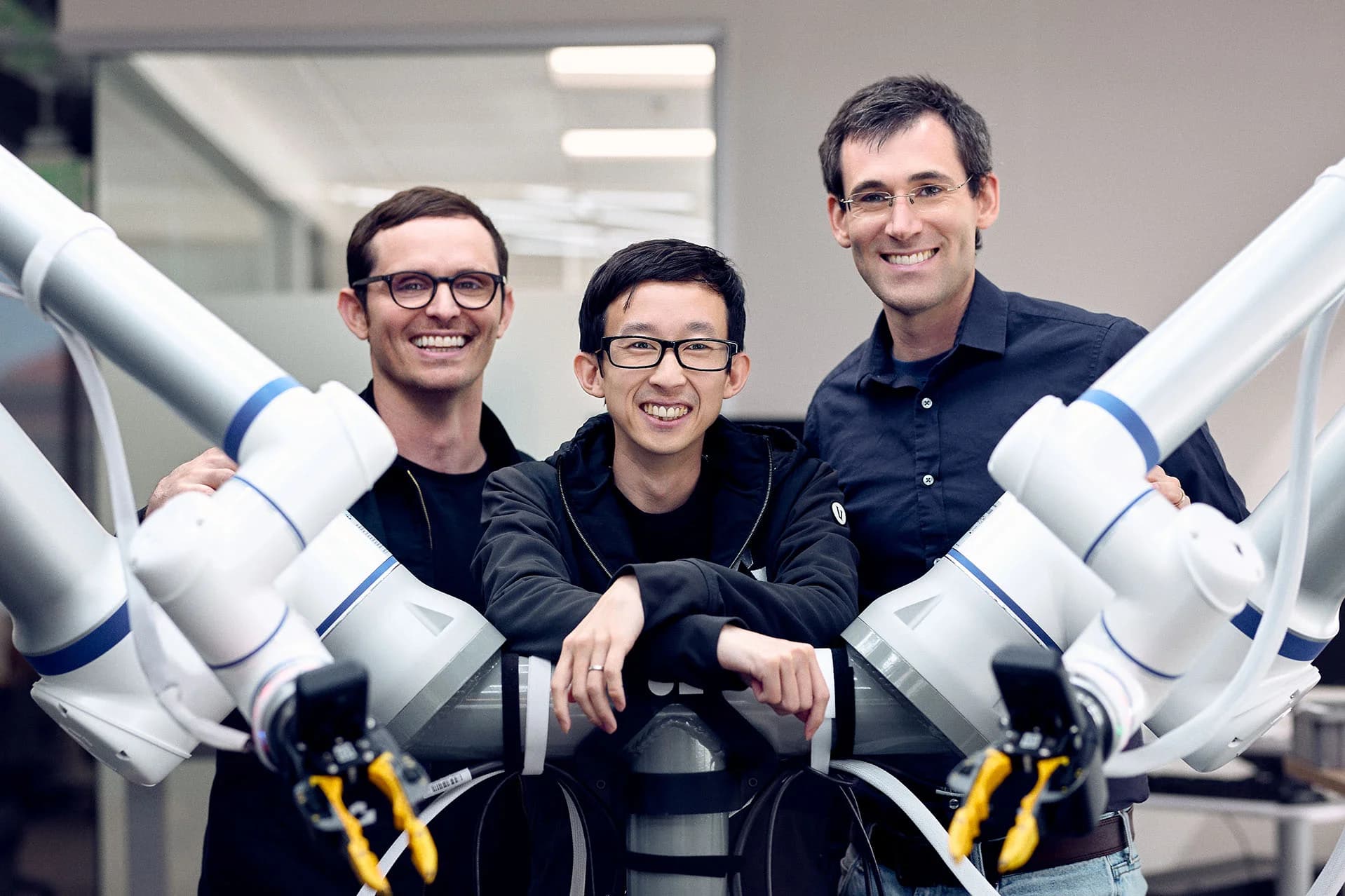
Physical AI Arms Race Accelerates: Generalist AI Secures $400M to Scale Robot Learning
What the company is
Generalist AI, Inc. trains embodied foundation models intended to run across many robot bodies rather than a single machine of its own design. It was founded in 2024 by Pete Florence and Andy Zeng, both previously researchers at Google DeepMind, and Andrew Barry, previously an engineer at Boston Dynamics. Florence is chief executive, Barry chief technology officer and Zeng chief scientist. The company is headquartered in San Mateo, California, and describes its goal as general intelligence for the physical world.
Technical approach
The public research record begins in November 2025 with GEN-0, which the company said was pretrained on 270,000 hours of in-house real-world manipulation data, growing by roughly 10,000 hours a week, and paired with an architecture it calls Harmonic Reasoning. A follow-up addendum in December argued that quality and diversity beat volume in the pretraining mixture. In January 2026 Zeng laid out the reasoning behind the data pipeline, arguing that teleoperation breaks the sensorimotor loop and that lightweight handheld capture devices preserve the micro-corrections a model needs.
GEN-1 arrived in April 2026, with the company reporting a 99% success rate on simple tasks against 64% for its predecessor, roughly three times faster execution, and adaptation to a new embodiment from about an hour of robot-specific data. Florence then said roughly 99% of GEN-1's parameters were trained from scratch rather than inherited from a vision-language backbone, and rejected the "world model" framing that dominates the sector's vocabulary. GEN-1.5, published in August 2026, learns tasks from seconds of demonstration without gradient updates, reporting a 59% average one-shot success rate across ten short-horizon tasks and 83% after ten gradient steps on five minutes of data — figures the company itself calls modest.
Funding and scale
Generalist raised $400 million led by Radical Ventures in June 2026, valuing it at $2 billion including the new money, with 8VC, Union Square Ventures, Norwest and Hanabi Capital joining alongside existing backers Nvidia's NVentures and Bezos Expeditions. In August 2026 TechCrunch reported, citing two people with knowledge of the deal and a regulatory filing, that the company had added nearly $200 million in an extension led by 8VC at a $3 billion valuation, taking the Series B to $600 million; Generalist did not comment. Florence has said the company had grown to 43 people around the time of the June round.
Position
Generalist sells software rather than robots, positioning its models as an intelligence layer for third-party arms, mobile platforms and humanoids, which puts it in the same bracket as other robot foundation-model labs rather than the humanoid hardware builders. Named customers, deployment counts and revenue have not been disclosed publicly, and the reported task suites remain short-horizon manipulation, so the commercial claim rests for now on the company's own benchmark reporting.
Robots & products
A selection of the company's announced products, not a complete catalogue.
GEN-1.5
AnnouncedAI model · announced August 2026
Large multimodal model that takes video (about 30 seconds of memory), language, proprioceptive and other sensor input and outputs 100 Hz action trajectories, able to in-context learn a new task from as little as 12 seconds of demonstration or adapt with 1 to 10 gradient steps.
GEN-1
AnnouncedAI model · announced April 2026
Second-generation embodied foundation model, roughly 99% of whose parameters the company says are trained from scratch on over 500,000 hours of physical interaction data, with support for a range of end effectors from five-finger hands to specialised tools.
GEN-0
AnnouncedAI model · announced November 2025
Embodied foundation model pretrained on more than 270,000 hours of in-house real-world manipulation data, introduced with an architecture the company calls Harmonic Reasoning and a claim of robotics scaling laws.
Funding
$600M raised| Round | Date | Amount | Valuation | Lead investors |
|---|---|---|---|---|
| Series B | August 2026 | $200M | $3B | 8VC |
| Series B | June 2026 | $400M | $2B | Radical Ventures |
Timeline
- Reported
Reported $3B valuation on 8VC-led Series B extension
TechCrunch reported, citing two people familiar and a regulatory filing, that nearly $200 million more had been raised, taking the Series B to $600 million; the company declined to comment.
techcrunch.com ↗ GEN-1.5 introduced as a one-shot learner
The model learns new tasks from 3 to 12 seconds of demonstration without gradient updates, reporting a 59% average one-shot success rate across ten tasks and 83% after ten gradient steps on five minutes of data.
Generalist AI Unveils GEN-1.5: One-Shot Robot Learning and the End of Heavy Fine-Tuning$400M Series B led by Radical Ventures at $2B valuation
New investors 8VC, Union Square Ventures, Norwest and Hanabi Capital joined existing backers Nvidia's NVentures and Bezos Expeditions; the company said total capital raised passed half a billion dollars.
Physical AI Arms Race Accelerates: Generalist AI Secures $400M to Scale Robot LearningFlorence rejects "world model" and VLA framing
The CEO said roughly 99% of GEN-1's parameters are trained from scratch rather than inherited from a vision-language backbone, calling the prevailing labels a temporary crutch.
The Death of the Label: Generalist AI Rejects 'World Models' in Favor of First-Class Physical FoundationGEN-1 released, trained on 500,000+ hours
The company reported a 99% success rate on simple tasks, roughly three times faster execution than prior systems, and adaptation to a new embodiment from about an hour of robot-specific data.
Generalist AI Unveils GEN-1: The Quest for Robot Mastery and “Intelligent Improvisation”Zeng sets out "physical commonsense" data thesis
Chief scientist Andy Zeng argued that teleoperation breaks the sensorimotor loop and that handheld capture devices preserve the reflexes and micro-corrections models need.
The Dark Matter of Robotics: Generalist AI’s Andy Zeng on the Quest for Physical CommonsensePretraining addendum argues data quality beats volume
A technical addendum to the GEN-0 release detailed ablation studies and evaluation metrics, arguing that data diversity and mixture matter more than raw hours.
Generalist AI Releases "Science of Pretraining" Deep Dive: Why Data Quality Trumps Volume in RoboticsGEN-0 unveiled with 270,000-hour manipulation dataset
The company published its first embodied foundation model, claiming scaling laws for robotics on the back of an in-house dataset growing by roughly 10,000 hours per week.
Generalist AI Unveils GEN-0, Claims Scaling Laws for Robotics Backed by 270,000 Hours of Real-World DataGeneralist AI founded by DeepMind and Boston Dynamics alumni
Pete Florence and Andy Zeng, formerly of Google DeepMind, founded the company with former Boston Dynamics engineer Andrew Barry; investor boldstart ventures records its first check in March 2024.
techcrunch.com ↗
Latest on Generalist AI
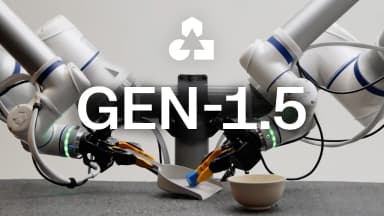
Generalist AI Unveils GEN-1.5: One-Shot Robot Learning and the End of Heavy Fine-Tuning
Generalist AI claims a GPT-3 moment for robotics, demonstrating a foundation model that learns new physical tasks in seconds from a single prompt.
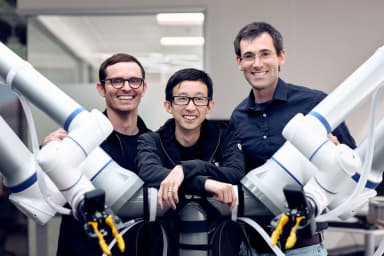
Physical AI Arms Race Accelerates: Generalist AI Secures $400M to Scale Robot Learning
Generalist AI has raised a massive $400 million funding round led by Radical Ventures, bringing its total capital to over half a billion dollars as it seeks to build hardware-agnostic physical intelligence.
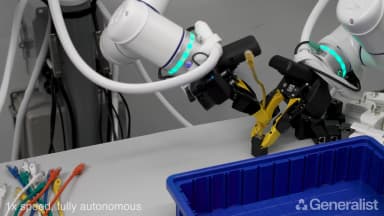
The Death of the Label: Generalist AI Rejects 'World Models' in Favor of First-Class Physical Foundation
Generalist AI CEO Pete Florence argues that terms like 'VLA' and 'World Model' are temporary crutches for the industry, revealing that GEN-1's 99% scratch-trained architecture is a bet on the eventual dominance of pure robotic data.

Generalist AI Unveils GEN-1: The Quest for Robot Mastery and “Intelligent Improvisation”
Generalist AI has released GEN-1, an embodied foundation model trained on 500,000 hours of interaction data. Boasting a 99% success rate and 3x faster task completion, the startup claims its system has reached a commercial threshold for “simple physical tasks” through emergent improvisation.
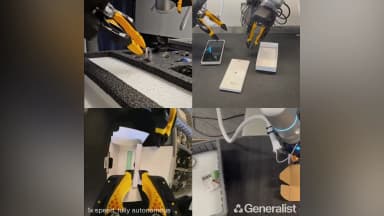
The Dark Matter of Robotics: Generalist AI’s Andy Zeng on the Quest for Physical Commonsense
Generalist AI's chief scientist argues that the next leap in robotics won't come from internet text, but from scaling the 'reflexive' intelligence of physical interaction.
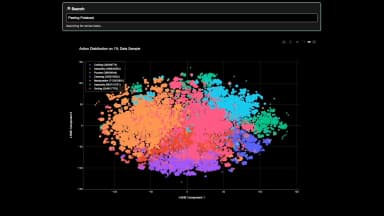
Generalist AI Releases "Science of Pretraining" Deep Dive: Why Data Quality Trumps Volume in Robotics
In a technical addendum to its GEN-0 launch, Generalist AI reveals new details on its pretraining methodology, introducing metrics like "Reverse KL" to measure model creativity and claiming infrastructure capable of absorbing 6.85 years of robot experience per day.
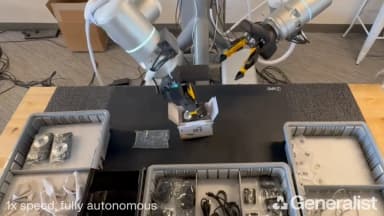
Generalist AI Unveils GEN-0, Claims Scaling Laws for Robotics Backed by 270,000 Hours of Real-World Data
Startup Generalist AI has unveiled GEN-0, an embodied foundation model it claims is trained on an unprecedented 270,000 hours of real-world manipulation data. The company reports its new architecture, "Harmonic Reasoning," and massive dataset have unlocked predictable scaling laws for robot intelligence.
Sources
- Generalist (@GeneralistAI) / Posts / X· checked September 6, 2026
- Generalist AI raises $400M at $2B valuation to build general intelligence for robotics· checked September 6, 2026
- Robotics startup Generalist reaches $3B valuation, sources say· checked September 6, 2026
- Generalist· checked September 6, 2026
- Pete Florence (@peteflorence) / Posts / X· checked September 6, 2026
- Generalist AI - 2026 Company Profile, Team, Funding & Competitors· checked September 6, 2026
- Generalist AI, Inc., robotics engineering San Mateo, California, USA· checked September 6, 2026
- Pete Florence - Co-Founder & CEO, Generalist· checked September 6, 2026
- Blog· checked September 6, 2026
- GEN-1.5: Embodied Foundation Models are One-Shot Learners· checked September 6, 2026