- Published on
Generalist AI Unveils GEN-1.5: One-Shot Robot Learning and the End of Heavy Fine-Tuning
One tap, and our reporting appears more often in your Google Top Stories. It makes a real difference to a small newsroom.

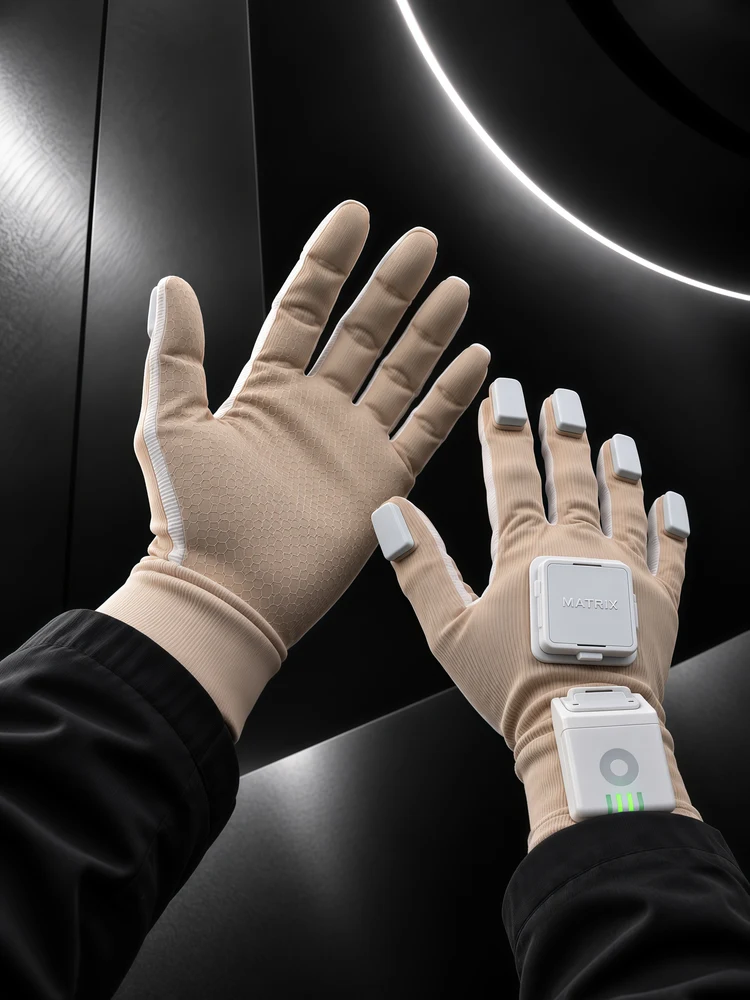
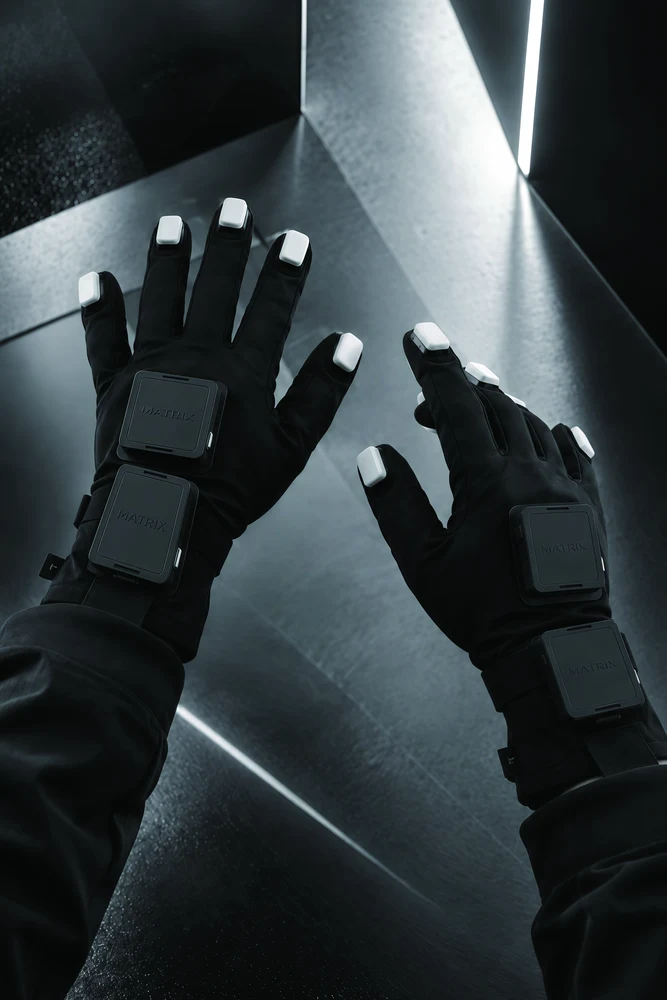

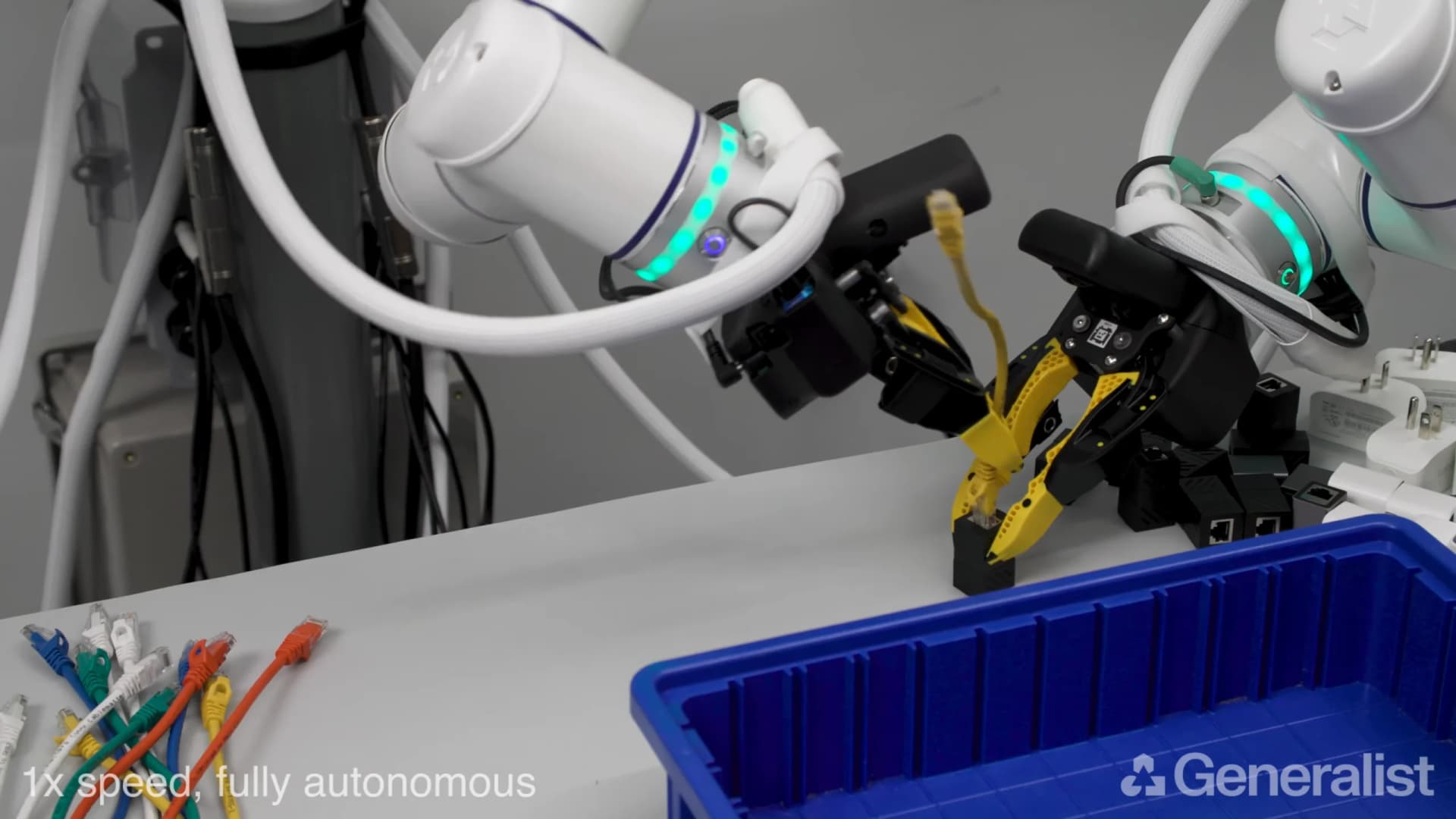
- Generalist AI has introduced GEN-1.5, a model capable of learning new physical tasks from a single demonstration of 3 to 12 seconds, without gradient updates.
- Across 10 diverse tasks, the model achieved a 59% average success rate (±10%) via one-shot prompting, rising to 83% (±9%) after 10 gradient steps on five minutes of data per task.
- The model exhibits zero-shot sim-to-real transfer, allowing demonstrations recorded entirely in simulation to successfully prompt behaviors on real-world hardware.
- NVIDIA's Jim Fan attributes the model's error-recovery ability to training on un-sanitized human data that preserves fumbles rather than trimming them, and separately argues that Generalist's use of handheld grippers marks the end of teleoperation as a data-collection method.
Generalist AI has revealed GEN-1.5, positioning the release as an embodied foundation model that exhibits one-shot learning capabilities for dexterous physical tasks. The announcement arrives as the company scales its computational infrastructure following a $400 million funding round in June.
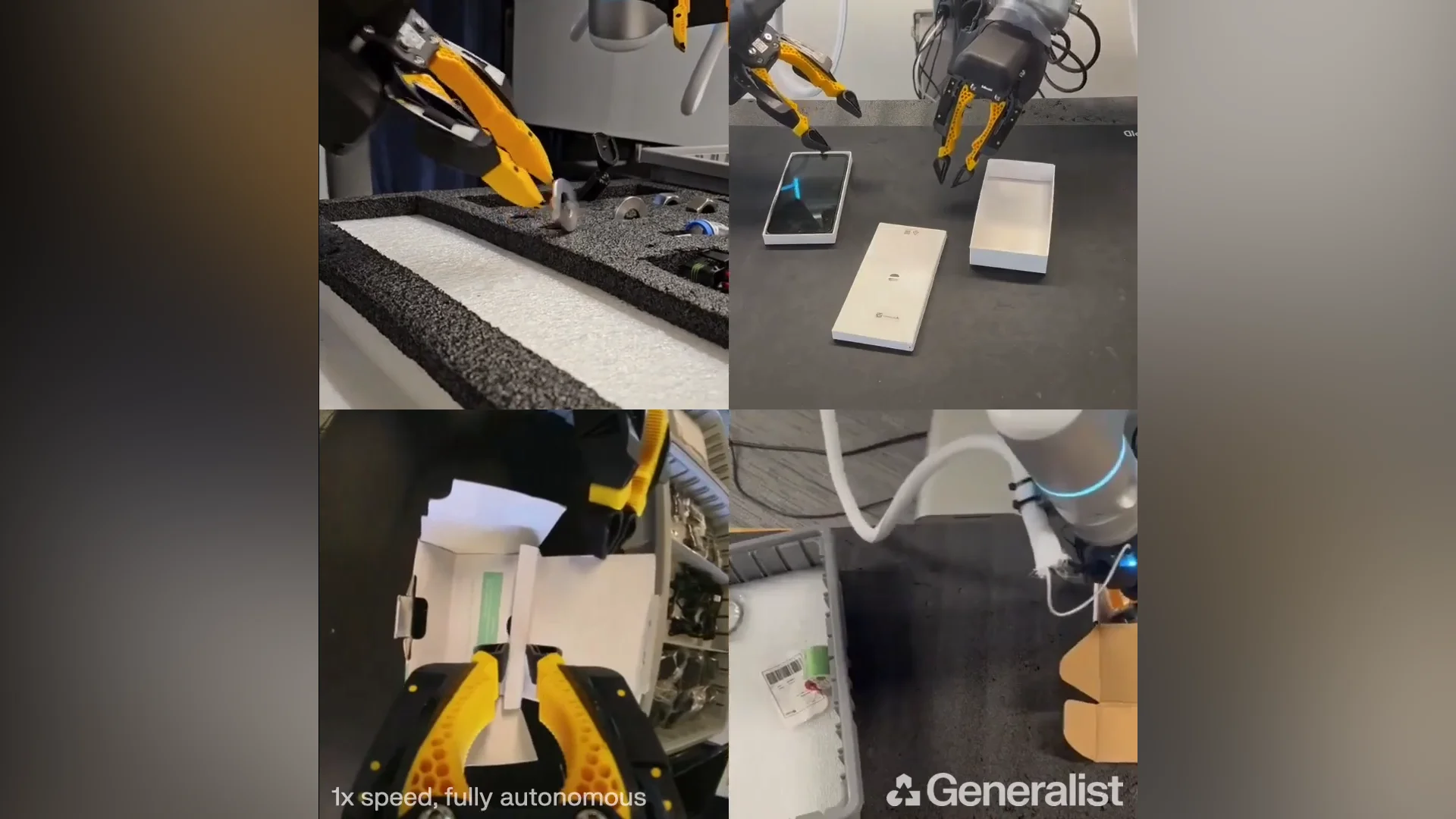
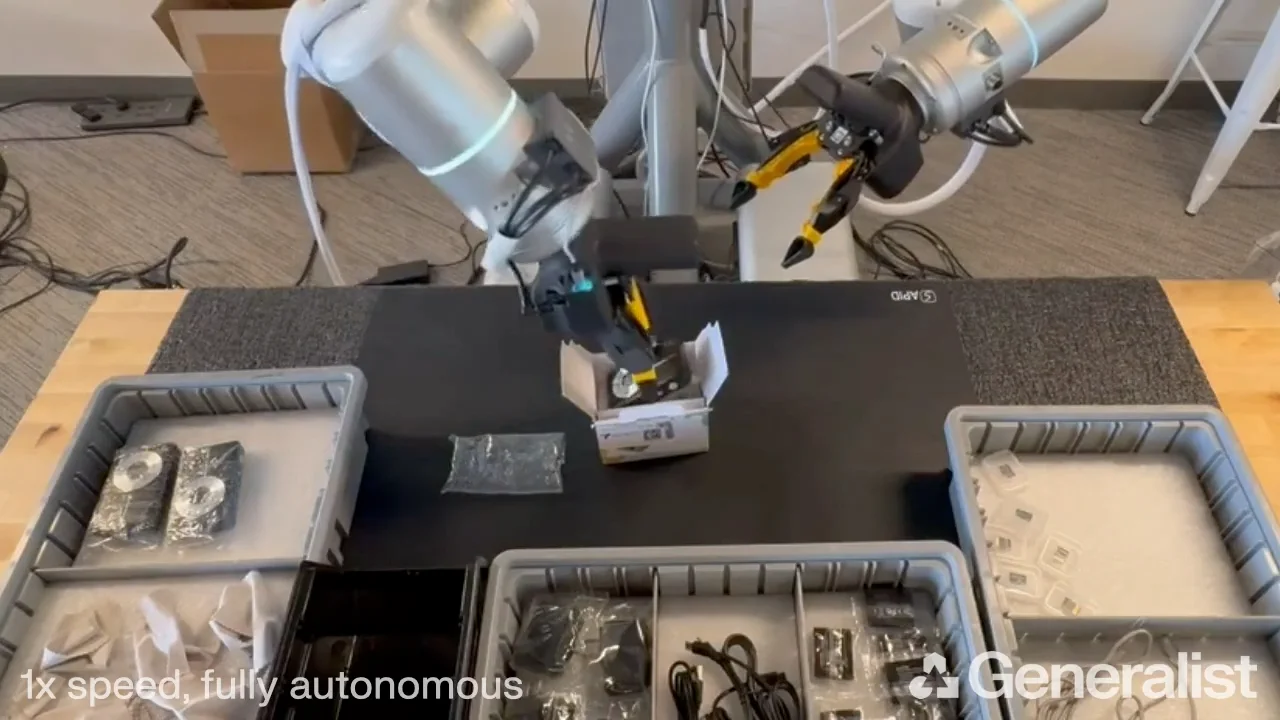
According to the company, GEN-1.5 can learn new behaviors when prompted with 3 to 12 seconds of sensorimotor demonstration data. This in-context process requires no gradient updates, allowing the system to generalize prompts, recover from unexpected physical mistakes, and improvise strategies out of the box. The company explicitly compares this capability to the in-context learning paradigm that emerged in language models with GPT-3.
Modest Success Rates, Major Architectural Shifts
Across a suite of 10 short-horizon manipulation tasks, the base pretrained model achieved a 59% success rate — with a standard deviation of 10 points — strictly through one-shot physical prompting. Fine-tuning lifts this considerably: 10 gradient steps on five minutes of data per task (roughly 50 demonstrations) produced an 83% success rate, with a standard deviation of 9 points. At the opposite extreme of the few-shot range, a single gradient step on one minute of data yielded 66.5% on a held-out task.
While the company acknowledges that these success rates are "modest" and the tasks remain relatively simple, the reduction in required training compute is significant. Historically, adapting models to new tasks has required tens of thousands of gradient steps; achieving competence in as few as one to ten steps represents a dramatic shift toward real-time adaptability in physical environments.
The weekly humanoid robotics briefing
One email a week: the launches, funding and research that mattered, with context from Humanoids Daily.
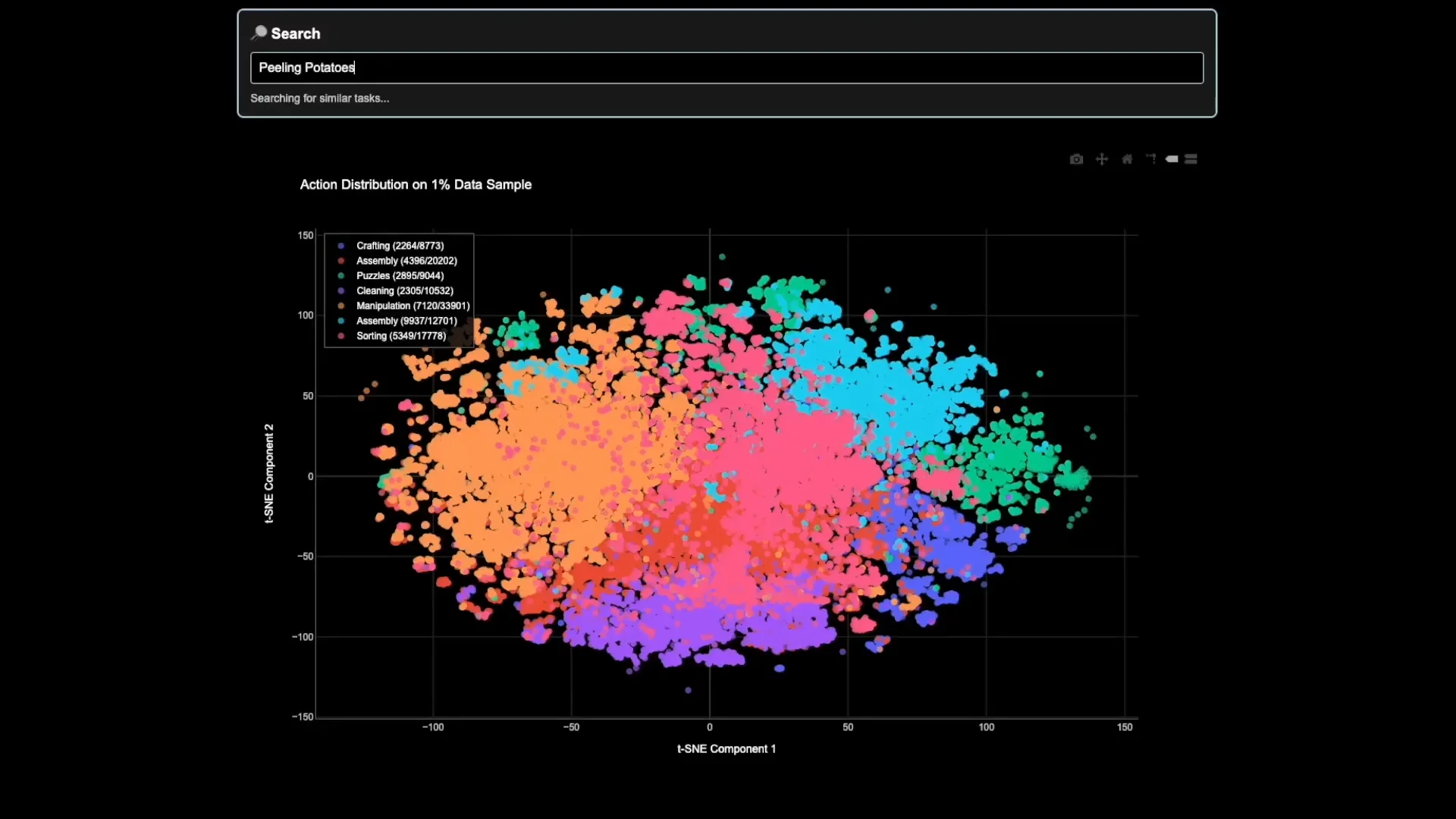
Read recent issuesThis efficiency appears to be the result of relentless pretraining. GEN-1.5 has been training continuously for over eight months. The team opted to leave the engine running as every tracked metric kept improving — more data absorbed, better compute efficiency, and step-change gains from successive architectural and algorithmic changes. This ongoing development leans heavily into the firm's previously established scaling laws for robotics.
Compositional Prompts and Sim-to-Real Transfer
GEN-1.5 introduces what the company calls compositional generalization. If two distinct physical prompts are placed in the model's 30-second context window, it can chain them into a continuous, longer-horizon skill. The model bridges the two tasks autonomously, generating intermediate repositioning, regrasping and error-recovery motions that are not present in either demonstration.
Furthermore, GEN-1.5 demonstrated an unexpected zero-shot sim-to-real transfer capability. The model successfully executed real-world tasks prompted entirely by simulated rollouts (e.g. from an RL agent or scripted policy), despite containing no simulation data in its pretraining corpus. Generalist is careful to note that this differs from the conventional definition of sim-to-real transfer: the model was not trained on the task in simulation or in the real world. In some instances, the system can even execute human-to-robot imitation, reproducing a task immediately after observing a human perform it with their bare hands in front of the robot's cameras.
The company is candid that skills acquired in-context remain more brittle than those learned through fine-tuning, though they still tolerate some perturbation.
Improvisation and the Case Against Teleoperation
Building on the early intelligent improvisation seen in GEN-1, GEN-1.5 showcases advanced behavioral flexibility beyond its demonstrations. In one recorded example, after being fine-tuned to sweep a block into a bowl using a brush, the model improvised with whatever it was handed. Given a banana, it used the fruit as a makeshift brush. Given a dustpan, it departed from the demonstrated strategy entirely, using the pan to scoop the block up and tip it into the bowl. A model fine-tuned for just one gradient step also autonomously cleared un-demonstrated obstacles, such as removing a piece of paper covering a target bowl — and sometimes replacing it afterwards.
The methodology behind the model's raw data collection is drawing notable industry endorsement. NVIDIA Director of Robotics Dr Jim Fan argues that the key to GEN-1.5 lies in the naturally repetitive structure of human-collected data. He points to symmetry in ordinary physical work — sorting, tidying, and assembly rarely finish in a single motion, and tasks like driving a bolt and then its twin mean each repetition serves as a free training signal imitating the one before it.
His second source of repetition is error recovery. "The key insight is to keep the failed first half instead of trimming it away," Fan noted, arguing that human fumbles left in the dataset teach the model organic recovery reflexes at test time.
Separately, Fan pointed to Generalist's reliance on handheld grippers — Universal Manipulation Interface (UMI) devices — rather than traditional teleoperation, which he has long predicted will not survive as a data-collection method. He argues that teleoperation inserts a layer of separation between the human and the environment that strips out physical intuition: the constant micro-adjustments and the feel of a part snapping into place are nearly impossible to capture when the operator cannot feel the scene directly. It is an approach championed by Generalist's Andy Zeng in his ongoing quest to solve physical commonsense.
While Fan expressed cautious optimism regarding the current hype wave, he noted that the showcased demonstrations remain simple and that true in-context efficacy depends heavily on how closely a test scenario aligns with the underlying training distribution.
Share this article
Read next
- Published on
- Reading time
- 5 min read
Physical AI Arms Race Accelerates: Generalist AI Secures $400M to Scale Robot Learning
- Published on
- Reading time
- 4 min read
Generalist AI Unveils GEN-1: The Quest for Robot Mastery and “Intelligent Improvisation”
- Published on
- Reading time
- 4 min read
The Death of the Label: Generalist AI Rejects 'World Models' in Favor of First-Class Physical Foundation
- Published on
- Reading time
- 4 min read
The Dark Matter of Robotics: Generalist AI’s Andy Zeng on the Quest for Physical Commonsense
- Published on
- Reading time
- 4 min read
Generalist AI Releases "Science of Pretraining" Deep Dive: Why Data Quality Trumps Volume in Robotics
- Published on
- Reading time
- 4 min read
Generalist AI Unveils GEN-0, Claims Scaling Laws for Robotics Backed by 270,000 Hours of Real-World Data

The weekly humanoid robotics briefing
One email a week: the launches, funding and research that mattered, with context from Humanoids Daily.
Read recent issues