- Published on
Abundance and the Bitter Lesson: Ashok Elluswamy Outlines Tesla’s Unified AI Future
One tap, and our reporting appears more often in your Google Top Stories. It makes a real difference to a small newsroom.

Supported by RoboStrategySupport for Humanoids Daily comes from RoboStrategy
Sponsored
Investing involves risk, including possible loss of principal. Read the prospectus before investing.
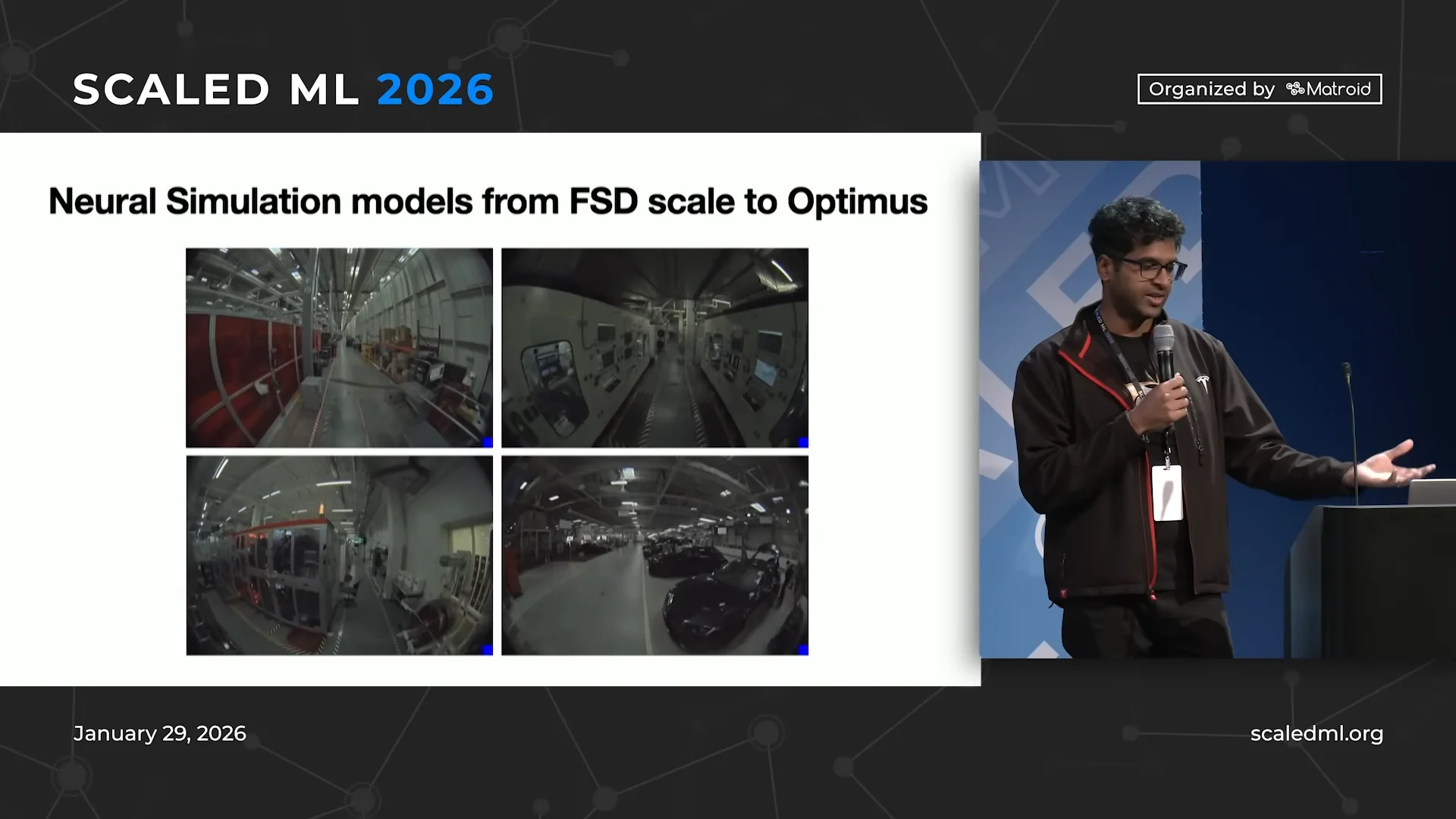
Tesla is no longer just a car company; it is a "Physical AI" powerhouse betting the farm on a single, unified neural architecture. At the 2026 ScaledML Conference, Ashok Elluswamy, Tesla’s Vice President of AI Software, delivered a sweeping technical keynote that connected the dots between the company's newly launched driverless robotaxi service in Austin and the looming mass production of the Optimus humanoid robot.
Elluswamy, who took the helm of the Optimus program last year, framed the company’s mission as one of "Amazing Abundance." To achieve this, Tesla is doubling down on "The Bitter Lesson"—the AI philosophy that scaling general-purpose learning algorithms eventually outperforms hand-engineered human logic.
The Death of Modularity
The core of Elluswamy’s presentation was a defense of Tesla’s "end-to-end" approach. While many competitors rely on modular stacks—separating perception, planning, and prediction into discrete codebases—Tesla has foregone these systems in favor of a single neural network. This network ingests raw video from eight cameras, navigation instructions, and kinematic data to output direct control actions.
"Codifying everything in rules-based systems creates leaky abstractions," Elluswamy explained, noting that real-world robotics requires information to flow densely. He illustrated this with "mini-trolley problems," such as a vehicle deciding whether to hit a deep water puddle or briefly cross into an oncoming lane. By training on human data, the AI learns to weigh these trade-offs holistically rather than following a rigid hierarchy of "if-then" statements.
The weekly humanoid robotics briefing
One email a week: the launches, funding and research that mattered, with context from Humanoids Daily.
Read recent issuesThis philosophy extends to subtle human-robot interactions. Elluswamy showed footage of FSD (Full Self-Driving) patiently waiting for a "straggler chicken" to cross a road and Smart Summon navigating around geese. He argued that detecting "soft intent"—such as whether a bird intends to stay put or move—is only possible when pixels flow directly to control, bypassing the need for a "chicken leg detector."
Generative 3D Reasoning
To address critics who claim end-to-end systems are "black boxes," Elluswamy revealed several internal "probes" Tesla uses for debugging and interpretability. The most striking is a proprietary form of Generative Gaussian Splatting.
Unlike traditional 3D reconstruction methods that can take 30 minutes to render a scene, Tesla’s neural-based system operates in hundreds of milliseconds. It allows the AI to "imagine" and explain the 3D geometry of its environment even when the vehicle deviates from its original path. This 3D awareness is baked into the same network that drives the car, ensuring the model understands the physical shapes and future trajectories of surrounding objects.
The World Simulator: Closing the Loop
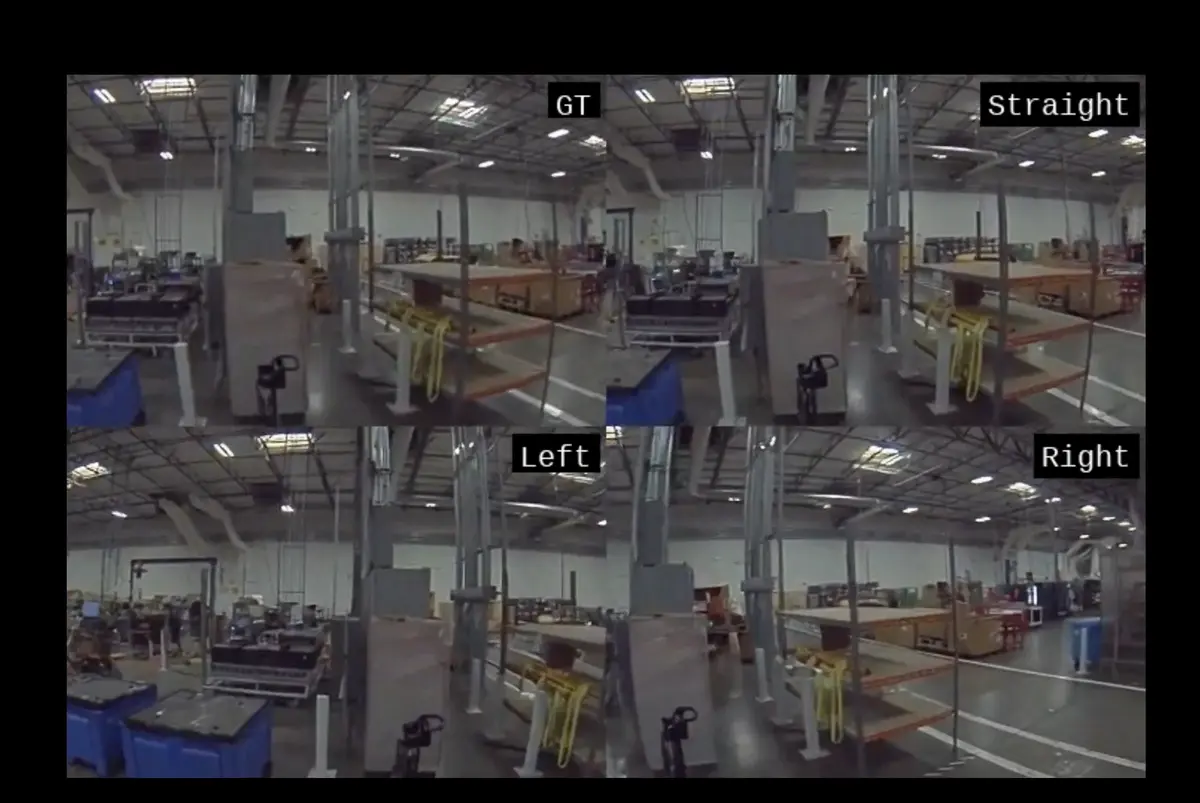
Perhaps the most critical piece of the puzzle is how Tesla evaluates its AI without risking metal in the real world. Elluswamy detailed a "World Simulator" neural network—a generative system that predicts the next video frame based on the robot’s actions.
This creates a closed-loop virtual environment where:
- Historical failures are replayed: New policy models are tested against past interventions to see if the robot now "deviates correctly" from a hazard.
- Adversarial scenes are injected: Engineers can modify real-world clips to add pedestrians or dangerous vehicle maneuvers that never actually happened.
- Real-time "Game Engine" driving: Tesla has optimized these models to run at 36Hz, allowing for fully synthetic, interactive driving sessions that look indistinguishable from reality.
"The same video generation network generalizes to indoor scenes for Optimus to walk around," Elluswamy noted, reinforcing that the unified 'world simulator' is the foundation for all Tesla robotics.
The Rise of the World Model: Waymo Enters the Fray
The shift toward generative simulation is not unique to Tesla. In a move that highlights a significant convergence across the industry, Waymo recently introduced the Waymo World Model, built upon Genie 3—Google DeepMind’s most advanced general-purpose world model. This development positions Waymo as a formidable technical rival to Tesla's vision, utilizing photorealistic and interactive 3D environments to solve the "data bottleneck".
From Austin to the "Terafab"
The timing of the talk is significant. Earlier this month, Tesla officially launched its robotaxi service in Austin, Texas, removing safety monitors and allowing the public to hail driverless rides. This real-world validation is the precursor to the "Cybercab"—a vehicle designed without a steering wheel or pedals—expected later in 2026.
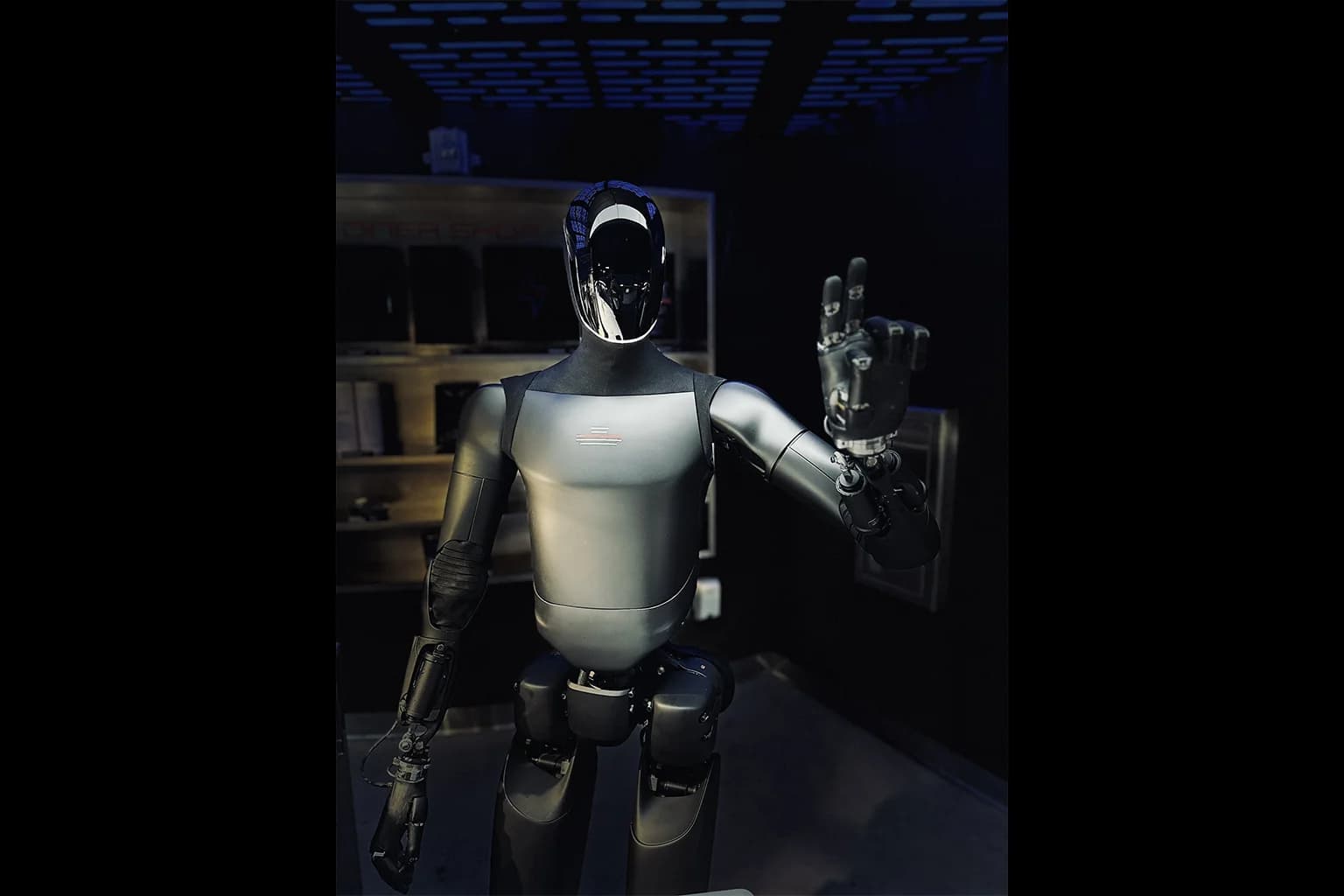
However, the ultimate goal remains the 1-million-unit Optimus production line currently being prepared at the Fremont factory. By phasing out the Model S and Model X, Tesla is clearing the physical and digital floor space for what Elon Musk calls the "infinite money glitch."
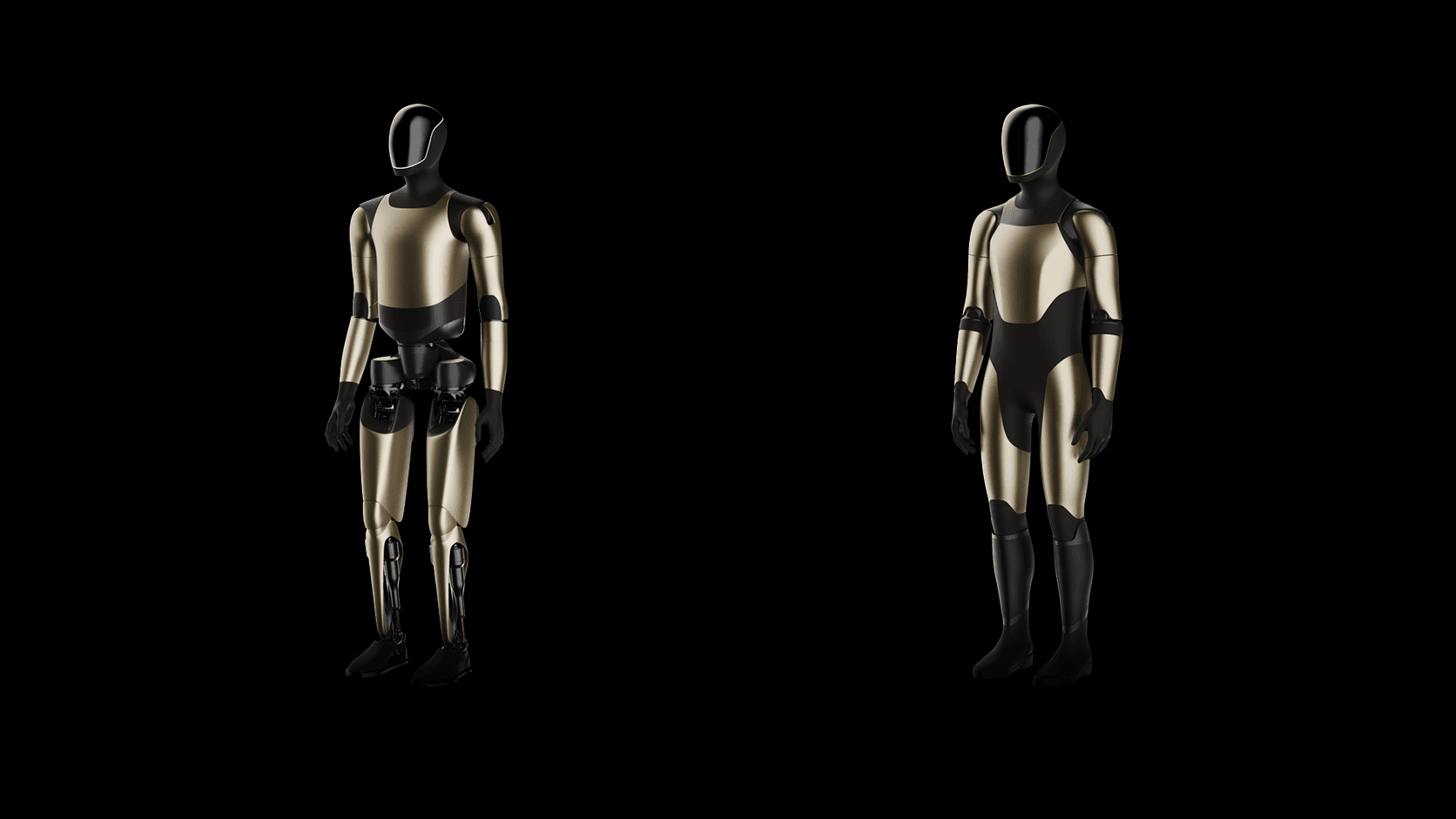
As Tesla prepares for the formal unveiling of the Gen 3 prototype in Q1 2026, Elluswamy’s presentation serves as a technical manifesto. In Tesla’s view, the hardware may change—from a 4,000-pound sedan to a 125-pound humanoid—but the "brain" remains a singular, vision-centric engine of prediction.
Share this article
Read next
- Published on
- Reading time
- 5 min read
Tesla AI Chief Details Unified 'World Simulator' for FSD and Optimus
- Published on
- Reading time
- 3 min read
Tesla Optimus Shows Off Kung Fu Moves, as AI Lead Highlights Unified Self-Driving Brain
- Published on
- Reading time
- 3 min read
Meet Ashok Elluswamy, The AI Architect Now Leading Tesla's Optimus Program
- Published on
- Reading time
- 5 min read
Tesla App Contains Optimus Gen 3 Renders—Here’s What They Show
- Published on
- Reading time
- 4 min read
Supply Chain Rumors Hint at Massive Optimus Order as Fremont Production Line Ramps Up
- Published on
- Reading time
- 5 min read
The Terafab Manifesto: Tesla and Intel Join Forces to Power Musk’s "Galactic" AI Ambitions
The weekly humanoid robotics briefing
One email a week: the launches, funding and research that mattered, with context from Humanoids Daily.
Read recent issues