- Published on
The Final "Run in the Sun": Boston Dynamics Showcases Research Atlas Agility Before Enterprise Deployment
One tap, and our reporting appears more often in your Google Top Stories. It makes a real difference to a small newsroom.

Supported by RoboStrategySupport for Humanoids Daily comes from RoboStrategy
Sponsored
Investing involves risk, including possible loss of principal. Read the prospectus before investing.
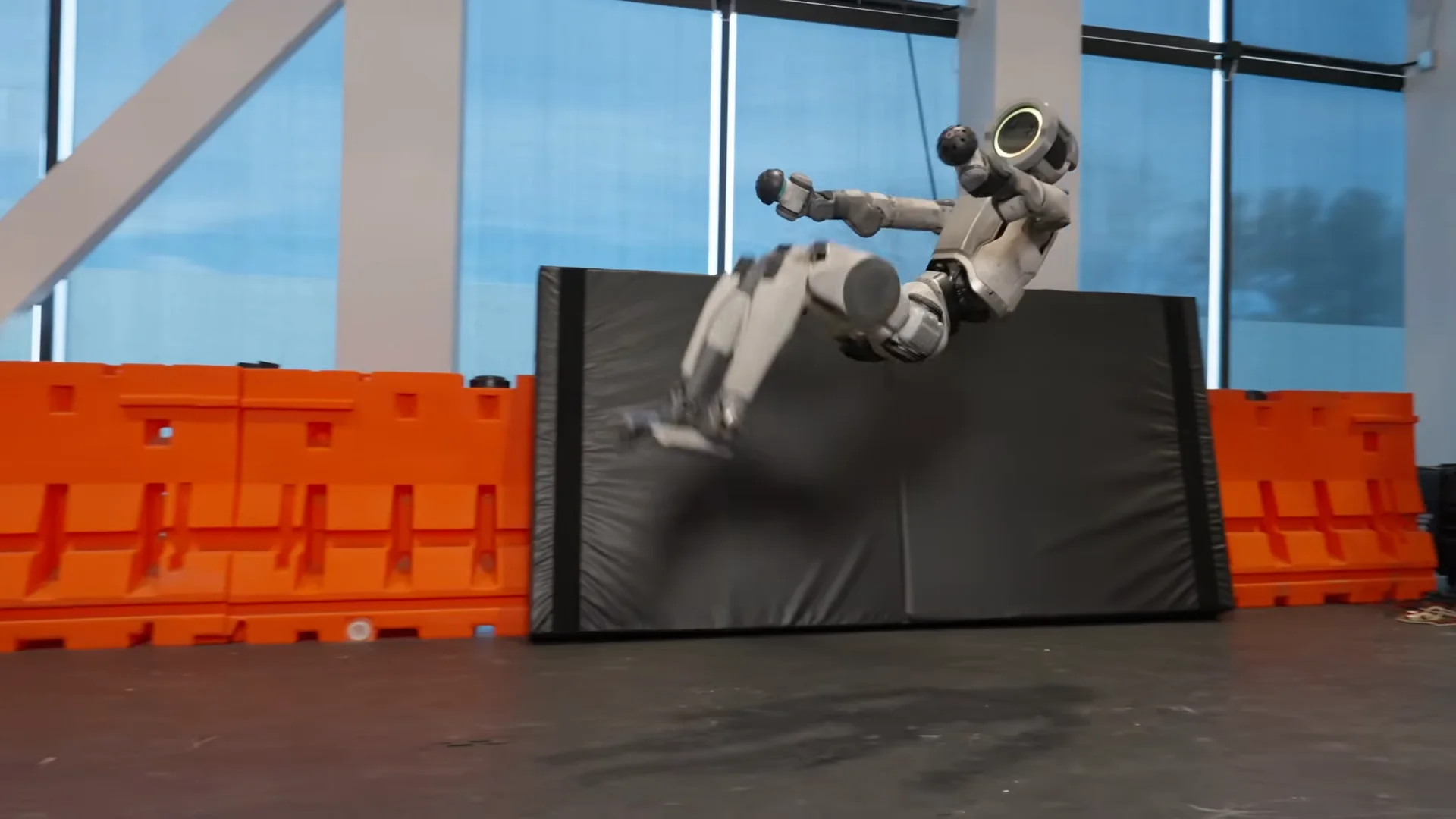
The transition from laboratory research to industrial reality is rarely this cinematic. As Boston Dynamics pivots toward the commercial deployment of its all-electric Atlas, the company has released a final series of videos showcasing the "research version" of the humanoid platform. The footage, which features a viral cartwheel-to-backflip combination, serves as a high-stakes swan song for the experimental phase of the program.
Gymnastics and "Bloopers": Pushing Full-Body Control
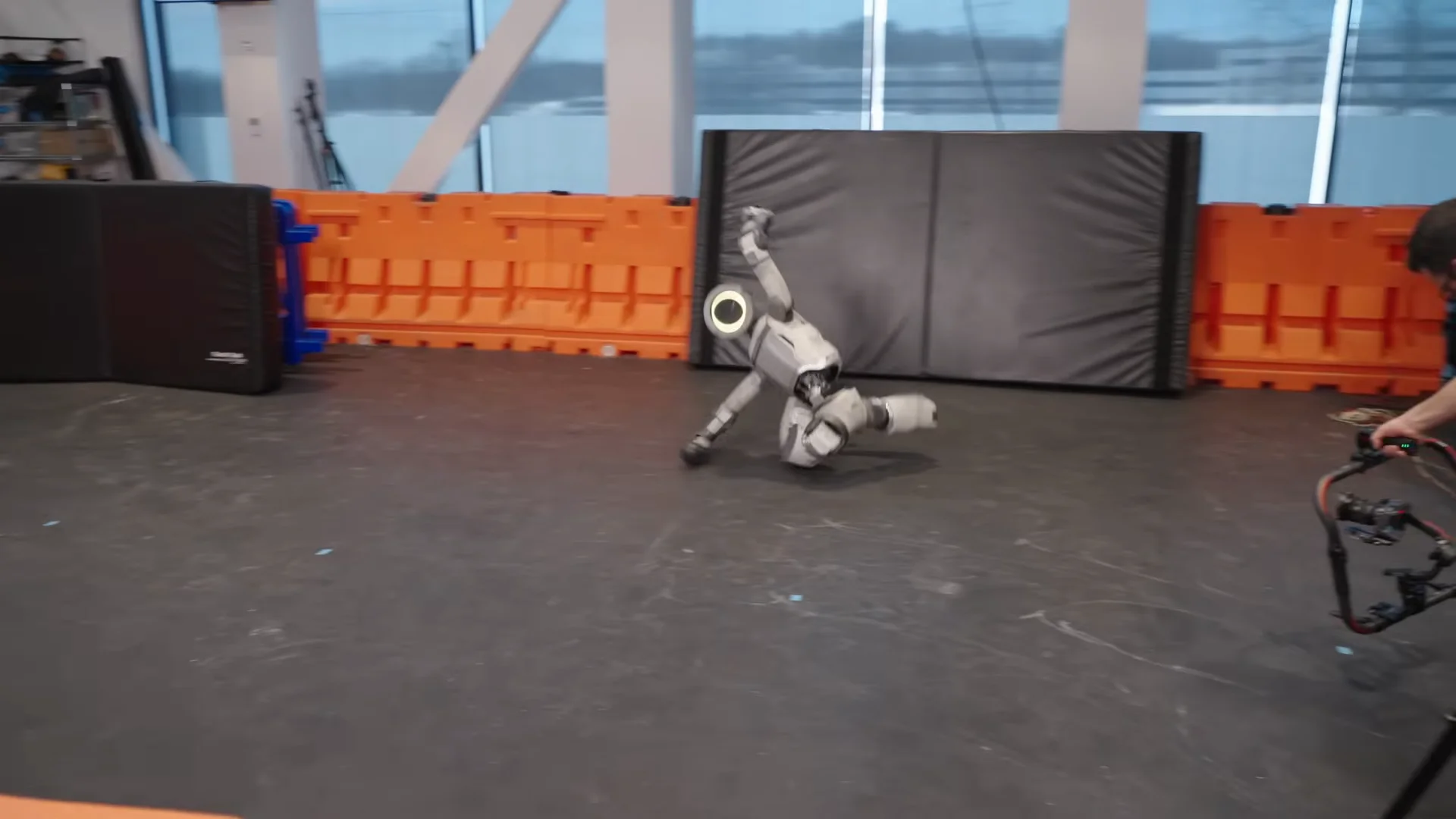
A short clip of Atlas executing a flawless cartwheel followed immediately by a backflip recently went viral on social media platforms. Shortly after, Boston Dynamics published a more comprehensive video on YouTube, providing a transparent look at the engineering effort required to achieve such maneuvers.
The extended video includes slow-motion replays and a "blooper" reel, documenting the numerous instances where the robot collapsed or tumbled during testing. "Now that the Atlas enterprise platform is getting to work, the research version gets one last run in the sun," the company stated in the video description. This "final push" was conducted in collaboration with the Robotics & AI Institute (RAI) to test the absolute limits of full-body mobility and whole-body control.
The RAI Institute and Zero-Shot Learning
The RAI Institute (formerly The AI Institute), led by Boston Dynamics founder Marc Raibert, has been a core partner in developing the underlying "Physical AI" that drives these movements. In a series of posts on X and YouTube, the Institute highlighted that the gymnastic maneuvers and the natural-looking walking gait debuted at CES 2026 are two ends of the same learning spectrum.
The weekly humanoid robotics briefing
One email a week: the launches, funding and research that mattered, with context from Humanoids Daily.
Read recent issuesAccording to the RAI Institute, these behaviors are enabled by a whole-body learning framework designed to achieve "zero-shot" transfer—moving a policy from a simulation to physical hardware without intermediate tuning. The Institute noted that this progress is a significant step toward "robust, generalist humanoid behaviors."
A Partnership Built on Reinforcement Learning
This collaboration was formalized in early 2025, when the two organizations announced a partnership to advance humanoid capabilities through reinforcement learning (RL). The partnership's primary objectives included:
- Bridging the Sim-to-Real Gap: Developing pipelines to transfer agile behaviors from high-speed parallel simulators to physical hardware.
- Improving Loco-Manipulation: Enhancing the robot's ability to manipulate objects, such as doors and levers, while simultaneously moving.
- Full-Body Contact Strategies: Exploring tasks that require coordination between arms and legs, such as dynamic running or handling heavy loads.
The partnership followed the success of the Spot Reinforcement Learning Researcher Kit, which enabled the quadruped to reach record speeds of 11.5 mph.
From Research to "Best Robot" at CES
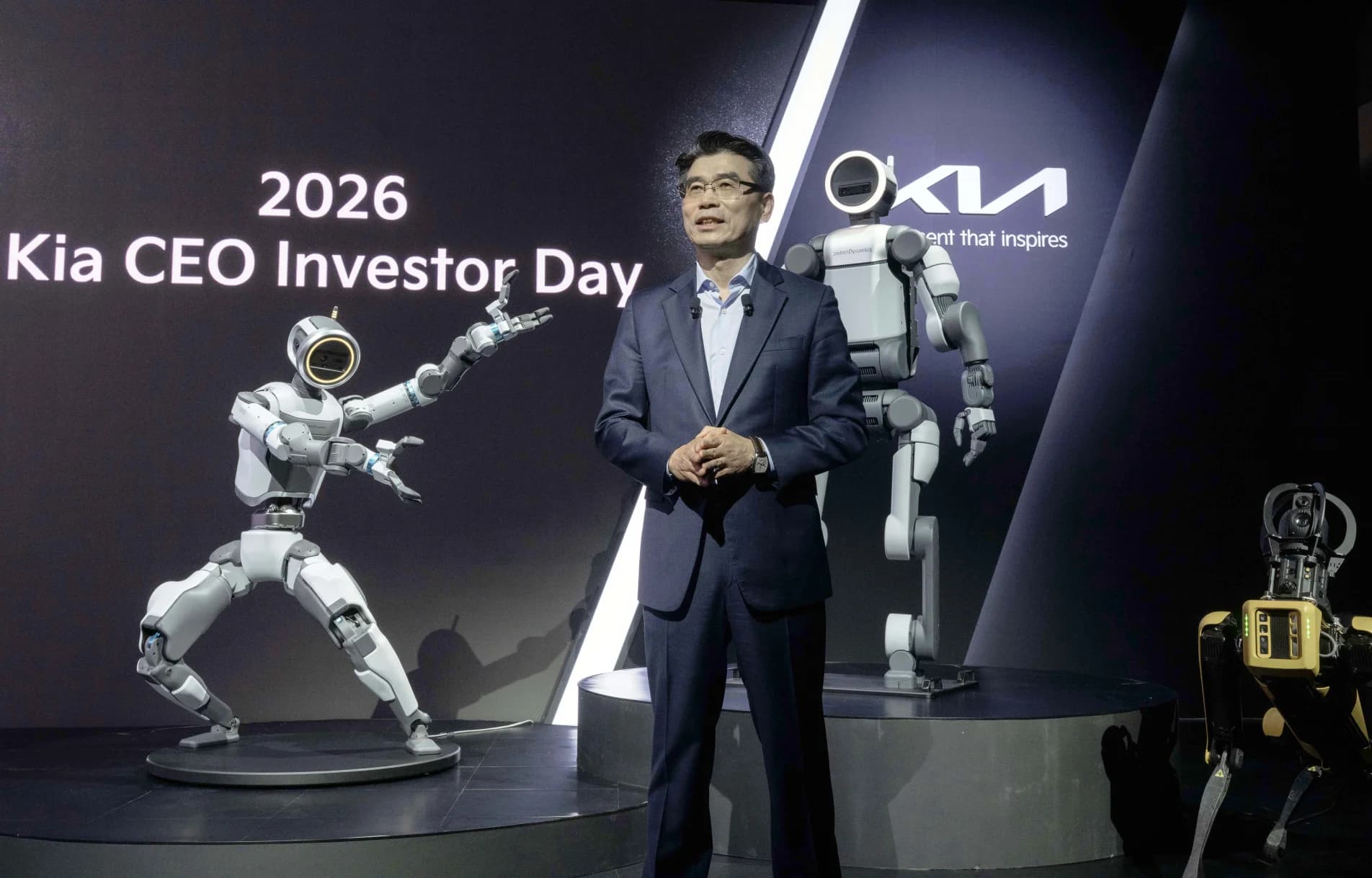
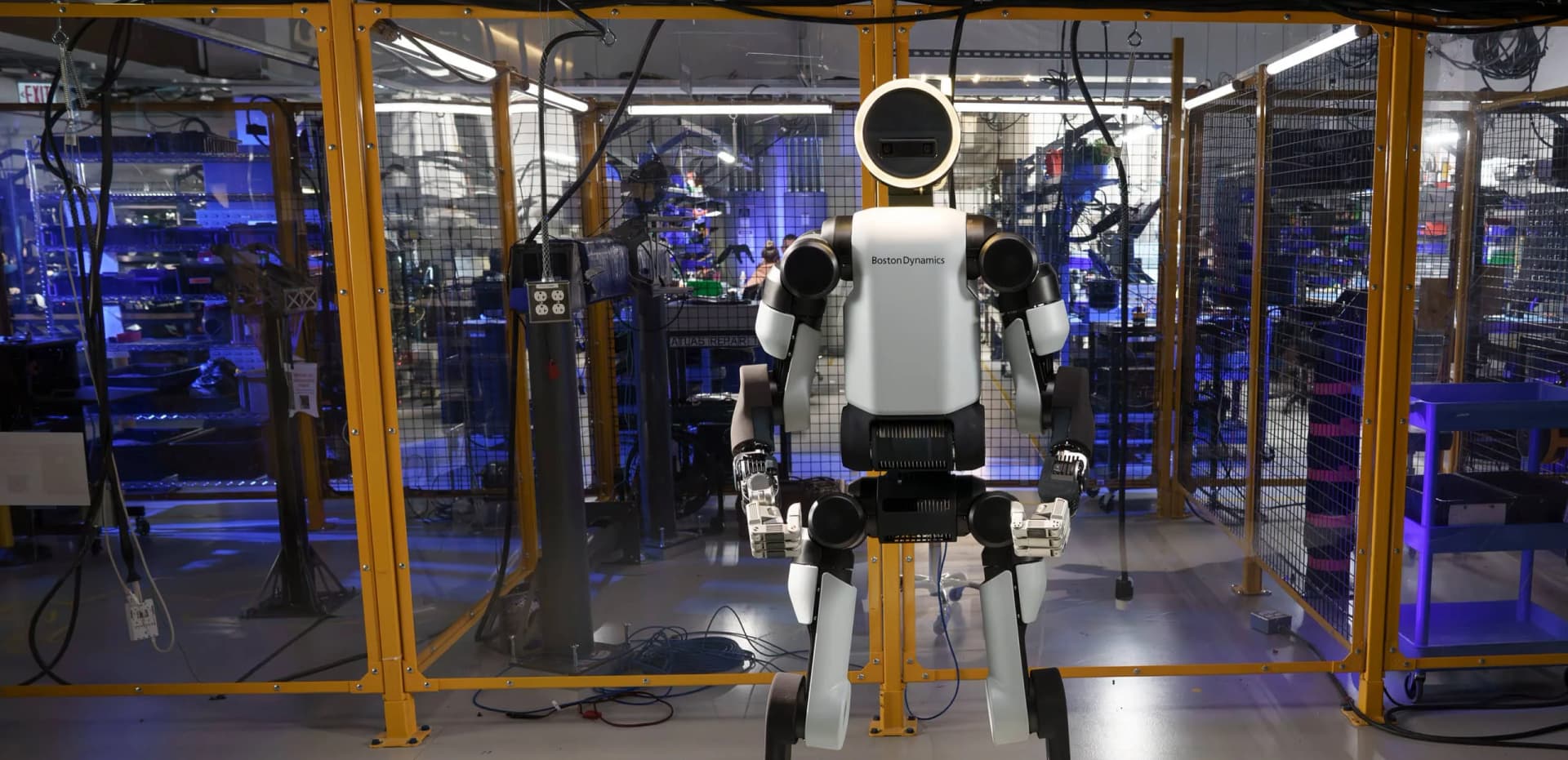
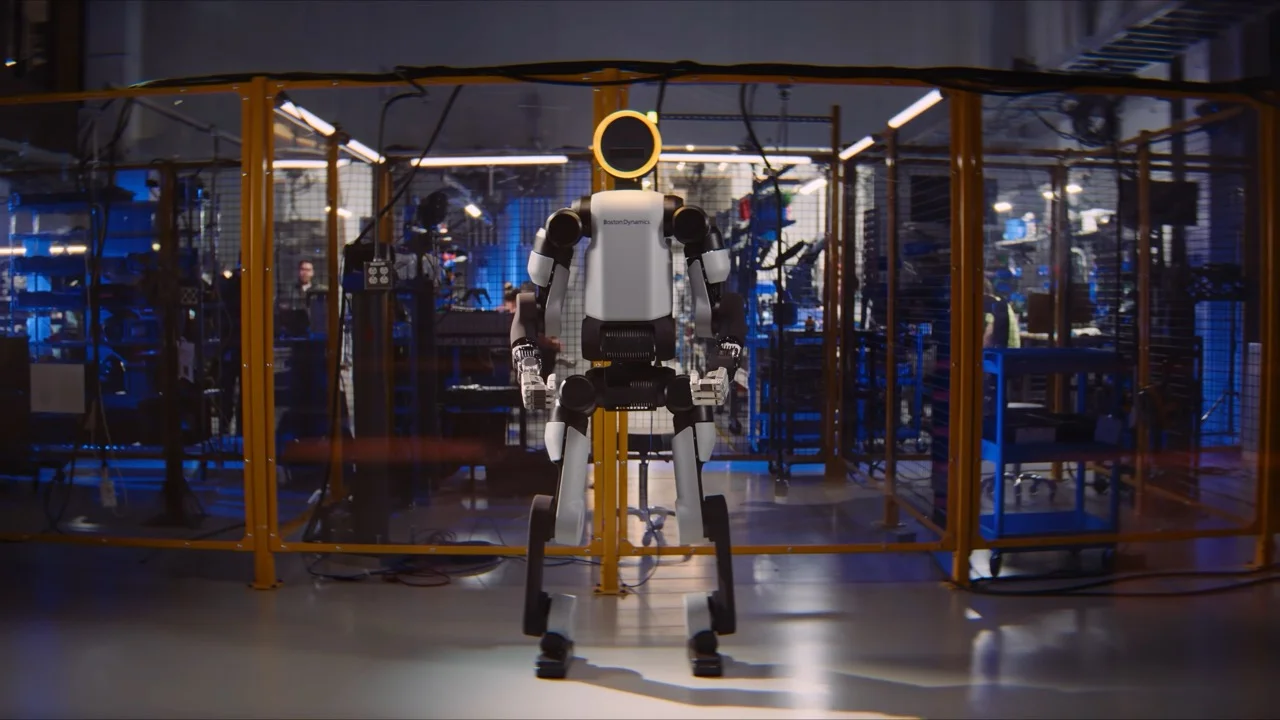
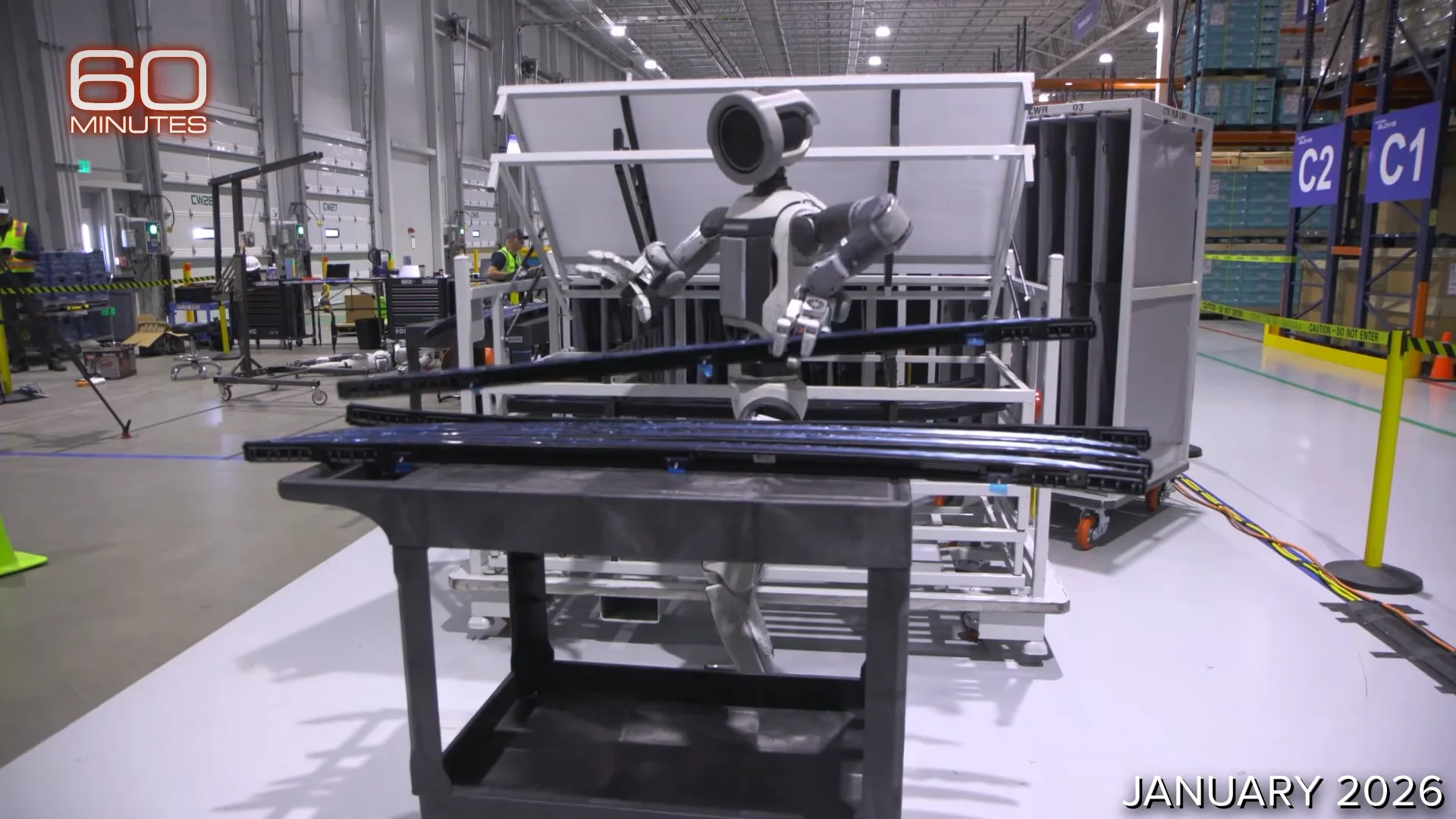
While the research version of Atlas is performing flips for the cameras, the production version is preparing for the factory floor. The all-electric Atlas was recently named "Best Robot" at CES 2026 by the CNET Group, with judges citing the sleek design of the production version and the naturalistic walking gait of the prototype version as industry-leading features.
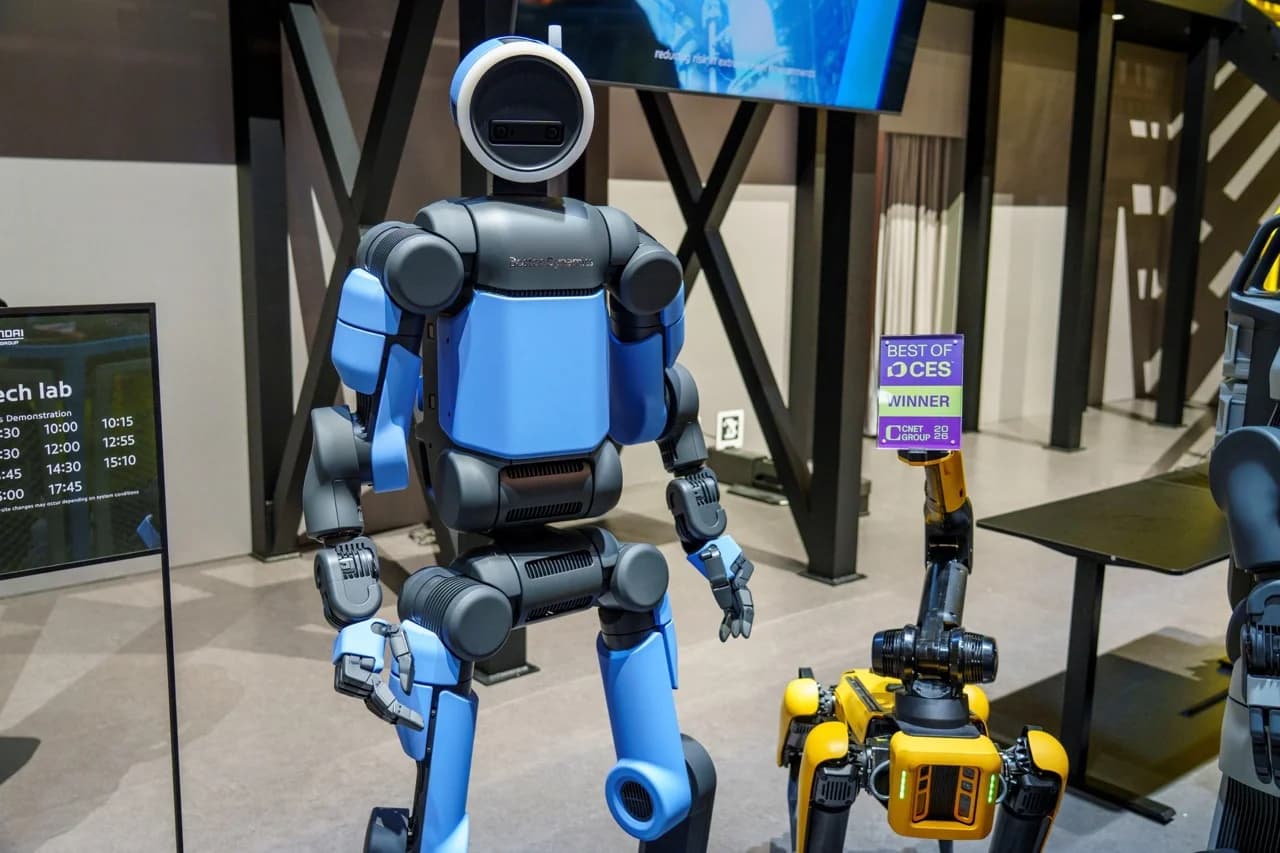
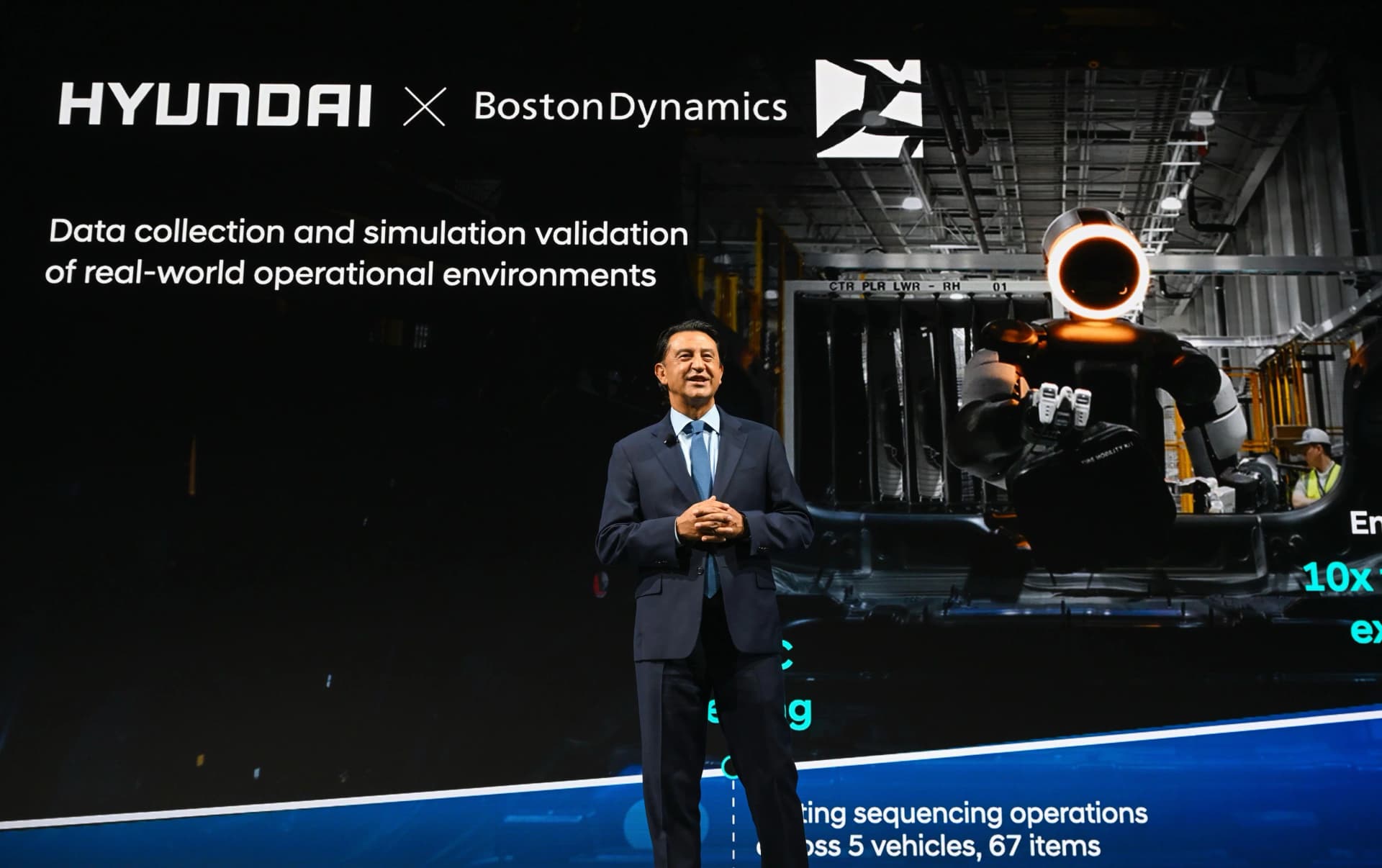
The enterprise-ready Atlas is designed for high-volume industrial tasks, boasting 56 degrees of freedom and a four-digit gripper equipped with tactile sensing. Hyundai Motor Group has confirmed that the robot will be deployed at the Hyundai Motor Group Metaplant America in Georgia by 2028. Initial tasks will focus on parts sequencing, with plans to expand into full component assembly by 2030.
The "Generalist" Mandate
The decision to focus on a humanoid form factor rather than specialized "hard automation" remains a core part of the Boston Dynamics strategy. By treating the humanoid form as a software problem, the company aims to create a machine that can be reprogrammed in days rather than engineered over months.
As the research version of Atlas retires from its role as a primary testbed, the data gathered from these "final runs" will likely feed into the massive datasets used at the newly announced Robot Metaplant Application Center (RMAC), helping to train the next generation of industrial humanoids for the "Phase Two" of the humanoid mission.
Watch the video below:
Share this article
Read next
- Published on
- Reading time
- 7 min read
Hyundai Says Atlas Will Not Replace Workers — One Day After Settling a Strike Over Exactly That
- Published on
- Reading time
- 4 min read
The Production Pivot: Leadership Exodus and Internal Pressure at Boston Dynamics
- Published on
- Reading time
- 4 min read
The Blueprint for a Bipedal Workforce: Kia Details Atlas Deployment Roadmap
- Published on
- Reading time
- 4 min read
Beyond the Backflip: Zachary Jackowski on Why Generalization is the Final Frontier for Atlas
- Published on
- Reading time
- 5 min read
Form as Function: Boston Dynamics Details the Industrial Design Logic Behind the Production Atlas
- Published on
- Reading time
- 5 min read
From Viral Clips to the Factory Floor: 60 Minutes Goes Inside Boston Dynamics’ Industrial Shift
The weekly humanoid robotics briefing
One email a week: the launches, funding and research that mattered, with context from Humanoids Daily.
Read recent issues