- Published on
Gold Medals and Greasy Pans: Physical Intelligence Tackles the "Robot Olympics"
One tap, and our reporting appears more often in your Google Top Stories. It makes a real difference to a small newsroom.

Supported by RoboStrategySupport for Humanoids Daily comes from RoboStrategy
Sponsored
Investing involves risk, including possible loss of principal. Read the prospectus before investing.
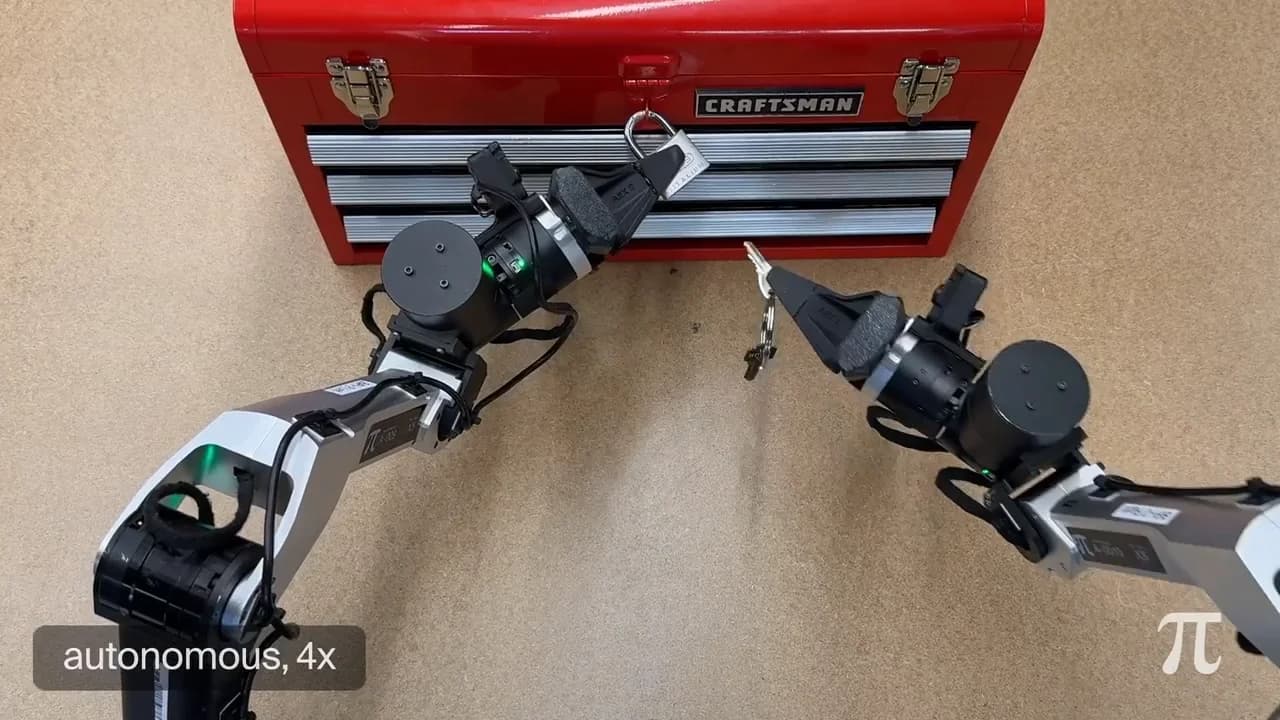
For decades, the robotics industry has been haunted by Moravec’s Paradox: the observation that high-level reasoning, like winning at chess or solving complex integrals, is computationally "easy," while low-level sensorimotor skills, like walking or washing dishes, are extraordinarily "hard".
On Monday, December 22, 2025, Physical Intelligence (Pi) released a technical update claiming a significant breakthrough in this area. By fine-tuning their latest foundation model, , the company successfully completed a series of "Robot Olympics" tasks—everyday behaviors that have long served as a benchmark for the limitations of autonomous machines.
The "Robot Olympics" Benchmark
The tasks were inspired by a "Humanoid Olympic Games" challenge proposed by roboticist Benjie Holson. Holson’s framework categorizes everyday physical challenges into Bronze, Silver, and Gold medal tiers, specifically designed to push the boundaries of force feedback, precision, and multi-stage manipulation.
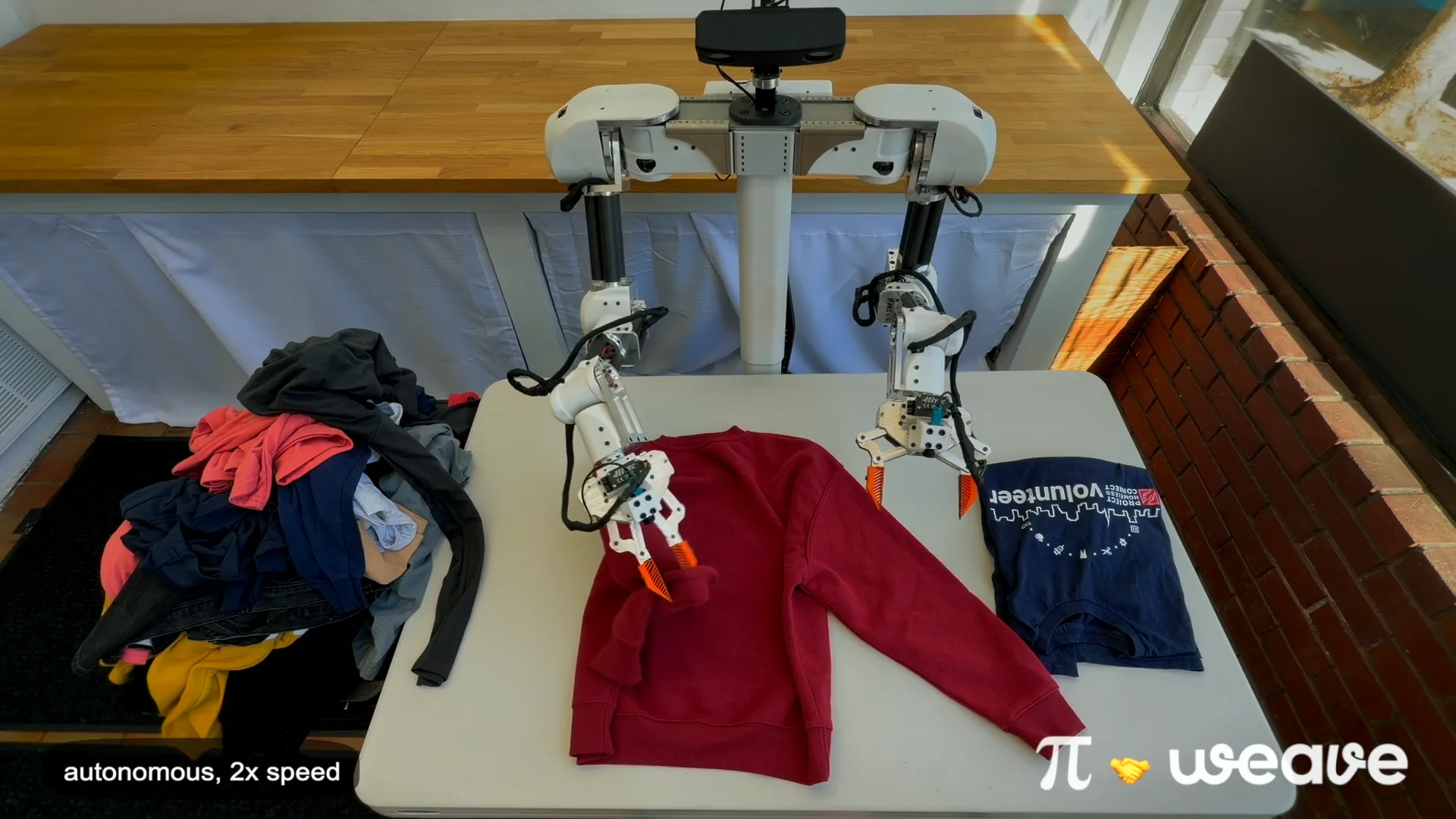
Pi reported that they achieved "initial solutions" for Gold medal tasks in three out of five categories, and Silver in the remaining two. The results included a wide variety of "unstructured" chores:
The weekly humanoid robotics briefing
One email a week: the launches, funding and research that mattered, with context from Humanoids Daily.
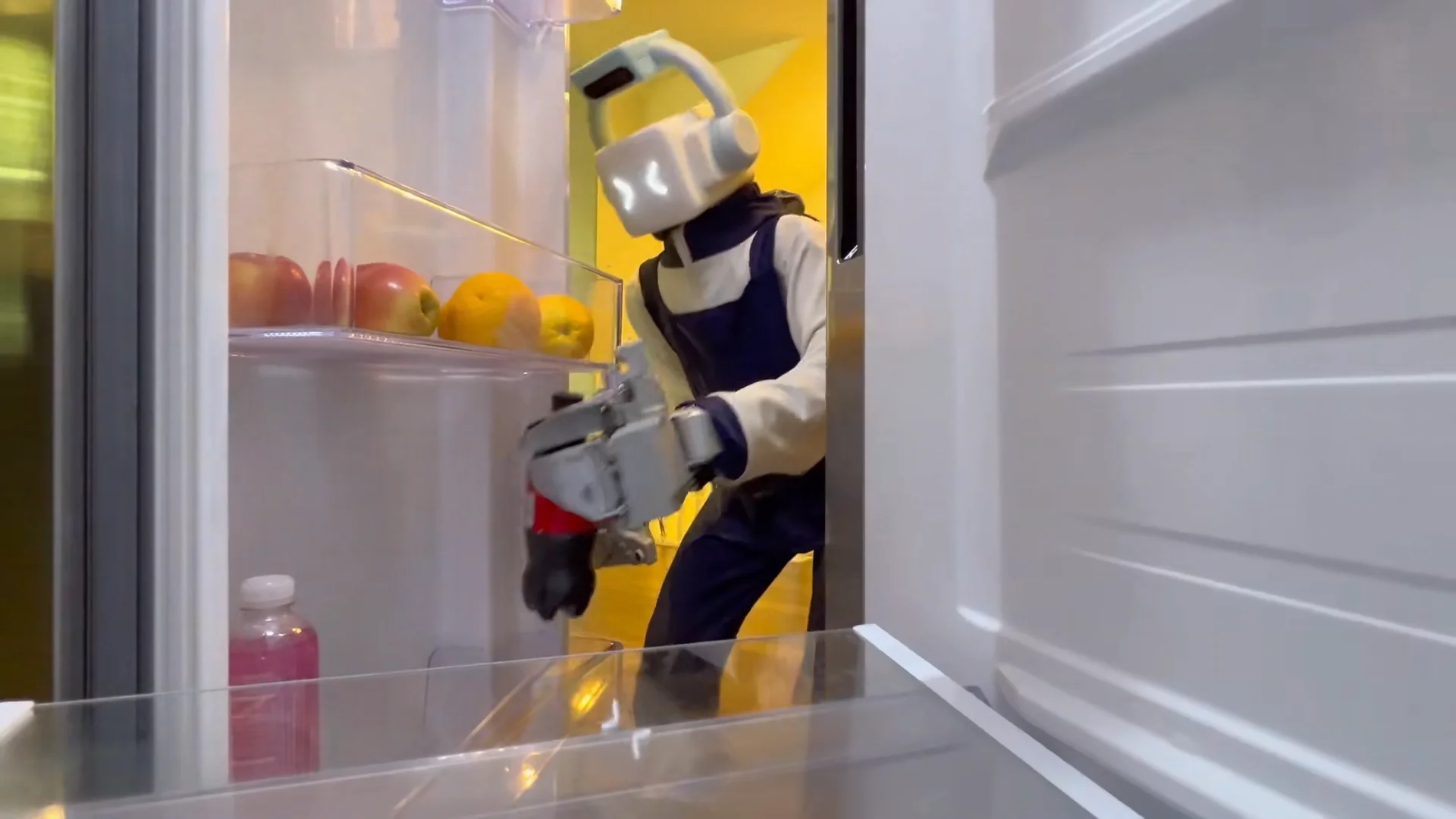
Read recent issues- Household Chores: Washing a greasy frying pan with a sponge (Gold), wiping counters (Bronze), and cleaning windows with a spray bottle (Bronze).
- Fine Manipulation: Using a key to unlock a door (Gold), turning a sock inside-out (Silver), and operating a dog poop bag (Silver).
- Tool Use: Making a peanut butter sandwich (Silver), which requires the robot to scoop butter with a knife, spread it with delicate force, and cut the bread into "elegant triangles".
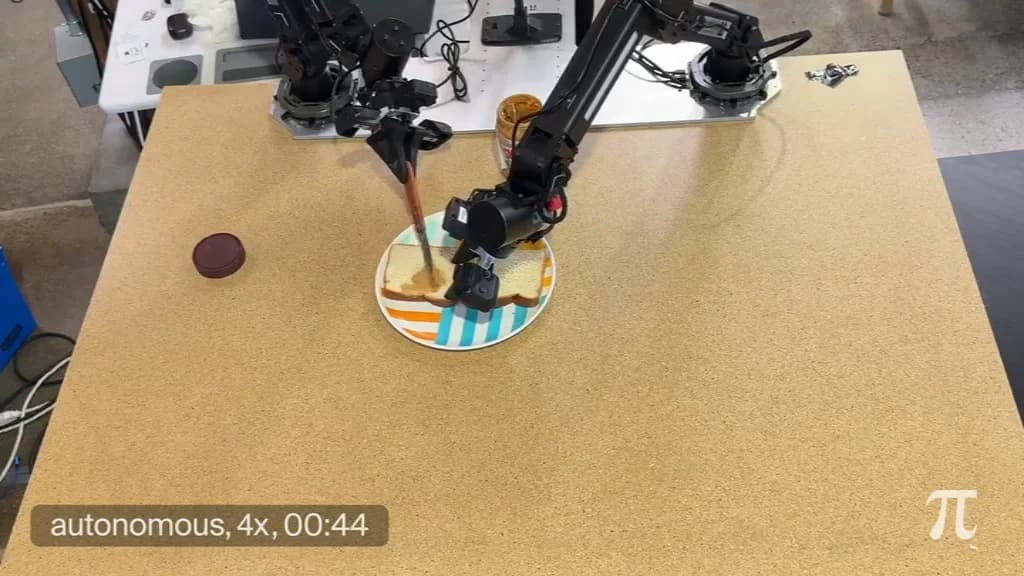
Scaling vs. Hard-Coding
The most significant takeaway from the update isn't just the tasks themselves, but how they were learned. Pi claims the robot was not explicitly programmed for these behaviors. Instead, they fine-tuned the model using under 9 hours of data per task.
This is suggesting that if a foundation model is sufficiently "pre-trained" on a diverse enough set of robot data, it develops a "physical intelligence" that makes learning new, complex tasks relatively fast.
To prove this, Pi ran a baseline test using a standard Vision-Language Model (VLM) that lacked specialized robot pre-training. That model failed every task, achieving only 9% task progress, compared to the 72% progress and 52% average success rate of the fine-tuned .
Industry Reaction: "Pre-training is Critical"
The demonstration has caught the attention of researchers at the highest levels of AI development. Russell Mendonca, a world models researcher at Google DeepMind and former Tesla Optimus engineer, noted the significance of the result on X.
"Impressive that the base model can be adapted for these dexterous tasks, particularly the lock and key," Mendonca wrote. "Note that training from scratch doesn’t work. Pre-training is critical for generalist robots, just as it is for generalist language / image / video models."
This sentiment aligns with Pi's own findings on the "emergence" of human-to-robot transfer, where scaling data allows models to spontaneously bridge the gap between human movements and robot actions.
The Hardware Bottleneck Remains
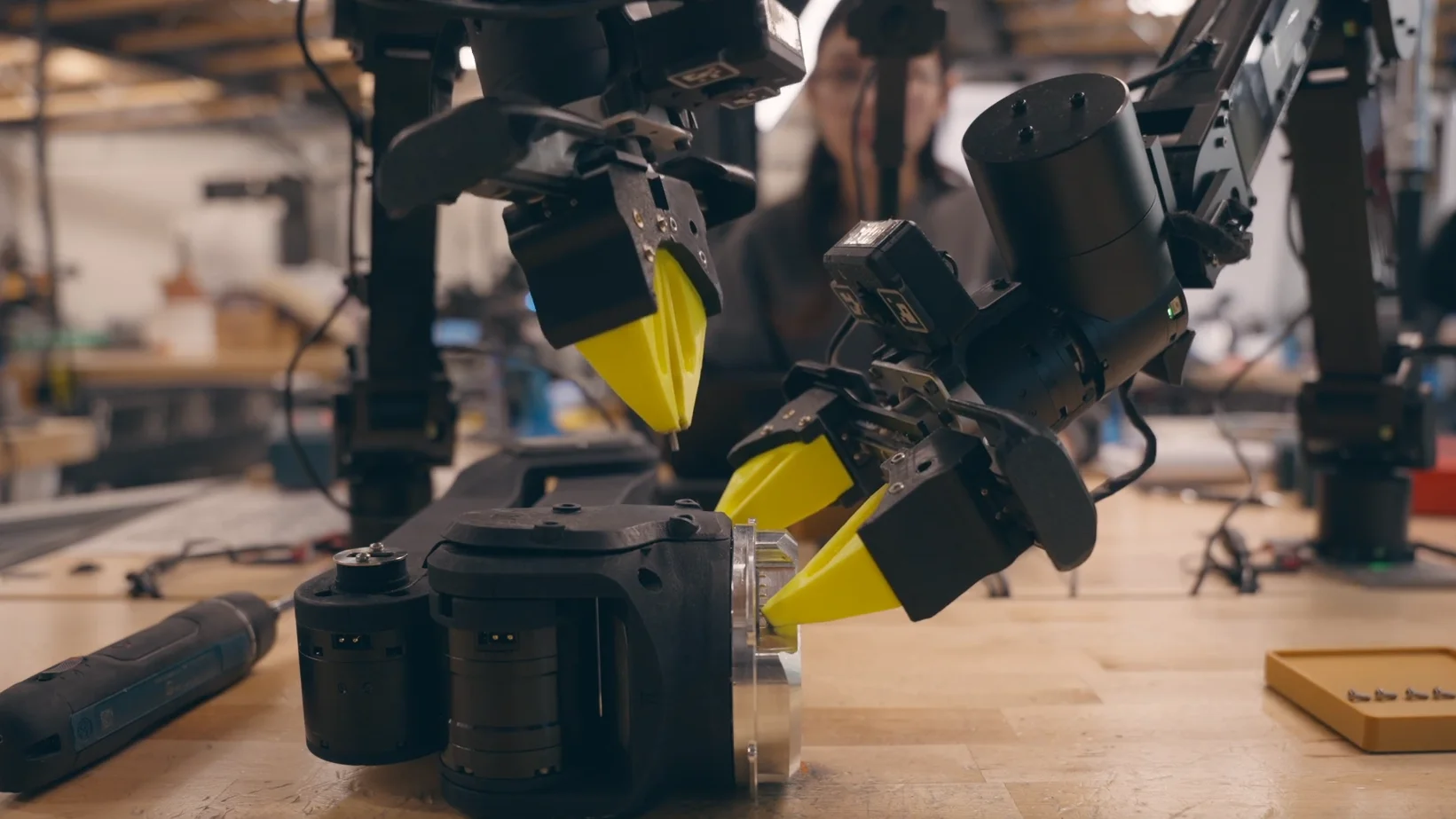
Despite the software wins, physical reality still presents hurdles. Pi acknowledged that they were unable to solve the "Gold" laundry task—hanging an inside-out dress shirt—simply because their current robot gripper was physically too wide to fit inside the sleeves. Similarly, for an orange-peeling task, the robot was forced to "disqualify" itself by using a sharp tool rather than bare fingers.
These limitations highlight why Pi, despite its software focus, partnered with hardware manufacturer AgiBot. The goal is to ensure their "universal brain" eventually has "bodies" capable of matching its digital capabilities.
Share this article
Read next
- Published on
- Reading time
- 4 min read
Don’t Forget the Salt: Physical Intelligence Equips Robots with 15-Minute "Multi-Scale" Memory
- Published on
- Reading time
- 4 min read
Physical Intelligence Finds 'Emergent' Bridge Between Human Video and Robot Action
- Published on
- Reading time
- 6 min read
Physical Intelligence Unveils π0.7: The Rise of Compositional Generalization in Robotics
- Published on
- Reading time
- 4 min read
Physical Intelligence in Talks for $1 Billion Round, Eyeing an $11 Billion Valuation
- Published on
- Reading time
- 4 min read
The Last Millimeter: Physical Intelligence Unveils RL Tokens for Hyper-Fast Precision
- Published on
- Reading time
- 5 min read
The API-fication of Robotics: Physical Intelligence Unveils Real-World Performance Data with Weave and Ultra


The weekly humanoid robotics briefing
One email a week: the launches, funding and research that mattered, with context from Humanoids Daily.
Read recent issues