- Published on
Simulating the 'Masterpiece': XPENG Robotics Unveils Design Framework and Lattice Musculature for IRON
One tap, and our reporting appears more often in your Google Top Stories. It makes a real difference to a small newsroom.

Supported by RoboStrategySupport for Humanoids Daily comes from RoboStrategy
Sponsored


Investing involves risk, including possible loss of principal. Read the prospectus before investing.
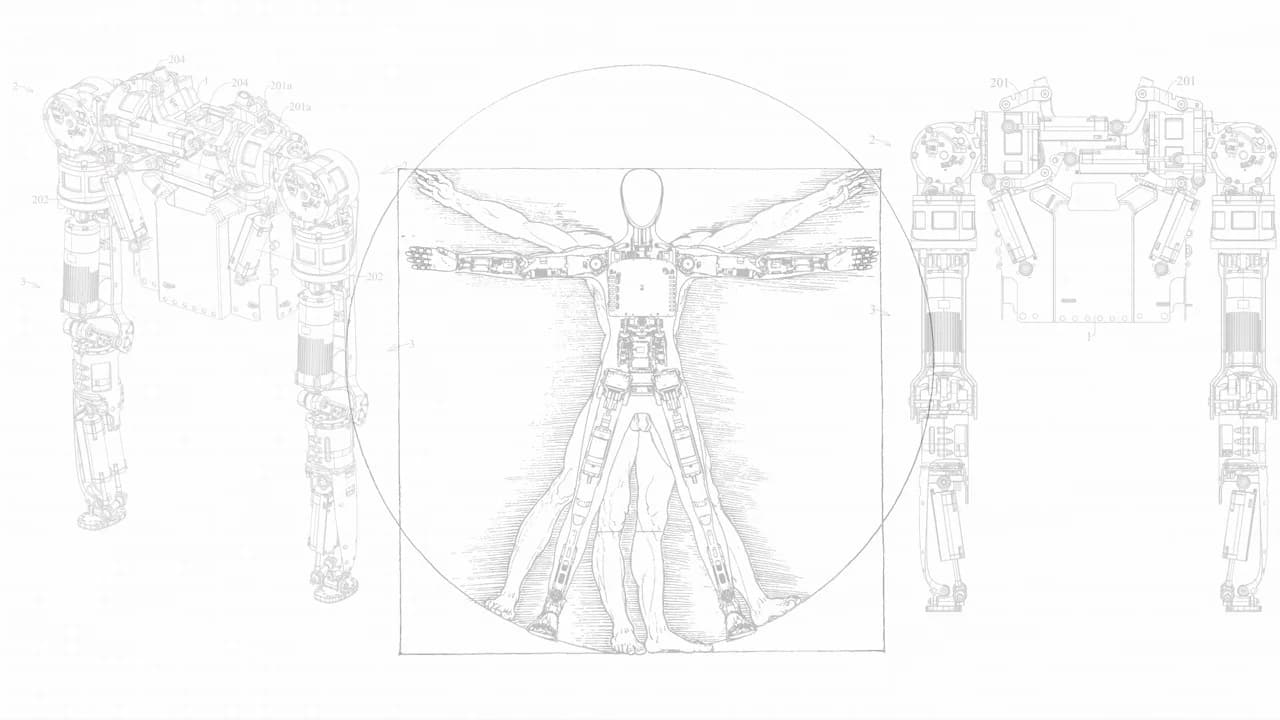
XPENG Robotics has released a new technical overview of its IRON humanoid, pivoting the conversation from its recent public appearances in Shenzhen toward the underlying engineering framework that makes its "model-like" gait possible. The video confirms that the company is treating human anatomy as a "masterpiece" to be replicated, moving beyond simple rotational joints to a "general-purpose bionic" architecture.
The "Body Logic" Framework
At the heart of IRON’s development is what XPENG calls a general-purpose humanoid design framework. Unlike earlier prototypes, this system is described as a "body logic" that ensures the robot remains balanced and expressive across various sizes and use cases. This suggests XPENG is eyeing a modular platform that could eventually support the "slimmer" or "fatter" versions CEO He Xiaopeng previously teased.
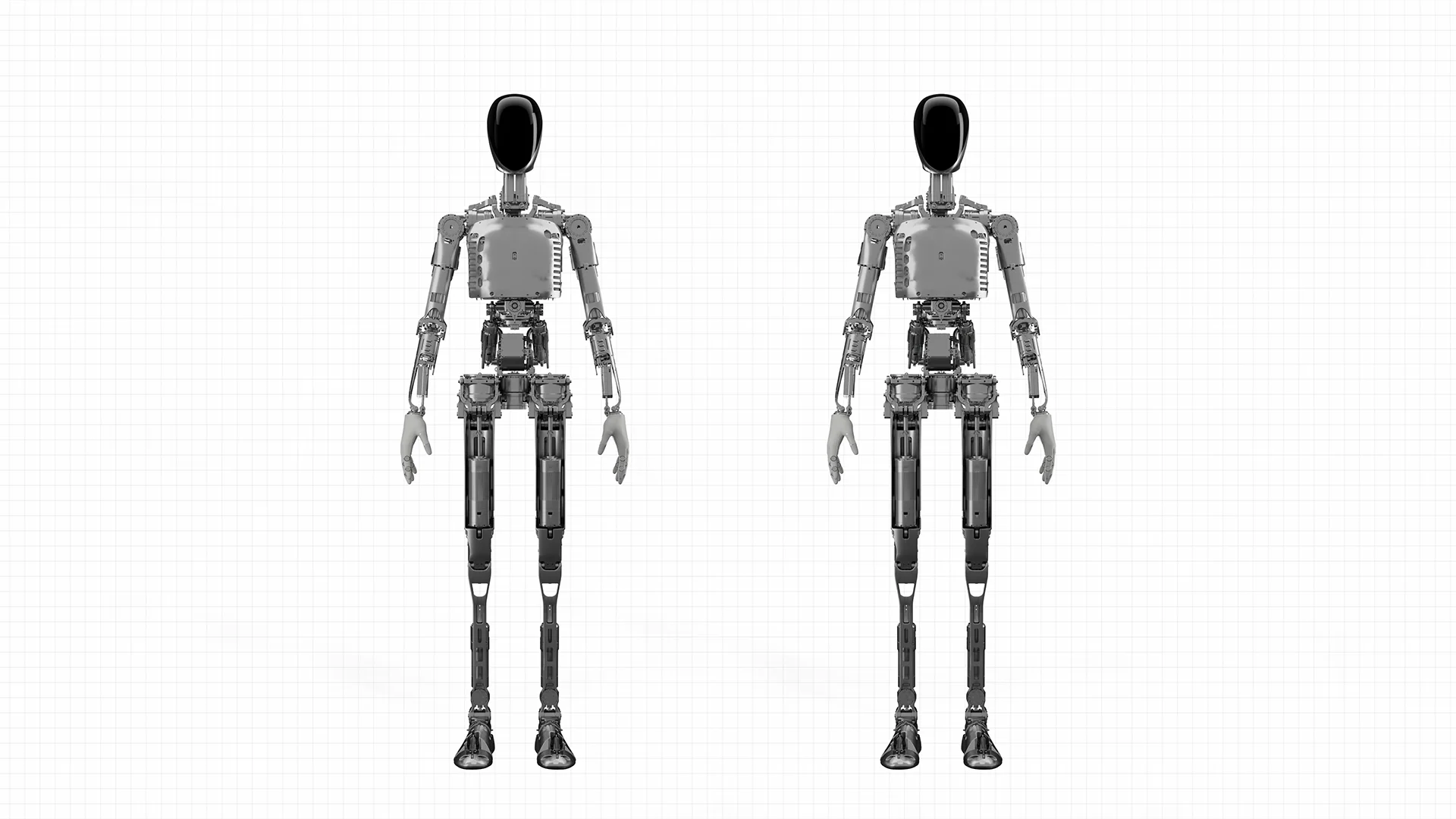
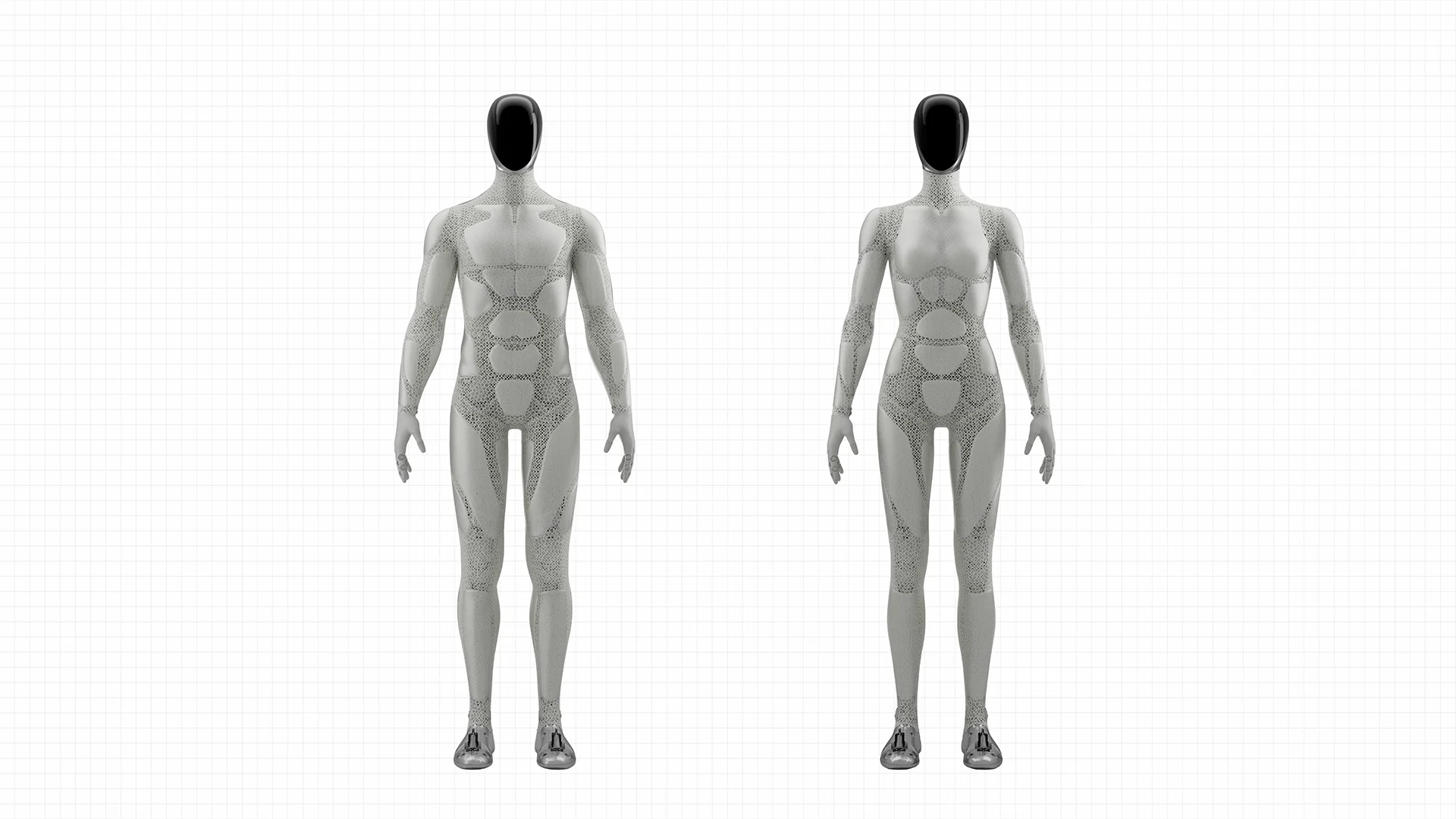
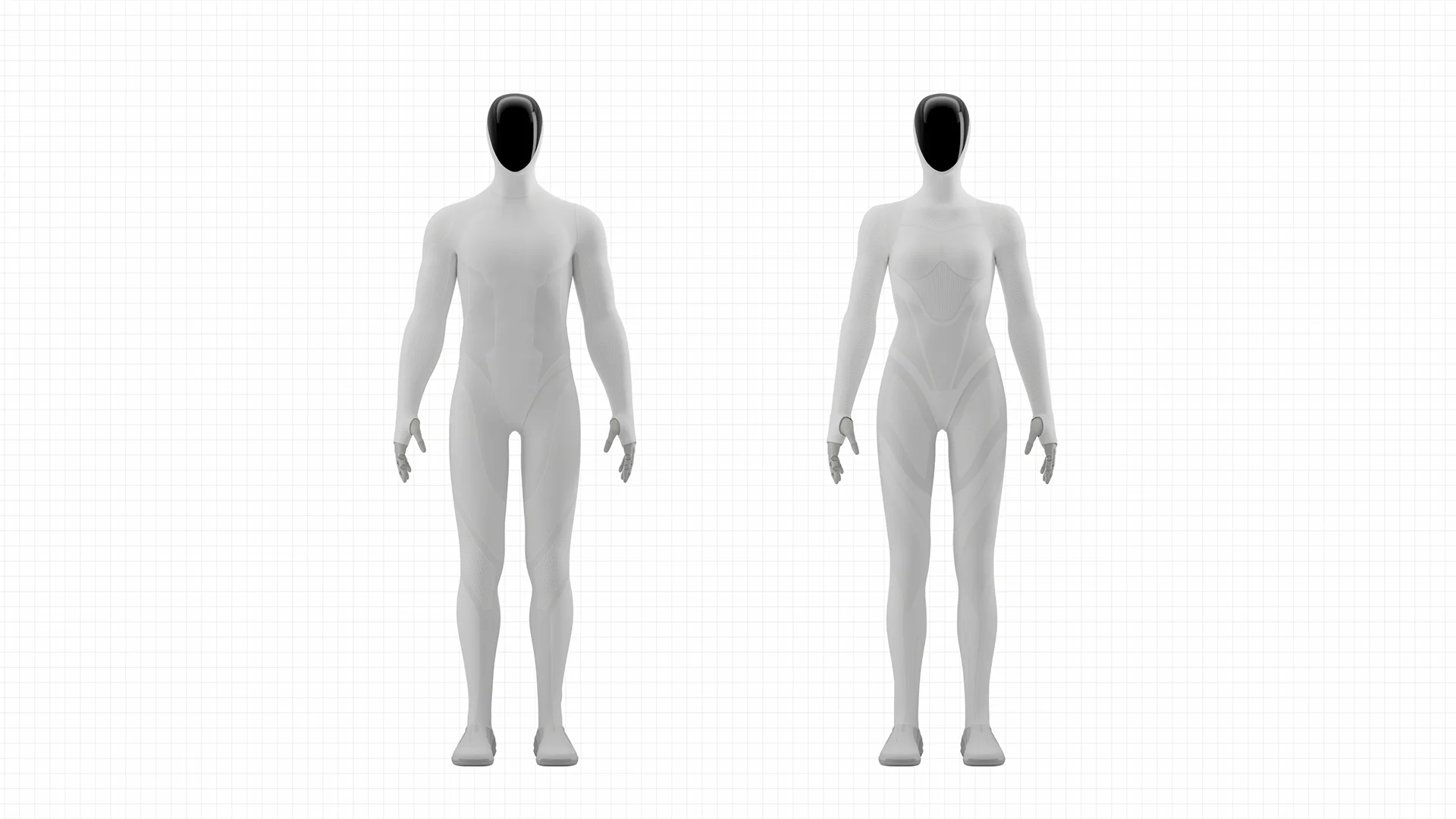
The framework guides the assembly of the robot in three distinct layers:
- A compact mechanical skeleton.
- Muscle-like lattice structures designed for bionic movement.
- A soft outer skin embedded with touch sensors to bridge the emotional gap between machine and human.
Overcoming the Lattice Simulation Gap
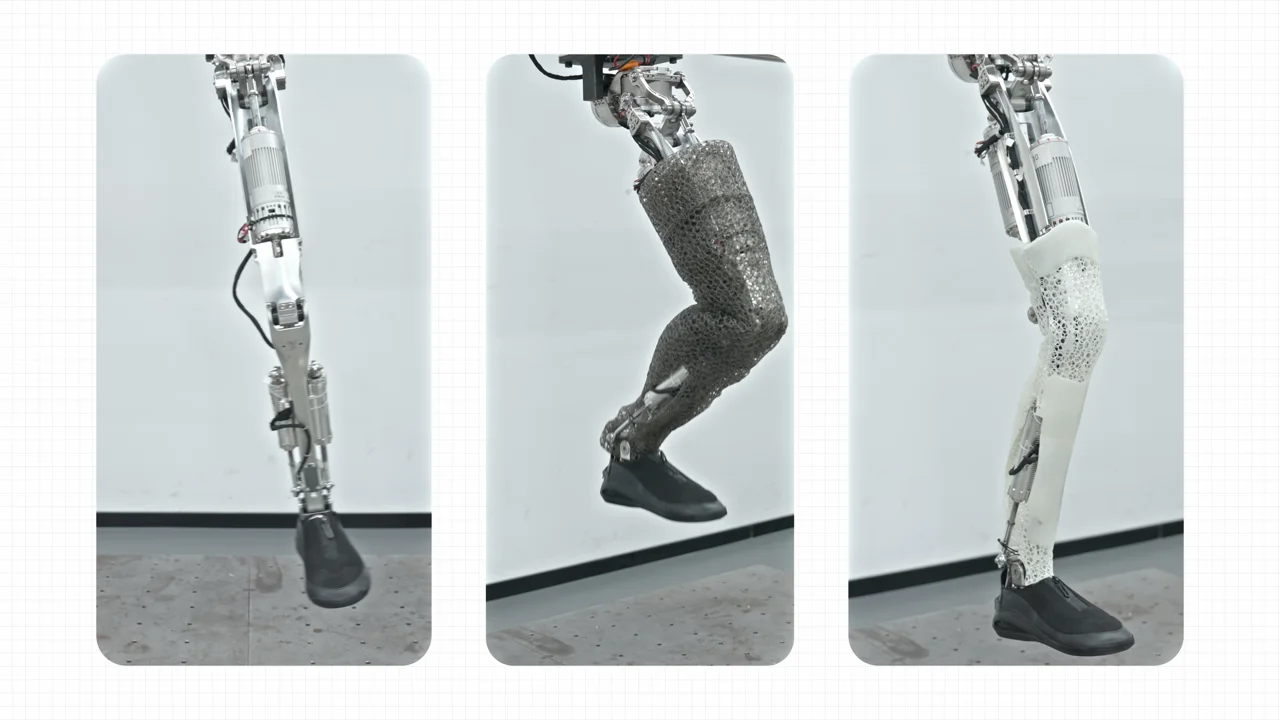
Perhaps the most significant technical revelation involves the robot's 3D-printed lattice muscles. While analysts previously noted that these structures help damp vibrations, XPENG engineers admitted that simulating their dynamic effects proved to be a major hurdle.
The weekly humanoid robotics briefing
One email a week: the launches, funding and research that mattered, with context from Humanoids Daily.
Read recent issuesBecause the lattice material has unique, non-linear physical properties, traditional simulation methods could not accurately predict how the "muscles" would affect the robot's overall motion. To solve this, XPENG developed proprietary system identification algorithms tailored specifically to the lattice material. By collecting massive amounts of dynamic data, they were able to calibrate their models, finally enabling efficient, high-fidelity simulations of the musculoskeletal system.
Rebuilding the Control Stack
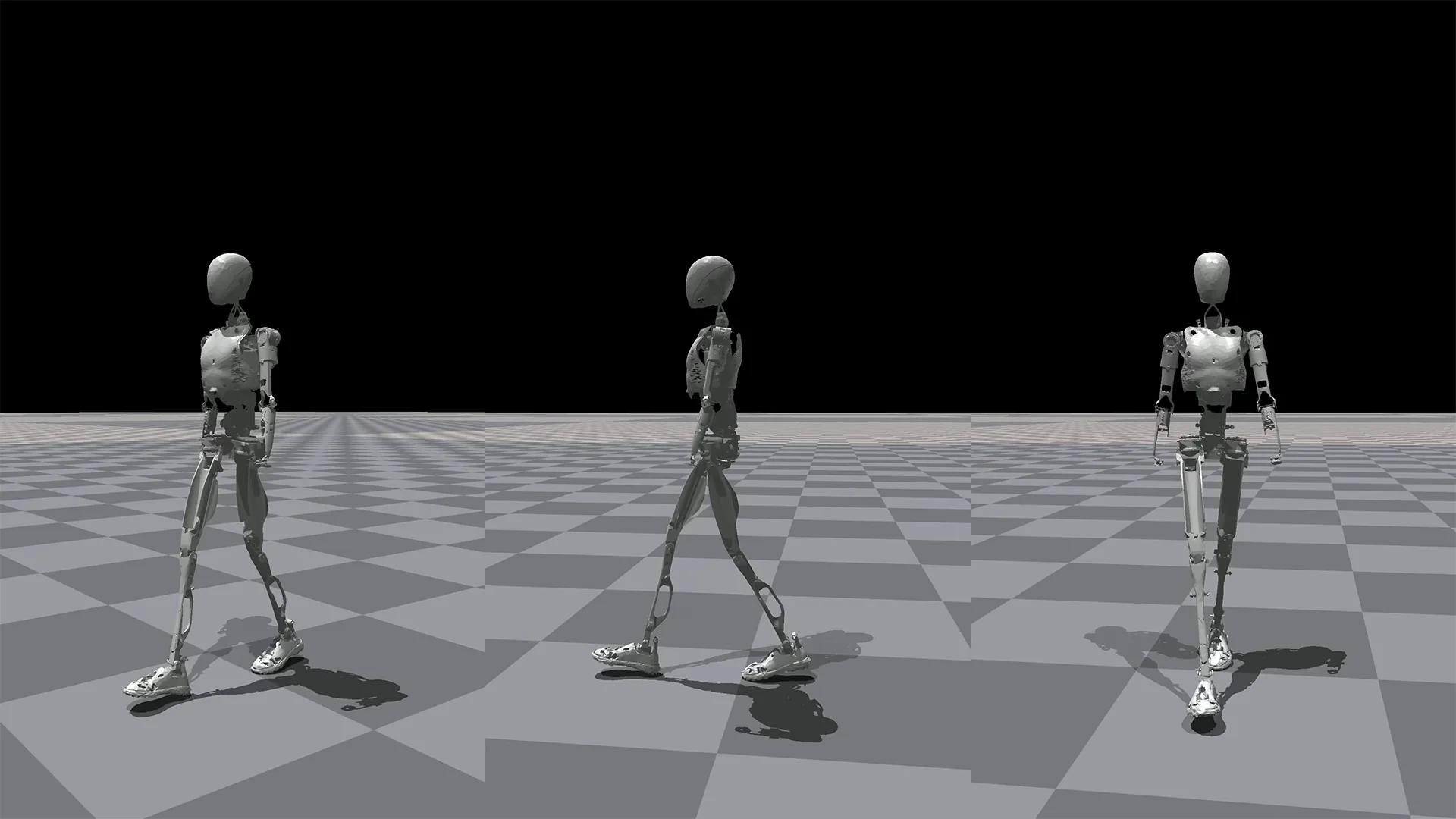
The video also details a complete overhaul of IRON’s motion control. XPENG has reportedly rebuilt its reinforcement learning (RL) algorithms from scratch. This new stack is designed to be "extremely robust," allowing the robot to maintain a fluid, human-like motion even when its physical properties—such as skin material or muscle density—are modified.
This software flexibility is critical for the 2026 mass production target. By decoupling the controller from specific hardware constants, XPENG can iterate on the "seventh generation" and "eighth generation" platforms without needing to spend weeks retuning the basic locomotion for every minor hardware tweak.
Anatomy-First Engineering
The presentation further validates previous reports on IRON's advanced degrees of freedom (DoF). XPENG explicitly credits the robot’s naturalistic shrugging and hugging to its biomimetic spine and complex shoulder assembly. By moving away from standard rotational joints in favor of structures that mimic human ligaments and bones, the team claims to have achieved a range of motion that makes simple actions like nodding and walking appear significantly more "natural and fluid."
As XPENG moves closer to its April 2026 mass production preparation phase, the focus is clearly shifting from "is it real?" to "how does it scale?" Following the recent rollout of the ET1 engineering test unit, these simulation breakthroughs may be the key to ensuring that the million-unit vision of 2030 remains grounded in physical reality.
Watch the video here:
Share this article
Read next
- Published on
- Reading time
- 6 min read
Inside XPENG’s Bet on IRON: He Xiaopeng on Why the Hardest Path in Humanoid Robotics Is Never Crowded
- Published on
- Reading time
- 6 min read
XPENG Launches Mass Production of IRON Humanoid
- Published on
- Reading time
- 4 min read
XPENG's Head of Robotics Admits Hardware is 'Bottleneck' as 2026 Production Goal Looms
- Published on
- Reading time
- 4 min read
Xpeng to Break Ground on "Full-Chain" Humanoid Factory to Meet 2026 Production Goal
- Published on
- Reading time
- 3 min read
XPENG CEO Targets Late 2026 for Massive IRON Deployment
- Published on
- Reading time
- 3 min read
Xpeng Iron Hits the Catwalk: Humanoid Prototype Makes Surprise Debut in Shenzhen




The weekly humanoid robotics briefing
One email a week: the launches, funding and research that mattered, with context from Humanoids Daily.
Read recent issues