- Published on
Skild AI Secures $1.4 Billion Series C, Tripling Valuation to Over $14 Billion
One tap, and our reporting appears more often in your Google Top Stories. It makes a real difference to a small newsroom.


Your guide
Rich Robinson
Jee Chee Ren · Executive tour
See China’s AI and robotics ecosystem first-hand.
Six days exploring AI, robotics and advanced manufacturing.
With Rich Robinson, Clinical Professor of Entrepreneurship at Peking University
Beijing · Guangzhou · Shenzhen
29 November–4 December 2026
Referral partnership · We earn a commission on referred bookings.
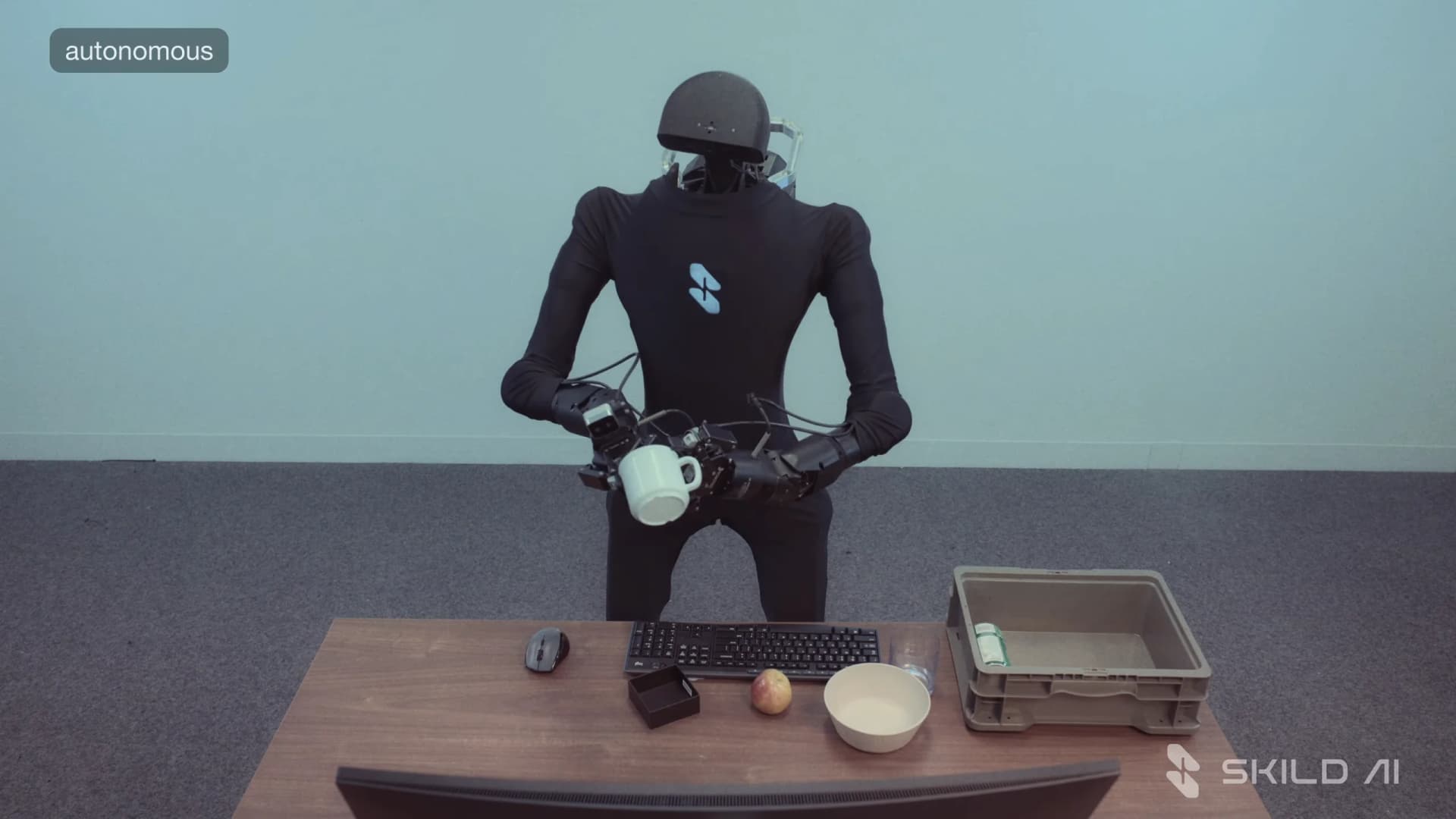
The high-stakes race to build a universal intelligence for robots has reached a new peak of capitalization. Skild AI announced on January 14, 2026, that it has raised $1.4 billion in a Series C funding round. The investment, led by SoftBank Group, propels the startup’s valuation to over $14 billion—a more than threefold increase from its Series B valuation just seven months ago.
The round saw participation from a formidable roster of investors, including NVentures (NVIDIA), Macquarie Capital, and Jeff Bezos via Bezos Expeditions. This influx of capital follows months of intense speculation regarding the deal, which marks a definitive win for SoftBank as it executes its broader “brains and bodies” strategy.
The Rise of the "Omni-Bodied" Brain
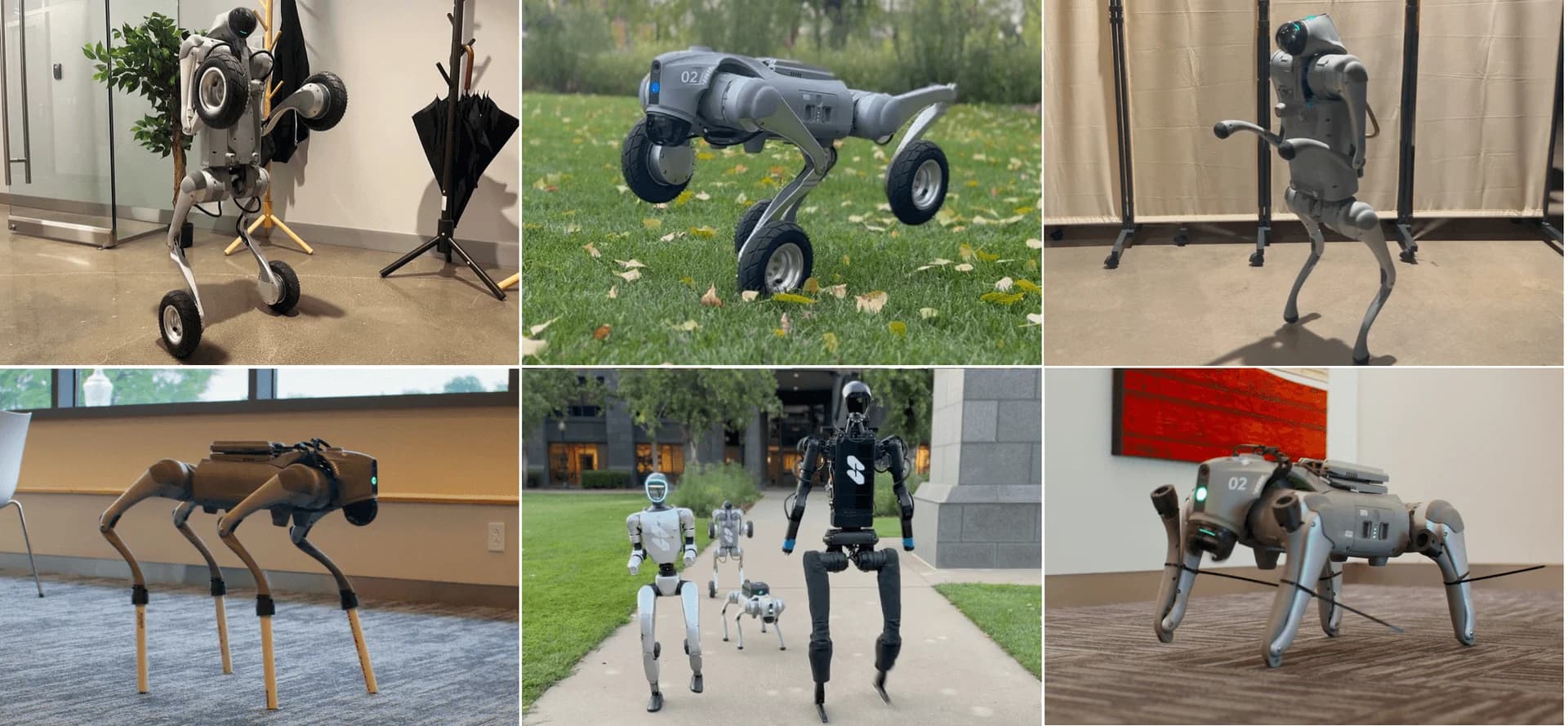
At the heart of Skild AI’s thesis is the Skild Brain, which the company describes as the industry’s first unified robotics foundation model. Unlike traditional robotics software that is overfit to a specific chassis, Skild’s model is "omni-bodied"—meaning it can control quadrupeds, humanoids, and robotic arms without prior knowledge of their specific mechanical forms.
The company credits this generality to a "multiverse" training approach. By forcing the AI to manage thousands of different simulated robot bodies across millennia of simulated time, the model develops in-context learning capabilities. This allows robots to adapt to physical changes in real-time, such as recovering from a jammed wheel or adjusting to makeshift stilts, without requiring manual reprogramming.
The weekly humanoid robotics briefing
One email a week: the launches, funding and research that mattered, with context from Humanoids Daily.
Read recent issuesA "War Chest" Race in Robotics
The $14 billion valuation places Skild AI at the top of a widening valuation chasm in the embodied AI sector. For comparison, other major software-first players like Physical Intelligence (Pi) raised significant rounds in late 2025, but Skild’s latest raise suggests that investors increasingly view generalized software as a more valuable asset than hardware itself.
Skild’s revenue growth has reportedly matched the investor enthusiasm. The company stated it grew from zero to $30 million in revenue in just a few months during 2025, primarily through deployments in security, construction, and warehouse assembly.
Scaling the Flywheel
Skild AI plans to use the new capital to scale its "data flywheel," a system that continuously improves the model as it is deployed across more robots and environments. The company leverages four primary data sources:
- Large-scale Simulation: Generating trillions of synthetic experiences.
- Internet Videos: Training the brain on billions of human action videos to understand object manipulation.
- Teleoperation: Capturing high-fidelity human data via smart interfaces.
- Real-world Deployments: Learning from robots active in factories, data centers, and delivery routes.
This strategy puts Skild in direct competition with other firms leveraging "internet-scale" datasets to solve the robotics data bottleneck. Notably, 1X Technologies recently unveiled its 1XWM World Model, a generative "cognitive core" that allows robots to "imagine" a task through video generation before execution.
While 1X uses this video-to-action pipeline to help its NEO humanoid generalize to domestic tasks like steaming a shirt or operating a toilet seat, Skild’s approach leans more heavily on massive-scale simulation to achieve its "omni-bodied" versatility. This focus on physical "common sense" has already allowed Skild's model to adapt zero-shot to extreme mechanical changes, such as discovering new locomotion strategies after simulated limb loss or autonomously switching to a walking gait when wheels are jammed.
With strategic investors like Samsung, LG, and Salesforce Ventures also joining the cap table, Skild AI is positioning its universal brain to be the operating system for a wide variety of industrial and domestic hardware.
"The Skild Brain can control robots it has never trained on, adapting in real time to extreme changes," said Deepak Pathak, co-founder and CEO of Skild AI. "We believe this omni-bodied learning is essential for building AGI that works reliably in the physical world".
Share this article
Read next
- Published on
- Reading time
- 5 min read
SoftBank and NVIDIA Reportedly Near Deal to Value Skild AI at $14 Billion
- Published on
- Reading time
- 4 min read
Skild AI Acquires Zebra’s Robotics Division to Build the "Orchestrated" Warehouse
- Published on
- Reading time
- 4 min read
Physical Intelligence in Talks for $1 Billion Round, Eyeing an $11 Billion Valuation
- Published on
- Reading time
- 4 min read
Sunday Robotics Raises $165M to Transition from Demos to Real-World Deployment
- Published on
- Reading time
- 3 min read
Apptronik Nears $1 Billion Milestone with Massive $520 Million Funding Extension
- Published on
- Reading time
- 3 min read
Figure AI Secures Over $1B to Accelerate Humanoid Robot Rollout


The weekly humanoid robotics briefing
One email a week: the launches, funding and research that mattered, with context from Humanoids Daily.
Read recent issues