- Published on
Former Boston Dynamics Roboticist Unveils Voxel, a $20,000 Home-Tidying Robot
One tap, and our reporting appears more often in your Google Top Stories. It makes a real difference to a small newsroom.


Your guide
Rich Robinson
Jee Chee Ren · Executive tour
See China’s AI and robotics ecosystem first-hand.
Six days exploring AI, robotics and advanced manufacturing.
With Rich Robinson, Clinical Professor of Entrepreneurship at Peking University
Beijing · Guangzhou · Shenzhen
29 November–4 December 2026
Referral partnership · We earn a commission on referred bookings.
A former Boston Dynamics staff roboticist is introducing a robot for a different kind of workplace: the home. Tuesday Labs, led by founder and CEO Ros Shinkle, has unveiled Voxel, a legged household robot intended to tidy rooms, fetch objects and water plants.
The New York City startup is taking $200 refundable reservations for Voxel Series-1, with an estimated purchase price of $20,000 and US deliveries expected to begin in 2028.
- Tuesday Labs pitches Voxel around four household functions: tidying, locating objects, fetching them and tending plants.
- Founder Ros Shinkle previously worked as a staff roboticist at Boston Dynamics; the company lists Y Combinator and FCVC as backers.
- Reservations cost $200, but Voxel remains a development prototype, with a substantial hardware redesign expected before delivery.
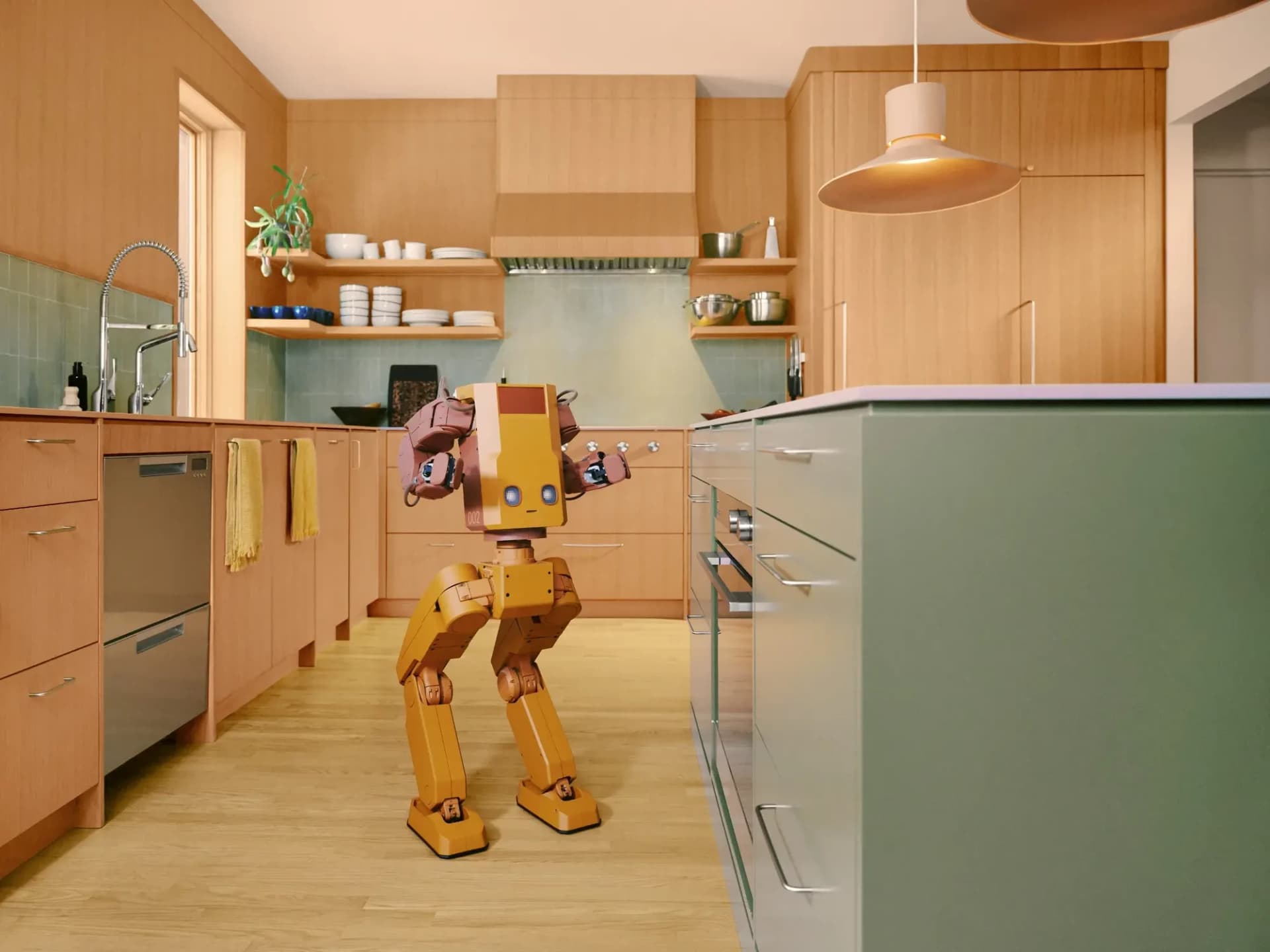
Shinkle introduced Voxel as a “droid butler” in an October 20 announcement on X. The company places personality alongside practical utility, describing a robot designed to fit into everyday domestic life.
A robot built around tidying
Tuesday Labs describes four intended functions on its product page. Home Reset means returning belongings to their places. Find would tell an owner where the robot last saw a misplaced item, while Fetch covers bringing things such as books, drinks or keys. Tend focuses on caring for plants, including watering them.
The weekly humanoid robotics briefing
One email a week: the launches, funding and research that mattered, with context from Humanoids Daily.
Read recent issuesThe published design uses seven-degree-of-freedom arms with fully actuated wrists, single-degree-of-freedom grippers, Z-shaped legs and stereo RGB vision. The choice of simple grippers distinguishes it from the multi-fingered hands often featured in humanoid demonstrations.
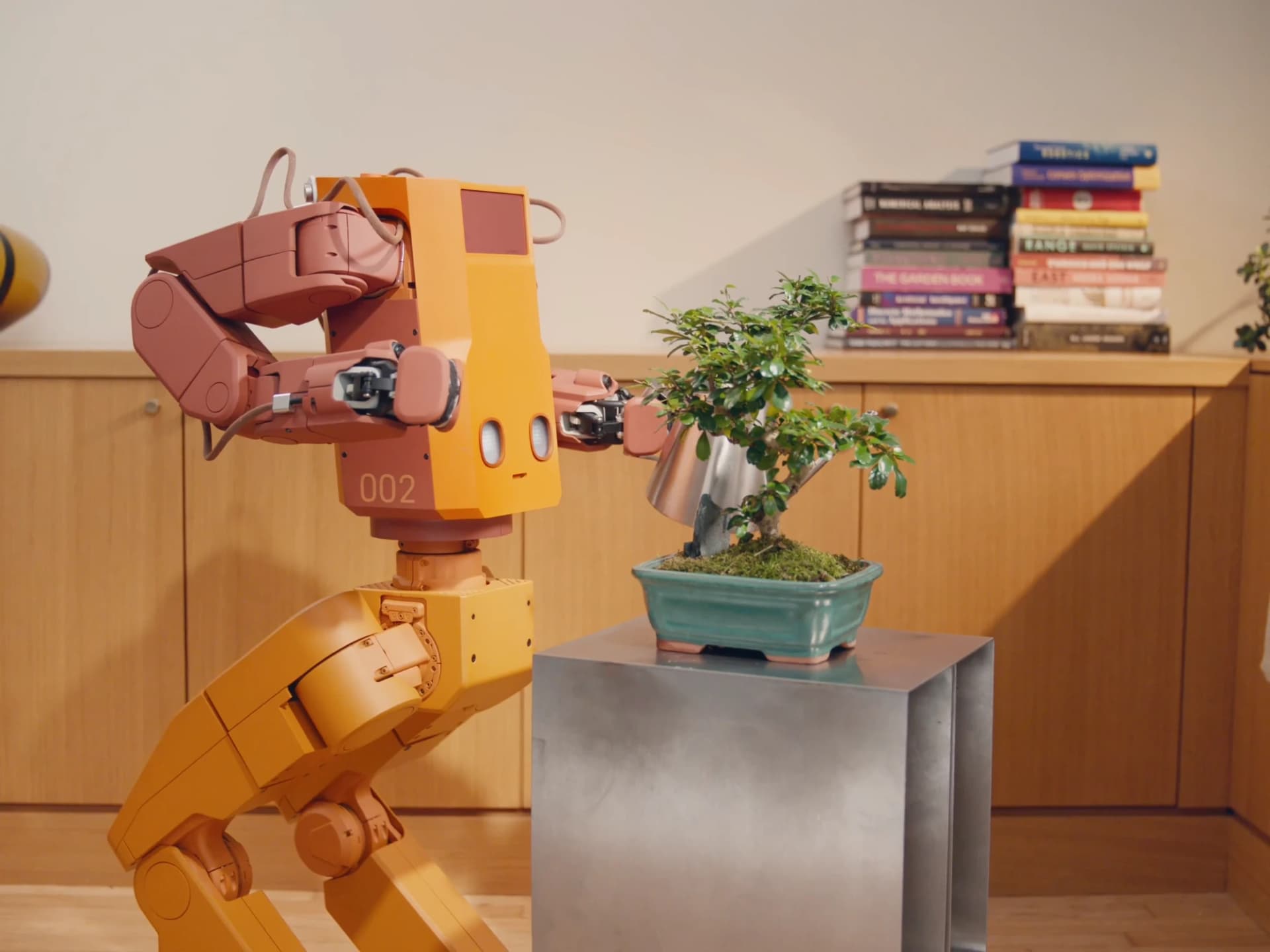
These are the company's product ambitions and published design details. They do not establish how reliably Voxel can perform the advertised tasks across unfamiliar homes or how much assistance it currently requires.
A distinctive domestic character
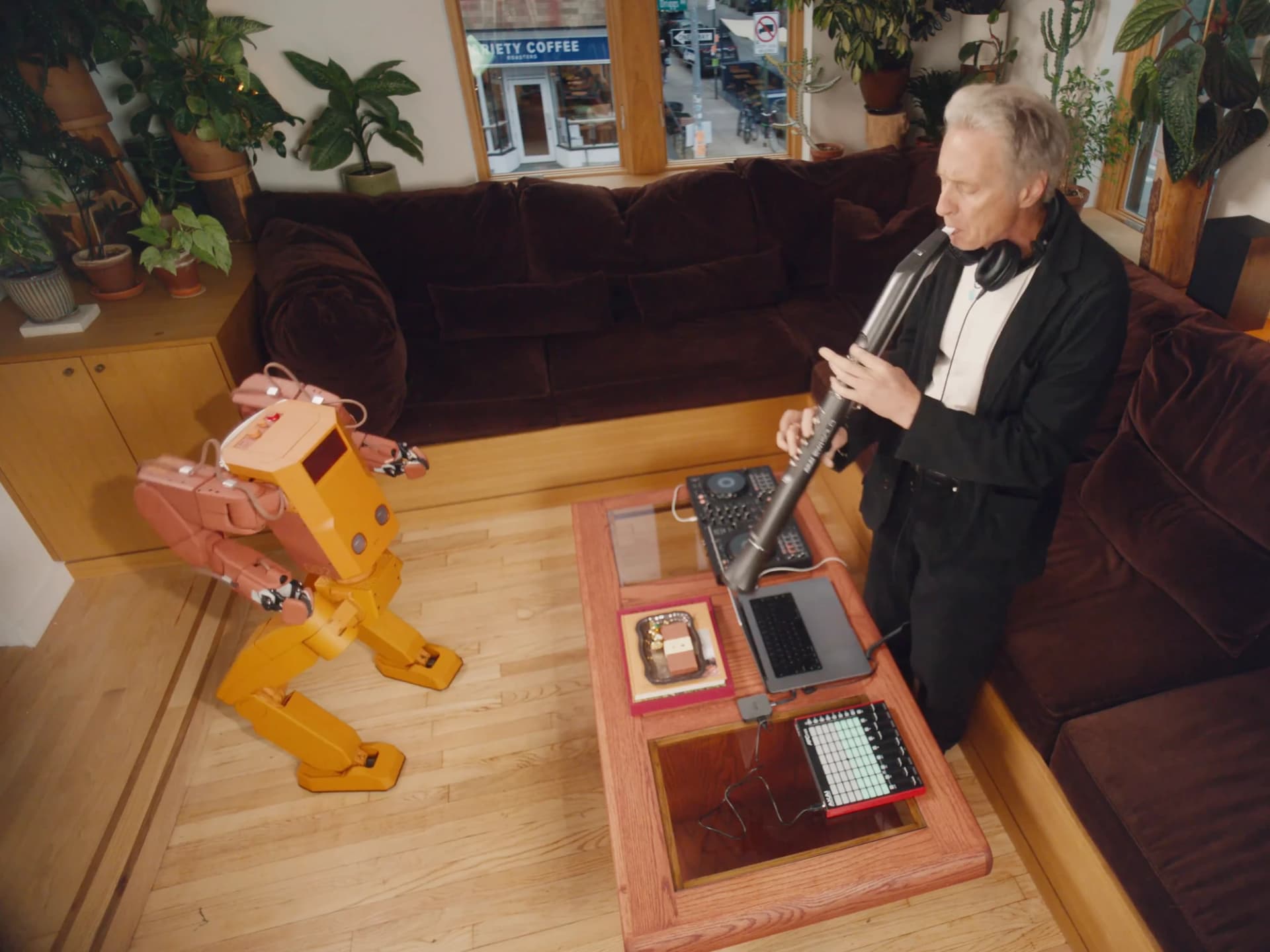
Voxel’s design and art direction are unusually cohesive. Mustard-yellow panels, dusty-rose arms and a simple illuminated face give it a playful, visibly mechanical character. The warm timber, houseplants and lived-in interiors of its launch imagery make the robot feel like part of a home. In atmosphere and attention to aesthetics, the presentation rivals 1X’s styling of NEO, while giving Voxel a distinctly different personality.
Its proportions also depart from the familiar human silhouette. The legs bend “backwards” relative to human knees, visually recalling earlier generations of Agility Robotics’ Digit. The two illuminated “eyes” sit low on the tall front panel, closer to the robot’s vertical midpoint than a conventional head position. That placement turns the torso itself into a face, reinforcing the character-like appearance.
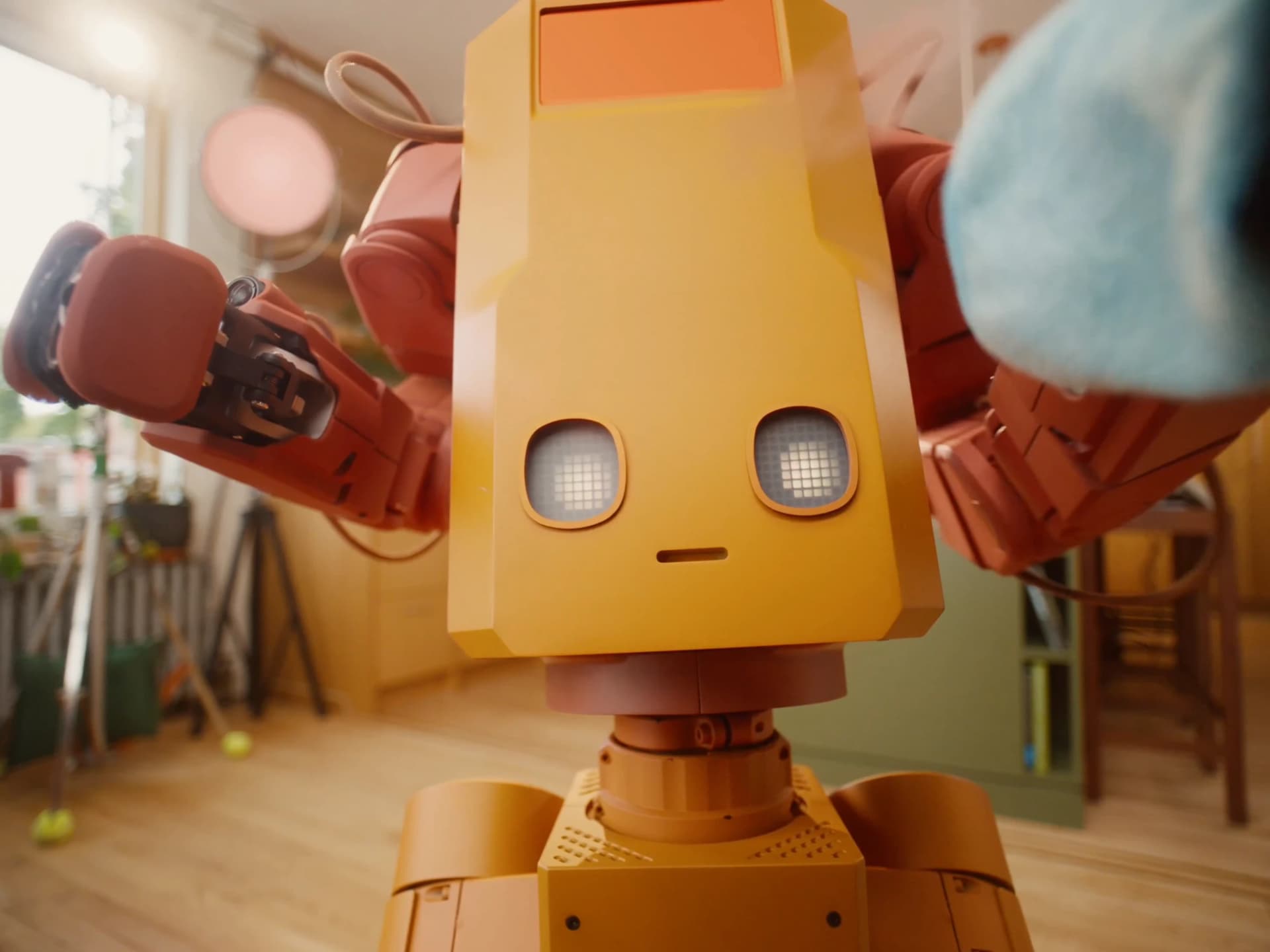
Tuesday Labs’ company page lists experience across its team and advisors from Boston Dynamics, Tesla and Pixar, among other organizations. It says it works with illustrators, character designers and animators to develop a robot people would want to share a home with. The launch materials suggest that effort extends well beyond the hardware to the way Voxel is presented.
What a reservation buys
The reservation page offers a place in the first production run, with individually numbered units. The $200 payment is applied toward a subsequent purchase and can be refunded before an order is placed. The estimated $20,000 price is not final; taxes and delivery fees are confirmed later.
The reservation agreement makes the development stage particularly clear: the robot in the launch materials is a concept and development prototype, and Tuesday Labs expects to substantially redesign its hardware. Appearance, capabilities and specifications may change significantly.
Deliveries are expected in 2028 but may come later, initially in selected US areas. An edition number does not guarantee delivery order.
Voxel therefore arrives as an early look at Tuesday Labs' approach to domestic robotics, with reservations opening well ahead of a finished product. Its proposition is straightforward: a robot that takes responsibility for the small, repeated chores that keep a home in order. The next test will be showing how consistently it can do that outside a launch presentation.
Share this article
Read next
- Published on
- Reading time
- 2 min read
AGCO Signs Agility Deal to Bring Humanoid Robots to Its Kansas Factory
- Published on
- Reading time
- 4 min read
Faraday Future Moves to Give Its Robotics Business a Separate Listed Home in $200 Million Deal
- Published on
- Reading time
- 3 min read
“I Cannot Love Digit 5”: Agility Co-Founder Explains His Robot’s Compromises
- Published on
- Reading time
- 2 min read
Figure’s Humanoid Has Walked 348 Miles on a Treadmill—and It’s Still Going
- Published on
- Reading time
- 3 min read
Tesla Makes Its Case for Board Continuity Ahead of December 3 Shareholder Vote
- Published on
- Reading time
- 2 min read
Agility Taps Logistics Veteran Mark Vale for Board Role Ahead of Merger Vote


The weekly humanoid robotics briefing
One email a week: the launches, funding and research that mattered, with context from Humanoids Daily.
Read recent issues