- Published on
Tesla Patent Application Details Flexible Touch Sensors for Robot Hands
One tap, and our reporting appears more often in your Google Top Stories. It makes a real difference to a small newsroom.

A newly published Tesla patent application describes flexible touch sensors designed to fit the curved surfaces of robotic fingers and palms—a likely part of the company’s work on Optimus, although the filing does not confirm their use in its next-generation hand.
- Tesla describes tactile sensor arrays that conform to fingers, palms and other curved robot surfaces, with individually readable contact-sensing regions.
- The application focuses heavily on manufacturing, including printing conductive patterns and molding layered sensors into three-dimensional shapes.
- The filing explicitly discusses humanoid tactile “skin,” but does not name Optimus or provide performance results for a finished hand.
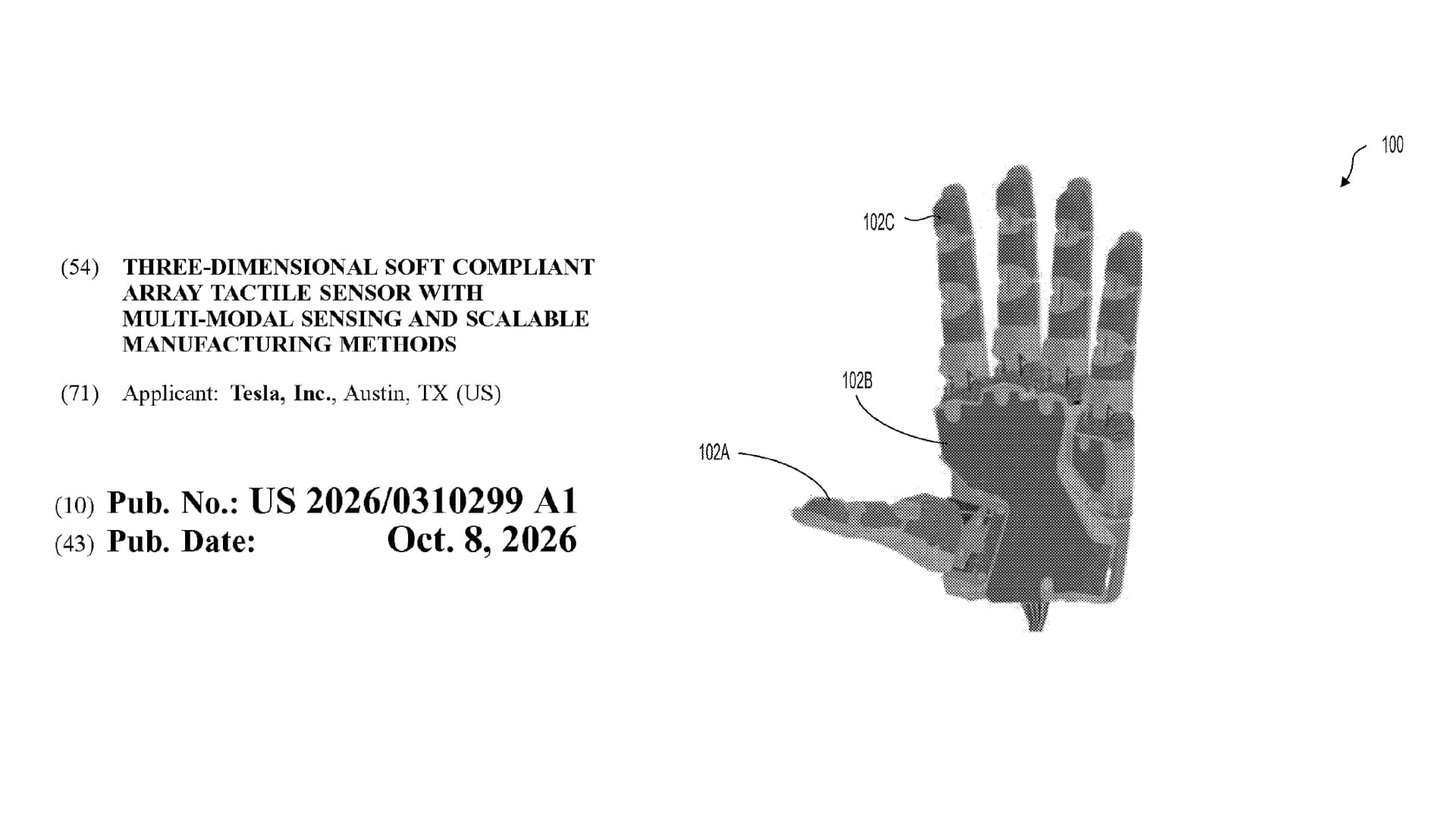
The U.S. application, US20260310299A1, was published on October 8 and flagged by patent researcher SETI Park. Humanoids Daily reviewed the full 28-page publication obtained from the U.S. Patent and Trademark Office.
Tesla filed the application on September 11, 2025, claiming priority to a provisional filing from April 4 that year. Its publication offers a look at earlier engineering work, rather than a new product announcement.
Touch sensors shaped to the hand
The document’s first illustration shows a robotic hand with sensing areas across its thumb, fingers and palm. The description explains that each sensor can contain multiple independently readable regions, described as “pixels,” to detect physical contact.
The weekly humanoid robotics briefing
One email a week: the launches, funding and research that mattered, with context from Humanoids Daily.
Read recent issuesThe proposed sensors use conductive regions on layers of flexible material, separated by another material that responds to pressure. In a capacitive version, compression changes the distance between the conductive regions and therefore their capacitance. A resistive version instead detects changes in electrical resistance as its sensing material deforms.
Tesla also describes forming the sensors around a robot’s outer housing to create tactile skin for a humanoid. That makes Optimus a strong inference as an intended application, even though the document also covers broader uses in robotics and automation.
Here, “three-dimensional” refers to the sensor’s shape and its ability to conform to curved surfaces. It should not be read as a claim that the design measures force in three axes.
How to manufacture it
Much of the filing concerns how to build those curved sensors. One approach starts with a layered structure and uses heat and a mold to form it into the desired shape. Another shapes the underlying material first, then adds conductive patterns and the remaining sensing layers.
The application describes screen printing, laser-based processes, pad printing and three-dimensional deposition as possible manufacturing techniques. It also allows for protective coverings to help shield the sensors from moisture, dust and abrasion.
That manufacturing focus is the useful insight: Tesla is exploring how to integrate touch sensing into the physical contours of a robot, including its hands. The application does not establish which approach Tesla has selected, whether it is used in the new Optimus hand, or how it performs in practice. It provides no measured sensitivity, durability or production-cost results with which to judge those questions.
The broader Optimus manufacturing push
The filing adds context to Tesla’s efforts to scale Optimus. As we recently reported, The Information said Tesla was building several hundred robots a week in August, largely for internal testing, training and data collection, while facing hand-assembly difficulties and touch-sensor durability problems. The patent does not establish that its design addresses those reported failures.
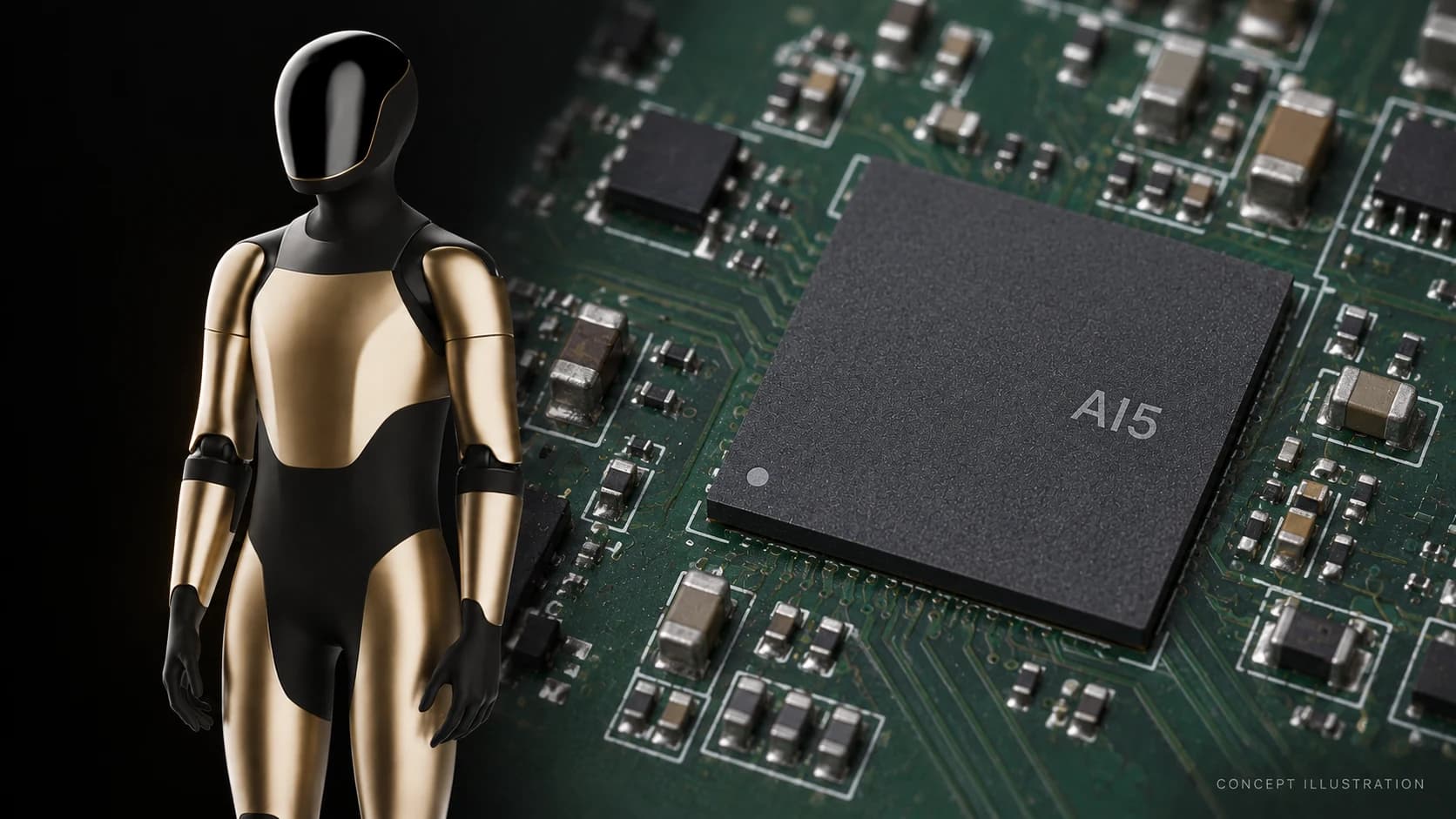
Component availability is another part of that effort. In our coverage of Tesla’s AI5 and AI6 memory changes, Elon Musk said Tesla halved AI5’s RAM allocation and cut AI6’s by one-third to secure enough memory for Optimus production, while keeping bandwidth unchanged. Together, these developments illustrate the range of hardware and supply challenges behind producing humanoids at scale.
Share this article
Read next
- Published on
- Reading time
- 3 min read
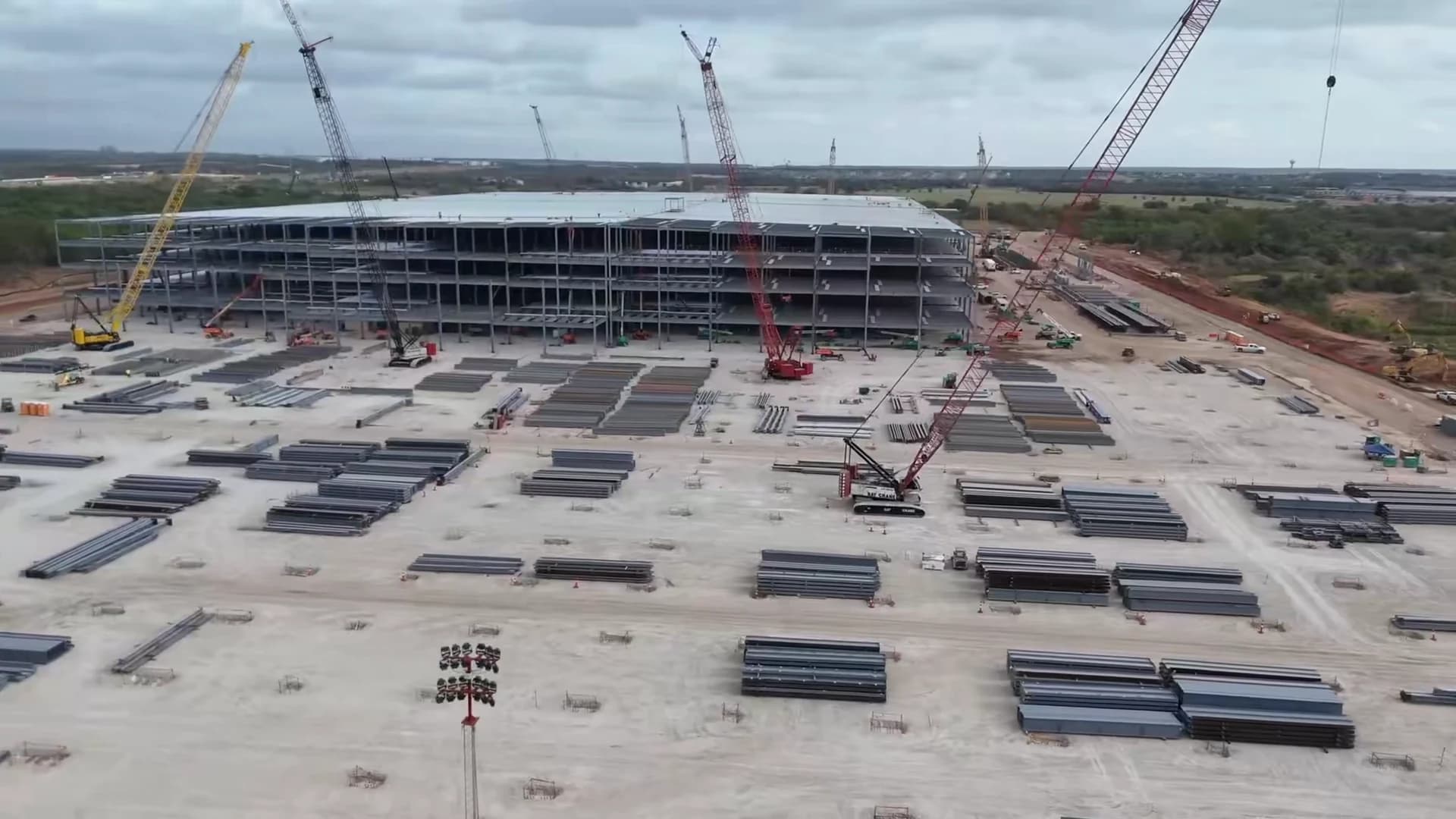
Tesla Optimus Plant Takes Shape in Texas, With Steel Structure Estimated at 40%
- Published on
- Reading time
- 3 min read
Musk Says Tesla Halved AI5 RAM to Secure Memory for Optimus Production
- Published on
- Reading time
- 8 min read
Tesla Reportedly Builds Hundreds of Optimus Robots a Week
- Published on
- Reading time
- 5 min read
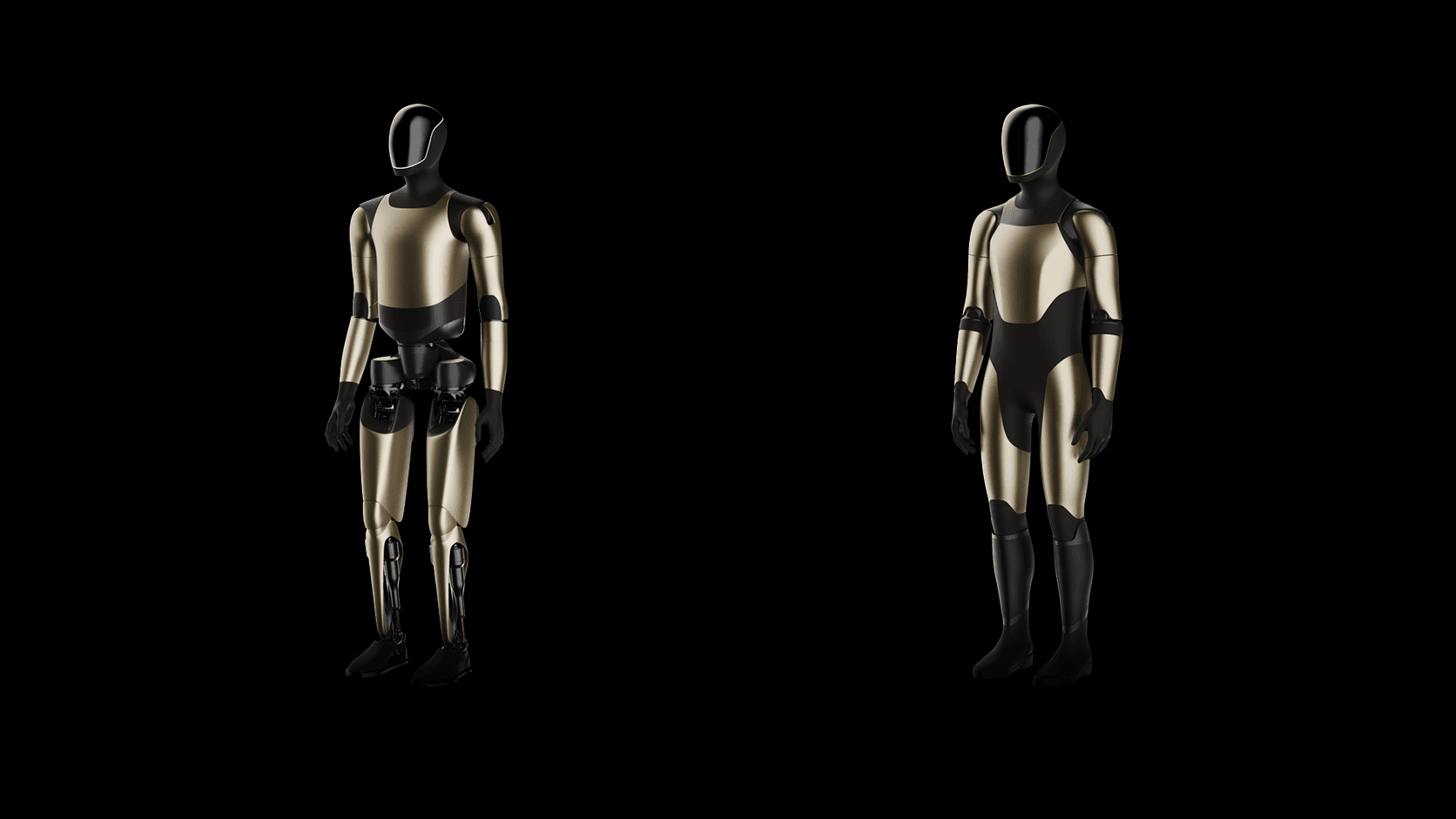
Tesla App Contains Optimus Gen 3 Renders—Here’s What They Show
- Published on
- Reading time
- 4 min read
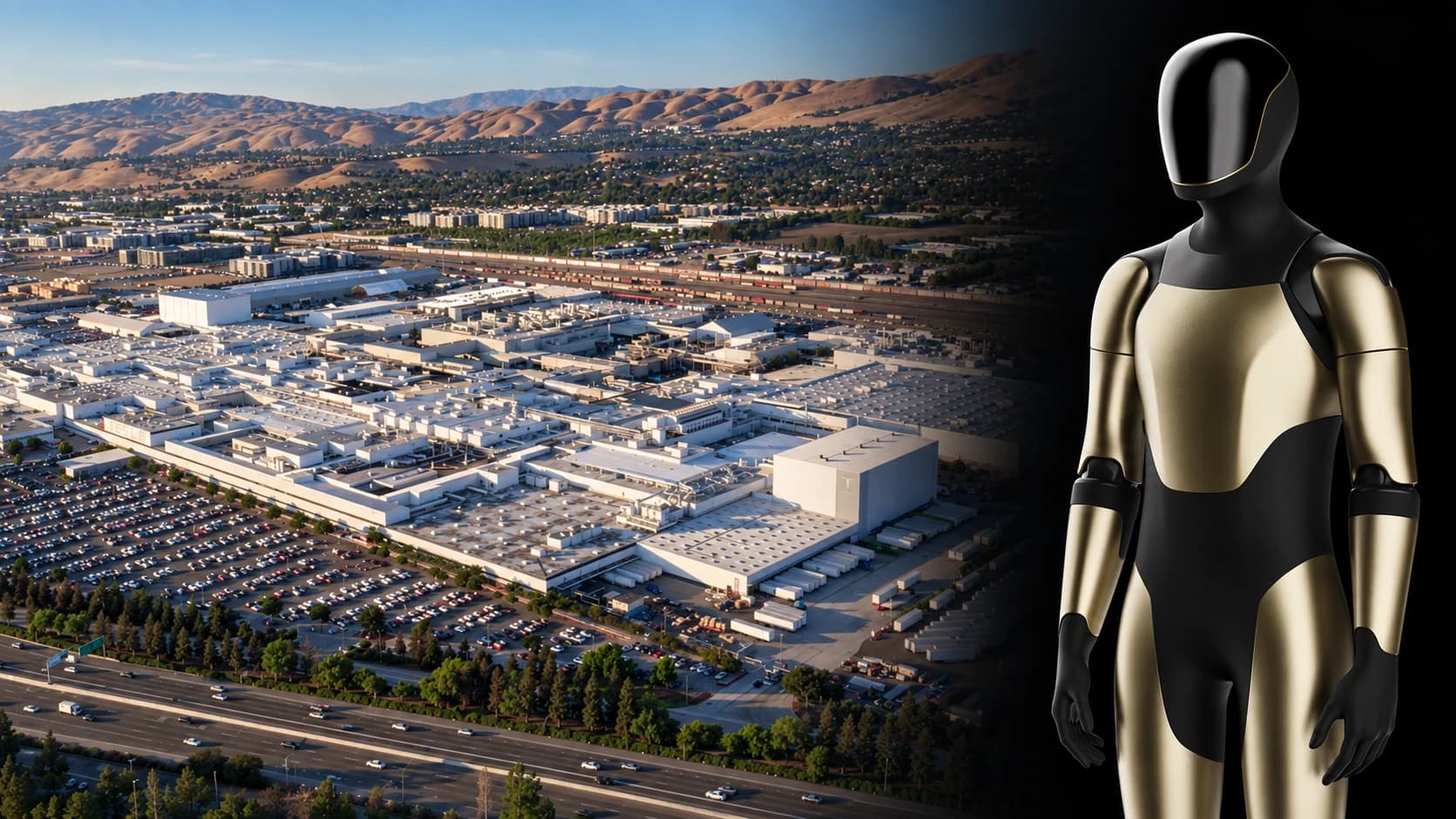
Supply Chain Rumors Hint at Massive Optimus Order as Fremont Production Line Ramps Up
- Published on
- Reading time
- 5 min read
The Terafab Manifesto: Tesla and Intel Join Forces to Power Musk’s "Galactic" AI Ambitions
The weekly humanoid robotics briefing
One email a week: the launches, funding and research that mattered, with context from Humanoids Daily.
Read recent issues