- Published on
Musk Details Optimus Hand Challenges, Warns of Slow Initial Production Ramp
One tap, and our reporting appears more often in your Google Top Stories. It makes a real difference to a small newsroom.


Your guide
Rich Robinson
Jee Chee Ren · Executive tour
See China’s AI and robotics ecosystem first-hand.
Six days exploring AI, robotics and advanced manufacturing.
With Rich Robinson, Clinical Professor of Entrepreneurship at Peking University
Beijing · Guangzhou · Shenzhen
29 November–4 December 2026
Referral partnership · We earn a commission on referred bookings.
- Elon Musk said Optimus’s initial production ramp will be slow as Tesla works through hand engineering and supply-chain constraints.
- At X Takeover on October 10, he described the difficulty of combining precise manipulation, force, durable touch sensors and replaceable finger coverings.
- Musk said China’s motor-magnet export restrictions delayed the program by two or three months last year, reinforcing Tesla’s push for domestic component alternatives.
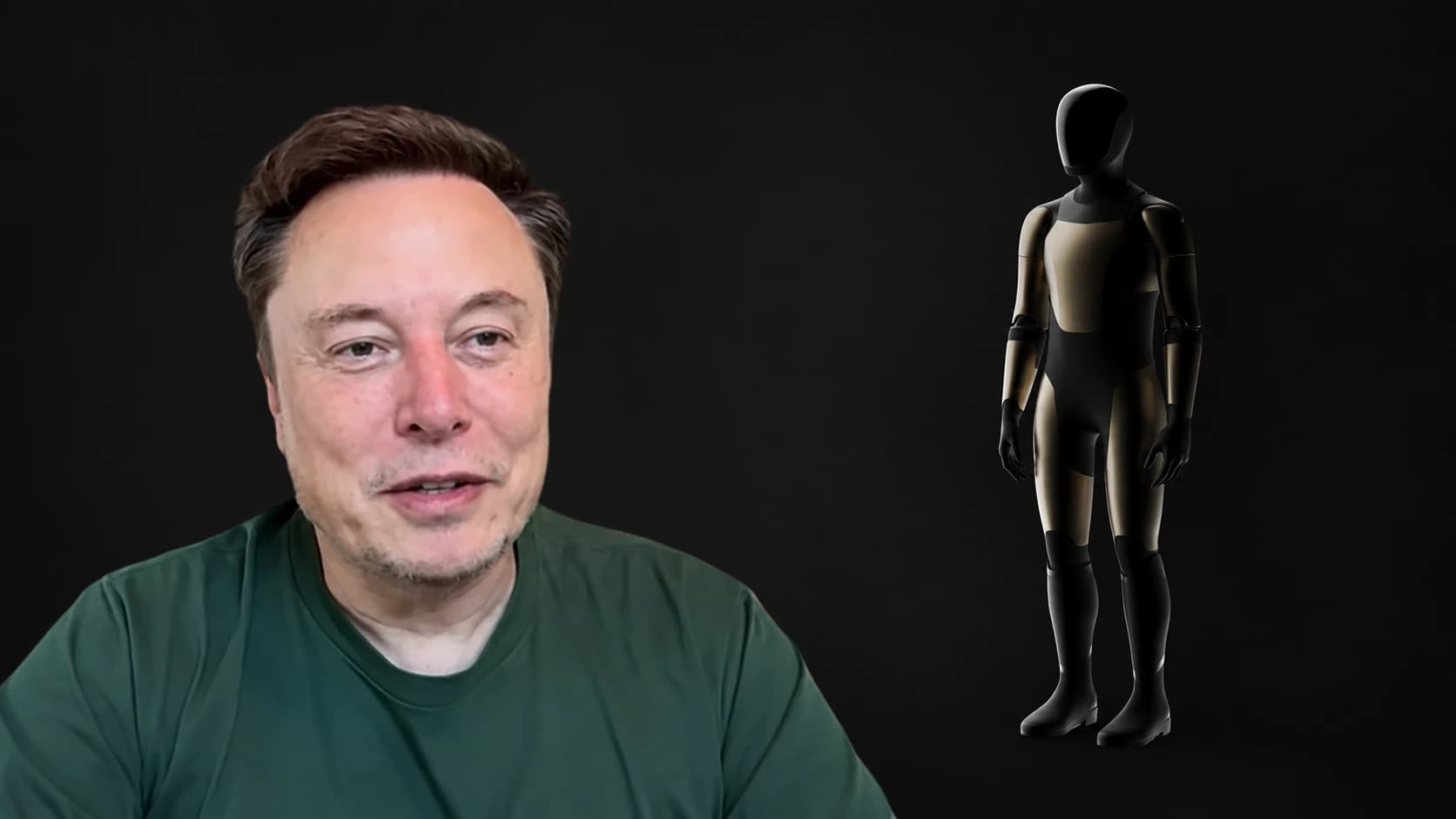
Elon Musk has detailed the engineering problems behind Optimus’s hands and warned that its production ramp will start slowly, even as Tesla pursues much larger manufacturing volumes.
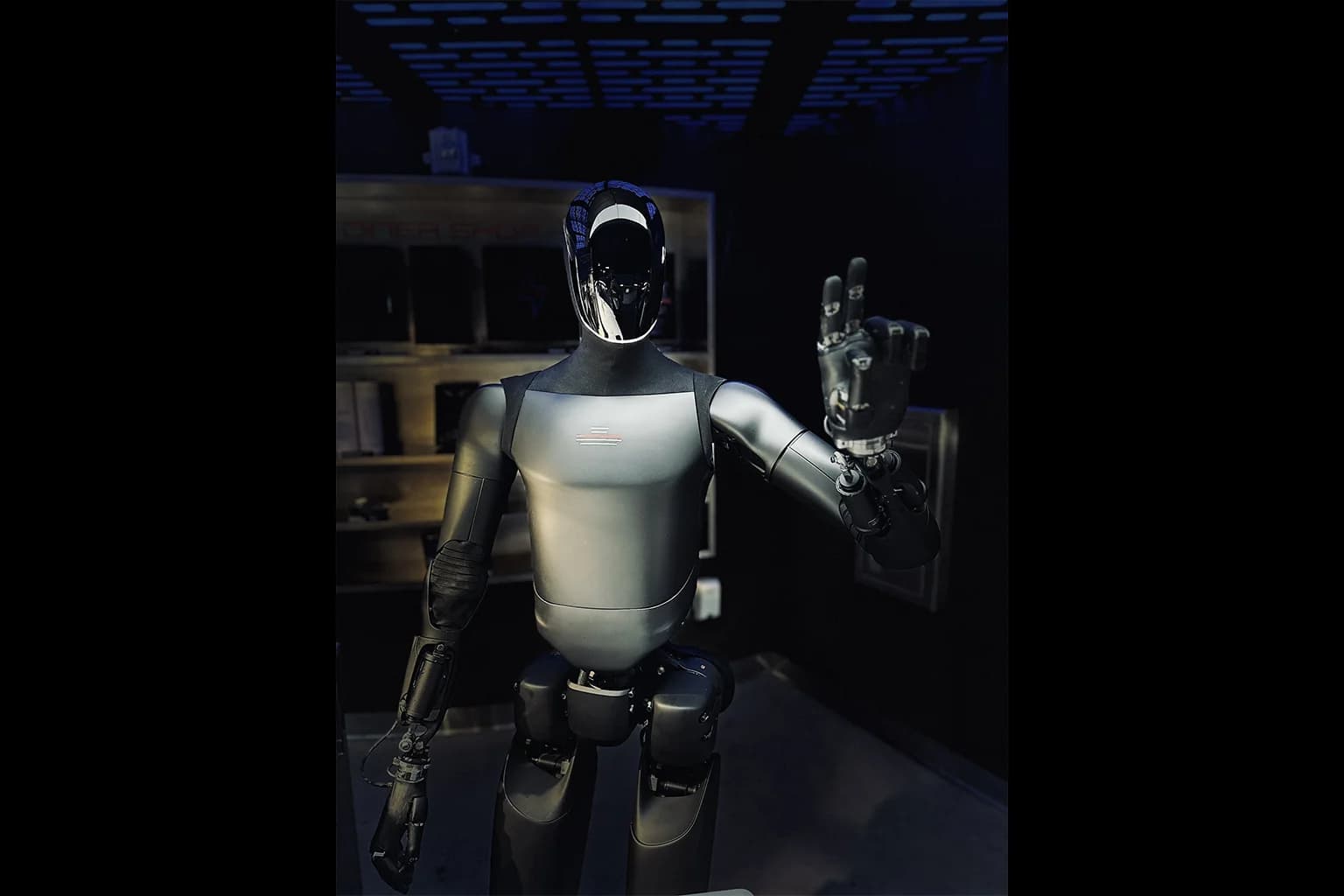
Speaking by video call at X Takeover on October 10, Musk described a collection of practical challenges: fingers that can manipulate tiny objects while applying force, touch sensors that survive repeated deformation, and outer coverings that grip securely but can be replaced when worn.
He also said China’s restrictions on exports of magnets used in electric motors set the Optimus program back by two or three months last year. Tesla needs to be able to produce the robot in the United States even if Chinese supply is interrupted, he said.
The Optimus discussion begins at 34:26 in the interview.
The weekly humanoid robotics briefing
One email a week: the launches, funding and research that mattered, with context from Humanoids Daily.
Read recent issuesA hand must be precise, strong and durable
Asked about progress on Optimus V3 and competing humanoids, Musk focused on the difficulty of reproducing everyday hand movements. Signing a name requires fine control; picking up a small screw and driving it into wood adds the need to apply pressure and torque without losing precision.
Touch sensing adds another set of constraints. Sensors near the surface risk damage, Musk said, while compliant fingers need sensing materials that can deform repeatedly without failing after a few thousand cycles. Human hands continually repair themselves; a robot’s components must instead withstand wear or be replaced.
His jar-opening example highlighted a less visible problem: rubber covering a finger can slip around the underlying structure when torque is applied. Tesla has to secure that covering while keeping it replaceable.
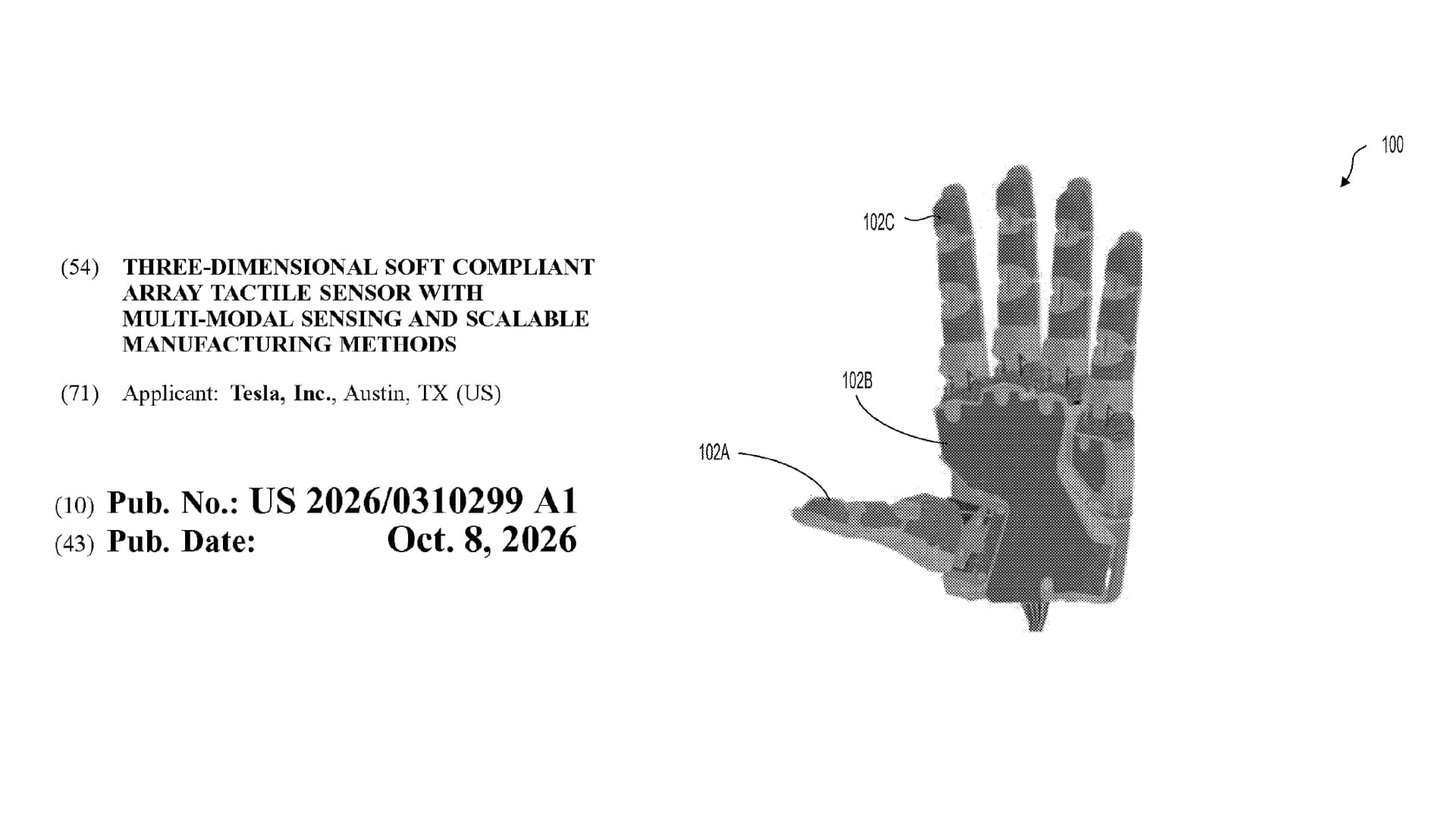
The discussion connects directly to our coverage of Tesla’s flexible touch-sensor patent application. That filing describes sensors formed around curved surfaces and protective layers against abrasion and other exposure. It does not establish which design Tesla uses in Optimus, or provide durability results. Musk’s remarks explain the engineering requirements, but do not confirm that the patent’s approaches have solved them.
Supply interruptions shape the production ramp
Musk reaffirmed his expectation of very high production volumes, while saying the beginning of the production curve would be slow. Resolving the robot’s design is only part of the work; Tesla also needs component supply that can scale.
He attributed last year’s two-to-three-month setback to unavailable motor magnets, saying Tesla was left with robots without arms. His proposed response is the ability to make all the parts domestically if another interruption occurs. That is an objective, not evidence that a fully domestic supply chain is already in place.
The remarks add context to our examination of Ningbo’s role in Optimus’s supply chain. Established Chinese suppliers offer precision manufacturing and experience with demanding components. Developing alternative sources requires comparable consistency, capacity and cost, beyond establishing an assembly operation in the United States.
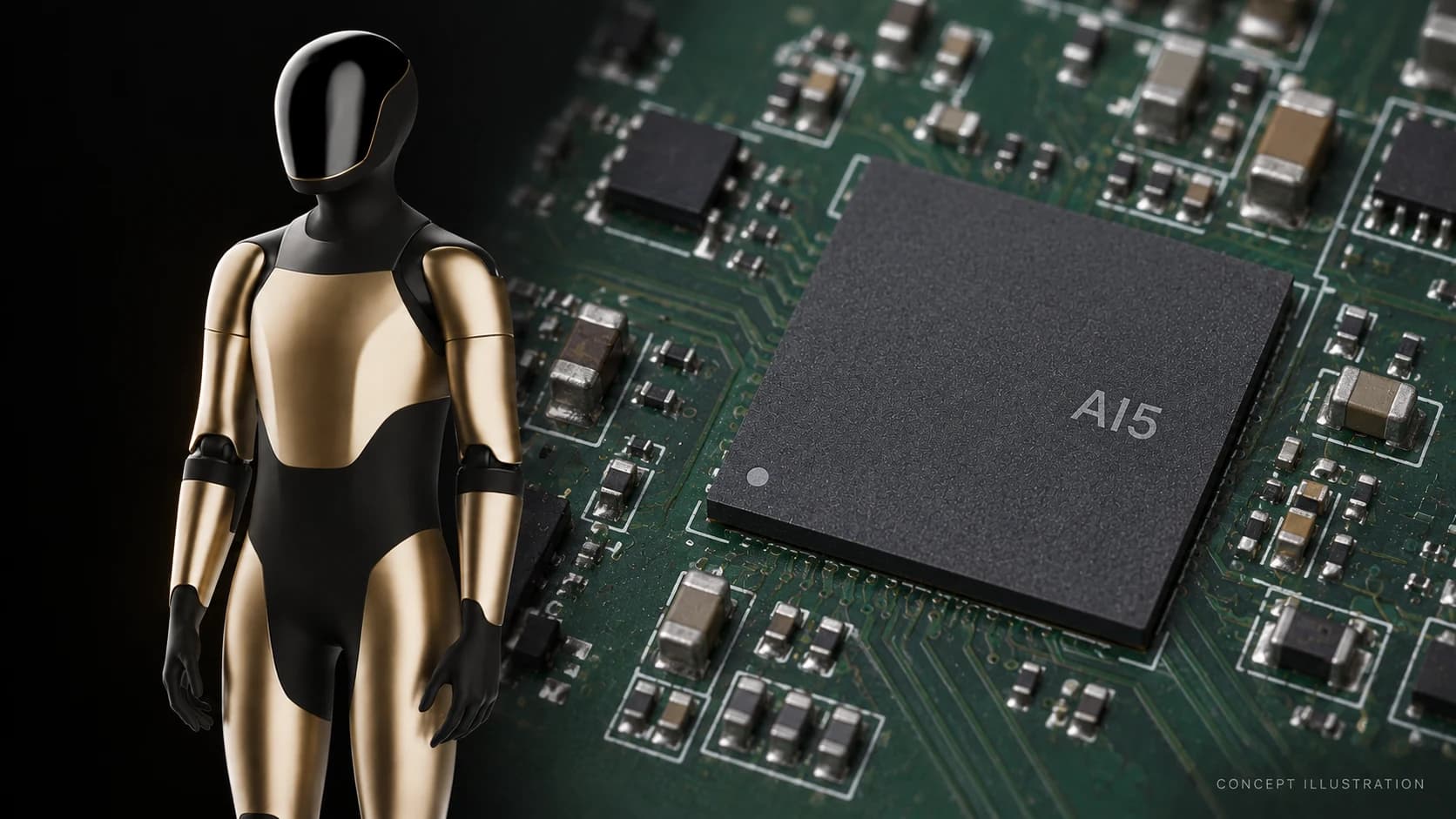
Memory availability is another constraint. As we recently reported, Musk said Tesla halved AI5’s planned RAM allocation and reduced AI6’s by one-third to secure enough memory for Optimus production, while retaining bandwidth. That separate announcement illustrates how supply considerations can change the robot’s computing plans as well as its mechanical components.
Factory progress and useful output are separate milestones
Tesla’s physical expansion is also advancing. In our latest Texas factory update, construction observer Joe Tegtmeyer estimated that about 40% of the basic steel structure was assembled. That measure concerns the frame, not overall factory completion or installed production capacity.
Meanwhile, The Information’s production reporting, covered here in September, described several hundred robots being built weekly at Fremont in August, largely for internal testing, training and data collection. It also reported hand-assembly difficulties and touch-sensor durability problems. Musk’s interview does not independently confirm those output figures or establish that the commercial design is finished.
He also emphasized the AI needed to connect vision and touch with motor commands and respond to unfamiliar situations. His broad criticism of complicated robot demonstrations as largely scripted was his assessment, rather than evidence about particular competitors’ systems.
The useful detail in his account is how closely the challenges interact. Dexterity depends on sensing and control, repeated use depends on durability, and higher output depends on making those components consistently. A growing factory and more development robots provide room to work on those problems; the interview offers no measured results showing they have been resolved.
Share this article
Read next
- Published on
- Reading time
- 5 min read
The Terafab Manifesto: Tesla and Intel Join Forces to Power Musk’s "Galactic" AI Ambitions
- Published on
- Reading time
- 3 min read
Musk Says Tesla Halved AI5 RAM to Secure Memory for Optimus Production
- Published on
- Reading time
- 5 min read
Tesla App Contains Optimus Gen 3 Renders—Here’s What They Show
- Published on
- Reading time
- 4 min read
Supply Chain Rumors Hint at Massive Optimus Order as Fremont Production Line Ramps Up
- Published on
- Reading time
- 3 min read
Finishing Touches: Tesla Misses Self-Imposed Q1 Deadline for Optimus Gen 3 Reveal
- Published on
- Reading time
- 3 min read
A 'Formula One' Pace: Tesla's Optimus Director Teases Gen 3 Prototype in New Recruitment Push
The weekly humanoid robotics briefing
One email a week: the launches, funding and research that mattered, with context from Humanoids Daily.
Read recent issues