- Published on
Physical Intelligence Opens API Beta for Robot Model Training and Inference
One tap, and our reporting appears more often in your Google Top Stories. It makes a real difference to a small newsroom.


Your guide
Rich Robinson
Jee Chee Ren · Executive tour
See China’s AI and robotics ecosystem first-hand.
Six days exploring AI, robotics and advanced manufacturing.
With Rich Robinson, Clinical Professor of Entrepreneurship at Peking University
Beijing · Guangzhou · Shenzhen
29 November–4 December 2026
Referral partnership · We earn a commission on referred bookings.
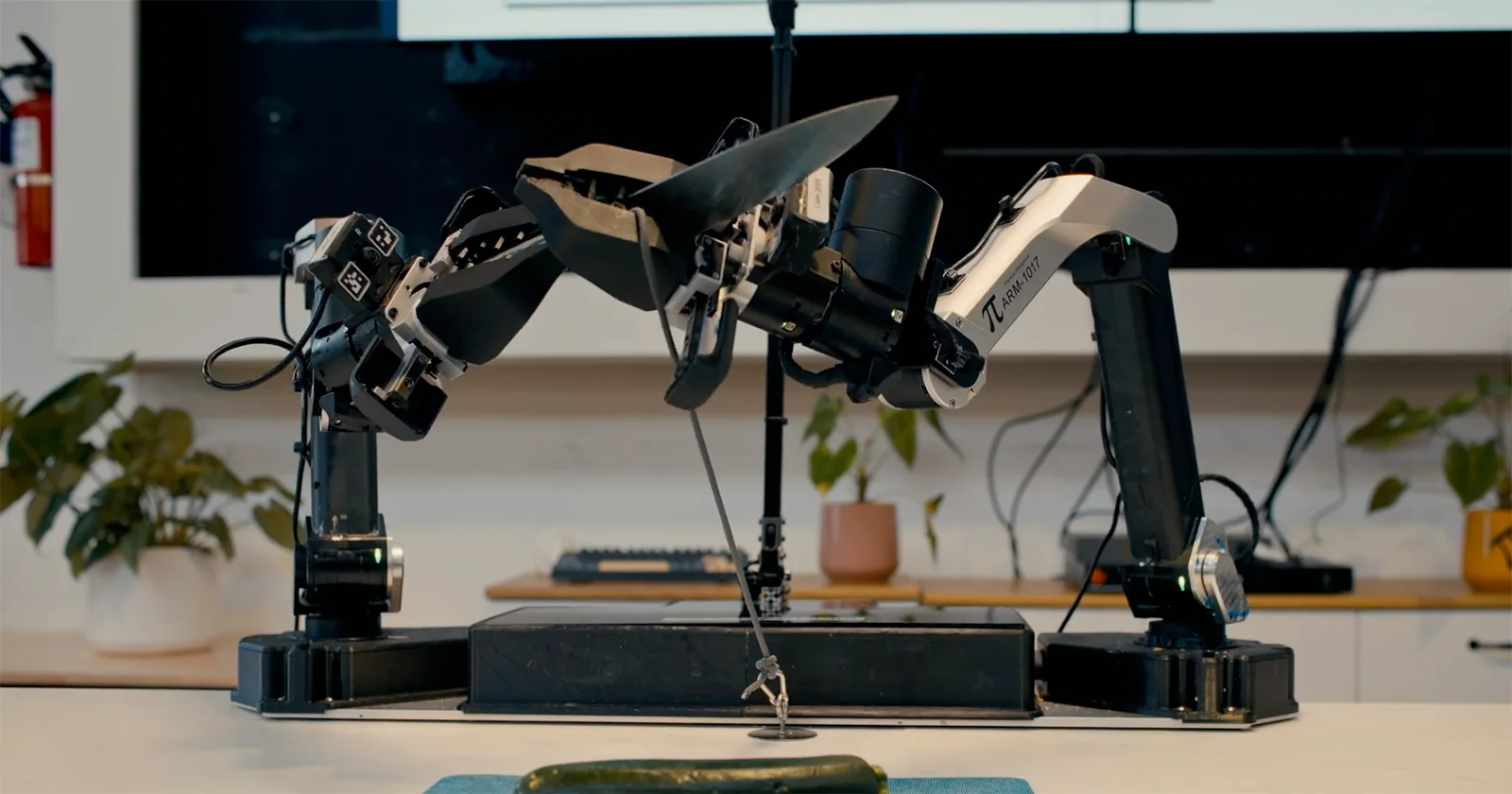
Physical Intelligence has announced a beta API for training and running its robot models, taking another step toward supplying the intelligence behind other companies’ machines.
- Developers can fine-tune models on PI-managed infrastructure and use hosted inference.
- Access is application-based, with teams onboarded in batches.
- Robot data collection and evaluation remain part of the development process.
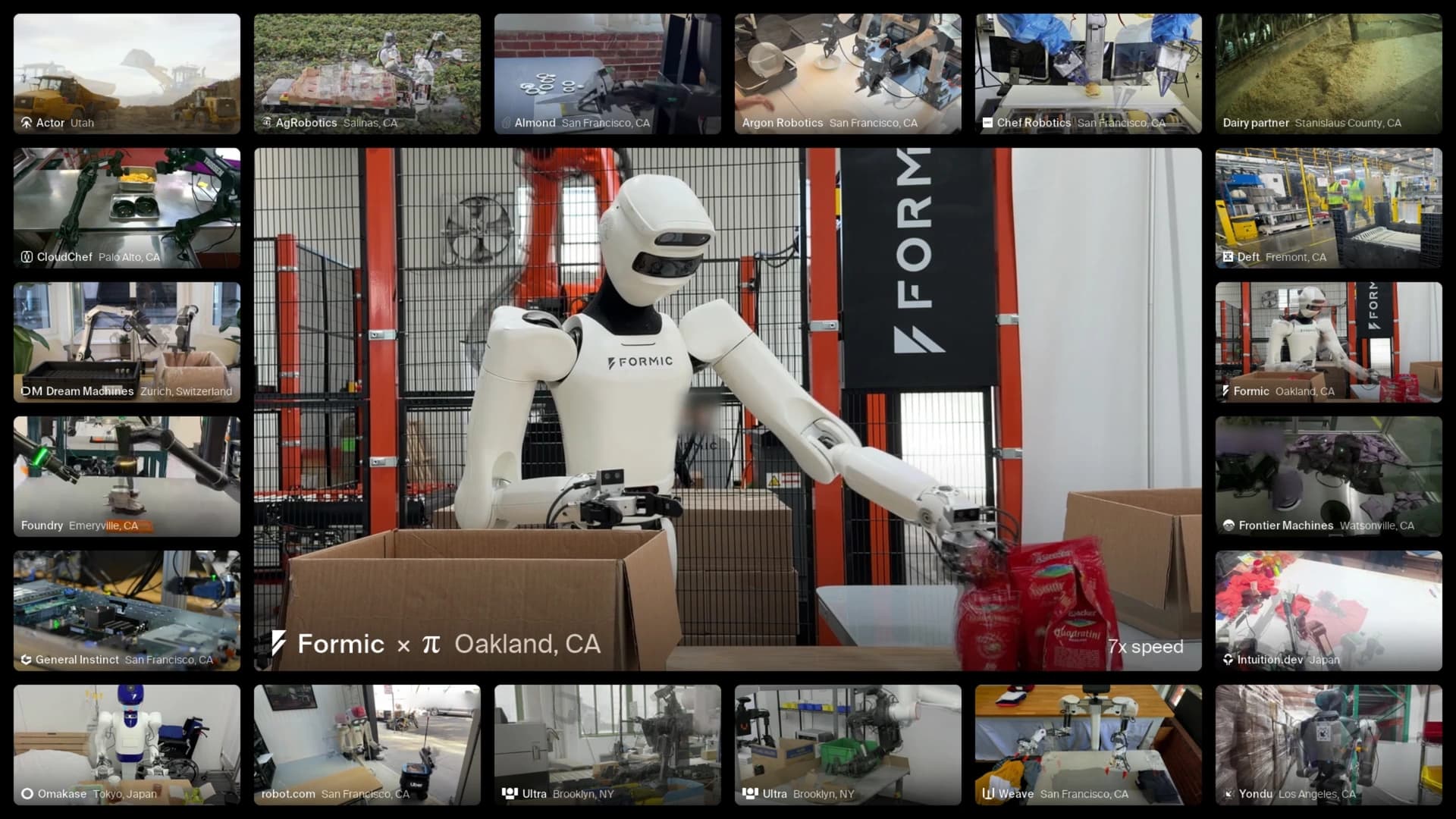
Announced on October 13, the service lets teams upload demonstrations, train a policy and test it on hardware, then collect further data around failures. PI says most showcased applications used cloud inference, with network connectivity proving challenging for some.
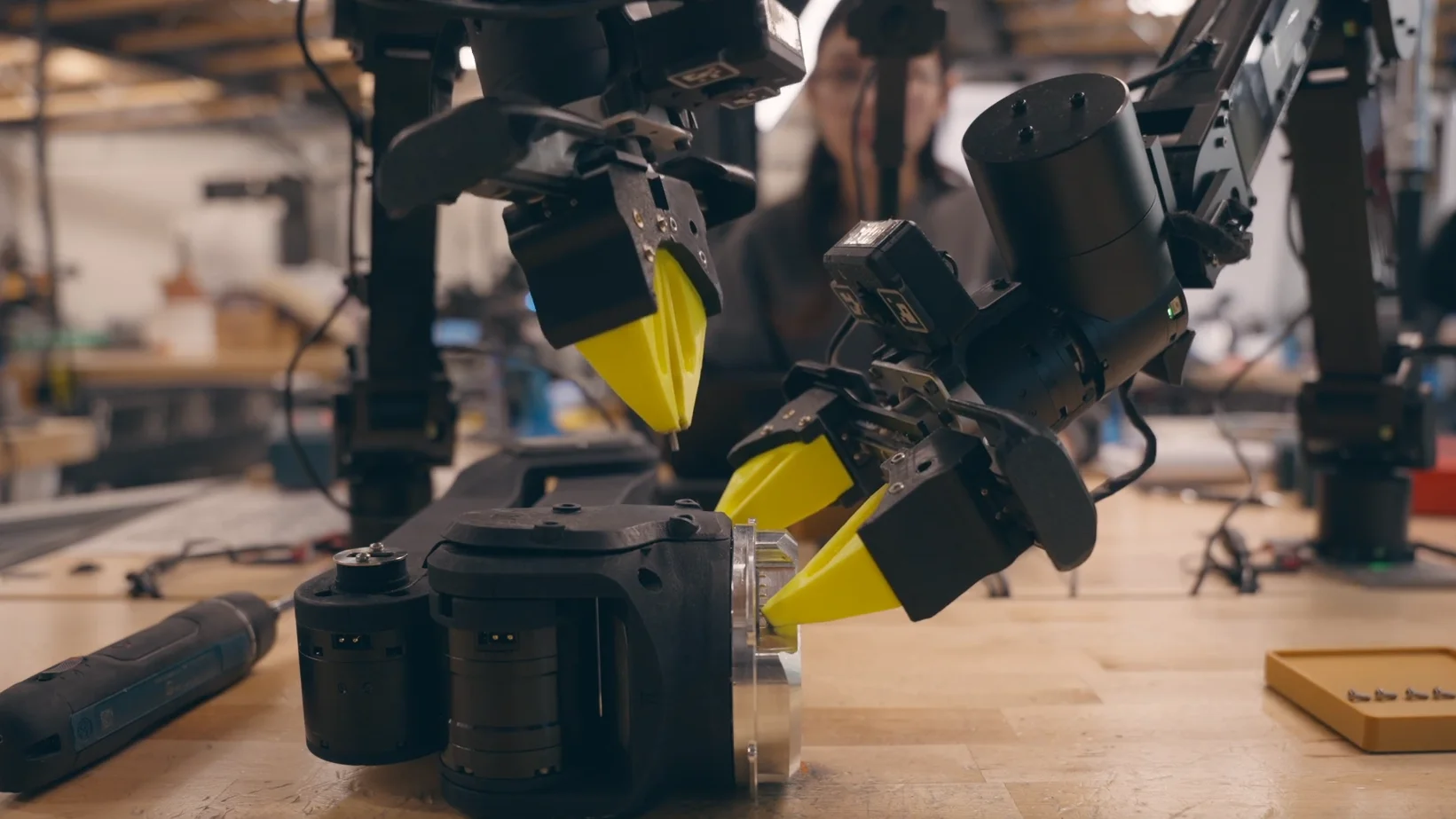
One example is Almond’s Axol dual-arm robot deburring spacers for its own assembly. PI says the team reached that demonstration after four days of API iteration. Its broader collaborations include Actor, whose wheel loader loads dump trucks in a commercial deployment.
A managed route to robot models
PI already distributes models and training tools through openpi, including π0, π0-FAST and π0.5. That repository provides checkpoints and examples for adapting models to developers’ datasets, but users must configure data processing, training and policy serving themselves.
The weekly humanoid robotics briefing
One email a week: the launches, funding and research that mattered, with context from Humanoids Daily.
Read recent issuesThe API’s managed approach could make experimentation more accessible to teams whose expertise lies in hardware or a particular application. That is the practical opportunity: less infrastructure to maintain while investigating whether a learned policy can reliably perform a useful job.
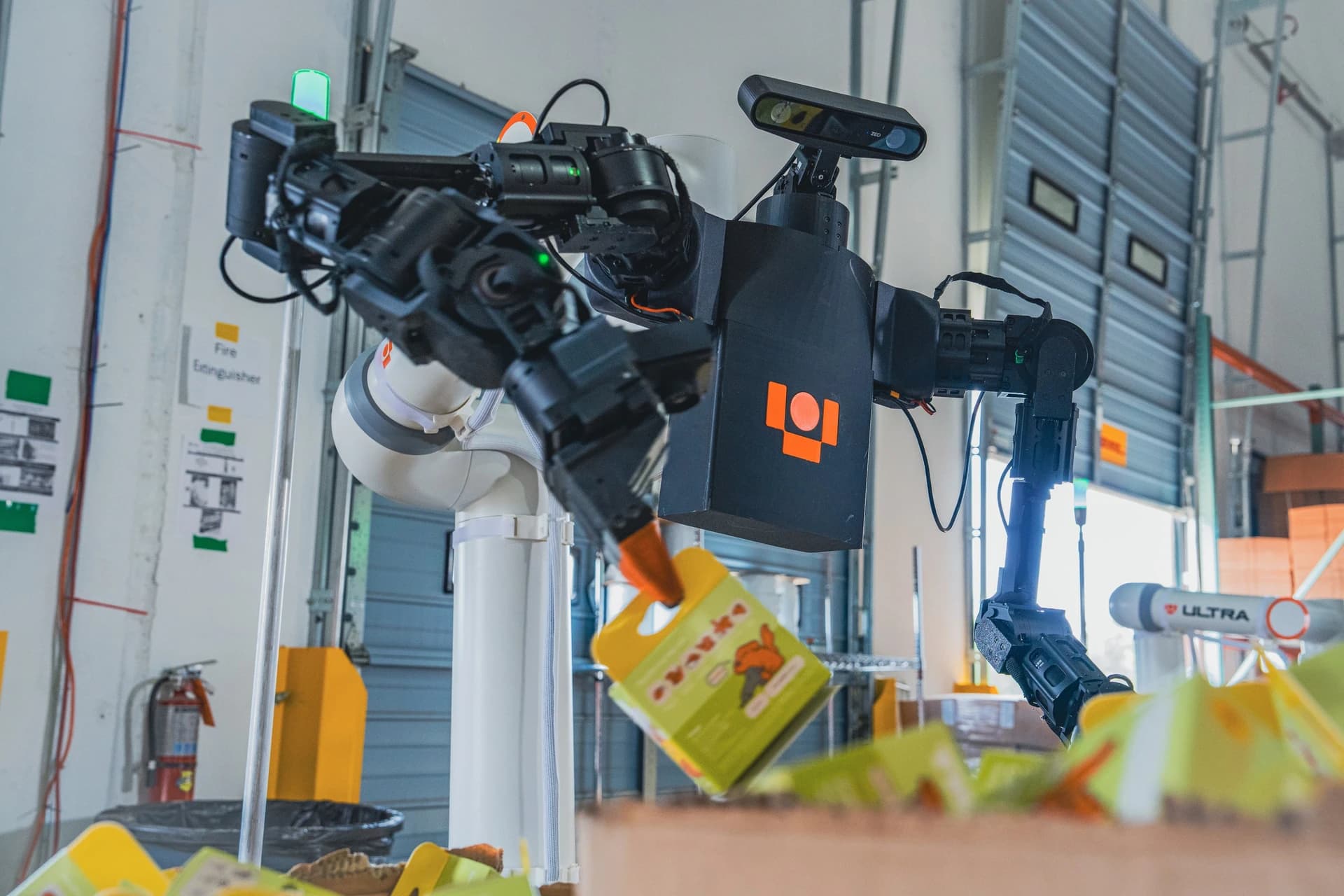
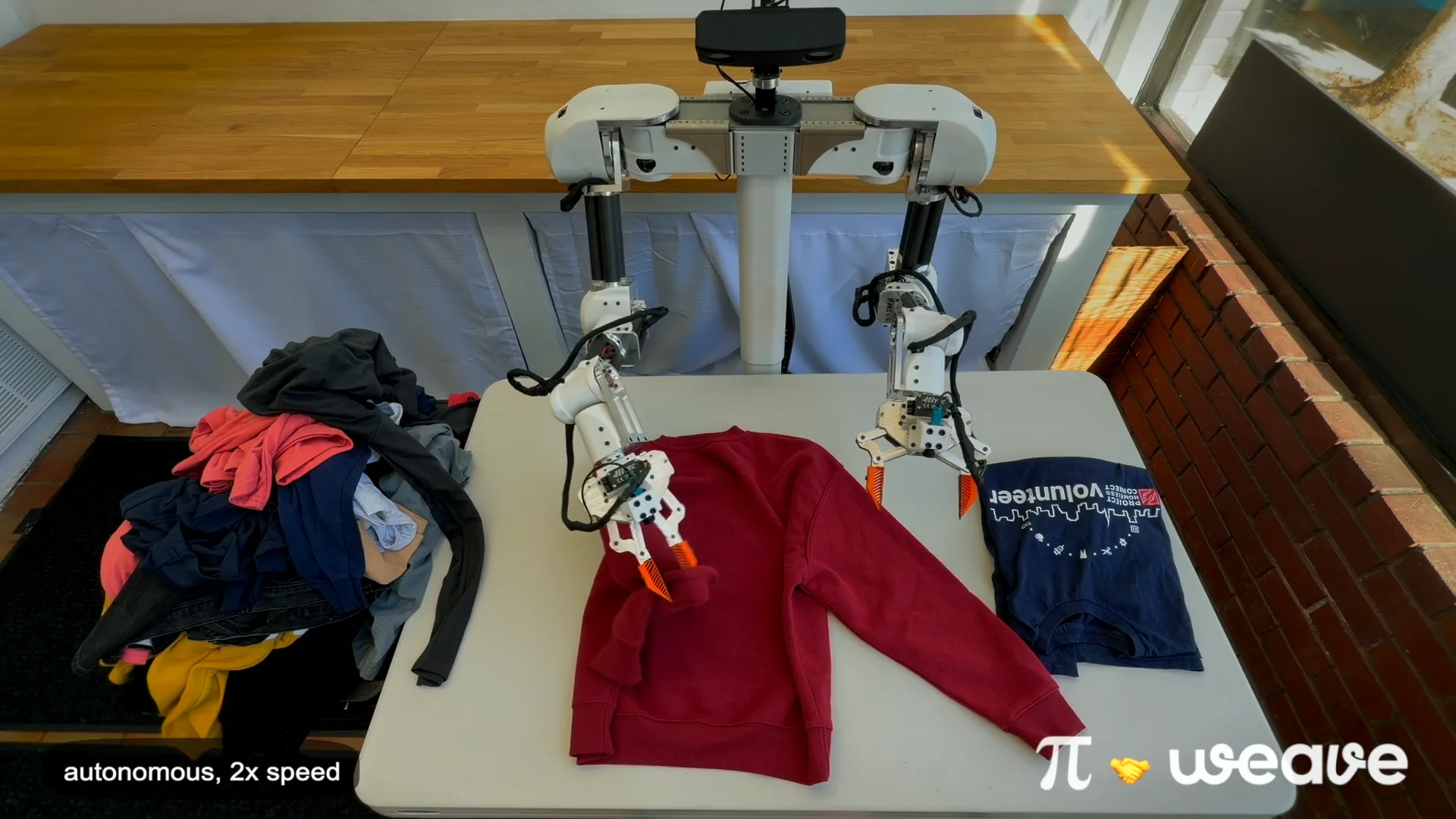
The launch builds on our earlier coverage of PI’s work with Weave and Ultra, which examined its models in laundry folding and industrial packaging. Those partnerships illustrated the business proposition of supplying a shared model foundation across different robot makers.
Applications are open
The beta application form says PI is starting small. It asks about applicants’ robot setups, training experience, available teleoperation data, intended simulation data and task success criteria. It also asks whether inference needs to run in the cloud, locally or both; that question alone does not establish local deployment availability.
For prospective users, the next step is applying with a concrete task and hardware setup. The rollout offers a way to test the shared-model approach against the requirements of an actual deployment.
Share this article
Read next
- Published on
- Reading time
- 3 min read
Ultra Raises $50 Million Series A for Warehouse Robots, Deepens Physical Intelligence Partnership
- Published on
- Reading time
- 6 min read
Physical Intelligence Unveils π0.7: The Rise of Compositional Generalization in Robotics
- Published on
- Reading time
- 4 min read
Physical Intelligence in Talks for $1 Billion Round, Eyeing an $11 Billion Valuation
- Published on
- Reading time
- 4 min read
The Last Millimeter: Physical Intelligence Unveils RL Tokens for Hyper-Fast Precision
- Published on
- Reading time
- 4 min read
Don’t Forget the Salt: Physical Intelligence Equips Robots with 15-Minute "Multi-Scale" Memory
- Published on
- Reading time
- 5 min read
The API-fication of Robotics: Physical Intelligence Unveils Real-World Performance Data with Weave and Ultra


The weekly humanoid robotics briefing
One email a week: the launches, funding and research that mattered, with context from Humanoids Daily.
Read recent issues