- Published on
Audi Partners with Mimic Robotics for AI-Driven Automotive Assembly
One tap, and our reporting appears more often in your Google Top Stories. It makes a real difference to a small newsroom.

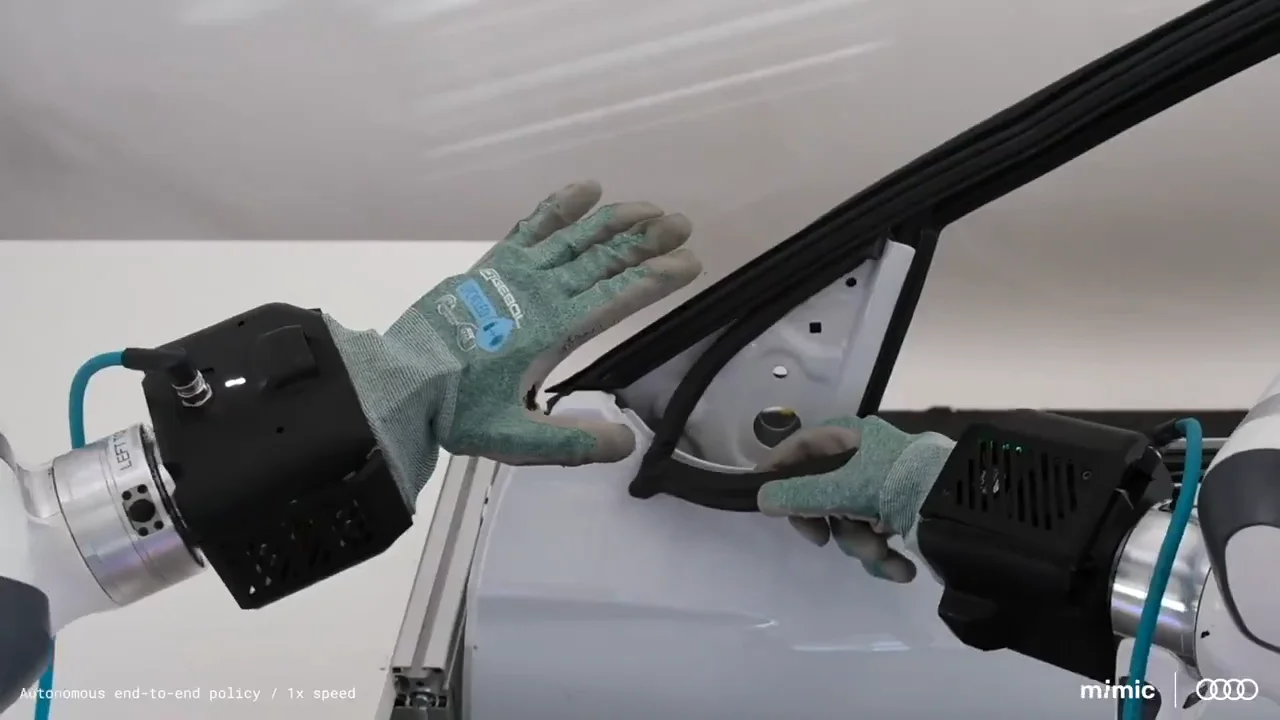
The industrial automation landscape is undergoing a fundamental shift from rule-based rigidity to the adaptive intelligence of foundation models. In the latest high-profile validation of this trend, German automotive giant Audi has announced a strategic collaboration with Mimic Robotics, a Zurich-based startup specializing in dexterous manipulation.
The partnership focuses on bringing AI-driven robotics into industrial production. A first look at the companies' joint work shows a bimanual platform autonomously installing a rubber weather strip onto a car door frame—a task that has traditionally been a bottleneck for automation due to the flexible nature of materials and the high precision required for insertion.
From Explicit Programming to Pixel-to-Action
The collaboration centers on Mimic’s "pixel-to-action" architecture. Unlike traditional industrial robots that require engineers to manually script every motion, Mimic’s system utilizes an end-to-end policy that translates raw sensor data directly into coordinated movements.
According to industry analysts, this "foundation model moment" for automation eliminates the need for hand-engineered perception pipelines. Instead, the system learns complex, long-horizon tasks by observing demonstrations and generalizing across environmental variations—a capability essential for high-mix, high-value manufacturing.
The weekly humanoid robotics briefing
One email a week: the launches, funding and research that mattered, with context from Humanoids Daily.
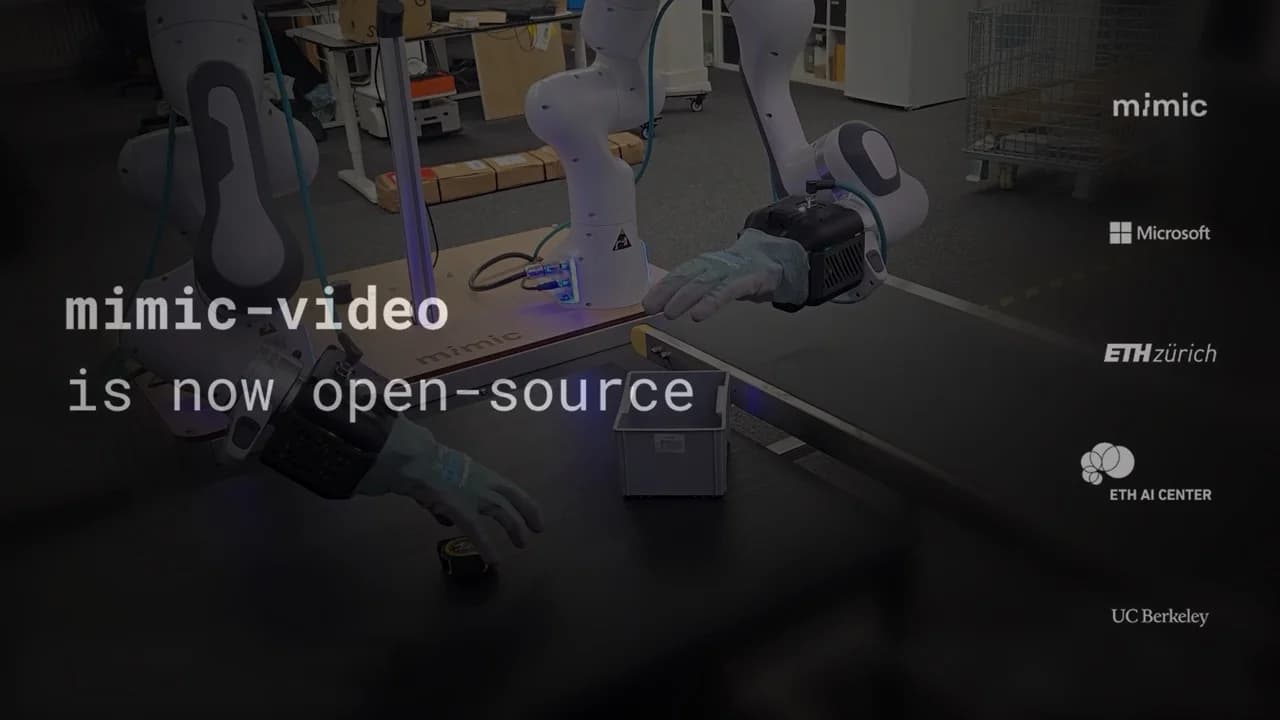
Read recent issuesTechnical documentation from the startup highlights their use of mimic-video, a Video-Action Model (VAM) that leverages pretrained video backbones to understand physical dynamics. This approach reportedly improves sample efficiency by 10x compared to standard Vision-Language-Action (VLA) models, allowing robots to learn industrial tasks from significantly less demonstration data.
A Pragmatic Pivot to Dexterity
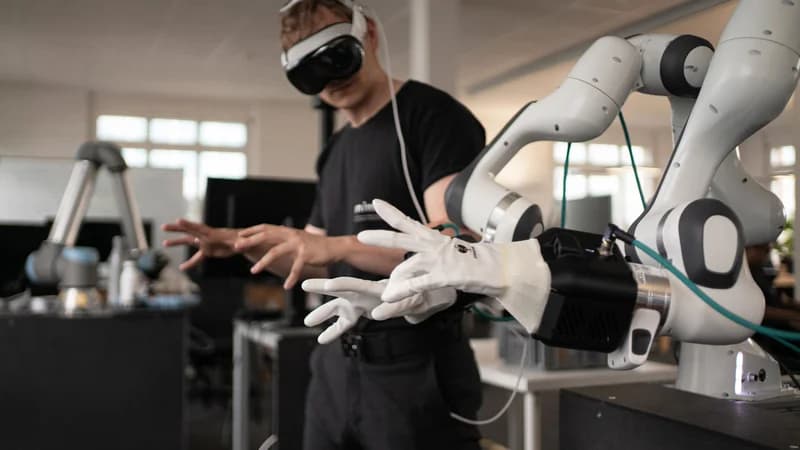
Founded in 2024 as a spin-off from ETH Zurich, Mimic recently secured $16 million in seed funding to advance its specific vision for "Physical AI". While many competitors are racing to build full-body humanoids, Mimic’s strategy focuses on pairing its proprietary 16-DoF dexterous humanoid hands with "proven, off-the-shelf robot arms".
The company argues that the full-body humanoid form factor often lacks industrial value compared to the efficiency of pairing high-dexterity end-effectors with established robotic platforms. To train these systems, Mimic uses a unique data-acquisition pipeline where human operators wear proprietary devices to capture detailed movement data during normal factory shifts, which is then used for imitation learning.

Zurich’s Growing Gravity
The partnership further solidifies Zurich’s status as Europe’s "Robotics Valley." The city’s ecosystem is increasingly attracting firms looking to bridge the gap between abstract AI and physical control. This trend was highlighted in late 2025 when Neura Robotics relocated its humanoid R&D to Zurich to tap into the local talent pool for Physical AI and cognitive software.
The Humanoid-Automotive Convergence
Audi’s move into learning-based assembly follows a wave of similar deployments across the automotive sector:
- BMW: Recently completed an 11-month pilot retiring the Figure 02 fleet after loading over 90,000 sheet metal parts at its Spartanburg facility.
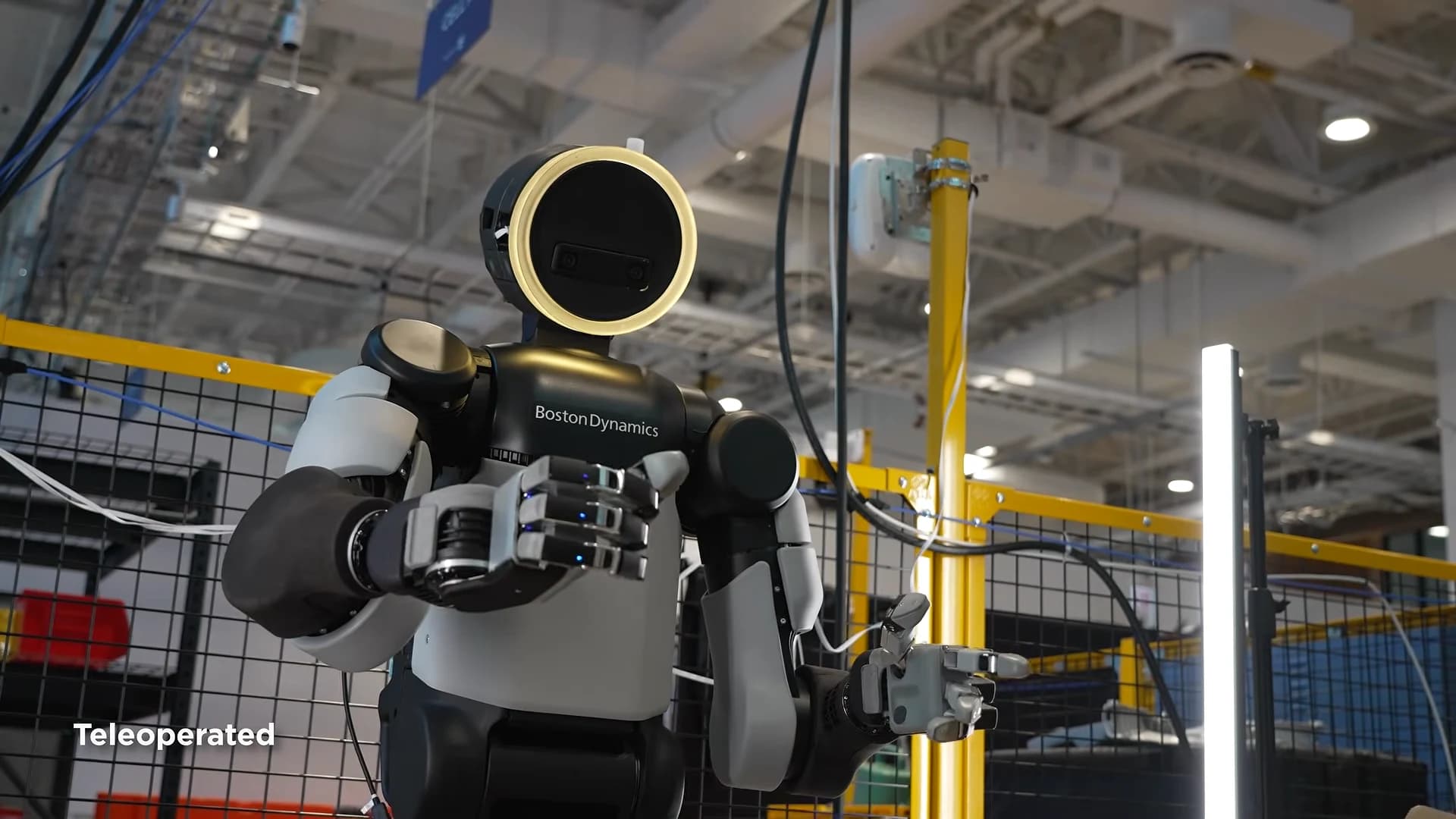
- Hyundai: Is leveraging its ownership of Boston Dynamics to prepare a production-ready Atlas for sequencing tasks at its Georgia Metaplant.
- Ford: Has conducted successful kitting and bin-picking trials in Cologne using the HMND 01 Alpha from UK startup Humanoid.
- Renault: Formed a strategic partnership with Wandercraft to develop the "Calvin" family of industrial humanoids for physically strenuous tasks.
- Mercedes-Benz: The German automaker is invested in Apptronik.
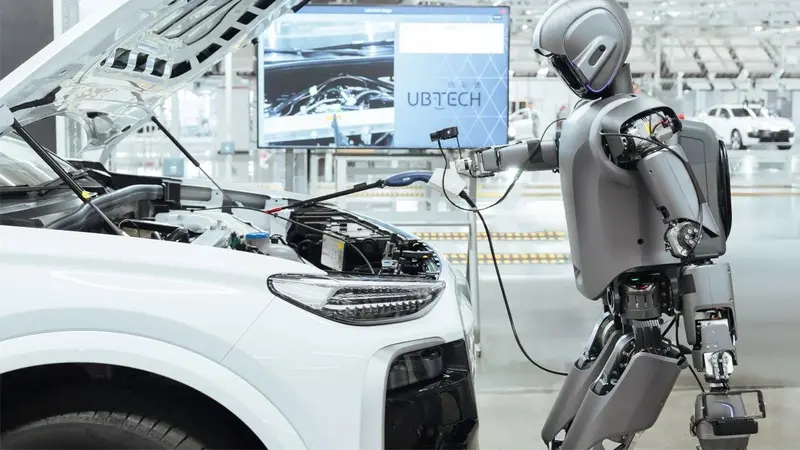
The above are just examples of a longer list. In China, UBTECH has worked with both Zeekr and the subject for this article, Audi.
For Audi, choosing a platform that focuses specifically on dexterous manipulation—using high-DoF robotic hands rather than simple grippers—suggests an interest in automating the final, most complex stages of vehicle assembly. As the industry moves toward Phase Two of deployment, the success of the Audi-Mimic collaboration will depend on whether these learning-based systems can maintain the 99.9% uptime required by global production lines.
Share this article
Read next
- Published on
- Reading time
- 4 min read
Mimic Robotics Open-Sources "mimic-video" Recipe to Accelerate Video-Action Models
- Published on
- Reading time
- 5 min read
Watch: Inside the Zurich Lab Building the "Android" of Humanoids
- Published on
- Reading time
- 4 min read
Neura Robotics Moves Humanoid R&D to Zurich, Tapping into Europe’s "Robotics Valley"
- Published on
- Reading time
- 3 min read
UBTech Humanoid Robots Join the Assembly Line at Audi FAW Plant in China
- Published on
- Reading time
- 4 min read
Mimic Robotics Raises $16M to Pair Dexterous AI Hands With Standard Robot Arms
- Published on
- Reading time
- 5 min read
Minerva Emerges From Stealth With $10M for Humanoids Built for Dangerous Work

The weekly humanoid robotics briefing
One email a week: the launches, funding and research that mattered, with context from Humanoids Daily.
Read recent issues