- Published on
Video: Unitree Deploys G1 Humanoids to Manufacture Robot Parts
One tap, and our reporting appears more often in your Google Top Stories. It makes a real difference to a small newsroom.

Supported by RoboStrategySupport for Humanoids Daily comes from RoboStrategy
Sponsored
Investing involves risk, including possible loss of principal. Read the prospectus before investing.
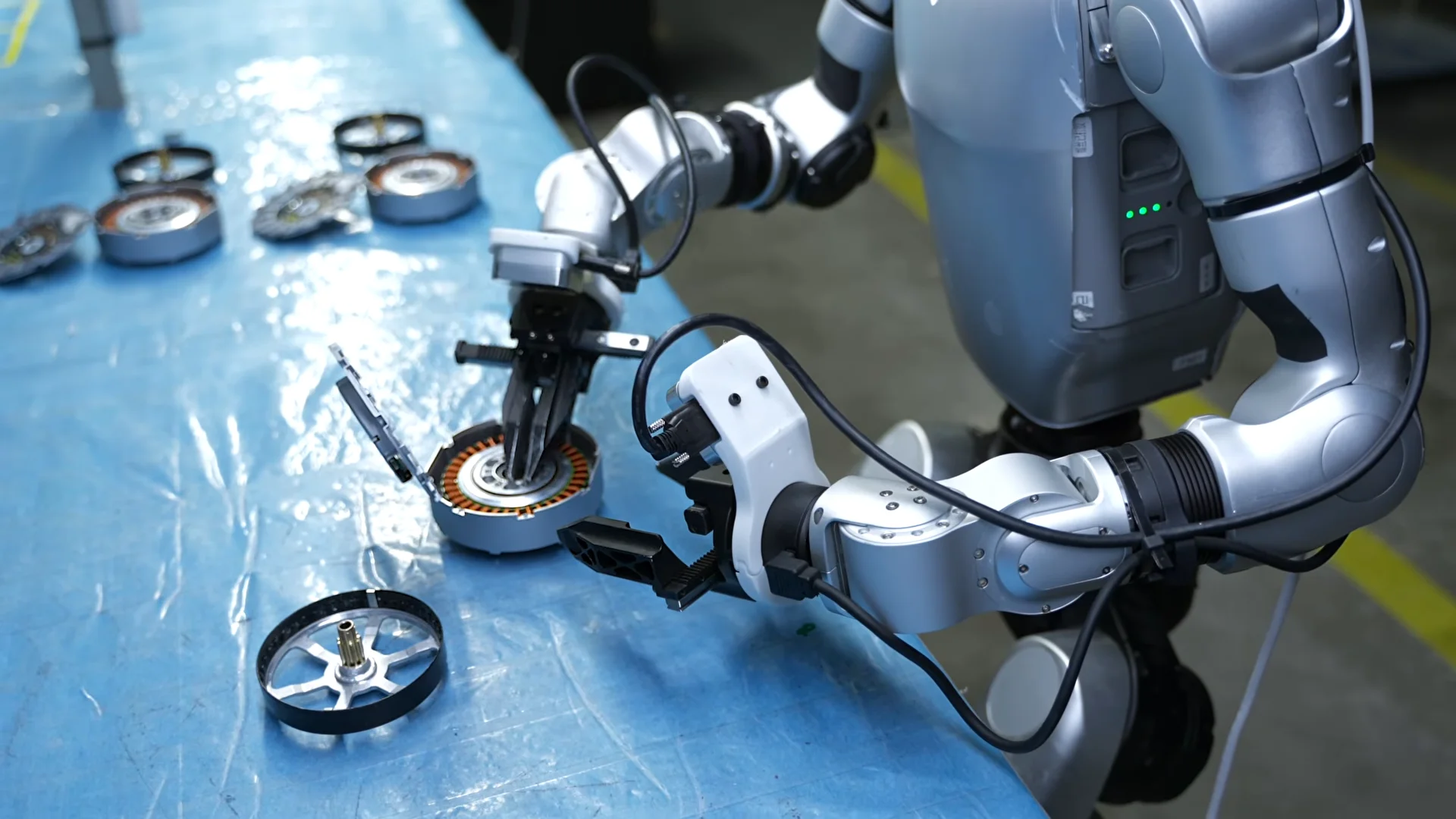
Just weeks after proving its hardware could survive -47°C temperatures in the Altay region, Unitree Robotics is pivoting from showmanship to high-stakes industrial utility. In a 44-second video released today the company’s G1 humanoid is shown operating on a production line, meticulously assembling robot parts within Unitree’s own manufacturing facility.
The Rise of UnifoLM-X1-0
The deployment is powered by a new embodied AI model dubbed UnifoLM-X1-0. This appears to be an evolution of the UnifoLM software suite previously introduced to streamline data acquisition and training.
This development directly supports Unitree’s broader "data engine" strategy. By utilizing its own robots to build more robots, the company is effectively closing the loop on data collection. This "human-in-the-loop" foundation, previously showcased through its Embodied Avatar teleoperation platform, allows the AI to learn from kinematically correct movements generated during real-world labor.
From "Actor" to Laborer
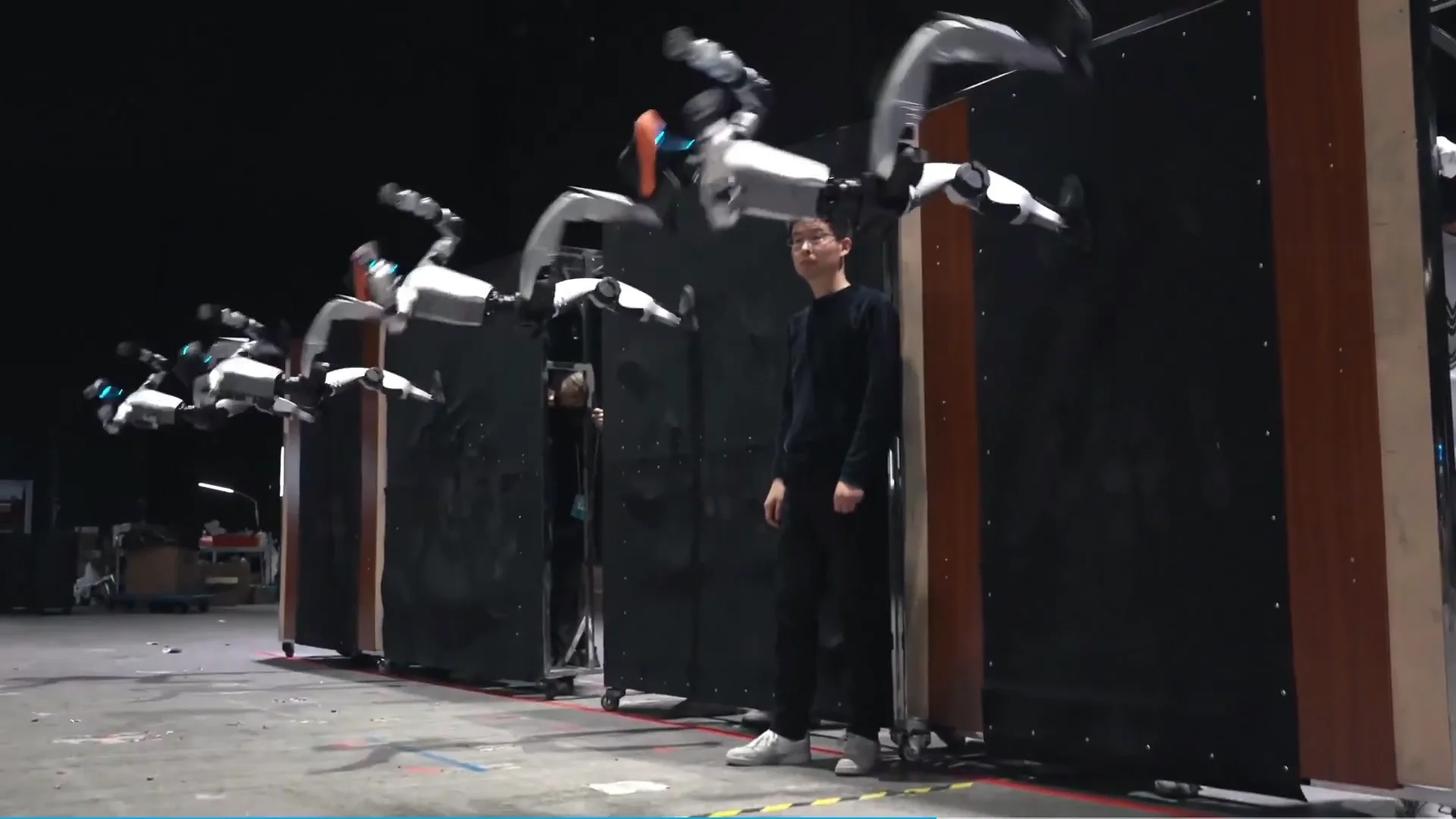
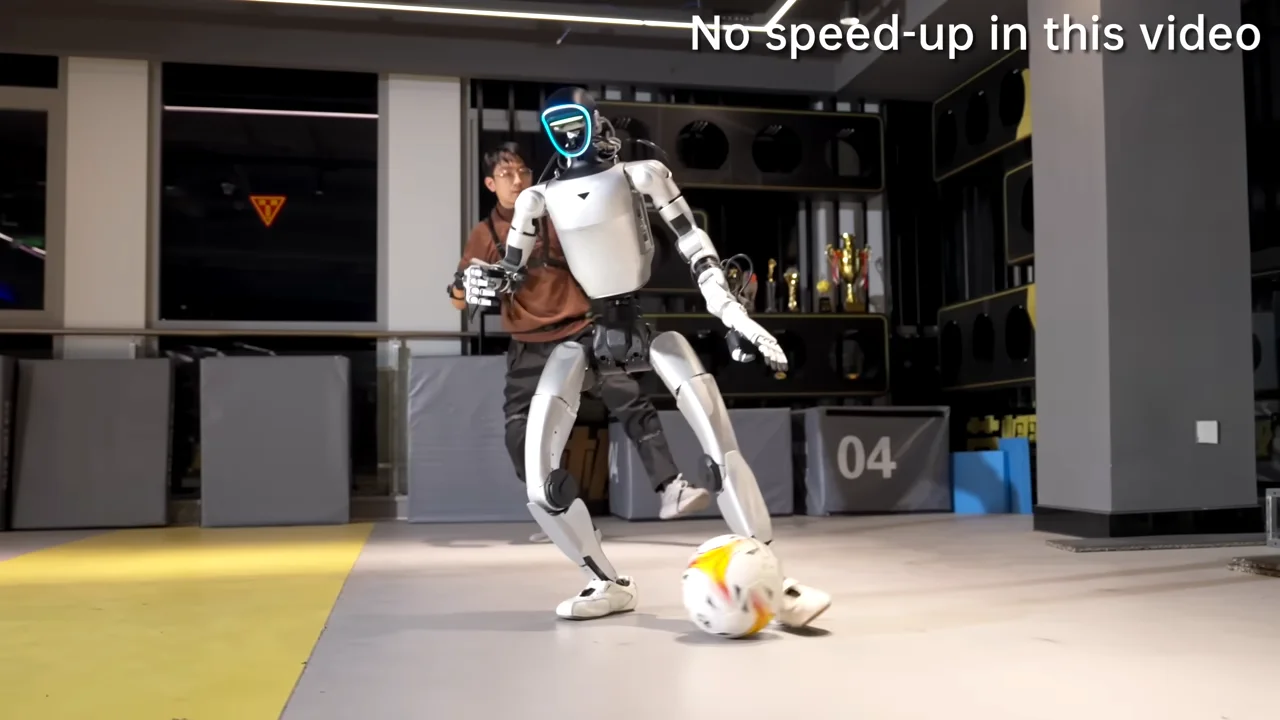
The G1 has long been Unitree’s most prolific platform, with over 5,500 units shipped in 2025. However, its public appearances have largely been limited to "acting" roles, such as choreographed gala performances or simulated boxing matches.
The weekly humanoid robotics briefing
One email a week: the launches, funding and research that mattered, with context from Humanoids Daily.
Read recent issuesMoving into a "real" factory setting—even a controlled, in-house one—is a significant step toward the “80/80” target proposed by CEO Wang Xingxing. Wang has argued that the "ChatGPT moment" for robotics will only arrive when a machine can complete 80% of tasks in 80% of unfamiliar environments. While a proprietary factory is not "unfamiliar," it provides the rigorous, repetitive testing ground necessary to bridge the gap between a technical demo and a commercial product.
The Path to Mid-2026 IPO
Unitree is currently preparing for a mid-2026 IPO and needs to demonstrate that its massive shipment volume translates into tangible economic value.
The industry remains skeptical of the "assembly trap," where robots are merely shown performing tasks at high speed—Unitree’s latest video is notably disclosed as being at 2x speed. By proving the G1 can handle factory labor internally, Unitree is making a case for the humanoid’s ROI (Return on Investment) ahead of its public listing.
Whether the UnifoLM-X1-0 model can generalize these skills to customer factories remains the industry's multi-billion-dollar question.
Share this article
Read next
- Published on
- Reading time
- 3 min read
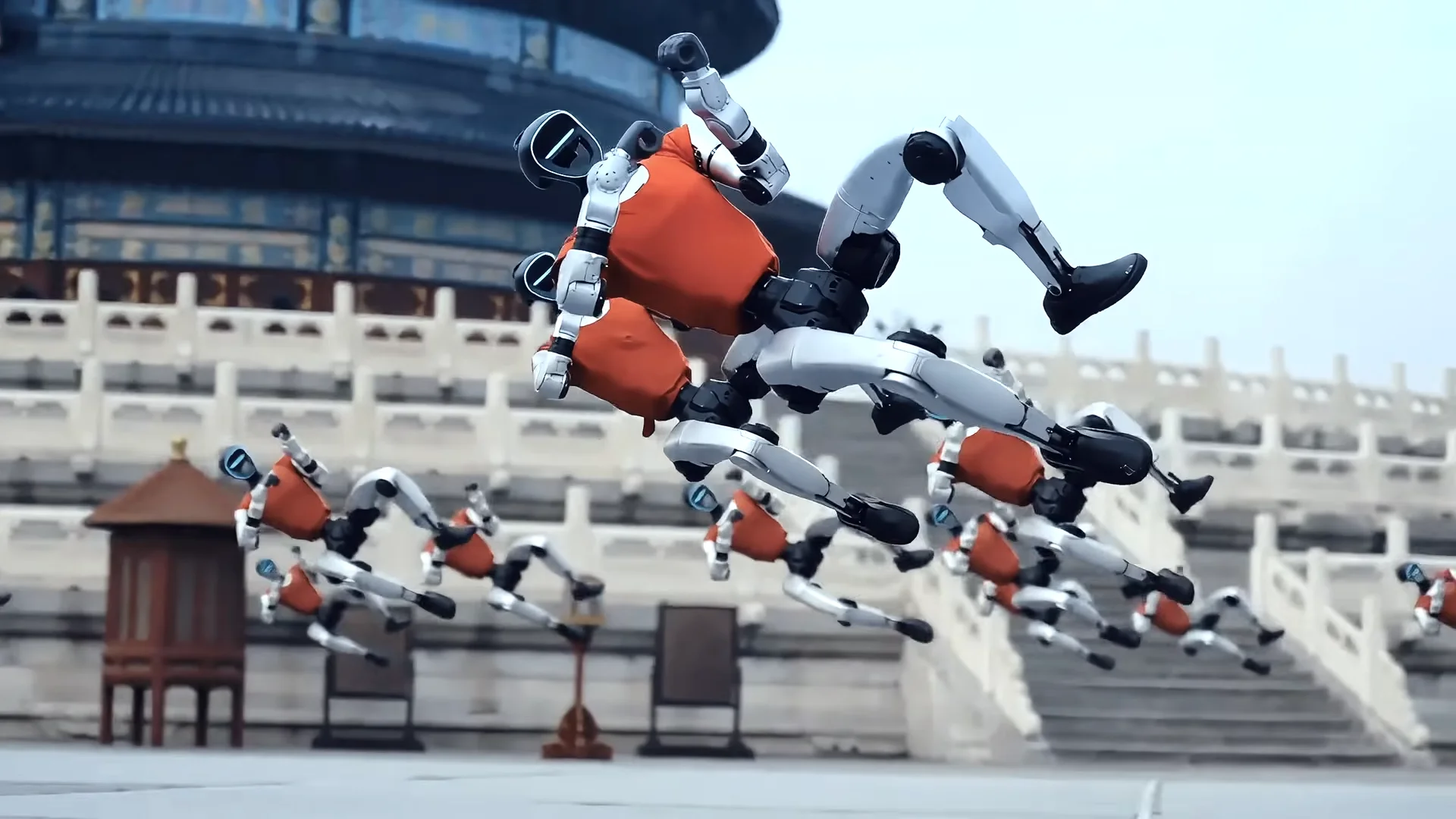
Sacred Ground, Silicon Swarm: Unitree’s G1 Fleet Performs at the Temple of Heaven
- Published on
- Reading time
- 2 min read
Watch: Unitree Previews "Cluster Cooperative" Tech with Mass Humanoid Performance
- Published on
- Reading time
- 4 min read
Unitree G1 Conquers -47°C in Snowy Winter Olympics Marketing Stunt
- Published on
- Reading time
- 4 min read
Startup's Viral Video Shows Unitree G1 Mastering Chores
- Published on
- Reading time
- 3 min read
Unitree's New ''Embodied Avatar'' Is More Than a ''Real Steel'' Toy—It's a Data Engine
- Published on
- Reading time
- 3 min read
Racing for the Future: The Complex Dynamics of Humanoid Robotics


The weekly humanoid robotics briefing
One email a week: the launches, funding and research that mattered, with context from Humanoids Daily.
Read recent issues