- Published on
The Mirror of Uncanny Valley: How Seedance 2.0 Is Breaking Our Ability to Fact-Check Robotics
One tap, and our reporting appears more often in your Google Top Stories. It makes a real difference to a small newsroom.


Your guide
Rich Robinson
Jee Chee Ren · Executive tour
See China’s AI and robotics ecosystem first-hand.
Six days exploring AI, robotics and advanced manufacturing.
With Rich Robinson, Clinical Professor of Entrepreneurship at Peking University
Beijing · Guangzhou · Shenzhen
29 November–4 December 2026
Referral partnership · We earn a commission on referred bookings.
The humanoid robotics industry has officially entered its "crisis of truth." While the field is seeing genuine, breathtaking advancements in motility, it is simultaneously being haunted by a new generation of hyper-realistic "AI slop."
The catalyst for this latest wave of confusion is Seedance 2.0, a multimodal video generation model from ByteDance that has set a new bar for physical realism. By utilizing a "multimodal director" architecture that synchronizes video, audio, and physics in a single pass, Seedance 2.0 is producing footage so convincing that even industry veterans are sounding the alarm.
The G1 "Infantry" Hoax
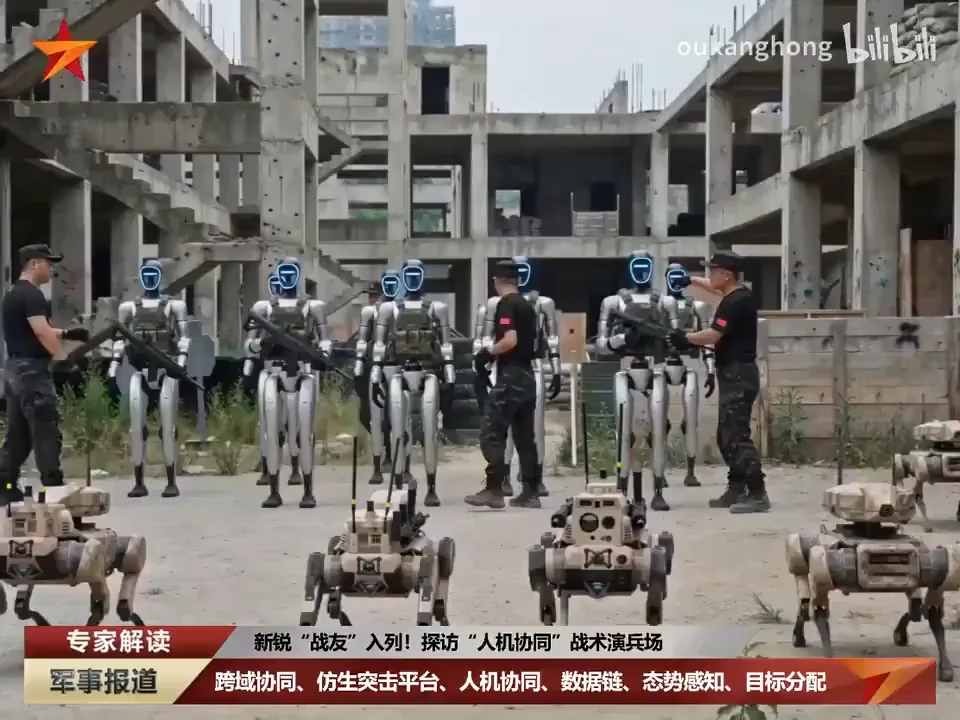
The most viral example of this new reality is a 49-second clip showing a squad of Unitree G1 humanoids and robotic dogs conducting live-fire drills in a military range. The video, which mimics the aesthetic of a Chinese military news segment, shows the robots handling automatic rifles with unsettling precision.

Fact-checkers and robotics experts were quick to dismantle the footage. CIX, CEO and founder of the REK robot fighting league, pointed out several technical impossibilities:
The weekly humanoid robotics briefing
One email a week: the launches, funding and research that mattered, with context from Humanoids Daily.
Read recent issues- Scale and Mechanics: The G1 stands only 4.5 feet (1.37 meters) tall and weighs 80 pounds; it lacks the mass to absorb the recoil of a standard infantry rifle.
- Sensor Fidelity: The G1’s head-mounted cameras are low-fidelity depth sensors designed for navigation, not the long-range ballistic targeting shown in the video.
- Logic of Design: A weaponized robot would likely utilize a custom-integrated weapon system rather than awkwardly holding a human rifle designed for fingers and stocks.
Despite these technical "tells"—and a disclaimer from the original uploader, "oukanghong," on Bilibili—the video was widely shared by accounts as evidence of a "fully AI-controlled robot army".
When Smoothness Becomes a Deepfake
While the G1 military video utilized high-stakes "cognitive warfare" themes, a second viral clip of the all-electric Boston Dynamics Atlas dancing proved that even simple movements are now prone to manipulation. Robotics expert Chris Paxton noted that while the Atlas's dancing in the video was "obviously fake" due to its overly fluid, almost weightless transitions, it is becoming increasingly difficult to tell just from video alone.
The danger lies in how closely these fakes mirror real progress. When the real robots are already doing the "impossible," an AI-generated video that pushes the capability just 10% further becomes remarkably easy to believe.
A Growing Industry Backlash
Humanoid robotics influencer The Humanoid Hub recently critiqued the trend, stating that "accounts with millions of followers are pushing AI slop as reality" and "trading credibility for clicks". The core concern is that these fakes will be weaponized for "cognitive warfare," flooding platforms until the public can no longer distinguish a genuine hardware breakthrough from a Seedance-generated dream.
This skepticism is already bleeding into the professional sphere:
- UBTECH vs. Figure: Figure CEO Brett Adcock recently accused UBTECH of using CGI for its "robot army" mass-production video. UBTECH was forced to release unfiltered drone footage to prove the hundreds of Walker S2 units were real.
- EngineAI’s "Proof of Life": After its T800 launch was labeled as CGI, EngineAI released behind-the-scenes footage and eventually had its CEO take a physical kick from the robot on camera to settle the debate.
The Paradox of Performance
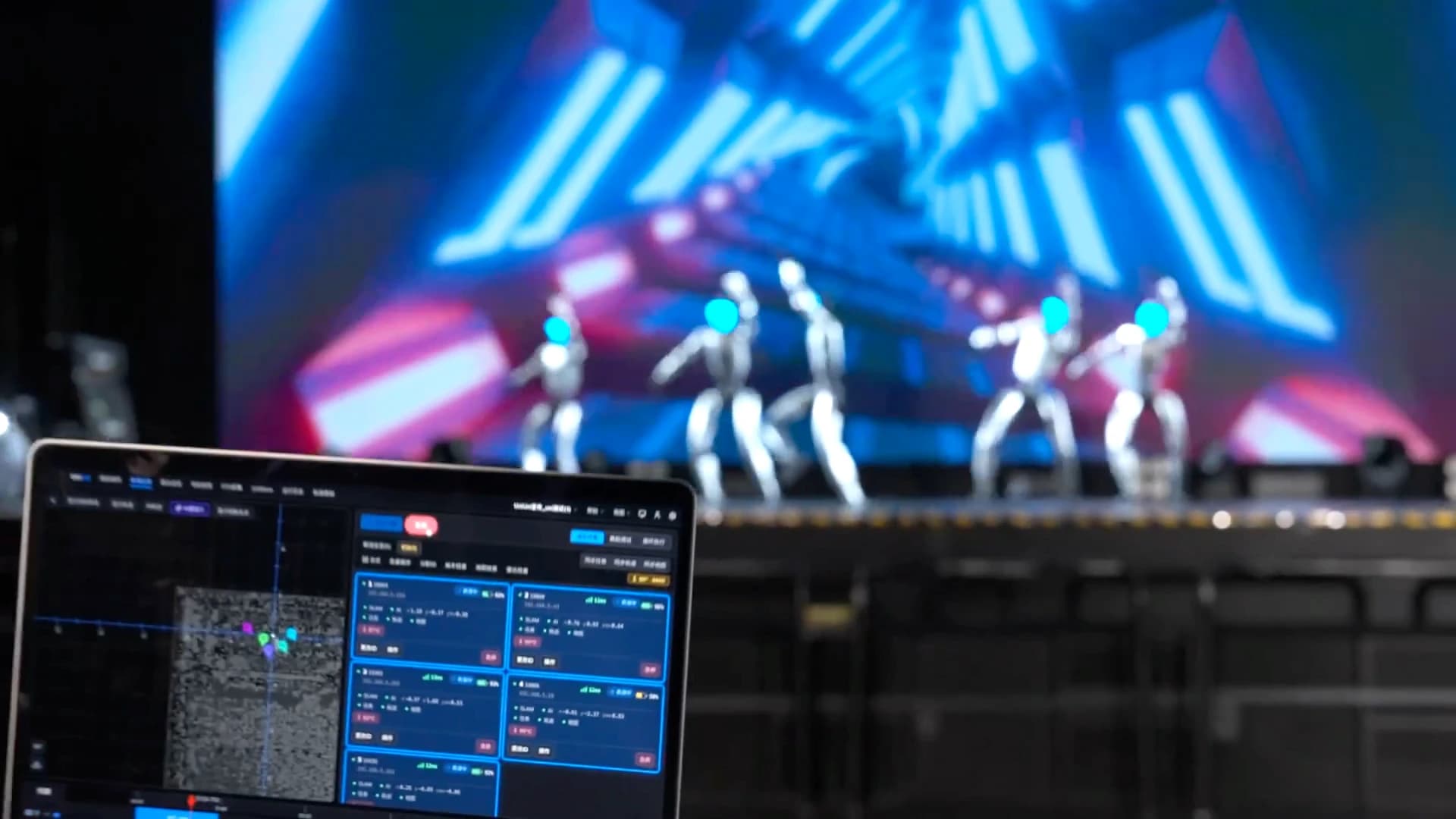
The most effective fakes are those that build upon verifiably real feats. The martial arts routine performed by Unitree humanoids at the 2026 Spring Festival Gala was real, but it was so impressive that it provided the perfect "visual anchor" for the fake military video that followed.

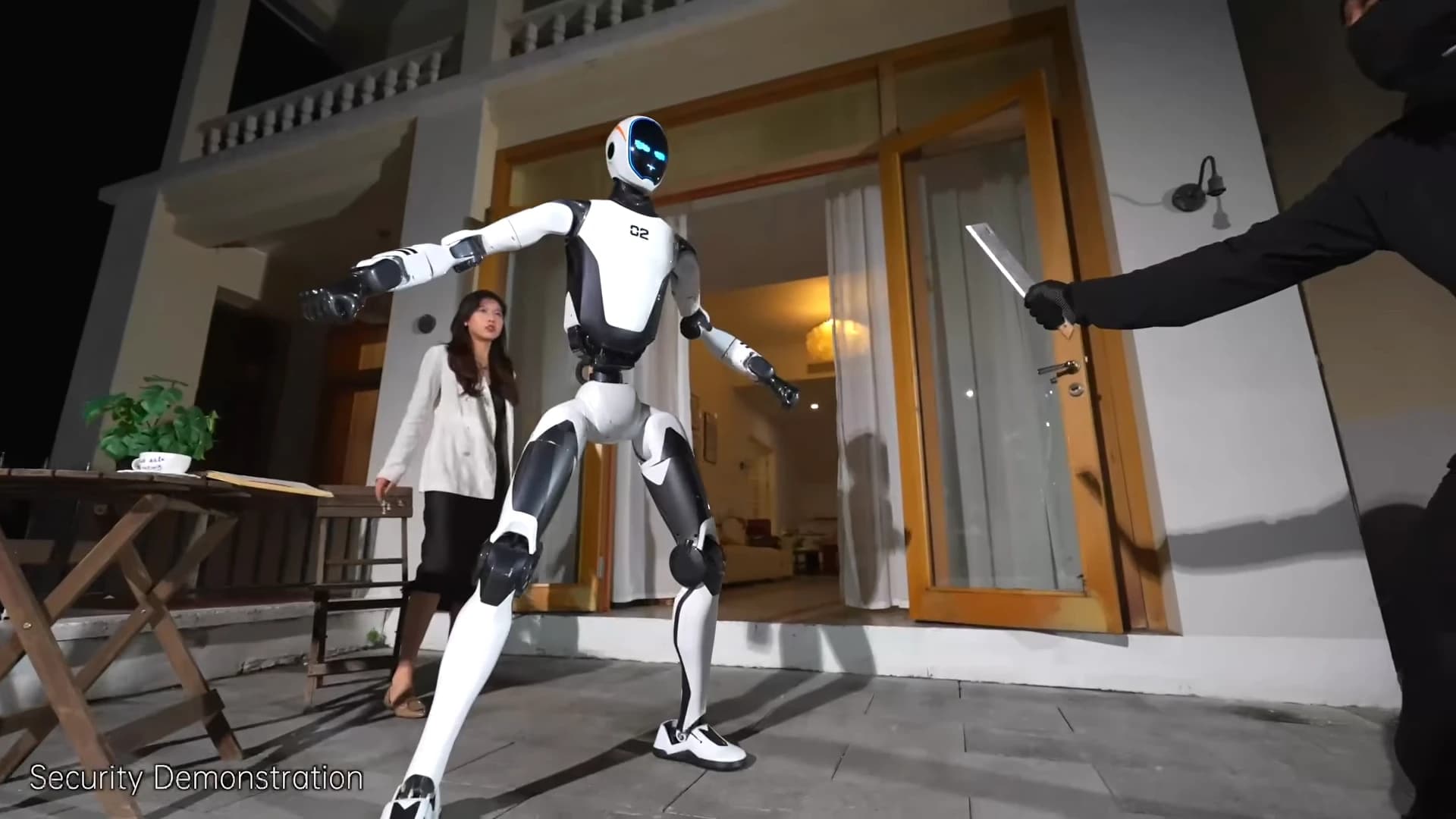
This phenomenon—where real hardware becomes indistinguishable from a human or a digital effect—has forced companies into increasingly bizarre demonstrations of "roboticism." A primary example is the controversy surrounding Xpeng’s next-gen "Iron" robot. After a 2025 stage demo featured a walk so fluid and human-like that viewers accused the company of putting a person in a suit, Xpeng was forced to release footage of staff cutting away the robot's foam padding to expose the mechanical skeleton underneath.
As models like Seedance 2.0 gain the ability to replicate "product detail preservation" and "real-world physics," the industry may have to move toward cryptographically signed video or live, unedited public demonstrations to maintain public trust. For now, the "Humanoids Daily" advice remains the same: if a robot looks too perfect, check the recoil, check the shadows, and wait for the "behind-the-scenes" proof.
Share this article
Read next
- Published on
- Reading time
- 8 min read
The Unitree G1 Is Becoming a Platform for American Robot Startups
- Published on
- Reading time
- 3 min read
Unitree’s H2-X Flips Off Cars in New Kung Fu “Guardian” Video
- Published on
- Reading time
- 3 min read
After Its Stock Surge, Unitree Warns Humanoid Commercialization Is Still in Its Early Days
- Published on
- Reading time
- 2 min read
Unitree Shares Jump 16% as China Pushes Robots Into Everyday Commerce
- Published on
- Reading time
- 3 min read
Unitree’s UniUni Lets Operators Choreograph Robot Teams With Natural Language
- Published on
- Reading time
- 3 min read
Unitree’s Wang Xingxing Says GPT-6 Tests Strengthen His Optimism for Embodied AI


The weekly humanoid robotics briefing
One email a week: the launches, funding and research that mattered, with context from Humanoids Daily.
Read recent issues