- Published on
Humanoid Robot Batteries Could Become an $850 Million Market by 2037, IDTechEx Forecasts
One tap, and our reporting appears more often in your Google Top Stories. It makes a real difference to a small newsroom.

The market for humanoid robot batteries could reach US$850 million by 2037, according to IDTechEx’s public overview of its new battery report. The research firm projects a ten-year compound annual growth rate of 34.2%, with battery swapping contributing to demand for additional packs.
- IDTechEx forecasts an US$850 million humanoid battery market by 2037.
- Its analysis considers spare batteries for swapping alongside demand from new robots.
- Agility’s fast-charging plans and XPENG’s solid-state development illustrate different approaches to extending useful working time.
More than a runtime specification
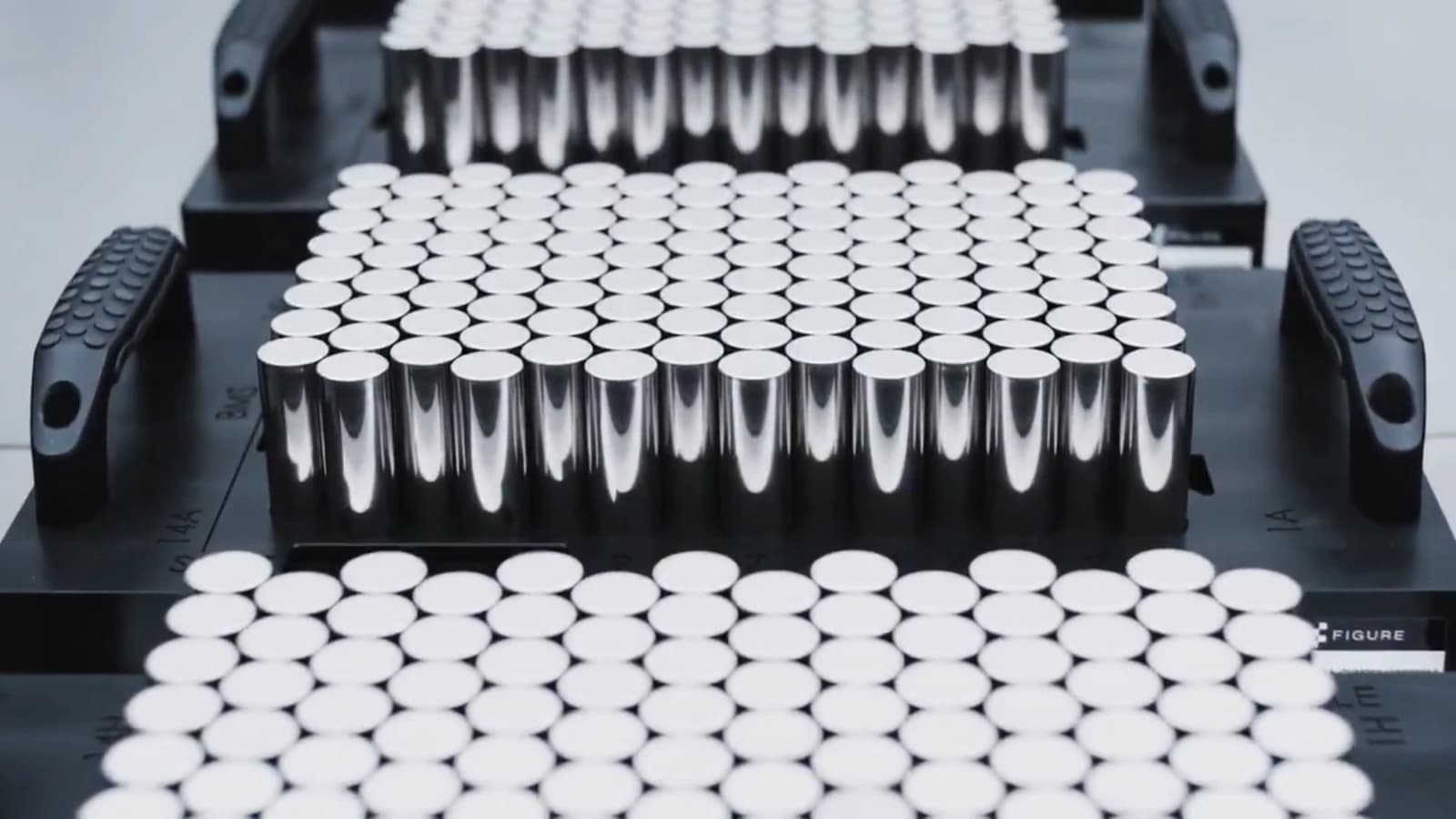
The report examines batteries for industrial, commercial and domestic humanoids. IDTechEx identifies operating time as a constraint and evaluates lithium-ion, solid-state and lithium-sulfur technologies against energy density, power, safety, cycle life and readiness for production.
It expects emerging chemistries to gain ground as manufacturing matures, while noting their higher costs and limited production scale. The firm also highlights swapping: an industrial robot can return to work with a charged pack while the depleted one recharges, creating demand for more batteries than robots.
Those choices are already visible in manufacturers’ announcements, although the performance claims are not directly comparable.
Follow humanoid robotics without following every announcement.
Get the week’s most important launches, funding and research—and why they matter—in one email from Humanoids Daily.
Once a week. Unsubscribe anytime.
Read recent issuesAgility prioritizes short charging stops
As we reported in October, Agility selected Nyobolt for Digit 5’s planned nine-minute recharge following 90 minutes of operation. Agility says that rhythm could support more than 20 working hours in a day, with early access expected in the first half of 2027.
That approach makes charging a recurring, brief interruption. Whether it delivers the intended productivity will depend on the complete operating cycle, including travel to the charger, maintenance and task delays. The announcement did not disclose pack capacity, charging power or quantified cycle-life results.
XPENG pursues a different battery design
XPENG, meanwhile, says the solid-state battery developed for IRON has entered small-batch production. Its October update emphasized energy density and protection against thermal propagation, impact and puncture, without publishing numerical performance results.
The precise chemistry remains unresolved. XPENG advertises an all-solid-state design, while earlier reporting described a semi-solid alternative. The manufacturing announcement alone does not establish which design is entering production or what runtime customers should expect.
The commercial test is useful working time
For operators, the meaningful comparison will be how much reliable work a robot completes across a shift, including the cost of chargers, spare packs and eventual replacements. A longer runtime, faster recharge or automated swap can each contribute, but none answers that question alone.
IDTechEx’s forecast provides a market estimate for this emerging component business. Its public overview does not disclose the detailed assumptions needed to independently assess the projection; this article draws on that overview, rather than the full paid report.
Share this article
Follow humanoid robotics without following every announcement.
Get the week’s most important launches, funding and research—and why they matter—in one email from Humanoids Daily.
Once a week. Unsubscribe anytime.
Read recent issuesRead next
- Published on
- Reading time
- 3 min read
New Figure 03 Robots Walk Out of BotQ in Brett Adcock’s Latest Video
- Published on
- Reading time
- 3 min read
DEEP Robotics Humanoids Join Traffic Police at Hangzhou Marathon
- Published on
- Reading time
- 5 min read
Lightberry’s Lumi Gains Conditional FCC Covered List Exemption
- Published on
- Reading time
- 3 min read
1X Teammates Use Spare NEO Heads to Test Home Integrations, Starting With the TV
- Published on
- Reading time
- 3 min read
AGIBOT Livestreams Six G2 Robots in a 24-Hour Convenience Store Challenge
- Published on
- Reading time
- 4 min read
Rhoda AI Shows Robots Recovering From Factory Edge Cases in Schrep Visit