- Published on
DEEP Robotics Humanoids Join Traffic Police at Hangzhou Marathon
One tap, and our reporting appears more often in your Google Top Stories. It makes a real difference to a small newsroom.

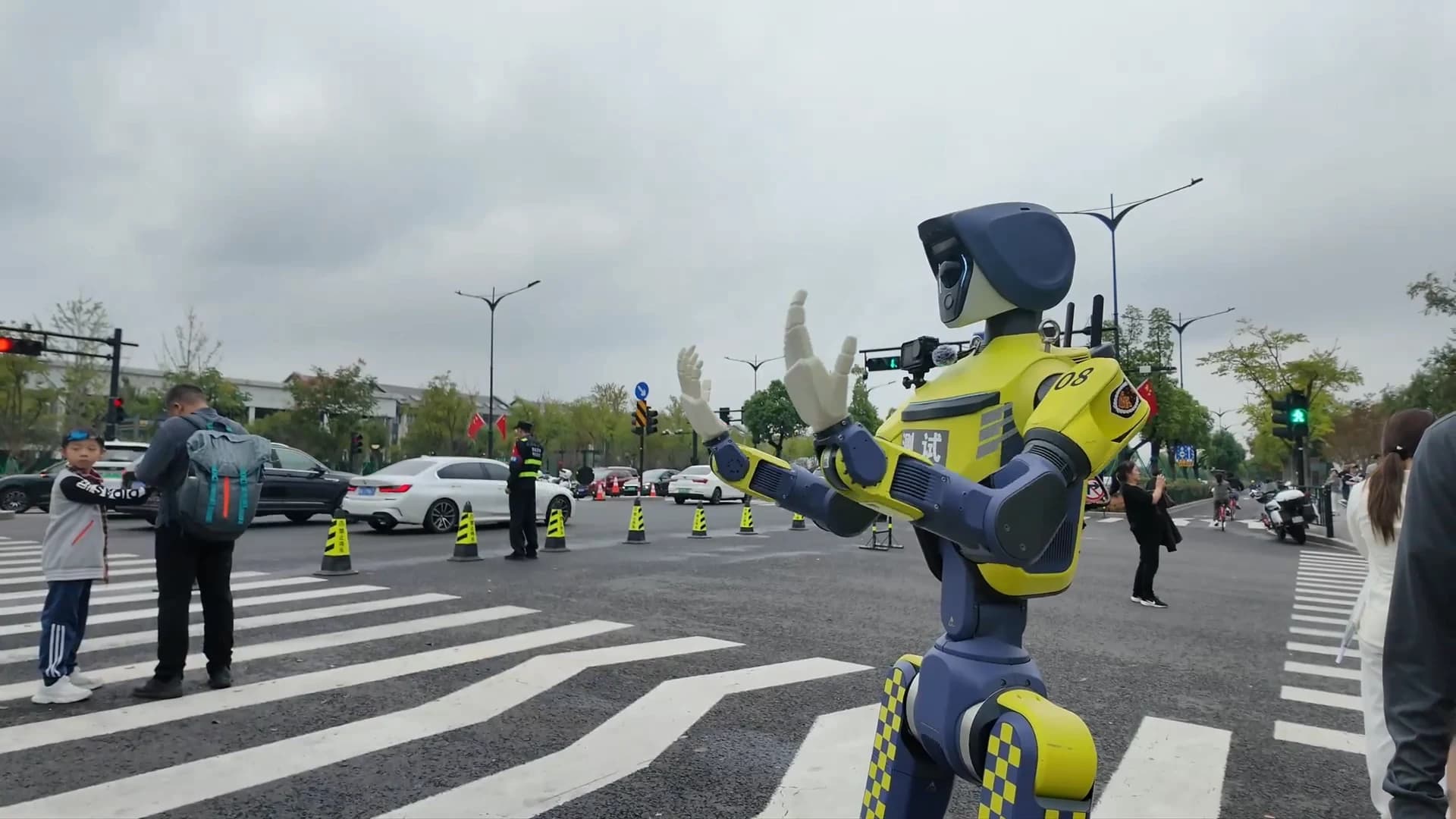
DEEP Robotics’ humanoids joined traffic-management operations at the Hangzhou Marathon on November 1, taking on a supporting role around the city’s Huanglong Sports Center.
The machines, known as Hangxing No.2, were developed with local traffic authorities and formed part of a patrol arrangement covering four locations, according to a Global Times report republished by Hangzhou’s official English-language website.
- Hangxing No.2 humanoids supported traffic operations at the November 1 Hangzhou Marathon.
- The company describes duties including patrols, traffic-safety warnings and answering public inquiries.
- The robots use DEEP Robotics’ DR02 platform, which the manufacturer markets for outdoor industrial work.
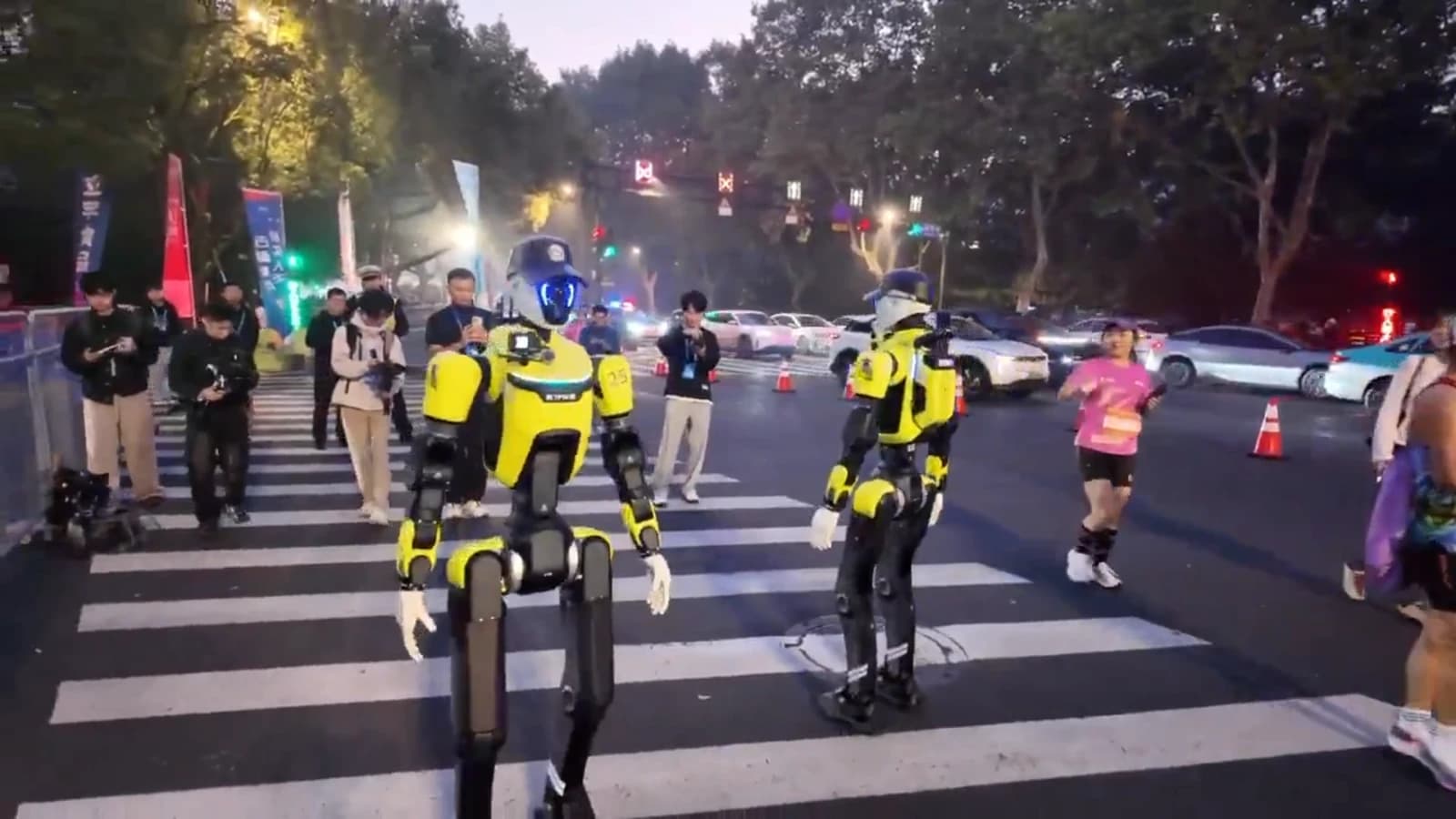
Humanoids beside the race route
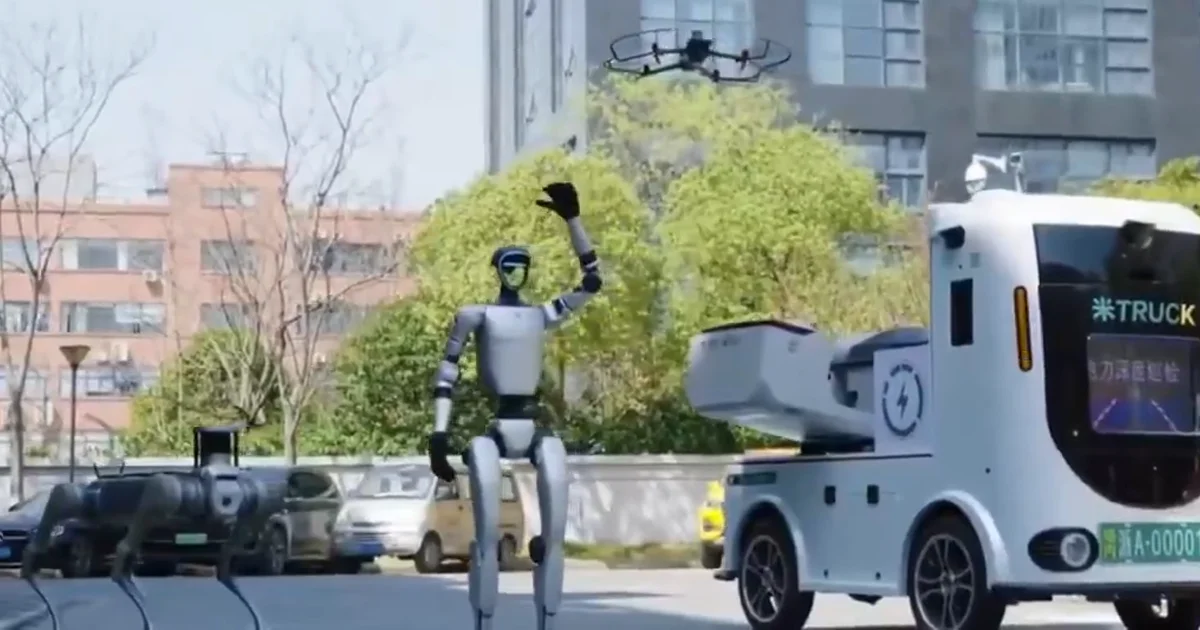
DEEP Robotics shared a video of the deployment on X. The video shows two yellow-and-black humanoids wearing police-style caps at a pedestrian crossing, with runners, onlookers and vehicles nearby.
The report describes a combination of intersection monitoring, preset-route patrols, warnings about traffic violations and public-information services. According to the company, the robots can perform standardized traffic-control gestures and broadcast safety advisories, helping with repetitive roadside work.
Follow humanoid robotics without following every announcement.
Get the week’s most important launches, funding and research—and why they matter—in one email from Humanoids Daily.
Once a week. Unsubscribe anytime.
Read recent issuesThe marathon drew 36,000 runners. DEEP Robotics presented the deployment as an opportunity to explore a repeatable model for humanoid support at large races, where crowds and movement patterns change over a concentrated period.
An outdoor role for DR02
The marathon appearance follows DR02’s earlier traffic-assistance testing in rainy conditions in Hangzhou’s West Lake district, which we covered on October 6. That footage showed traffic reminders, pedestrian interaction and obstacle-avoidance testing, with the machines marked as test units.
Hangxing No.2 is based on DR02. On its official product page, DEEP Robotics lists full-body IP66 protection and an operating-temperature range of −20°C to 55°C. The company also describes replaceable limb modules intended to simplify maintenance.
Those design priorities are relevant to roadside work, where a robot must contend with weather and shared public space. They do not, by themselves, establish how reliably it can interpret a crowded crossing or respond to an unusual situation.
The available reporting does not provide intervention counts, accuracy measurements for violation detection or a detailed account of operator control during the event. It also does not establish that the robots independently issued penalties.
The clearest takeaway is the setting: a public event gave DEEP Robotics a chance to put its humanoid traffic-support concept alongside real pedestrian and vehicle flows. Whether that becomes routine deployment will depend on consistent performance and a clear division of responsibility between machines and officers.
Share this article
Follow humanoid robotics without following every announcement.
Get the week’s most important launches, funding and research—and why they matter—in one email from Humanoids Daily.
Once a week. Unsubscribe anytime.
Read recent issuesRead next
- Published on
- Reading time
- 2 min read
Deep Robotics Tests IP66-Rated DR02 on Traffic Duty in the Rain
- Published on
- Reading time
- 5 min read
Unitree’s Stock Slump Puts China’s Robot IPOs Under Scrutiny
- Published on
- Reading time
- 4 min read
Deep Robotics Showcases Agile, Firefighting DR02 Humanoid in Dynamic New Demo
- Published on
- Reading time
- 5 min read
Deep Robotics Files for $367M STAR Market IPO Following First Profitable Year
- Published on
- Reading time
- 4 min read
State Grid’s $995 Million Bet: 8,500 Robots to Spearhead "Deployment Year One" in Energy
- Published on
- Reading time
- 4 min read
OpenMind Launches Hardware-Agnostic App Store to Unify Humanoid "Skills"