- Published on
Man vs. Machine: Figure AI Intern Edges Out Humanoid Fleet in 10-Hour Sorting Challenge
One tap, and our reporting appears more often in your Google Top Stories. It makes a real difference to a small newsroom.

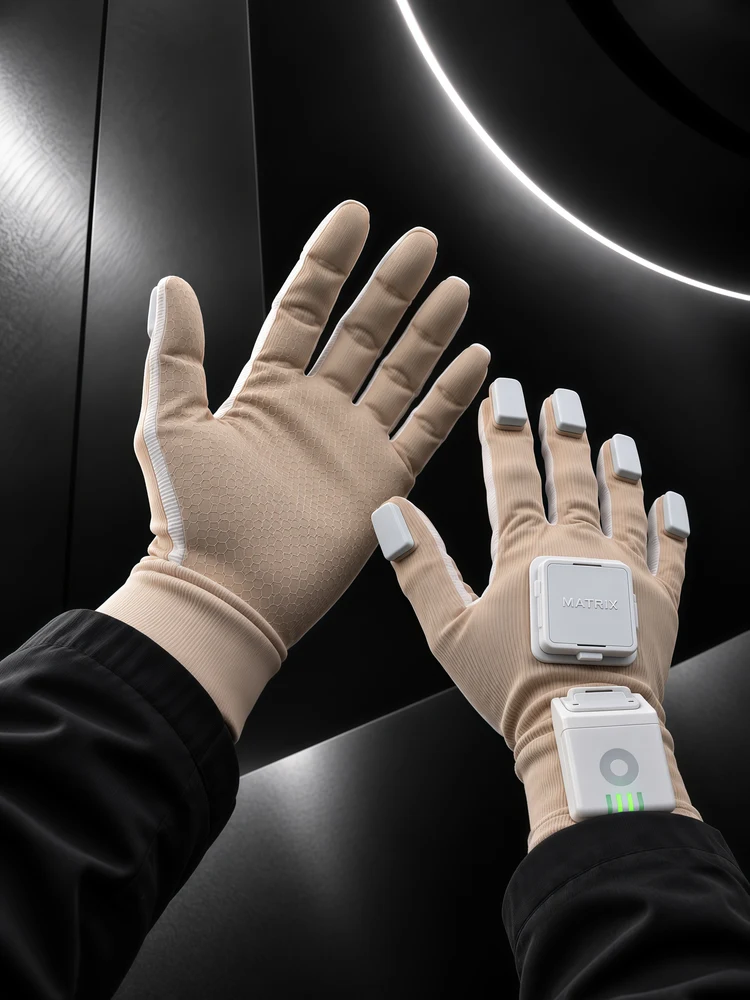
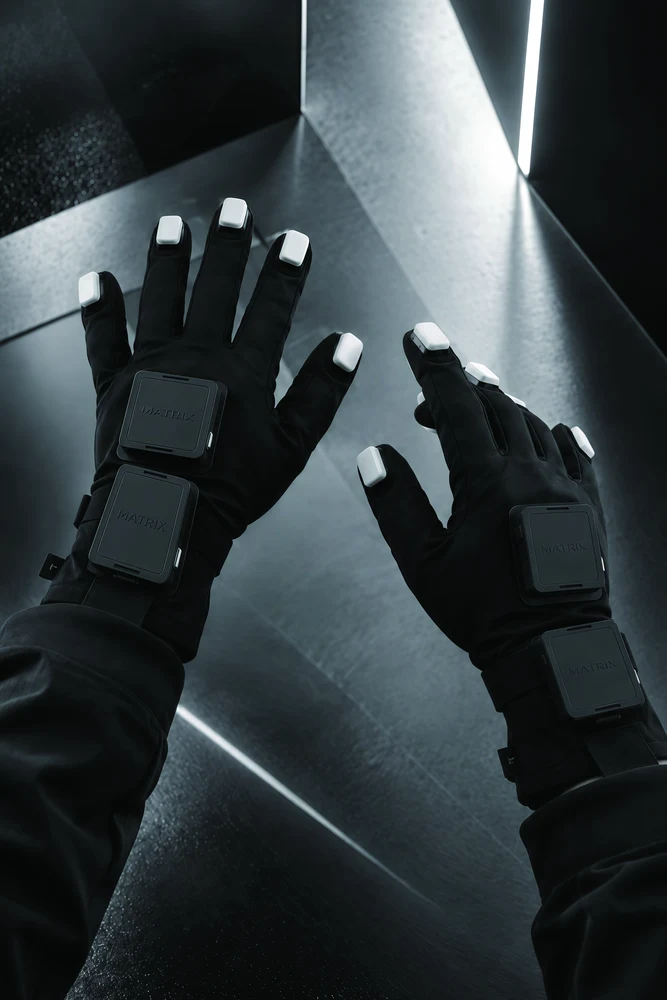

- Figure AI CEO Brett Adcock staged a 10-hour "Man vs. Machine" head-to-head competition pitting human intern Aime against the company's autonomous Figure 03 robots.
- The human intern narrowly won the shift, sorting 12,924 packages (2.79 seconds per package) compared to the robot's 12,732 packages (2.83 seconds per package).
- To comply with California labor laws, the human competitor took mandatory meal and rest breaks, which allowed the continuous robot fleet to nearly close the throughput gap.
- While the competition left the human intern with blistered fingers and a heavily fatigued forearm, Figure's robot fleet has continued running uninterrupted, surpassing 116 hours of continuous operation.
The high-stakes transparency experiment unfolding at Figure AI's facility just took an unexpected, competitive turn. Having already extended what was an originally planned 8-hour shift into a multi-day endurance run, the robotics startup decided to break up the monotony of its continuous broadcast with a classic trial: human versus hardware.
Taking to X (formerly Twitter), Figure CEO Brett Adcock announced the surprise experiment simply: "We got bored. Time for Man vs. Machine."
The Rules of Engagement
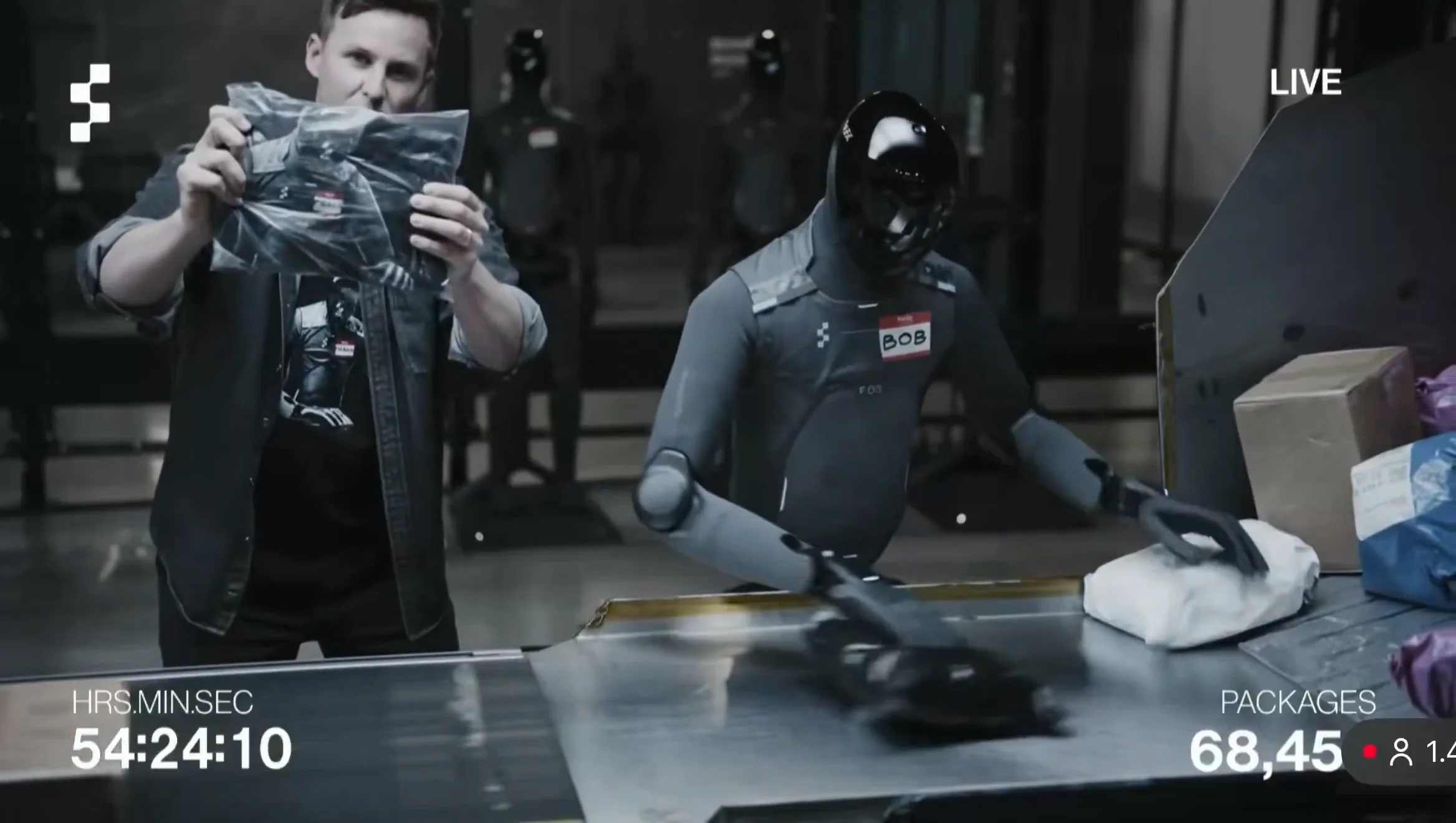
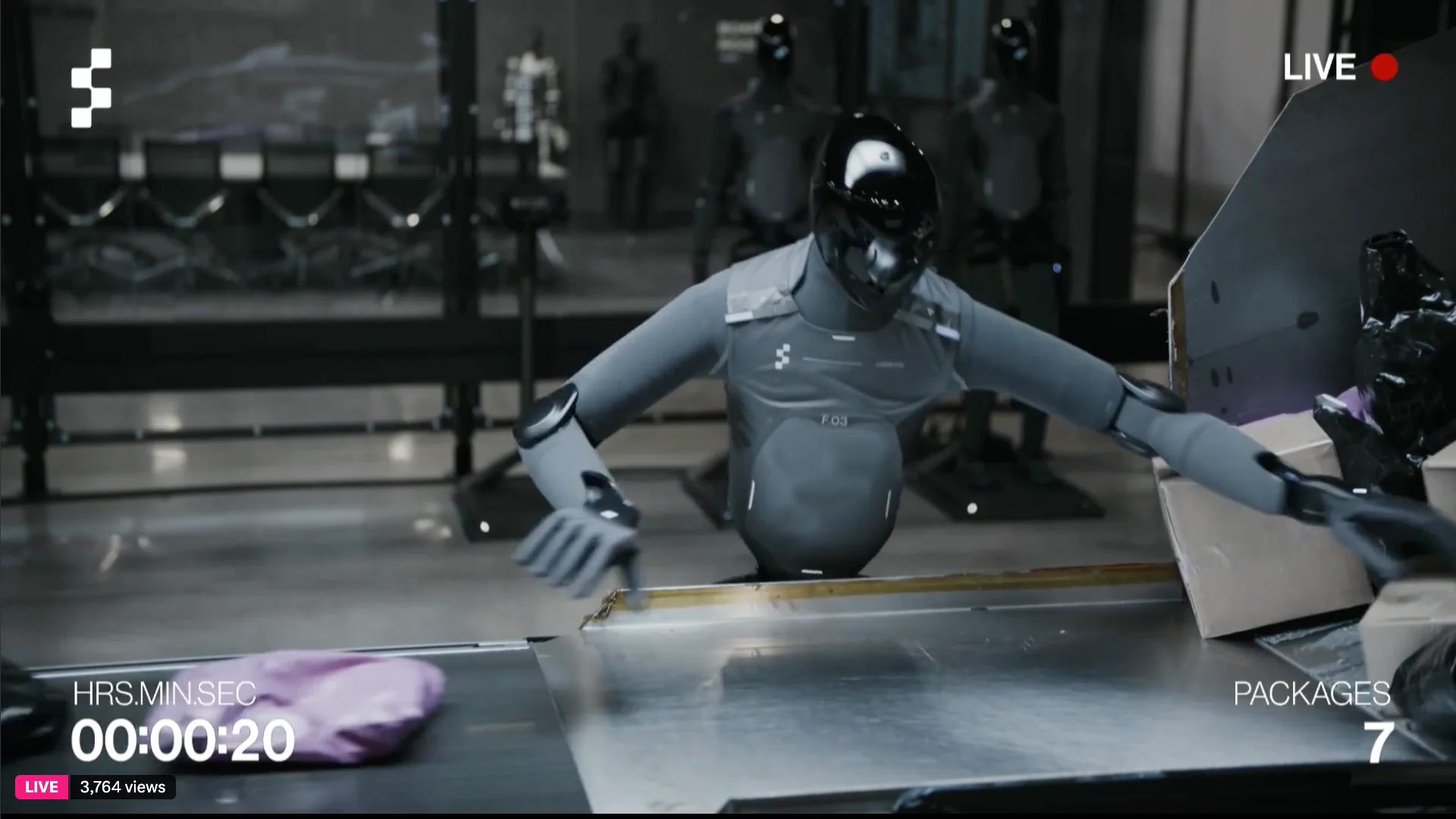
The parameters of the "Man vs. Machine" challenge were straightforward but rigorous. Figure pitted a human intern named Aime head-to-head against a small fleet of Figure 03 humanoid units for 10 straight hours. Both were tasked with the identical small package sorting workflow that has anchored the company's recent demonstrations. The objective requires the operator to detect a package's barcode, pick up the item, and reorient it face-down onto a moving conveyor belt.
Crucially, the competition accounted for real-world regulatory constraints. "We’re following California labor laws, so the human gets both meal breaks and paid rest breaks during the shift," Adcock noted.
The weekly humanoid robotics briefing
One email a week: the launches, funding and research that mattered, with context from Humanoids Daily.
Read recent issues
The structural differences between human labor and robotic automation formed the core of the experiment's thesis. Adcock hypothesized a classic "tortoise and the hare" dynamic, betting that while the human would possess superior peak speed, cumulative physical fatigue and mandatory legal breaks would inevitably slow the human down, allowing the unceasing machine to gain ground. To ensure an authentic baseline, Adcock added, "Nobody told the intern to let the robots win. Honestly, it’s anyone’s guess who wins."
A Narrow Victory for Humanity
When the 10-hour buzzer sounded, humanity managed to cling to a razor-thin victory. Aime processed a total of 12,924 packages over the course of the shift, maintaining a blistering average pace of 2.79 seconds per package. The autonomous Figure 03 fleet finished just a fraction behind, logging 12,732 packages at a steady cadence of 2.83 seconds per package according to Adcock's final tally (though the live visual dashboard overlay recorded the robot's count at 12,734).
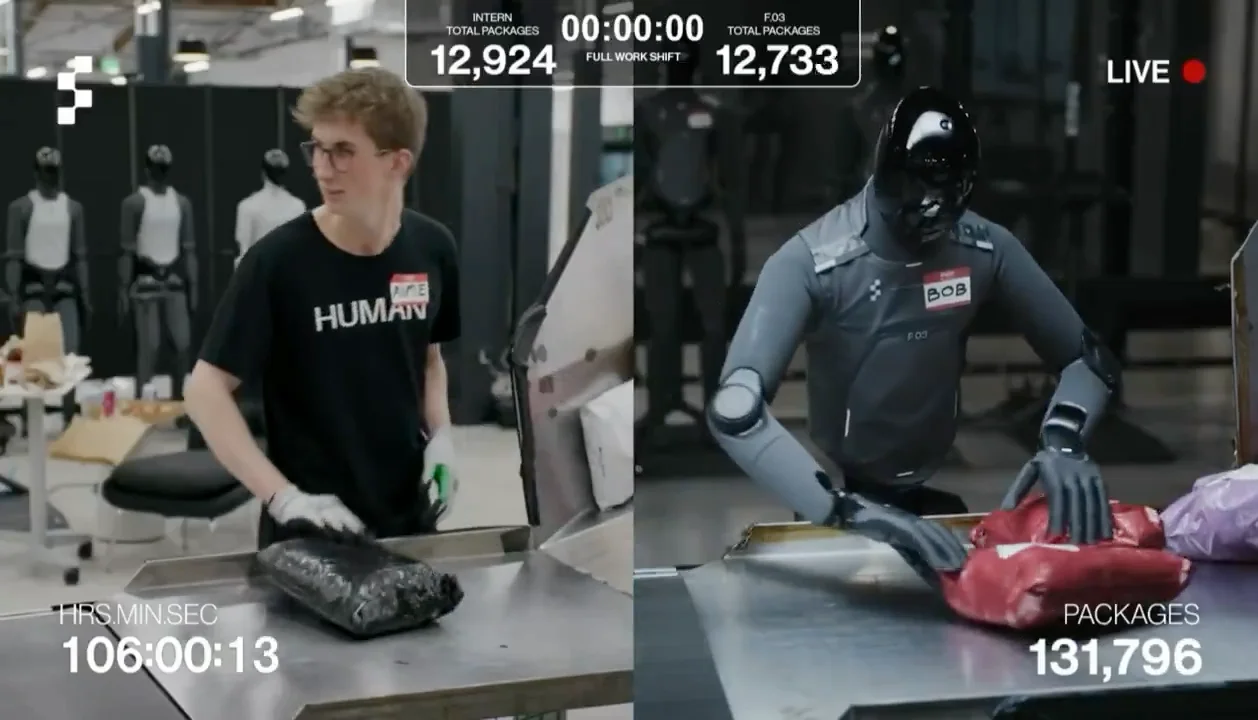
"Congrats to Aime!!" Adcock posted following the conclusion of the shift, while quickly signaling that the window for human dominance in industrial logistics is rapidly closing. "This is the last time a human will ever win."
The narrow margin highlights how effectively the robot's continuous operation compensated for the human's raw speed advantage. Because the Figure 03 utilizes a seamless autonomous rotation protocol to swap out units when batteries run low , the machine pipeline suffered none of the downtime mandated by the intern's legal rest periods.
The Cost of Throughput
While the numbers paint a picture of competitive parity, the physical reality of the challenge underscored the starkest contrast between biological and mechanical labor. Following the shift, Adcock shared an update on the intern's physical condition, noting that Aime's "fingers are blistered" and quoting the intern as saying his left forearm was "basically broken" from the grueling repetition.
In contrast, the fleet of charcoal-grey humanoids experienced no such physical degradation. Operating on Figure's proprietary, end-to-end Helix-02 vision-language-action neural network, the machines continue to process items directly from raw camera pixels without physical exhaustion or cognitive decline.
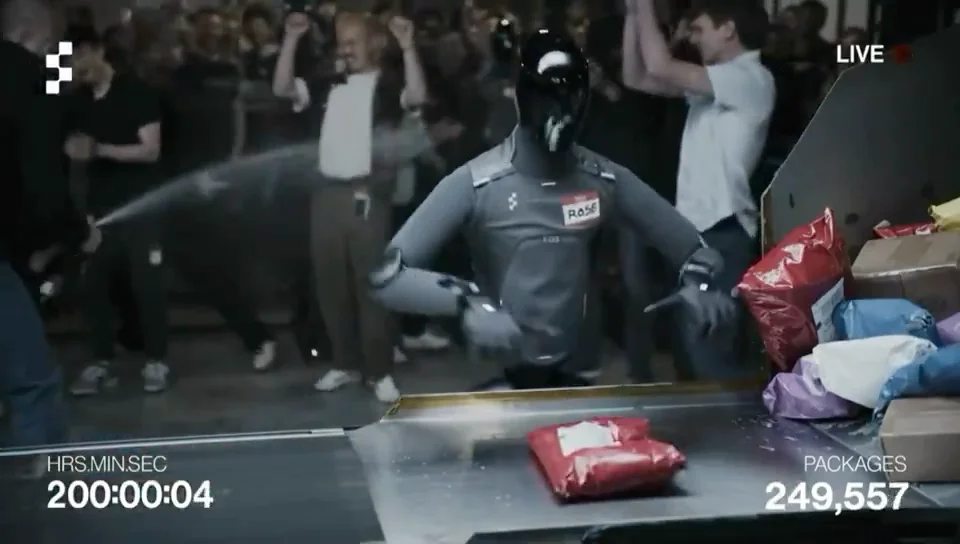
Furthermore, while Aime clocked out after 10 hours to recover, Figure’s robots simply kept working. The live broadcast, which initially blew past its 26-hour milestone and later its 64-hour mark, has now transitioned into an unprecedented marathon. At this exact moment, the rotating fleet of Bob, Frank, Gary, Rose, and Jim has been operating continuously for 116 hours and 49 minutes, sorting a grand total of 145,320 packages and counting.
While critics have previously noted that flipping boxes represents a relatively narrow validation of generalized AI, this head-to-head trial offers a concrete proof of concept for industrial automation. The intern may have won the 10-hour sprint, but Figure's ongoing livestream makes it increasingly clear which competitor is built for the marathon.
Watch the live stream below:
Share this article
Read next
- Published on
- Reading time
- 6 min read
Figure CEO Brett Adcock Claims Humanoids Are Already Delivering ROI Amid Severe Labor Shortages
- Published on
- Reading time
- 4 min read
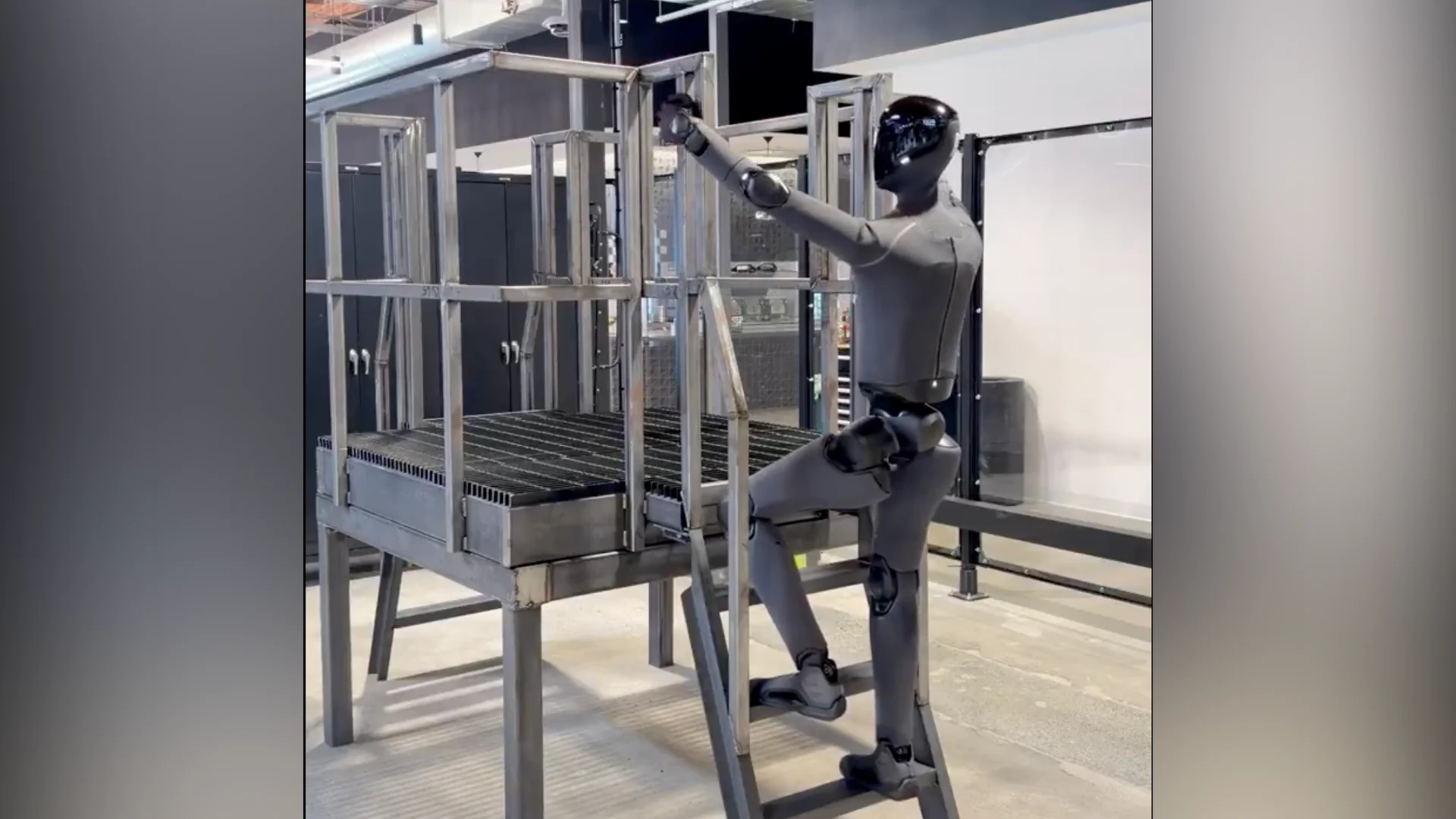
Stepping Up: Figure 03 Achieves Autonomous Ladder Climbing, Reigniting the Bipedal Debate
- Published on
- Reading time
- 4 min read
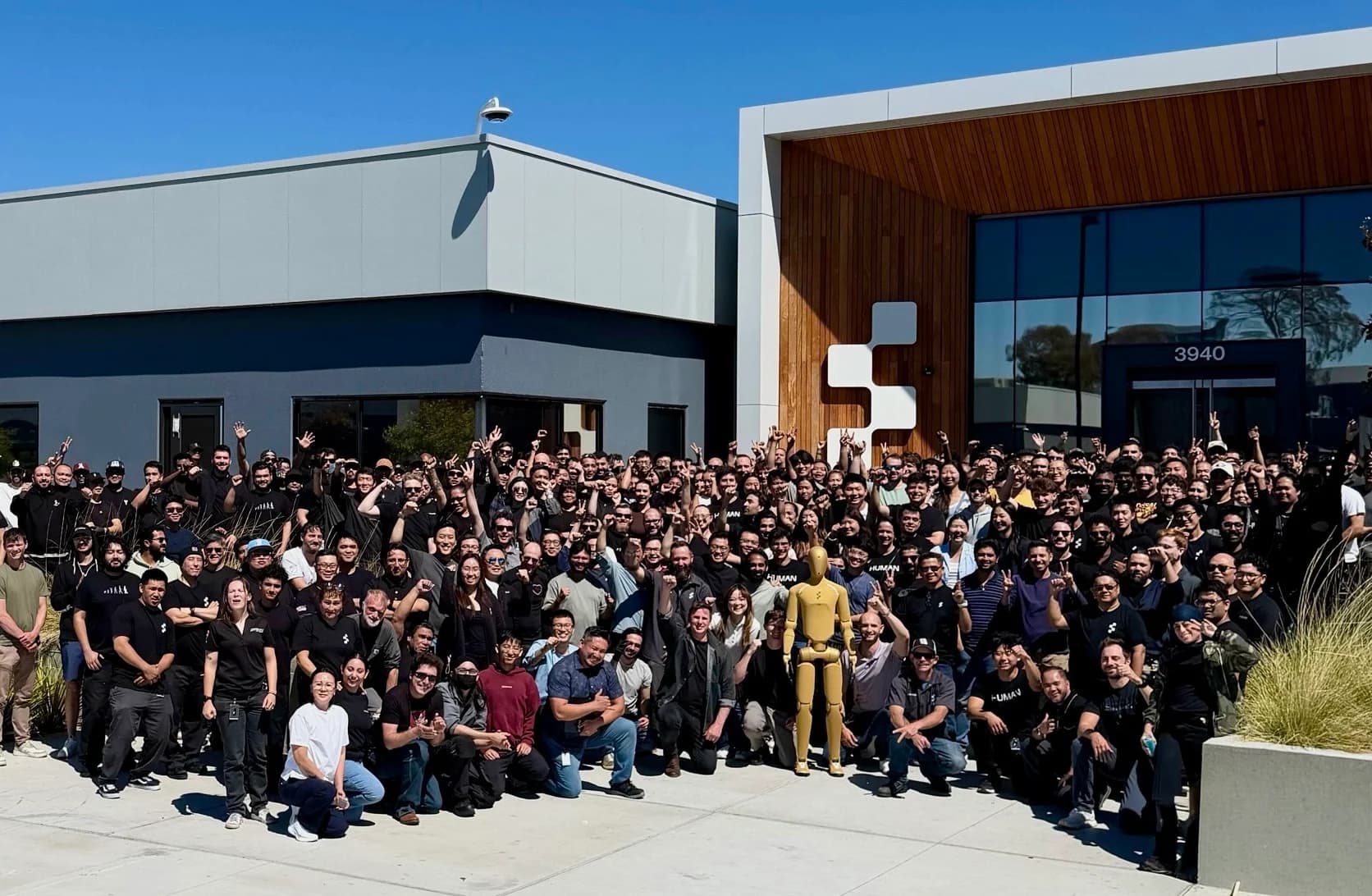
A Golden Milestone: Figure Manufactures Its 1,000th Figure 03 Humanoid
- Published on
- Reading time
- 4 min read
Figure AI Pops Champagne as Autonomous Marathon Crosses 200 Hours Without Hardware Failure
- Published on
- Reading time
- 8 min read
Beyond the 60-Hour Mark: Figure AI’s Endurance Marathon Signals Playbook for Figure 4 and Supply Chain Independence
- Published on
- Reading time
- 4 min read
Live Now: Figure 03 Hits Blistering 2.6-Second Throughput in 8-Hour Unedited Shift

The weekly humanoid robotics briefing
One email a week: the launches, funding and research that mattered, with context from Humanoids Daily.
Read recent issues