- Published on
Bear Hugging a Fridge: Inside Boston Dynamics’ Push for "Whole-Body" Physical AI
One tap, and our reporting appears more often in your Google Top Stories. It makes a real difference to a small newsroom.


- Boston Dynamics demonstrated its all-electric Atlas lifting and manipulating heavy objects using whole-body coordination rather than relying solely on its hands.
- The behavior was trained via a reinforcement learning pipeline that minimizes the "sim-to-real" gap, enabling seamless transition from simulation to physical hardware.
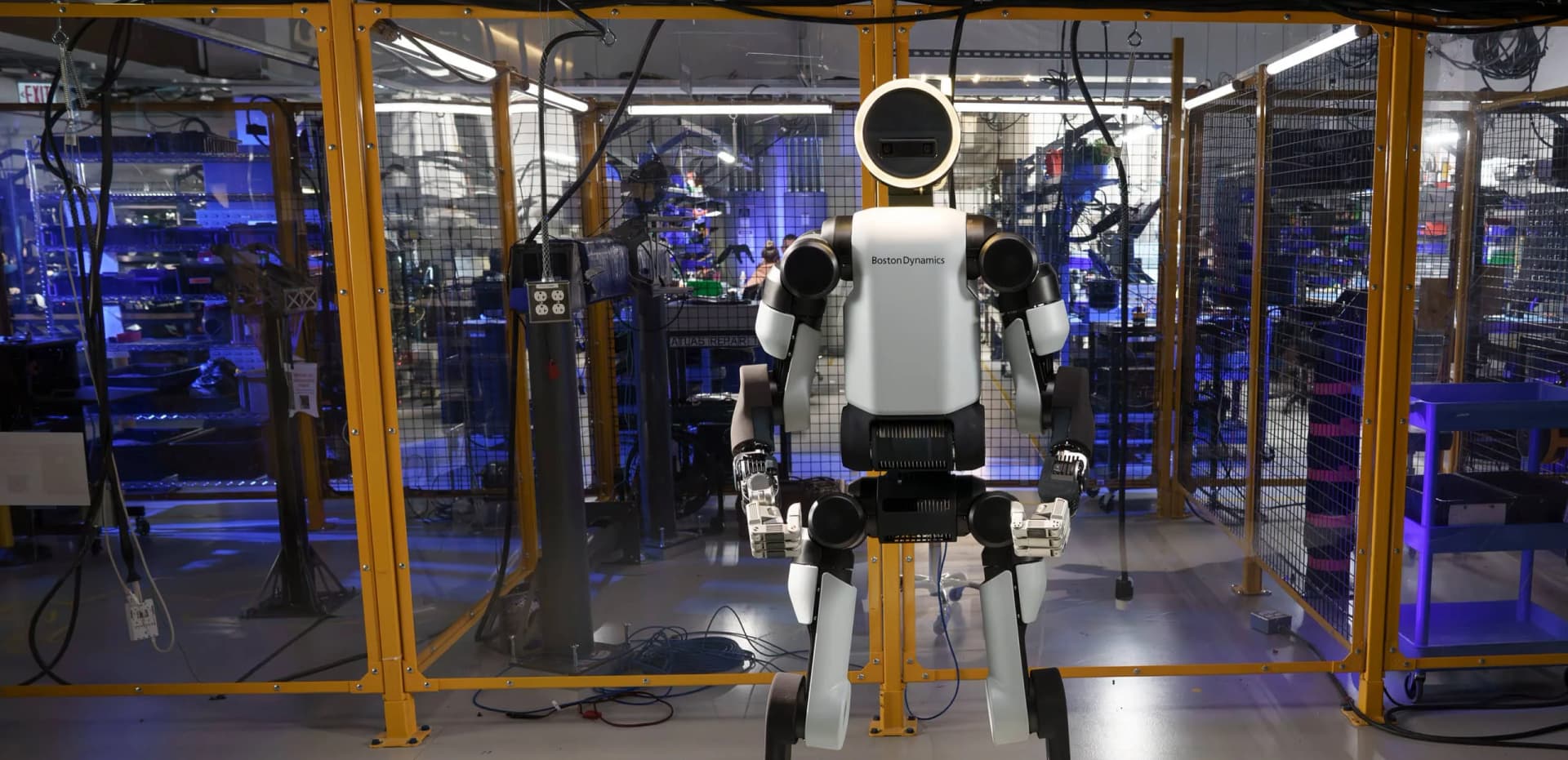
- Atlas's simplified design incorporates just two unique rotary actuator types and continuous 360-degree joint rotation to reduce mechanical complexity and field-service time.
- This rapid progress comes amidst a broader leadership exodus and heavy board pressure to meet Hyundai's strict commercial manufacturing timelines.
- The demonstration signals an industry-wide effort to graduate from Phase One hardware validation into sustained industrial deployment.
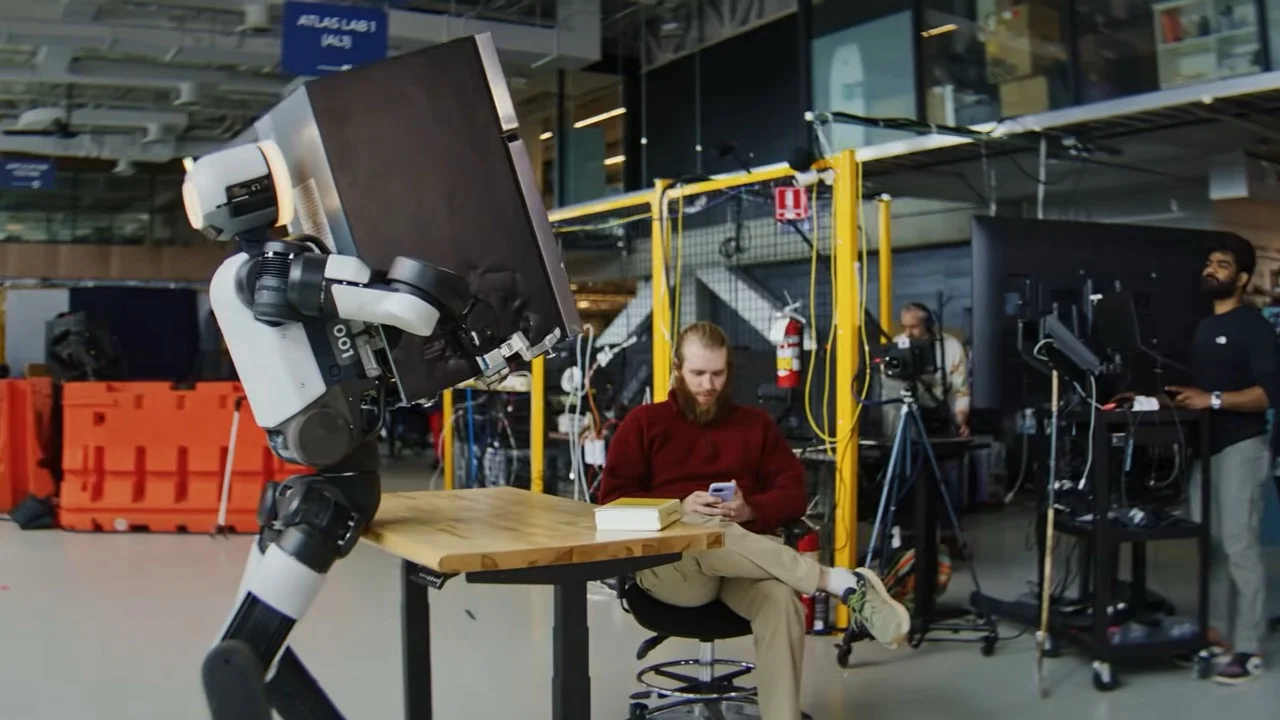
Boston Dynamics has unveiled a striking new demonstration of its all-electric, production-ready Atlas humanoid robot handling heavy, irregular cargo: a kitchen mini-fridge. In a pair of newly released videos, the machine is shown squatting down, bear-hugging the appliance, carrying it across a laboratory, and utilizing a non-human 180-degree torso rotation to set it down seamlessly. The demonstration highlights significant advancements in the robot's physical strength and full-body control as the company pushes toward commercialization.
The Case for Whole-Body Manipulation
In a technical breakdown authored by Alberto Rodriguez (Director of Robot Behavior for Atlas), Shane Rozen-Levy, and Vinay Kamidi, the company framed the experiment as a deliberate exploration of "physical intelligence." The authors argue that many dominant approaches in contemporary robotics are overly dependent on constant visual feedback and limited interaction surfaces, such as fingertips, to execute lightweight tasks. Real-world labor, by contrast, requires a generalist tool that can leverage its entire physical structure—including forearms, biceps, and knees—to shoulder massive, awkward loads.
While the public footage shows Atlas moving an (almost) empty 50-pound mini-fridge, the engineering team revealed that they pushed the policy to its absolute limits in the laboratory. By filling the appliance with an assortment of shifting objects from around the lab, they increased the total weight to over 100 pounds (45 KG). Despite the robot's reinforcement learning (RL) policy only being trained on loads between 50 and 70 pounds, the system successfully stabilized and transported the heavier, unevenly distributed weight without manual intervention from engineers.
Closing the Sim-to-Real Gap
The rapid deployment of the fridge behavior highlights a highly optimized software pipeline. According to the team, the entire behavior went from a basic animation reference trajectory to stable execution on physical hardware in just a few weeks.
The weekly humanoid robotics briefing
One email a week: the launches, funding and research that mattered, with context from Humanoids Daily.
Read recent issuesThis speed is driven by an exceptionally narrow "sim-to-real gap," meaning behaviors optimized in simulation transfer to physical hardware with minimal intermediate tuning. Atlas practiced the maneuver for millions of parallel hours in simulation, where engineers utilized domain randomization to introduce slight variations in floor friction, motor strength, and payload characteristics. Rather than relying entirely on real-time vision loops, the robot relies heavily on body proprioception—implicit feedback from its physical actuators—to sense and counteract the mass, inertia, and shifting internal contents of the fridge in real time.
Designing for Industrial Mass Scale
The high fidelity of Atlas's simulation environment is a direct byproduct of radical hardware simplifications designed to streamline manufacturing. Moving away from the complex hydraulic architectures of its predecessor, the all-electric model treats the humanoid form primarily as a scalable software problem.
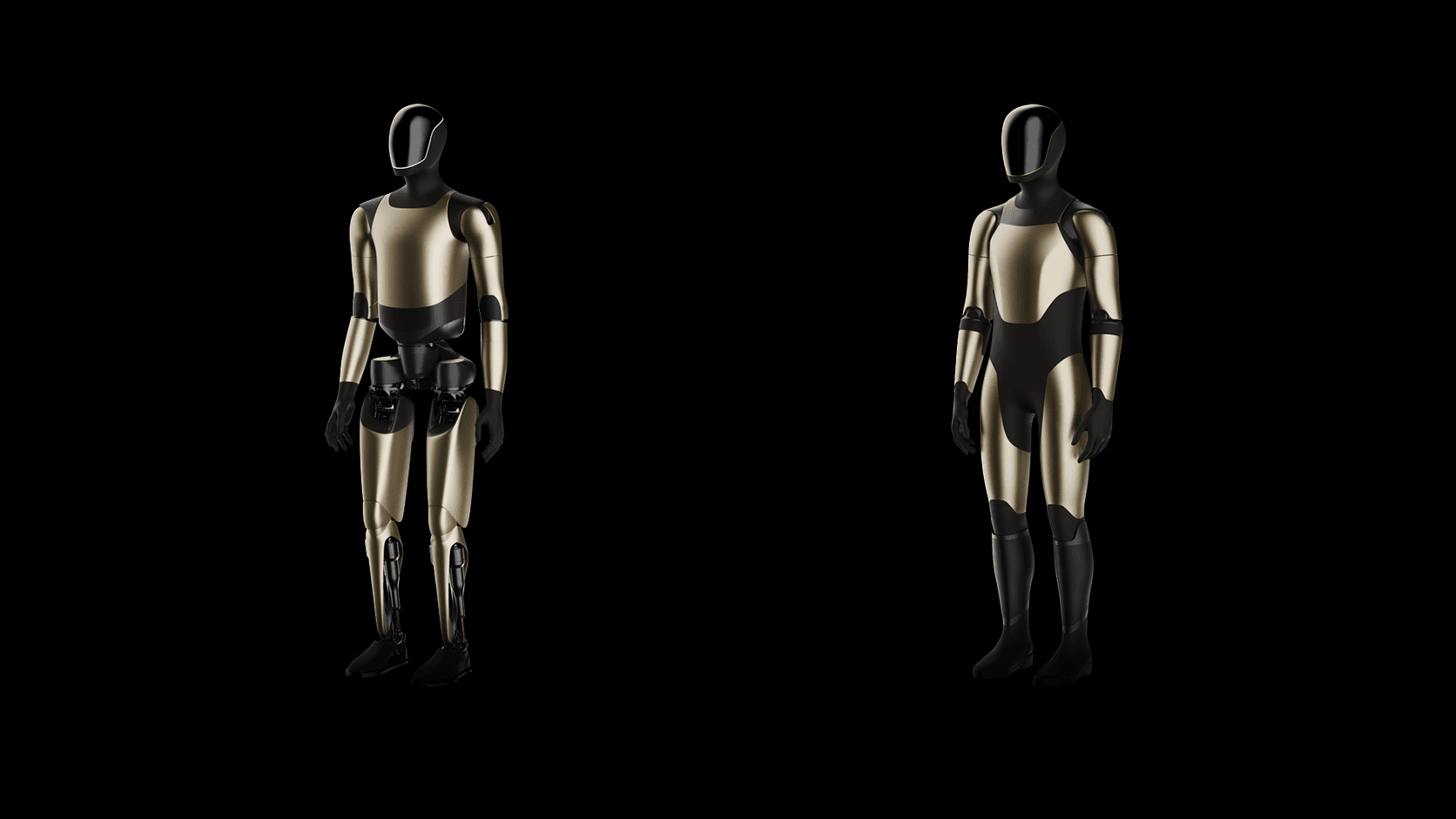
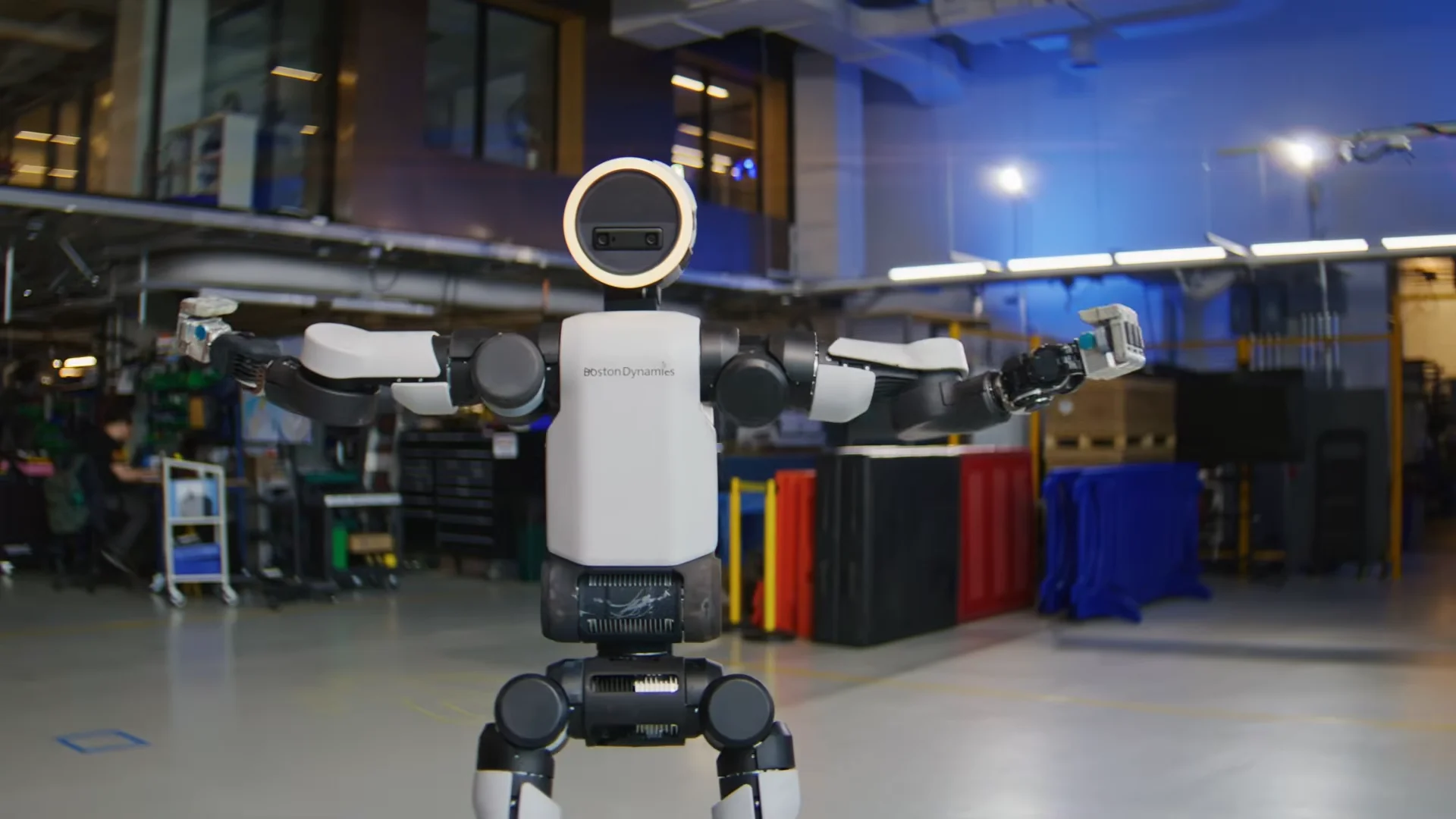
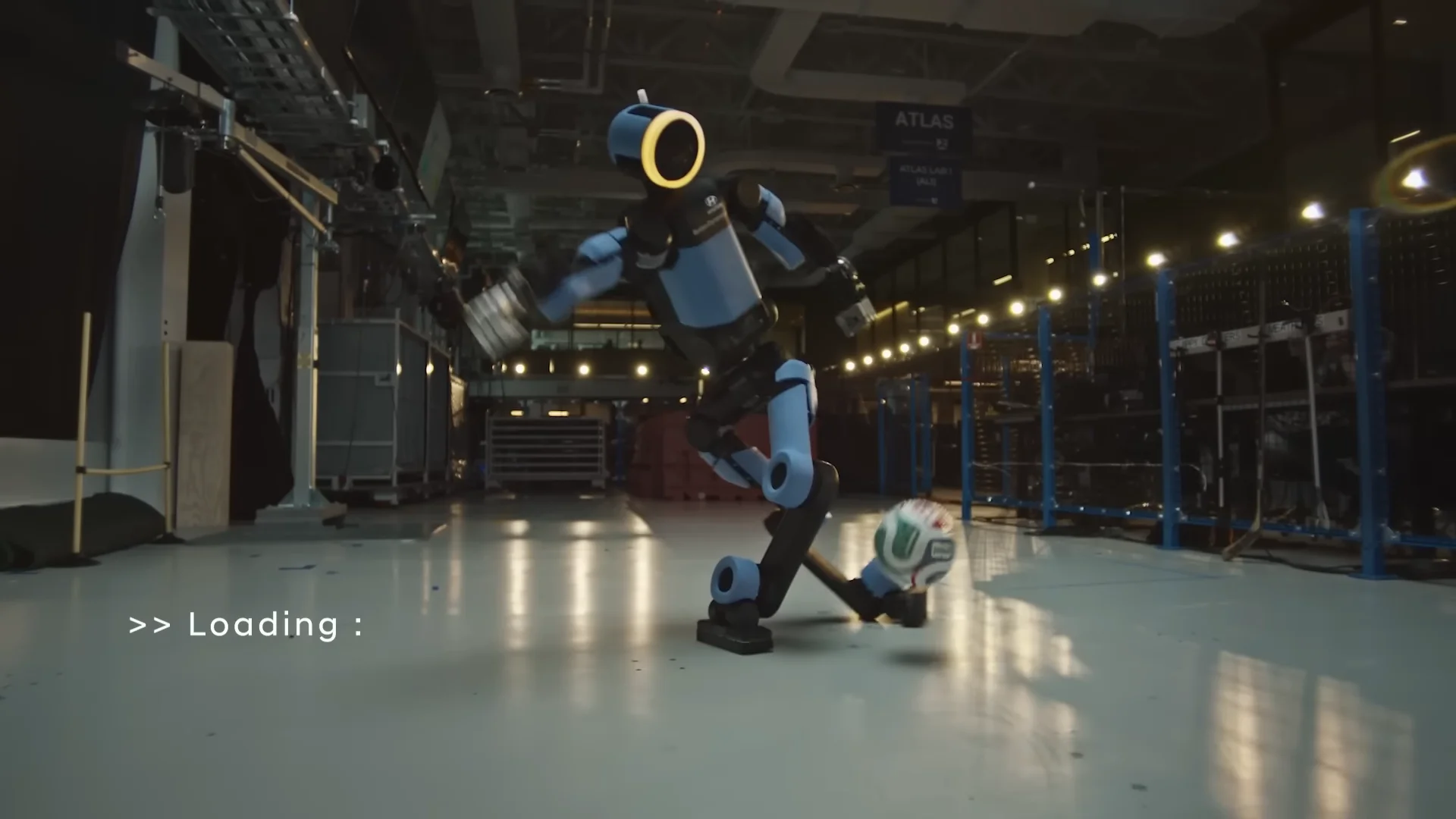
The robot utilizes just two unique proprietary rotary actuator designs across its entire frame, simplifying its bill of materials and supply chain complexity. Both arms and both legs are structurally identical, as are its shoulder and pelvic sub-assemblies. By completely eliminating external cabling across the joints, the engineering team removed the primary driver of traditional actuator failures, enabling continuous 360-degree rotation.
This morphology gives Atlas unique ways to move with efficiency; it can reverse its gait or spin its torso entirely backward to navigate tight factory floor constraints without taking extra steps. Symmetrical front-to-back feet further ensure the machine moves with equal capability in both directions. For minimized factory downtime, the limbs, hands, and head are configured as modular, field-replaceable units that can be swapped out by a technician within minutes.
Navigating the "Phase Two" Mandate
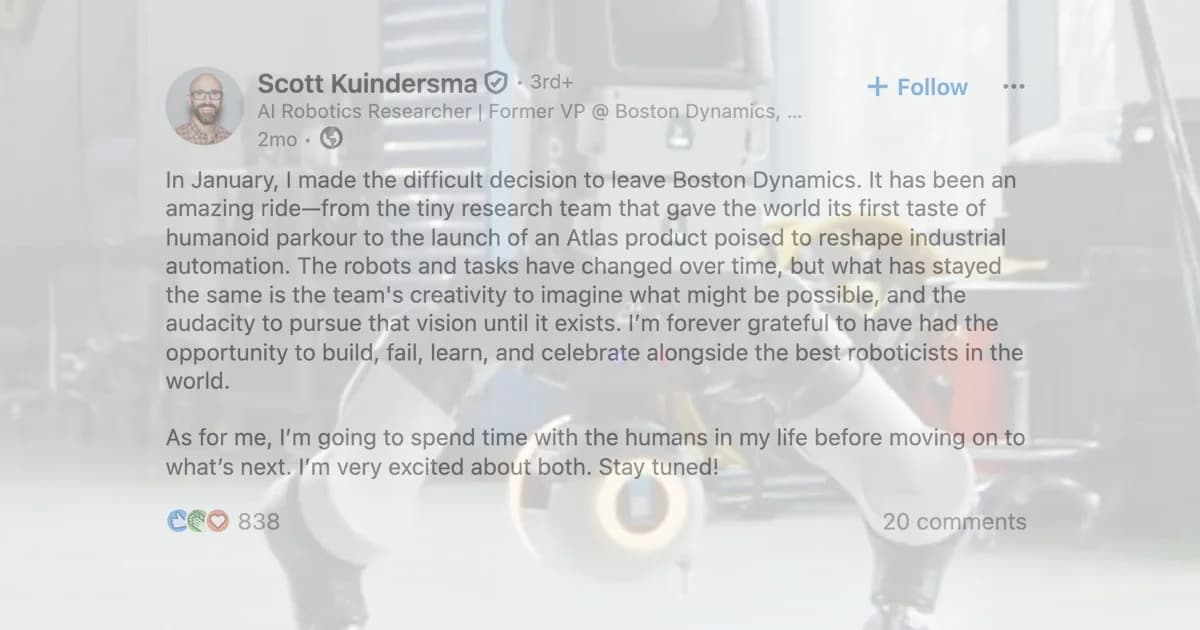
This latest technical breakthrough arrives at a critical juncture for the Waltham-based pioneer. Boston Dynamics is currently navigating a highly publicized leadership exodus that includes the retirement of longtime CEO Robert Playter and departures of key technical directors. Former employees suggest this turnover is driven by board-level pressure to meet majority owner Hyundai Motor Group's aggressive commercial timelines.
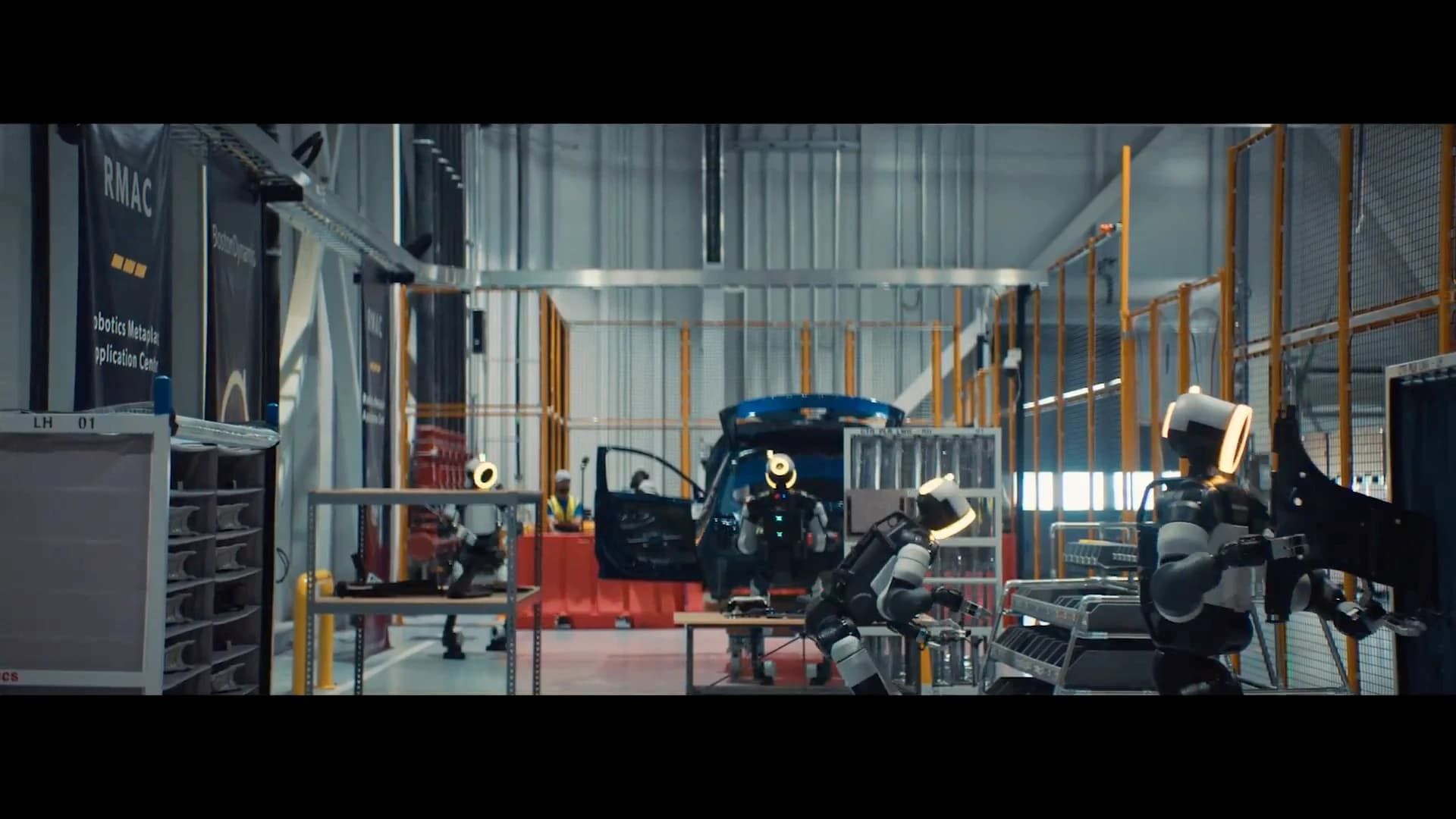
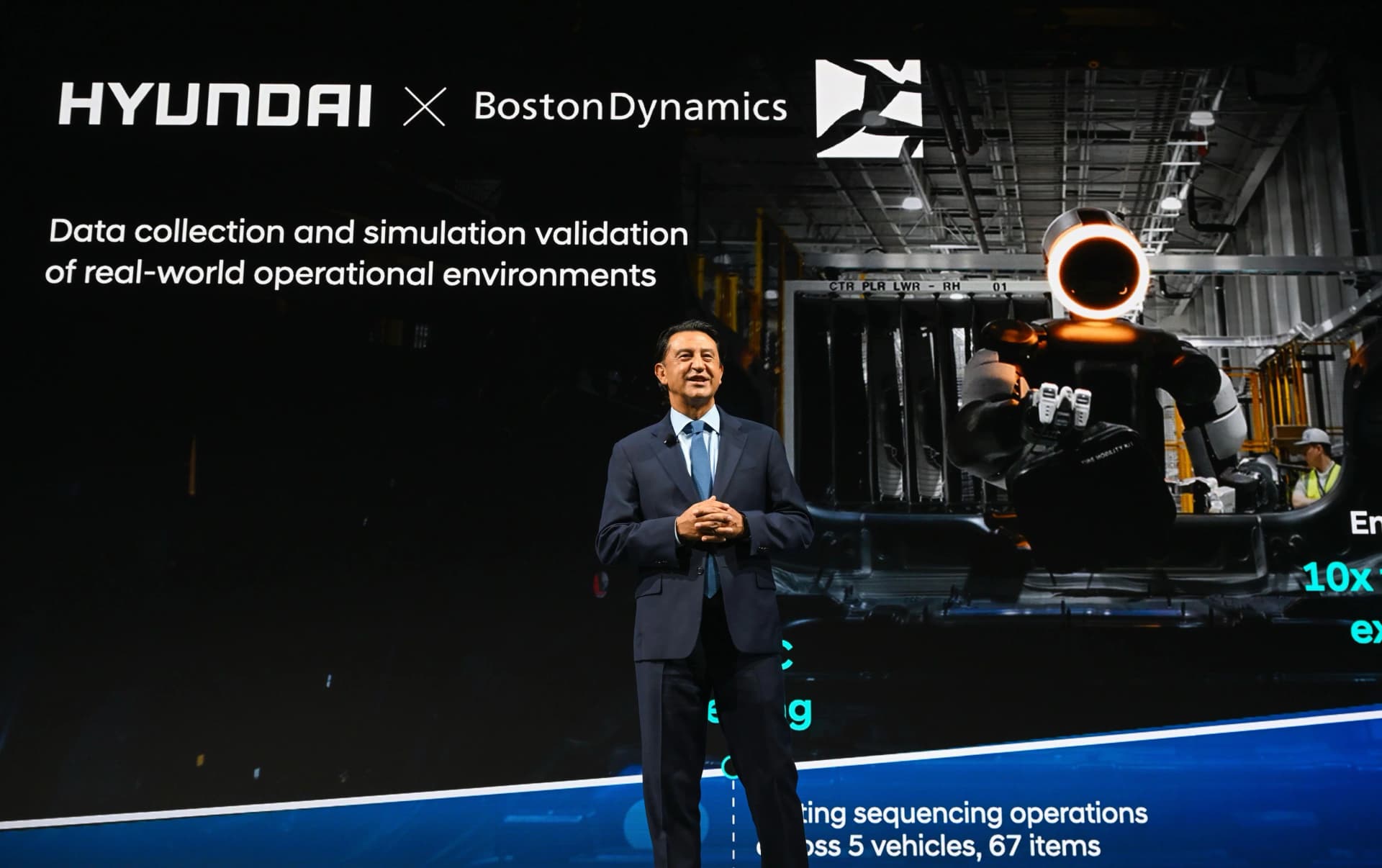
Hyundai has tasked Boston Dynamics with shifting from an experimental laboratory to a high-volume manufacturer capable of shipping true automotive volumes of humanoids. The conglomerate intends to deploy tens of thousands of robots, targeting a manufacturing capacity of 30,000 units annually to support full-scale operations at its Georgia Metaplant by 2028.
As product leads emphasize, the humanoid sector is aggressively attempting to graduate from Phase One hardware validation—the grind of proving physical reliability —into "Phase Two," which focuses on finding true product-market fit through sustained commercial deployment. While the company notes that the grippers used in the mini-fridge demonstration are an older workhorse iteration rather than the newer four-digit dexterous models debuted at CES, the ability to rapidly deploy robust, whole-body physical behaviors suggests the company's software stack is moving quickly to meet its industrial mandates.
Watch the video below:
Share this article
Read next
- Published on
- Reading time
- 4 min read
Boston Dynamics Makes Its Case for Atlas and a Two-Year Payback Target
- Published on
- Reading time
- 7 min read
Hyundai Says Atlas Will Not Replace Workers — One Day After Settling a Strike Over Exactly That
- Published on
- Reading time
- 4 min read
Hyundai to Take Full Ownership of Boston Dynamics in $325 Million SoftBank Buyout
- Published on
- Reading time
- 4 min read
The Production Pivot: Leadership Exodus and Internal Pressure at Boston Dynamics
- Published on
- Reading time
- 4 min read
The Blueprint for a Bipedal Workforce: Kia Details Atlas Deployment Roadmap
- Published on
- Reading time
- 4 min read
Beyond the Backflip: Zachary Jackowski on Why Generalization is the Final Frontier for Atlas
The weekly humanoid robotics briefing
One email a week: the launches, funding and research that mattered, with context from Humanoids Daily.
Read recent issues