- Published on
Skild AI Crosses $100M ARR in 10 Months, Mounting an Enterprise Assault on Robotics "Demo Culture"
One tap, and our reporting appears more often in your Google Top Stories. It makes a real difference to a small newsroom.


Your guide
Rich Robinson
Jee Chee Ren · Executive tour
See China’s AI and robotics ecosystem first-hand.
Six days exploring AI, robotics and advanced manufacturing.
With Rich Robinson, Clinical Professor of Entrepreneurship at Peking University
Beijing · Guangzhou · Shenzhen
29 November–4 December 2026
Referral partnership · We earn a commission on referred bookings.
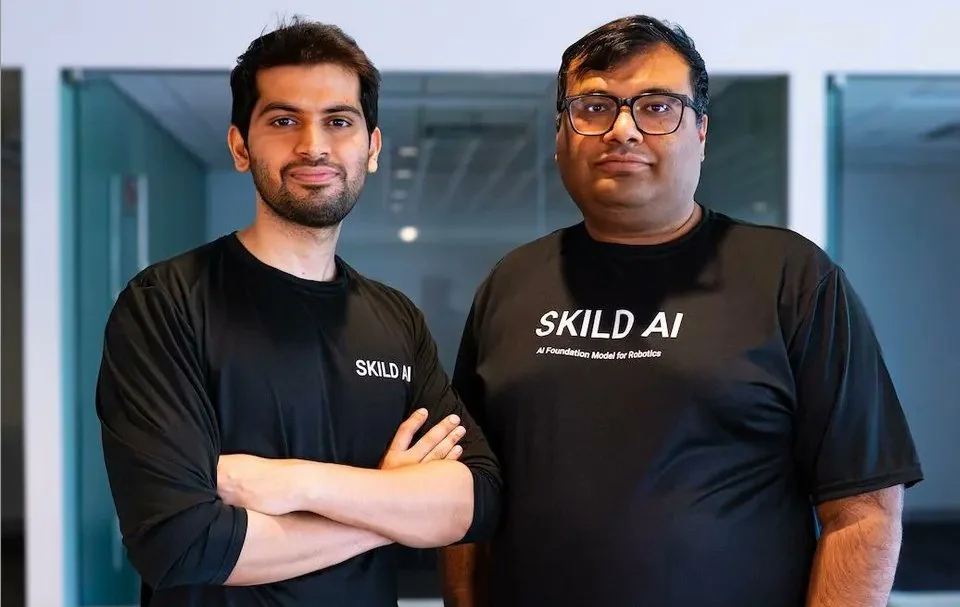
- Skild AI has surpassed $100 million in annual recurring revenue (ARR), reaching the commercial benchmark just ten months after its initial real-world deployment.
- The startup counts more than 60 enterprise clients across electronics assembly, food services, warehousing, and data center inspection, including Foxconn, Mitsui & Co., Sumitomo Wiring Systems, and G10 Fulfillment.
- In an essay accompanying the milestone, co-founders Deepak Pathak and Abhinav Gupta launched a pointed critique of robotics "demo culture," arguing that visual video clips obscure the brutal gap between 10% prototype reliability and production-grade cycle times.
- The financial surge expands on Skild's $1.4 billion Series C round and coincides with the rollout of its S1 in-context foundation model, co-developed on NVIDIA's physical AI compute stack.
- The rapid revenue ramp offers an empirical defense for specialized physical AI software neolabs amid growing skepticism from frontier foundation model labs.
In an embodied AI market frequently criticized for trading in slick, heavily edited hardware demos, Skild AI is attempting to anchor its credibility in cold, hard cash.
Ten months after turning on its first commercial deployment, the Pittsburgh-headquartered foundation model startup announced it has crossed $100 million in annual recurring revenue (ARR). The milestone represents one of the fastest commercial ramp-ups recorded in enterprise automation, seeing Skild scale from roughly $30 million reported during its $1.4 billion Series C funding round in January to triple digits before year’s end.
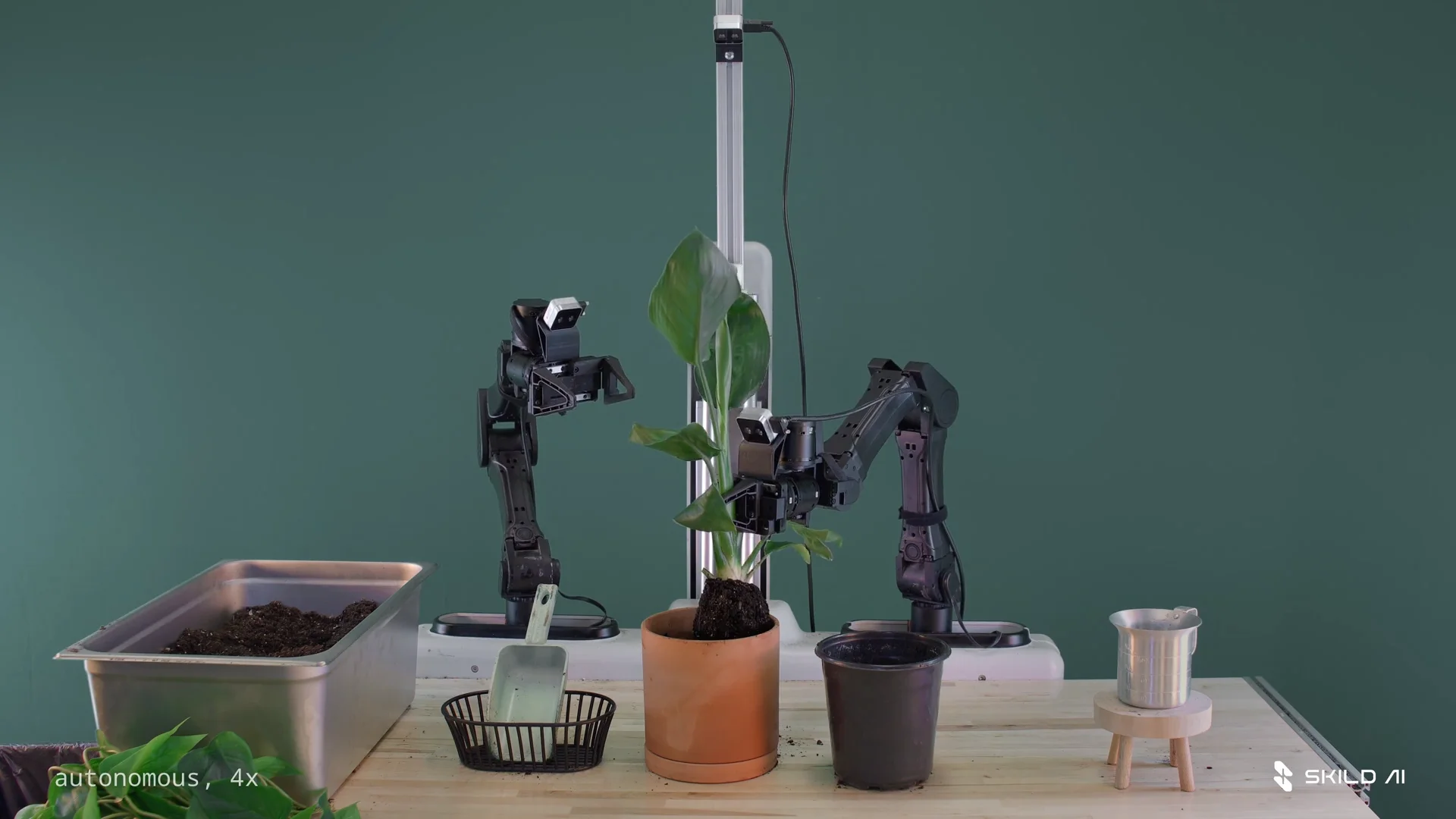
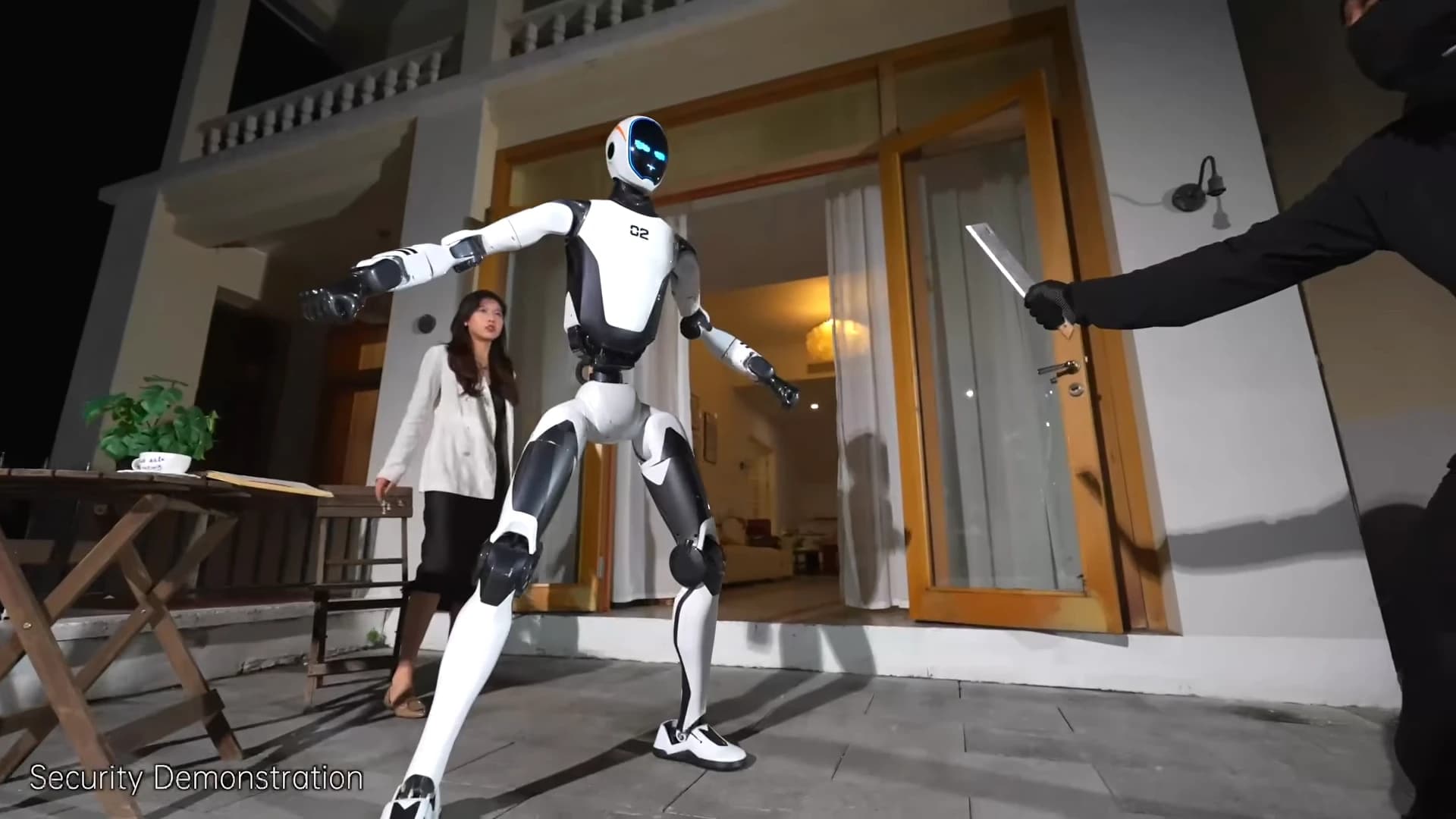
The company claims to have integrated its general-purpose robot brain into over 60 paying enterprise customer environments. Rather than isolating its models to repetitive parcel sorts or warehouse transit, Skild’s footprint spans automated meal assembly in commercial kitchens, high-density server manufacturing, wire harness fabrication, and ongoing facility security.
Notably, the revenue composition heavily favors complex manipulation over standard mobile bases: mobility accounts for only 10% of total revenue, while dedicated Fetch solutions represent 4%, leaving the vast bulk driven by industrial manipulation and specialized physical workflows.
Follow humanoid robotics without following every announcement.
Get the week’s most important launches, funding and research—and why they matter—in one email from Humanoids Daily.
Once a week. Unsubscribe anytime.
Read recent issuesThe Production Line: From Blackwell Racks to Meal Plating
Skild’s revenue velocity is underpinned by contracts with industrial and infrastructure giants.
On the manufacturing floor, Skild has partnered with Foxconn and NVIDIA to deploy the Skild Brain on dual-arm manipulators tasked with assembling NVIDIA Blackwell systems. The automated cell handles high-precision insertion tasks—including seating busbars, positioning limit blocks, and driving 16 individual screws under strict contact-aware force thresholds. Because data center architecture revisions alter geometric layouts across every product iteration, traditional automation would require shutting lines down for months of manual trajectory re-scripting; Skild’s adaptive policies absorb design adjustments on the fly.
┌─────────────────────────────────────────────────────────────┐
│                   SKILD REVENUE DYNAMICS                    │
├────────────────────────────────┬────────────────────────────┤
│ Milestone                      │ $100M ARR in 10 months    │
│ Customer Base                  │ 60+ Enterprise Clients     │
│ Revenue Share: Mobility        │ 10%                        │
│ Revenue Share: Fetch           │ 4%                         │
│ Primary Driver                 │ Manipulation & Inspection  │
└────────────────────────────────┴────────────────────────────┘
The startup has found similarly complex niches in automotive and food logistics:
- Sumitomo Wiring Systems: Automating wire harness assembly—a notorious manufacturing bottleneck defined by deformable, flexible wiring that classical computer vision systems routinely fail to grasp.
- Mitsui & Co. (AIM Services): Automating commercial kitchen plating lines. AIM Services prepares roughly 1.4 million meals per day across Japanese institutions, where dish plating remains an acute, labor-intensive barrier.
- G10 Fulfillment: Deploying pick-and-pack manipulators in e-commerce fulfillment. According to G10 COO and CTO Brian Wright, warehouse lines jumped from an average manual baseline of 50 lines per hour to roughly 130–140 lines per hour under Skild’s robotic systems.
- STN Inc.: Conducting autonomous data center telemetry and facility inspections to reduce human operational overhead across hyperscale infrastructure.
"Seeing Is Not Believing": The Anti-Demo Manifesto
To mark the financial benchmark, Skild co-founders Deepak Pathak and Abhinav Gupta published an essay titled "The Hidden Pillar of Robotics Research is Deployment," framing real-world adoption not merely as a monetization strategy, but as an irreplaceable research instrument.
In doing so, Pathak and Gupta mounted a direct ideological attack on the venture-backed robotics sector's reliance on curated video demonstrations.
"Watching demo videos has become a common way to measure progress in physical AI," Pathak wrote. "The problem is that a successful clip from a robot with 5%, 10%, or 99% accuracy can look exactly the same. Even if you're 10% accurate, you can just keep shooting until it works. We taught our model to make eggs last year. It took a week to cook the first egg, then two months to make it work reliably with different eggs and in different setups. This is why seeing is not believing in robotics".
The founders argued that comparing robotics to large language models misses the structural reality of physical deployment. While LLMs benefited from years of isolated algorithmic development culminating in the sudden consumer explosion of ChatGPT, embodied models cannot be developed in laboratory isolation.
Crucially, the founders singled out operational throughput—cycle time—as an evaluation metric that academic papers and promotional clips consistently omit:
“Imagine a factory line with ten stations—five operated by robots and five by people. Every station must finish within roughly the same cycle time. If one station is slower, it constrains the throughput of the entire line. A robot that is 99.9% accurate but ten times too slow is not almost deployable. It's not deployable.”
Internal cultures that celebrate short-term demo milestones, Skild argued, poison real engineering incentives: researchers naturally gravitate toward the initial 50% breakthrough because it produces flashy video material, leaving the brutal, unglamorous pursuit of the final 50% of real-world edge cases neglected.
S1 and the "Physical RSI" Flywheel
The operational lessons harvested from its customer fleet directly dictated the design of Skild’s recently unveiled S1 foundation model.
In production environments, plant layouts frequently shift, assembly parts undergo dimensional revisions, and suppliers swap components. Under standard vision-language-action (VLA) setups, each environmental variance mandates hours of fresh teleoperation logging and computationally expensive weight fine-tuning.
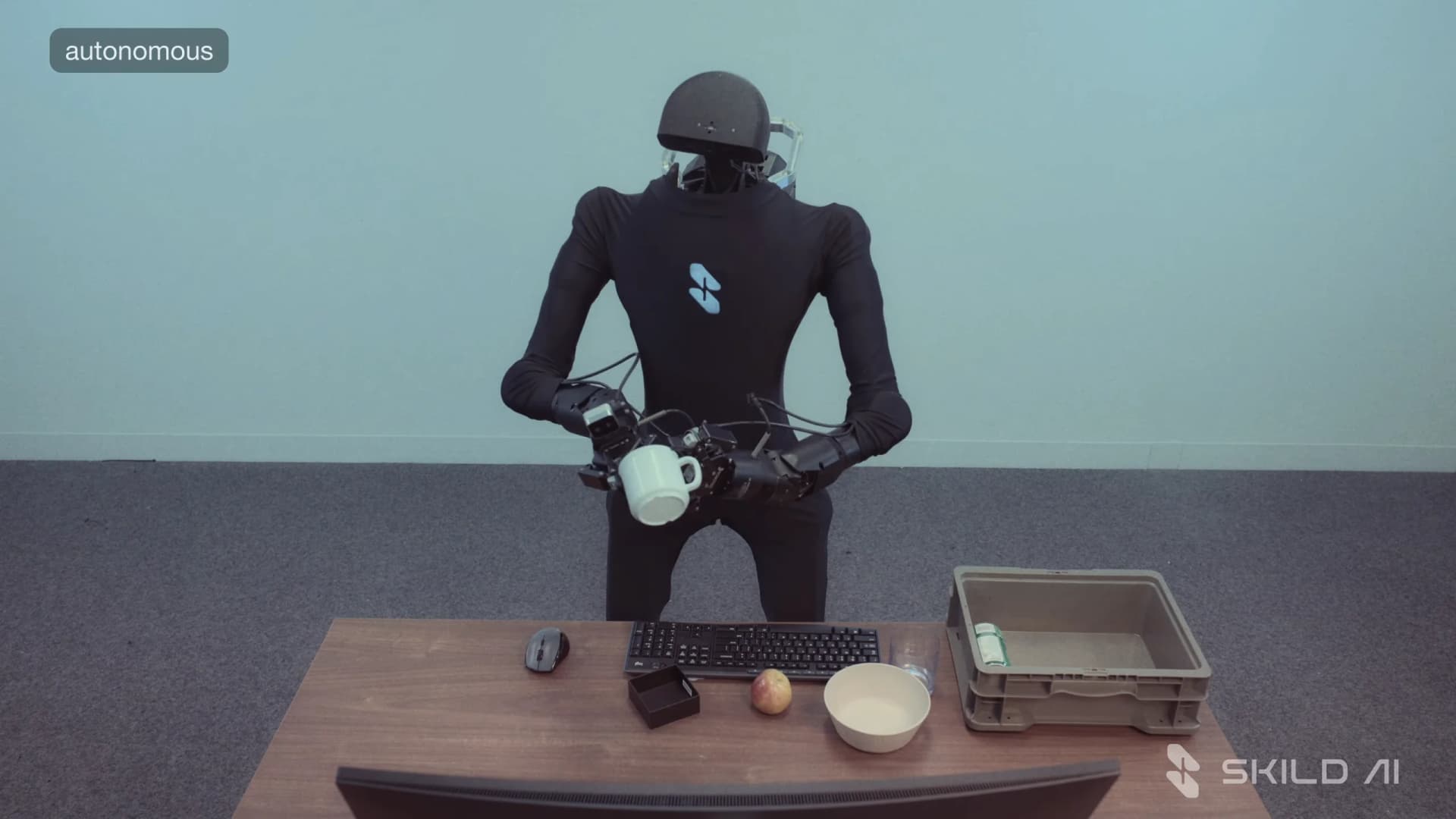
S1 circumvents gradient updates through visual in-context learning, allowing on-site factory technicians to prompt a dual-arm manipulator with a single video of a new process and execute the routine within minutes. In testing on novel multistep manipulation horizons, S1 logged a 66% step success rate on out-of-distribution tasks, matching the performance yields that historically demanded roughly 380 manual teleoperation runs.
Skild feeds those edge deployments back into what it terms "Physical RSI" (recursive self-improvement):
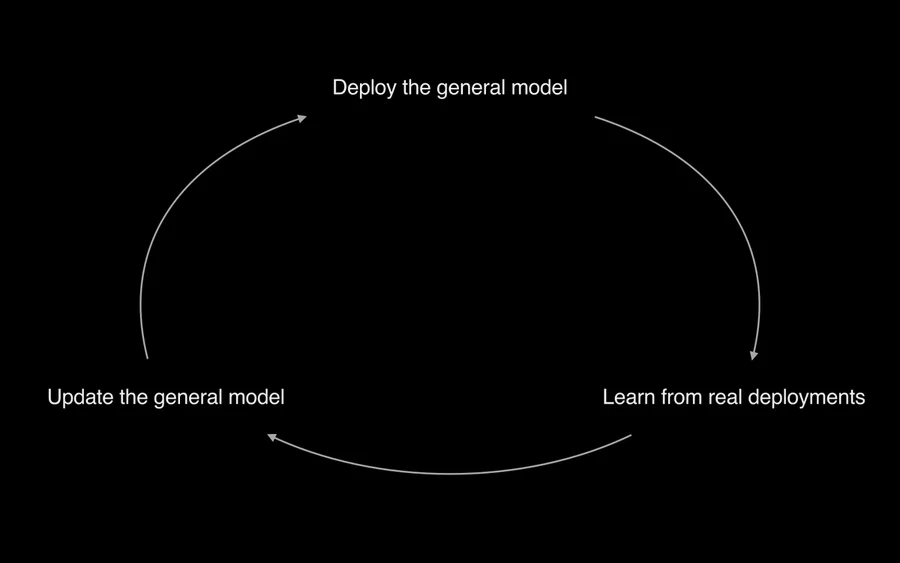
The founders compared the model architecture to a student’s foundational academic training:
"In high school, we knew physics, chemistry, and mathematics at a decent level," Pathak explained. "Now imagine we could take our high-school self and, in a parallel universe, do a PhD in chemistry. Another in physics. Another in mathematics. Then imagine distilling all of that specialized knowledge back into the student we started as. By deploying, we're making the 'high-school self'—S1—better and better".
To support that distillation loop, Skild relies on NVIDIA's full physical AI software suite, utilizing Isaac Lab, Cosmos generative data curation, and newly developed GPU-accelerated simulation solvers integrated into the Newton physics engine to validate physical contact behaviors prior to production rollouts.
The Defense of the Specialist Neolab
Skild’s commercial velocity injects concrete data into an escalating strategic debate across Silicon Valley.
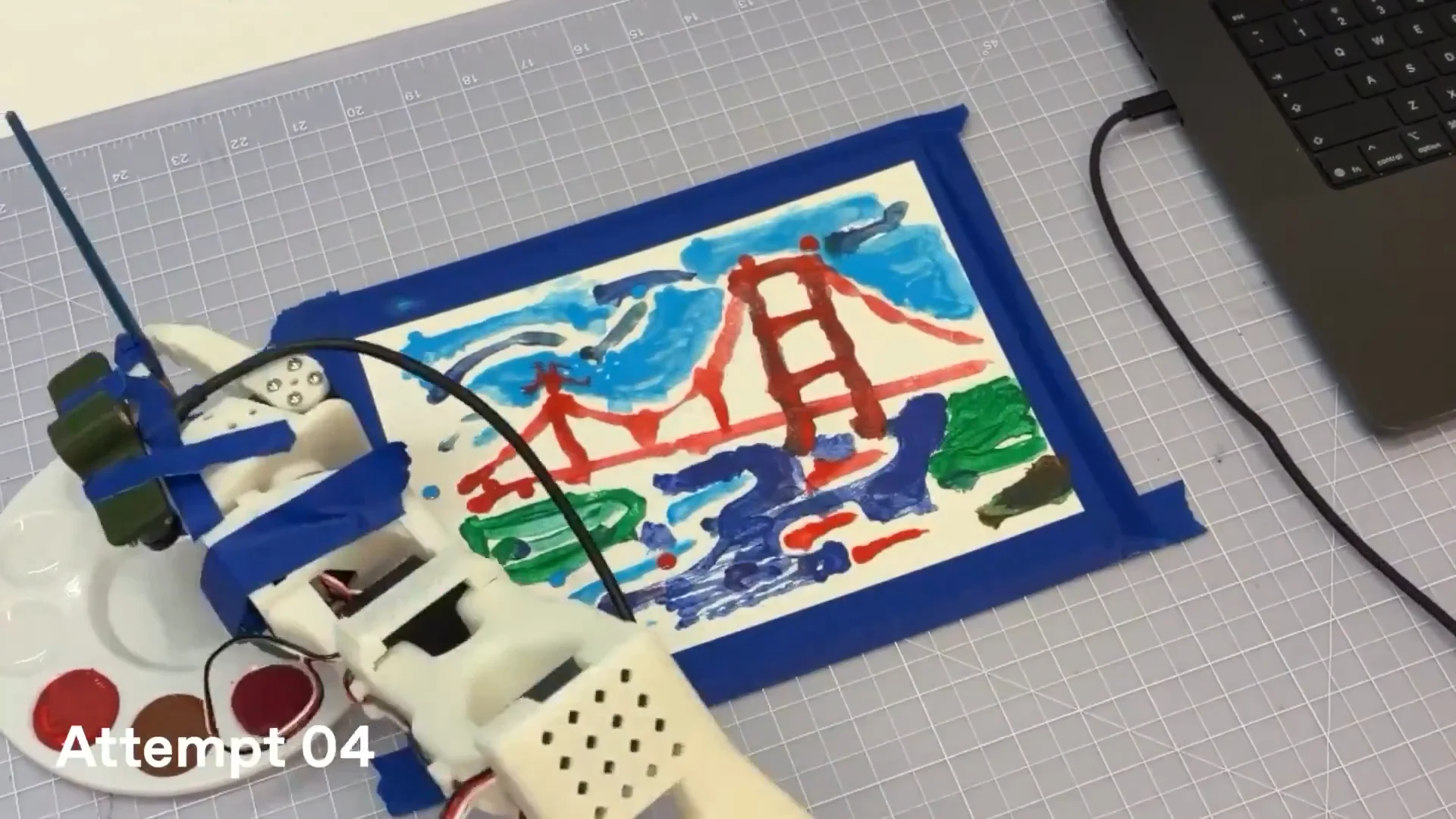
Just days ago, an OpenAI researcher showcased GPT-6 Astra iteratively learning to paint the Golden Gate Bridge using an off-the-shelf arm, prompting researchers like Amazon’s Zeeshan Zia to speculate that generalized multimodal foundation models might eventually render dedicated robotics neolabs obsolete. Under that hypothesis, centralized cloud APIs with superior spatial and algorithmic reasoning will simply swallow the physical intelligence layer whole.
Skild’s operational balance sheet suggests a counter-narrative: frontier reasoning models may sketch paintings in controlled laboratory environments, but converting spatial intelligence into industrial-scale cash flow requires navigating rigid factory cycle times, friction-dependent assembly, and tight supply-chain integration.
By reaching $100 million ARR inside ten months, Skild is betting that the definitive moat in robotics will not be claimed by whoever shoots the best video prompt, but by the company whose models survive the unforgiving physical realities of the assembly line.
Share this article
Follow humanoid robotics without following every announcement.
Get the week’s most important launches, funding and research—and why they matter—in one email from Humanoids Daily.
Once a week. Unsubscribe anytime.
Read recent issuesRead next
- Published on
- Reading time
- 8 min read
Skild AI Unveils S1: In-Context Learning for Long-Horizon Robot Manipulation
- Published on
- Reading time
- 4 min read
Skild AI Acquires Zebra’s Robotics Division to Build the "Orchestrated" Warehouse
- Published on
- Reading time
- 4 min read
Skild AI Secures $1.4 Billion Series C, Tripling Valuation to Over $14 Billion
- Published on
- Reading time
- 3 min read
Masayoshi Son's SoftBank Renews Humanoid Robotics Hunt, Targeting AI-Driven Startups
- Published on
- Reading time
- 5 min read
Skild AI’s S1 Learns Soccer Through More Than 140 Years of Simulated Self-Play
- Published on
- Reading time
- 5 min read
The "OpenAI of Robotics" Debate Reignites as GPT-6 Astra Paints in Real Life