- Published on
The "OpenAI of Robotics" Debate Reignites as GPT-6 Astra Paints in Real Life
One tap, and our reporting appears more often in your Google Top Stories. It makes a real difference to a small newsroom.


Your guide
Rich Robinson
Jee Chee Ren · Executive tour
See China’s AI and robotics ecosystem first-hand.
Six days exploring AI, robotics and advanced manufacturing.
With Rich Robinson, Clinical Professor of Entrepreneurship at Peking University
Beijing · Guangzhou · Shenzhen
29 November–4 December 2026
Referral partnership · We earn a commission on referred bookings.
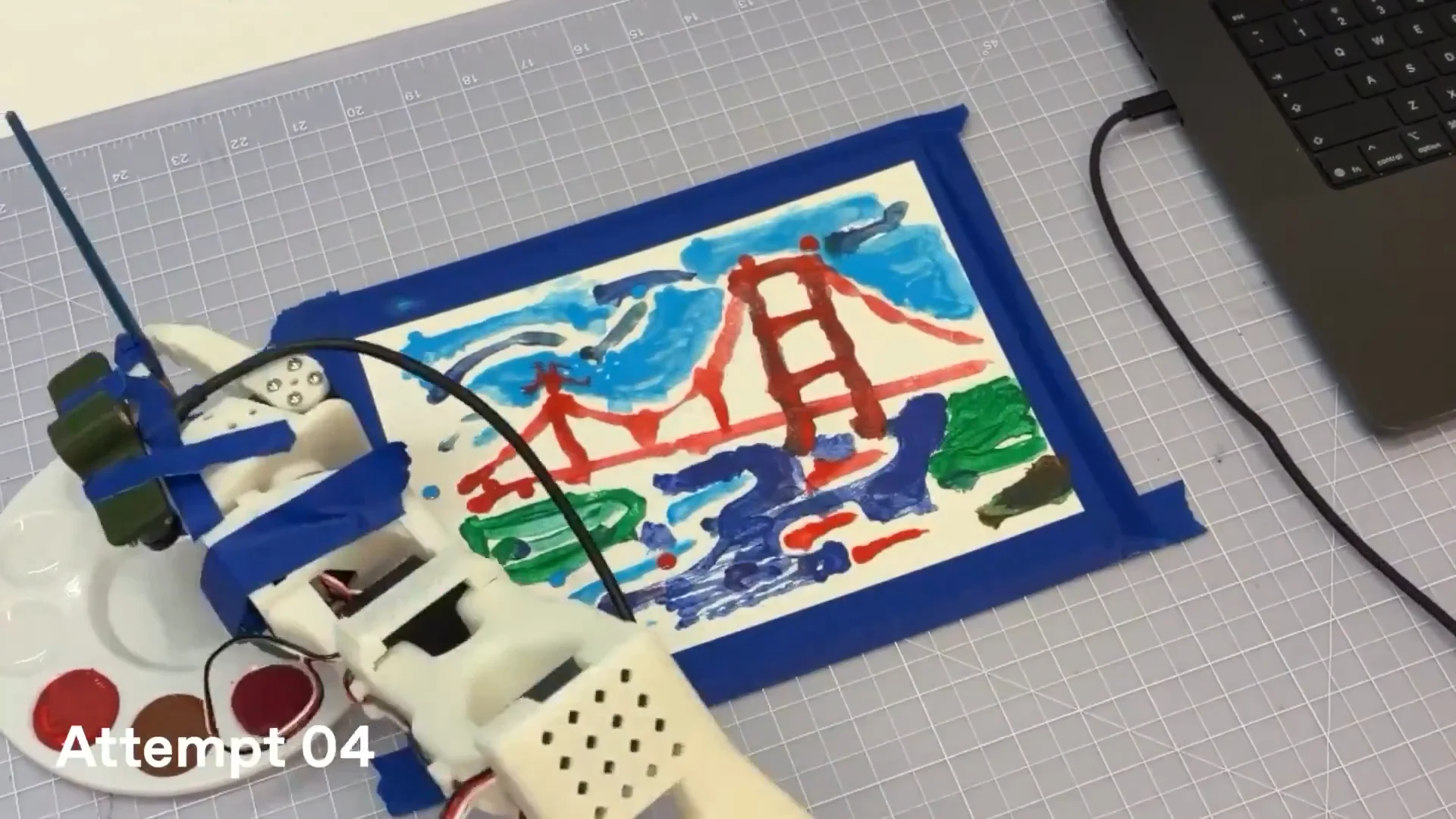
- An OpenAI roboticist demonstrated GPT-6 Astra autonomously learning to control a robotic arm holding a physical paintbrush, iterative-painting the Golden Gate Bridge from visual camera feedback.
- The demonstration prompted AI researcher Zeeshan Zia to argue that the "OpenAI of robotics" may simply be OpenAI itself, rather than specialized physical AI neolabs.
- Clone Robotics CEO Dhanush Radhakrishnan countered that rapid model degradation and algorithm diffusion mean real economic moats reside exclusively in category-leading superhumanoid hardware and consumer data flywheels.
- The exchange highlights a growing split among investors and engineers over whether frontier LLMs will commoditize physical intelligence layers or stall against the physical realities of contact mechanics.
When OpenAI launched GPT-6 Astra, much of the spotlight centered on mathematical proofs, autonomous browser use, and software engineering. Yet in robotics circles, the frontier model's visual reasoning and agentic problem-solving continue to spill directly onto physical test benches.
The latest proof-of-concept arrived from Thijs, a 20-year-old roboticist at OpenAI. Providing Astra with an off-the-shelf robotic arm, a paintbrush, and a camera, he instructed the model to paint San Francisco’s Golden Gate Bridge in real life. Without explicit manual joint trajectory scripting, the model deduced how to actuate the arm, incorporating closed-loop visual updates to refine its brushstrokes across successive iterations.
The resulting canvas—a stylized rendition in red and blue watercolours—quickly made its way into the hands of OpenAI CEO Sam Altman, who publicly requested and received the finished piece.
The experiment mirrors similar community efforts that surfaced over the weekend. Other developers reported using Astra to generate custom physics environments in MuJoCo, writing low-level controllers from scratch to guide five-fingered hands in replicating Picasso's famous dove sketch under friction-dependent grasp constraints.
Follow humanoid robotics without following every announcement.
Get the week’s most important launches, funding and research—and why they matter—in one email from Humanoids Daily.
Once a week. Unsubscribe anytime.
Read recent issuesFor many observers, watching a general-purpose model adapt zero-shot to physical kinematic tool-use feels like an inflection point. However, it has also reignited an existential strategic debate across the robotics industry: will specialized physical AI startups capture the value of the embodied revolution, or will general foundation models swallow the physical intelligence layer whole?
The "OpenAI of Robotics" Question
Watching Astra move fluidly from software codebases to physical actuators prompted Zeeshan Zia, Principal Scientist for Multi-Agent Systems and Multimodal AI at Amazon Alexa and co-founder of Retrocausal, to offer a blunt prognosis:
“Seems like the OpenAI of Robotics will be OpenAI, not Physical Intelligence or Skild.”
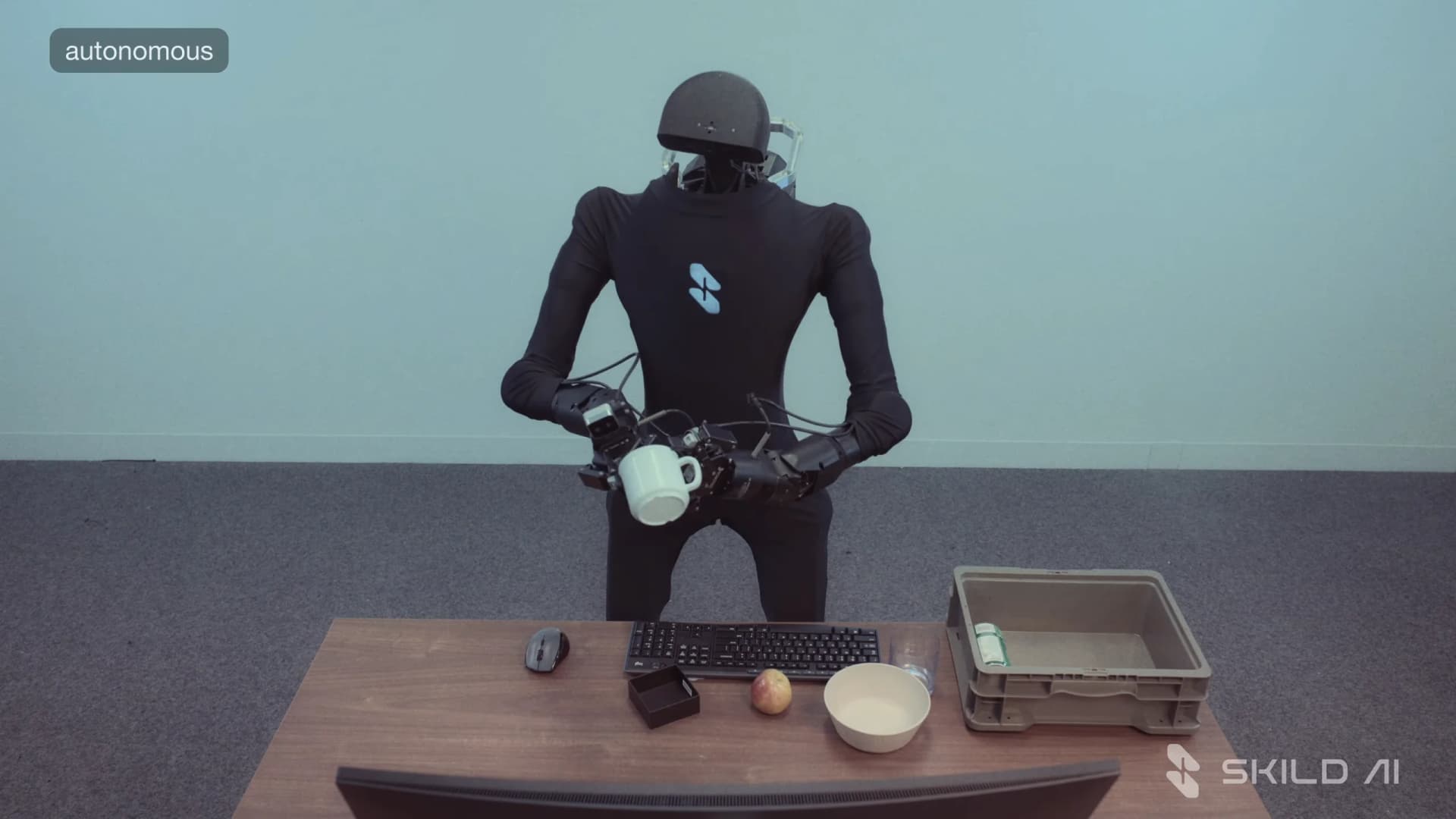
The comment targets the core thesis of well-funded embodied AI startups. Over the past year, specialist labs like Physical Intelligence (Pi) and Skild AI have raised hundreds of millions of dollars to build dedicated foundation models for manipulation and locomotion. Startups like Pi have pursued universal "intelligence layer" APIs using techniques like real-time action chunking, while Skild’s S1 demonstrated zero-shot generalization through in-context video prompting.
Yet if general-purpose multimodal models like Astra can coordinate multi-view camera inputs, infer spatial geometry, and write operational inverse kinematics solvers on the fly, the argument for dedicated robotics foundation architectures faces stiffer scrutiny. Recent third-party hardware benchmarks from RoboCurve already showed GPT-6 Astra hitting a 95% completion rate on gross pick-and-place trials, dramatically reducing reasoning tokens and API operational overhead compared to rival models.
Coupled with Altman’s recent confirmation that OpenAI will "definitely" build its own humanoid robot alongside internal data center hardware, the threat to standalone software startups is no longer theoretical.
The Hardware Counter-Thesis
Not everyone in robotics accepts the premise that frontier software labs will run away with the physical market. Dhanush Radhakrishnan, CEO of biomimetic humanoid developer Clone Robotics, pushed back against Zia’s framing, arguing that software-only advantages in robotics evaporate quickly.
"Frontier models have a half life of 6 months," Radhakrishnan responded. "NVIDIA open sources methods. Algorithms knowhow proliferates. Hand collected UMI data will not save the neolabs. Robotics returns will accrue to the consumer data flywheel and category leading superhumanoid platform, as determined by the upper bound of the hardware’s capabilities."
Radhakrishnan’s skepticism reflects an increasingly vocal faction of robotics founders and venture investors who argue that hardware—not intelligence—is the ultimate moat. Under this view, foundation models are headed toward inevitable commoditization. As open-source algorithmic paradigms spread, physical utility will not be gated by reasoning tokens, but by actuator bandwidth, sensor fidelity, thermal dissipation, and structural durability.
A model can reason through brush placement on paper, but standard end-effectors still struggle when physical friction and structural non-linearities enter the equation. As RoboCurve’s physical manipulation benchmarks revealed, Astra’s spatial competence collapsed down to a 10% success rate the moment it was assigned sub-millimeter puzzle insertions.
Without human-grade tactile sensing, high-frequency torque loops, and compliant mechanical hardware, frontier models run into physical barriers that pure inference compute cannot easily resolve.
Commoditized Brains, Unforgiving Bodies
The divergent views reflect two radically different bets on how robotics value chains will mature over the next decade.
If generalist models continue their current trajectory, general reasoning engines could render bespoke vision-language-action (VLA) architectures redundant, converting robotics into a systems integration discipline powered by centralized cloud APIs. In that scenario, OpenAI’s immense compute scale gives it a commanding lead.
Conversely, if physical mechanics present an asymptotic ceiling that digital-first architectures cannot bridge, value will shift toward manufacturers who control proprietary hardware ecosystems, custom muscle architectures, and closed consumer fleets.
For now, an AI model holding a physical paintbrush and adjusting its strokes in real time provides an undeniable glimpse of progress. Whether that capability culminates in a software monopoly or merely accelerates the commoditization of the robotic brain remains the multi-billion-dollar question hanging over the industry.
Share this article
Follow humanoid robotics without following every announcement.
Get the week’s most important launches, funding and research—and why they matter—in one email from Humanoids Daily.
Once a week. Unsubscribe anytime.
Read recent issuesRead next
- Published on
- Reading time
- 5 min read
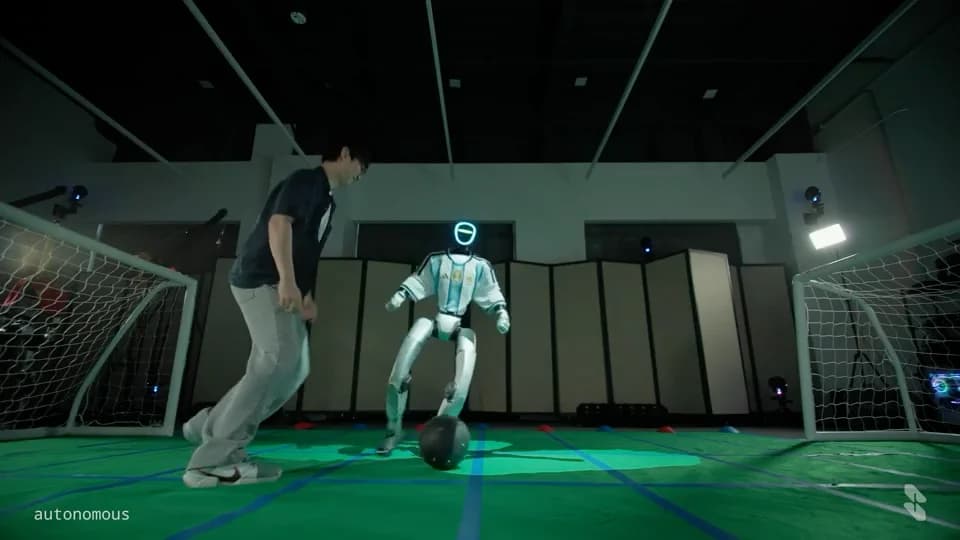
Skild AI’s S1 Learns Soccer Through More Than 140 Years of Simulated Self-Play
- Published on
- Reading time
- 8 min read
Skild AI Crosses $100M ARR in 10 Months, Mounting an Enterprise Assault on Robotics "Demo Culture"
- Published on
- Reading time
- 8 min read
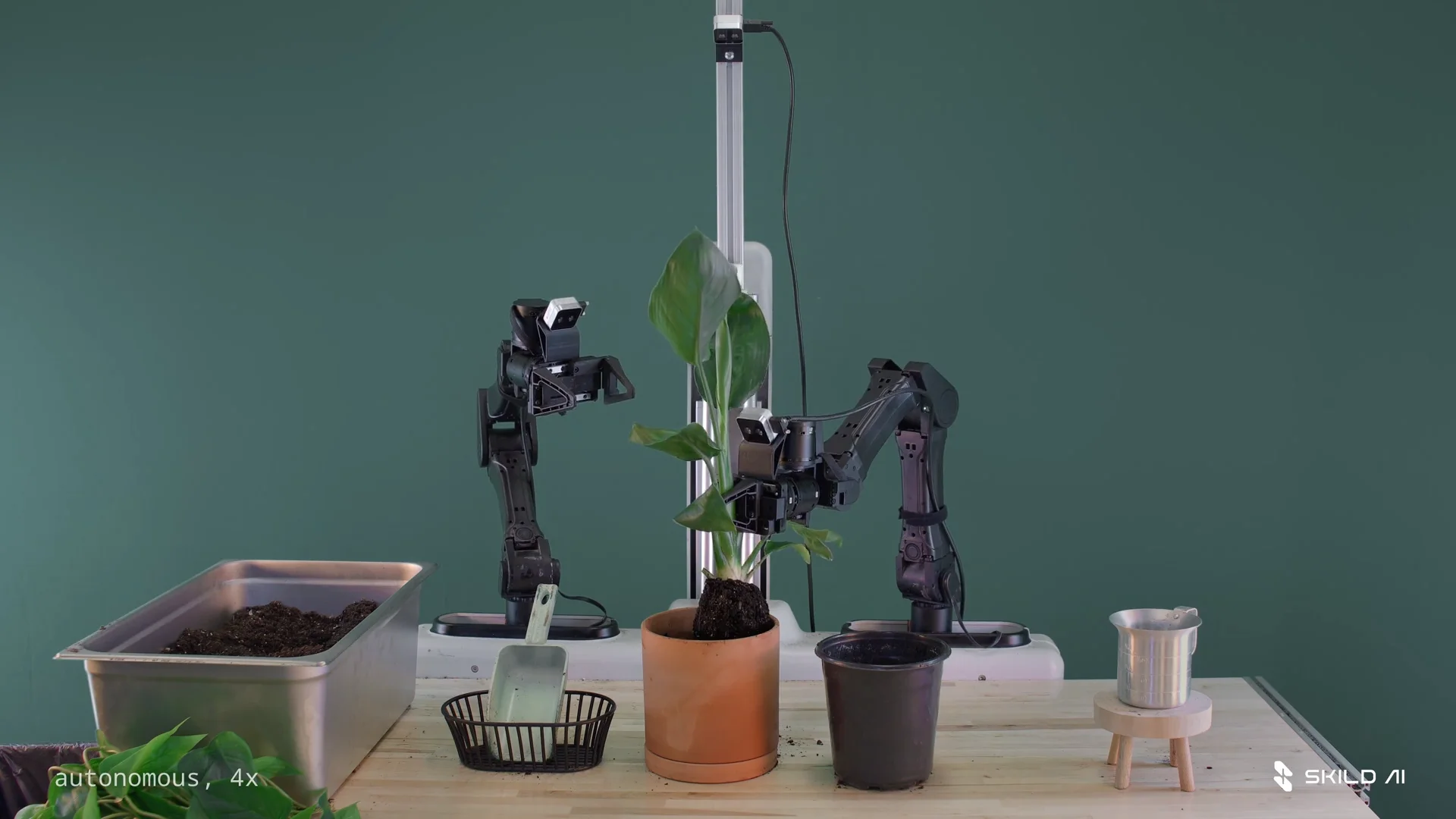
Skild AI Unveils S1: In-Context Learning for Long-Horizon Robot Manipulation
- Published on
- Reading time
- 4 min read
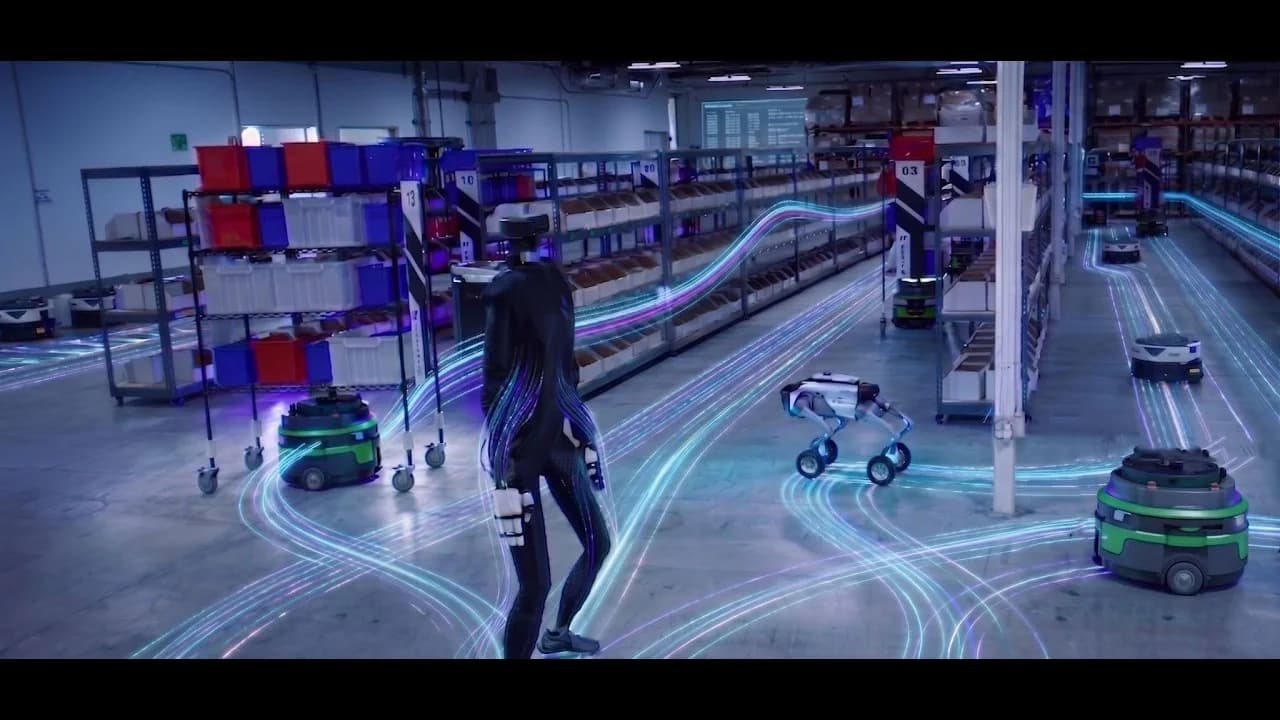
Skild AI Acquires Zebra’s Robotics Division to Build the "Orchestrated" Warehouse
- Published on
- Reading time
- 4 min read
Skild AI Secures $1.4 Billion Series C, Tripling Valuation to Over $14 Billion
- Published on
- Reading time
- 5 min read
SoftBank and NVIDIA Reportedly Near Deal to Value Skild AI at $14 Billion