- Published on
Watney Raises $80 Million to Put Robots to Work in Data Centers
One tap, and our reporting appears more often in your Google Top Stories. It makes a real difference to a small newsroom.

Supported by RoboStrategySupport for Humanoids Daily comes from RoboStrategy
Sponsored


Investing involves risk, including possible loss of principal. Read the prospectus before investing.

- Watney has raised $80 million in Series A funding, taking its total above $100 million.
- Investor Hummingbird describes its initial focus as last-mile cabling in AI data centers.
- Watney reports more than 99.99% reliability, but does not define the measure or disclose how much human assistance its systems require.
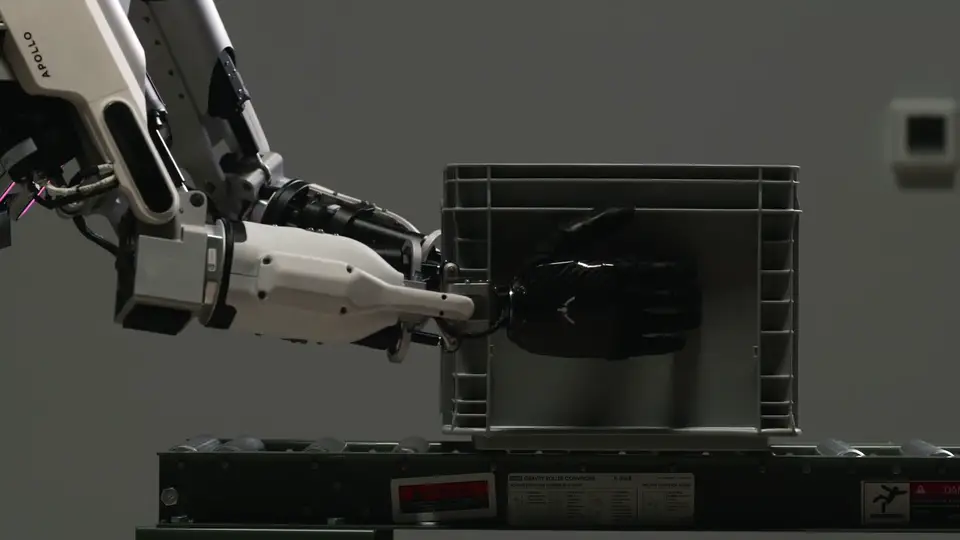
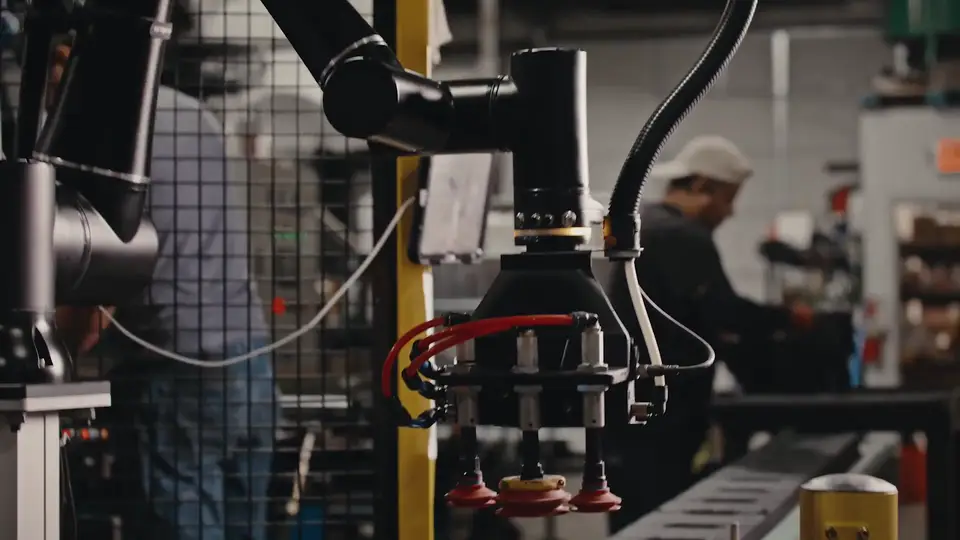
Watney has raised $80 million to build robots for data centers, targeting the physical work behind expanding compute capacity. Its September 17 announcement names Valor Atreides AI Fund and Hummingbird Ventures as co-leads, with returning participation from Conviction, Abstract, A* and Grant Gordon.
The round takes total funding above $100 million. Watney says it has served major hyperscalers since 2025, accumulating hundreds of thousands of hours in customer facilities. It does not name those customers in the announcement.
Starting with cabling
Hummingbird’s portfolio description gives a more specific starting point: last-mile cabling for AI data centers. That makes the commercial proposition easier to understand than a general promise of a robotic workforce. Installing connections is a concrete task against which customers can assess speed, accuracy and deployment cost.
Watney’s website frames its broader opportunity around labor shortages, hazardous conditions and operational complexity in critical infrastructure. It offers prospective customers a pilot, positioning the business around deployments rather than simply selling a research platform.
The weekly humanoid robotics briefing
One email a week: the launches, funding and research that mattered, with context from Humanoids Daily.
Read recent issuesFor humanoid robotics readers, the relevant distinction is the design objective. Watney says it chooses robot bodies for advantages in precision, reliability or scale, rather than to imitate human movement.
What “four nines” tells us—and what it does not
Watney reports more than “four nines” of reliability, conventionally meaning above 99.99%. It also claims the largest U.S. fleet of dexterous robots operating around the clock, without supplying a fleet count.
Reliability needs a denominator. A percentage of completed tasks, a percentage of available operating time and a percentage of actions without intervention answer different questions. The announcement does not specify which is being measured, so the figure cannot be treated as an autonomous task-success rate or compared directly with household-robot evaluations.
For customers, the useful evidence will connect that reliability to completed work: how many connections a system handles, what happens when it encounters an exception, and how much operator support each deployment needs. Those details would help establish whether Watney’s robots can make data-center expansion faster and more economical at scale.
Share this article
Read next
- Published on
- Reading time
- 3 min read
Lumos Says NexCore Can Teach Robots New Skills in Days
- Published on
- Reading time
- 2 min read
Apptronik Launches Elevate Robotics for "Superhuman" Industrial Automation
- Published on
- Reading time
- 3 min read
EngineAI Secures $200 Million Series B as Manufacturing Giant Luxshare Joins the Cap Table
- Published on
- Reading time
- 4 min read
Physical Intelligence in Talks for $1 Billion Round, Eyeing an $11 Billion Valuation
- Published on
- Reading time
- 3 min read
Robotera Reaches $1.4 Billion Valuation in RMB 1 Billion Strategic Round
- Published on
- Reading time
- 4 min read
Sunday Robotics Raises $165M to Transition from Demos to Real-World Deployment




The weekly humanoid robotics briefing
One email a week: the launches, funding and research that mattered, with context from Humanoids Daily.
Read recent issues