- Published on
The World Model Rebellion: Yann LeCun Launches AMI Labs to Challenge the 'LLM-Pilled' Consensus
One tap, and our reporting appears more often in your Google Top Stories. It makes a real difference to a small newsroom.

Supported by RoboStrategySupport for Humanoids Daily comes from RoboStrategy
Sponsored


Investing involves risk, including possible loss of principal. Read the prospectus before investing.

Yann LeCun is officially moving from the "perch" of academic critique to the trenches of industrial implementation. The Turing Award winner and former Chief AI Scientist at Meta has launched AMI Labs (Advanced Machine Intelligence), a frontier research lab headquartered in Paris.
The move marks a definitive escalation in LeCun’s long-standing campaign against the industry’s reliance on Large Language Models (LLMs) for physical tasks. Pronounced "a-mee" (friend in French), the startup arrives with a rumored $3.5 billion valuation and a mission to build "world models" that understand physical reality through observation rather than text tokens.
The French Connection: AMI and UMA
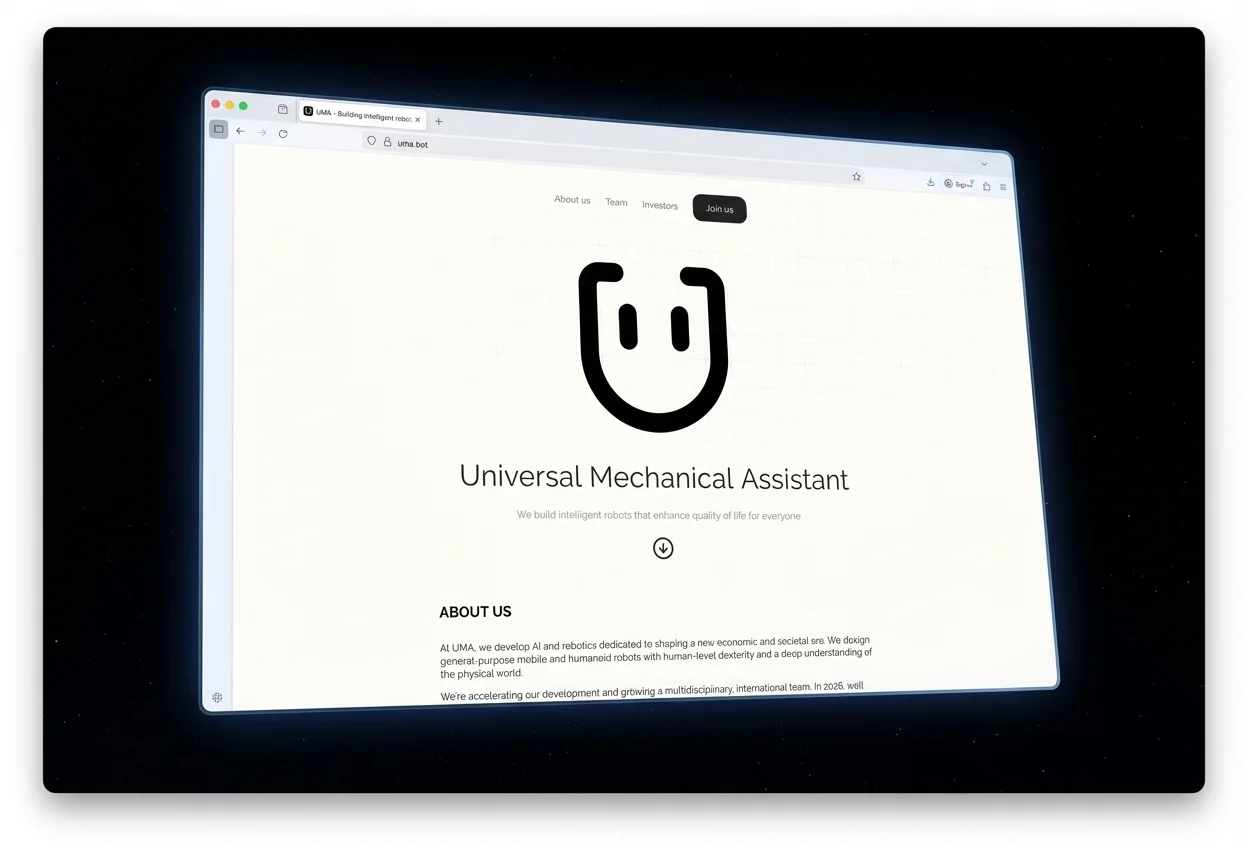
The launch further cements Paris as a growing and exciting center for embodied AI. AMI Labs shares more than just a home city and a similar-sounding name with the recently unveiled Universal Mechanical Assistant (UMA).
LeCun serves as a formal advisor to UMA, and the two companies share significant DNA. UMA's investor, Greycroft, is reportedly in talks to back AMI as well. While UMA is focused on the rapid productization of general-purpose mobile and humanoid robots, AMI Labs appears positioned as the foundational "brain" laboratory, developing the hierarchical architectures LeCun believes are currently missing from the sector.
The weekly humanoid robotics briefing
One email a week: the launches, funding and research that mattered, with context from Humanoids Daily.
Read recent issuesThe leadership at AMI is also a "who’s who" of the Meta/FAIR diaspora. Joining LeCun is CEO Alex LeBrun (formerly of Meta and Nabla) and Laurent Solly, Meta’s former VP for Europe.
"No Idea How to Make Them Smart"
LeCun’s departure from Meta was catalyzed by what he describes as the industry becoming "LLM-pilled." In a recent talk at AI House Davos 2026, LeCun reiterated his stark warning that current humanoid firms are hitting a wall.
There is a lot of companies building humanoid robots... they do kung-fu and impressive things. This is all precomputed," LeCun noted. "None of those companies—absolutely none of them—has any idea how to make those robots smart enough to be useful.
LeCun’s critique centers on the "brittleness" of current Vision-Language-Action (VLA) models. While companies like Figure are showing loco-manipulation breakthroughs with their Helix 02 system, LeCun argues these are still essentially "scripted" behaviors that lack the "common sense" of a house cat.
AMI Labs intends to solve this using JEPA (Joint Embedding Predictive Architecture). Unlike generative AI (like ChatGPT or Sora), which tries to predict every pixel or word, JEPA predicts the future in an "abstract representation space." This allows a robot to ignore the unpredictable noise of the world—like the flickering of a light or the texture of a rug—to focus on the causal physics of a task.
Social Media Sparring: Musk vs. LeCun
LeCun’s "Negative Nancy" reputation on social media has led to increasingly public friction with other industry titans. Following a clip of his Davos comments, Elon Musk chimed in on X (formerly Twitter), suggesting LeCun "thinks if he can’t do it, no one can."
LeCun fired back, clarifying that he isn't betting against robotics, but against the techniques currently in fashion. "I know I can do it and I know how to do it. Just not with the techniques everyone is currently betting on," LeCun replied. He further dismissed the "vast majority" of humanoid hardware firms for using "LLM-derived methods" that are only suitable for narrow tasks.
This puts him at odds not just with Musk’s Optimus program, but also with Figure’s Brett Adcock, who recently dismissed LeCun’s academic caution by telling him to "get his hands dirty".
The Pragmatic Gap
While LeCun chases "Human-Level AI" through world models, the industry is currently split between his long-term vision and "good enough" pragmatism. Experts like Scott Walter argue that humanoids don't need perfect dexterity or AGI-level "common sense" to provide immediate industrial value.
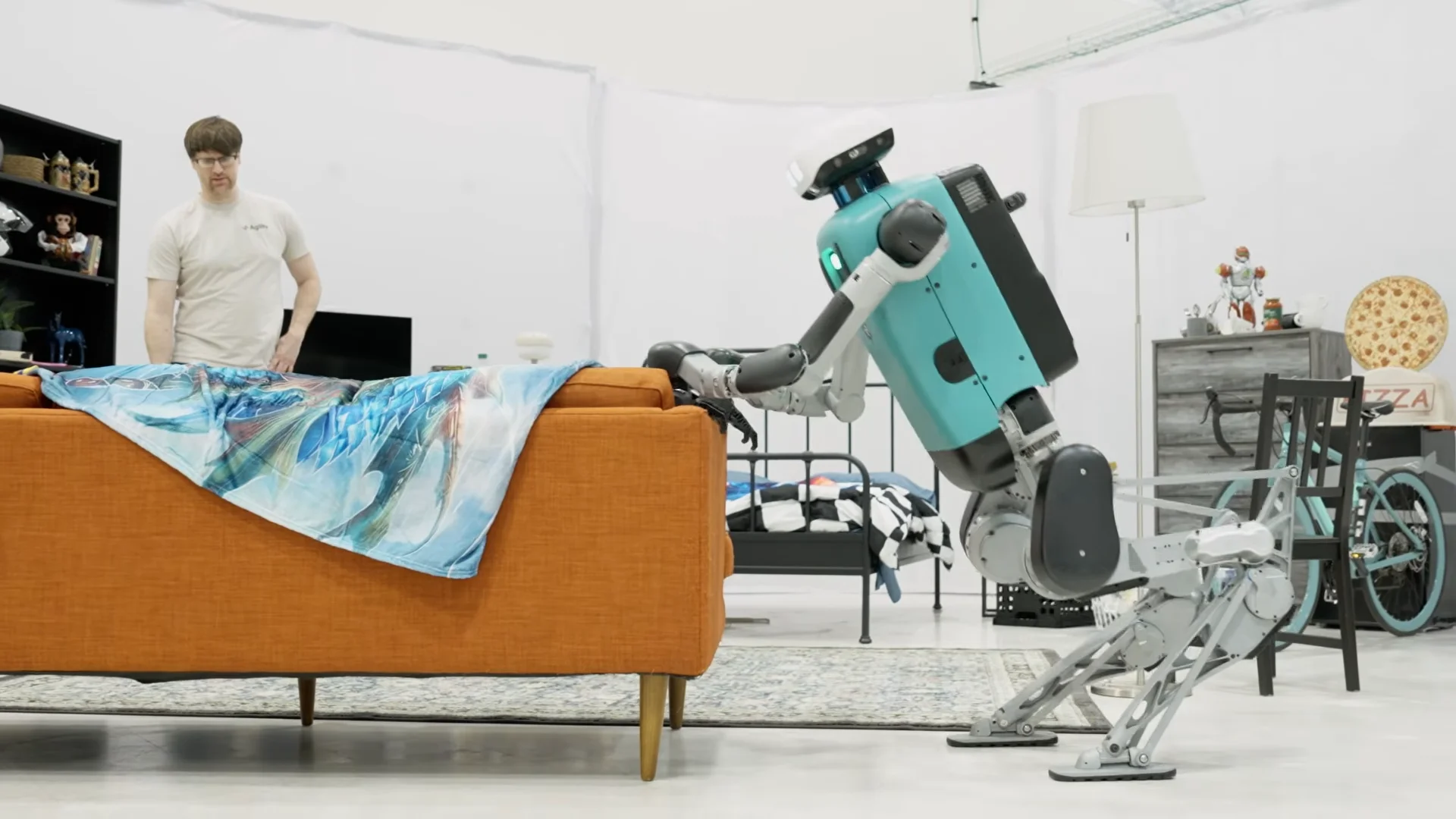
Agility's Digit is doing useful work on the daily. Figure has shown industrial applications. Another example is "The Dishwasher Wars," where Figure’s Helix 02 and Sunday Robotics’ Memo are battling over domestic tasks using end-to-end learning. These systems may be "narrow" by LeCun’s standards, but they are increasingly capable of solving automation tasks that were impossible two years ago.
DeepMind's Demis Hassabis seems to occupy a middle ground, acknowledging that language is limited for robotics and prioritizing world models through projects like Genie and SIMA. However, even DeepMind leadership admits the industry needs "one more big breakthrough" to achieve true generalization.
AMI Labs is LeCun’s bet that he is the one providing that breakthrough. By focusing on industrial control, wearables, and healthcare, AMI is looking to prove that real intelligence doesn't start in a text box—it starts in the messy, high-bandwidth reality of the physical world.
Share this article
Read next
- Published on
- Reading time
- 4 min read
Yann LeCun Predicts "Paradigm Shift" in Robotics by 2027, Dismisses LLMs as "Intrinsically Unsafe"
- Published on
- Reading time
- 4 min read
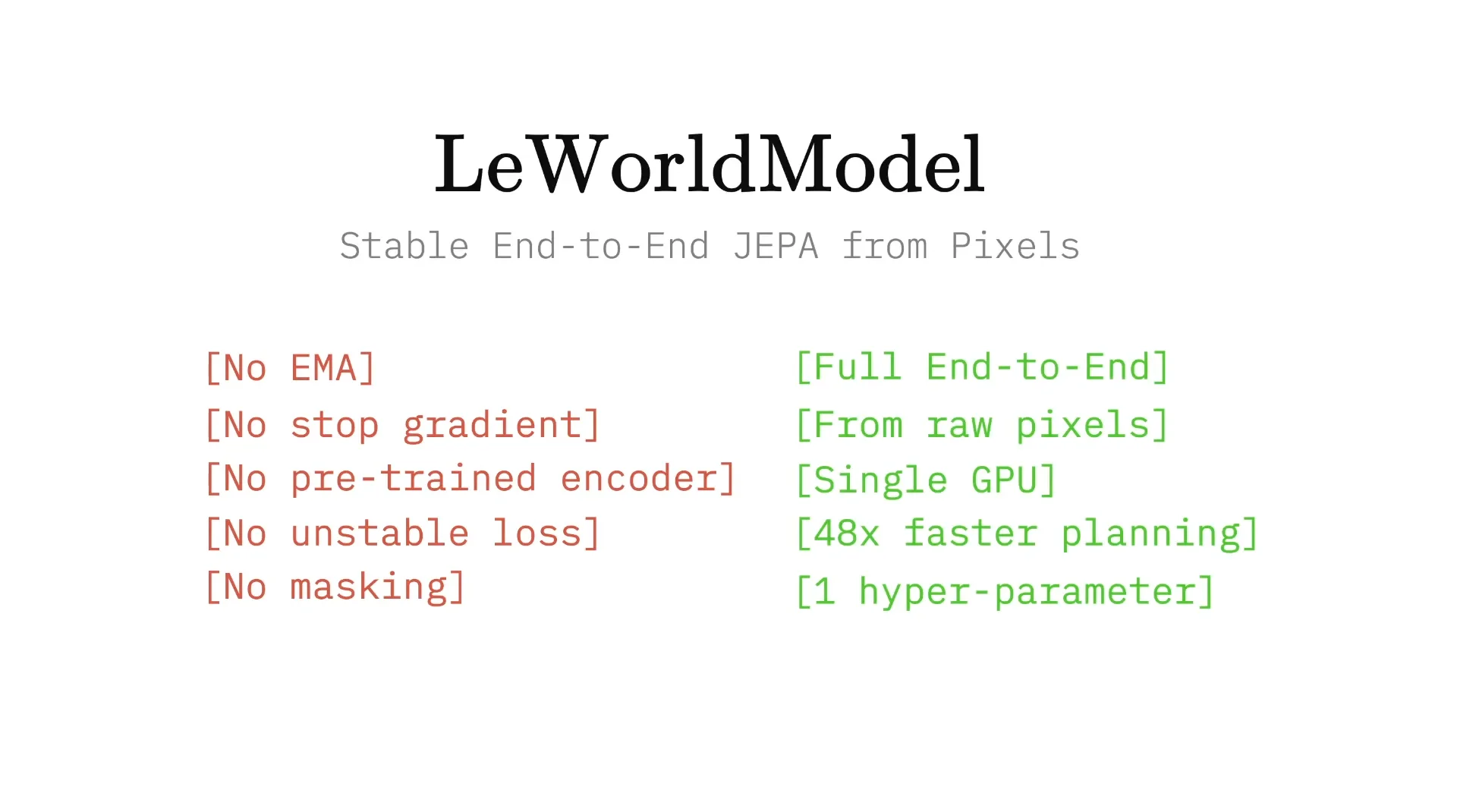
Yann LeCun’s World Model Vision Gets a Leaner Engine: Introducing LeWorldModel
- Published on
- Reading time
- 3 min read
The Billion-Dollar World Model: Yann LeCun’s AMI Labs Secures $1.03B to Challenge LLM Dominance
- Published on
- Reading time
- 25 min read
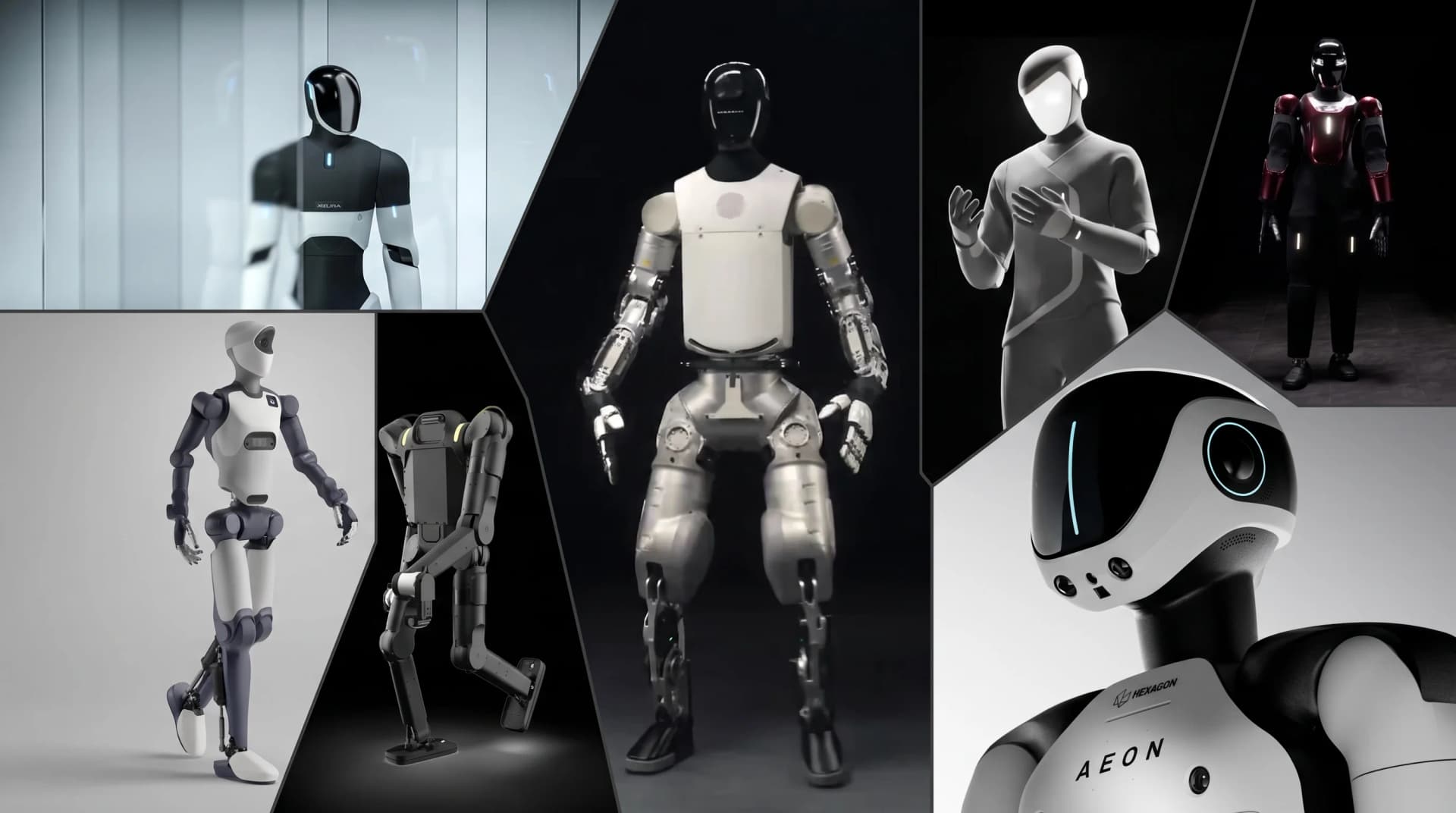
The Humanoids of Europe: Built by Their Customers
- Published on
- Reading time
- 4 min read
UMA Exits Stealth: The European Robotics ''Supergroup'' Arrives in Paris
- Published on
- Reading time
- 4 min read
In Paris, a New Stealth Startup Named UMA Enters the Humanoid Race



The weekly humanoid robotics briefing
One email a week: the launches, funding and research that mattered, with context from Humanoids Daily.
Read recent issues