- Published on
Google DeepMind Opens the Portal: Project Genie and the Quest for the "Infinite Training Loop"
One tap, and our reporting appears more often in your Google Top Stories. It makes a real difference to a small newsroom.

Supported by RoboStrategySupport for Humanoids Daily comes from RoboStrategy
Sponsored

Investing involves risk, including possible loss of principal. Read the prospectus before investing.

From Research Preview to Public Prototype
On January 29, 2026, Google DeepMind transitioned its ambitious world-building technology from the lab to the public, rolling out Project Genie to Google AI Ultra subscribers in the United States. Powered by the Genie 3 model, the research prototype allows users to sketch, explore, and remix interactive 3D environments in real-time using text prompts or uploaded images.
While the immediate application appears centered on generative media and gaming—sparking a notable dip in the stock prices of industry giants like Unity and Roblox—the release marks a significant milestone in Google DeepMind’s broader "Physical AI" roadmap. By simulating the dynamics of the environment and predicting how actions affect the world, Genie 3 provides the foundational "intuitive physics" that DeepMind believes is essential for Artificial General Intelligence (AGI).
The "Infinite Training Loop" for Robotics
The launch of Genie 3 is more than a creative tool; it is a direct response to the "data bottleneck" currently facing the robotics industry. As Kanishka Rao, DeepMind’s Director of Robotics, noted late last year, robotics lacks the massive internet-scale datasets available to large language models.
DeepMind CEO Demis Hassabis has proposed a solution through what he calls the "Infinite Training Loop," which leverages the convergence of world-generating models and simulated agents. In this architecture:
The weekly humanoid robotics briefing
One email a week: the launches, funding and research that mattered, with context from Humanoids Daily.
Read recent issues- Genie 3 acts as the "Teacher," generating millions of diverse, interactive virtual worlds on the fly.
- SIMA (Simulated Agents) acts as the "Student," practicing tasks like unzipping bags or navigating complex rooms within these simulations.
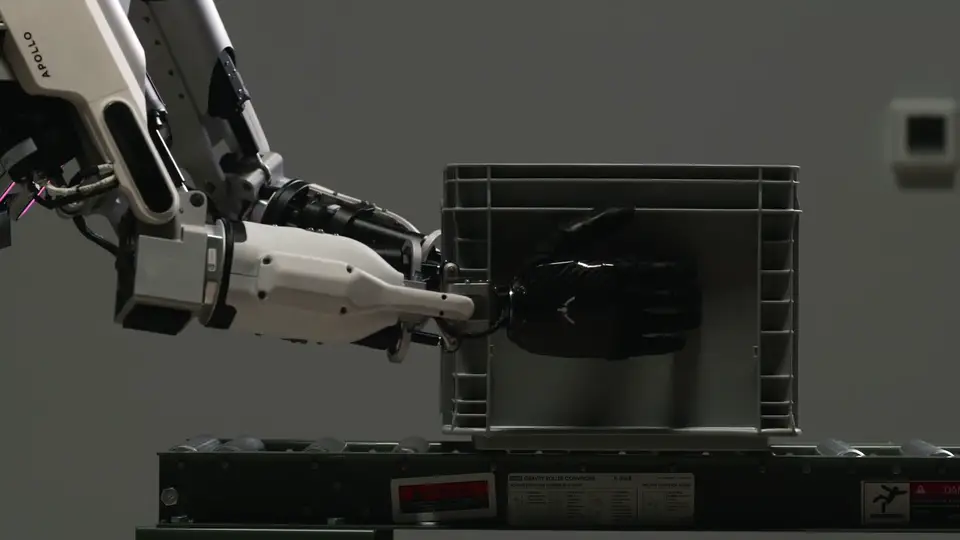
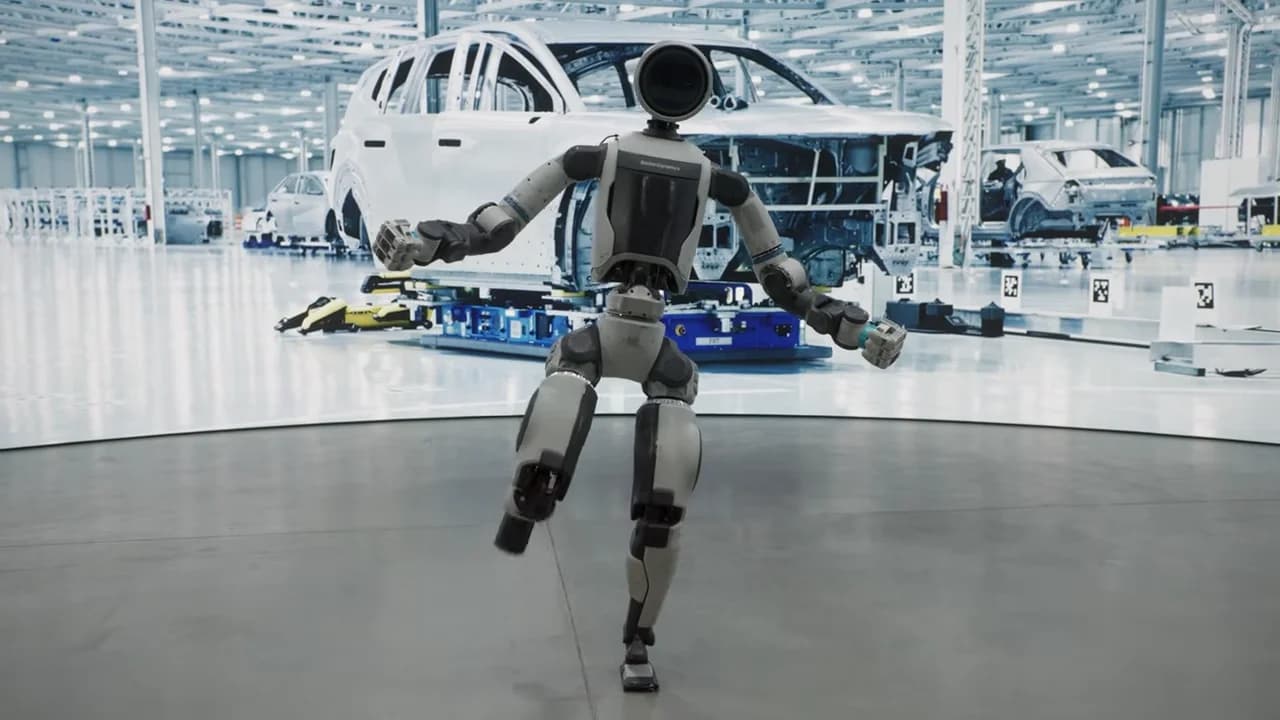
This approach allows agents to learn fundamental motions in a virtual "boot camp" before being deployed onto hardware like the production-ready Atlas or the Apptronik Apollo.
Technical Capabilities and Real-World Constraints
Genie 3 represents a technical leap over its predecessors, offering photorealistic environments at 720p resolution and a fluid 20–24 frames per second. Crucially, the model features improved consistency, meaning previously seen details are recalled when a user revisits a location, and environments can handle sustained interaction without degrading.
However, hands-on tests of the Project Genie prototype reveal that the technology is still in its early stages. Current limitations include:
- Duration: Experiences are capped at 60 seconds of continuous interaction.
- Latency: Users have reported frustrating input lag, complicating character control.
- Physics Accuracy: While Genie 3 aims for "physics-grade" simulation, environments can still experience strange inconsistencies, such as a racetrack unexpectedly turning into grass.
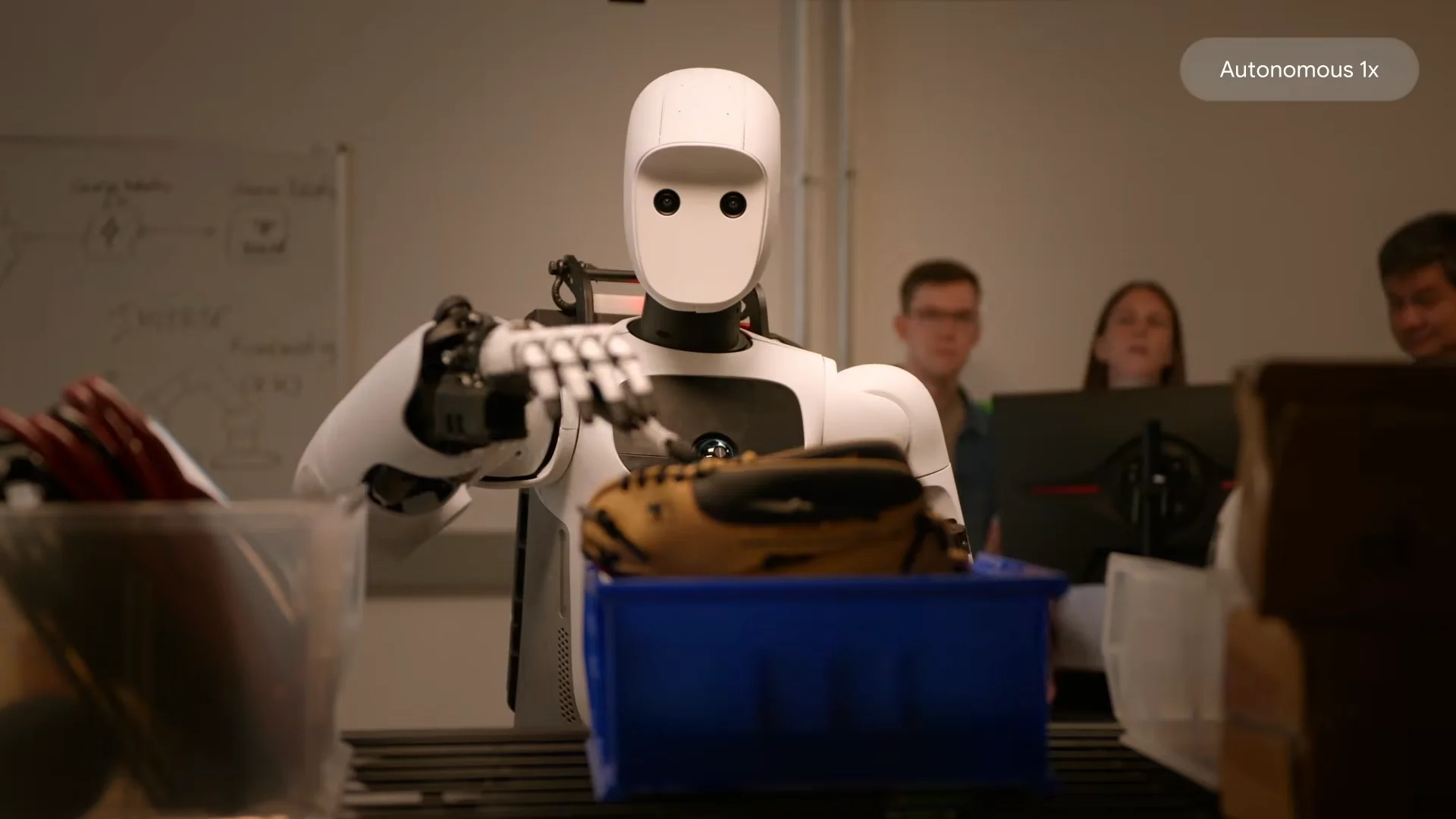
Despite these hurdles, the model’s ability to generalize motions—rather than just static objects—is central to DeepMind's cross-embodiment strategy. Carolina Parada, Head of Robotics at DeepMind, confirmed that the team is already using these world models to test and evaluate robots in entirely new scenarios.
Market Disruption and the AGI Roadmap
The unveiling of Project Genie sent ripples through the video game industry. On the Friday following the announcement, stock prices for Take-Two Interactive dropped to $220.30 (down 7.93%), while Unity saw a sharp decline of 24.22% to $29.10.
For DeepMind, the goal remains the creation of a "universal assistant" that understands the physical world. By integrating Genie with the Gemini Robotics framework, the company is positioning itself to build the "Android of robotics"—a general-purpose brain capable of embodying any machine form.
The release of Project Genie serves as a public testbed for these "agentic systems". As the technology moves from 60-second interactive snippets toward the "physics-grade" simulations required for autonomous vehicles and humanoids, the industry will watch closely to see if the "Infinite Training Loop" can finally bridge the gap between simulation and the messy reality of the physical world.
Share this article
Read next
- Published on
- Reading time
- 4 min read
DeepMind CEO Demis Hassabis: World Models and 'Infinite Training Loops' are the Keys to AGI
- Published on
- Reading time
- 4 min read
Google DeepMind Unveils Gemini Robotics-ER 1.6: A Leap in Spatial Reasoning and Industrial Utility
- Published on
- Reading time
- 3 min read
DeepMind Hires Former Boston Dynamics CTO to Build the ‘Android of Robotics’
- Published on
- Reading time
- 7 min read
Google DeepMind Unveils Gemini Robotics 2, Bringing Whole-Body Intelligence and Multi-Robot Teams to Physical AI
- Published on
- Reading time
- 4 min read
Agile Robots and Google DeepMind Partner to Bring Gemini to the Factory Floor
- Published on
- Reading time
- 5 min read
Waymo Leverages Genie 3 to Launch "Waymo World Model" for Hyper-Realistic Simulation


The weekly humanoid robotics briefing
One email a week: the launches, funding and research that mattered, with context from Humanoids Daily.
Read recent issues