
Generative Bionics
Italian deep-tech company spun out of the Istituto Italiano di Tecnologia in 2024, developing sensorised humanoid robots for industrial work. Its GENE.01 platform, unveiled as working hardware in July 2026, combines full-body tactile skin with what the company calls physics-native AI; its first announced application is humanoid welding at Fincantieri shipyards.
- Founded
- 2024
- Headquarters
- GenoaItaly
- Total funding
- $81.2M
- Products
- 3
- Our coverage
- 7stories

Generative Bionics Unveils GENE.01: A Smart-Skin Humanoid Built on Peer-Reviewed Ergonomics 
Fincantieri and Generative Bionics Partner to Bring Humanoid Welders to Italian Shipyards 
Italy Enters the Chat: Generative Bionics Raises €70M to Bring "Physical AI" to Industry 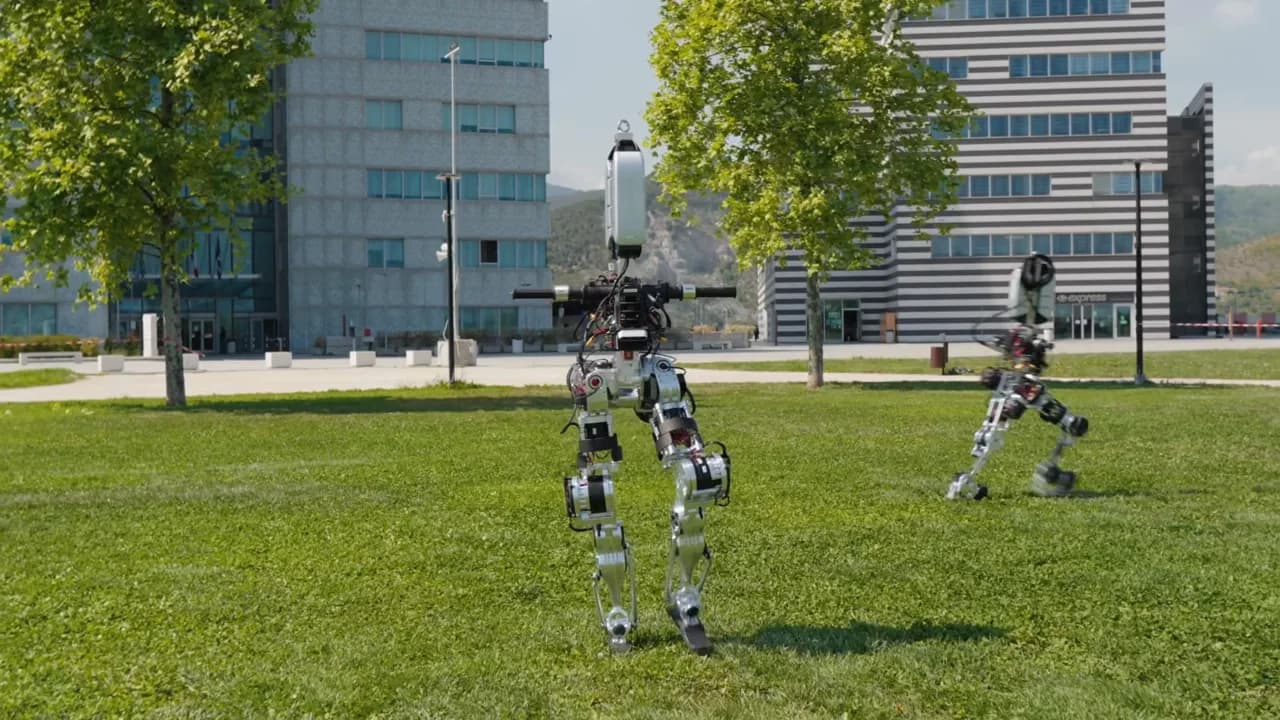
Generative Bionics Demonstrates Outdoor Locomotion, Taps Italdesign for Mass Production
What the company builds
Generative Bionics is a Genoa-based deep-tech company building humanoid robots for industrial work. It was incorporated in July 2024 as a spin-out of the Istituto Italiano di Tecnologia (IIT), carrying forward roughly two decades of humanoid research in the iCub and ergoCub lineages, and it holds exclusive licences from IIT to several of those technologies, including work developed with the national workplace-insurance institute INAIL under a Physical AI programme. The founding team is drawn from IIT: CEO Daniele Pucci, formerly head of the institute's Artificial and Mechanical Intelligence line, with Alessio Del Bue as chief AI officer, Marco Maggiali as CTO and Andrea Pagnin as chief business officer, alongside entrepreneurs Davide Rota, who serves as executive chairman, and Jeffrey Libshutz. The company emerged publicly in December 2025 with a 70 million euro seed round led by the Artificial Intelligence Fund of CDP Venture Capital, with AMD Ventures, Eni Next, Duferco, RoboIT and Tether participating.
Technical approach
The product line begins with GENE.01, shown as a concept at CES 2026 during AMD's opening keynote and unveiled as a working, fully sensorised platform on 20 July 2026, built in six months. Its distinguishing feature is a distributed tactile skin covering the body, which the company pairs with what it calls physics-native AI: control and design co-optimised against the robot's own mechanics so it can register contact and human proximity rather than treating people as obstacles. The method rests on peer-reviewed work on the ergoCub predecessor published in Nature Machine Intelligence. Motion control is learned; the company demonstrated lower-body prototypes performing blind walking and running on uneven outdoor terrain in May 2026. GENE.01's digital twin has been released as a URDF model on GitHub and distributed through the PyPI, Conda and ROS ecosystems. Rather than a single general-purpose machine, the company describes customising one platform at three levels for each application: distilling the AI around the task, adapting the exterior, and changing end effectors.
Commercial traction
The first named deployment is industrial welding. A four-year partnership with Fincantieri, signed in February 2026, targets on-site tests at the shipbuilder's Sestri Ponente yard by the end of 2026, with operational functionality inside two years and certification work after that. Italdesign was engaged to engineer the GENE.01 exterior for volume manufacture, and in June 2026 the company signed with the German motion-control firm Synapticon to build actuators with European final assembly, calibration and safety testing. AMD supplies compute.
Competitive position
The company positions itself around European technological sovereignty — EU-protected actuation, trusted supply chains, compliance — which distinguishes its pitch more than its hardware does in a field crowded with US and Chinese entrants. Against those better-funded rivals it has one disclosed funding round, no shipped commercial units, and a roadmap whose first real test is a shipyard trial. Its assets are the IIT research base, an unusually fast concept-to-hardware cycle, and industrial partners with the volumes to matter if the trials hold.
Robots & products
A selection of the company's announced products, not a complete catalogue.
GENE.01 open platform / digital twin
AnnouncedPlatform · announced July 2026
An open development platform for adapting GENE.01 to different deployment scenarios, whose first release is a URDF digital-twin model on GitHub, distributed across the PyPI, Conda and ROS ecosystems.
GENE.01/W welding variant
AnnouncedBipedal humanoid · announced February 2026
A welding-optimised variant of the GENE.01 platform being developed with Fincantieri for shipyard work, with on-site tests planned at the Sestri Ponente yard by the end of 2026.
GENE.01
PrototypeBipedal humanoid · announced January 2026
A fully sensorised industrial humanoid platform with full-body tactile skin and what the company calls physics-native AI, first shown as a concept at CES 2026 and unveiled as working hardware in July 2026.
Funding
$81.2M raised| Round | Date | Amount | Valuation | Lead investors |
|---|---|---|---|---|
| Seed | December 2025 | $81.2M | — | CDP Venture Capital (Artificial Intelligence Fund) |
Timeline
GENE.01 makes US debut at AMD Advancing AI 2026
The platform was shown in the United States at AMD's Advancing AI event on 22-23 July 2026, following its Italian reveal.
eweek.com ↗Working GENE.01 platform unveiled, built in six months
The company presented a fully functional sensorised humanoid with full-body tactile skin, published its digital twin across PyPI, Conda and ROS, and cited peer-reviewed ergoCub research in Nature Machine Intelligence.
Generative Bionics Unveils GENE.01: A Smart-Skin Humanoid Built on Peer-Reviewed ErgonomicsSynapticon partnership for European actuation stack
The German motion-control firm will supply integrated actuators tailored to GENE.01, with European final assembly, calibration and safety testing.
Generative Bionics Unveils GENE.01: A Smart-Skin Humanoid Built on Peer-Reviewed ErgonomicsBipedal prototypes shown walking and running outdoors
CEO Daniele Pucci published footage of leg-centric prototypes performing blind walking and running on uneven terrain using reinforcement-learned control.
Generative Bionics Demonstrates Outdoor Locomotion, Taps Italdesign for Mass ProductionItaldesign engaged to industrialise GENE.01 exterior
The partnership, formalised during Milano Design Week, covers engineering the robot's exterior for large-scale manufacturing.
Generative Bionics Demonstrates Outdoor Locomotion, Taps Italdesign for Mass ProductionFour-year Fincantieri partnership for shipyard welding humanoid
The programme targets initial on-site tests at Fincantieri's Sestri Ponente yard by the end of 2026, with operational functionality within two years and industrial certification thereafter.
Fincantieri and Generative Bionics Partner to Bring Humanoid Welders to Italian ShipyardsGENE.01 concept unveiled at CES 2026
The robot was shown during AMD's opening keynote in Las Vegas, marking the public debut of the company's design and technology direction.
Fincantieri and Generative Bionics Partner to Bring Humanoid Welders to Italian ShipyardsExits stealth with EUR 70 million round
The raise, led by the Artificial Intelligence Fund of CDP Venture Capital with AMD Ventures, Eni Next, Duferco, RoboIT and Tether, was one of Europe's largest in humanoid robotics and funds product development, industrial validation and a first production plant.
Italy Enters the Chat: Generative Bionics Raises €70M to Bring "Physical AI" to IndustryFounded as an IIT spin-out in Genoa
Daniele Pucci, Alessio Del Bue, Marco Maggiali and Andrea Pagnin, all formerly of the Istituto Italiano di Tecnologia, incorporated the company in July 2024 with entrepreneurs Davide Rota and Jeffrey Libshutz.
gbionics.ai ↗
Latest on Generative Bionics

Generative Bionics Plans Major Humanoid Training Hub in Italy With AMD
A planned 5,000-square-metre Italian hub would train GENE.01 humanoids using physical tasks and AMD-powered digital twins, with operations targeted for Q4 2027.

Eni and Generative Bionics Explore Industrial Humanoids, Smart Footwear and AI Computing
An exploratory MoU covers GENE.01 inspection and remote-assistance uses, robot footwear materials, and potential access to Eni’s industrial sites and computing capacity.
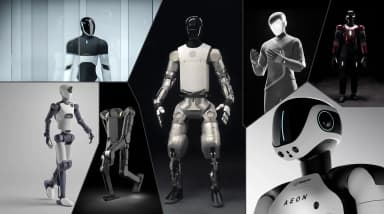
The Humanoids of Europe: Built by Their Customers
While the coverage stays fixed on China and the United States, seven European companies have quietly signed deployment commitments running into the thousands of units. Europe's humanoid sector is being built by its buyers.

Generative Bionics Unveils GENE.01: A Smart-Skin Humanoid Built on Peer-Reviewed Ergonomics
Six months after exiting stealth, Italian deep-tech startup Generative Bionics has revealed a fully functional GENE.01 platform backed by Nature-published research, open-source models, and automotive manufacturing talent.
Generative Bionics Demonstrates Outdoor Locomotion, Taps Italdesign for Mass Production
The Italian robotics startup has showcased new bipedal prototypes capable of blind walking and running, just weeks after announcing a major industrialization partnership with Italdesign.

Fincantieri and Generative Bionics Partner to Bring Humanoid Welders to Italian Shipyards
Following the reveal of its GENE.01 concept at CES 2026, Italian startup Generative Bionics has signed a four-year industrial partnership with shipbuilding giant Fincantieri to deploy autonomous welding robots in heavy manufacturing.

Italy Enters the Chat: Generative Bionics Raises €70M to Bring "Physical AI" to Industry
Born from the prestigious Italian Institute of Technology, the new spinoff enters the humanoid race with backing from AMD and Tether, aiming to turn 20 years of research into industrial reality.
Sources
- Generative Bionics Introduces Gene.01, a Fully Functional Smart-Skin Humanoid Robot Platform Designed for Safe Human Collaboration· checked September 6, 2026
- Generative Bionics S.r.l., humanoid robots, Genoa, Liguria, Italy· checked September 6, 2026
- Press Release: Generative Bionics closes €70 million funding round· checked September 6, 2026
- Fincantieri and Generative Bionics launch an industrial partnership to develop a humanoid welding robot for shipyards· checked September 6, 2026
- Open Positions — Generative Bionics· checked September 6, 2026
- From iCub to humanoids: Generative Bionics raises $81M· checked September 6, 2026
- Generative Bionics· checked September 6, 2026
- GENE.01 — Generative Bionics· checked September 6, 2026