- Published on
The Humanoids of Europe: Built by Their Customers
One tap, and our reporting appears more often in your Google Top Stories. It makes a real difference to a small newsroom.

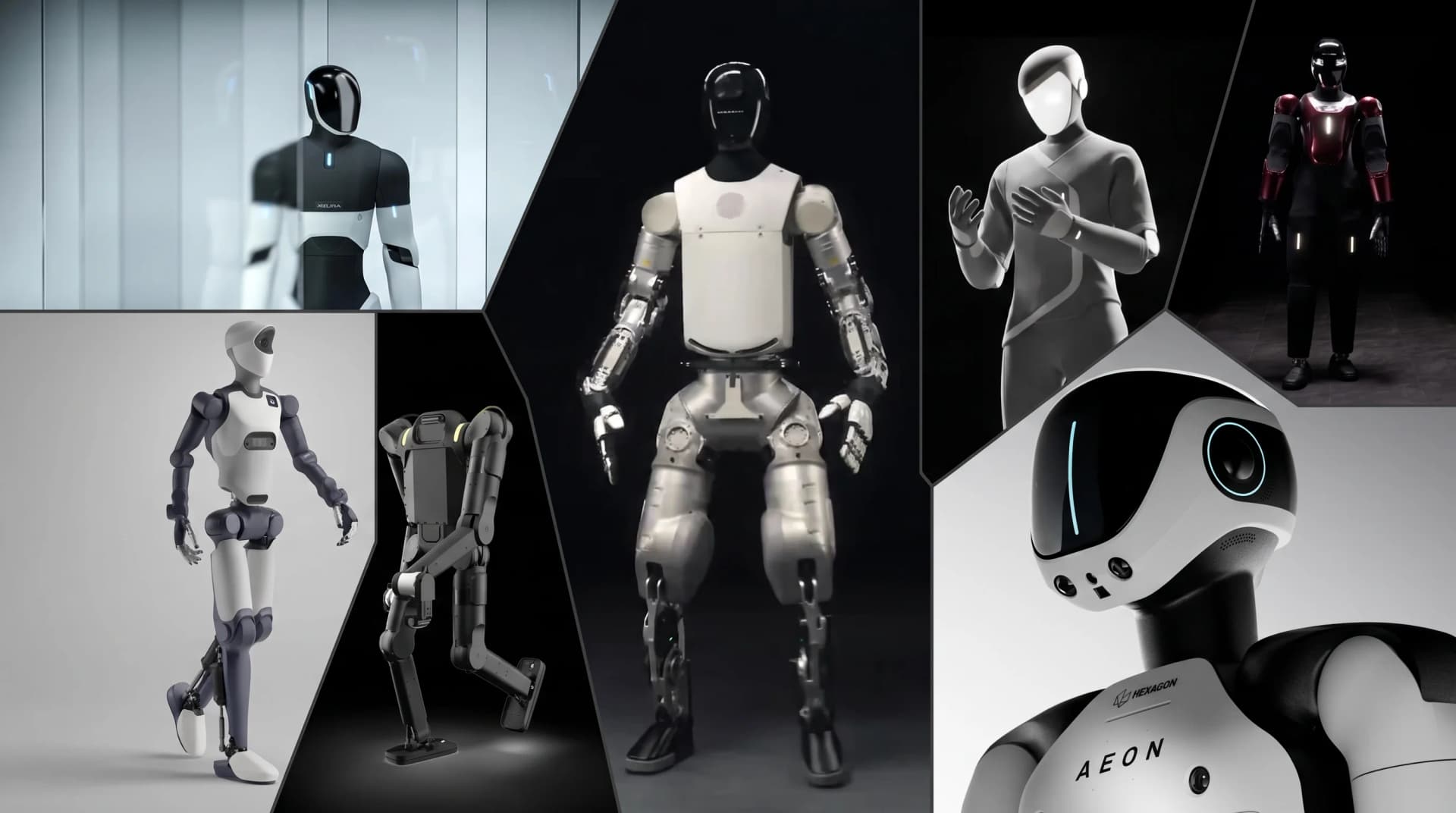
- Seven European manufacturers — NEURA Robotics, Agile Robots, Hexagon, Humanoid, Wandercraft, Generative Bionics and UMA — now build humanoid hardware on the continent, across five countries.
- Europe's distinguishing feature is not the robots but the buyers: Schaeffler, Bosch, Renault, BMW, Siemens, SAP and Fincantieri are simultaneously customers, component suppliers, contract manufacturers and, in several cases, shareholders.
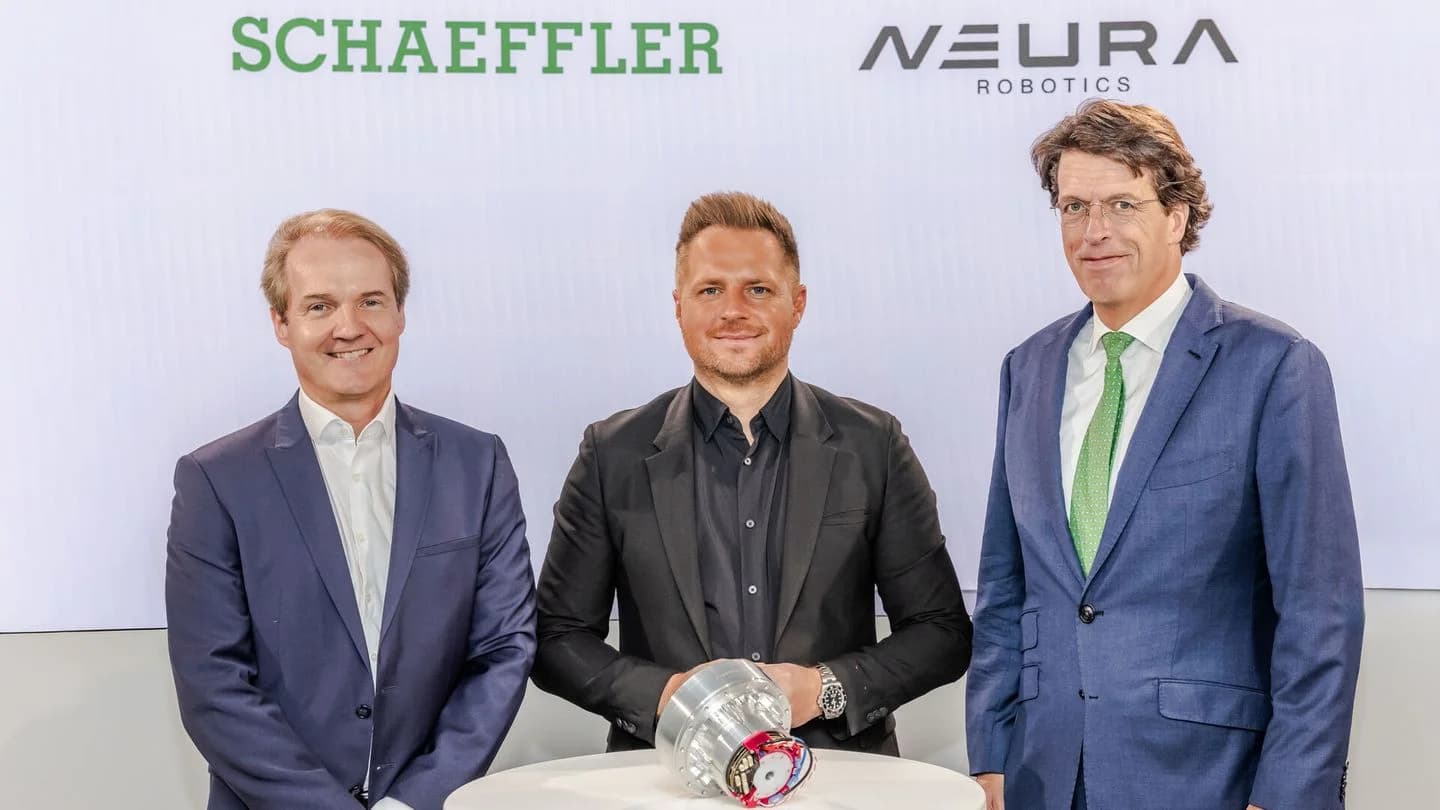
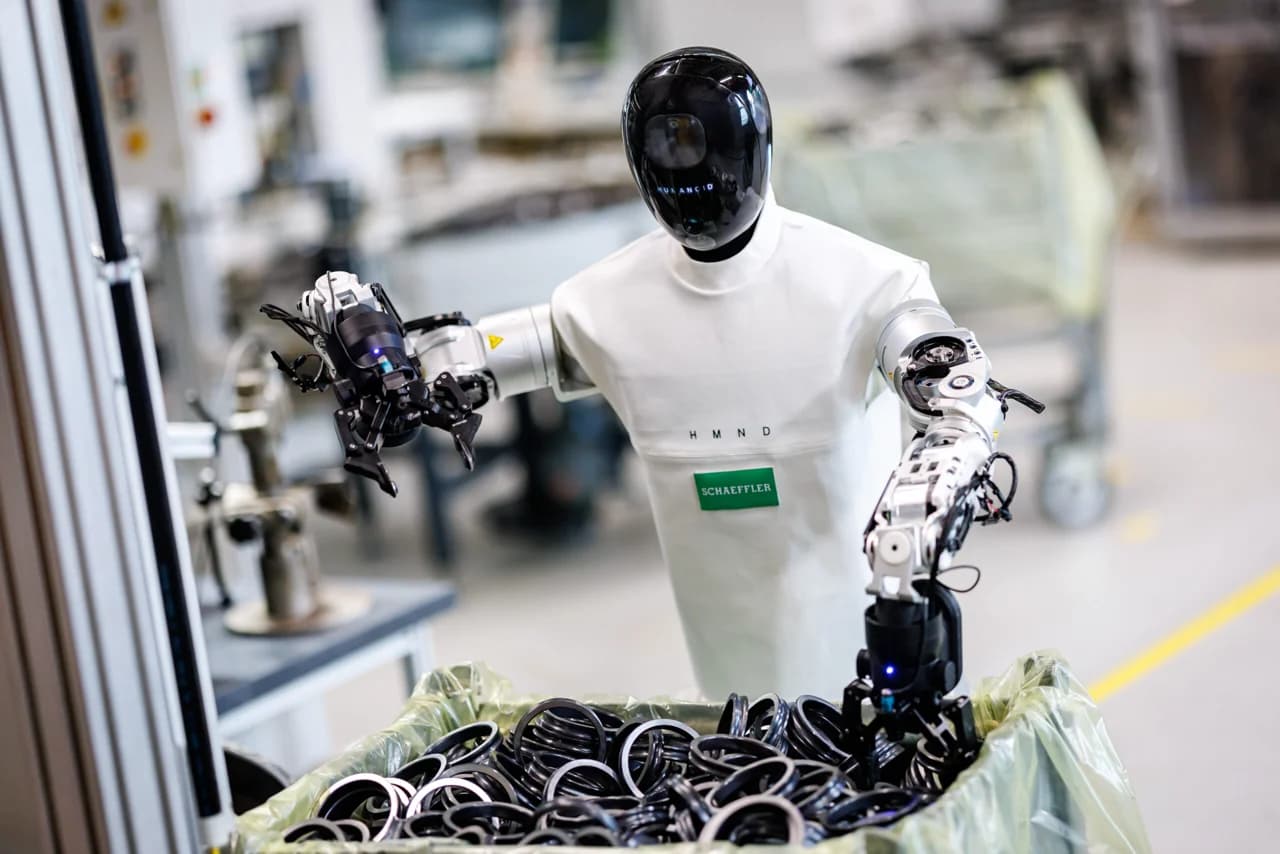
- Schaeffler alone has committed to a mid-four-digit NEURA rollout by 2035, at least 1,000 Hexagon AEON units over seven years, and a four-digit Humanoid deployment by 2032 — while supplying actuators to all three.
- Disclosed capital is concentrating fast: NEURA's $1.4 billion Series C (June 2026) and Humanoid's $152 million Series A at a $1.35 billion valuation (July 2026) sit alongside Agile Robots' roughly $1.5 billion raised since 2018.
- The model layer exists, but it sits apart from the hardware. Zurich's Flexion ($50M Series A, NVIDIA-backed) and Mimic Robotics (ETH spin-off, Audi partner) are building the software brains — Flexion on Chinese chassis, Mimic on off-the-shelf arms — and neither is publicly tied to any of the seven manufacturers.
- Every company on this list runs on American compute: NVIDIA, Qualcomm or AMD.
For two years the humanoid story has been a contest between China and the United States. Unitree's price cuts, AGIBOT's production lines, XPENG's Iron, Figure's BotQ throughput, Boston Dynamics' Hyundai mandate, Tesla's Optimus deadlines — the coverage, the funding records and the demo reels have come from those two countries. Europe has featured mostly as a market: somewhere Chinese and American robots get piloted, certified and sold.
That framing is now out of date. In the twelve months to September 2026, European manufacturers signed deployment agreements covering several thousand units, raised close to $2 billion in disclosed equity, and put robots into production work at BMW, Renault, Schaeffler and Siemens facilities. Almost none of it was announced with a demo reel.
The customer is also the supplier
Start with the structural difference, because it explains most of the rest.
In the United States, humanoid companies raise venture capital against a general-purpose thesis and then look for pilots. In China, hardware makers chase unit cost and volume. In Europe, the industrial buyer arrives first — and arrives holding equity, actuators and factory space.
Follow humanoid robotics without following every announcement.
Get the week’s most important launches, funding and research—and why they matter—in one email from Humanoids Daily.
Once a week. Unsubscribe anytime.
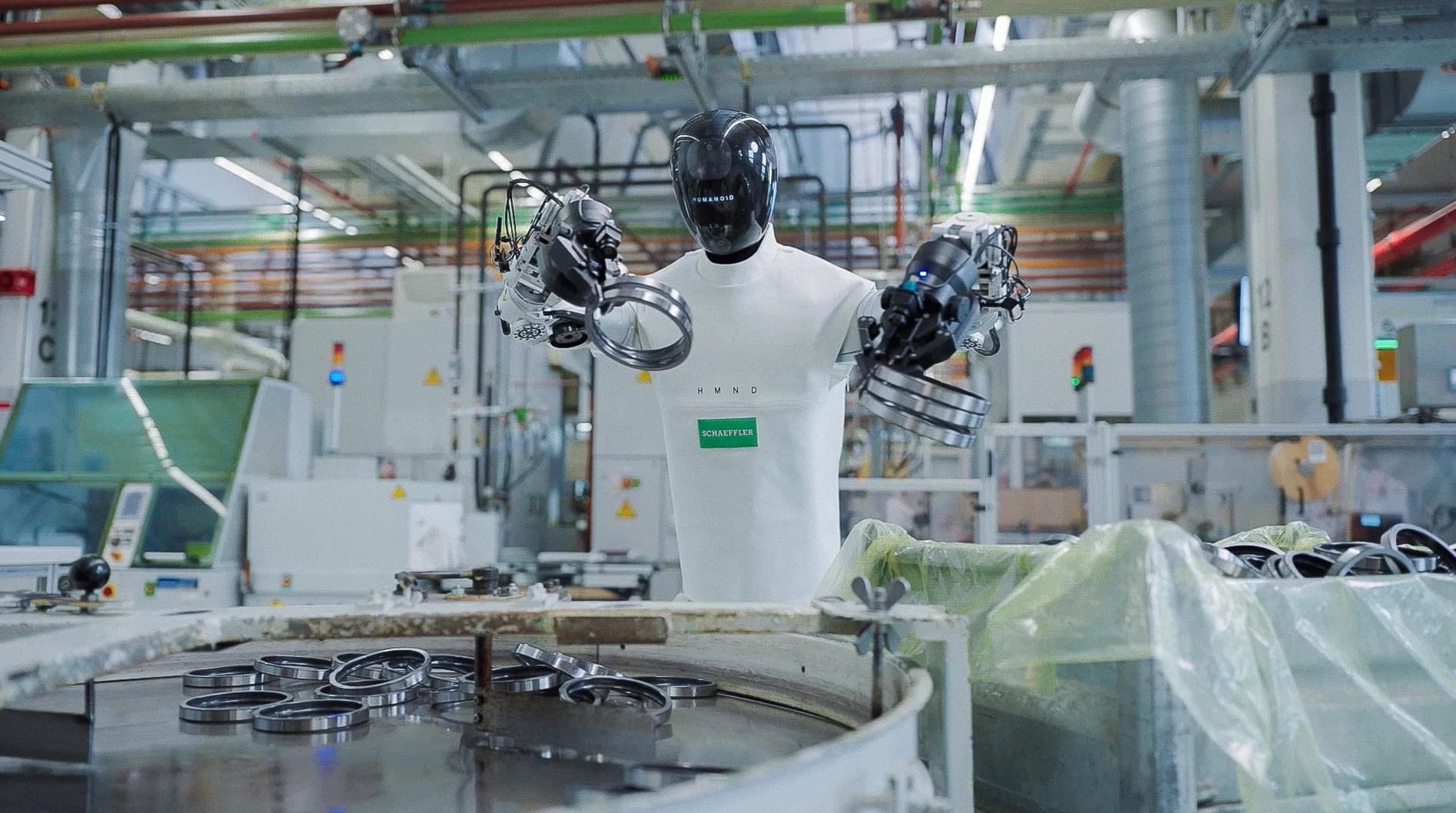
Read recent issuesSchaeffler is the clearest case. The German Tier 1 supplier agreed in November 2025 to deploy a mid-four-digit number of NEURA 4NE1 units by 2035 and to supply the actuators for them. In April 2026 it committed to at least 1,000 Hexagon AEON humanoids across its global plants over seven years, again supplying the precision gearing in return. In May 2026 it signed a binding, phased agreement with Humanoid for a four-digit number of wheeled units by 2032, sold as robot-as-a-service, and became preferred actuator supplier for more than half of Humanoid's joint demand on wheeled platforms through 2031. It has also invested in both NEURA and Humanoid, opened a "Humanoid Gym" in Germany where AEON is trained on real factory tasks by imitation learning, and says it can cut strain wave gearbox costs by more than 25 percent through forming rather than machining from 2027.
Schaeffler is not alone. Bosch manufactures Humanoid's robots for the European market and invested in its Series A. Renault holds a stake in Wandercraft and plans to run 350 of its robots. BMW took Hexagon's AEON into Plant Leipzig. Siemens, SAP and Fincantieri have each put a factory or a shipyard behind a European developer.
This is a different financing mechanism from the American model, and it carries its own risk. Every one of these agreements is phased, revocable, and written by a customer who can price a Chinese alternative against it at each stage.
In pictures
Humanoids of Europe
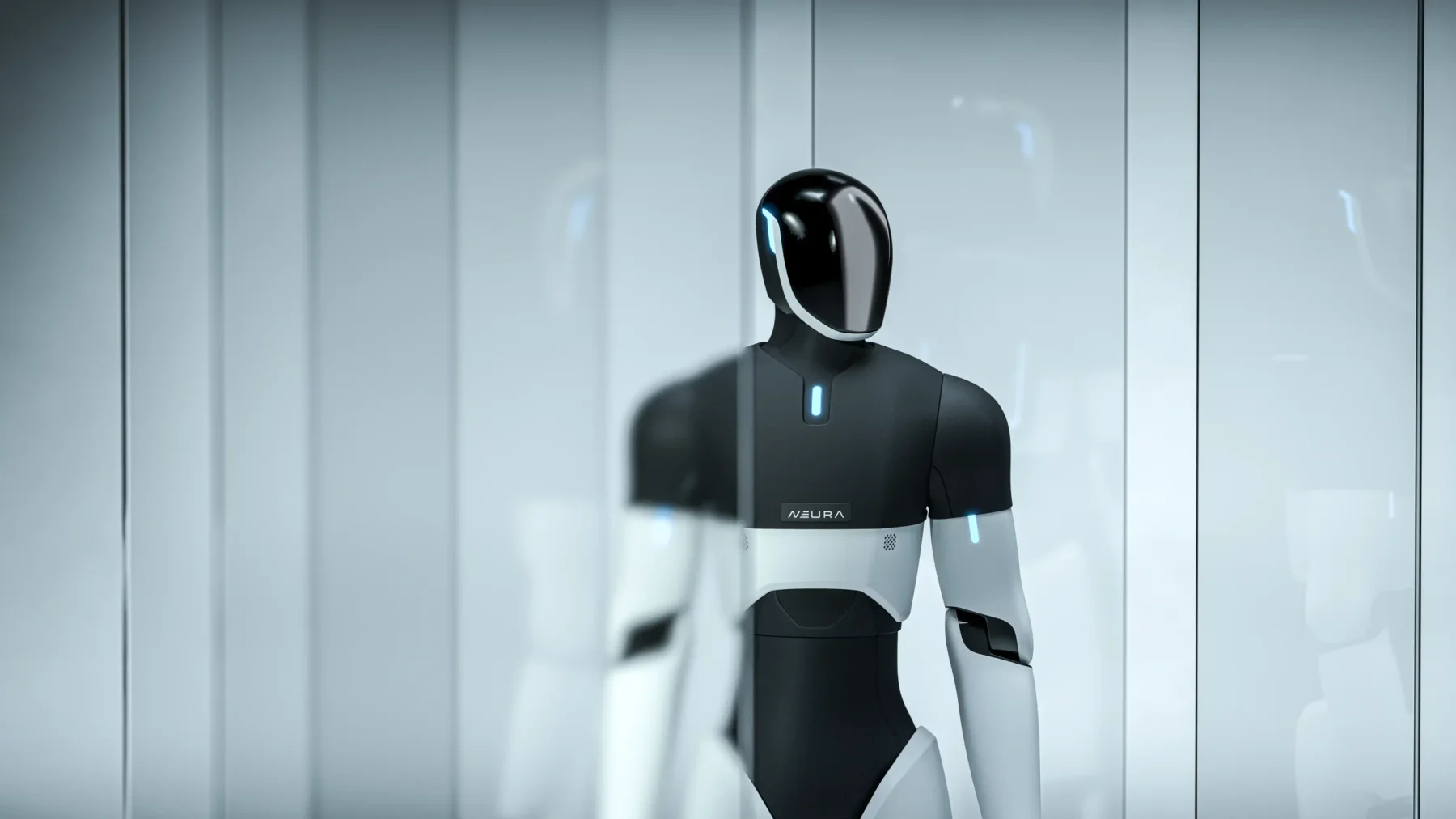
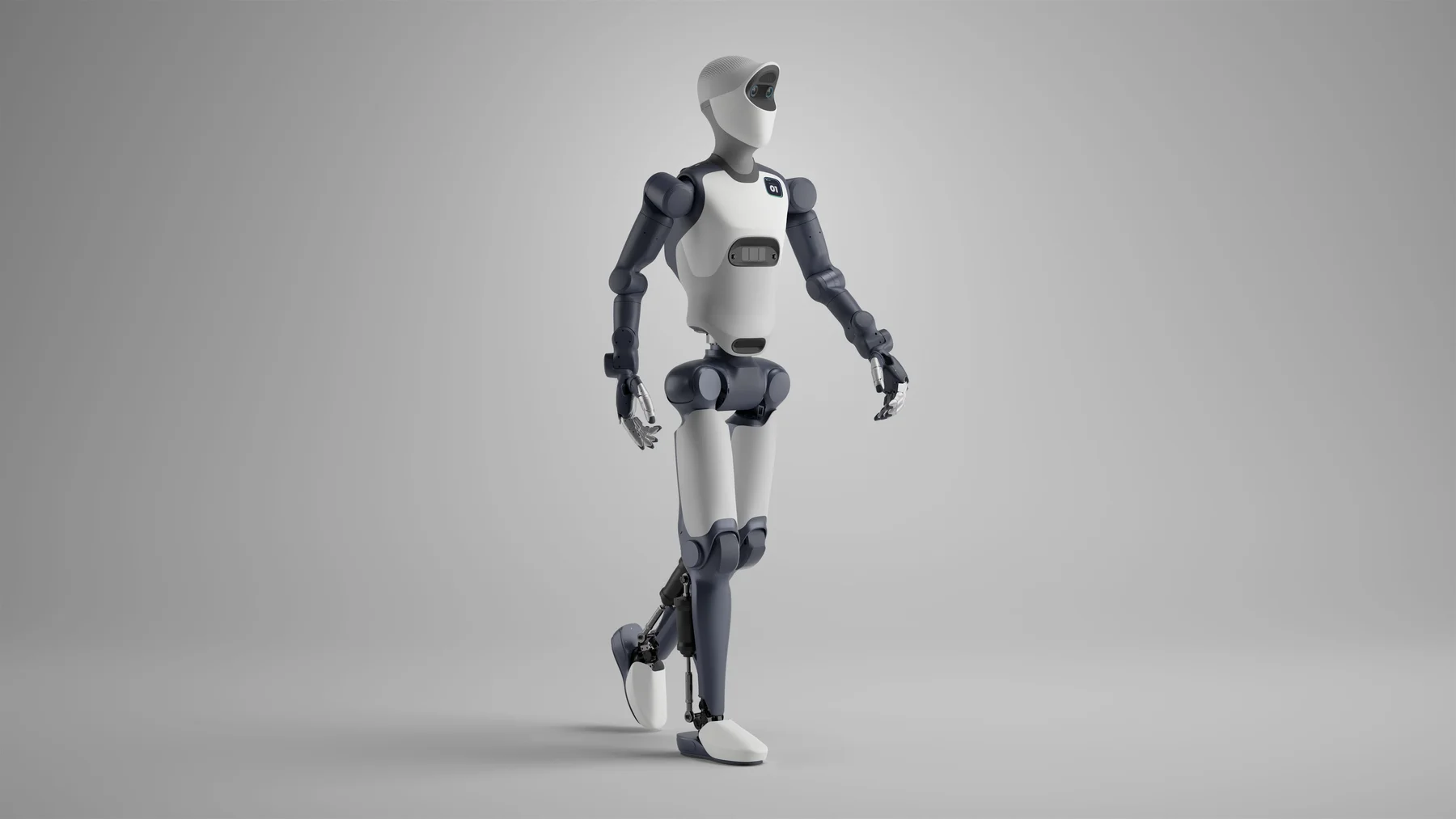
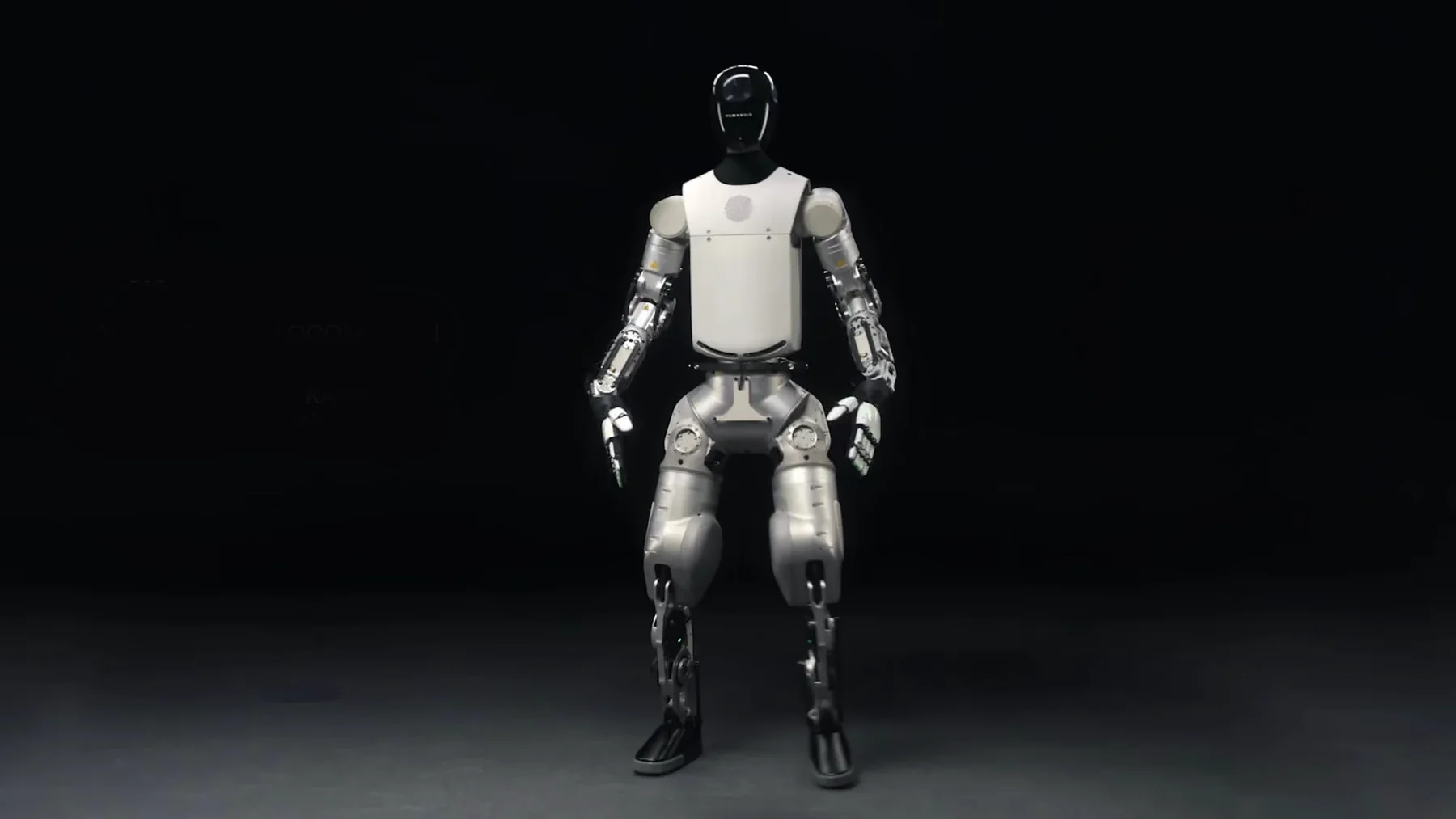

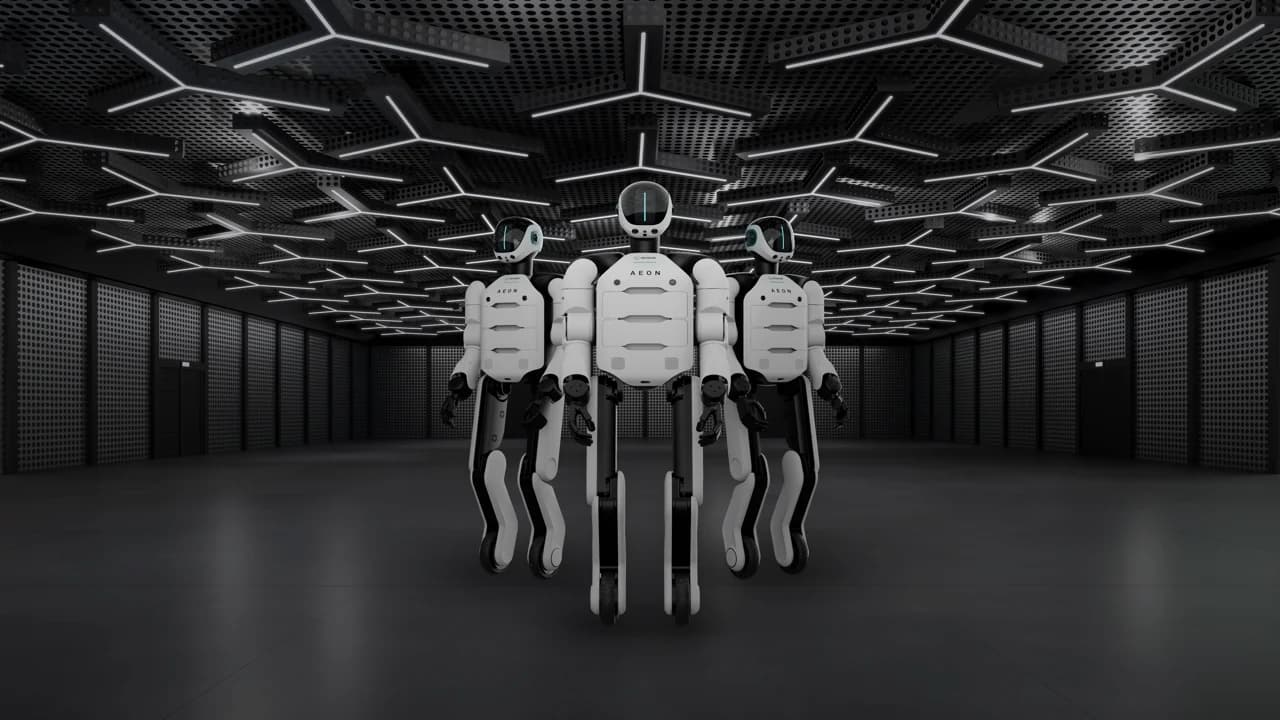
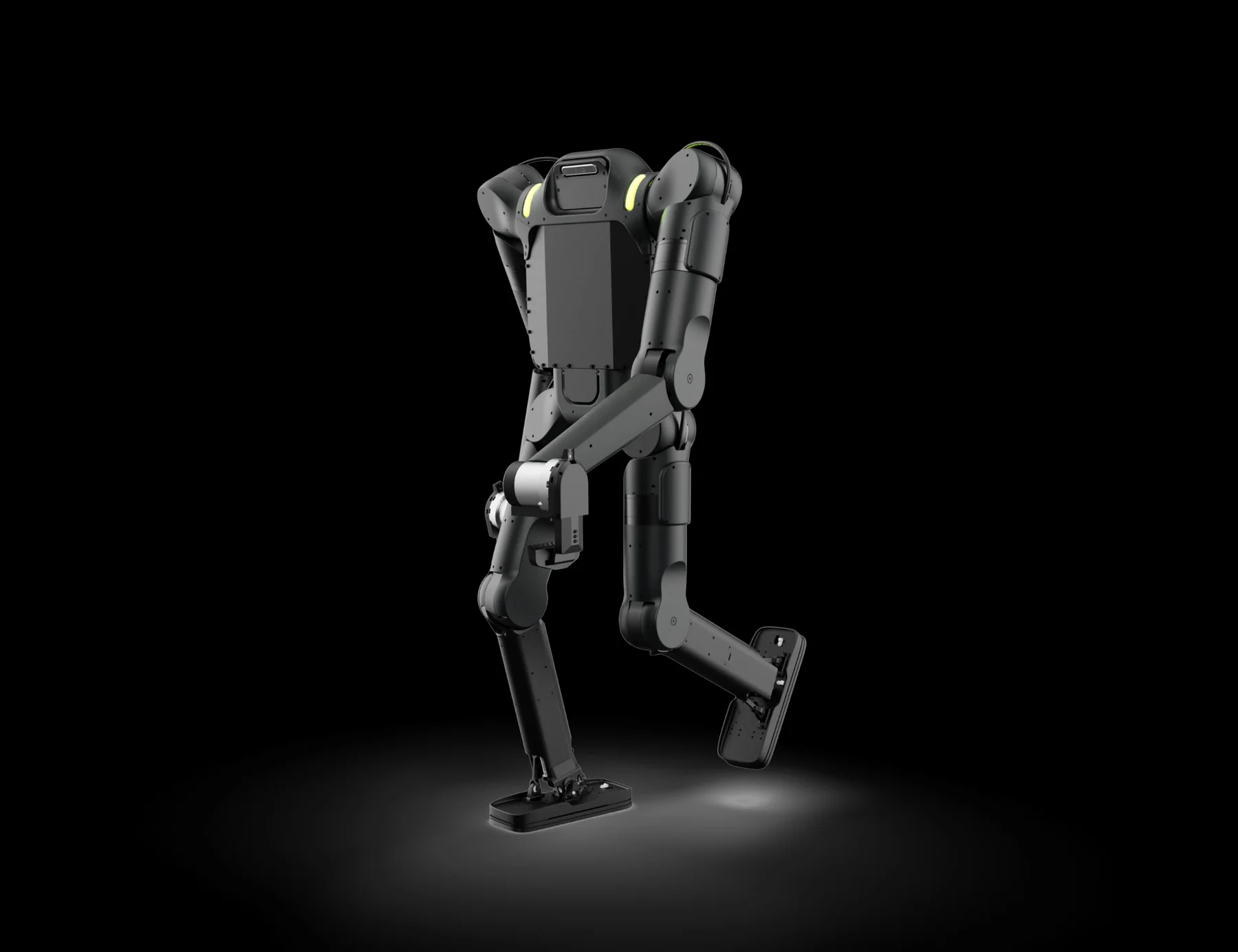
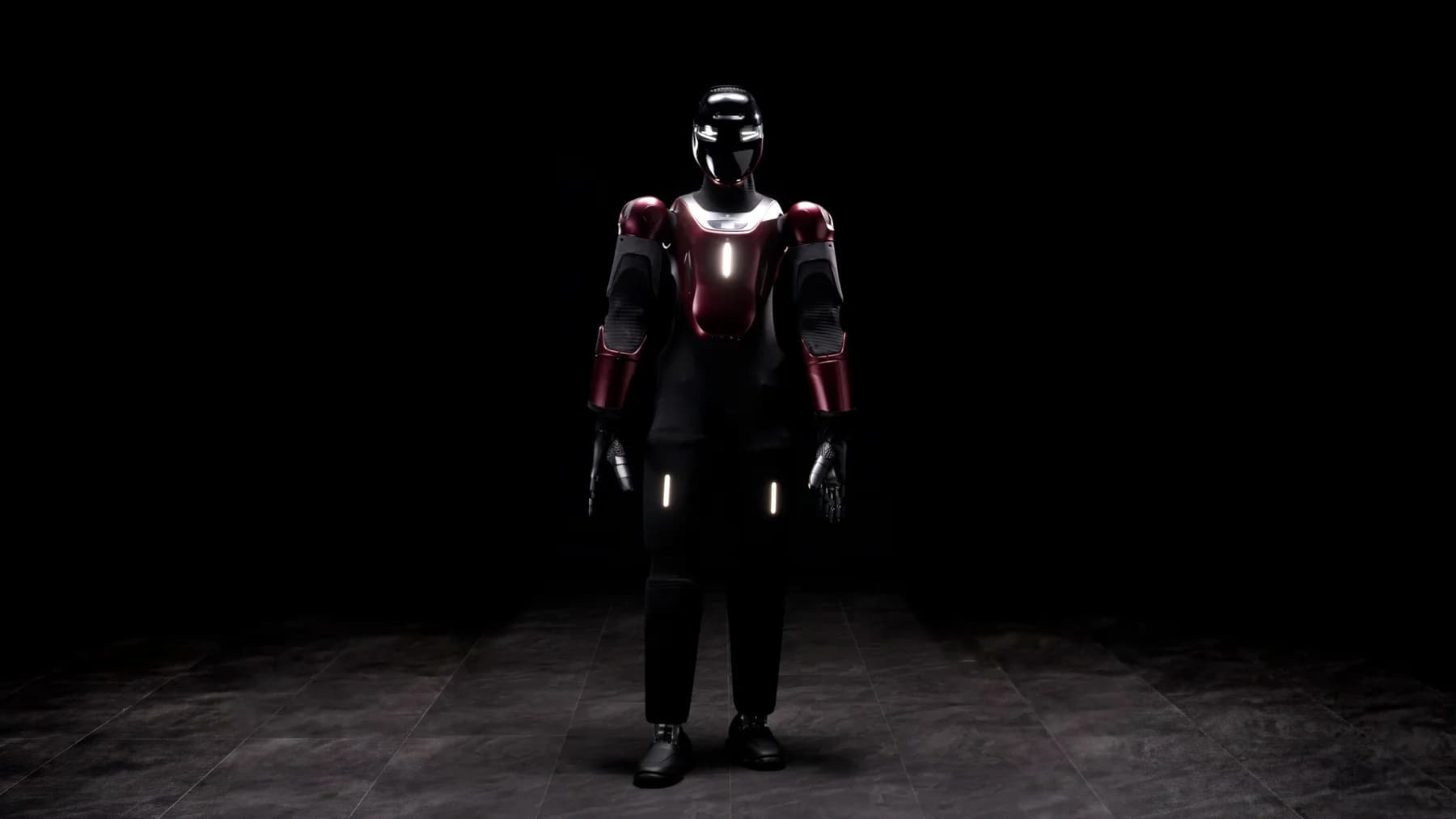
The next-generation 4NE1, styled with Studio F.A. Porsche and shown at CES 2026. NEURA Robotics is taking refundable €100 reservations for the Gen 3.5 and says it will be available at the end of 2026.
Germany: the two heavyweights
NEURA Robotics is the loudest European name and the best capitalised. Founded in Metzingen in 2019 by David Reger, it now employs around 1,400 people and sells a full spread of hardware — the LARA and MAiRA cobot arms, the MAV mobile platform, the MiPA service robot, a quadruped, and the 4NE1 humanoid — tied together by Neuraverse, a software layer the company pitches as an operating system and skills marketplace for its own and third-party machines.
Its capital escalated in three steps: €66 million Series A in 2024, €120 million Series B led by Lingotto in January 2025, and a Series C of up to $1.4 billion announced on 10 June 2026, led by Tether with Qualcomm, Amazon, NVIDIA, Bosch, Schaeffler, imec.xpand and the European Investment Bank. Bloomberg put the valuation at roughly $7 billion, which NEURA has not confirmed. The company says its order and deployment pipeline exceeds $1 billion and targets multi-million unit production by 2030.
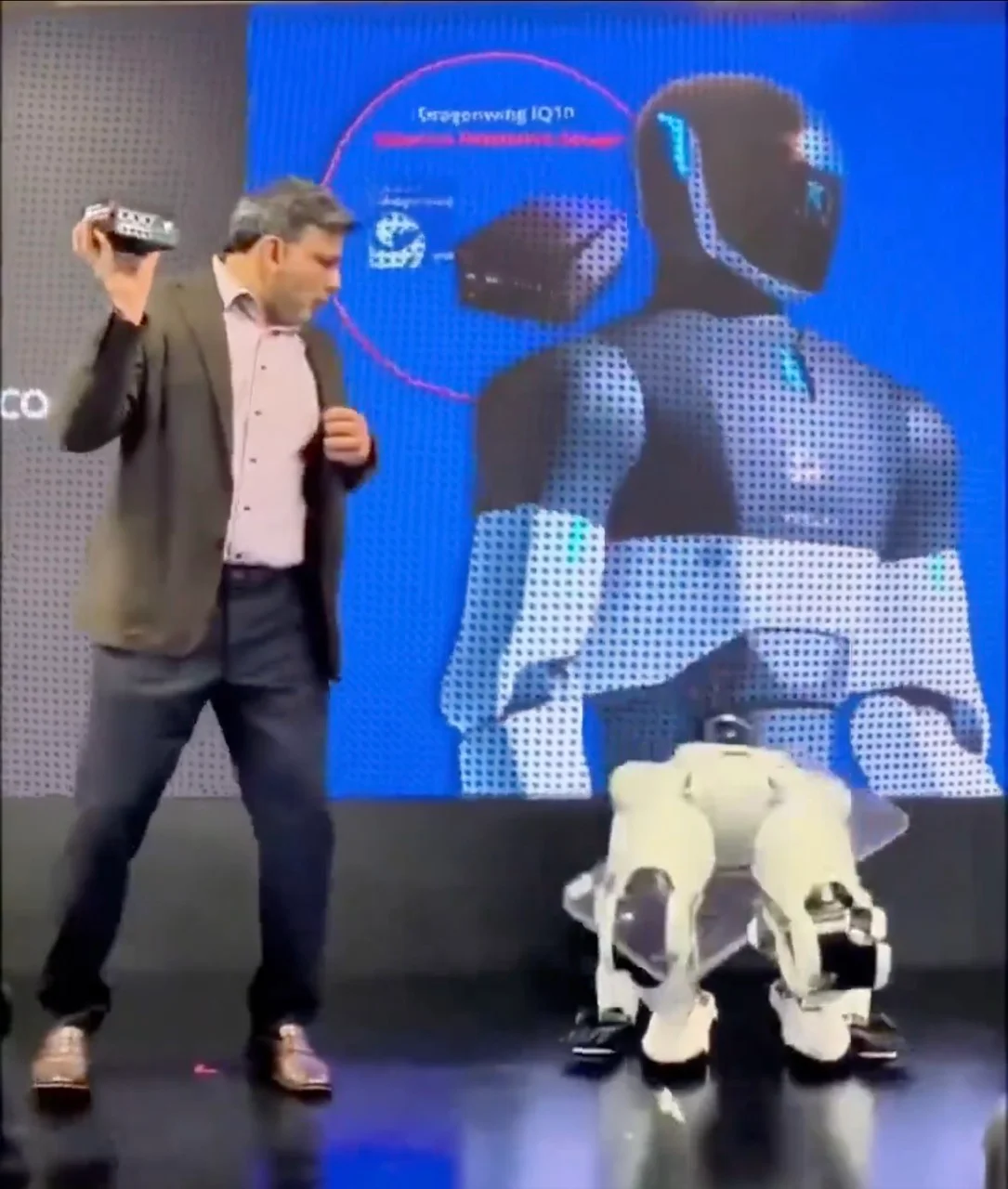
The execution record is more mixed than the funding suggests. A 4NE1 Gen 3.5 running Qualcomm's Dragonwing reference design collapsed during a live Computex keynote in Taipei in June 2026, weeks before the Series C was announced. The company has moved humanoid R&D to a new Zurich centre, opened Europe's largest physical AI training centre with TUM at Munich Airport, and is taking refundable €100 reservations for a 4NE1 Gen 3.5 it says will be available at the end of 2026. That date is the first hard checkpoint on this list.
Agile Robots SE is the quieter and, on current revenue, the larger business. A 2018 spin-off of the German Aerospace Center's robotics institute, it has roughly 3,200 employees, has raised about $1.5 billion, and became Germany's first robotics unicorn when SoftBank Vision Fund 2 led a $220 million Series C in 2021. CEO Zhaopeng Chen told the Wall Street Journal the company booked around €300 million of revenue in 2025 and expects roughly double that in 2026.
Much of that scale was bought. Agile Robots absorbed the insolvent Munich arm maker Franka Emika in 2023, took majority control of BMW spin-off idealworks the same year, and closed its acquisition of thyssenkrupp's Automation Engineering unit on 1 April 2026, adding around 650 engineers and ten locations under the Krause Automation name. Its humanoid, Agile ONE, arrived on 19 November 2025 with the hand as its headline claim: fingertip and force-torque sensing in every joint, trained on what the company calls one of Europe's largest real-world industrial datasets. In February 2026 Agile ONE pressed the button that switched on the Deutsche Telekom and NVIDIA Industrial AI Cloud in Munich, where Agile Robots is an anchor customer. SoftBank is reportedly in talks over a further round of about $800 million.
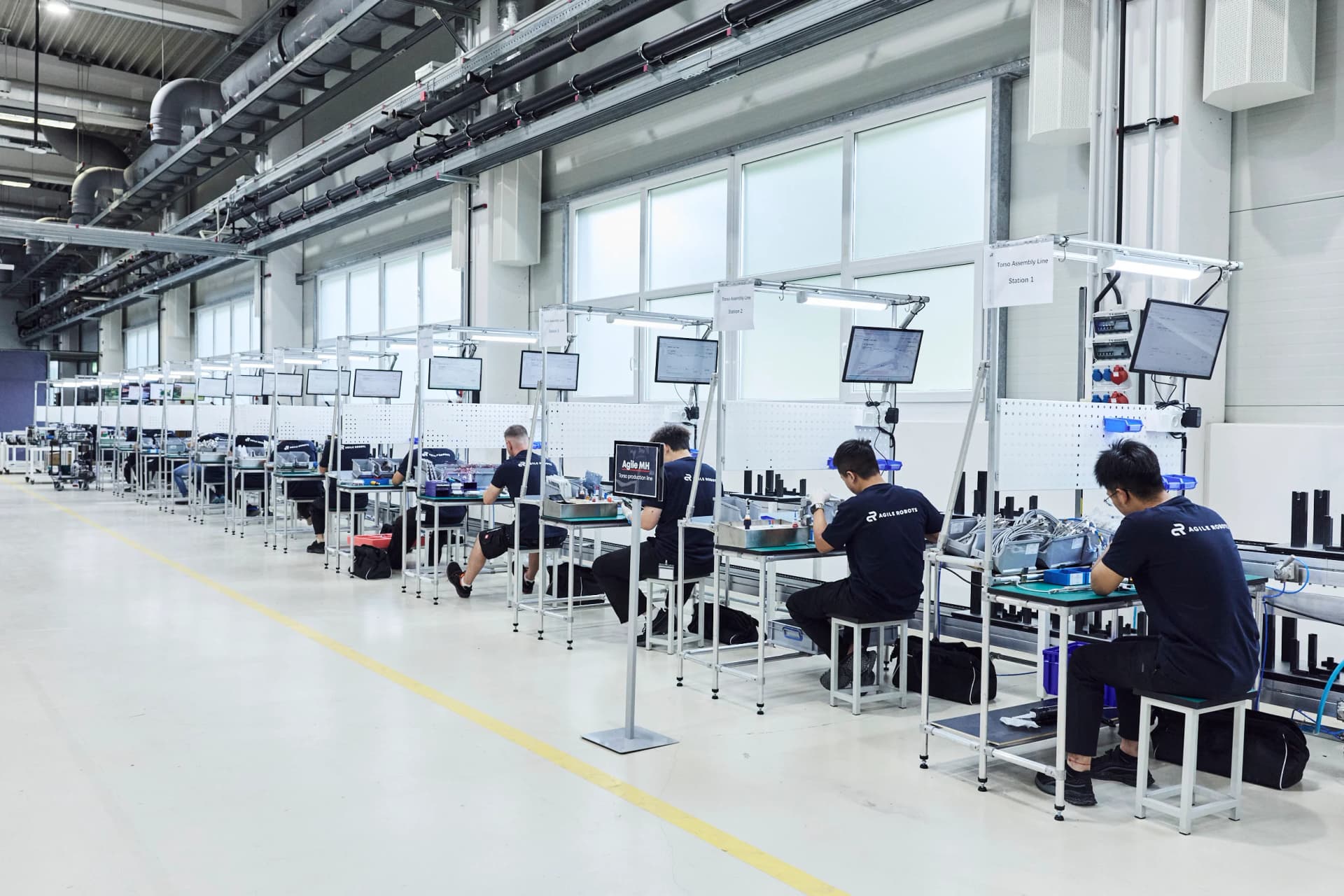
The two German companies reach the same factory floor from different directions: NEURA sells humanoids into an ecosystem it is still building, while Agile Robots is adding one to a catalogue that already books nine-figure revenue.
United Kingdom: Europe's first pure-play unicorn
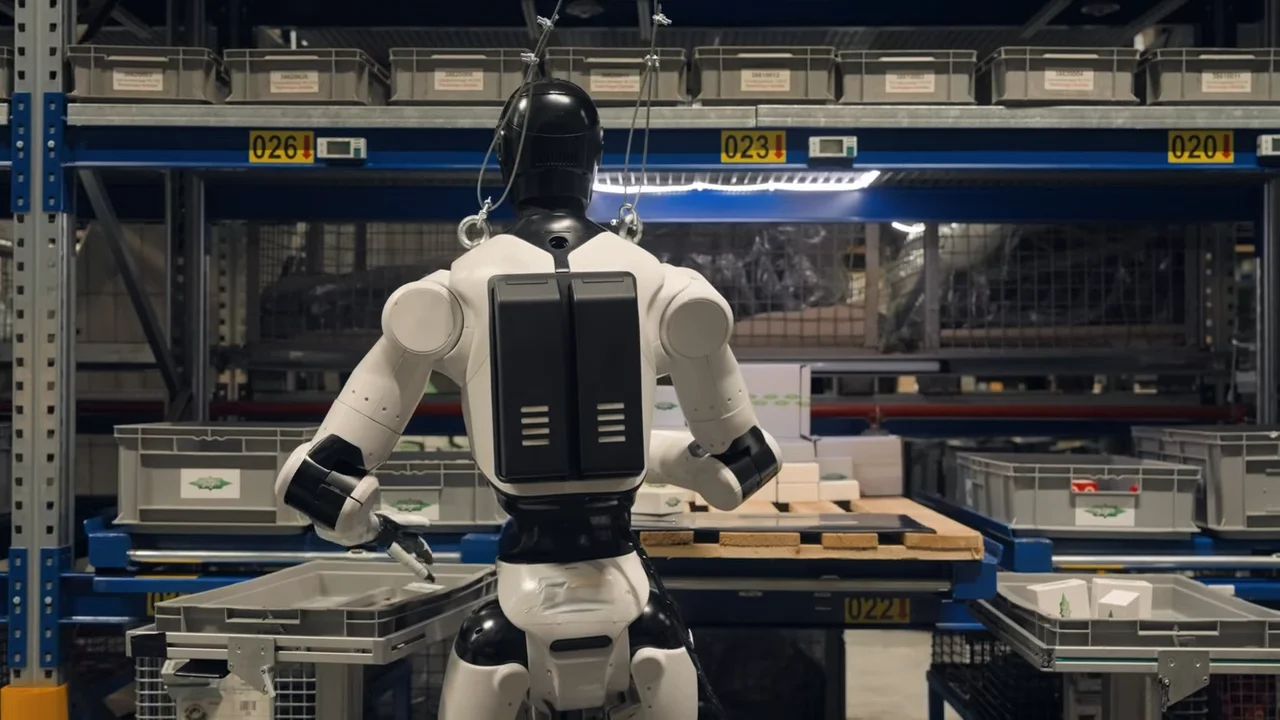
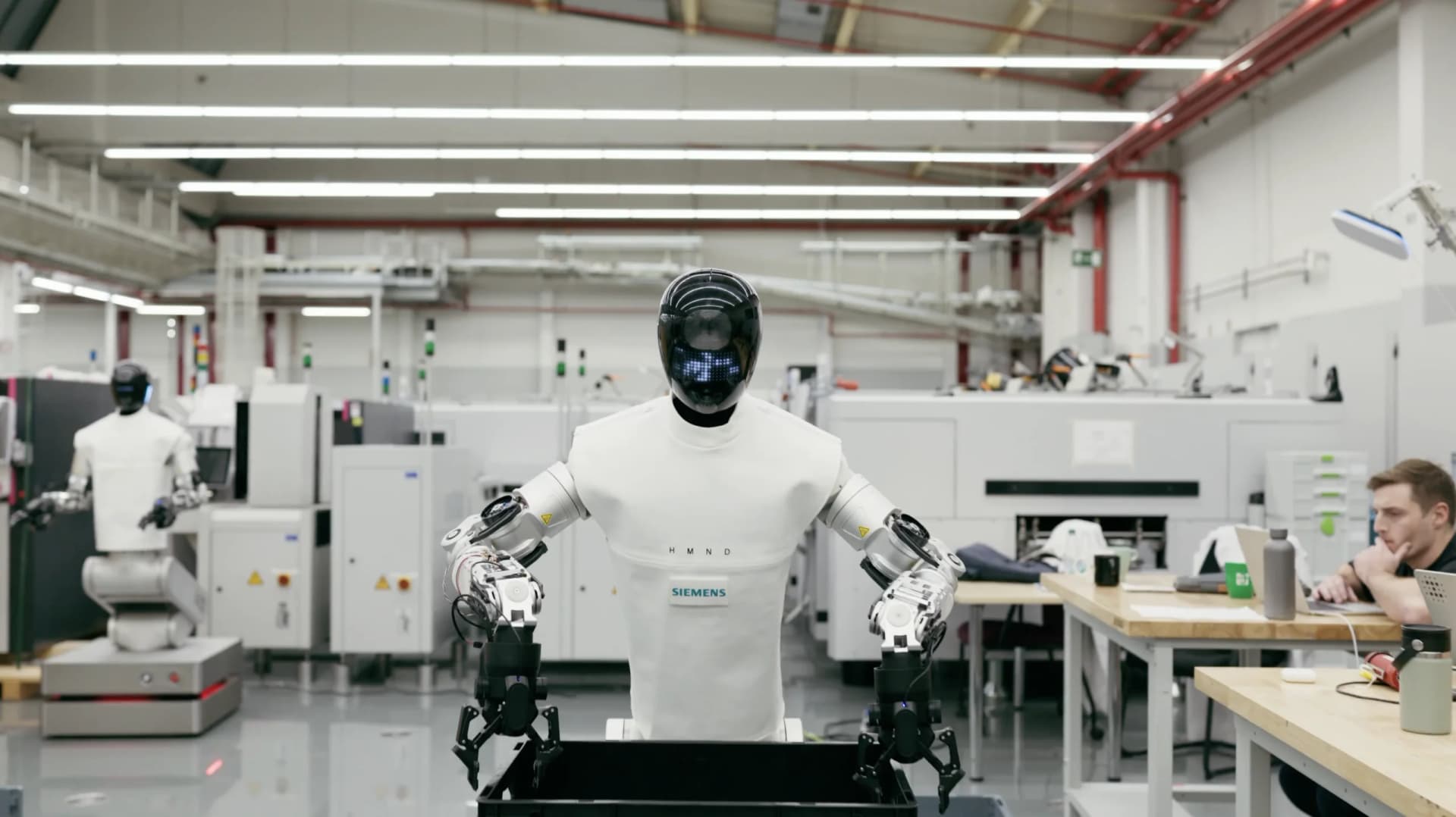
Humanoid, registered in London as SKL Robotics Ltd and founded in 2024 by Artem Sokolov, moved faster than anyone else on this list. Its HMND 01 Alpha went from concept to functional prototype in seven months. Its $152 million Series A on 21 July 2026, led by Prime Movers Lab with Schaeffler, Bosch, Fubon and Aglaé Ventures, took disclosed funding to $270 million at a $1.35 billion post-money valuation — the first pure-play humanoid unicorn in Europe.
The strategic choice worth noting is the wheels. Humanoid leads with a wheeled bimanual mobile manipulator and keeps the biped as a research platform, which Sokolov frames as a faster route to European certification and near-term deployment. On top sits KinetIQ, a four-layer stack running from fleet orchestration down to whole-body control, extended in June 2026 with a real-world reinforcement learning method aimed at 99.9% manipulation reliability.
The proof-of-concept list is genuinely broad — bin picking at Schaeffler, tote handling at Siemens in Erlangen, a logistics pilot with SAP and Martur Fompak, intralogistics at Bosch in Bühl, and kitting trials at Ford's Innovation Centre in Cologne, where the robot handled thin sheet-metal body parts two-handed and hit 83 picks per hour at 97% reliability. The company also claims tens of thousands of pre-orders — 34,000, which Forbes reported on 8 September 2026 as representing a $2.4 billion pipeline. Those are non-binding, and the throughput figures it publishes for KinetIQ Ascend — a 42% gain on machine feeding, 85% on cluttered tote picking — are company-supplied and unverified. The first Schaeffler systems are due live at Herzogenaurach and Schweinfurt in December 2026.
France: two opposite bets
Wandercraft has the longest operating history in the group and the least conventional route in. Founded in Paris in 2012 out of École Polytechnique, it spent a decade building self-balancing bipedal exoskeletons for rehabilitation — Atalante X is deployed in more than 150 rehabilitation centres, and the personal Eve exoskeleton received FDA clearance on 11 August 2026, with a US commercial launch scheduled for 17 September. Wandercraft says it anticipates Medicare reimbursement eligibility under the K1007 pathway within 60 to 90 days of launch.
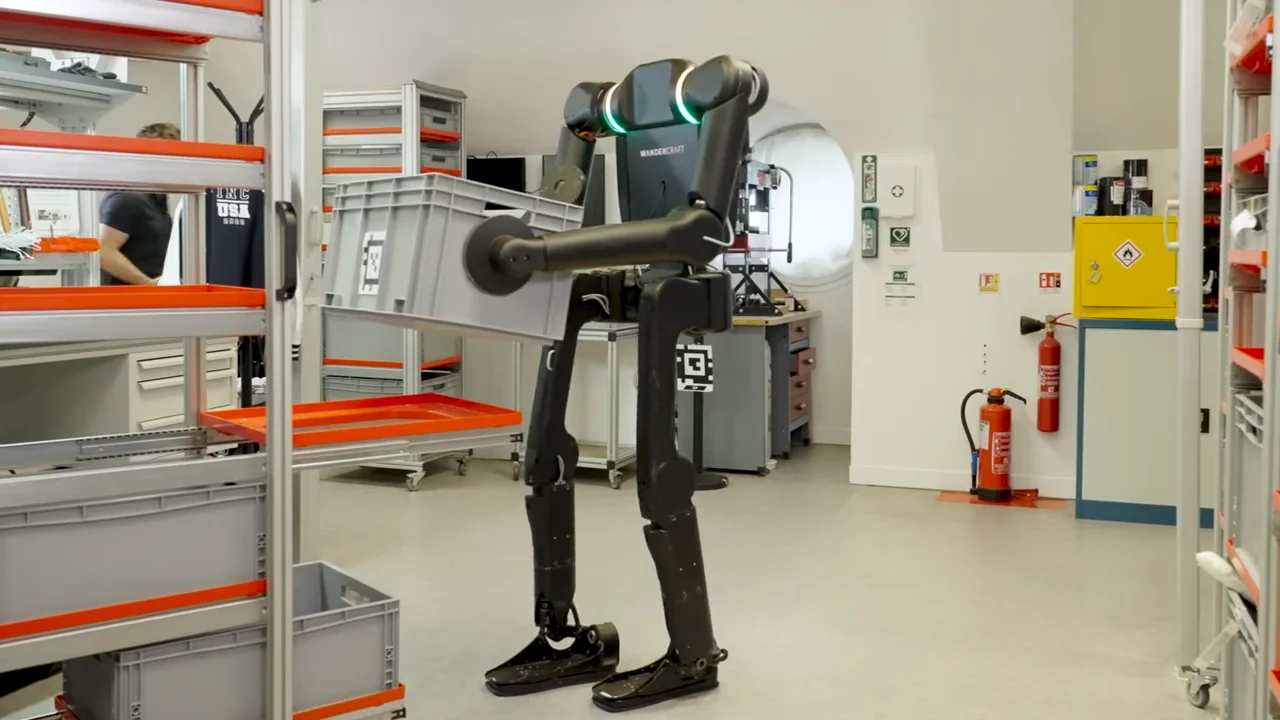
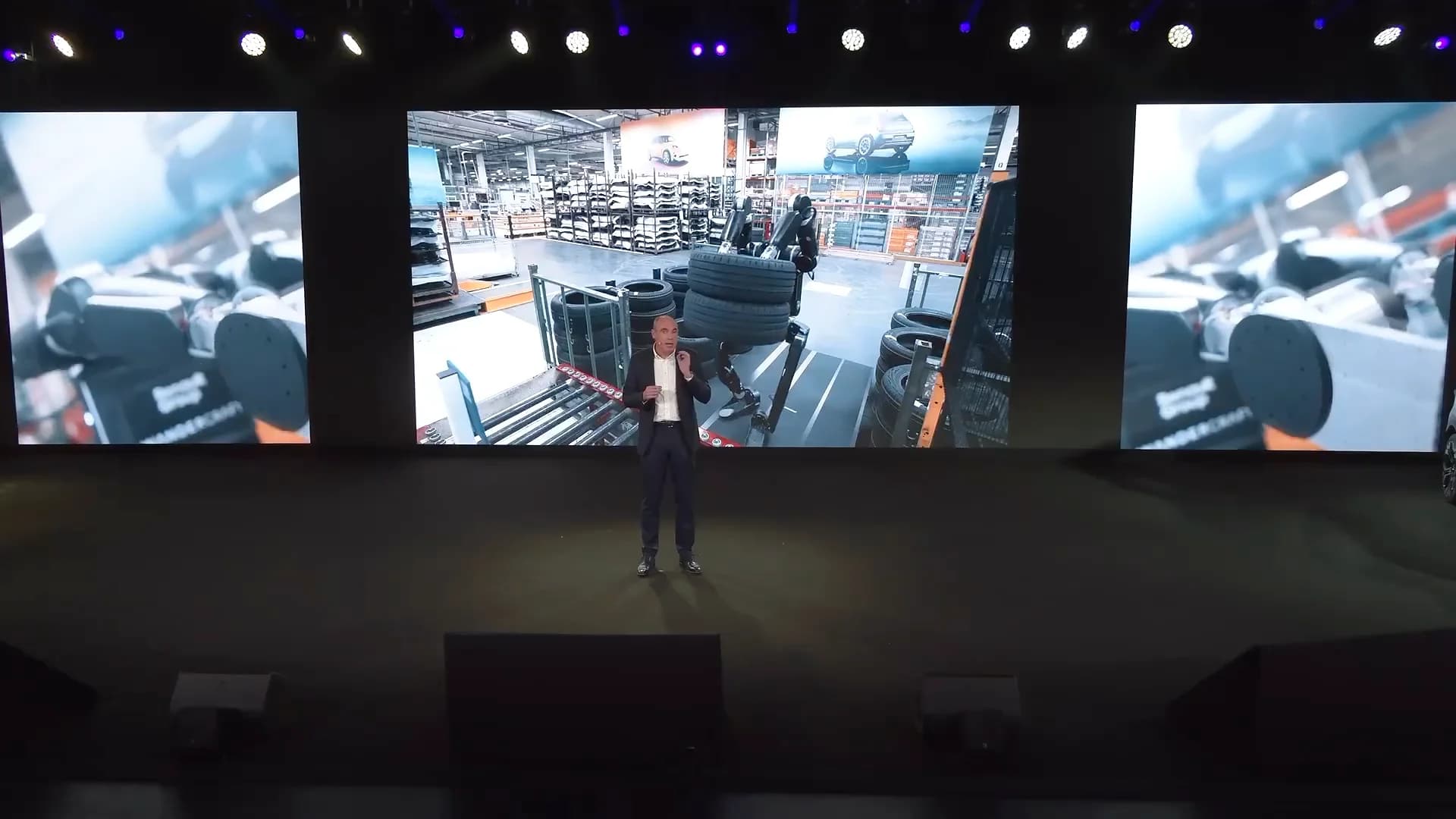
The industrial line reuses that control stack. Calvin-40, unveiled in June 2025 with Renault, has no head — cameras sit lower on the torso — and is rated to 40 kg of payload, roughly double the figure quoted for Tesla's Optimus or Figure 02. The company says the first unit was assembled in 40 days by reusing actuation and balance software already qualified for medical use. Renault said in March 2026 it would deploy 350 Calvin units by 2027, with the robot already handling tires at Douai; Italian supplier SAPA followed as customer number two. This month the company said it has 12 signed enterprise customers across automotive, logistics, retail, healthcare and defence, and Bloomberg reported it is seeking roughly €100 million at a €750 million pre-money valuation with Goldman Sachs advising.
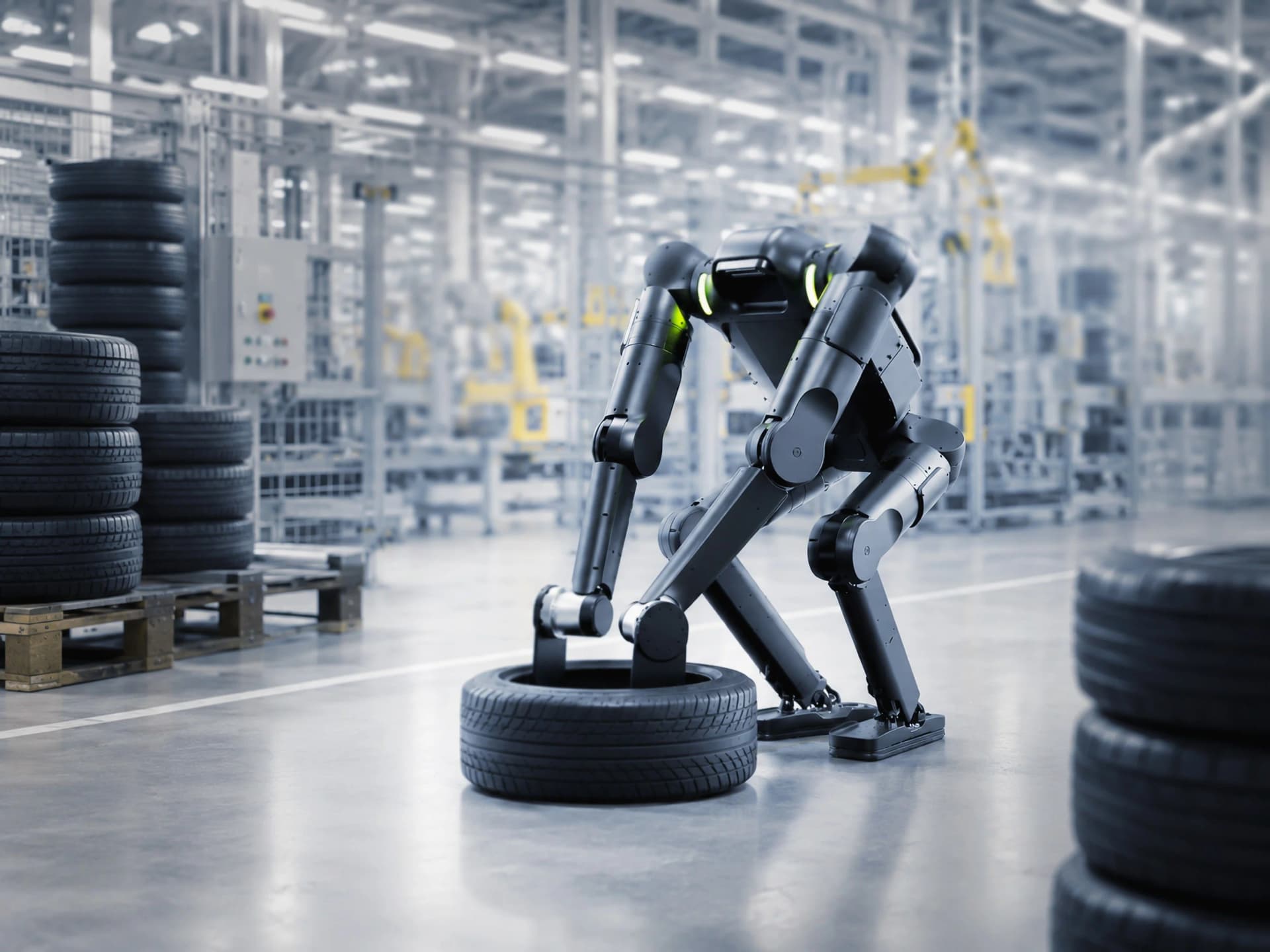
Masselin has been blunt about the strategy: "We don't believe in building a general-purpose robot and hoping customers figure out how to use it."
UMA is the opposite profile — the newest company here and the one with the most decorated founding team. Universal Mechanical Assistant exited stealth in Paris on 1 December 2025 under Rémi Cadène, previously of Tesla Autopilot and Optimus and the lead on Hugging Face's open-source LeRobot library, with Pierre Sermanet (Google Brain, DeepMind) as chief science officer and SO-100 designer Robert Knight as chief robot officer. Yann LeCun advises, as does Thomas Wolf.
On 7 July 2026 UMA showed "Prototype Version 0" and published the design of its Northstar humanoid, a lightweight human-scale machine with a visor in place of a face. A specialist robot tracker lists it at 165 cm, 40 kg, a 15 kg rated payload and 24 degrees of freedom with twelve in the hands; UMA has not published a spec sheet of its own. The method is called Real-Time Learning — skills acquired from demonstration rather than reprogramming. The company says it is in talks with about 50 potential customers with pilots planned during 2026, and that the first industrial product will be wheeled, with a concept prototype at the end of this year. UMA names eight backers on its own site — Greycroft, Relentless, Unity Growth Fund, Commit by Red River West, Factorial, Drysdale, Kima Ventures and ALM Ventures — and says it is "backed by a strong first round." It has never published an amount. The $40 million figure that circulates came from pre-launch reporting describing Cadène as seeking roughly that sum, and no closed figure has been confirmed. Nothing has been publicly deployed.
Sweden and Switzerland: the metrology route
Hexagon AB is the only listed company on this list and the only one that arrived at humanoids from measurement rather than robotics. The Stockholm-listed group (HEXA B) created a Robotics division in March 2025 under Arnaud Robert, headquartered in Zurich, and unveiled AEON in June 2025.
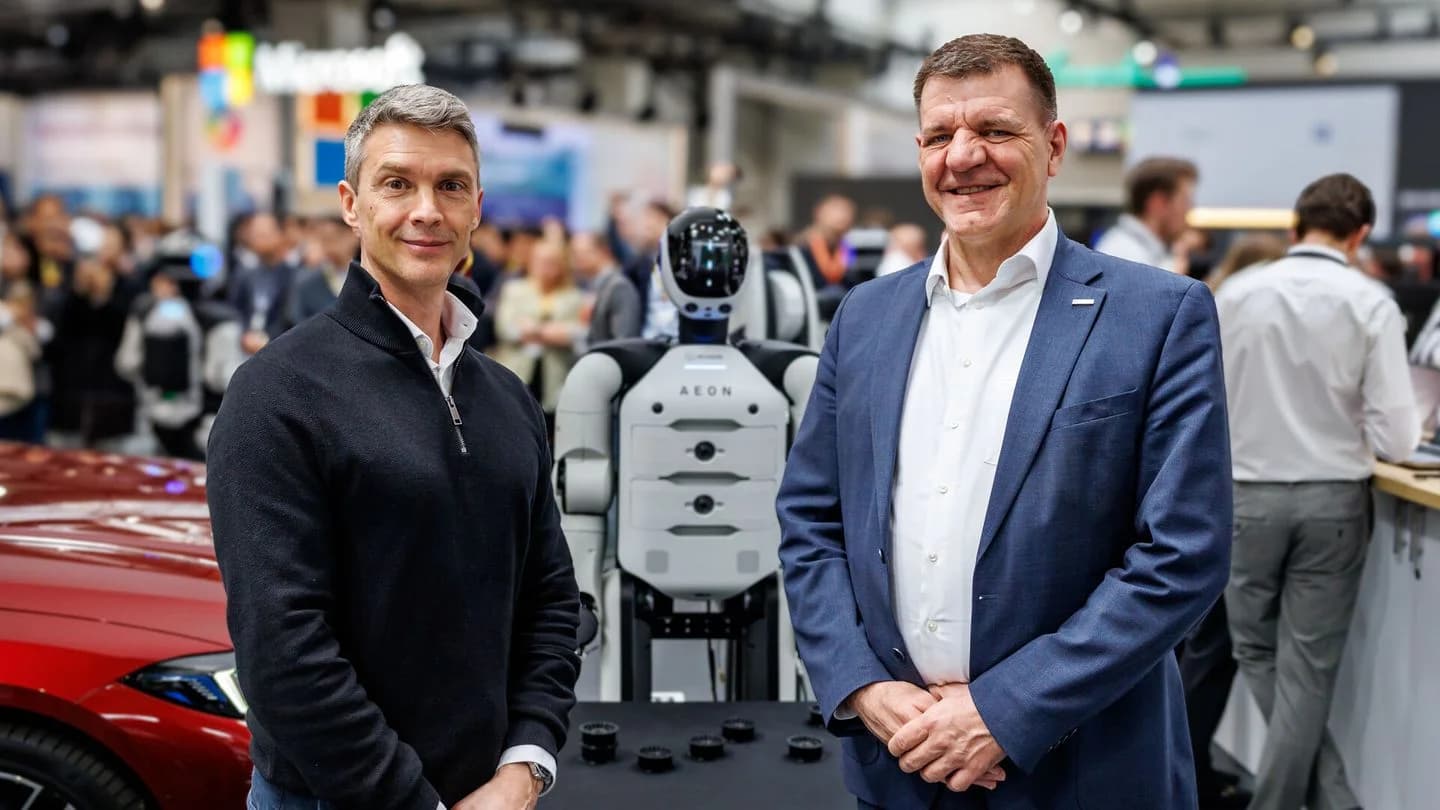
AEON is a wheel-footed biped — two articulated legs ending in wheels instead of feet, so it rolls fast across flat floors but can still step over an obstacle — swaps batteries rather than recharging, and is aimed at material handling, machine tending, part inspection and reality capture for digital twins, which is the point. Hexagon's existing business is sensing and metrology, and AEON is being sold as a mobile extension of it. Compute is NVIDIA Jetson, with IGX Thor adopted for edge processing in March 2026; a January 2026 Microsoft collaboration covers Azure data management and one-shot imitation learning.
The deployment record is the strongest in this group relative to time elapsed. BMW ran a first test at Plant Leipzig in December 2025, made AEON its first European humanoid project in February 2026, and had the robot performing production tasks there by June. Schaeffler's 1,000-unit commitment landed in April.
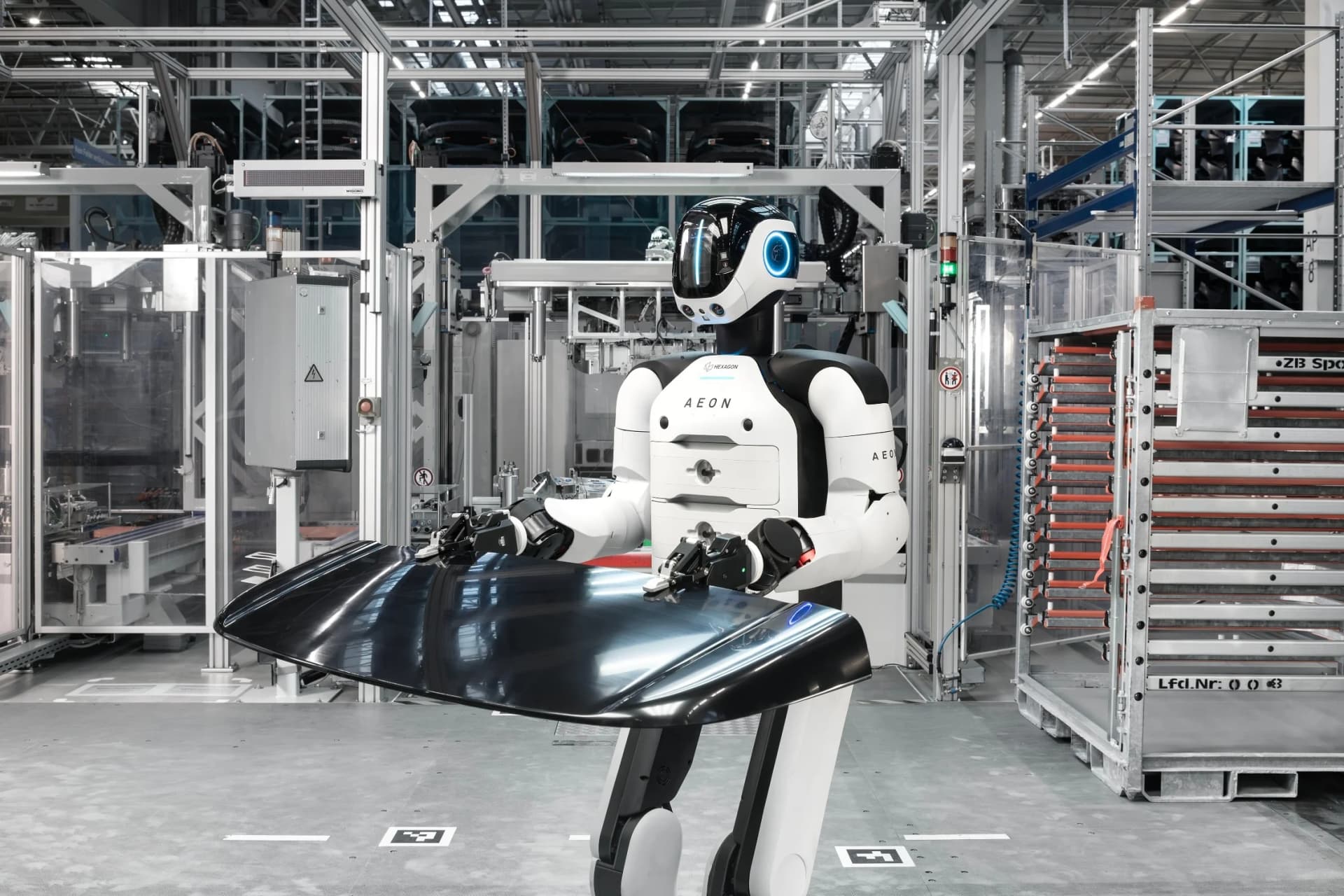
Hexagon has disclosed no unit prices, contract values or robotics headcount. In May 2026 it completed the spin-off of Octave Intelligence, leaving robotics as a growth line inside a narrower measurement group, where it will show up more clearly in group reporting.
Italy: the sovereignty pitch
Generative Bionics was incorporated in Genoa in July 2024 as a spin-out of the Istituto Italiano di Tecnologia, carrying exclusive licences to two decades of iCub and ergoCub research. CEO Daniele Pucci ran IIT's Artificial and Mechanical Intelligence line; the founding team came with him. It emerged in December 2025 with a €70 million seed led by CDP Venture Capital's AI fund, with AMD Ventures, Eni Next, Duferco, RoboIT and Tether participating.
GENE.01 was shown as a concept at CES 2026 and unveiled as working, fully sensorised hardware on 20 July 2026, built in six months. Its distinguishing feature is a distributed tactile skin across the body, paired with what the company calls physics-native AI — control and design co-optimised so the robot registers contact and human proximity rather than treating people as obstacles. The underlying ergonomics work was published in Nature Machine Intelligence. Lower-body prototypes walked and ran blind on uneven outdoor terrain in May 2026.

Commercially it has one named deployment and it is a good one: a four-year partnership with shipbuilder Fincantieri, signed February 2026, targeting humanoid welding trials at the Sestri Ponente yard by the end of 2026. Italdesign is engineering the exterior for volume manufacture; Synapticon is building actuators with European final assembly, calibration and safety testing; AMD supplies compute. The company leads with sovereignty — EU-protected actuation, a trusted supply chain, compliance — but its deeper asset is the research base behind it. Two decades of iCub and ergoCub work at IIT, peer-reviewed and now exclusively licensed to the spin-out, is a longer run at humanoid hardware than almost anyone else in this field can claim, and it is where the tactile skin comes from. That record is still an academic one. Against better-funded rivals the company has a single disclosed funding round and no shipped commercial units, and the Fincantieri yard is the first place the pedigree has to produce something that works to a schedule.
Zurich: Europe's Robotics Valley
Two of the seven manufacturers above put their robot brains in the same city. NEURA moved humanoid R&D to a new Zurich development centre in late 2025 while keeping assembly in Metzingen. Hexagon's Robotics division is headquartered in Zurich, not at the group's Stockholm registered office. The gravitational mass is ETH Zurich's Robotic Systems Lab, the source of the ANYmal quadruped and a steady supply of locomotion and reinforcement-learning people.
Two independent Zurich companies are now working the software layer directly.
Flexion Robotics emerged from stealth in November 2025 with a $50 million Series A led by DST Global Partners with NVIDIA's NVentures, Moonfire, Redalpine and Prosus Ventures. It builds no hardware. The thesis is that vertical integration is a temporary inefficiency and that the industry needs a horizontal autonomy layer — the company's own analogy is Android. Its stack runs three layers: a VLM agent for task decomposition, a diffusion-based motion generator, and a reinforcement-learning whole-body controller. The founding team is unusually well matched to that bet: CEO Nikita Rudin and co-founder Marco Hutter come out of ETH's Robotic Systems Lab, and CTO David Höller managed research at NVIDIA, where he helped build Isaac Gym. A March 2026 lab tour showed a fleet of 14 humanoids, with Rudin claiming the same stack can be brought to a new robot and a new task in about a week.
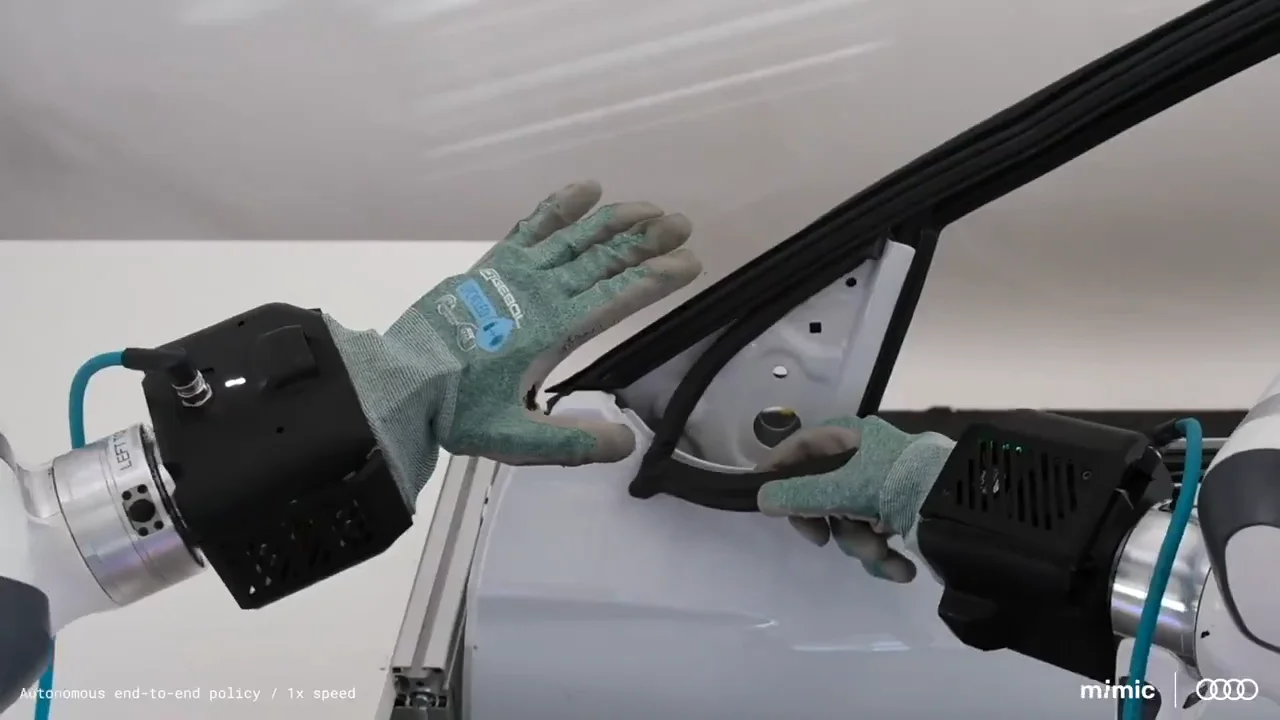
Mimic Robotics, an ETH Zurich spin-off founded in 2024, takes the narrower route. It builds 16-DoF dexterous hands and the models that drive them, paired with off-the-shelf industrial arms — co-founder Stephan-Daniel Gravert has argued there are few industrial scenarios where the full-body form factor earns its complexity. It raised a $16 million seed in November 2025 led by Elaia and Speedinvest, taking total funding past $20 million, and trains on data captured by skilled workers wearing its own collection devices on live production lines. In February 2026 Audi partnered with it on assembly work, demonstrating autonomous weather-seal installation on a door frame — a flexible-material insertion task that has resisted conventional automation. In April it open-sourced mimic-video, its Video-Action Model recipe built on NVIDIA's Cosmos-Predict2 backbone with researchers from Microsoft, ETH and UC Berkeley, claiming 10x sample efficiency over standard VLA models.
Both are pursuing the same horizontal thesis as the American model-layer startups, at roughly a twentieth of the capital — Flexion's $50 million against the $1.1 billion Physical Intelligence has raised, or Skild's $1.4 billion Series C at a $14 billion valuation. Neither is publicly wired into any of the seven European manufacturers above.
What Europe is not doing
No company on this list is building a consumer humanoid. None has announced a million-unit line. None is promising a home robot next year. The European entries are wheeled where wheels work — Hexagon's AEON puts wheels where a biped would have feet — headless where heads are decoration, payload-rated where payload is the constraint, and pointed at welding, bin picking, machine tending and tire handling.
Two gaps are worth stating plainly.
The first is how the brain connects to the body. Europe does have a model layer — Flexion and Mimic are both building one in Zurich — but it is an order of magnitude smaller than the American equivalent, and it is not plugged into European hardware. Flexion proves its stack on a Unitree G1, a PNDBotics Adam and a LimX Dynamics Oli; the fleet in its Zurich lab is Chinese. Mimic's first named industrial partner is Audi, not any of the seven companies above.

The manufacturers, meanwhile, each build their own: NEURA has Neuraverse, Humanoid has KinetIQ, Generative Bionics has physics-native AI, every one of them inside its own hardware business and trained on its own data. Agile Robots went outside Europe entirely and partnered with Google DeepMind to put Gemini on the factory floor. Nobody in Europe is currently selling an autonomy layer to a European humanoid maker.
The second is silicon. Every company here runs on NVIDIA, Qualcomm or AMD. NEURA's answer is to industrialise the modules — it is working with Italian embedded specialist SECO to build distributed compute modules around Qualcomm Dragonwing chips. That addresses assembly, not dependency.
Meanwhile the continent is being entered from outside. AGIBOT and Minth opened Europe's first humanoid mass-production line in Šabac, Serbia with a €20 million initial line and a planned €200 million hub at Inđija, and picked up TÜV Rheinland certification and a retail alliance at IFA 2026. UBTECH's Walker S2 is in logistics pilots at Rossmann. German Chancellor Merz visited Unitree in February. The first humanoids mass-produced on European soil are Chinese.
The list is also growing at the bottom. Darmstadt's Pink Robotics unveiled its P0 prototype in August 2026 with a sharp critique of Germany's robotics ecosystem, and Nucleus exited stealth deploying teleoperated humanoids into factories on day 91, skipping the autonomy wait entirely.
The checkpoints
Five dates will settle most of the open questions in this piece.
| When | What | Who |
|---|---|---|
| End 2026 | 4NE1 Gen 3.5 availability, against refundable €100 reservations | NEURA Robotics |
| End 2026 | Humanoid welding trials begin at Sestri Ponente shipyard | Generative Bionics / Fincantieri |
| End 2026 | Wheeled concept prototype | UMA |
| December 2026 | First units live at Herzogenaurach and Schweinfurt | Humanoid / Schaeffler |
| 2027 | 350 Calvin-40 units deployed | Wandercraft / Renault |
The European sector does not need a viral demo to clear these. It needs the robots that are already contracted to turn up and work. By the end of 2027 the order books on this page will have converted into installed fleets, or they will not have.
Company table
| Company | HQ | Founded | Humanoid | Form | Disclosed funding | Largest commitment |
|---|---|---|---|---|---|---|
| NEURA Robotics | Metzingen, DE | 2019 | 4NE1 / 4NE1 Mini | Bipedal | Series C up to $1.4B (val. ~$7B reported) | Mid-four-digit units, Schaeffler, by 2035 |
| Agile Robots SE | Munich, DE | 2018 | Agile ONE | Bipedal | ~$1.5B cumulative | ~€600M group revenue target 2026 |
| Humanoid | London, UK | 2024 | HMND 01 Alpha | Wheeled + bipedal | $270M ($1.35B val.) | Four-digit units, Schaeffler, by 2032 |
| Wandercraft | Paris, FR | 2012 | Calvin-40 | Bipedal, headless, 40 kg payload | $75M Series D; seeking €100M | 350 units, Renault, by 2027 |
| Hexagon AB | Stockholm / Zurich | 1975 | AEON | Wheel-footed biped | Listed (HEXA B) | 1,000+ units, Schaeffler, over 7 years |
| Generative Bionics | Genoa, IT | 2024 | GENE.01 | Bipedal, tactile skin | €70M seed | 4-year Fincantieri partnership |
| UMA | Paris, FR | 2025 | Northstar | Bipedal (wheeled first) | Seed closed, amount undisclosed | ~50 customer conversations |
Share this article
Follow humanoid robotics without following every announcement.
Get the week’s most important launches, funding and research—and why they matter—in one email from Humanoids Daily.
Once a week. Unsubscribe anytime.
Read recent issuesRead next
- Published on
- Reading time
- 3 min read
Wandercraft Expands Industrial Push, Inks Deal With Auto Supplier SAPA
- Published on
- Reading time
- 4 min read
The Tier 1 Play: Schaeffler Commits to 1,000 Hexagon AEON Humanoids in Deep Component Deal
- Published on
- Reading time
- 4 min read
SAP Launches Major ‘Embodied AI’ Push with Humanoid, Neura Robotics, and Others
- Published on
- Reading time
- 4 min read
Scale at Speed: Humanoid and Schaeffler Move to Massive Multi-Thousand Unit Rollout
- Published on
- Reading time
- 4 min read
Schaeffler Commits to Thousands of Neura Humanoids in Deep Component and AI Partnership
- Published on
- Reading time
- 4 min read
Renault to Deploy 350 Wandercraft Calvin Humanoids in Industrial Speed Run