- Published on
Swedish Startup 120ft Wants to Fit a Humanoid-Run Factory Into Three Containers
One tap, and our reporting appears more often in your Google Top Stories. It makes a real difference to a small newsroom.


Your guide
Rich Robinson
Jee Chee Ren · Executive tour
See China’s AI and robotics ecosystem first-hand.
Six days exploring AI, robotics and advanced manufacturing.
With Rich Robinson, Clinical Professor of Entrepreneurship at Peking University
Beijing · Guangzhou · Shenzhen
29 November–4 December 2026
Referral partnership · We earn a commission on referred bookings.
Swedish startup 120ft has emerged from stealth with a plan to put local robotic assembly inside three shipping containers. The Stockholm company has raised €576,000 from 22 angel investors to develop microfactories operated by humanoid robots, according to SiliconANGLE’s launch report.
- 120ft proposes three-container factories for preparation, assembly, inspection and packing, with brands paying per finished product.
- Its initial pilots target rigid parts under 5 kg assembled with screws or press-fits; cables, flexible materials and gluing come later.
- The angel round supports a move toward commercial production. The company’s seven-minute skill-programming goal is a target for 2027.
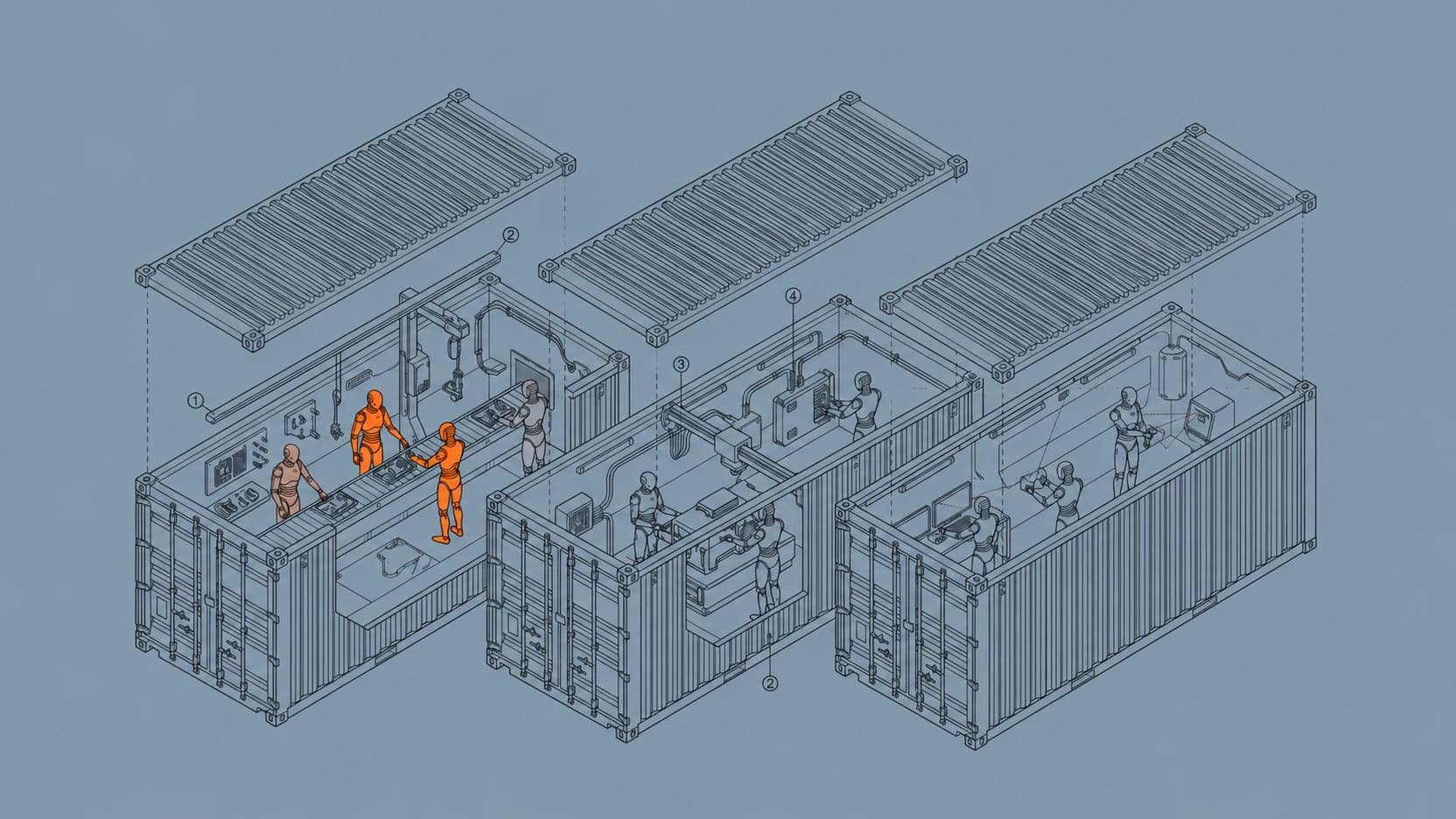
A small factory shared by several brands
The name comes from three 40-foot containers. One prepares incoming components, another handles assembly, and the third inspects and packs the output. On its website, 120ft pitches production runs starting at 100 units, with customers retaining their designs and existing component suppliers.
The proposed service would let brands purchase assembly capacity without buying robots or running a factory themselves. SiliconANGLE reports that 120ft plans to own and operate the facilities, sharing their robots among customers and charging for completed products. Early targets include small appliances and consumer electronics.
Founder and CEO Martin Willers previously co-founded speaker company Transparent and built hardware design business People People. His new venture addresses a familiar problem for smaller brands: committing money to large production orders before knowing what customers will buy.
The weekly humanoid robotics briefing
One email a week: the launches, funding and research that mattered, with context from Humanoids Daily.
Read recent issuesLocal assembly would shorten one part of that process. Components could still come from international suppliers, so the model would not make the entire supply chain local.
The software behind the containers
Robots pictured on 120ft’s website appear to be Unitree G1 humanoids, offering a glimpse of the hardware behind its development work. That identification is based on the imagery, rather than a disclosed hardware specification. The company describes Factory OS as connecting different robots and automation platforms, suggesting a broader integration strategy; it has not published a list of supported robot models.
120ft says customers submit parts lists, drawings and quality requirements, which it turns into production instructions tested in simulation. Its Factory OS is intended to coordinate AI models, robots and automation systems across the assembly process.
The company reports that programming one end-to-end assembly skill took seven weeks in 2025 and takes seven hours in 2026. It is targeting seven minutes in 2027, and explicitly labels its illustrated curve as an outlook rather than a measured time series.
That is a claim about preparing a skill, not the time needed to manufacture a product. Faster preparation could make small batches more attractive, but output quality and the amount of human assistance would still determine whether a production run is economical.
Unite.AI reports a lamp-assembly demonstration involving a cylinder lock, threading a bulb fitting and a functional test. Its report also notes that the announcement does not provide task success rates or human-intervention frequency.
The funding is intended to help 120ft reach commercial production and develop its software and factory infrastructure. For now, the opportunity is a focused one: proving that a shared robotic facility can deliver small batches reliably enough for brands to depend on it.
Share this article
Read next
- Published on
- Reading time
- 3 min read
XPENG Targets H2 2027 European Rollout for IRON Humanoid Robot
- Published on
- Reading time
- 3 min read
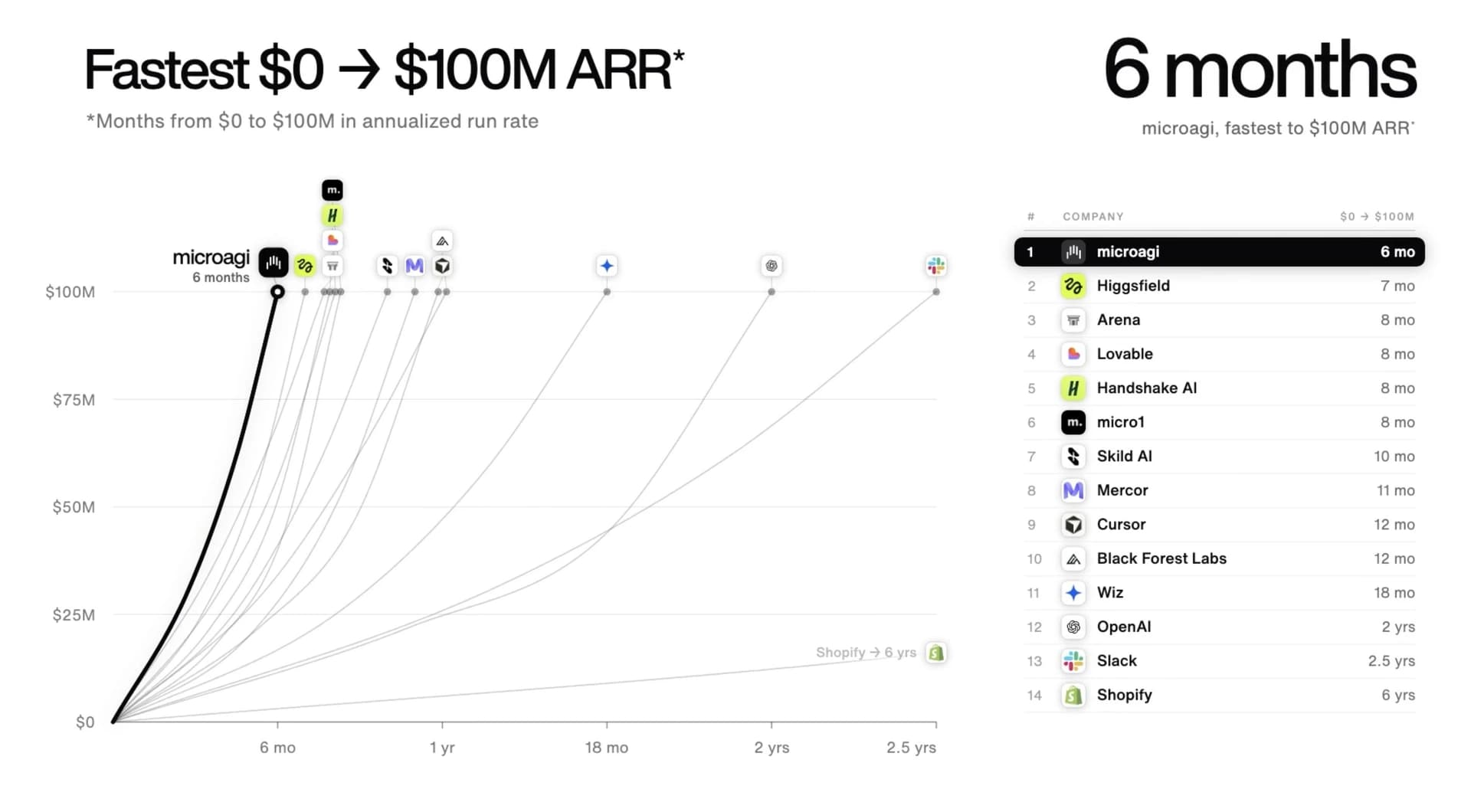
Microagi Says It Reached $100 Million Revenue Run Rate in Six Months
- Published on
- Reading time
- 5 min read
Minerva Emerges From Stealth With $10M for Humanoids Built for Dangerous Work
- Published on
- Reading time
- 3 min read
Clone Shows Torso 3 Hand Demo, Targets November Launch for Redesigned Torso 4
- Published on
- Reading time
- 3 min read
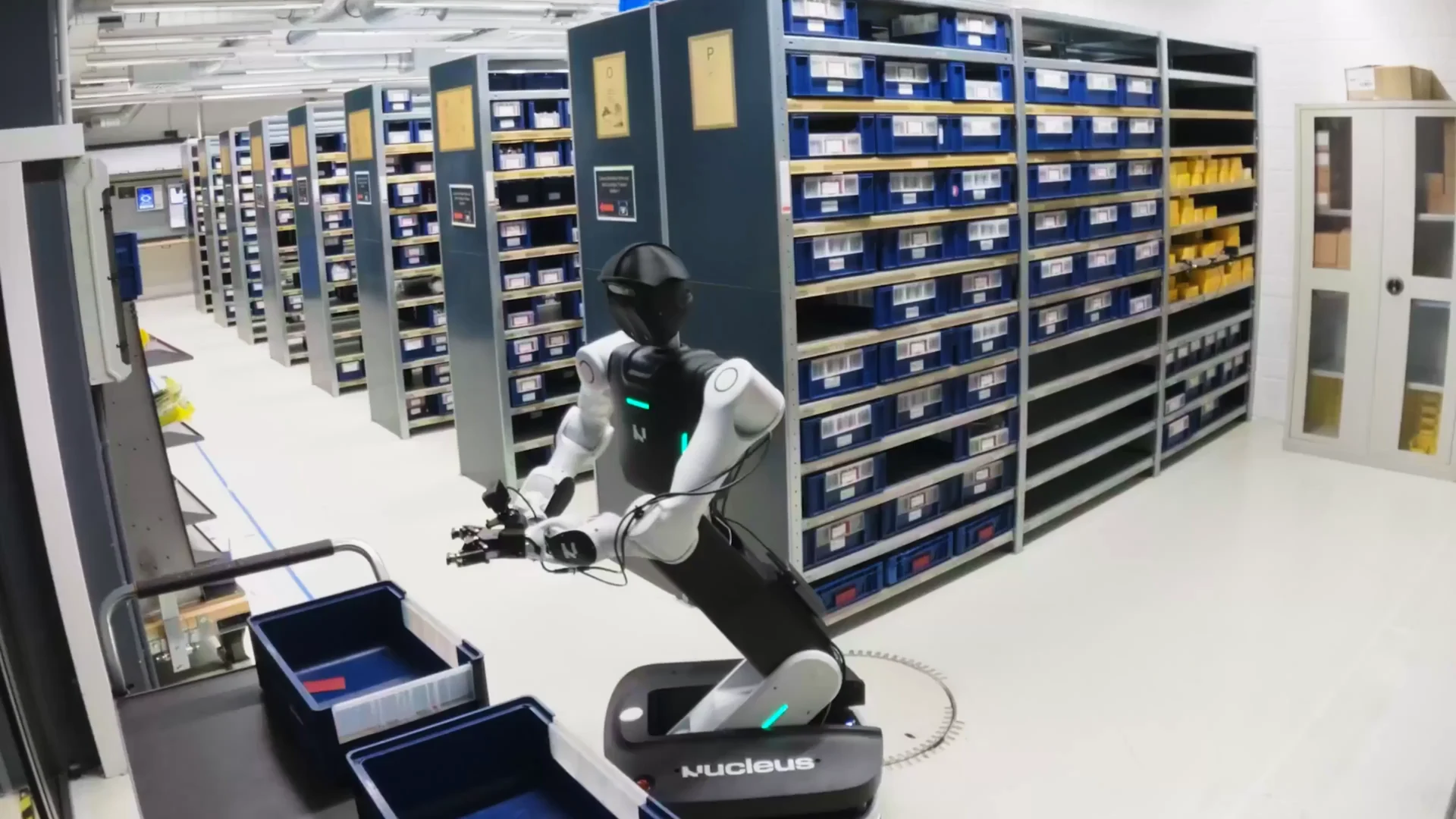
Nucleus Shares Nearly Two Hours of Factory Work, Says Demo Is 60% Autonomous
- Published on
- Reading time
- 4 min read
Humanoid Europe 2026: From Robot Demos to Real Deployment in Munich


The weekly humanoid robotics briefing
One email a week: the launches, funding and research that mattered, with context from Humanoids Daily.
Read recent issues