- Published on
Nucleus Shares Nearly Two Hours of Factory Work, Says Demo Is 60% Autonomous
One tap, and our reporting appears more often in your Google Top Stories. It makes a real difference to a small newsroom.

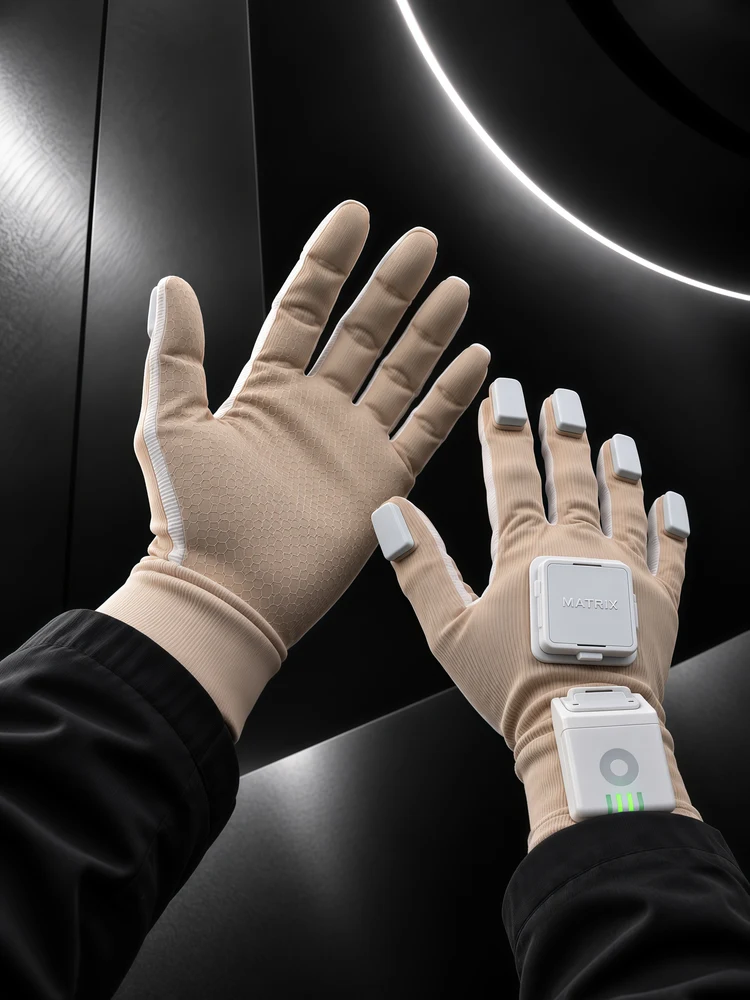
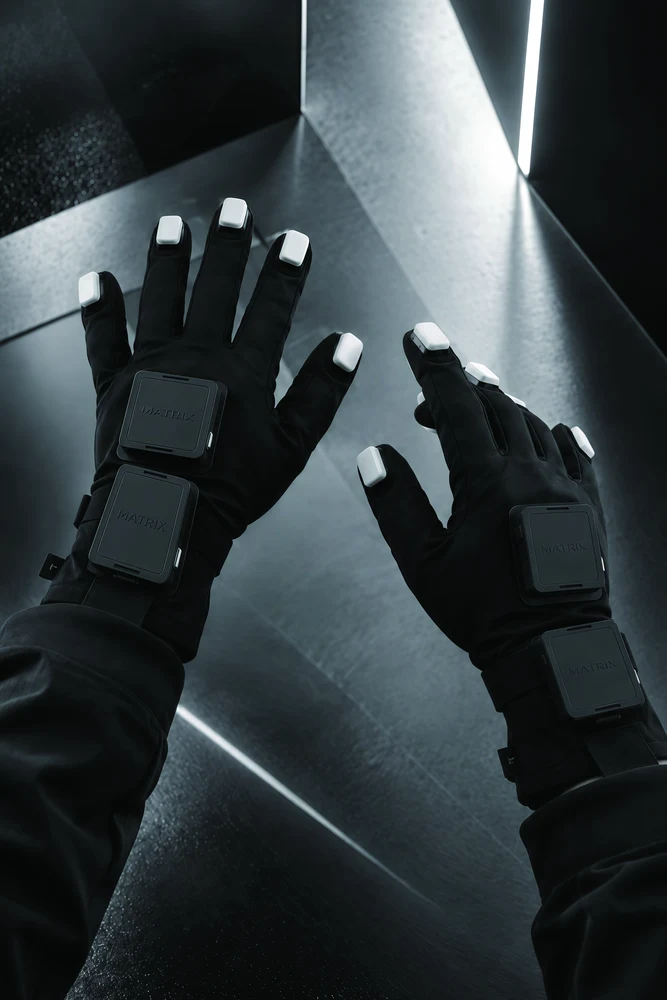

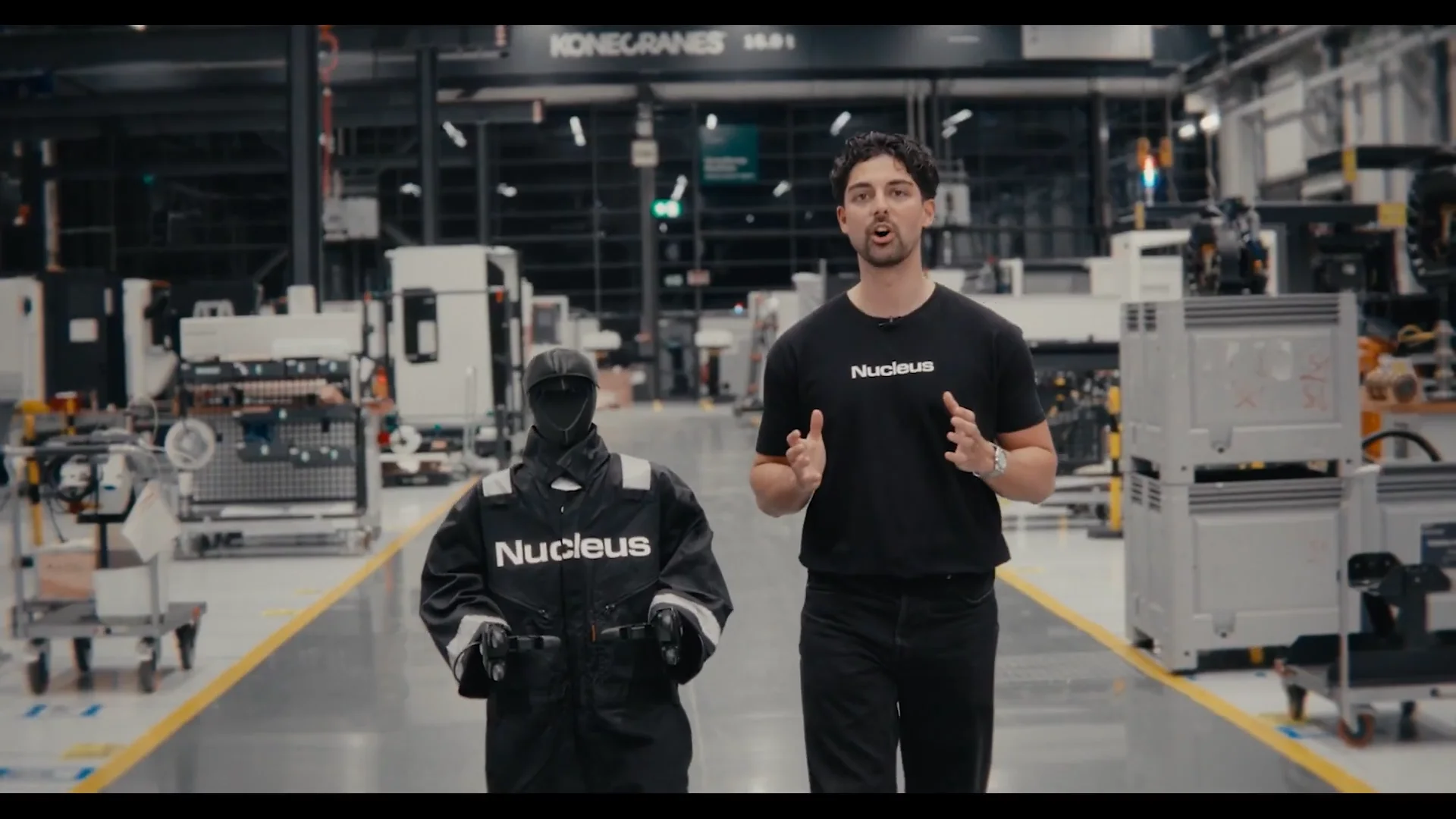
- Nucleus has shared what founder and CEO Melvin Schwarz describes as nearly two hours of uncut factory work, with interventions visible.
- Schwarz told Humanoids Daily that the demonstration was 60% autonomous and 40% teleoperated, without specifying how the split was measured.
- He says the company now regularly runs four-to-six-hour shifts, extending its strategy of combining autonomy with human assistance in industrial deployments.
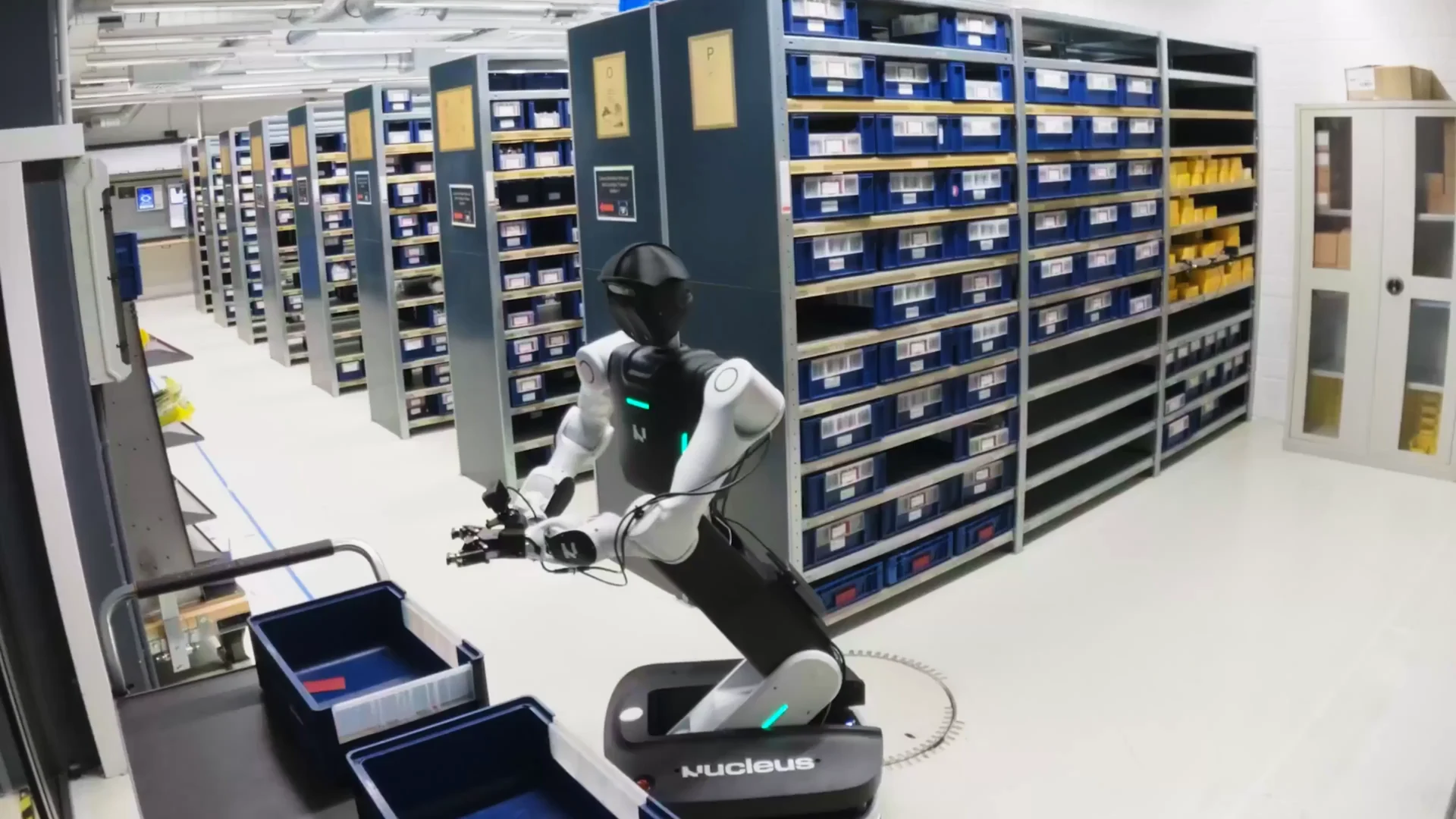
Nucleus has released a lengthy factory demonstration as it works to turn supervised robot deployments into sustained industrial work. In an October 1 update, founder and CEO Melvin Schwarz describes the footage as nearly two hours of uncut operation, with hesitations and interventions left visible.
Asked by Humanoids Daily how much of the demonstration was autonomous, Schwarz said it was 60% autonomous and 40% teleoperated. He did not specify whether those percentages refer to elapsed time, tasks or another measure, and the figures describe this demonstration rather than the company's deployments as a whole.
Schwarz also says Nucleus now regularly runs four-to-six-hour shifts, with the robot completing a job from start to finish. That is a broader operating claim than the duration of the footage shared in this update; it should not be read as four to six hours of uninterrupted autonomy.
From deployment to longer runs
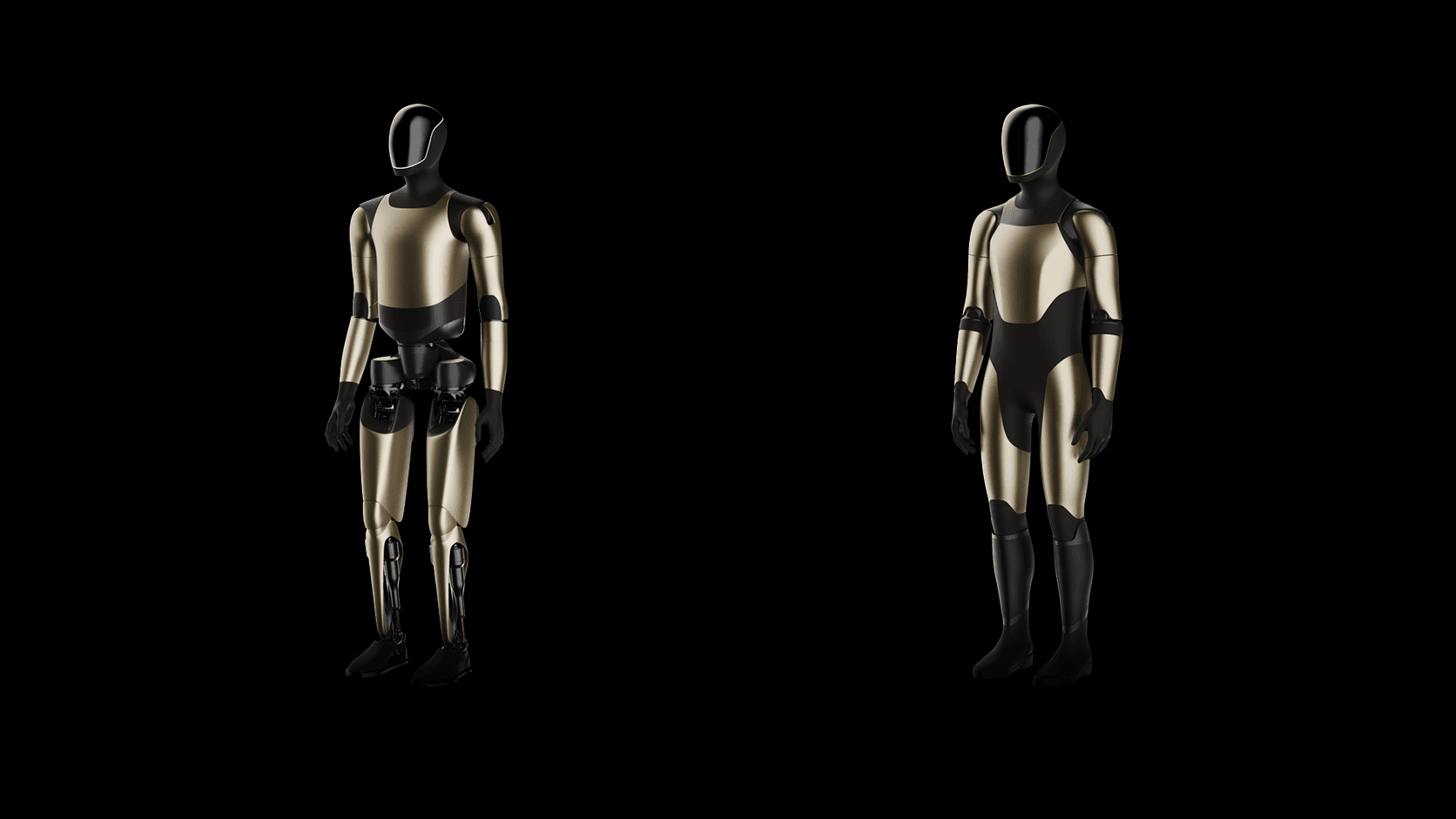
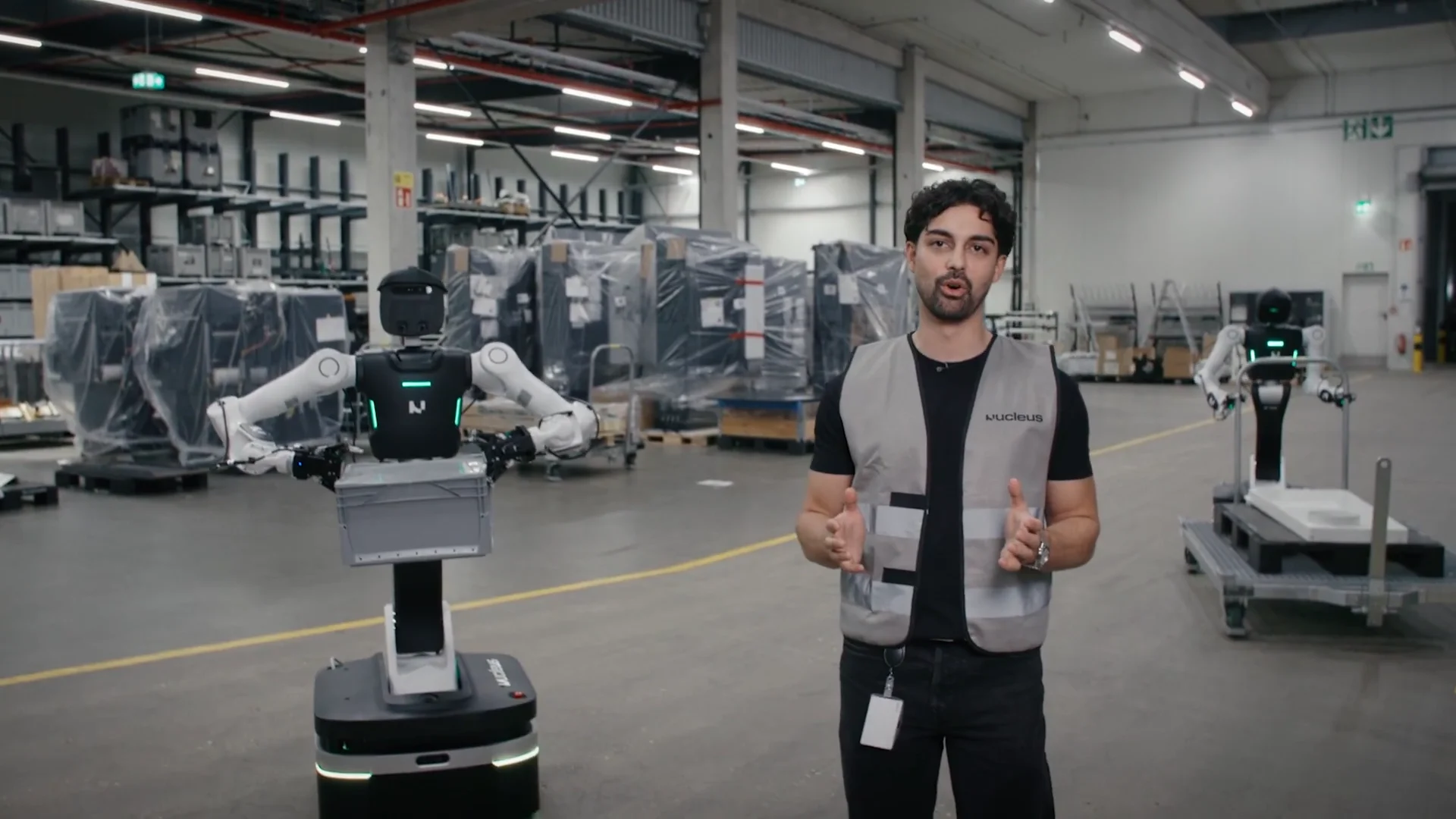
The update follows Nucleus II's switch to a wheeled platform, which Schwarz attributed to customers prioritizing payload, battery endurance and operational safety. At the time, the company said it would show longer runs with failures and recoveries included.
Human assistance has been central to Nucleus's approach since it emerged from stealth. The startup aims to put robots to work before achieving full autonomy, using supervised operation and interventions to gather training data while delivering a service to customers.
The new demonstration offers a longer view of that approach, with a disclosed mix of autonomy and remote control. For the business model, the next question is how much human attention each robot requires: whether operators can supervise several machines, how often they must intervene, and how those requirements change as tasks become more familiar. The 60/40 split alone does not answer those questions, but it gives readers useful context for interpreting the footage.
Share this article
Read next
- Published on
- Reading time
- 5 min read
Nucleus Pivots to Wheeled Base for "Nucleus II" Following Factory Floor Pushback
- Published on
- Reading time
- 4 min read
Europe’s Nucleus Exits Stealth, Deploying Teleoperated Humanoids to Factories on "Day 91"
- Published on
- Reading time
- 3 min read
Clone Shows Torso 3 Hand Demo, Targets November Launch for Redesigned Torso 4
- Published on
- Reading time
- 4 min read
Humanoid Europe 2026: From Robot Demos to Real Deployment in Munich
- Published on
- Reading time
- 3 min read
Eni and Generative Bionics Explore Industrial Humanoids, Smart Footwear and AI Computing
- Published on
- Reading time
- 2 min read
Agile Robots and Hitachi Partner on Physical AI for Manufacturing

The weekly humanoid robotics briefing
One email a week: the launches, funding and research that mattered, with context from Humanoids Daily.
Read recent issues