- Published on
Ultra Raises $50 Million Series A for Warehouse Robots, Deepens Physical Intelligence Partnership
One tap, and our reporting appears more often in your Google Top Stories. It makes a real difference to a small newsroom.

- The $50 million Series A follows a $12 million seed round; the $62 million figure covers both.
- Ultra offers warehouse robots through a service model, charging for installation and ongoing support.
- Its Physical Intelligence partnership already includes live order-packing deployments with human intervention when needed.
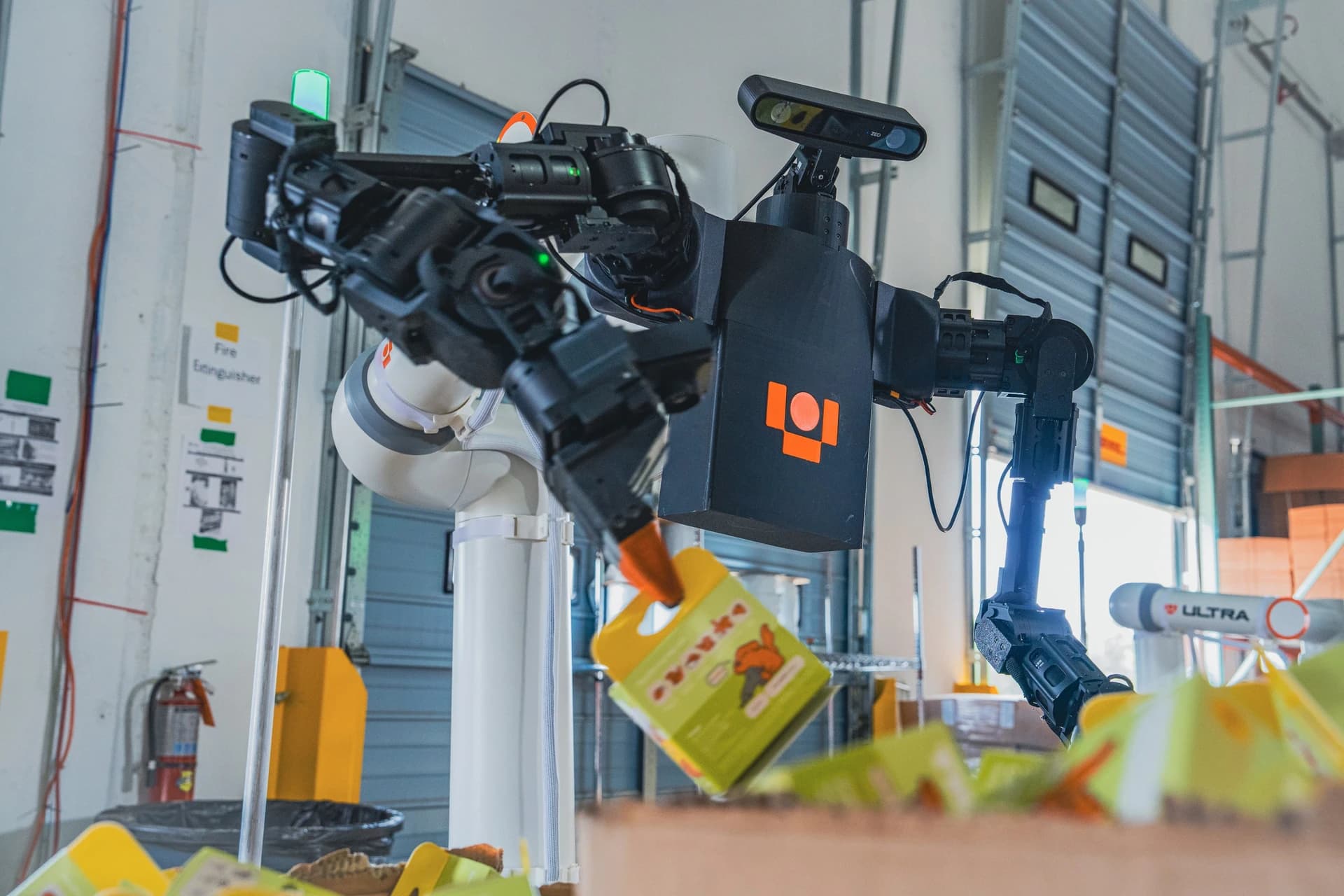
Ultra has raised a $50 million Series A to expand its warehouse robotics business, bringing its announced funding to $62 million including an earlier seed round, according to Fortune.
The Brooklyn-based company is also deepening its relationship with Physical Intelligence, whose robot AI models power its systems. Ultra’s approach combines task-focused hardware, recurring service fees and AI that improves through warehouse deployments.
A warehouse service business
Fortune reports that Framework Ventures led the Series A, with Y Combinator participating. Y Combinator and NextView led the earlier seed round.
CEO Jon Miller Schwartz told the publication that customers pay an initial integration fee followed by monthly hardware and software support charges. Ultra says its robots have packed more than half a million orders. Revenue was not disclosed.
The weekly humanoid robotics briefing
One email a week: the launches, funding and research that mattered, with context from Humanoids Daily.
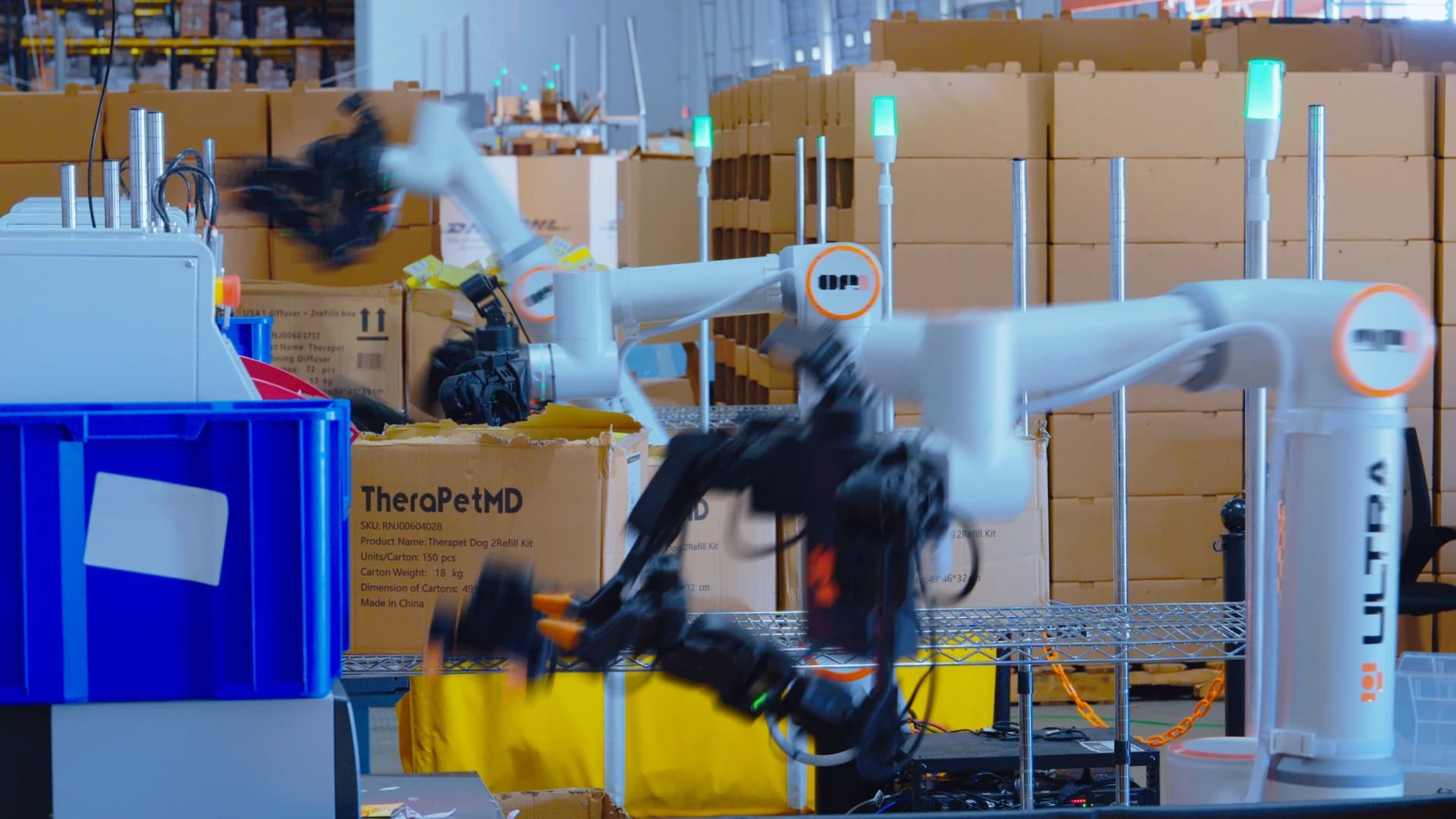
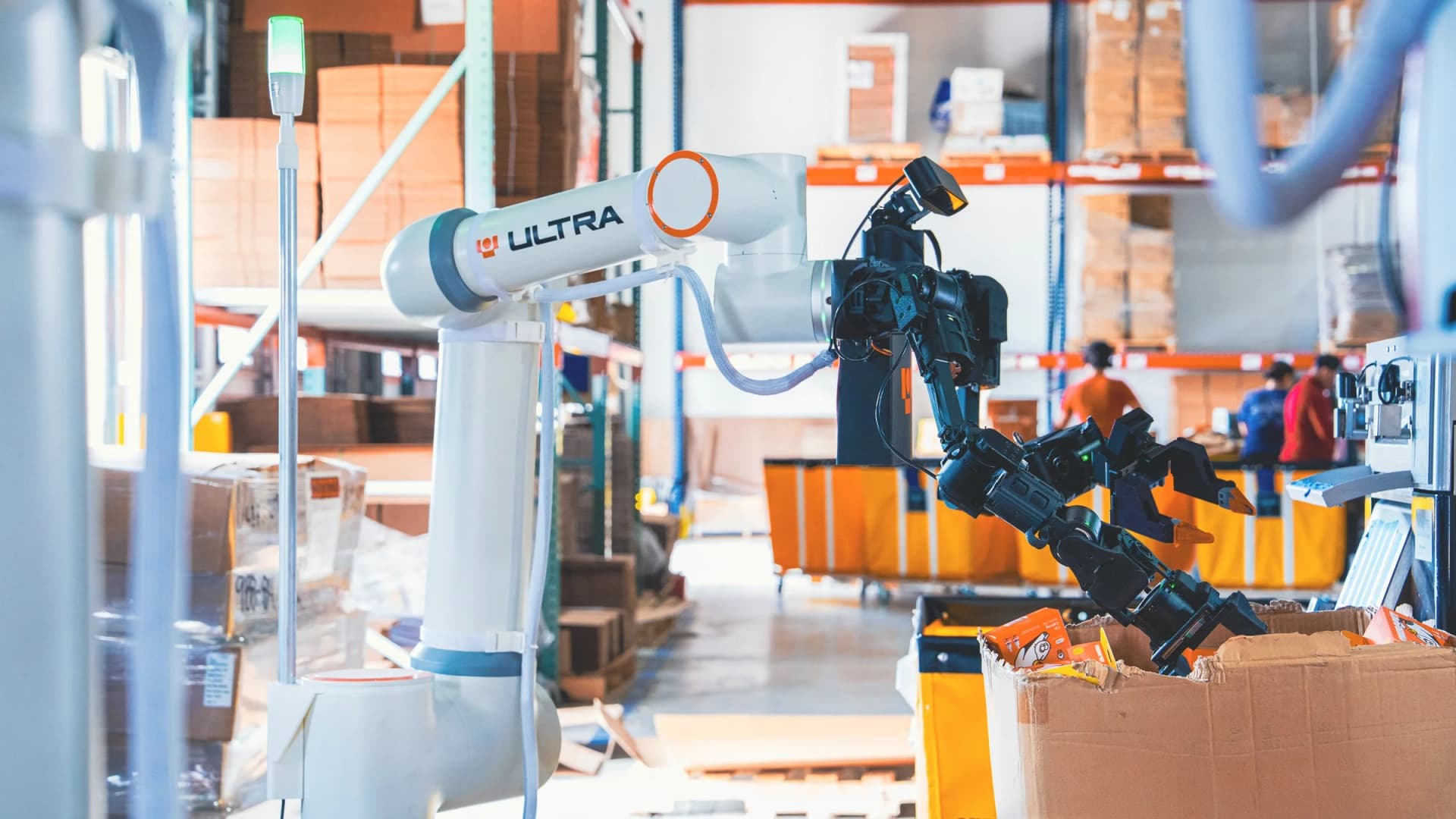
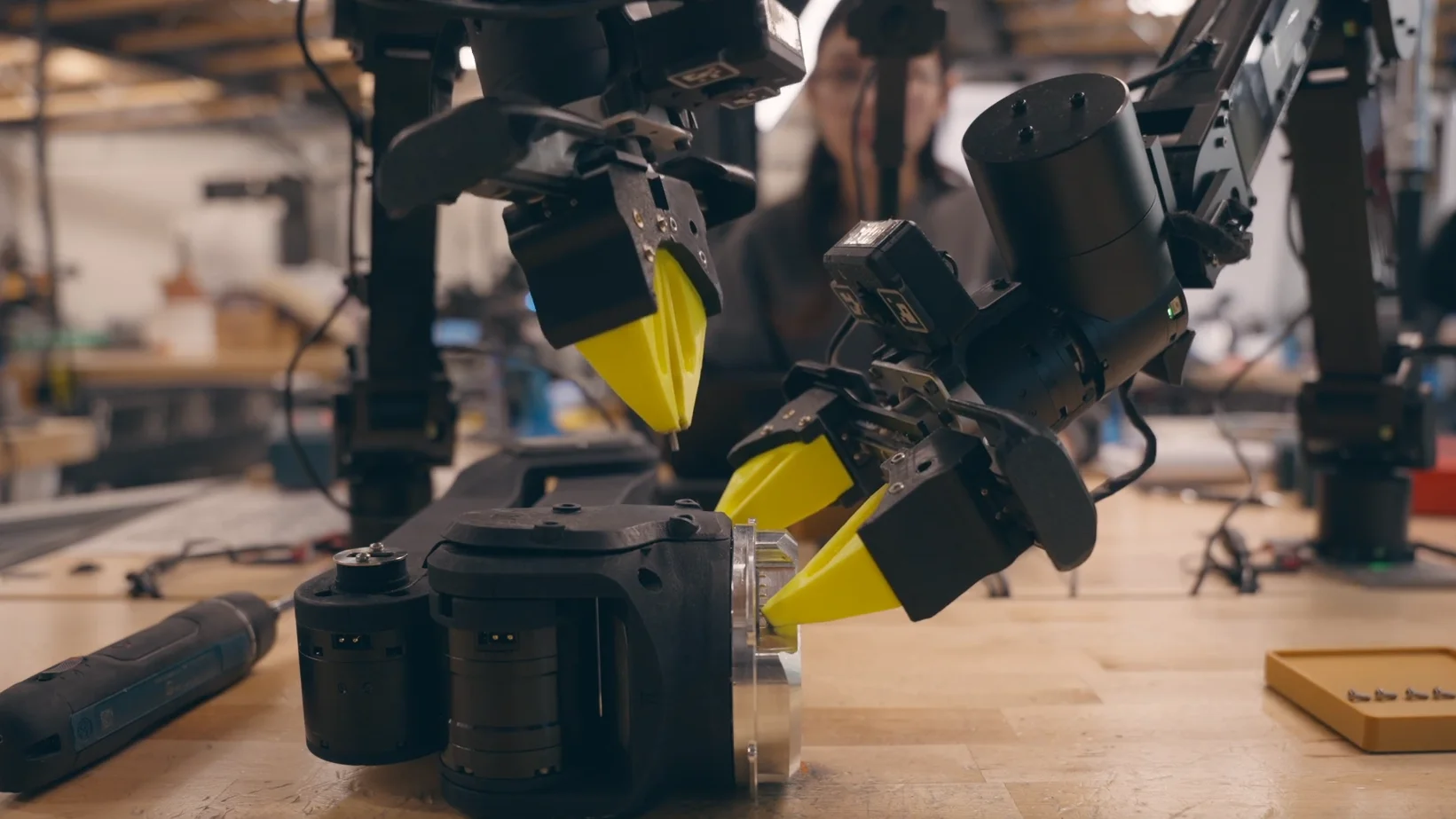
Read recent issuesUltra’s own website identifies its robot as Operator, or OP1, and lists packing, sorting and kitting as target workflows. It describes deployments in New York, Georgia, New Jersey and Texas.
OP1 works from a stationary position on locking caster wheels, which allow it to be moved between work areas. Ultra lists a five-by-five-foot footprint, payloads of up to 10 pounds per arm and power from a standard 120-volt outlet. The design focuses on manipulating goods at workstations rather than walking between them.
An existing Physical Intelligence partnership
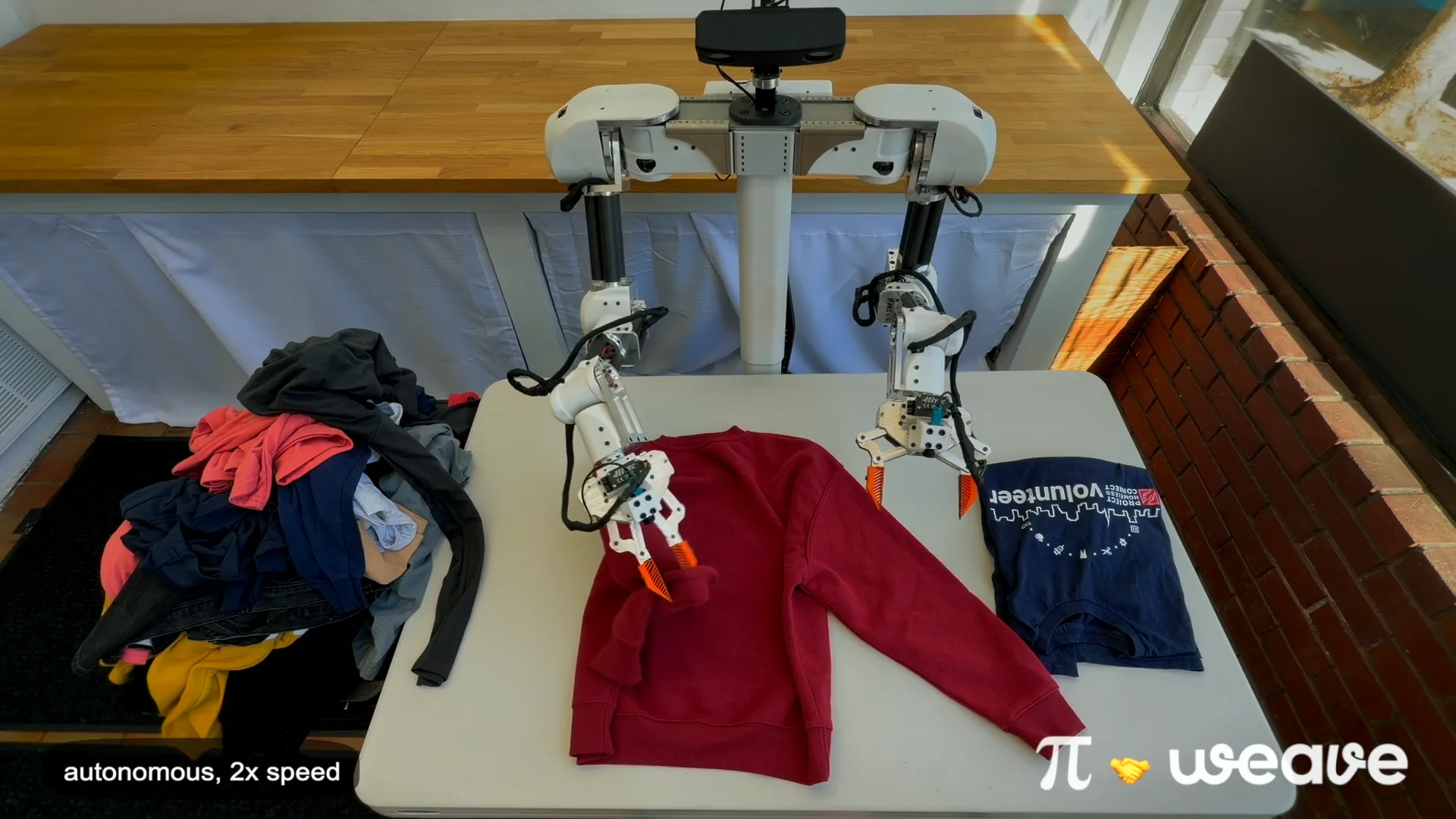
The relationship with Physical Intelligence predates this funding announcement. As we reported in February, Physical Intelligence shared results from its work with Weave and Ultra, including Ultra’s account of using its models to package real customer orders.
Ultra reported a full shift at 96.4% autonomy using π0.6, alongside improvements in throughput and reliability across successive model generations. That figure describes the reported shift, rather than a guarantee across its fleet.
The same account explains that human operators intervene when the model encounters problems. Those interventions help maintain correct order processing while generating data for subsequent training.
This division of work gives Ultra a way to concentrate on hardware, installation and customer operations while drawing on a specialist AI developer’s models. Physical Intelligence, in turn, gets experience and data from robots working outside the lab.
For the broader robotics industry, the business is a useful example of how deployment can be organized around an existing warehouse task. Its progress will depend on reliable output and the cost of support—including human interventions—as the installed fleet grows.
Share this article
Read next
- Published on
- Reading time
- 5 min read
The API-fication of Robotics: Physical Intelligence Unveils Real-World Performance Data with Weave and Ultra
- Published on
- Reading time
- 5 min read
Highline Commerce Taps Ultra Robotics to Automate 30% of Fulfillment in Brooklyn Hub
- Published on
- Reading time
- 6 min read
Physical Intelligence Unveils π0.7: The Rise of Compositional Generalization in Robotics
- Published on
- Reading time
- 4 min read
Physical Intelligence in Talks for $1 Billion Round, Eyeing an $11 Billion Valuation
- Published on
- Reading time
- 4 min read
The Last Millimeter: Physical Intelligence Unveils RL Tokens for Hyper-Fast Precision
- Published on
- Reading time
- 4 min read
Don’t Forget the Salt: Physical Intelligence Equips Robots with 15-Minute "Multi-Scale" Memory


The weekly humanoid robotics briefing
One email a week: the launches, funding and research that mattered, with context from Humanoids Daily.
Read recent issues