- Published on
Figure CEO Claims General-Purpose Robots Are Arriving "Next Year"
One tap, and our reporting appears more often in your Google Top Stories. It makes a real difference to a small newsroom.


Your guide
Rich Robinson
Jee Chee Ren · Executive tour
See China’s AI and robotics ecosystem first-hand.
Six days exploring AI, robotics and advanced manufacturing.
With Rich Robinson, Clinical Professor of Entrepreneurship at Peking University
Beijing · Guangzhou · Shenzhen
29 November–4 December 2026
Referral partnership · We earn a commission on referred bookings.

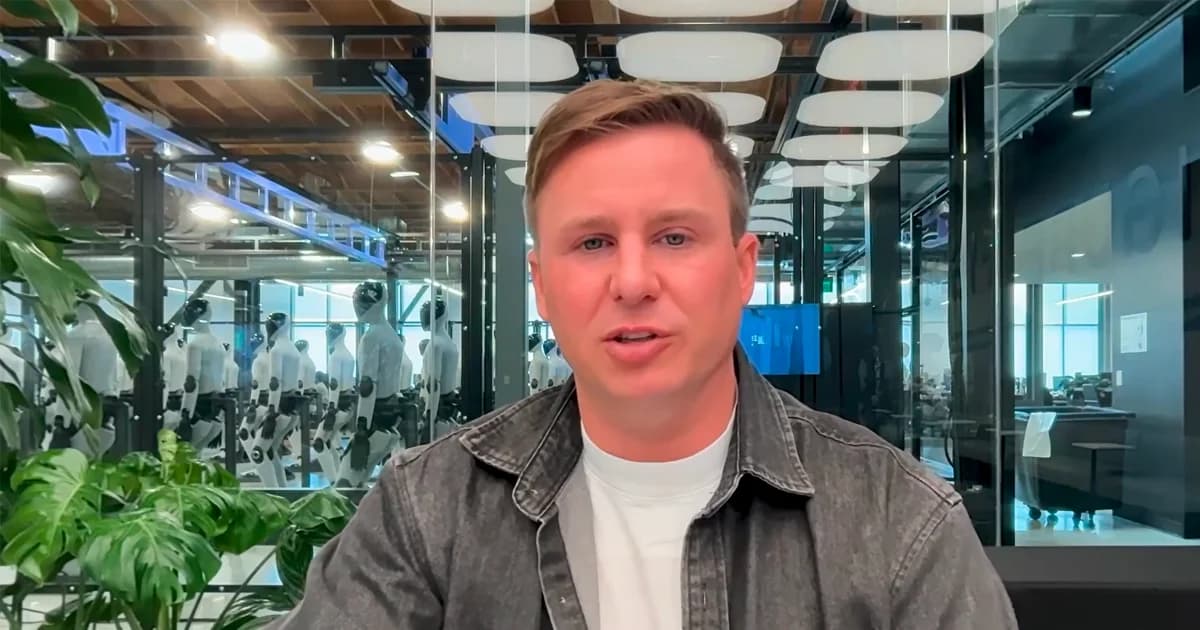
SAN FRANCISCO – In a conversation at the Dreamforce conference, Figure CEO Brett Adcock laid out one of the most aggressive timelines to date for the arrival of truly autonomous, general-purpose humanoid robots. Speaking with Salesforce CEO Marc Benioff, Adcock claimed that the primary obstacle in the field is not manufacturing, but solving intelligence, and predicted his company would achieve this milestone far sooner than most expect.
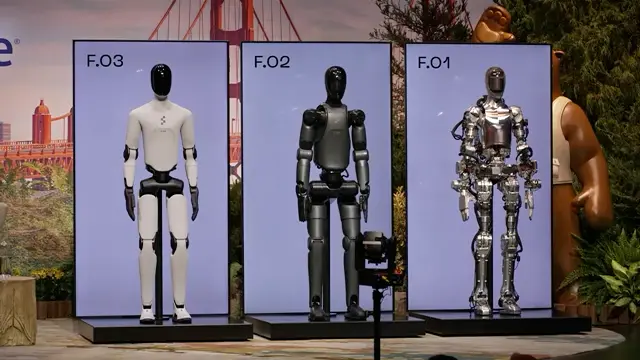
Flanked by static models of the company’s three robot generations—Figure 01, 02, and 03—Adcock argued that the industry is at a turning point. "The manufacturing problem.. it's like problem number 50," he said. "The race right now for humanoids is who can solve general robotics".
An Aggressive Timeline Focused on AI
Adcock's most striking claim was a concrete prediction for when a humanoid could perform a wide range of tasks based on voice commands in an unfamiliar setting. "I think we'll be able to do general purpose work with a humanoid by just through speech and have it do everything you'd want it to do in unseen places like a home it's never been in next year," he stated.
He positioned Figure as being "multiple one or two years beyond anybody else in the world", estimating it would take competitors five years to reach a similar position.
The weekly humanoid robotics briefing
One email a week: the launches, funding and research that mattered, with context from Humanoids Daily.
Read recent issuesThis confidence, he explained, stems from the company's focus on solving the software and intelligence challenge, which he described as a problem of immense scale. A humanoid has 40 degrees of freedom, or joints, leading to a number of possible positions greater than the number of atoms in the universe. "You can't code your way out of this problem," Adcock said, adding that the only solution is through neural networks.
He contrasted Figure’s approach with others in the field, dismissing some public demonstrations as "open loop theatrics" or pre-programmed routines. In contrast, he said, the tasks Figure's robots perform are "done by a neural network", citing their ongoing work at a BMW manufacturing plant in Spartanburg, where a robot has been operating 10 hours a day since April.
Leaning on the Human Form Factor
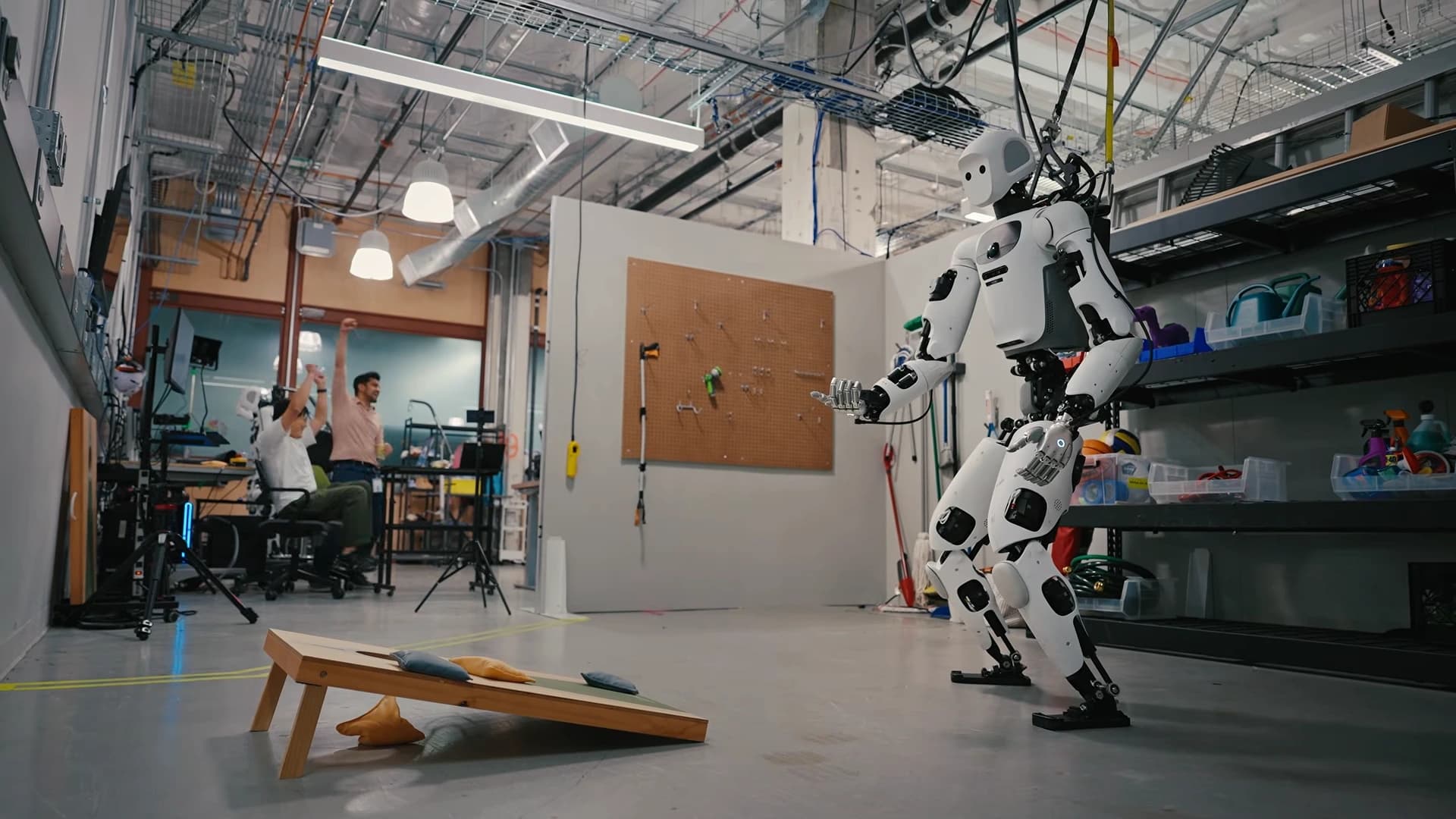
According to Adcock, the key to solving the intelligence problem is leveraging the "unfair advantage" of the humanoid form. Because the robots share the same basic structure as humans, they can learn from the vast repository of existing human video data to navigate spaces and manipulate objects. This strategy is central to the design of the company’s latest robot, the Figure 03, which was engineered with a sophisticated sensor suite specifically to support its "Helix" AI model.
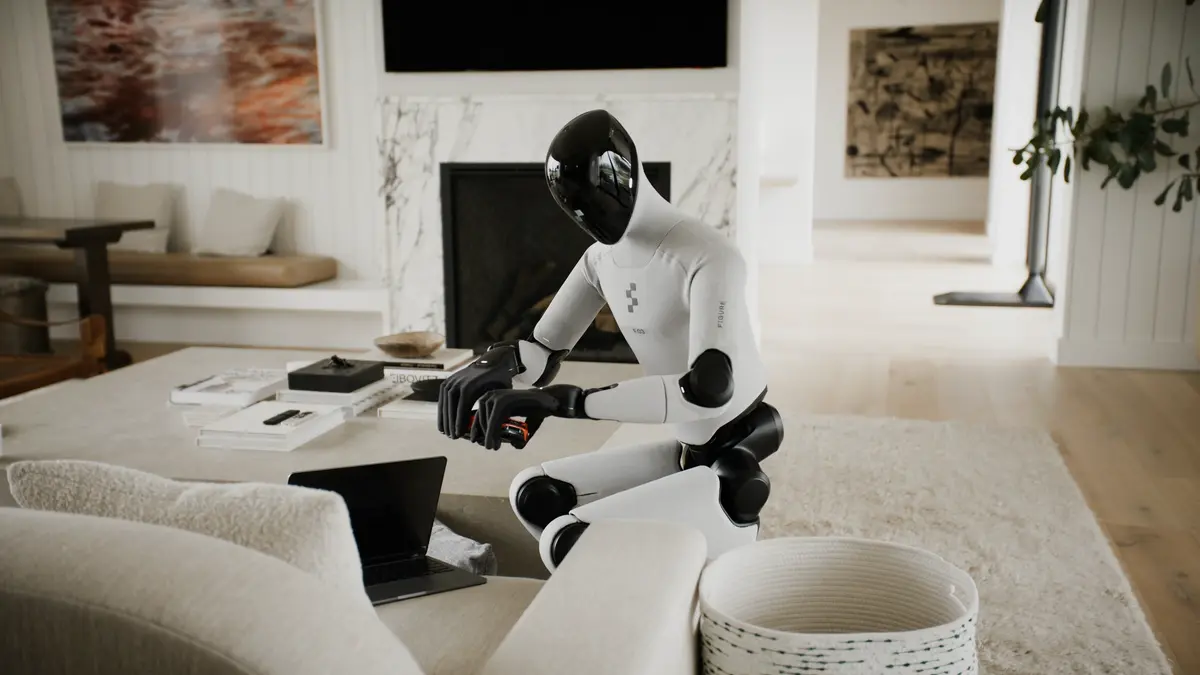
This learning is collective. "Once one robot knows how to move packages or do your dishes or whatever, every robot in the fleet knows this," he said.
While downplaying manufacturing as the most critical current problem, Adcock confirmed the company is scaling up. Figure has established a facility called "BotQ" where it is "trying to make thousands of robots". The facility, detailed in the Figure 03 announcement, is designed with an initial capacity of 12,000 robots per year. He also revealed that the company intends to put its own robots on its manufacturing line this year, a first step toward a long-term vision of self-replicating systems.
A Sci-Fi Vision with Civilian Focus
Adcock's long-term vision is ambitious, referencing concepts like self-replicating Von Neumann probes colonizing the galaxy and building a company worth "tens of trillions" of dollars. "We're not building robots, we're building a new species, really," he remarked.
Despite the futuristic scope and questions about potential military applications, Adcock was clear about the company's current focus. After being repeatedly contacted by the Department of Defense, he stated that Figure has no interest in militarizing its technology. "It's just like not interesting for us," he said. "Shipping robots in the home and the workforce. That's what gets us excited".
For now, the vision of a galaxy populated by autonomous machines remains science fiction. But if Adcock's timeline holds, the first proof points for a world populated by general-purpose humanoids could arrive much sooner than anyone thought.
Share this article
Read next
- Published on
- Reading time
- 2 min read
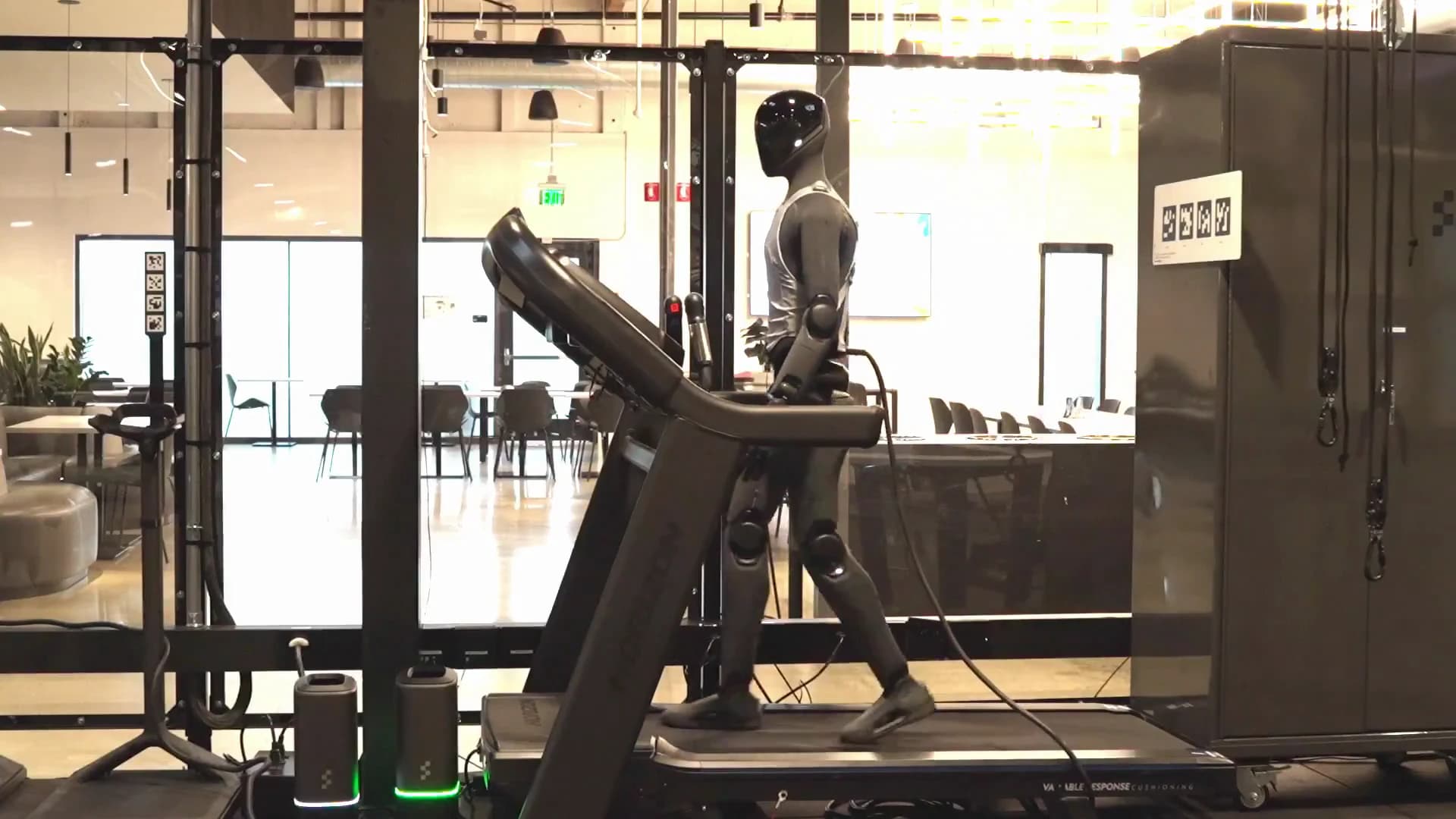
Figure’s Humanoid Has Walked 348 Miles on a Treadmill—and It’s Still Going
- Published on
- Reading time
- 5 min read
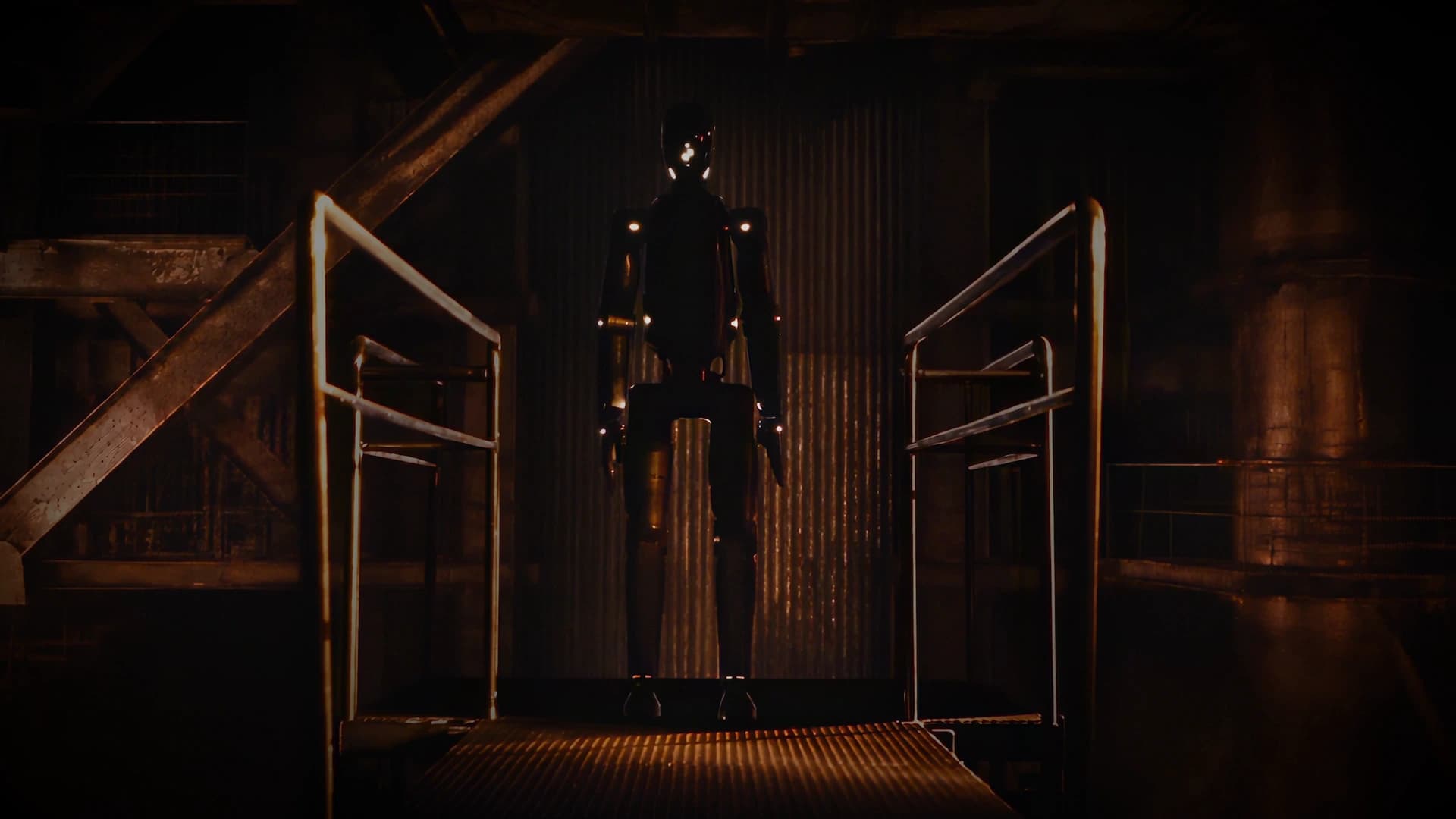
Figure Melts Figure 02 With Arnold Schwarzenegger in a Terminator-Style Sendoff
- Published on
- Reading time
- 3 min read
Hasta La Vista, Figure 02: Adcock Teases a Terminator-Style Sendoff
- Published on
- Reading time
- 5 min read
Figure Joins NVIDIA’s Open Agent Safety Platform as Humanoid Deployment Approaches
- Published on
- Reading time
- 2 min read
Brett Adcock’s vehicle clip echoes Figure 03’s delivery demo
- Published on
- Reading time
- 6 min read
Figure CEO Brett Adcock Claims Humanoids Are Already Delivering ROI Amid Severe Labor Shortages

The weekly humanoid robotics briefing
One email a week: the launches, funding and research that mattered, with context from Humanoids Daily.
Read recent issues