- Published on
Gemini 4 Argon Takes Apollo From Human Video to Seven Straight Cornhole Shots
One tap, and our reporting appears more often in your Google Top Stories. It makes a real difference to a small newsroom.


Your guide
Rich Robinson
Jee Chee Ren · Executive tour
See China’s AI and robotics ecosystem first-hand.
Six days exploring AI, robotics and advanced manufacturing.
With Rich Robinson, Clinical Professor of Entrepreneurship at Peking University
Beijing · Guangzhou · Shenzhen
29 November–4 December 2026
Referral partnership · We earn a commission on referred bookings.
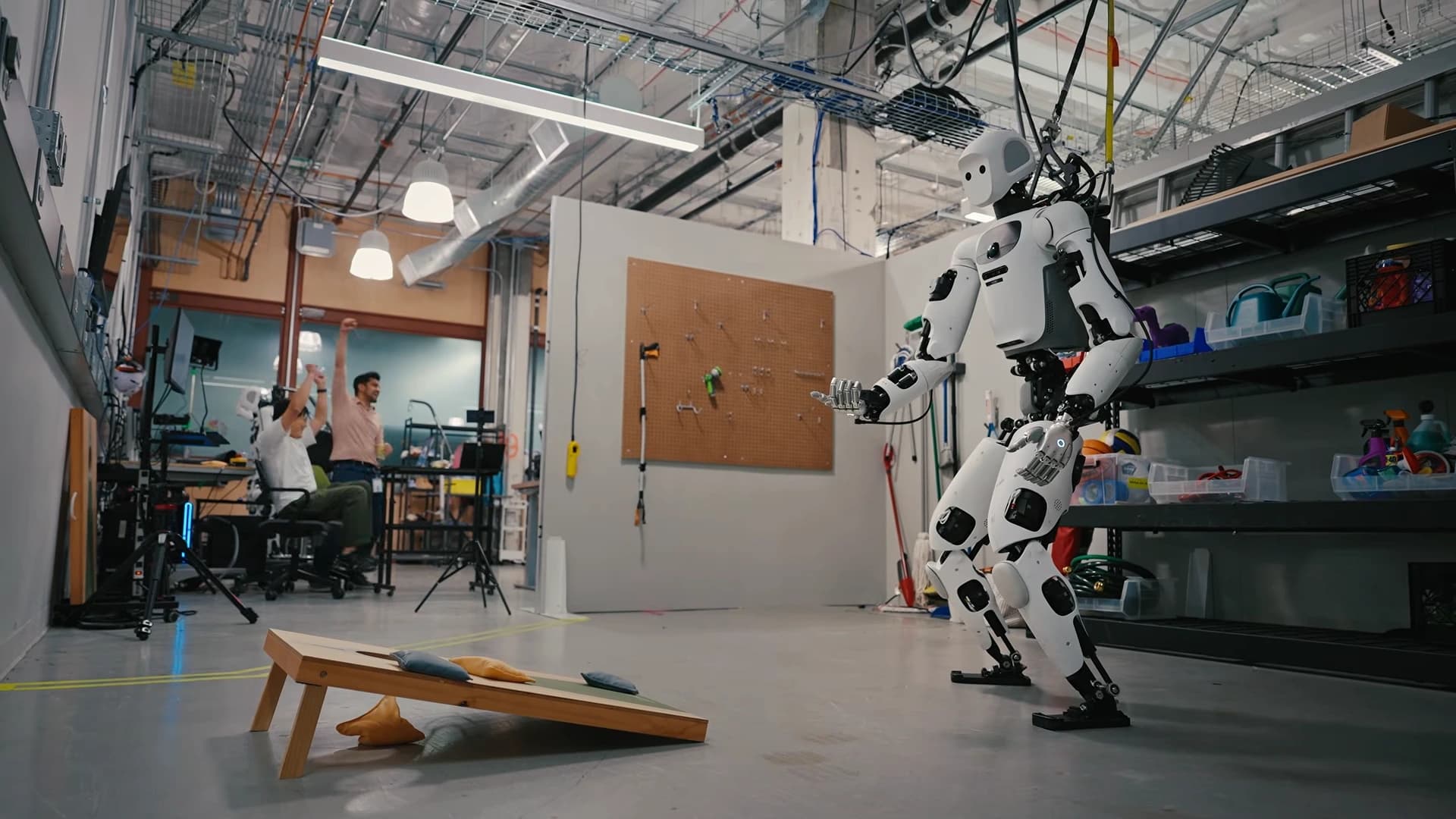
- Google says Apollo sank seven consecutive cornhole shots after Argon used human video, simulation practice and real-world feedback to develop the throw.
- Argon’s reported 87% ERQA score measures embodied reasoning questions, separately from physical robot performance.
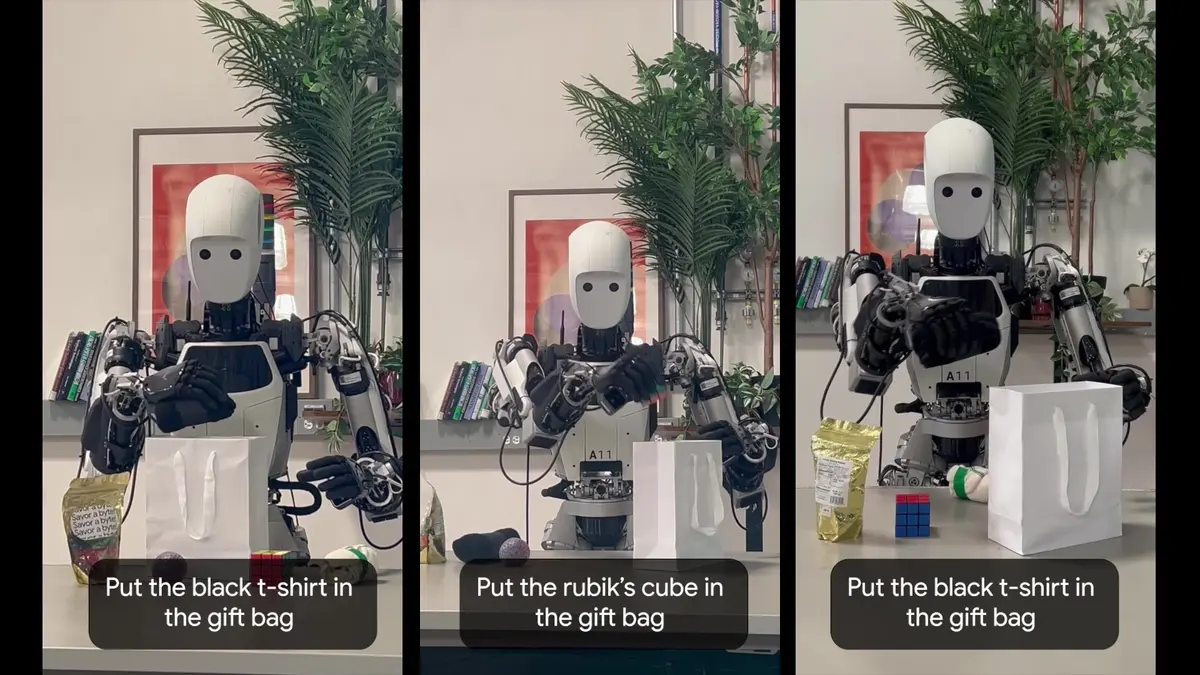
- Google’s examples span real hardware, physics simulation and generated video; each demonstrates a different part of the development process.
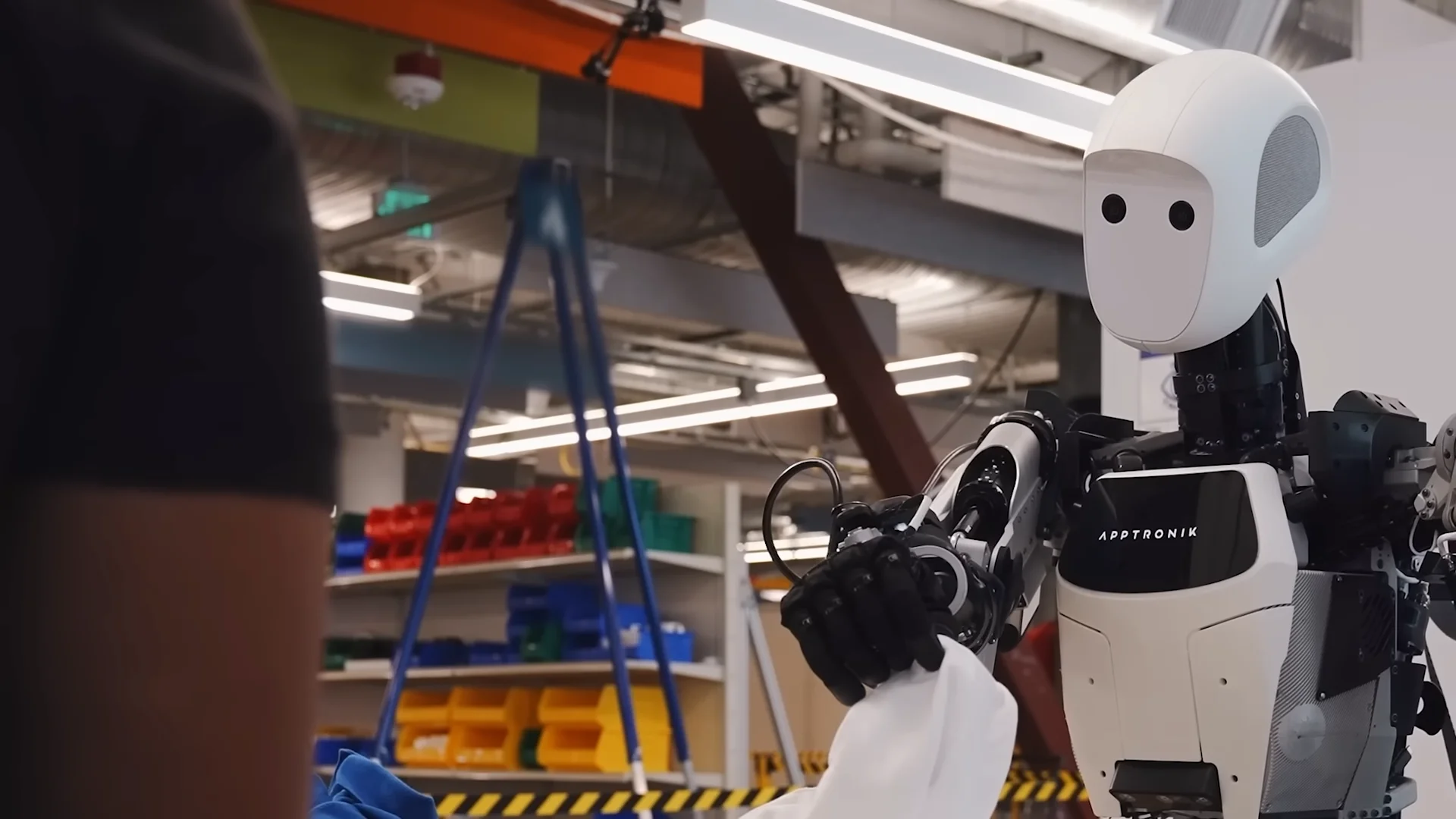
Google DeepMind is using Gemini 4 Argon to connect video understanding, simulation building and physical robot control. In an internal demonstration announced on October 13, Google says Apptronik’s Apollo 2 humanoid learned a cornhole throw through a video-to-simulation workflow and then sank seven consecutive shots on real hardware.
The demonstration accompanies Argon’s wider release and a robotics developer post covering control, simulation reconstruction, data annotation and iterative improvement.
Watching, practicing and adjusting
In the accompanying demo, researchers describe showing Gemini a human cornhole video and prompting it to practice in MuJoCo. The model reviews unsuccessful attempts and revises its approach.
A segment presented as the model’s own summary describes mapping the human arm swing and release onto the robot, locating the board using its cameras, and building a simulation. It then widens the stance and adjusts the swing to clear the hip. On hardware, the account describes further release adjustments based on where bags land.
The weekly humanoid robotics briefing
One email a week: the launches, funding and research that mattered, with context from Humanoids Daily.
Read recent issuesThat last step matters: the demonstrated workflow includes feedback from physical attempts. The seven-shot streak does not establish a first-attempt success rate. Google has not provided a total attempt count or a breakdown of the human engineering behind this cornhole experiment in the linked posts.
Google says the pipeline can reduce weeks of manual simulation modeling to hours. The practical promise is a shorter cycle between observing a task, constructing a test environment and improving the resulting movement.
Reasoning beyond task planning
Russell Mendonca, a Google DeepMind robotics researcher whose profile lists previous work on Tesla’s Optimus AI team, said Argon had changed his expectations for language models in robotics.
“Reasoning can be a powerful mechanism for generalization,” he wrote, extending the point to low-level control as well as semantic planning.
The published examples still involve robotics infrastructure. Google’s arm-control demonstration, for example, gives Argon a calibrated visual grid and predefined motion commands. The materials do not establish that the general-purpose model directly replaces every high-frequency controller.
In a second post, Mendonca described an iterative planning loop using the Gemini Omni world model. Argon writes a plan, inspects the generated outcome and revises it. Google illustrates this with a video rollout of hands arranging tiles to spell ARGON. That is a generated video plan, distinct from Apollo’s physical trial.
A broader development toolkit
Other examples include Spot practicing foot-pedal bin disposal in MuJoCo and Argon reconstructing simulation environments from camera recordings or sketches. Google also reports generating more than 4,500 simulated episodes for VLA fine-tuning, raising real-world task success from 56% to 75% and reducing completion time from 35 to 24 seconds in that evaluation.
The reported 87% on ERQA measures something different. The benchmark repository describes 400 multiple-choice questions combining images and text about spatial reasoning and real-world scenarios. It is a reasoning test, not an 87% robot task-completion rate.
We previously covered Gemini Robotics 2’s whole-body control and multi-robot coordination. Argon extends the picture with examples of a general-purpose model building simulations, generating control code and refining actions through feedback.
The announcement follows DeepMind’s plans for a new Cambridge-area robotics lab. Argon adds a concrete software direction to that expansion: using a general-purpose model to help construct, test and refine the systems that make robots act.
Share this article
Read next
- Published on
- Reading time
- 7 min read
Google DeepMind Unveils Gemini Robotics 2, Bringing Whole-Body Intelligence and Multi-Robot Teams to Physical AI
- Published on
- Reading time
- 4 min read
Agile Robots and Google DeepMind Partner to Bring Gemini to the Factory Floor
- Published on
- Reading time
- 5 min read
Waymo Leverages Genie 3 to Launch "Waymo World Model" for Hyper-Realistic Simulation
- Published on
- Reading time
- 5 min read
Google DeepMind Robotics Director: We Need "One More Big Breakthrough" to Solve General Purpose Robots
- Published on
- Reading time
- 5 min read
Google DeepMind Unveils On-Device Gemini Robotics, Pushing AI Closer to Autonomous Dexterity
- Published on
- Reading time
- 3 min read
Cartwheel Robotics Founder Scott LaValley Joins Google DeepMind

The weekly humanoid robotics briefing
One email a week: the launches, funding and research that mattered, with context from Humanoids Daily.
Read recent issues