- Published on
Xpeng Equips IRON Humanoid with 'VLT' AI System, Targeting Autonomy and Mass Production
One tap, and our reporting appears more often in your Google Top Stories. It makes a real difference to a small newsroom.


Your guide
Rich Robinson
Jee Chee Ren · Executive tour
See China’s AI and robotics ecosystem first-hand.
Six days exploring AI, robotics and advanced manufacturing.
With Rich Robinson, Clinical Professor of Entrepreneurship at Peking University
Beijing · Guangzhou · Shenzhen
29 November–4 December 2026
Referral partnership · We earn a commission on referred bookings.
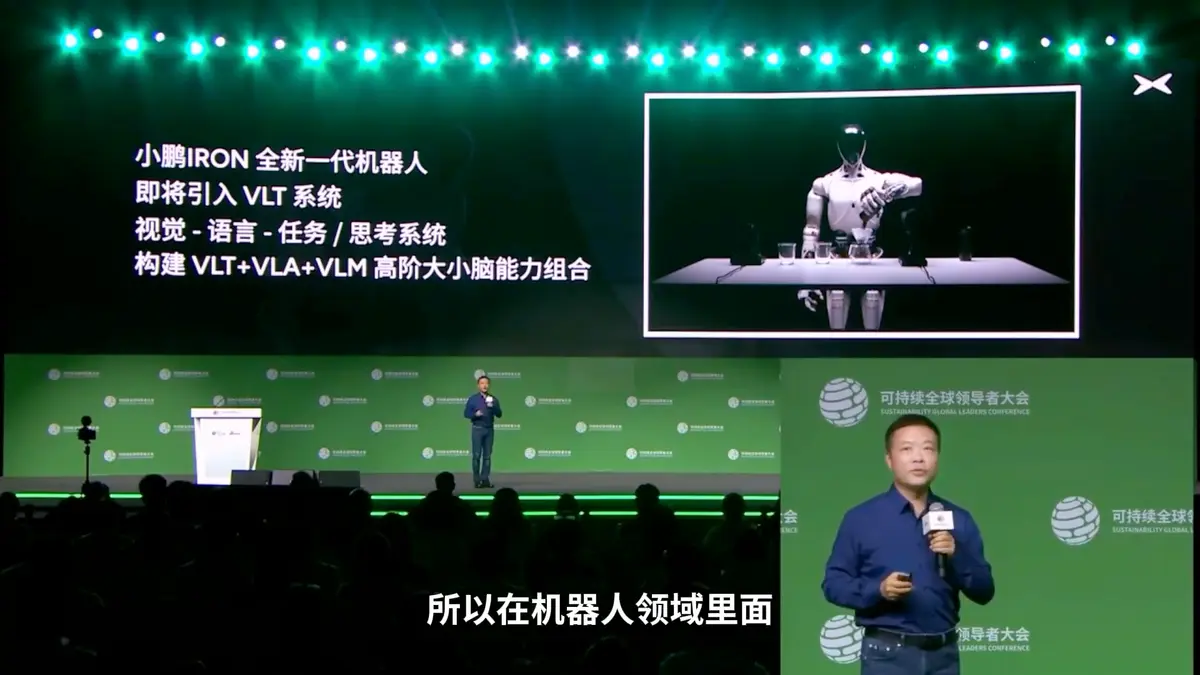
Chinese electric vehicle and technology firm Xpeng is equipping its next-generation humanoid robot, IRON, with a new AI system designed to move it from a teleoperated machine to an autonomous agent. In a speech at the 2025 Sustainable Global Leaders Conference on October 16, Chairman and CEO He Xiaopeng revealed the robot will be powered by a "Vision-Language-Task/Thinking" (VLT) system, with a formal unveiling planned for the company's Tech Day in November.
The announcement signals Xpeng's deepening commitment to robotics and places its strategy squarely in line with a global trend toward developing sophisticated, multi-modal AI models as the "brains" for general-purpose robots.
From Commands to 'Thinking'
According to He, the VLT system is designed to process visual and language inputs to directly generate a task system. He added that the long-term goal is for this capability to "evolve into thinking."
This new system is part of a larger, more complex architecture that Xpeng is building. He described a "VLT+VLA+VLM high-level cerebellum and cerebrum capability combination" composed of more than five operating systems. "Only in this way can we truly transform the current remote-controlled robots into autonomous robots," He stated, highlighting the strategic pivot toward genuine autonomy.
The weekly humanoid robotics briefing
One email a week: the launches, funding and research that mattered, with context from Humanoids Daily.
Read recent issuesThis multi-model approach, separating high-level reasoning from low-level action, echoes strategies seen elsewhere in the industry. It is conceptually similar to Google DeepMind's recent Gemini 1.5 robotics framework, which uses one model for embodied reasoning and another vision-language-action (VLA) model for execution.
A Familiar Playbook
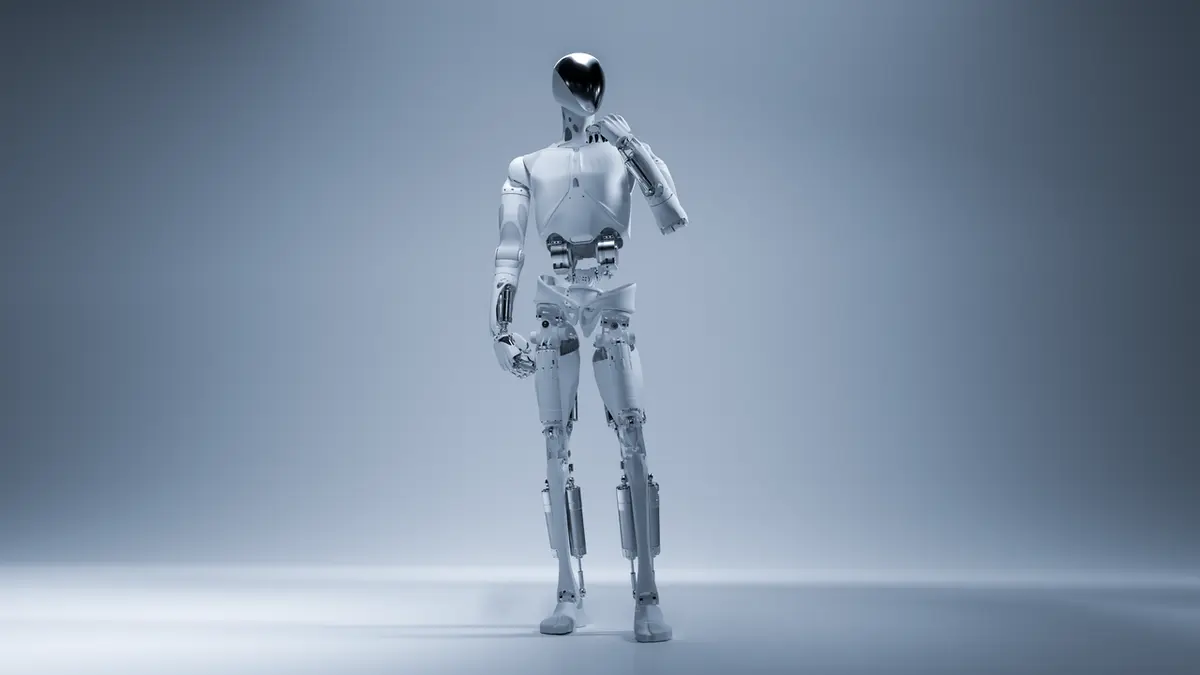
Xpeng's strategy of leveraging its expertise in automotive AI for its humanoid program draws a direct parallel to its biggest rival, Tesla. He Xiaopeng noted that, alongside the robotics work, Xpeng is also testing a new generation VLA model for its autonomous driving systems. This mirrors Tesla's stated ambition to unify the AI models for its self-driving vehicles and its Optimus robot, betting that a single, powerful AI foundation can master navigation and interaction in the physical world, whether on four wheels or two legs.
The focus on vision-language-action models is now an industry standard. Robotics firms like Figure AI with its Helix model and 1X with Redwood AI are all developing their own VLA systems to enable robots to understand and perform complex, language-driven tasks in unstructured environments.
The Path to Commercialization
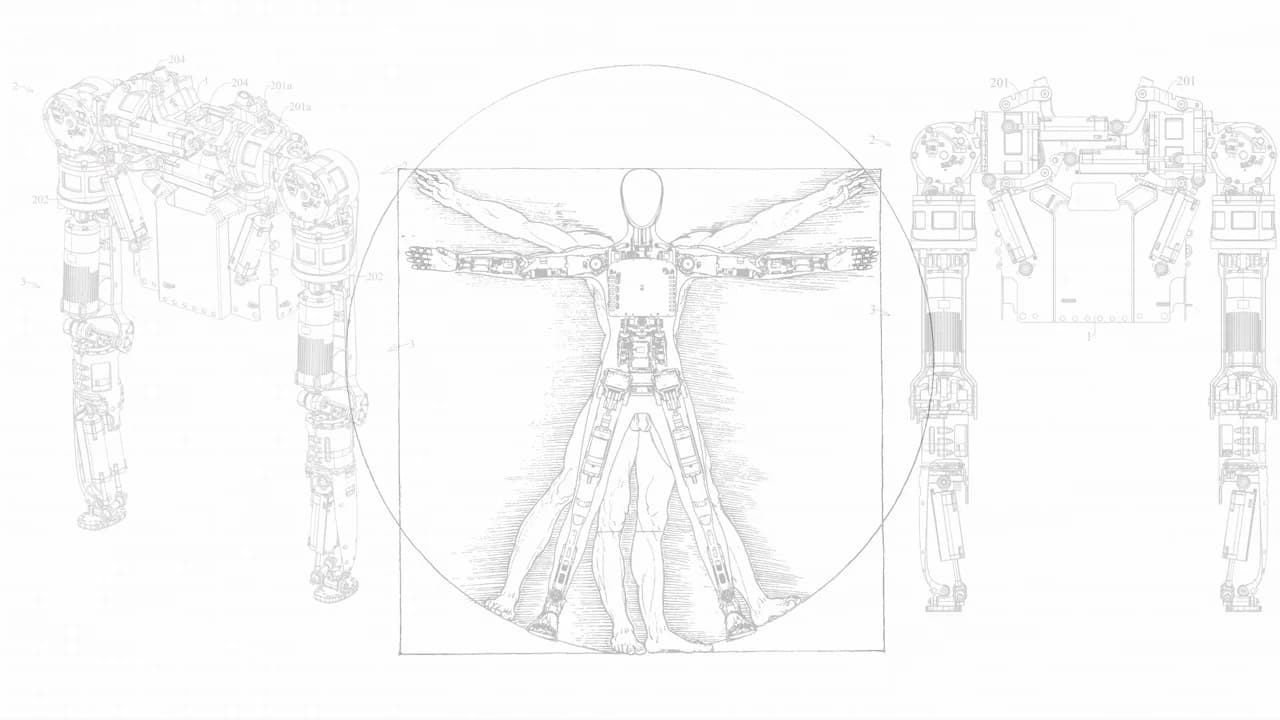
Xpeng's ambitions extend beyond research and development. He Xiaopeng predicted that humanoid robots will bring "truly huge changes to many industries globally in the next 2 to 5 years." This timeline suggests a push toward commercial deployment around 2027-2030. Reports indicate the company has been securing key patents for robot design and posture generation, building a foundation for a serious commercial play.
While full technical specifications of the VLT system remain under wraps, the announcement solidifies Xpeng's position as a serious contender in the humanoid race. The upcoming November Tech Day will be closely watched for further details on how the company's "thinking" AI will translate from a high-level concept into tangible robotic capabilities.
Share this article
Read next
- Published on
- Reading time
- 6 min read
Inside XPENG’s Bet on IRON: He Xiaopeng on Why the Hardest Path in Humanoid Robotics Is Never Crowded
- Published on
- Reading time
- 6 min read
XPENG Launches Mass Production of IRON Humanoid
- Published on
- Reading time
- 4 min read
XPENG's Head of Robotics Admits Hardware is 'Bottleneck' as 2026 Production Goal Looms
- Published on
- Reading time
- 4 min read
Xpeng to Break Ground on "Full-Chain" Humanoid Factory to Meet 2026 Production Goal
- Published on
- Reading time
- 3 min read
XPENG CEO Targets Late 2026 for Massive IRON Deployment
- Published on
- Reading time
- 5 min read
Simulating the 'Masterpiece': XPENG Robotics Unveils Design Framework and Lattice Musculature for IRON


The weekly humanoid robotics briefing
One email a week: the launches, funding and research that mattered, with context from Humanoids Daily.
Read recent issues