- Published on
Figure CEO Brett Adcock Claims Humanoids Are Already Delivering ROI Amid Severe Labor Shortages
One tap, and our reporting appears more often in your Google Top Stories. It makes a real difference to a small newsroom.


- Figure AI founder Brett Adcock asserts that the primary challenge in the humanoid sector is achieving high-level onboard AI, not hardware mass manufacturing.
- Adcock revealed that early commercial partners are already achieving a return on investment, driven by severe labor shortages and annual turnover rates exceeding 100% in some sectors.
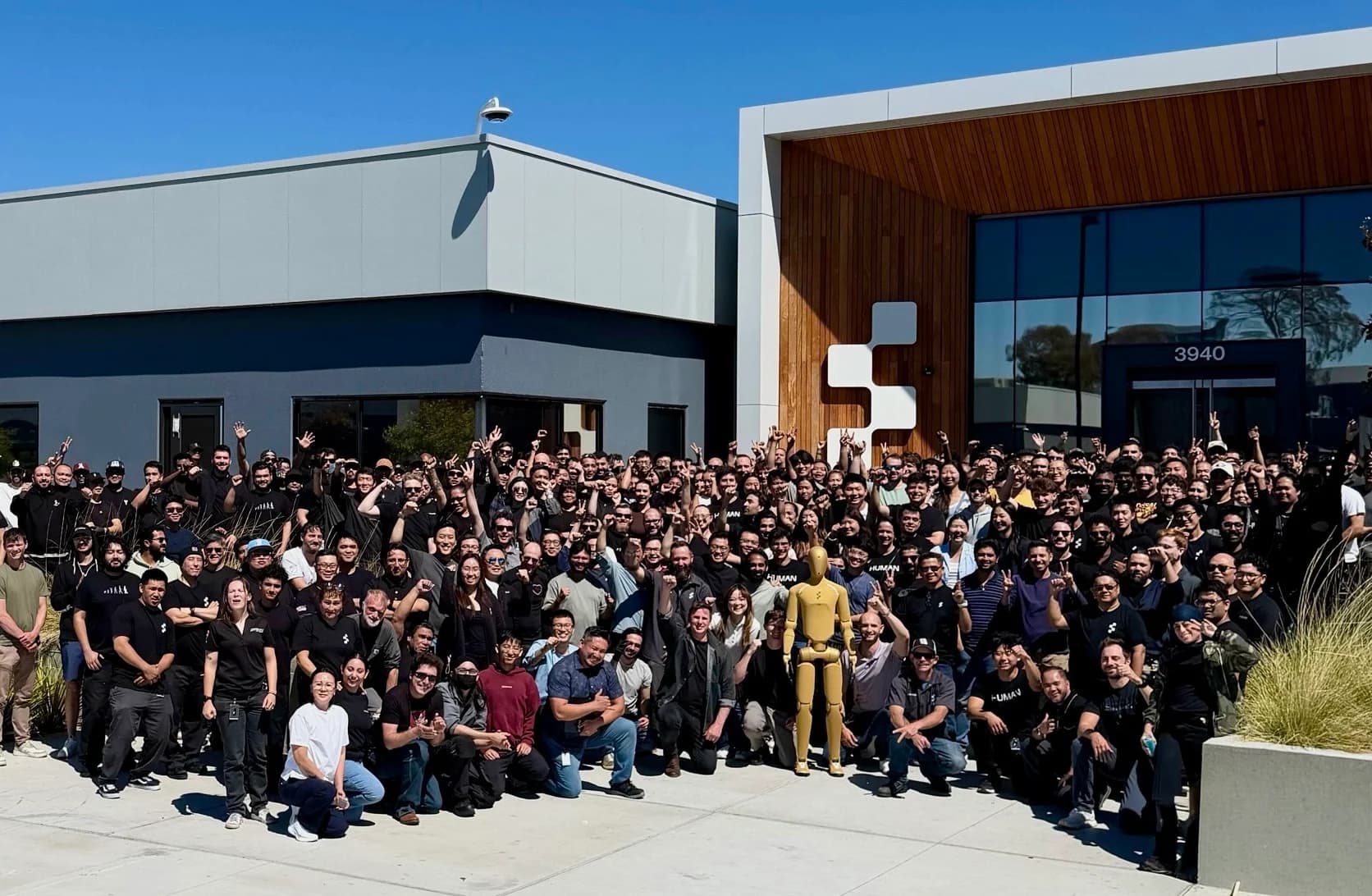
- The company recently manufactured its 1,000th Figure 03 robot, a process Adcock compares to the scale and relative simplicity of consumer electronics manufacturing rather than complex automotive assembly.
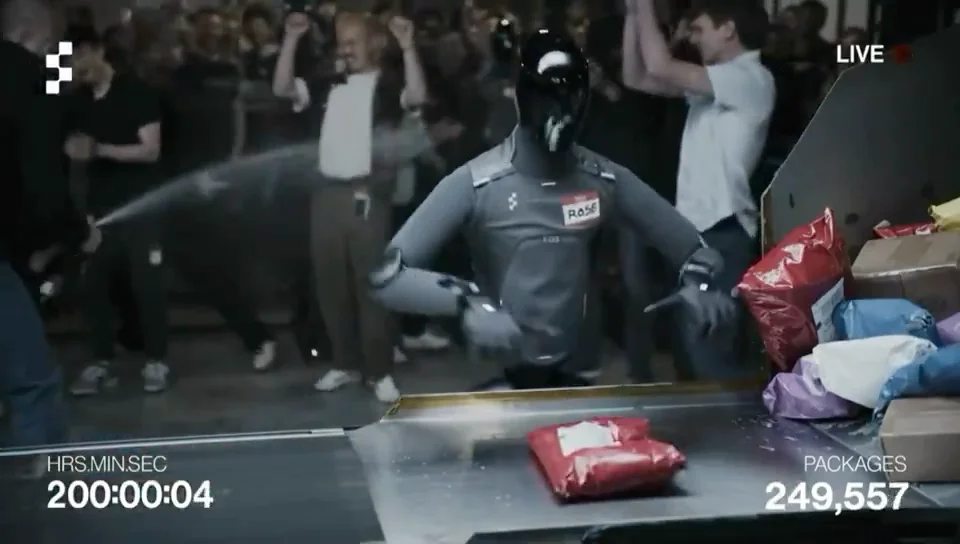
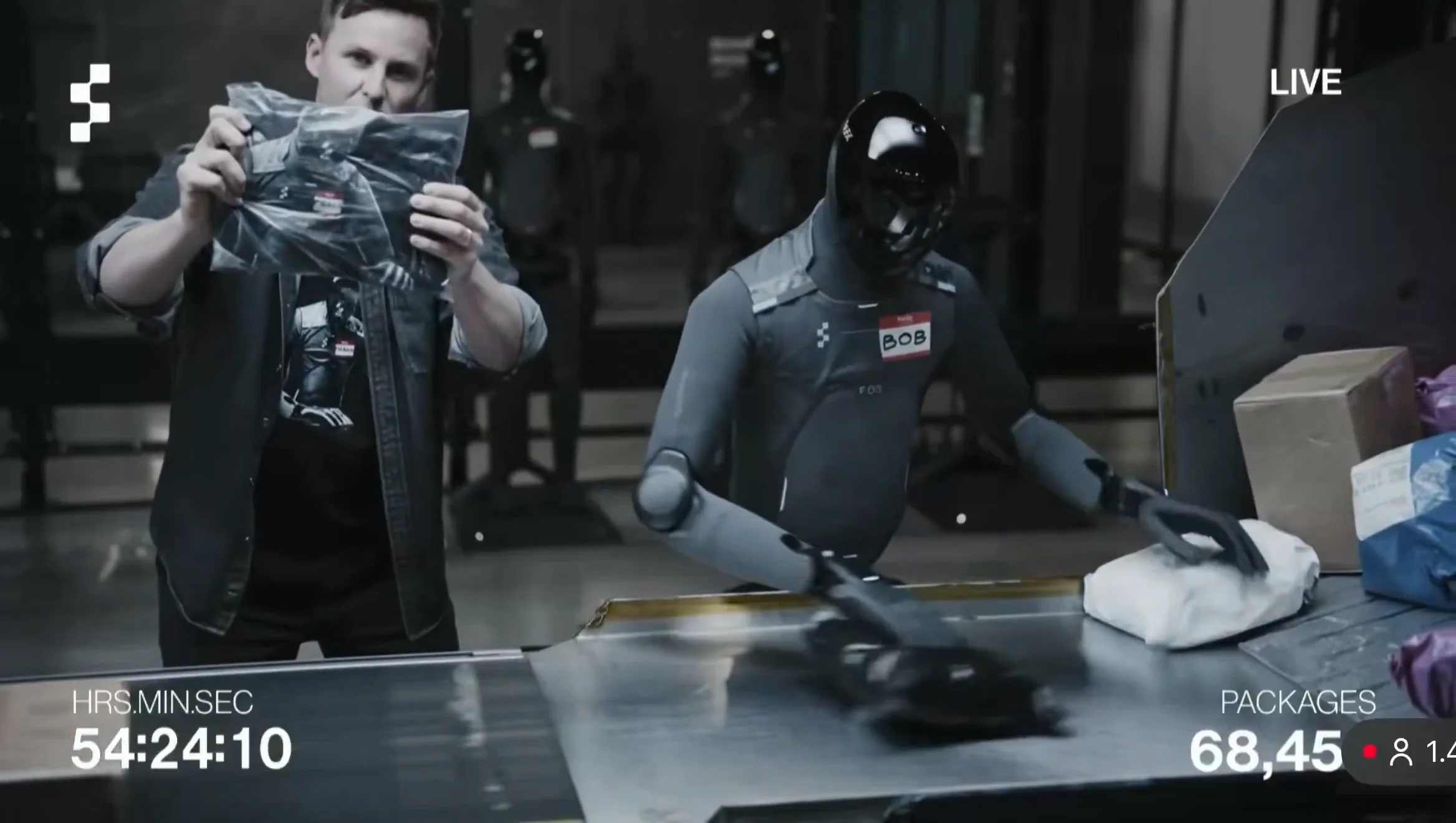
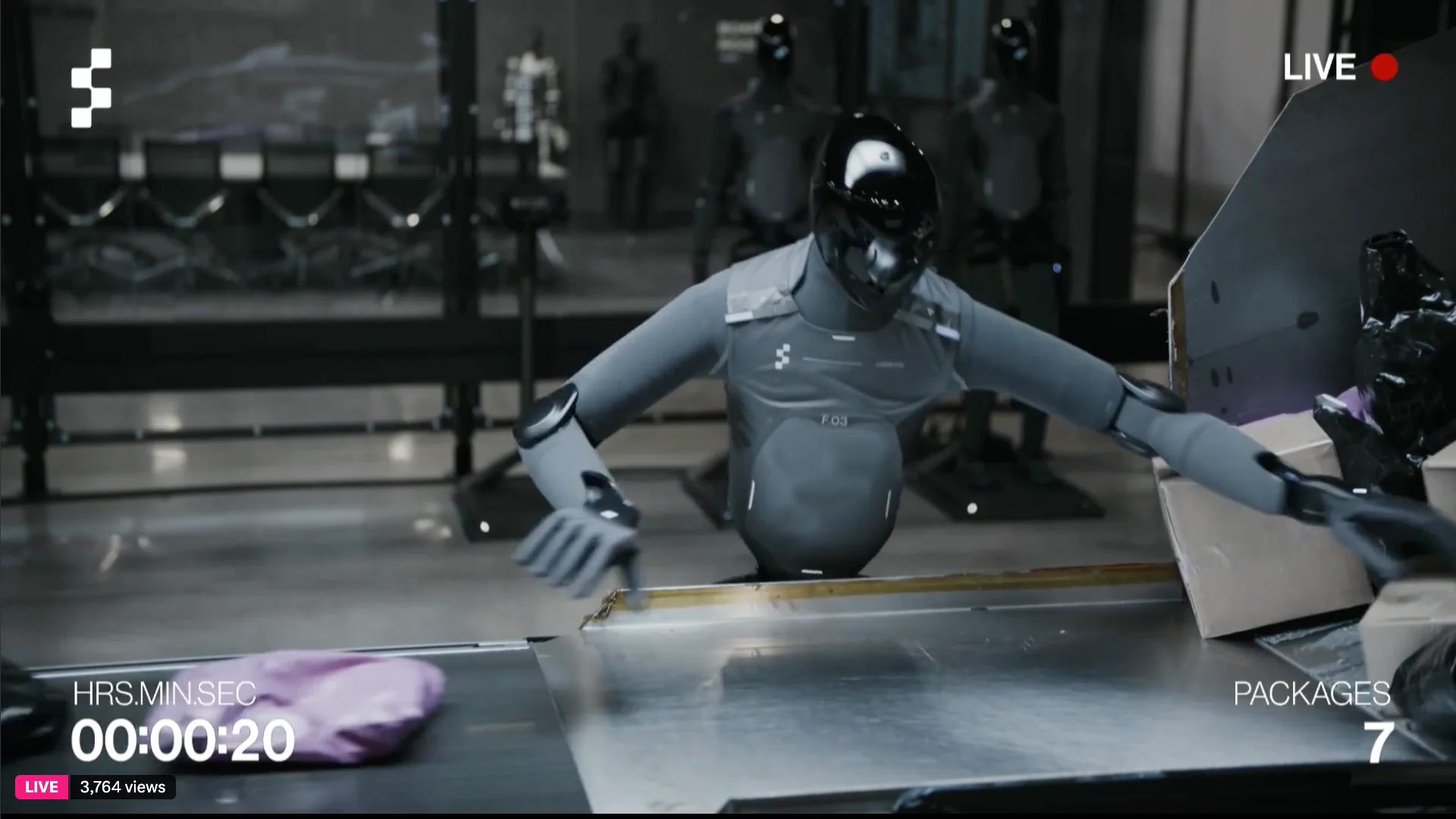
- Figure’s recent 200-hour autonomous sorting marathon was explicitly designed around a direct customer use case that required sustained human-level speeds.
The humanoid robotics industry has historically been defined by highly choreographed demonstrations and distant promises of general-purpose utility. However, according to Figure AI founder and CEO Brett Adcock, the commercial realities of the technology are already beginning to take shape on the factory floor.
During a recent appearance on the My First Million podcast (watch it at the end of this article), Adcock offered a pragmatic look at the state of humanoid commercialization. His comments provided crucial context to Figure's recent string of public milestones, emphasizing that the company's focus has shifted away from simply proving the hardware works toward solving critical labor shortages for enterprise clients.

The Intelligence Bottleneck
While companies across the globe are racing to ramp up production numbers, Adcock argued that simply mass-producing hardware is no longer the primary hurdle.
"The hard problem is not that," Adcock stated. "We believe now the most important constraint to really solve is building a really intelligent robot system to the world". He noted that buyers can already purchase structurally functional robots from overseas manufacturers, but without advanced intelligence, they are effectively just remote-controlled toys. Adcock compared the experience of buying an unintelligent robot to early consumer drones, which were often difficult to operate, prone to crashing, and quickly abandoned.
The weekly humanoid robotics briefing
One email a week: the launches, funding and research that mattered, with context from Humanoids Daily.
Read recent issuesInstead, Figure's goal is to achieve true, human-level intelligence that operates autonomously without pre-programmed code. This AI-first approach underscores the necessity of continuous, unscripted operation—a capability Figure heavily leaned into during its recent unedited autonomous sorting marathon.
Manufacturing at the "Cell Phone" Scale
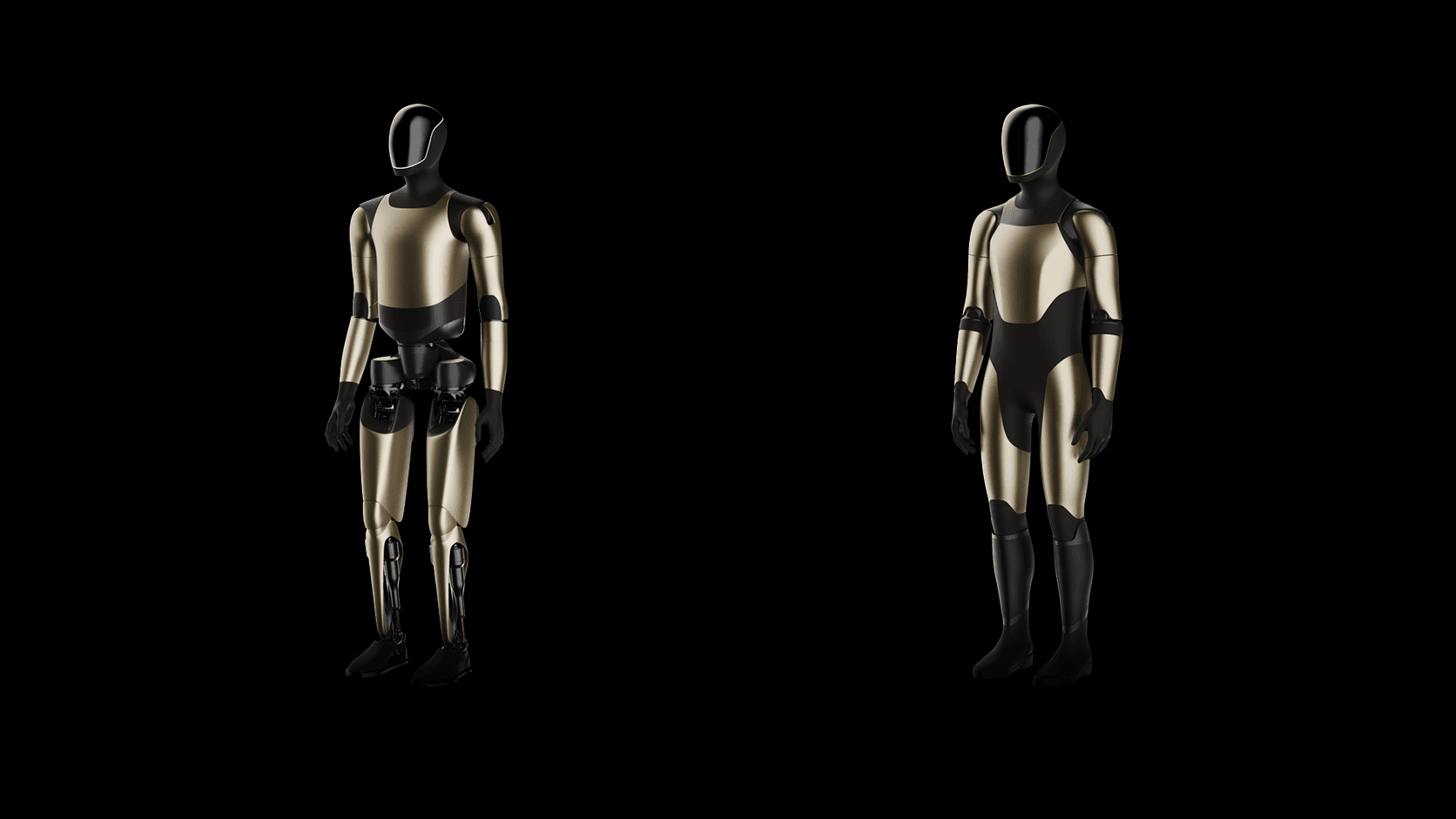
Despite the emphasis on software, Figure has simultaneously been scaling its physical footprint. Adcock confirmed on the podcast that the company recently built its 1,000th engineering validation test (EVT) robot for the Figure 03 generation. This aligns with the company's recent public celebration of its golden milestone, further cementing the $39 billion startup's status as one of the few Western firms capable of high-volume humanoid manufacturing.
Interestingly, Adcock pushed back on the notion that mass-producing humanoids is as difficult as building automobiles. Because every individual component of a Figure robot can be held and manipulated by human hands, the manufacturing process is structurally closer to making consumer electronics, like cell phones.
"Cars, you will die trying to manufacture," Adcock explained. "You need robots that literally pass [the chassis] to other robots... and if any of those break across thousands of robots, you're dead". By contrast, the modularity and manageable size of humanoid components make scaling production significantly less precarious.
These 1,000 robots are currently divided into two fleets: an internal engineering and research group for continuous testing, and a commercial fleet deploying to customers. Adcock noted that Figure shipped robots to its third commercial customer just last week.
"Dying With Labor": The Push for Immediate ROI
Perhaps the most significant claim from the interview was Adcock's assertion that Figure's robots are already operating at human speeds and generating a return on investment (ROI) for enterprise clients.
The driving force behind this early adoption isn't corporate futurism, but a desperate need for reliable labor. Adcock stated that companies are approaching Figure because they are "dying with labor," facing exorbitant talent costs, massive shortfalls, and turnover rates that occasionally exceed 100% per year.
"They come to us and they're saying... we don't have a solve for this," Adcock said.
Because a robotic unit can work multiple shifts per day, seven days a week, the math for commercial deployment is already beginning to pencil out. Adcock revealed that the viral livestream where a Figure 03 robot continuously sorted packages was not a random laboratory stunt, but a direct replica of a customer's real-world logistics requirement. That client needed packages sorted at a rate of three seconds per item for five hours a day. Figure’s system maintained a pace of 2.9 seconds per package for 200 straight hours.
This context illuminates the direct commercial strategy behind Figure's recent partnerships, including its complex logistics sequencing deployment at BMW Plant Spartanburg and its large-scale logistics agreement with Catalyst Brands.
Separating Fact from Fiction
As the sector becomes increasingly crowded, filtering genuine technical progress from marketing noise has become a challenge for both investors and the public. Adcock's metric for success is strictly utilitarian.
"What we care about is not like the best robot that's doing backflips and running the fastest mile or dancing or in a parade," Adcock argued. The true benchmark, he says, is the ability to ship robots that can operate autonomously at scale in economically useful environments—whether that is running an end-to-end supply chain, building a structure, or eventually cooking dinner at home.
The robotics industry is undoubtedly prone to exaggeration, but Figure's relentless focus on logging unedited hours in industrial settings suggests a maturation of the space. As host Sam Parr jokingly envisioned a future where a Figure robot takes a smoke break on the BMW factory floor, it is clear the company is designing its machines for the gritty realities of human work.
Share this article
Read next
- Published on
- Reading time
- 4 min read
Stepping Up: Figure 03 Achieves Autonomous Ladder Climbing, Reigniting the Bipedal Debate
- Published on
- Reading time
- 4 min read
A Golden Milestone: Figure Manufactures Its 1,000th Figure 03 Humanoid
- Published on
- Reading time
- 4 min read
Figure AI Pops Champagne as Autonomous Marathon Crosses 200 Hours Without Hardware Failure
- Published on
- Reading time
- 5 min read
Man vs. Machine: Figure AI Intern Edges Out Humanoid Fleet in 10-Hour Sorting Challenge
- Published on
- Reading time
- 8 min read
Beyond the 60-Hour Mark: Figure AI’s Endurance Marathon Signals Playbook for Figure 4 and Supply Chain Independence
- Published on
- Reading time
- 4 min read
Live Now: Figure 03 Hits Blistering 2.6-Second Throughput in 8-Hour Unedited Shift

The weekly humanoid robotics briefing
One email a week: the launches, funding and research that mattered, with context from Humanoids Daily.
Read recent issues