- Published on
IFR Counts 7,000 Humanoid Sales in 2025—Many for Research
One tap, and our reporting appears more often in your Google Top Stories. It makes a real difference to a small newsroom.

Supported by RoboStrategySupport for Humanoids Daily comes from RoboStrategy
Sponsored


Investing involves risk, including possible loss of principal. Read the prospectus before investing.
- IFR counted approximately 7,000 humanoid sales for industrial and professional service use in 2025, according to Reuters.
- Many purchases supported research and AI data collection rather than productive work.
- The tally has a defined scope and should not be treated as interchangeable with other shipment estimates.
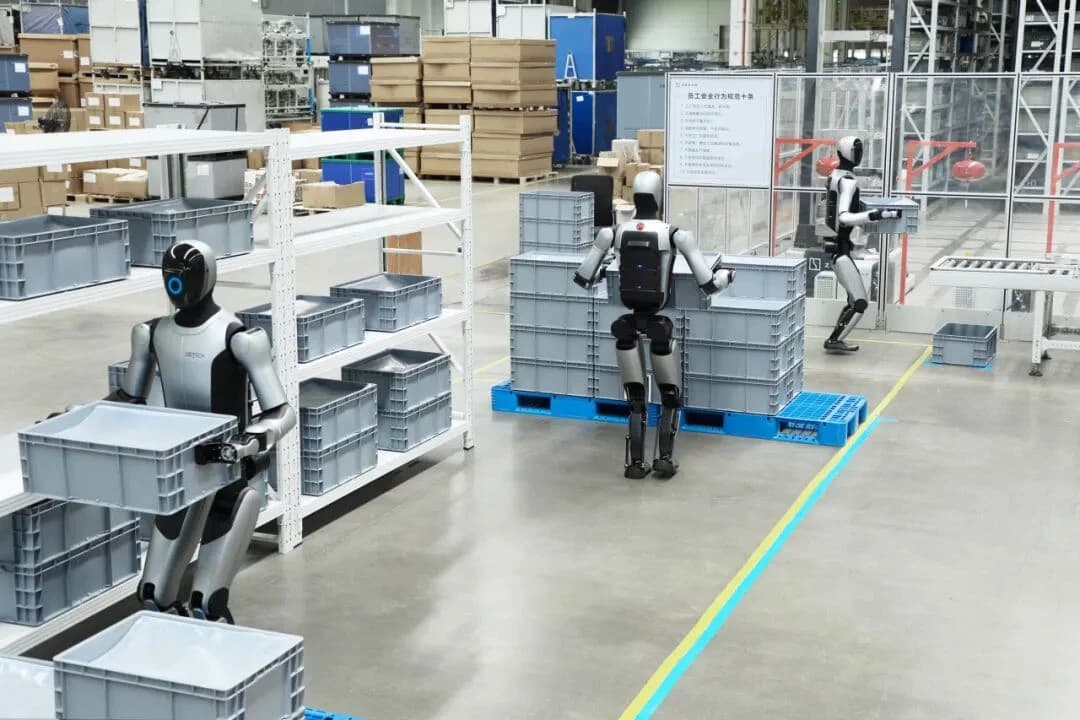
About 7,000 humanoid robots were sold worldwide for industrial and professional service use in 2025, according to International Federation of Robotics figures reviewed by Reuters. The number offers a useful benchmark—but sales alone do not measure how much work these machines perform.
IFR secretary general Susanne Bieller told Reuters that many buyers were research institutions or companies collecting data to improve AI models. Automotive pilots typically involved single-digit or sometimes double-digit robot counts.
What the tally includes
Reuters reports that IFR’s definition requires a human-like appearance and autonomous operation in environments designed for people. Legs are not mandatory. The supplier- and industry-association-based tally excludes consumer and military humanoids, with medical robots classified separately.
That scope matters when comparing the figure with the larger totals circulating in the industry. Our coverage of the competing Unitree and AGIBOT shipment claims has already highlighted disputes about which machines belong in the category.
The weekly humanoid robotics briefing
One email a week: the launches, funding and research that mattered, with context from Humanoids Daily.
Read recent issuesWithout matching definitions, supplier coverage and reporting periods, differences between estimates cannot establish that one source has disproved another. Nor can a sales total tell us how many units have been installed, how often they operate or whether they deliver a return on investment.
A small category beside established robotics
For scale, IFR’s published industrial-robot statistics recorded 542,000 installations in 2024. Its professional service-robot report put that category’s sales at almost 200,000 units in the same year, based on a sample of 294 suppliers.
These are different categories, measures and reporting years. They illustrate the scale of established automation, rather than providing a like-for-like market-share calculation for humanoids.
Research purchases can still serve a commercial purpose. As explored in our feature on robotics data-collection strategies, teaching robots useful behavior is itself a substantial part of development. Hardware bought for that process can support future capabilities without yet performing a customer’s everyday work.
The next useful measure is therefore what happens after delivery: operating hours, intervention frequency, completed tasks and repeat orders. A growing sales base is one milestone. Reliable, economically useful deployment is another.
Share this article
Read next
- Published on
- Reading time
- 13 min read
How to think about the robotics market
- Published on
- Reading time
- 26 min read
RoboStrategy: Our Investment in Maven Robotics
- Published on
- Reading time
- 5 min read
Goldman Sachs: China's Humanoid Strategy Pivots to "Dedicated" Service Robots and Entertainment
- Published on
- Reading time
- 12 min read
Humanoid Robot Market Forecasts: A Landscape of High Hopes and Wide Disagreement
- Published on
- Reading time
- 5 min read
Faraday Future Expands Robot Lineup With $9,990 Master Mini
- Published on
- Reading time
- 3 min read
GPT-6 Astra Rarely Refused Unsafe Robot Commands in New Test




The weekly humanoid robotics briefing
One email a week: the launches, funding and research that mattered, with context from Humanoids Daily.
Read recent issues