- Published on
LimX Dynamics Launches TRON 2: A Modular "Shapeshifter" for Embodied AI Research
One tap, and our reporting appears more often in your Google Top Stories. It makes a real difference to a small newsroom.

Supported by RoboStrategySupport for Humanoids Daily comes from RoboStrategy
Sponsored


Investing involves risk, including possible loss of principal. Read the prospectus before investing.
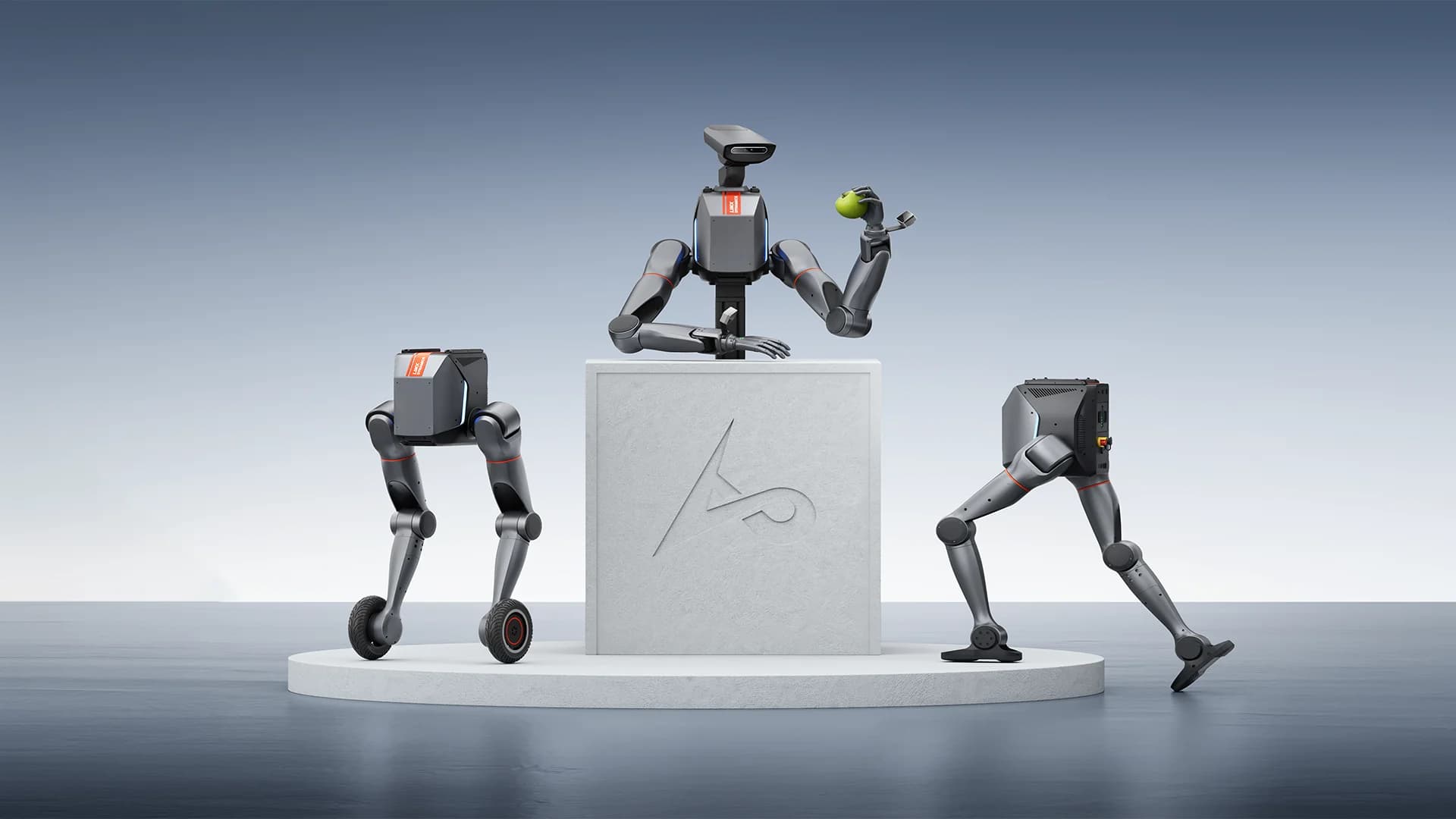
Shenzhen-based robotics manufacturer LimX Dynamics has announced the release of TRON 2, a highly modular robot designed to serve as a "Swiss Army knife" for embodied AI research.
Departing from the fixed form factors typical of the industry, the TRON 2 is defined by its "Tri-Form" configuration. It functions as a singular platform that can be physically reconfigured into three distinct modes: a bipedal walker, a wheeled-legged robot, or a stationary dual-arm manipulator.
The launch underscores LimX’s aggressive push into the education and research market, following closely on the heels of updates to their flagship humanoid, Oli. By offering a sub-$30,000 multi-modal platform, the company appears to be lowering the hardware barrier for labs working on Vision-Language-Action (VLA) models and Sim2Real deployment.

The "Tri-Form" Architecture
The core value proposition of the TRON 2 is hardware versatility. While most research robots are purpose-built for either manipulation or locomotion, TRON 2 attempts to bridge the gap through modularity.
The weekly humanoid robotics briefing
One email a week: the launches, funding and research that mattered, with context from Humanoids Daily.
Read recent issuesAccording to product details released by LimX, the robot supports three primary configurations:
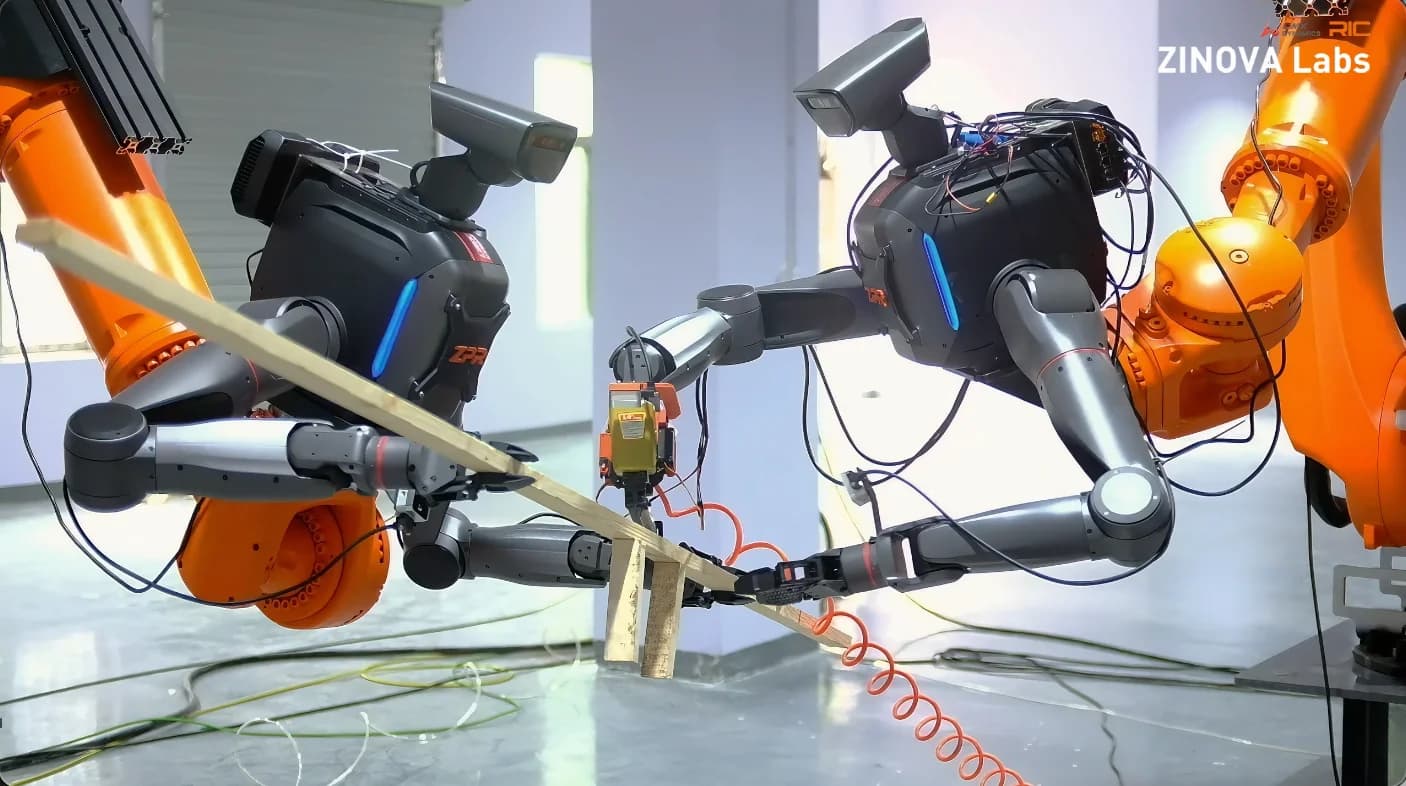
- Dual Arms (Stationary): A desktop or stand-mounted setup focused on fine manipulation. It features two 7-DoF (Degrees of Freedom) arms with a payload capacity of 10kg, designed for "mastering desktop tasks."
- Sole Feet (Bipedal): A legged configuration that uses visual input for motion planning, capable of tasks like stair climbing and responding to terrain variations.
- Wheeled Legs: A hybrid mode that combines the efficiency of wheels with the articulation of legs, supporting heavier payloads (up to 30kg in this mode) and faster movement across diverse terrains.
In a move that highlights the platform's modular nature, LimX demonstrated that the system allows users to swap limb modules to switch modes. The company describes it as a system where users can "freely configure" the setup to fit their specific mission—effectively allowing a lab to purchase one core system that acts as three different types of robots depending on the day's experiment.

Focus on VLA and Data Collection
While the hardware transformation is visually striking, the TRON 2 is explicitly positioned as a software development platform. LimX is marketing the robot as an "All-In-One VLA Platform," referencing the growing trend of Vision-Language-Action models where AI interprets visual data and natural language to execute physical tasks.
The system supports a full Python development workflow, ROS1/ROS2, and open SDKs. To facilitate the transition from simulation to reality (Sim2Real), TRON 2 is compatible with major simulators including NVIDIA Isaac Sim, MuJoCo, and Gazebo.
The "EDU Edition" of the robot includes preloaded algorithms and tutorials for models like ACT and Pi0, with LimX claiming users can "Master VLA in 2 hours." This focus on "out-of-the-box" usability mirrors the simplified unboxing experience recently introduced for their larger humanoid, Oli.

Under the Hood: Technical Specifications
The official spec sheet reveals significant onboard power for the platform, particularly in the EDU edition designed for developers.
- Compute: The TRON 2 EDU is powered by an 11th Gen Intel Core i7 (1165G7) processor, providing local compute for the "AI Computing Box." It includes 2TB of storage and multiple interfaces (4x ETH, 4x USB 3.0) for sensor integration.
- Degrees of Freedom (DoF): The robot features high articulation with 28 active degrees of freedom in total for the full humanoid form (7 per arm, 5 per leg, 2 in the head, and 2 dexterous hands).
- Sensors: The EDU version is heavily instrumented for perception, featuring RGBD cameras in the head, waist, and wrists, along with a high-precision IMU.
- Mobility & Power:
- Speed: In wheeled mode, the robot can reach speeds of 3–5 m/s, while walking mode tops out at 2–3 m/s.
- Battery: A 46.8V, 9Ah ternary lithium battery supports fast charging (20–80% in 30 minutes).
- Payload: The arms are rated for a 5kg payload each (10kg total), while the wheeled chassis can haul up to 30kg.
Pricing and Availability
LimX Dynamics has confirmed pricing for the EDU Edition, which is distinct from the "Standard" version in that it includes the onboard Intel i7 compute unit, full SDK access, and the complete array of head and wrist sensors.
- Dual-Arm (EDU Edition): Priced at $20,000. This version includes the stationary manipulation configuration (head, torso, and arms) but lacks mobility modules.
- 3-in-1 (EDU Edition): Priced at $25,000. This comprehensive kit includes the stationary setup plus the modular feet and wheels, allowing for full reconfiguration between all three modes.
The EDU edition also supports VR teleoperation (via Oculus Quest 3) and secondary development in Python/C++, features that are notably absent or restricted in the Standard commercial version.
Evolution from TRON 1
The TRON 2 represents a significant leap in complexity compared to its predecessor. The original TRON 1 was a smaller biped —somewhat reminiscent of the AT-ST walkers from Star Wars.
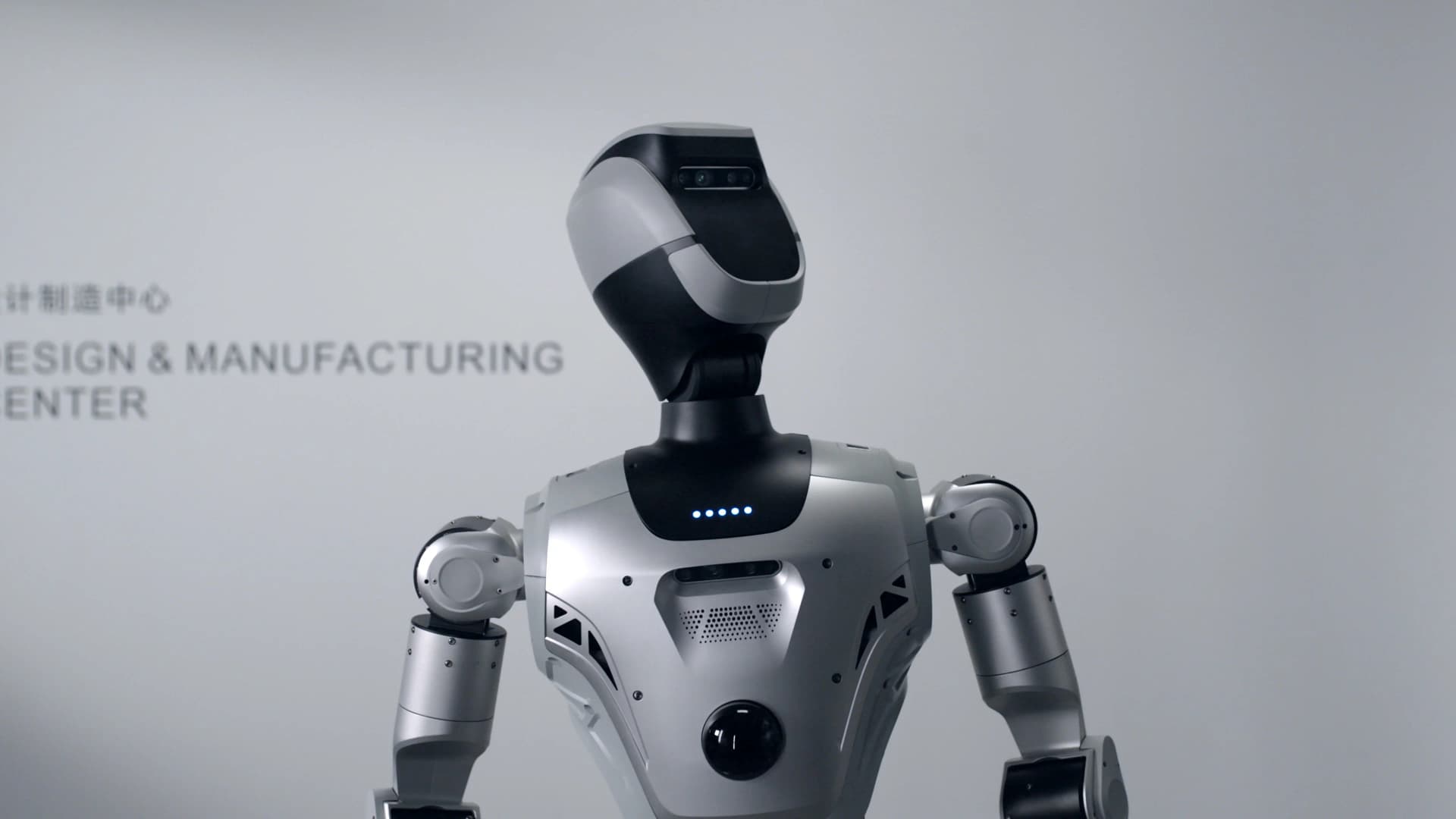
While the TRON 1 was later capable of being fitted with a single optional arm it remained primarily a study in balance and gait. The TRON 2 integrates the dual-arm manipulation capabilities usually reserved for full-sized humanoids like Oli, making it a more viable platform for complex mobile manipulation research.
The TRON 2 is available for order now via the LimX Dynamics website.
Share this article
Read next
- Published on
- Reading time
- 4 min read
LimX Dynamics Secures $200 Million Series B to Scale Modular and General-Purpose Humanoids
- Published on
- Reading time
- 5 min read
LimX and ZINOVA Put TRON 2 to Work on Simulated Construction Sites
- Published on
- Reading time
- 5 min read
LimX Dynamics Secures $200M Pre-IPO Round, Unveils Fully Autonomous Oli in Uncut Demo
- Published on
- Reading time
- 5 min read
LimX Dynamics Fully Details Luna: A Fabric-Wrapped Humanoid Built for the Stage
- Published on
- Reading time
- 3 min read
LimX Dynamics Unveils "Luna": A High-Performance Humanoid Built for the Spotlight
- Published on
- Reading time
- 3 min read
LimX Dynamics Teases Sleek New Humanoid Ahead of Taobao Influencer Festival



The weekly humanoid robotics briefing
One email a week: the launches, funding and research that mattered, with context from Humanoids Daily.
Read recent issues