- Published on
Luxonis Launches OAK 4 FFC to Put Five Robot Cameras on One Vision Computer
One tap, and our reporting appears more often in your Google Top Stories. It makes a real difference to a small newsroom.

Luxonis has launched OAK 4 FFC, a compact vision computer that lets robot builders connect up to five cameras in their own layout, with synchronization, stereo depth and AI processing handled on the board. For humanoids, the pitch is a head with stereo eyes plus side and rear cameras, without assembling the perception system from separate computing and camera components.
- OAK 4 FFC connects up to five camera modules to a 70 × 53 mm carrier board, with onboard depth processing and neural-network inference.
- Dynamic Calibration uses natural scene features to align cameras without a calibration target, although suitable lighting and visual detail are still required.
- The developer kit is listed at $849 and shipping now. A $730 barebone version is due in Q1 2027; camera modules are sold separately.
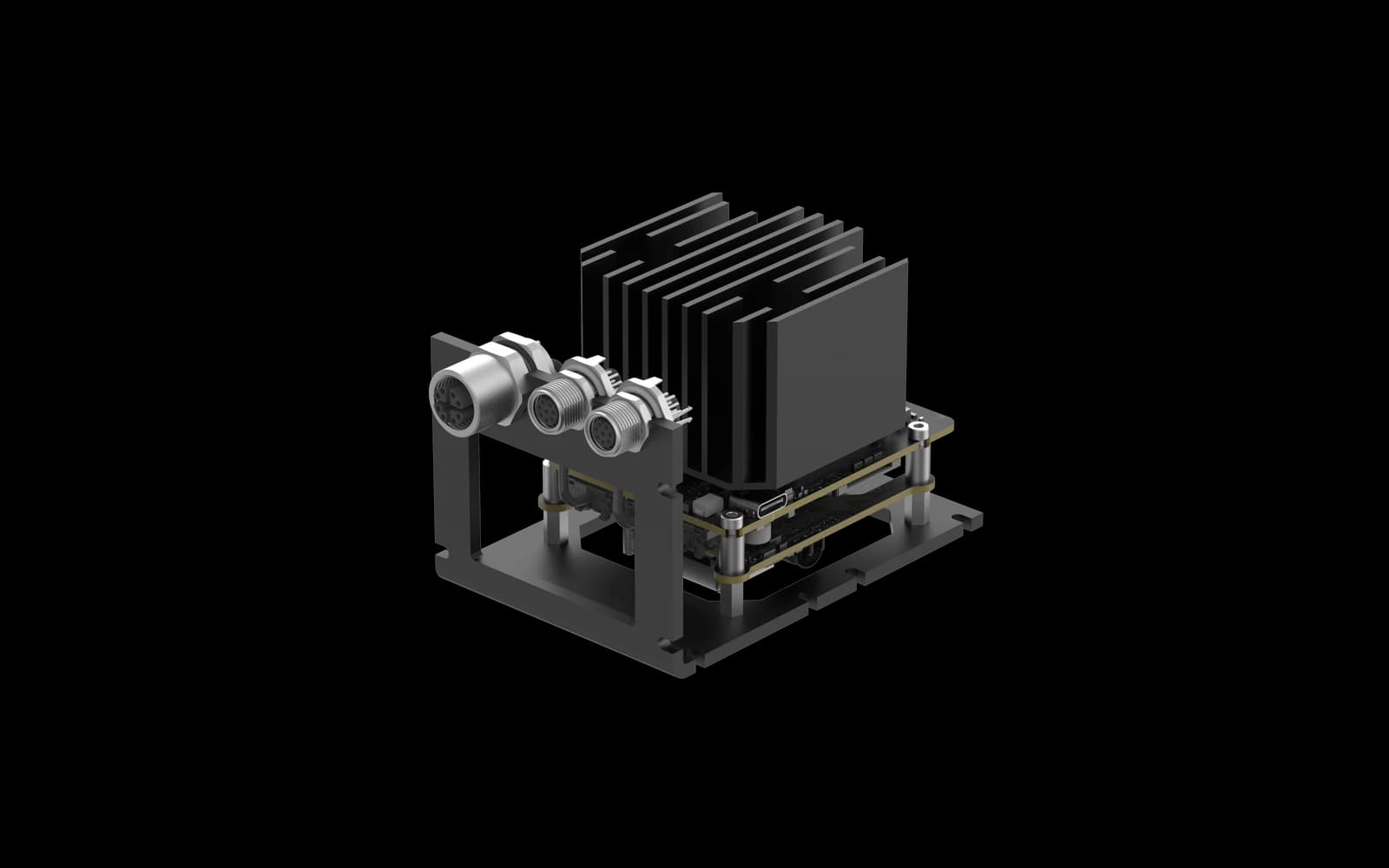
The October 27 launch targets humanoids, drones and other robots whose camera placement is dictated by their physical design. According to Luxonis's launch page, OAK 4 FFC can serve as the main computer for simpler or stationary robots, or as a dedicated perception module alongside a Jetson or another host.
Cameras placed around the robot
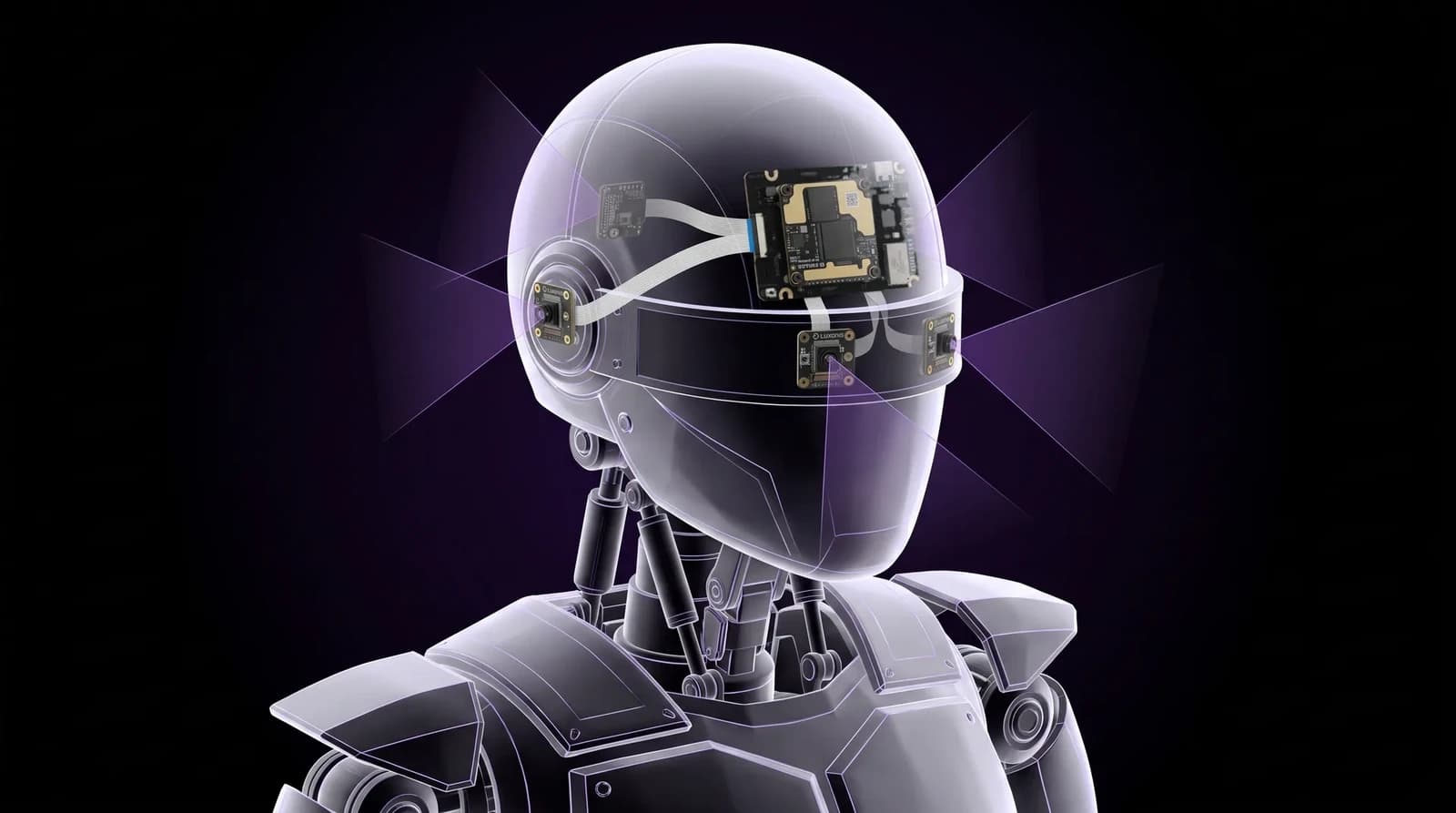
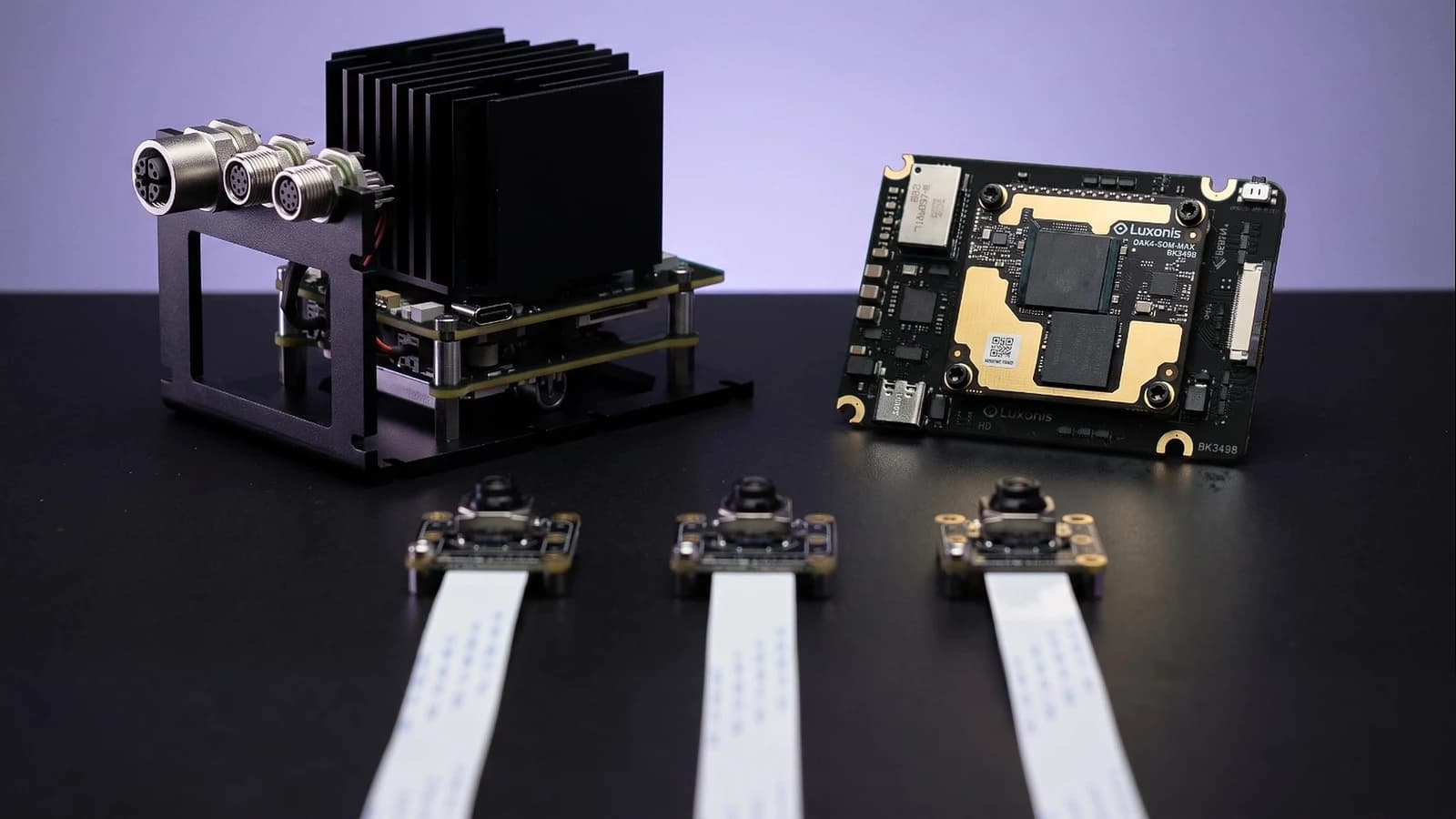
Rather than fixing a stereo pair inside a finished camera enclosure, the board connects camera modules through flexible cables. Builders choose the spacing between the stereo cameras and where the other views belong.
Luxonis illustrates a humanoid configuration with two forward-facing cameras, a wide-angle camera on each side and a fifth camera looking backward. Processing depth, detections and tracking on the board could reduce the perception workload passed to a robot's main computer. That is an integration option, rather than a claim that the board replaces the compute needed for every humanoid AI model.
Follow humanoid robotics without following every announcement.
Get the week’s most important launches, funding and research—and why they matter—in one email from Humanoids Daily.
Once a week. Unsubscribe anytime.
Read recent issuesSupported modules include 48-megapixel IMX586 color cameras, 5-megapixel OG05 global-shutter cameras and 1-megapixel OV9282 global-shutter cameras. Camera choice, lenses and stereo spacing can therefore be matched to the intended task.
Calibration from the scene
Camera alignment matters for stereo depth: a small shift in mounting can make the geometry used to estimate distance inaccurate. Luxonis supplies factory-calibrated camera modules and uses Dynamic Calibration to establish or refine their relationship within a rig.
The setup workflow asks builders to enter approximate camera positions in OAK Viewer, then recalibrate using features visible in the scene instead of a checkerboard or ChArUco target. The company's calibration documentation also describes monitoring alignment and recalibrating after thermal changes, mechanical shocks or mounting changes.
This still depends on suitable imagery. Luxonis recommends textured objects at different depths and warns against dark scenes, blank walls, reflective or transparent surfaces and repetitive patterns. Target-free calibration simplifies a setup step; it does not remove the need to check that the environment provides enough information.
Compute, price and availability
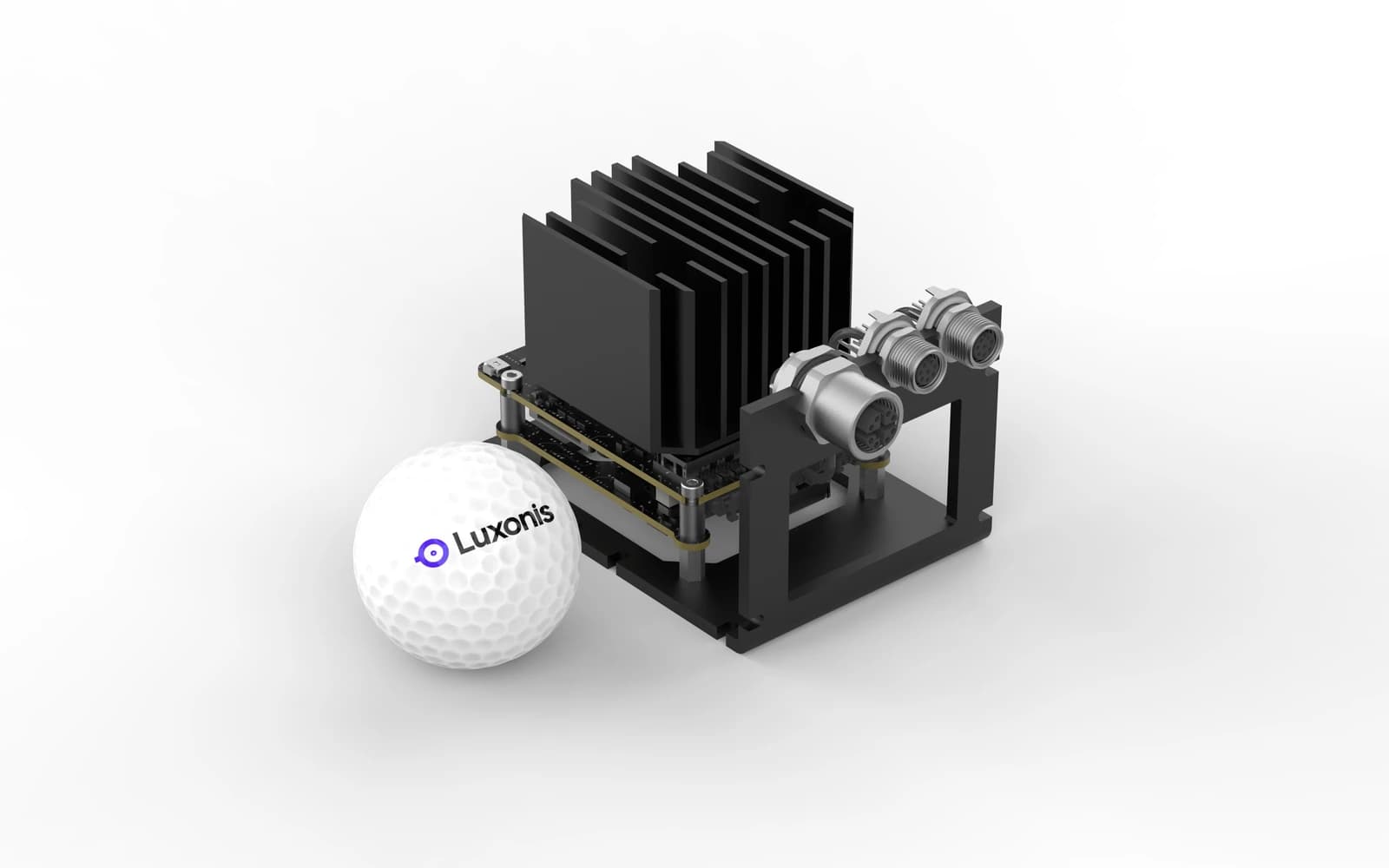
The board uses Luxonis's RVC4-based OAK 4 compute module, a six-core ARM CPU, Linux-based Luxonis OS, 8 GB of RAM and 128 GB of storage. Luxonis markets it at 52 TOPS; the detailed specifications list a 48-TOPS INT8 AI accelerator and a 4-TOPS FP16 GPU, figures that should not be treated as a benchmark for a particular robot workload.
Connectivity includes 2.5 GbE, USB-C and CAN, with a 6–32 V DC power input and optional PoE+ support. The barebone assembly weighs 36 grams, while the developer kit weighs 215 grams and includes a passive heatsink, PoE+ module and connectors.
The developer kit is listed as available now, with the barebone version and volume availability planned for Q1 2027. Both require separately purchased camera modules. For humanoid developers, the immediate proposition is a more configurable perception subsystem, with less camera synchronization and calibration work to build themselves.
Share this article
Follow humanoid robotics without following every announcement.
Get the week’s most important launches, funding and research—and why they matter—in one email from Humanoids Daily.
Once a week. Unsubscribe anytime.
Read recent issuesRead next
- Published on
- Reading time
- 2 min read
Tesla’s Lars Moravy Floats Optimus as a Cybercab Charging Helper
- Published on
- Reading time
- 3 min read
Boston Dynamics Taps Korean Suppliers for Atlas, With 10,000-Robot Preparations Reported
- Published on
- Reading time
- 4 min read
Boston Dynamics Employee Petition Against ICE Robot Deal Tests Its Ethical Guardrails
- Published on
- Reading time
- 2 min read
Faraday Future Completes Robotics Business Transfer to Nasdaq-Listed FFR
- Published on
- Reading time
- 19 min read
Tesla’s Optimus Gen 3, Figure 04 and the Next Apollo: When Each Could Be Revealed
- Published on
- Reading time
- 3 min read
GXO Expands Agility Partnership to Two More U.S. Sites, Starting With Digit 4