- Published on
Tesla’s Lars Moravy Floats Optimus as a Cybercab Charging Helper
One tap, and our reporting appears more often in your Google Top Stories. It makes a real difference to a small newsroom.

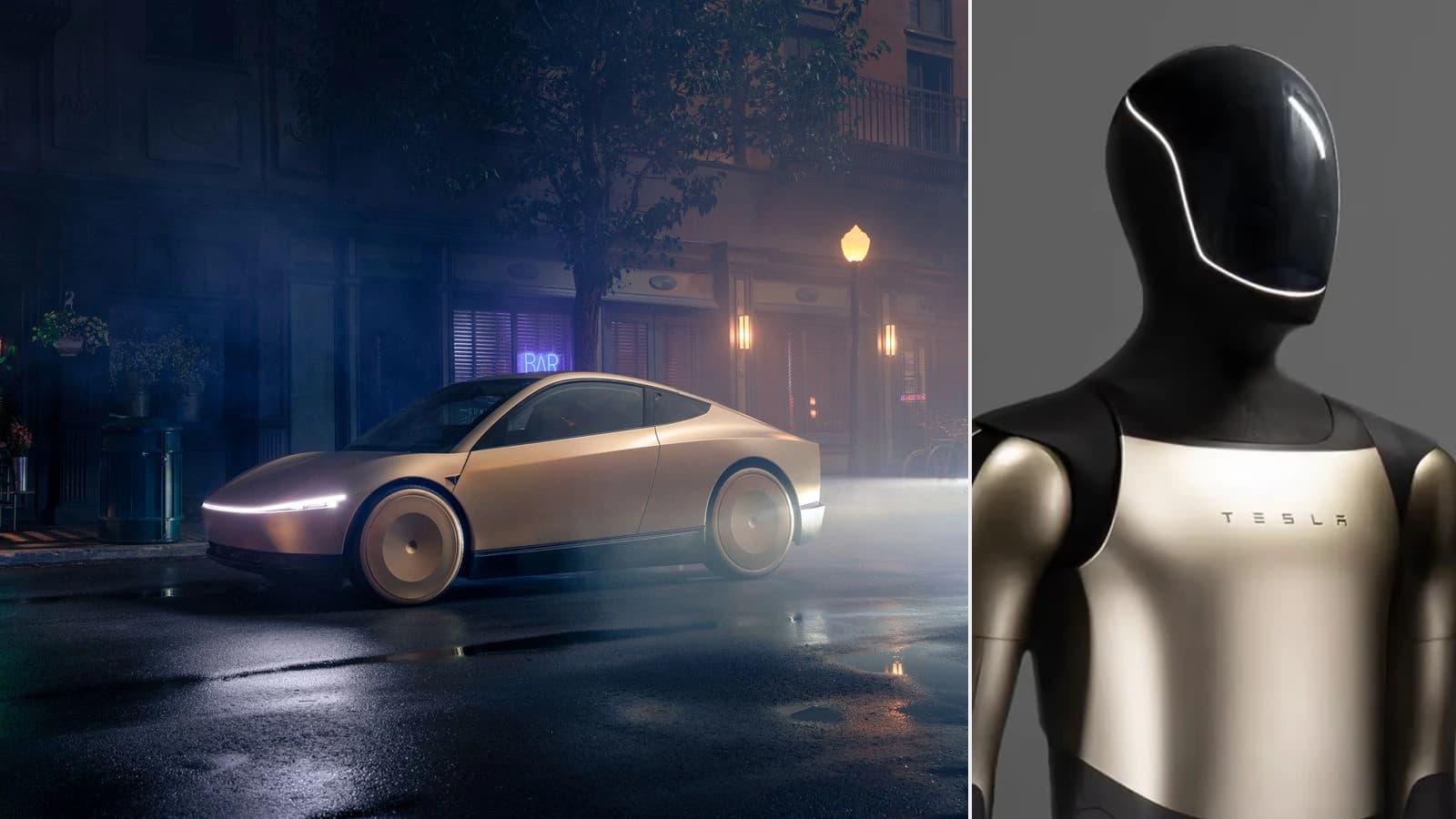
Tesla’s Lars Moravy has floated Optimus as a potential helper for charging Cybercab vehicles, offering a glimpse of how the company’s humanoid could support its autonomous fleet.
Speaking in Munro Live’s Cybercab engineering discussion, Moravy explained that the vehicle retains a charging port so Tesla can use existing infrastructure. He added: “hopefully Optimus will help us with that shortly.”
- Moravy suggested Optimus could help Cybercab use existing charging infrastructure.
- His comment expresses a hope, without a firm deployment date or operational commitment.
- A separate battery discussion offers an approximate capacity reference, rather than a formal Optimus specification update.
The physical work around an autonomous fleet
Moravy’s remark came while discussing the transition toward more automated charging infrastructure. The possible role for Optimus is bridging that transition, rather than replacing Tesla’s longer-term charging plans.
The distinction matters: autonomous driving does not, by itself, automate every task needed to keep a vehicle fleet running. Connecting a charger is a physical interaction with equipment, a potential application for a humanoid designed to work with human-built infrastructure.
Follow humanoid robotics without following every announcement.
Get the week’s most important launches, funding and research—and why they matter—in one email from Humanoids Daily.
Once a week. Unsubscribe anytime.
Read recent issuesThe subsequent conversation also touched on vehicle servicing and delivery. A more expansive scenario involving autonomous trucks, vehicles and robots delivering food was raised by Munro’s host. It should be understood as speculation, not an announced Tesla deployment plan.
A small battery detail
Earlier, around 34 minutes into the video, Tesla battery engineer Robbie described Optimus’s battery as one module, referring approximately to 2.5–3 kWh and saying it was not the robot’s largest cost.
The conversational wording does not establish an exact capacity for a specific Optimus generation, a runtime figure or a battery cost breakdown.
For the more concrete manufacturing update, Tesla recently said Optimus production had begun on its Fremont high-volume lines, as covered in our Q3 earnings report. Moravy’s charging suggestion adds a possible use case, rather than evidence of a deployed capability.
The Optimus remarks were highlighted by The Humanoid Hub.
Share this article
Follow humanoid robotics without following every announcement.
Get the week’s most important launches, funding and research—and why they matter—in one email from Humanoids Daily.
Once a week. Unsubscribe anytime.
Read recent issuesRead next
- Published on
- Reading time
- 19 min read
Tesla’s Optimus Gen 3, Figure 04 and the Next Apollo: When Each Could Be Revealed
- Published on
- Reading time
- 6 min read
Tesla Begins Optimus Production in Fremont, Targets Customer Deliveries in Late 2027
- Published on
- Reading time
- 3 min read
Tesla Makes Its Case for Board Continuity Ahead of December 3 Shareholder Vote
- Published on
- Reading time
- 2 min read
Musk Puts Optimus and Cybercab at the Center of Tesla’s Future Value
- Published on
- Reading time
- 5 min read
Musk Details Optimus Hand Challenges, Warns of Slow Initial Production Ramp
- Published on
- Reading time
- 4 min read
Tesla Patent Application Details Flexible Touch Sensors for Robot Hands