- Published on
Machenta Raises $40 Million to Teach Robots New Tasks From One Demonstration
One tap, and our reporting appears more often in your Google Top Stories. It makes a real difference to a small newsroom.

London startup Machenta has raised $40 million to pursue robots that can pick up new tasks from a single demonstration, without a fresh round of training each time. Its approach uses simulation to teach a model how to learn, then a real-world demonstration to tell it what to do.
- Business Insider reports a $40 million seed round co-led by Creandum and Union Square Ventures.
- Machenta says its model is pretrained entirely in simulation and can use a single real-world demonstration to perform a new task without fine-tuning.
- Its launch includes manipulation demonstrations across six robots and preliminary experiments with humanoid hands. Broader reliability and commercial deployment remain to be established.
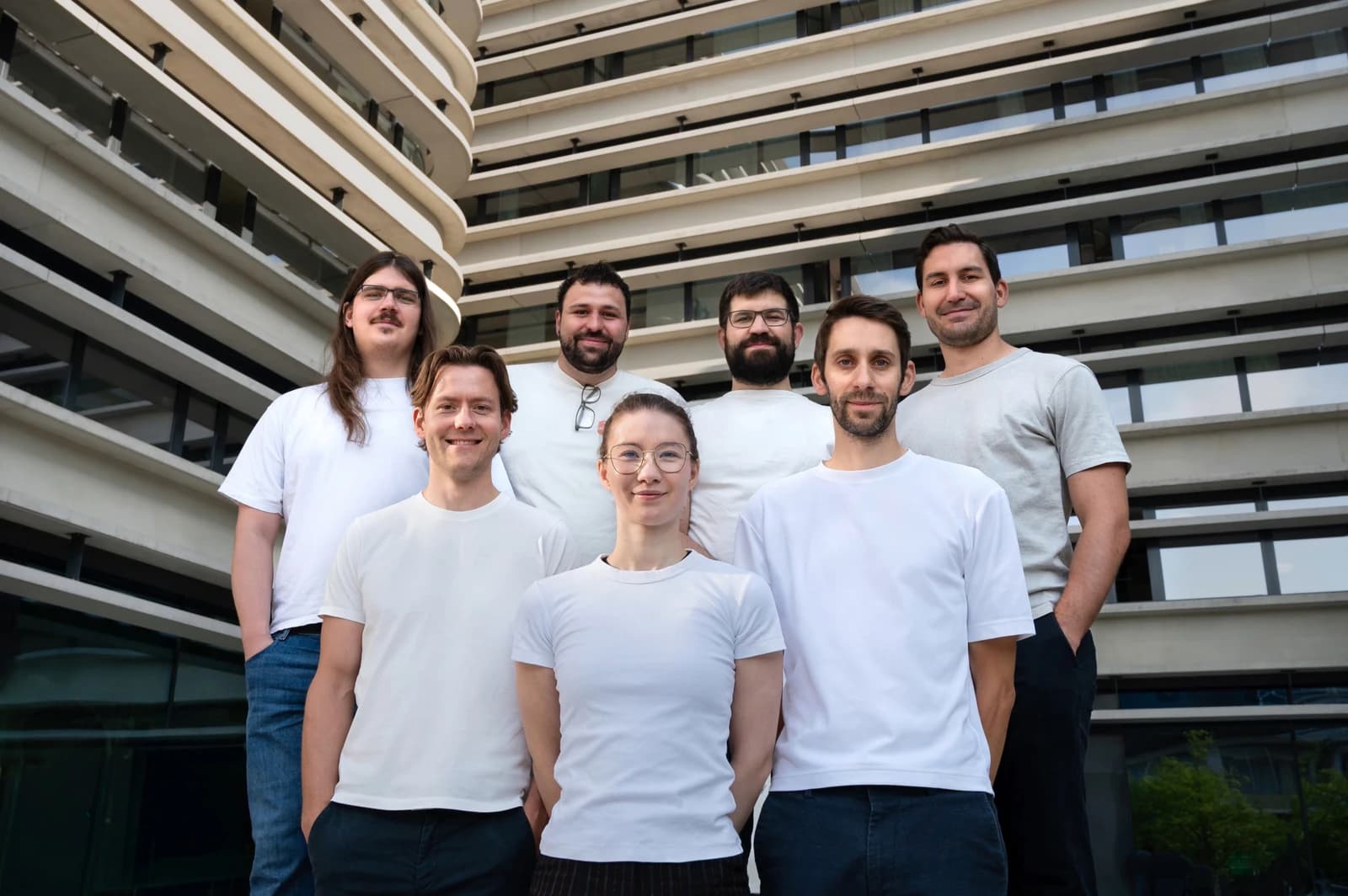
Business Insider reports that the 11-person company was founded by Imperial College London researchers Edward Johns and Vitalis Vosylius. It remains focused on research, with no near-term commercialization plans. The funding will support hiring and larger-scale training with compute and simulated data.
A demonstration becomes the prompt
In its October 27 technical introduction, Machenta describes a vision-demo-action model, or VDA. Instead of using a language instruction to specify a task, it takes a demonstration alongside live visual observations and predicts the robot's actions.
The distinction is what happens after someone teaches a new task. Conventional task-specific training changes a model's weights using collected examples. Machenta says its pretrained model can interpret the demonstration directly, with no additional weight updates or waiting for another training run.
Follow humanoid robotics without following every announcement.
Get the week’s most important launches, funding and research—and why they matter—in one email from Humanoids Daily.
Once a week. Unsubscribe anytime.
Read recent issues“Instant” therefore refers to adapting to a new task, not eliminating the substantial training needed to build the underlying model. Similarly, its claim of using no real-world training data applies to pretraining: the demonstration and camera observations used during deployment still come from the real world.
The approach builds on six years of Imperial research, including Implicit Graph Alignment and Instant Policy. Machenta's bet is that sufficiently varied simulated experience can teach a general ability to interpret demonstrations, rather than requiring simulations tailored to each eventual customer task.
From a small assembly line to humanoid hands
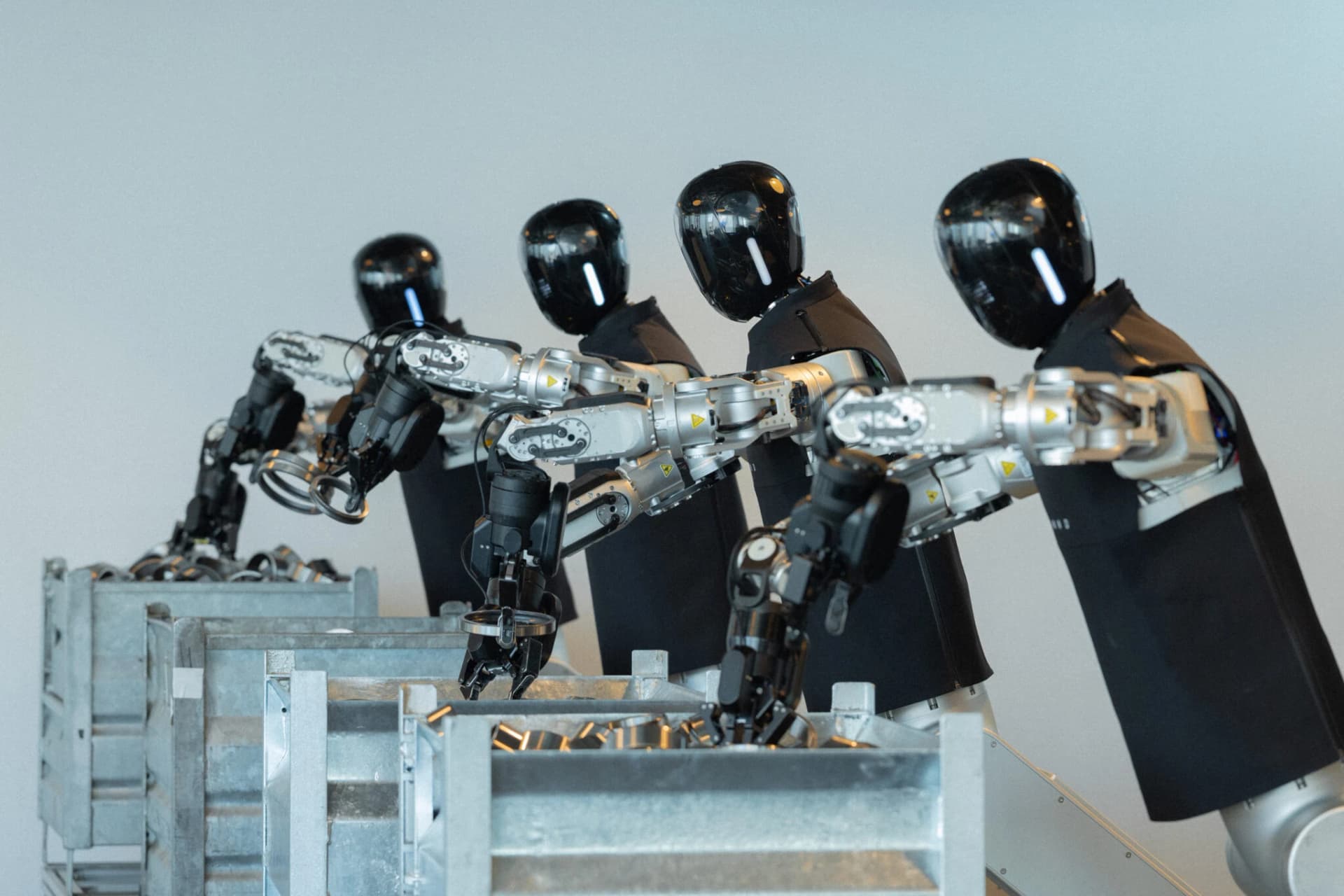
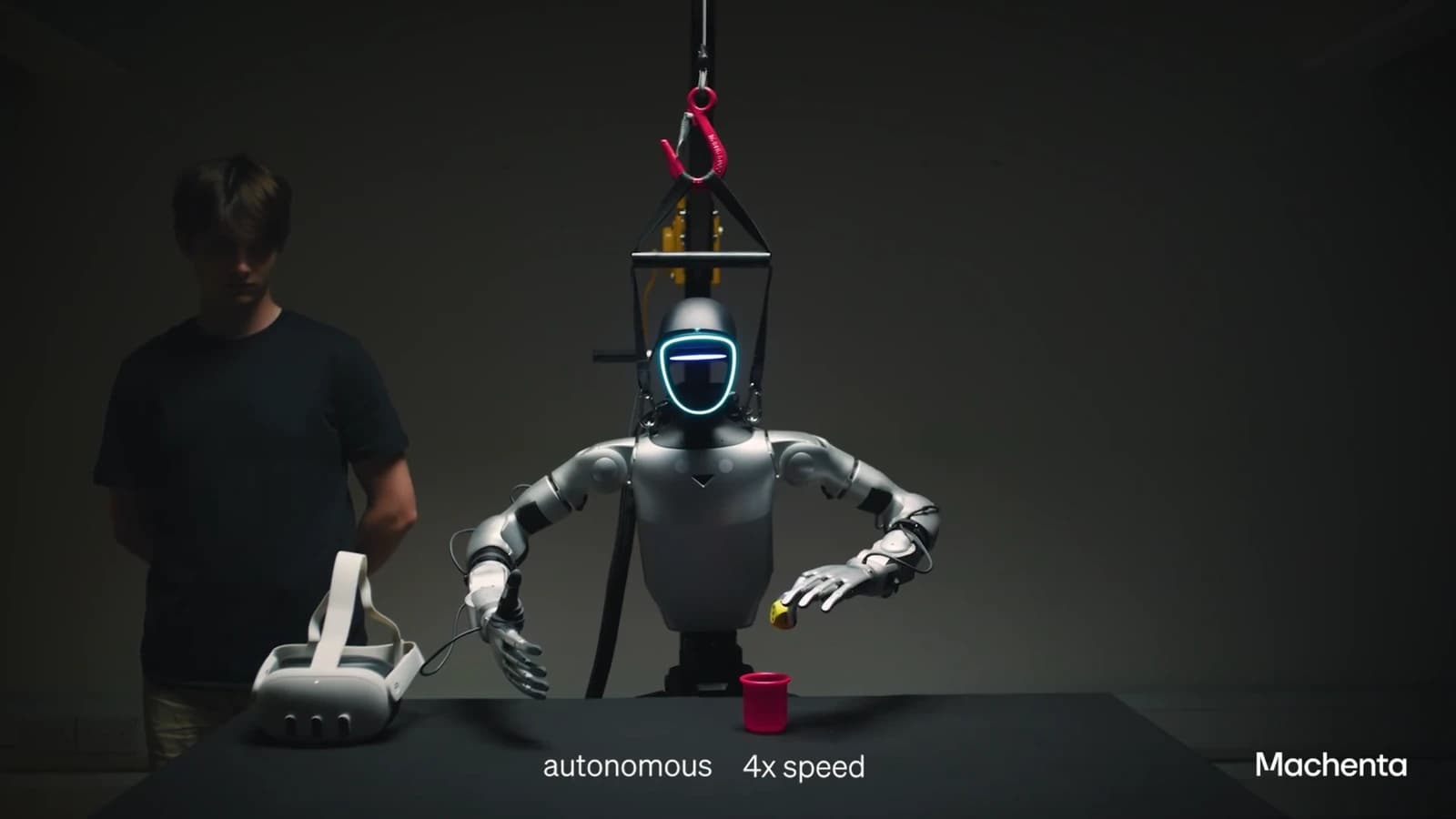
The company's examples include tidying tools, tending machines and a three-robot assembly sequence. Machenta says the same model operates across six robots, different camera arrangements and several teaching methods, including physically guiding an arm and using a VR controller.
It also presents early experiments in which human hand demonstrations guide humanoid hands. These are relevant to humanoid manipulation, but the company explicitly describes them as preliminary and outside its main focus. They do not establish general-purpose, whole-body humanoid capability.
One demonstration is also not always the end of the process. Machenta describes adding examples to resolve ambiguity, combining shorter demonstrations into longer tasks and trying alternative strategies when a robot's physical limits prevent the first approach from working.
Promising results, with a narrow test so far
For reliability, Machenta reports hour-long runs on three simple, self-resetting tasks: 74 successful block placements out of 74 attempts, 78 screwdriver handovers out of 78, and 97 successful bottle-standing attempts out of 99. These are company-reported results on a small set of tasks, rather than evidence of equivalent reliability across its entire demonstration library.
The practical question is whether this can reduce the work between buying a robot and making it useful. If teaching a new operation becomes a short demonstration rather than a separate data-collection and training project, smaller and frequently changing jobs become more plausible targets for automation. Machenta's next challenge is showing that this flexibility survives more demanding tasks and sustained use beyond its research demonstrations.
Share this article
Follow humanoid robotics without following every announcement.
Get the week’s most important launches, funding and research—and why they matter—in one email from Humanoids Daily.
Once a week. Unsubscribe anytime.
Read recent issuesRead next
- Published on
- Reading time
- 2 min read
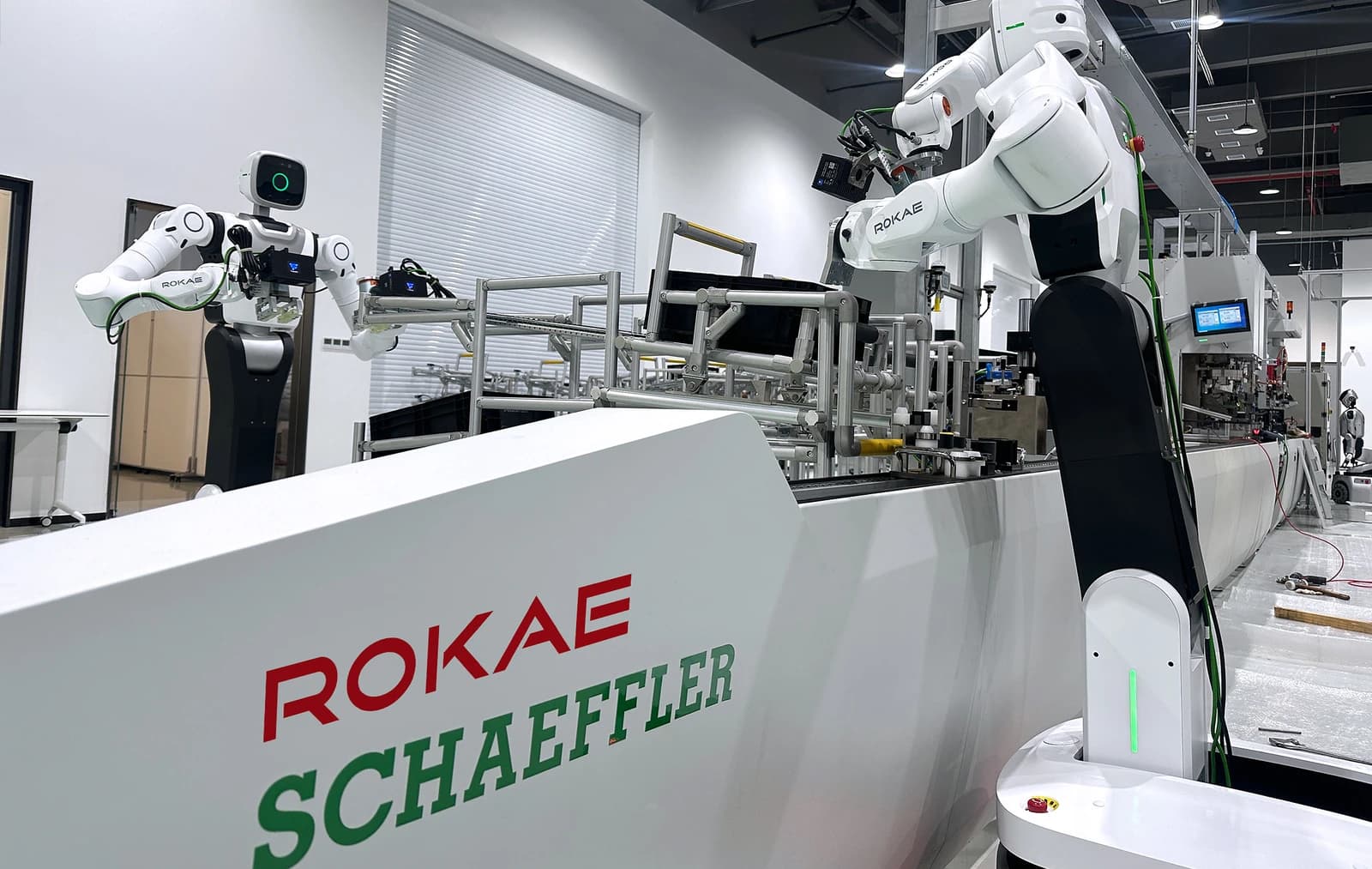
ROKAE Reports 10,000 Humanoid Arms Delivered, Identifies Schaeffler Factory Deployment
- Published on
- Reading time
- 3 min read
Schaeffler COO Sees Humanoid Opportunities in Components, Factories and Services
- Published on
- Reading time
- 4 min read
Enact Raises $30M Pre-Seed to Give Factory Robots a Sense of Force
- Published on
- Reading time
- 3 min read
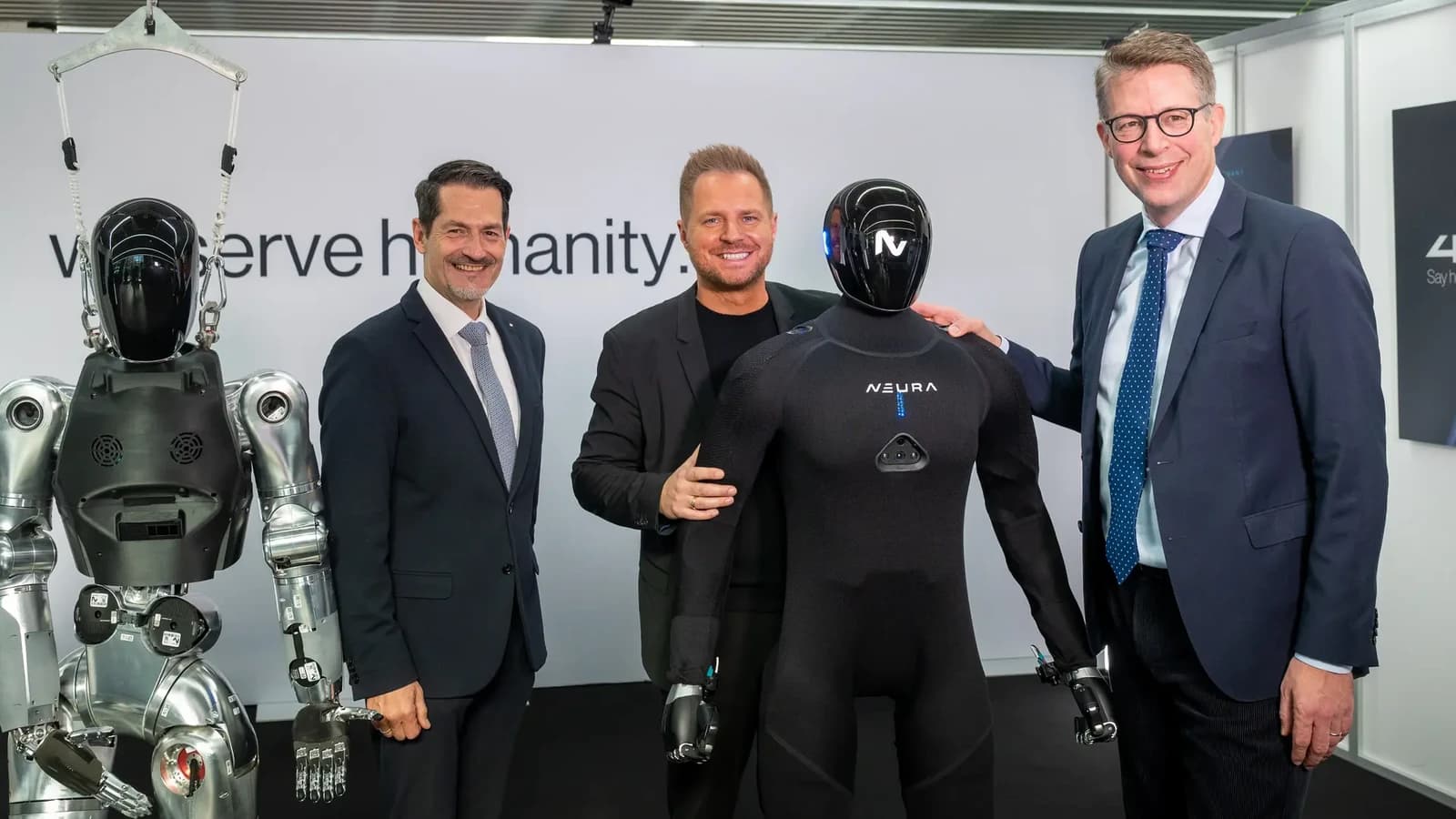
NEURA Unveils Lighter 4NE1 Gen 4 as TUM RoboGym Opens in Munich
- Published on
- Reading time
- 3 min read
Agile Robots Unveils Agile ONE SN as NVIDIA Expands Its Isaac Robotics Platform
- Published on
- Reading time
- 3 min read
Humanoid Expands NVIDIA Collaboration, Replacing Two Robot Computers With One