- Published on
"Robotics Is No Longer an Elitist Sport": NVIDIA Unveils GR00T 2 and Open-Sources the Stack Behind It
One tap, and our reporting appears more often in your Google Top Stories. It makes a real difference to a small newsroom.

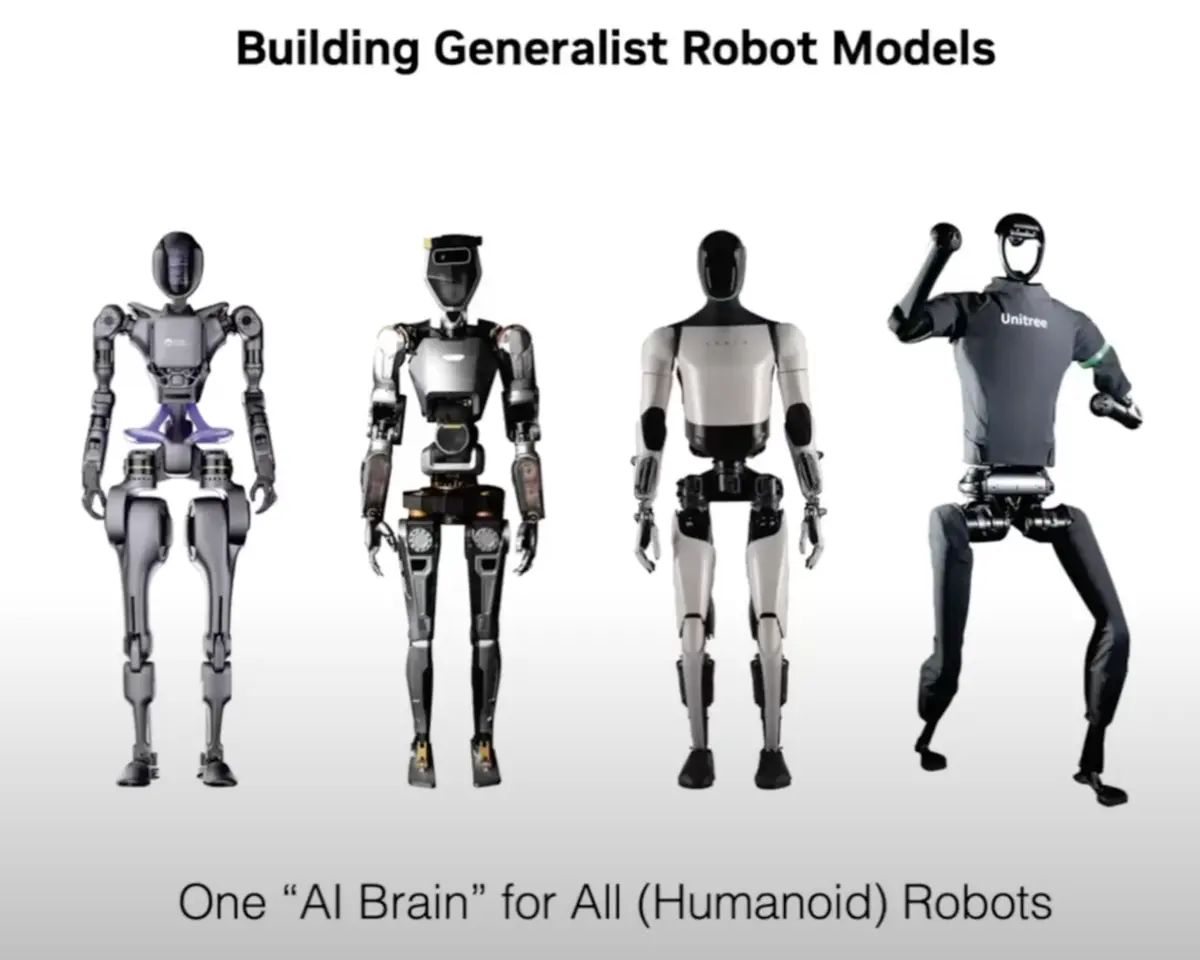
NVIDIA has introduced GR00T 2, the next generation of its robot foundation model, at the Conference on Robot Learning (CoRL) in Austin, Texas. Unlike the vision-language-action models behind earlier GR00T releases, GR00T 2 is a world action model: it predicts the next few frames of video together with the robot's next actions, then executes the actions it has just imagined. The model is built on NVIDIA Cosmos.
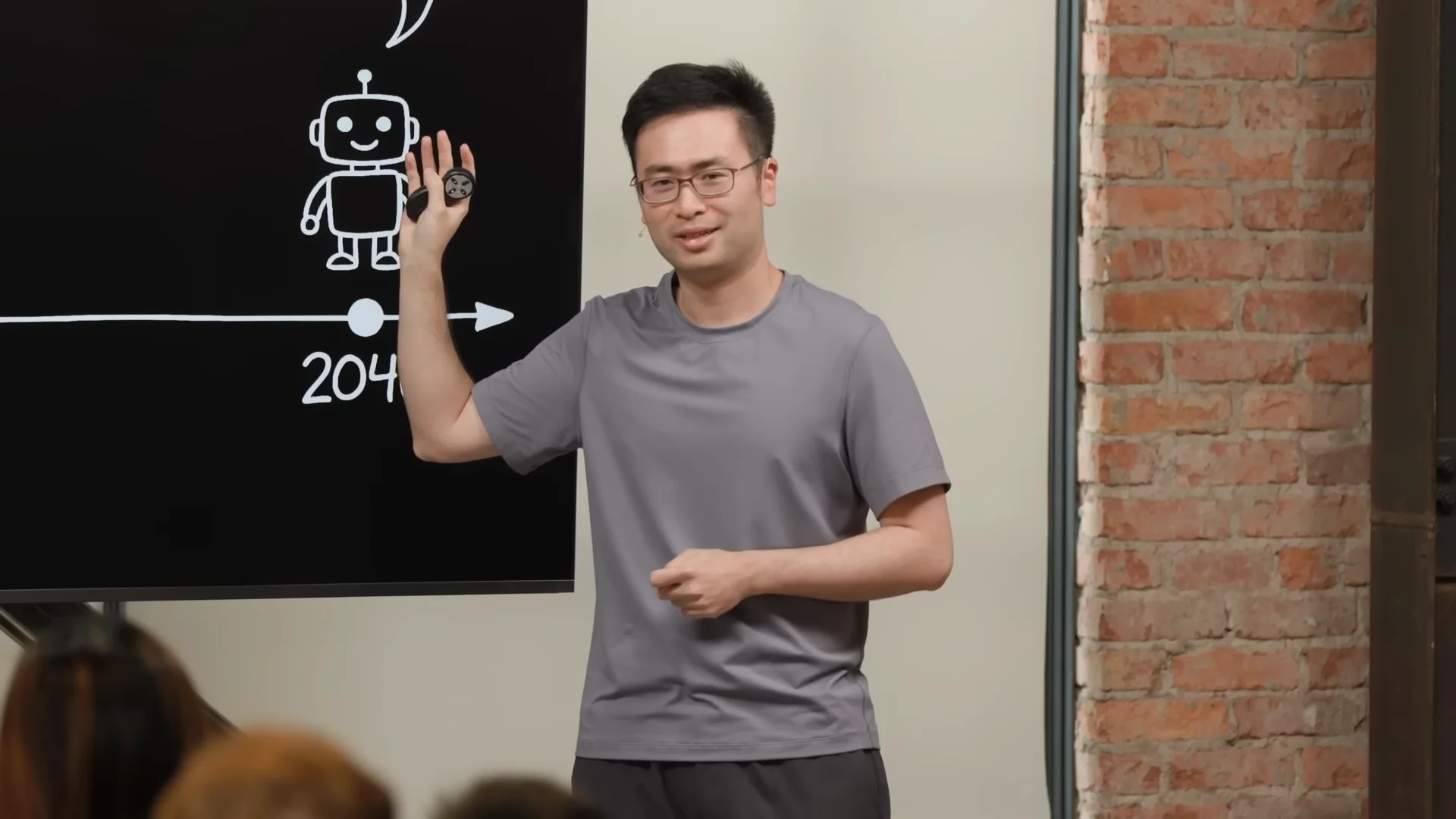
Jim Fan, NVIDIA's director of robotics and a distinguished scientist, presented it on Monday, the first day of the conference, in the closing talk of an afternoon session. The talk is part of CoRL's Day 1 livestream. He said the weights for GR00T 2 and a lighter GR00T 2 Turbo variant will be released as open source in December, along with the training recipe for its cross-embodiment transfer. Several of the tools and data sets used to build it are available now.
- GR00T 2 is a 2-billion-parameter world action model that generates future video frames and robot actions in a single diffusion pass.
- NVIDIA reports 71% average success across 50 tasks from one demonstration per task, and 95% with five, after a 30-minute fine-tune on a single RTX 5090.
- Model weights arrive in December. NVIDIA released 100,000 hours of human egocentric video, the SimFoundry real-to-sim pipeline and hardware designs for its data-collection devices today.
- Foxconn, Siemens, Nexuni and MicroAGI are testing the model in factory, laundry and cable-handling work.
How the model works
In Fan's framing, GR00T 2 is a fast "System 1" skill model that a larger reasoning model can direct. He opened the talk with the release of OpenAI's GPT-6 Astra on 3 September, which he said sent roboticists through "five stages of grief", and argued that frontier language models make a good low-level skill model more valuable, not less.
"Everything is going to be a skill, including System 1," Fan said. "The right question is, what makes a good skill? Can you easily teach it by showing? Can you easily steer it by reasoning?"
Follow humanoid robotics without following every announcement.
Get the week’s most important launches, funding and research—and why they matter—in one email from Humanoids Daily.
Once a week. Unsubscribe anytime.
Read recent issuesThe core model has 2 billion parameters and takes in a language instruction, multiple camera views and the robot's state. It denoises predicted future frames and an action chunk together, executes the chunk, then repeats. "Not a single pixel is real," Fan said over a clip of generated video. "We are watching the robot dreaming."
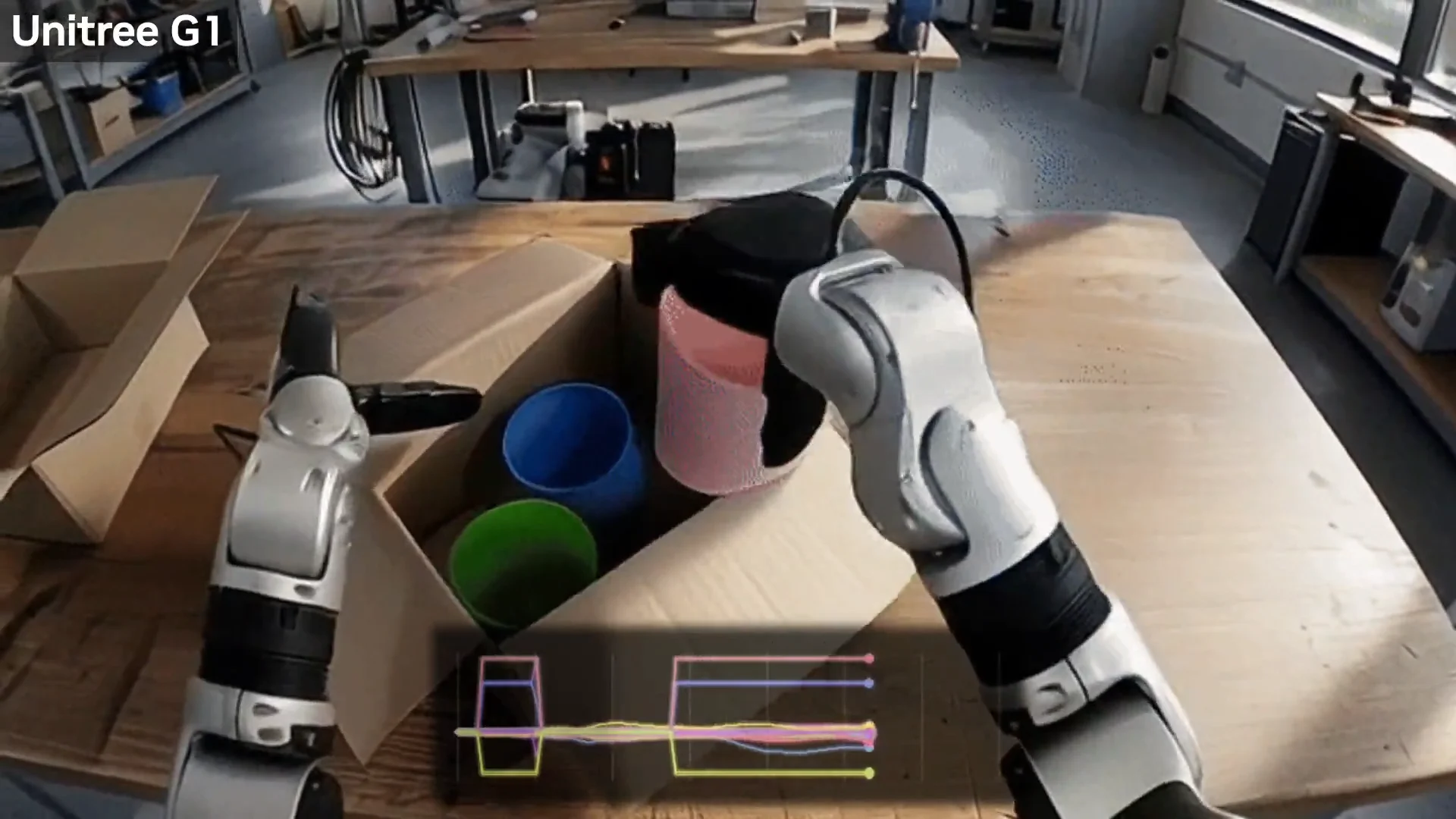
GR00T 2 Turbo keeps the same parameter count but uses four times fewer spatial video tokens, so it can run on the robot. On a Unitree G1, NVIDIA runs Turbo on a Jetson AGX Thor, where one prediction takes 124 milliseconds, while the SONIC whole-body controller runs at 50 Hz on a separate Jetson Orin NX.
According to NVIDIA's project page, the pretraining mixture contains 402,730 hours of egocentric video of people working, 10,184 hours of handheld UMI gripper demonstrations across 2,897 tasks, and 23,500 hours of robot teleoperation. The robot data covers YAM and Franka arms, Sharpa and Wuji dexterous hands, and the Unitree G1. The project page and its whitepaper cover the architecture and evaluations in full.
Learning from humans and simulation
The feature NVIDIA spent the most time on is what it calls cross-embodiment adaptation: collecting training data in an easier setting, such as people wearing capture devices or a simulator, and transferring the skill to a robot that never practiced it.
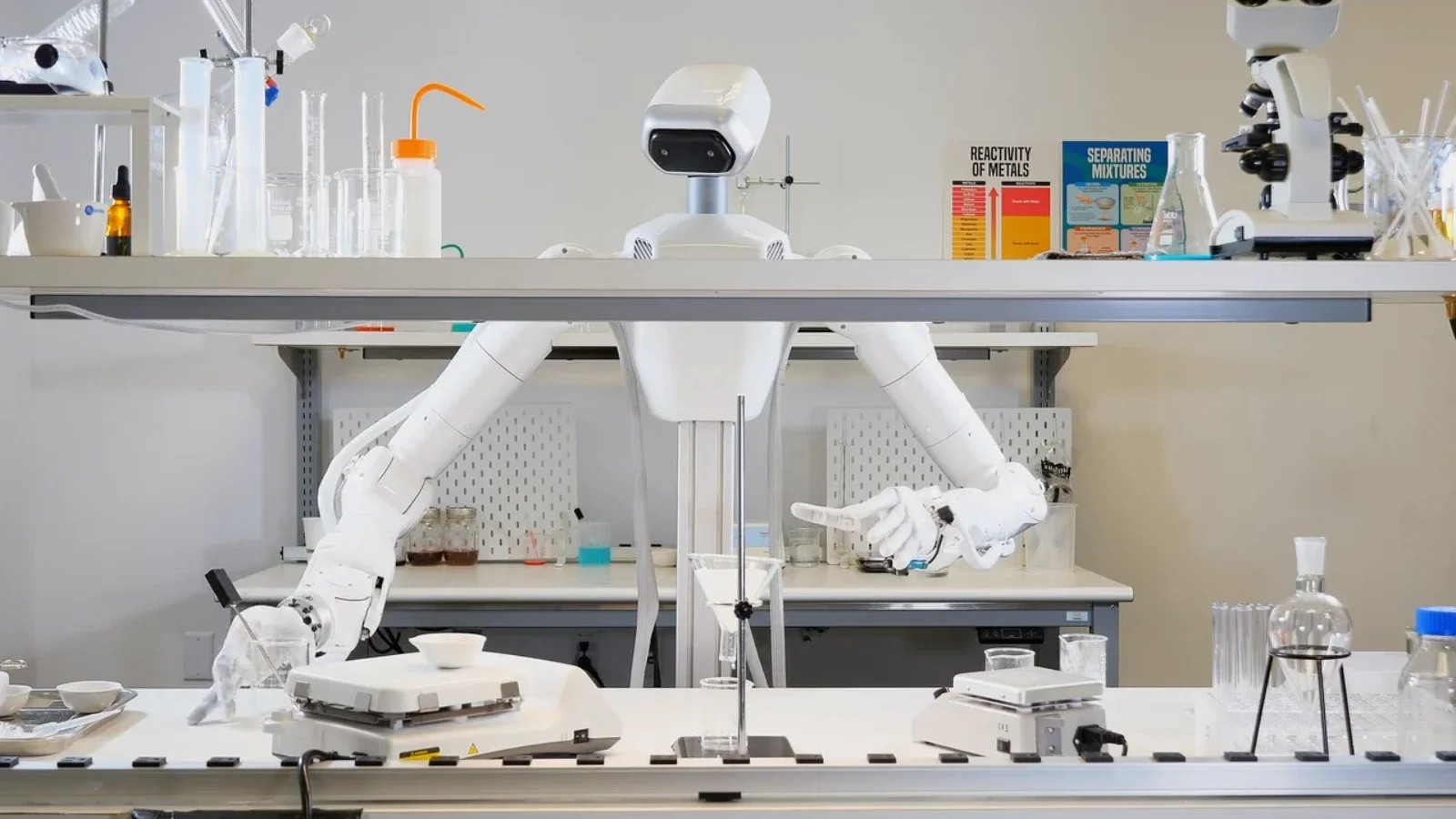
In one demo, a person wearing UMI grippers assembled a toy truck. NVIDIA fine-tuned GR00T 2 only on that human data, and a pair of YAM grippers completed the assembly end to end. The project page puts that task at 60% success, on sequences up to four minutes long. In a chemistry-lab demo, the filtering steps of a salt-purification task were learned from motion-capture-glove recordings with no robot teleoperation.
NVIDIA also built DexUMI, an exoskeleton that maps one-to-one onto a robot hand's joints. Fan showed robot hands cutting bananas with a knife after training only on exoskeleton data. "Our whole lab now smells like banana," he said.
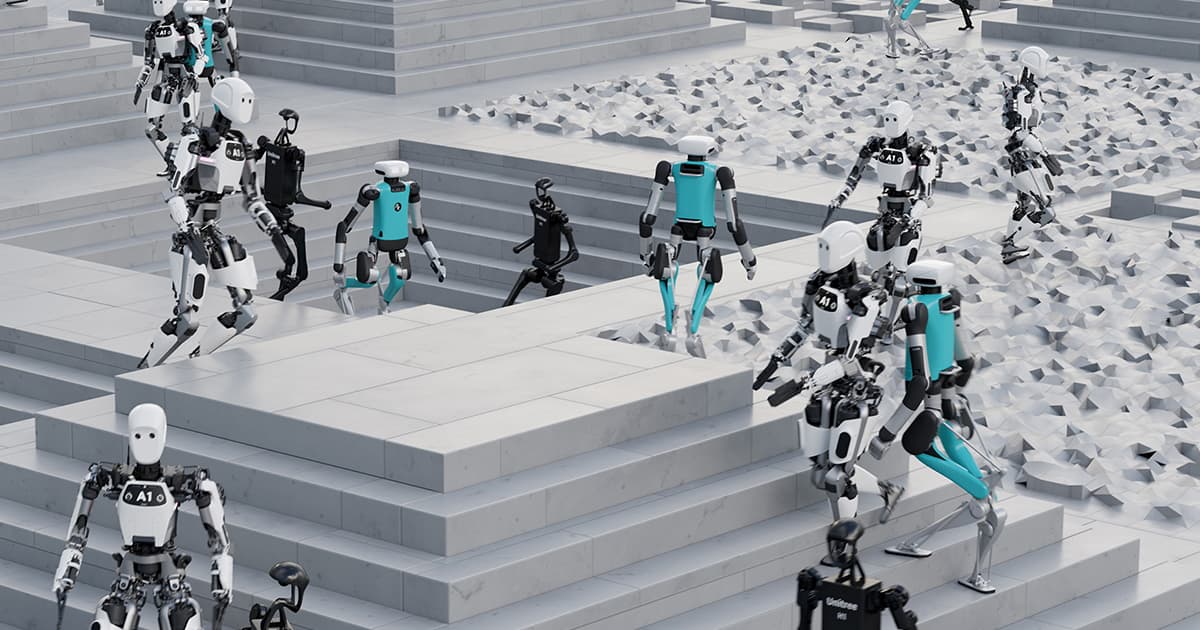
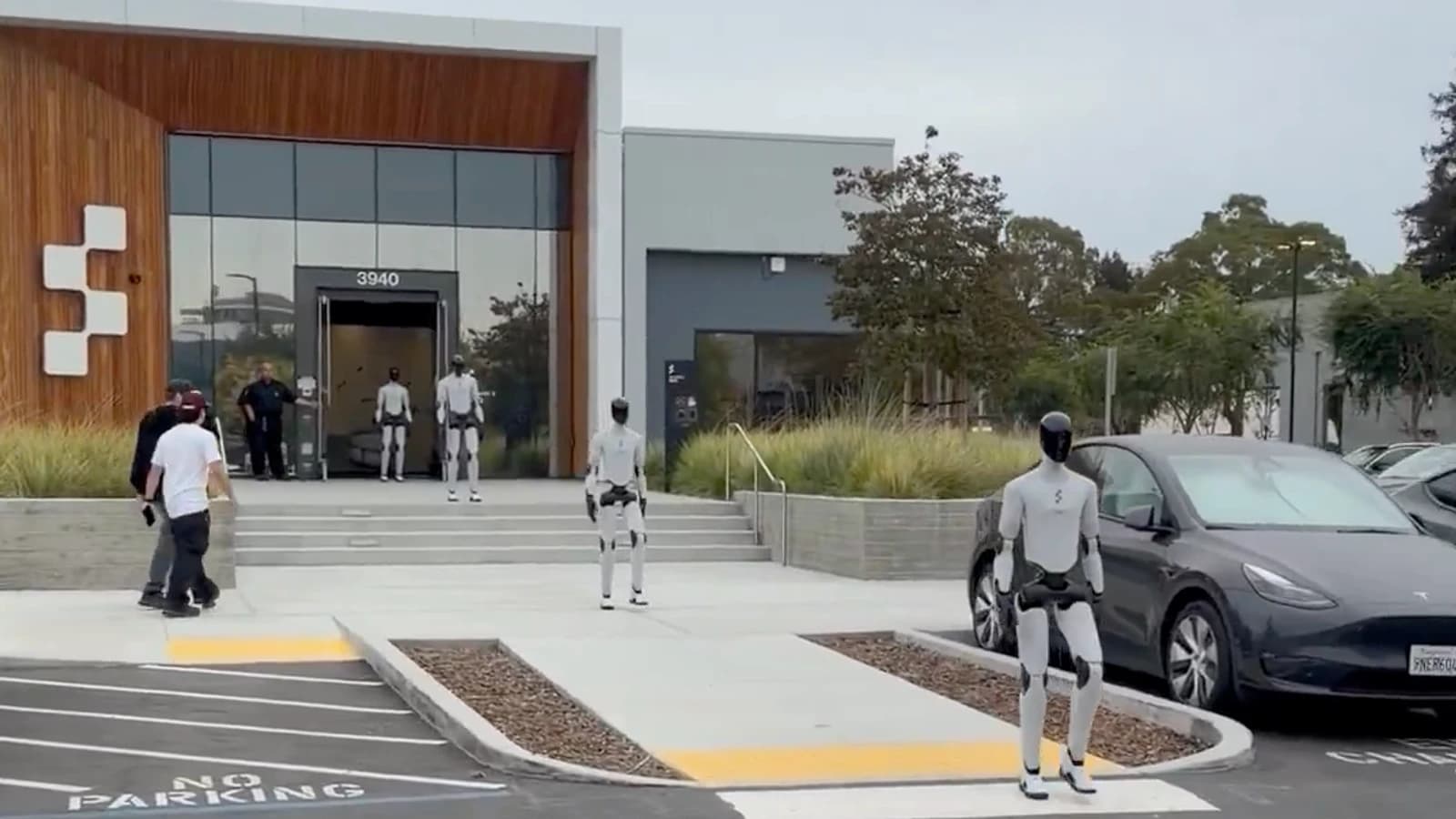
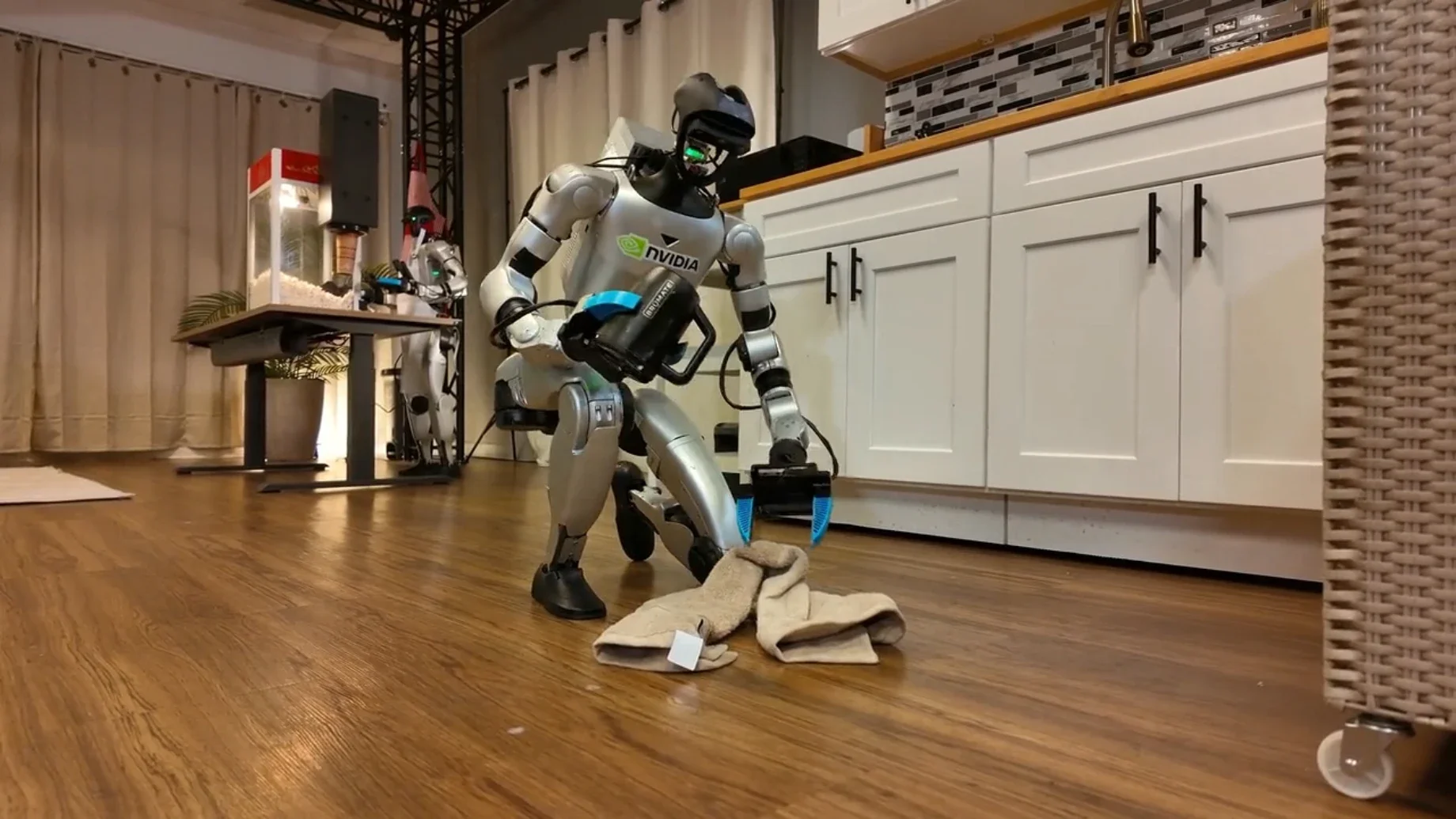
Simulation works the same way. NVIDIA trains policies with reinforcement learning in Isaac Lab, generates synthetic trajectories from them, and fine-tunes GR00T 2 on those trajectories alone before deploying on a real robot. Fan showed this for whole-body tasks on the G1, including wiping up spilled coffee. At a party night in NVIDIA's lab, a G1 running Turbo scooped and served popcorn. NVIDIA reports 48 successes in 48 trials on that task. Fan put the robot's annual recurring revenue at "about $20 per night".
Few-shot numbers
On 50 tasks run on a bimanual robot with two Sharpa hands, NVIDIA reports:
- Zero-shot: 40 of 50 tasks completed at least once without any task-specific demonstrations, for 40% average success.
- One demonstration per task: 71% average success.
- Five demonstrations per task: 95%, with 37 tasks succeeding in every trial. The five demonstrations add up to under three minutes of robot data.
Adaptation uses a 30-minute LoRA fine-tune on a single RTX 5090. NVIDIA's CoRL blog post adds that GR00T 2 currently ranks in the top three across both vision-language-action and world action model categories on the RoboCasa365, RoboLab, RoboDojo and MolmoSpaces leaderboards.
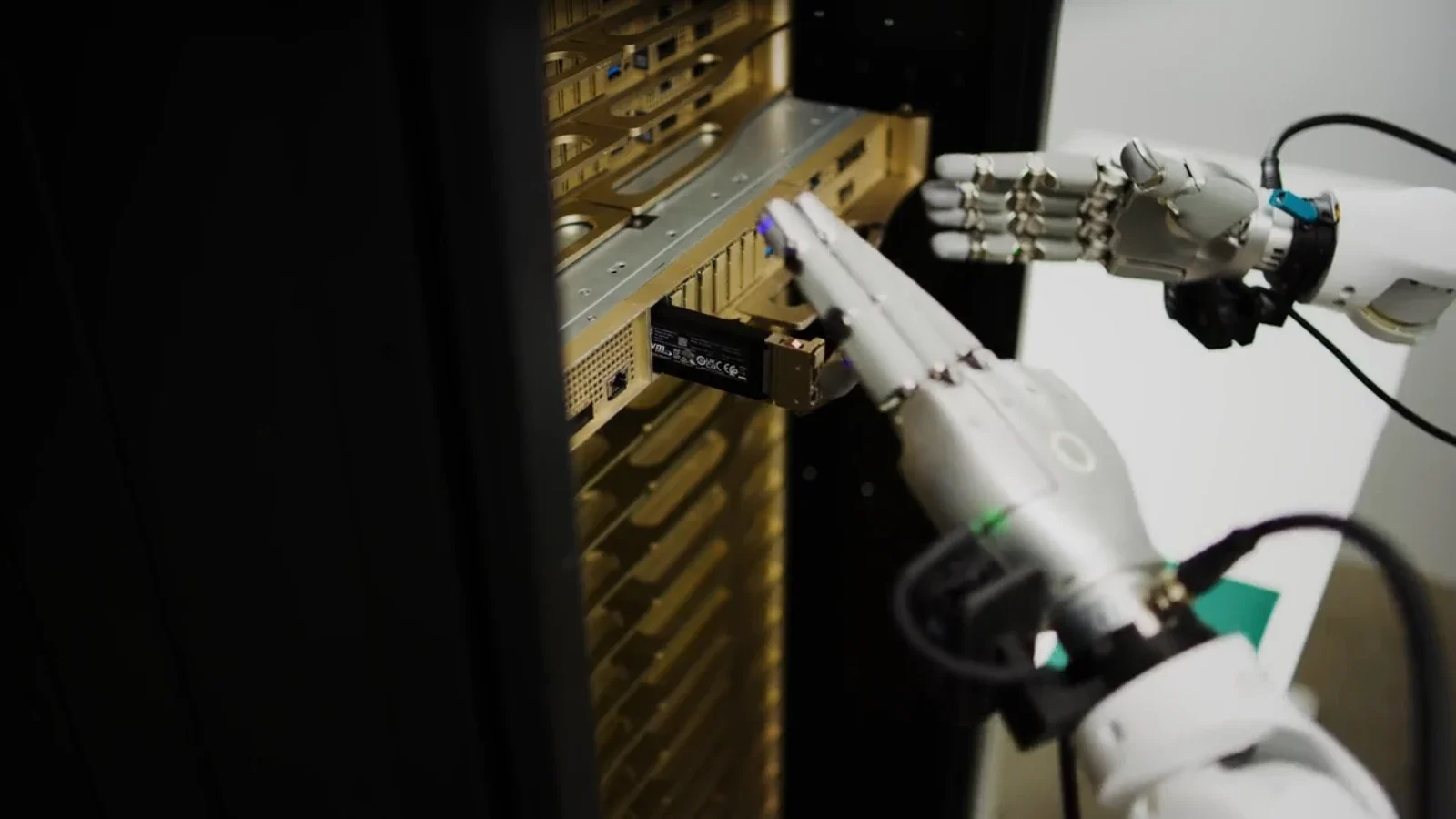
Fan's longest demos went past three to five minutes and 20 steps. One showed a robot cutting a shipping label with scissors, peeling it and applying it to a package after one hour of demonstration data. Another showed the robot removing and reseating a memory module in a GB300 server, which NVIDIA reports at 85% success.
Steering by a reasoning model
The third part of the system is how a reasoning model directs GR00T 2. Fan showed three interfaces, all driven by Astra in his demos:
- WAM API, where the reasoning model draws marks directly onto the camera image to show what to pick up and where to put it. On NVIDIA's YAM arm, success on such instructions rose from 40% to 92%. Fan used it to solve the Tower of Hanoi zero-shot.
- WAM edit, where the reasoning model watches the camera feed and the robot's joint state and corrects GR00T 2's actions only when needed. In a lab demo, Astra stopped a repetitive dipping motion at the two dips the prompt specified, then switched on a microscope and told the robot hand how far to rotate to bring the sample into focus.
- ASPIRE, an agentic harness that mixes GR00T 2 with code-based skills the agent writes by trial and error, first in simulation. When GR00T 2 installed a toy plane's wing upside down, ASPIRE ran a recovery motion and handed control back. With the agent, NVIDIA reports 292 of 300 successful toy assemblies across three toys, against 71 to 84 per toy without it.
"Neither Astra nor GR00T can do this alone, and you need both," Fan said.
What is open, and when
Fan closed the talk by listing releases, describing open-source access as a response to the barrier frontier models have lowered. "Astra didn't shatter our dreams, but it shattered our walled gardens," he said. "Robotics is no longer an elitist sport anymore." He also argued that labs need to run their low-level models locally: "You need to own System 1, untethered and free of the tyranny of conference Wi-Fi."
- GR00T 2 and GR00T 2 Turbo weights, plus the cross-adaptation recipe: December 2026.
- SimFoundry, a real-to-sim pipeline that reconstructs scenes and objects, including articulated objects and particle physics, with physical validation. Version 1.0 is available now, and 2.0 is due in early 2027.
- ASPIRE, the agent framework described above.
- Flora, the video annotation models NVIDIA released in October. Fan said a locally hosted Flora is 125 times cheaper than Astra at the same performance.
- Human-1M-100K, the first 100,000 hours of NVIDIA's in-house egocentric human video, on Hugging Face now, with a browser explorer.
- Hardware designs for the UMI gripper, the DexUMI exoskeleton and a flexible robot neck. "Now you can build it in your own garage," Fan said.
NVIDIA has not yet published the license terms for the GR00T 2 weights. Its Flora models were released under a noncommercial research license, despite similar "open-source" language at launch.
Early users
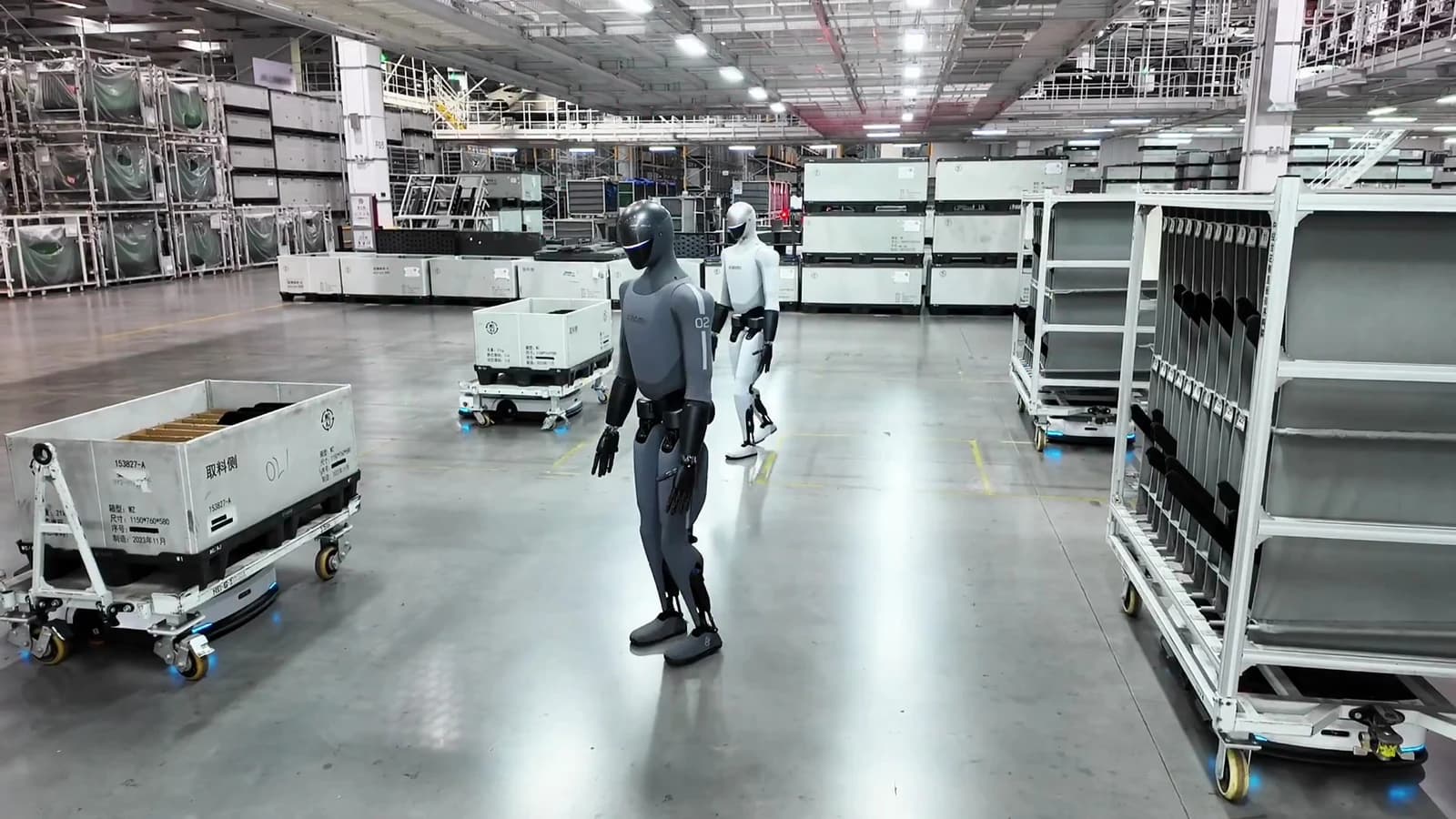
NVIDIA named four companies working with GR00T 2. Taiwanese contract manufacturer Foxconn is applying it to automation for server manufacturing. Siemens is evaluating it for industrial use cases. Nexuni is testing it for laundry handling. MicroAGI has post-trained GR00T 2 with reinforcement learning to swap Ethernet cables with a YAM arm, building and calibrating the simulation environments with Isaac Lab 3.0 and the Newton physics engine.
Also at CoRL: simulation tools
NVIDIA paired the model with Isaac Lab 3.0, which lets users switch between the PhysX and Newton physics solvers. NVIDIA reports up to 2.5 times the training throughput of Isaac Lab 2.3 with PhysX on a vision-based dexterous manipulation benchmark.
Skild AI announced Steel, a GPU rigid-body solver for Newton developed with NVIDIA and published on GitHub. Steel is designed for batches that mix different robots, tasks and scenes on one GPU. On a single RTX PRO 6000 Blackwell, Skild measured 3.9 million environment steps per second across a 20-task mix, up to 13 times PhysX, and a geometric mean of 3.8 times PhysX on single-task runs. The figures cover physics stepping only, not full training.
UC Berkeley professor Ken Goldberg's group presented Graph-as-Policy, in which AI agents assemble robot programs from individual skills and refine them in Isaac simulation, along with an industrial benchmark called VABAR. Ambi Robotics, Bosch Research and Siemens are exploring the approach. "To me, agentic robotics is the most exciting technological development since the internet in 1995," Goldberg said in NVIDIA's announcement.
Share this article
Follow humanoid robotics without following every announcement.
Get the week’s most important launches, funding and research—and why they matter—in one email from Humanoids Daily.
Once a week. Unsubscribe anytime.
Read recent issuesRead next
- Published on
- Reading time
- 3 min read
Foxconn to Deploy NVIDIA-Powered Humanoid Robots in Houston AI Server Plant
- Published on
- Reading time
- 5 min read
Skild AI’s S1 Learns Soccer Through More Than 140 Years of Simulated Self-Play
- Published on
- Reading time
- 4 min read
NVIDIA Open-Sources DreamDojo: A 44,000-Hour "Dream" to Solve the Robotics Data Gap
- Published on
- Reading time
- 4 min read
NVIDIA Details Open-Source GR00T N1 Foundation Model and Hover Controller for Humanoids
- Published on
- Reading time
- 5 min read
The "OpenAI of Robotics" Debate Reignites as GPT-6 Astra Paints in Real Life
- Published on
- Reading time
- 4 min read
The Great Parallel: NVIDIA’s Jim Fan Outlines the Robotics "End Game" Strategy