- Published on
Boston Dynamics Puts Atlas on Wheels to Push Its Motors to the Limit
One tap, and our reporting appears more often in your Google Top Stories. It makes a real difference to a small newsroom.

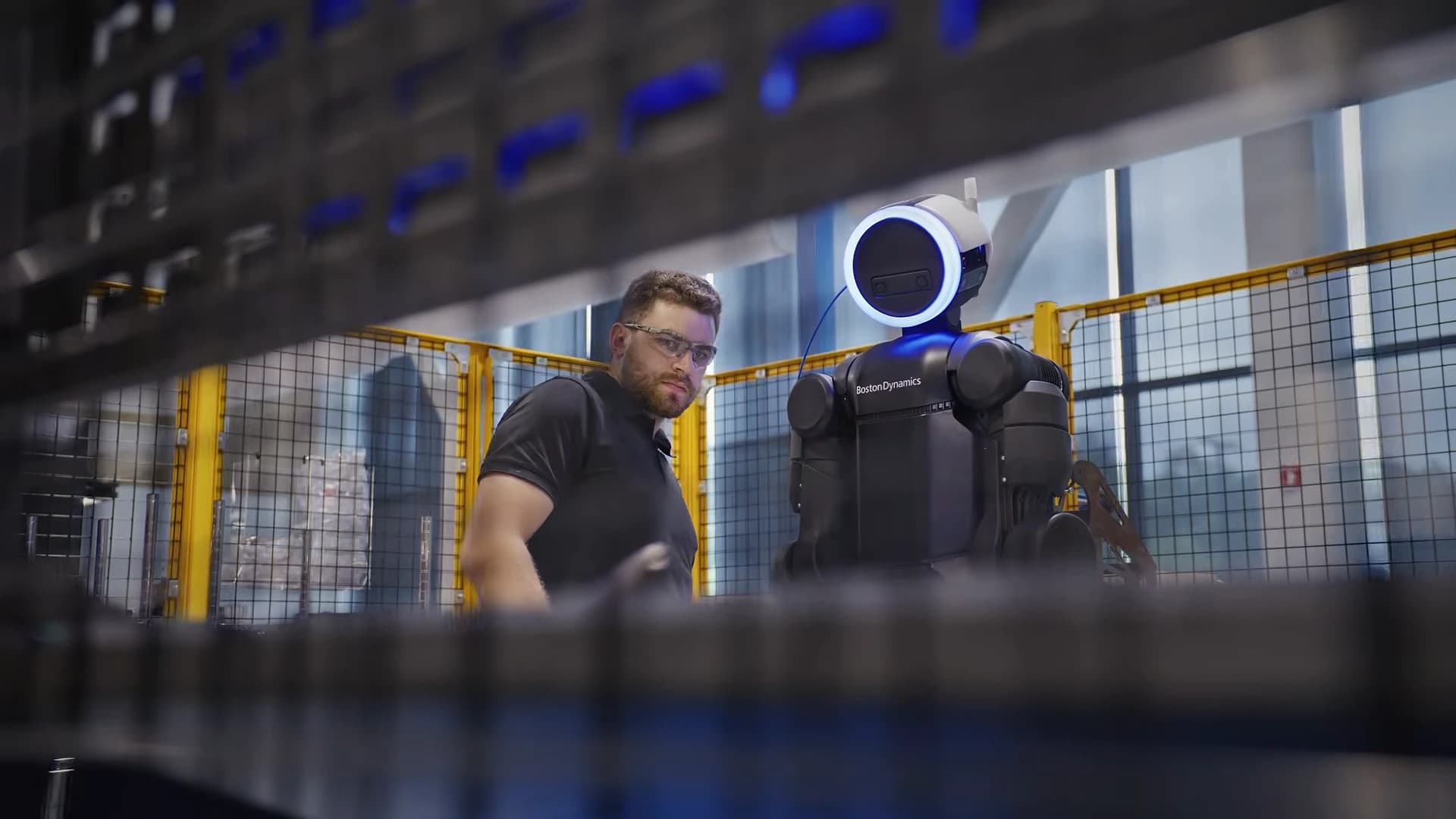
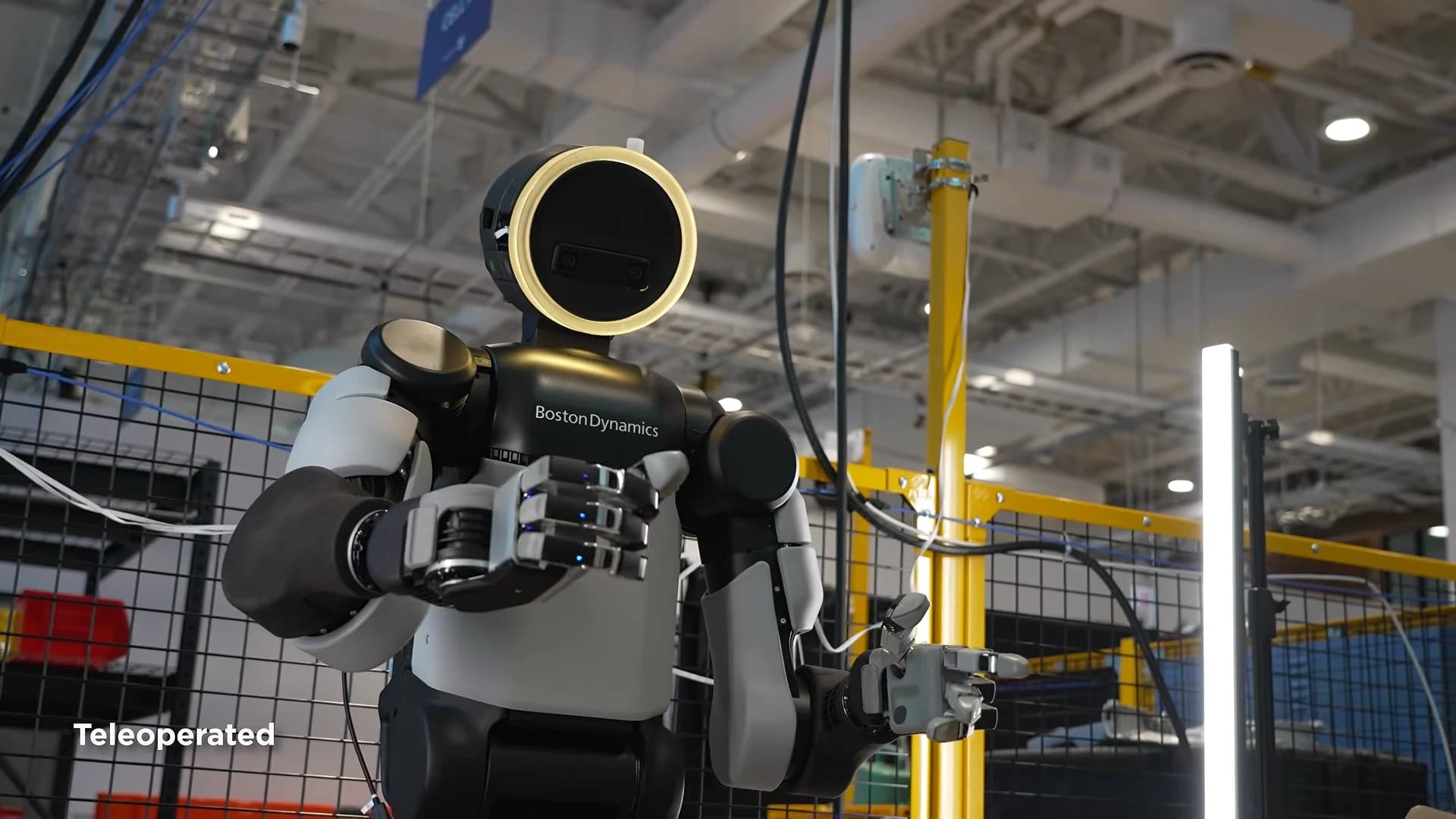
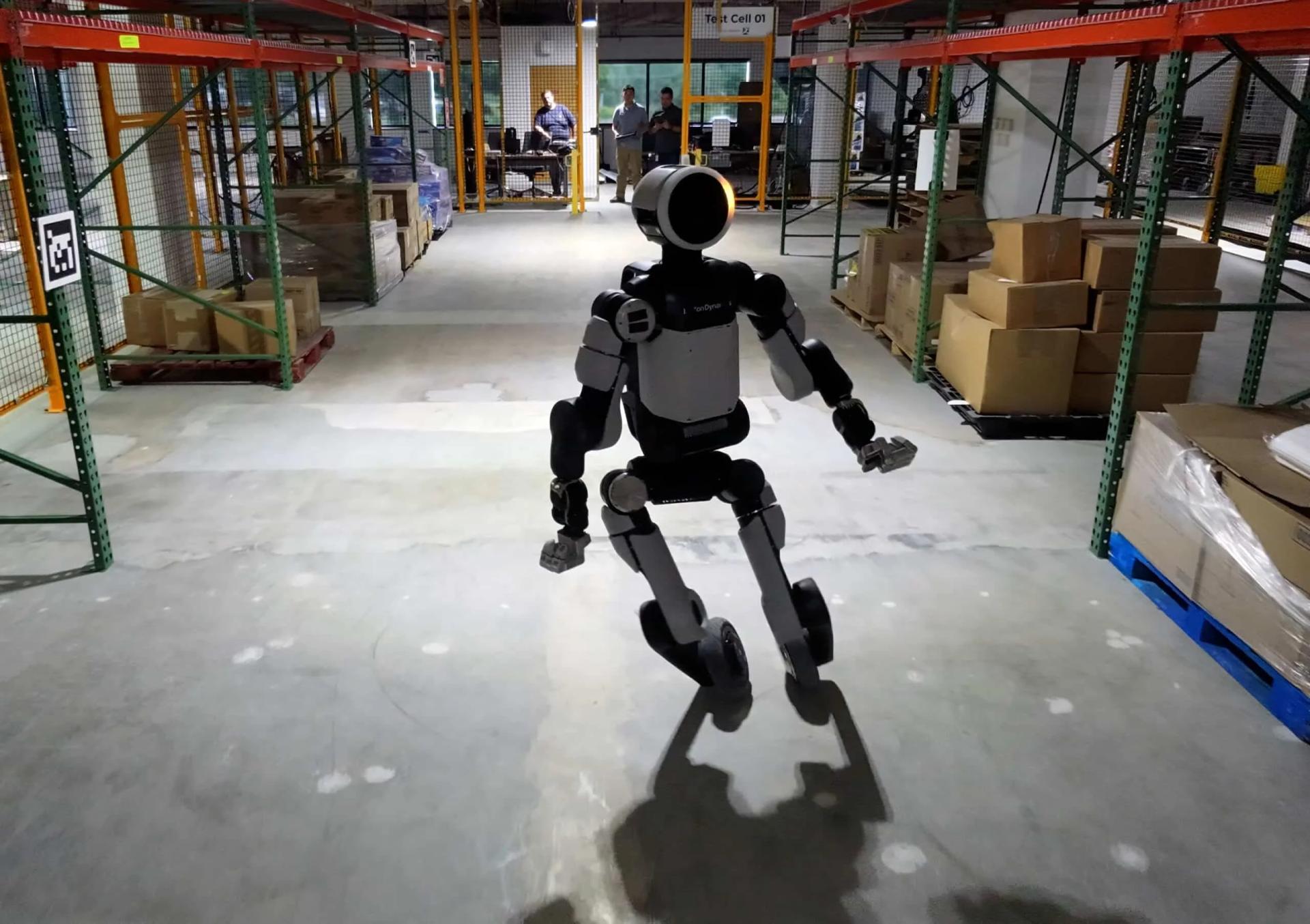
Boston Dynamics has replaced the feet on an Atlas humanoid with wheels and trained it to roll, drift and jump through the same kind of whole-body controller it uses on the walking robot. The company published the experiment today in a blog post and video by Xiaoyu "Andy" Wu, a controls engineer on the Atlas team. It says the wheeled version is a test of its motors, and that it has no plans to sell it.
- Boston Dynamics mounted an off-the-shelf scooter rim on each of Atlas's ankle actuators with one custom adapter, the only new part in the build. In software, each wheel is modelled as an ankle that can spin continuously.
- A learned whole-body controller, trained with reinforcement learning in simulation, made the switch with a few changes to its rewards, command ranges and posture. Smooth rolling emerged without being scripted.
- The point was to run Atlas's motors near their torque and speed limits for long stretches while carrying the robot's weight. Boston Dynamics says the lessons are already going back into the standard Atlas.
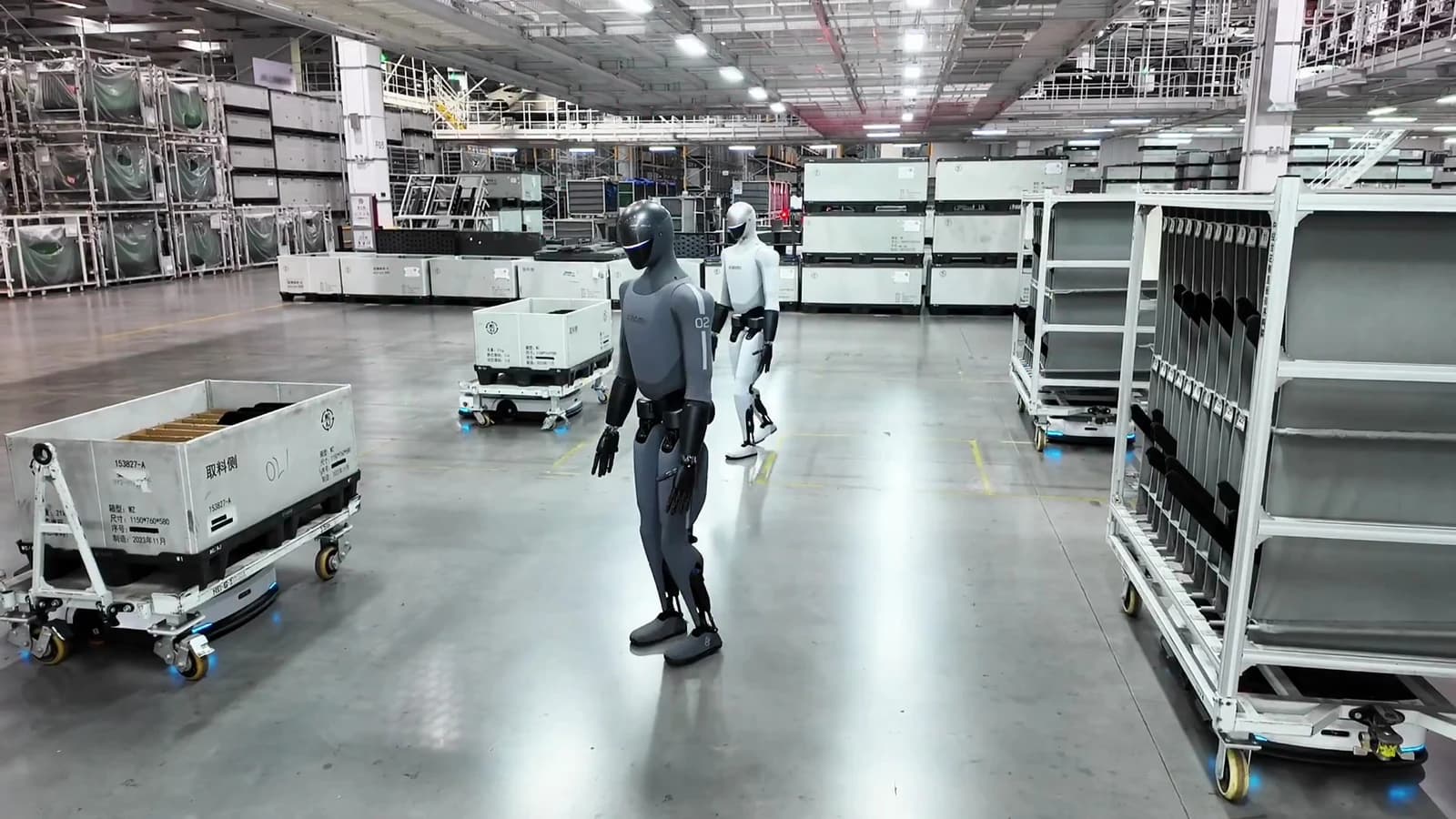
- Hexagon built AEON around wheels from the start, and Unitree has shown wheeled humanoids and sells wheeled quadrupeds such as the new AS2-W.
"A wheeled Atlas isn't a product. It's a research testbed," Wu writes. He has spent more than a decade controlling electric motors and the power electronics that drive them, at Boston Dynamics and before it.
Alberto Rodriguez, who leads AI and robot behaviour for Atlas at Boston Dynamics, framed the work as a controls problem when he shared it on X. In his description, high-performance reinforcement learning means managing two loops at once: the policy running on the robot, nested inside the loop that trains it.
One adapter, one model change
The hardware change is small. Technicians Mark Loughlin and Peter Jardin bolted the wheels on, using an adapter designed by Josh Geating that fixes a scooter rim to the existing ankle actuator. The ankle motor drives the wheel directly. Nothing else on the robot was changed.
Follow humanoid robotics without following every announcement.
Get the week’s most important launches, funding and research—and why they matter—in one email from Humanoids Daily.
Once a week. Unsubscribe anytime.
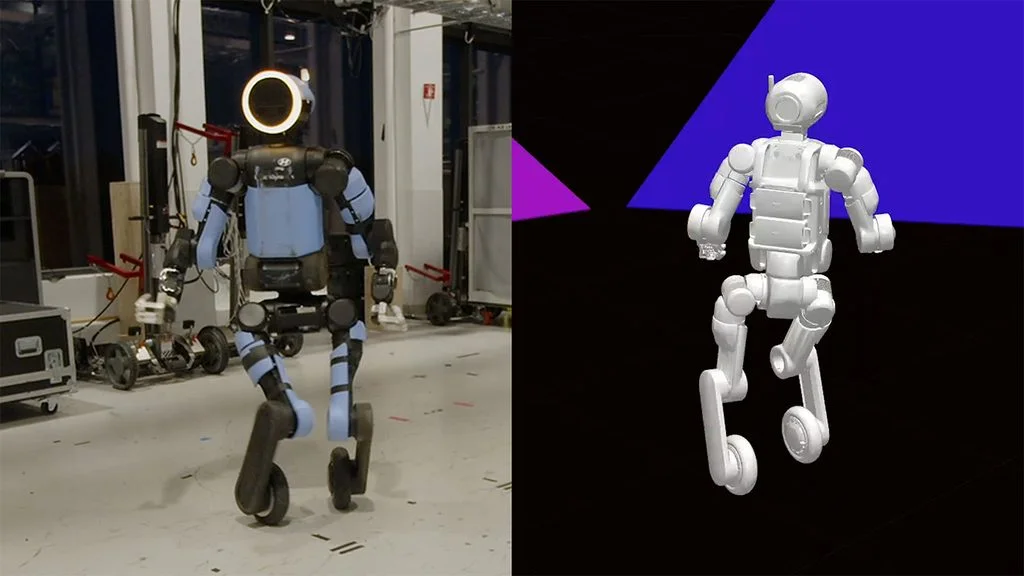
Read recent issuesThe software change was similar in scale. Wu took the standard Atlas robot model and replaced the feet with wheels, each one treated as an ankle joint with no rotation limit. The team then adapted the policy framework it already uses for whole-body control instead of writing a new one. According to Wu, targeted changes to three things were enough: how the rewards are weighted, the range of commands the policy trains on, and how it holds its posture. Rolling then emerged on its own, and the robot stayed stable and easy to steer.
The blog post credits Robin Deits, Shane Rozen-Levy and Roberto Shu for the RL stack, and thanks Google DeepMind's MuJoCo team for the open-source physics engine.
Reusing motion capture made for feet
Some of the behaviours came from Boston Dynamics' existing library of motion trajectories and human motion-capture clips, run through the same trajectory-tracking pipeline the walking Atlas uses. Wu picked clips with a lot of foot sliding in them. In a side-to-side dash with a hop, where a person would slide their feet, the policy steered the wheels and rolled through the move instead.
A 360-degree spin jump, tracked from a human mocap recording, worked on the first try on hardware. During the windup, the wheeled lower body rolled into position before the upward push. Wu calls the jump low-risk despite how it looks, and compares driving the robot as it drifts and slides around to playing a video game.
Why wheels
The wheels were a way to load the motors. Boston Dynamics wanted a case in which the actuators had to deliver high torque and high speed continuously while carrying the robot's weight. Every launch, turn and stop on wheels pushes the leg motors across their torque-speed range, which walking does only in short bursts. Wu acknowledges he could have run a normal behaviour on a robot with feet. He writes that the wheels were not really the point, and that the aim was to push the actuation to its limits.
For the policy to survive that, the simulated robot had to match the real one closely. Wu describes checking that low-level control parameters were identical across every software setup, running characterisation experiments on the hardware, and tuning the simulated motor model to match what was measured. He describes the resulting sim-to-real transfer as "basically perfect."
The company ties this to field data from its Spot quadruped and Stretch warehouse robot, which it says show that robots in the real world meet problems that can't be fully reproduced in a lab. Wu says the findings are already being applied to the standard, legged Atlas, which Hyundai plans to deploy in its plants. His next project is improving how the policy responds when an actuator fails.
Other humanoids on wheels
Atlas on wheels is an experiment, but several companies have shipped or shown humanoids that roll. The Swedish firm Hexagon designed its AEON humanoid around wheel-based locomotion from the start. BMW is bringing it into its Leipzig plant and is the subject of a 1,000-unit commitment from Schaeffler.
The closest match to the Atlas experiment came from Unitree Robotics in April. The company posted a video of a standard G1 humanoid with wheels in place of its feet, rolling and turning on its full legs with a fluid, skating style of movement. Unitree wrote that humanoids "can work without wheels — but they can also have wheels if they want."
Wheels on legs are more common on quadrupeds, where Unitree sells wheeled versions of several of its robot dogs. The most recent, the AS2-W, was unveiled in July. Unitree says it can carry a continuous 16 kg payload and drive more than 30 km unloaded.
Hexagon sells AEON as a wheeled product. Boston Dynamics' version reused a walking robot's ankle and its existing controller, and the company says it has no plans to sell it.
Share this article
Follow humanoid robotics without following every announcement.
Get the week’s most important launches, funding and research—and why they matter—in one email from Humanoids Daily.
Once a week. Unsubscribe anytime.
Read recent issuesRead next
- Published on
- Reading time
- 6 min read
Apple's HALO Teaches a Unitree G1 to Navigate Unseen Rooms With Simulation-Generated Data
- Published on
- Reading time
- 5 min read
Skild AI’s S1 Learns Soccer Through More Than 140 Years of Simulated Self-Play
- Published on
- Reading time
- 3 min read
Boston Dynamics shows off a fascinating leap in humanoid mobility
- Published on
- Reading time
- 3 min read
Amazon's ResMimic Teaches Humanoids to Handle Objects by Adding Precision to General Motion
- Published on
- Reading time
- 4 min read
Boston Dynamics Says Atlas Takes a Day to Build—and Wants to Cut That to an Hour
- Published on
- Reading time
- 4 min read
Boston Dynamics Gives Atlas Four-Finger Hands Built for Tools and AI Training