- Published on
"Peace Through Strength": Foundation CEO Showcases Phantom Robot on Fox Business
One tap, and our reporting appears more often in your Google Top Stories. It makes a real difference to a small newsroom.



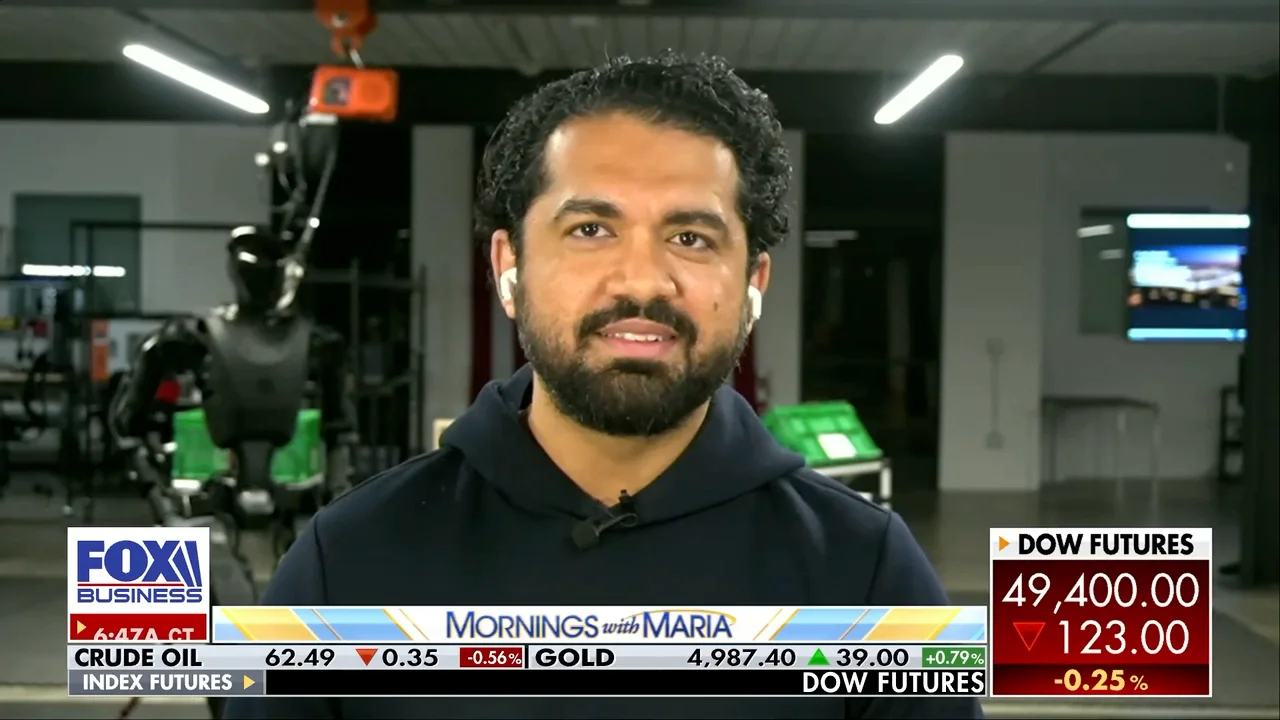
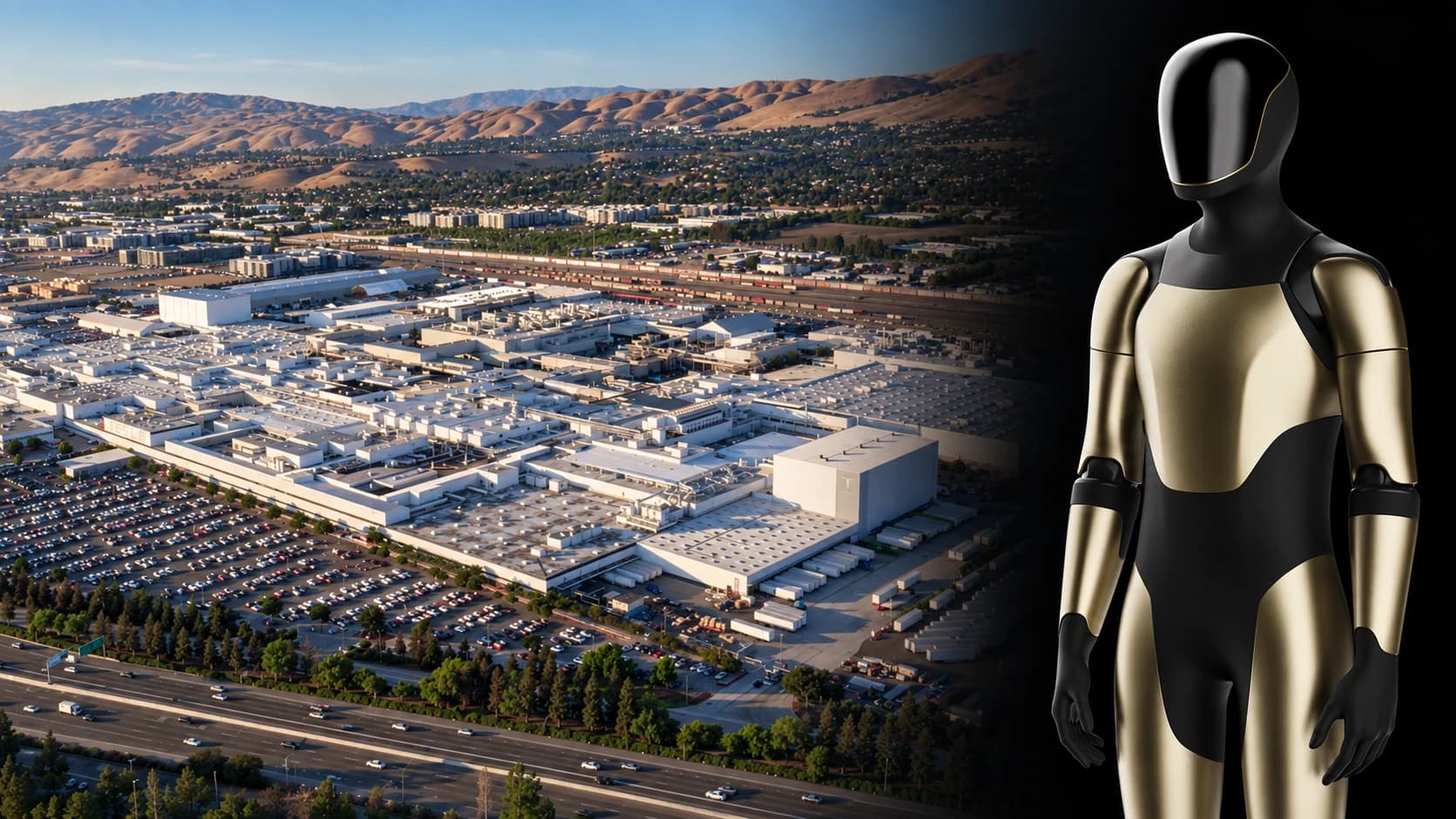
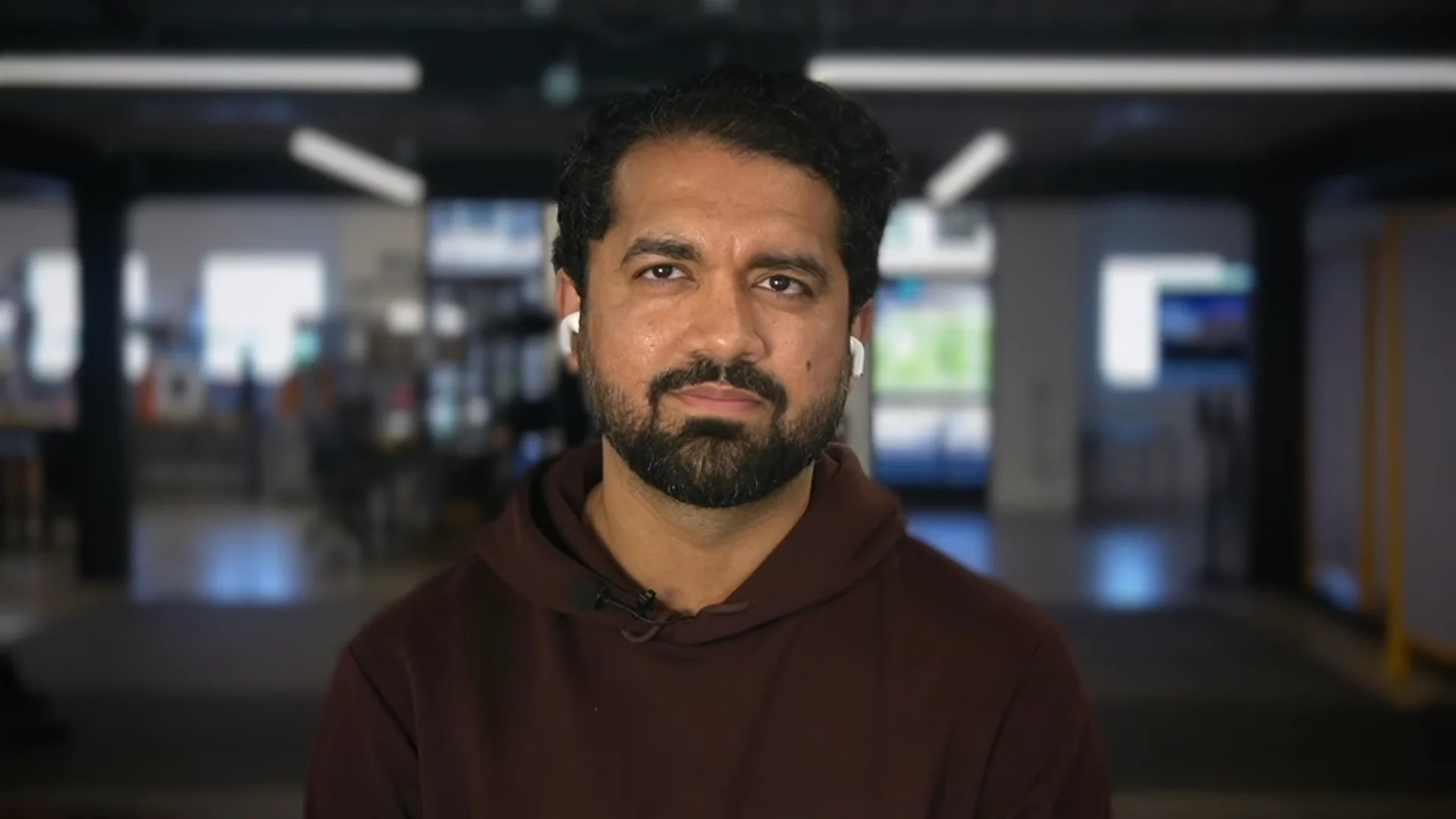
In a televised appearance on Fox Business’s Mornings with Maria on February 13, 2026, Foundation Robotics CEO Sankaet Pathak doubled down on his vision of a robot-integrated future, spanning from U.S. automotive factories to the front lines in Ukraine. The segment, which featured a live demonstration of the company’s "Phantom" humanoid walking in the background of Pathak’s San Francisco headquarters, provided new details on the company's dual-use strategy and its increasingly ambitious global roadmap.
The "Inevitable" Automation of Work
The interview opened with Pathak reacting to recent predictions from AI leaders at Microsoft and Anthropic regarding the rapid automation of white-collar tasks. Pathak expressed agreement with the assessment that repetitive or data-heavy jobs are "potentially going away" and will be replaced by humanoids or other robotic forms.
"I think this is as close to the singularity as we can be," Pathak told host Maria Bartiromo. While acknowledging that the shift will be "extremely disruptive" in the short term—referencing Elon Musk’s description of the transition as a "supersonic tsunami"—Pathak argued that the automation of labor could eventually liberate humanity from repetitive work, enabling a future where machines handle essential services like housing and healthcare.
The Ukraine Ambition: High-Stakes Proving Ground
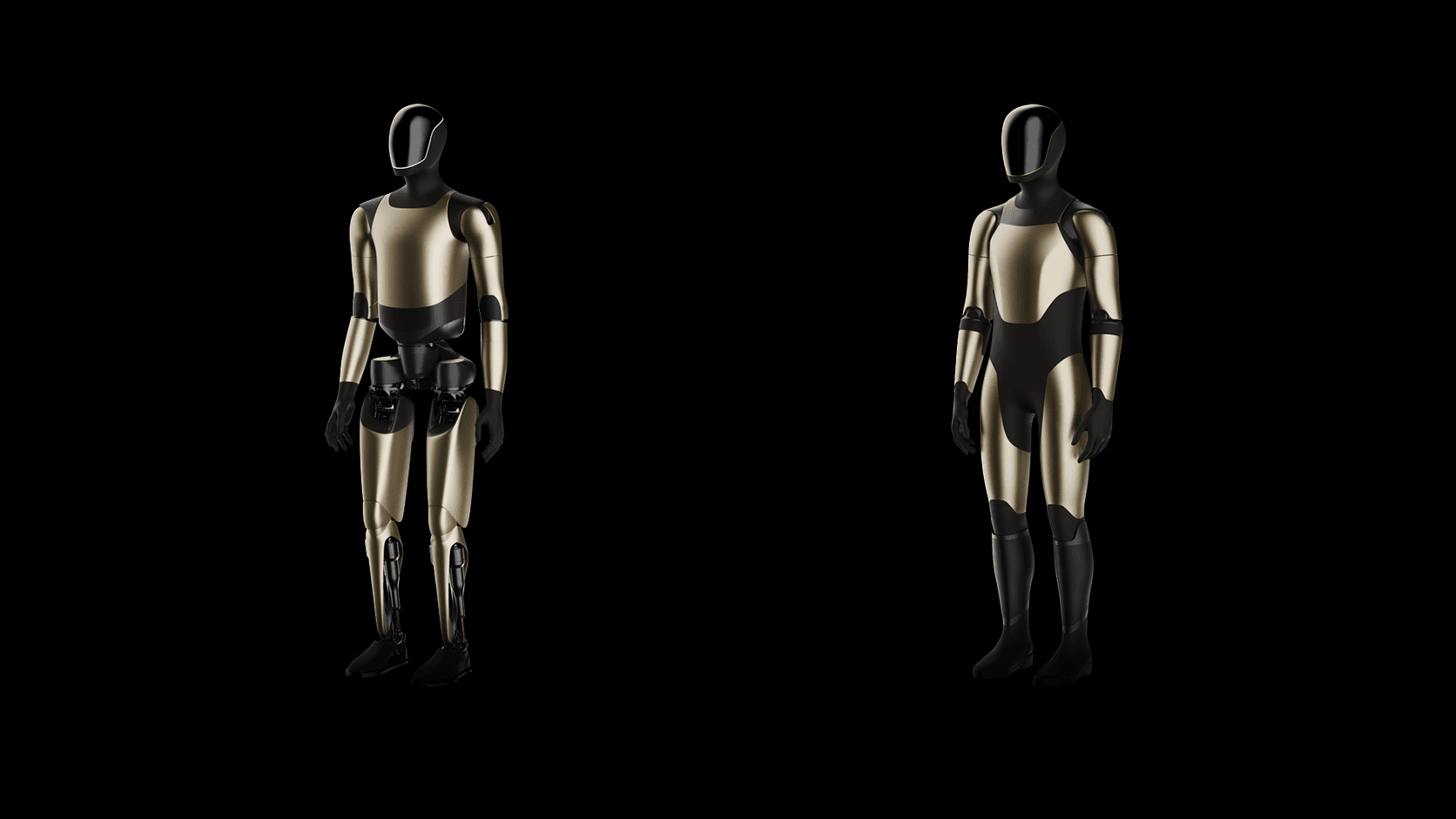
During the segment, CEO Sankaet Pathak discussed a U.S.-brokered agreement intended to eventually deploy "Phantom" robots to Ukraine. While the deal signals Foundation’s intent to move into the defense sector, it remains in the "pilot" phase. The company’s vision involves three primary military applications for its 5'9" humanoid units:
The weekly humanoid robotics briefing
One email a week: the launches, funding and research that mattered, with context from Humanoids Daily.
Read recent issues- Logistics: Moving supplies in areas where human soldiers are frequently targeted by airborne drones.
- Maintenance: Performing inspection and repair tasks behind the lines.
- Reconnaissance: Breaching doors and surveilling buildings to ensure they are safe for human entry.
Pathak framed this military focus as a necessity for "peace through strength," arguing that a large-scale fleet of U.S. humanoids serves as a deterrent to adversaries. This aligns with earlier statements from co-founder Mike LeBlanc, who has pitched the Phantom as a “bullet sponge” designed to take risks that would otherwise cost human lives.
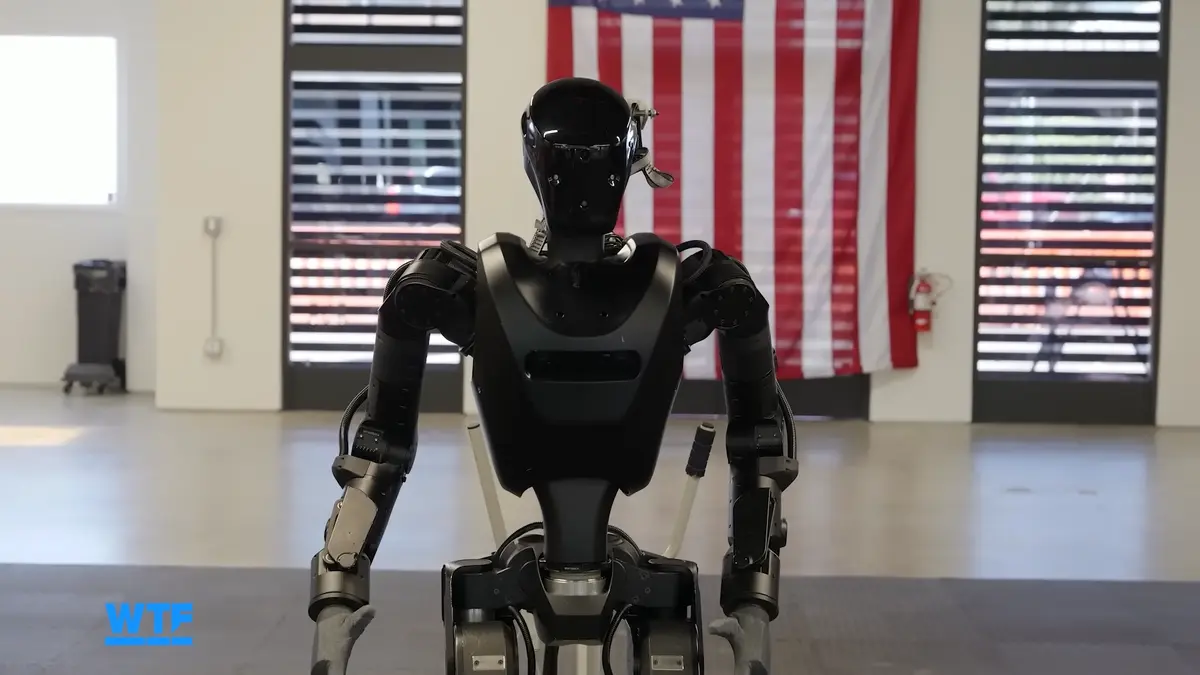
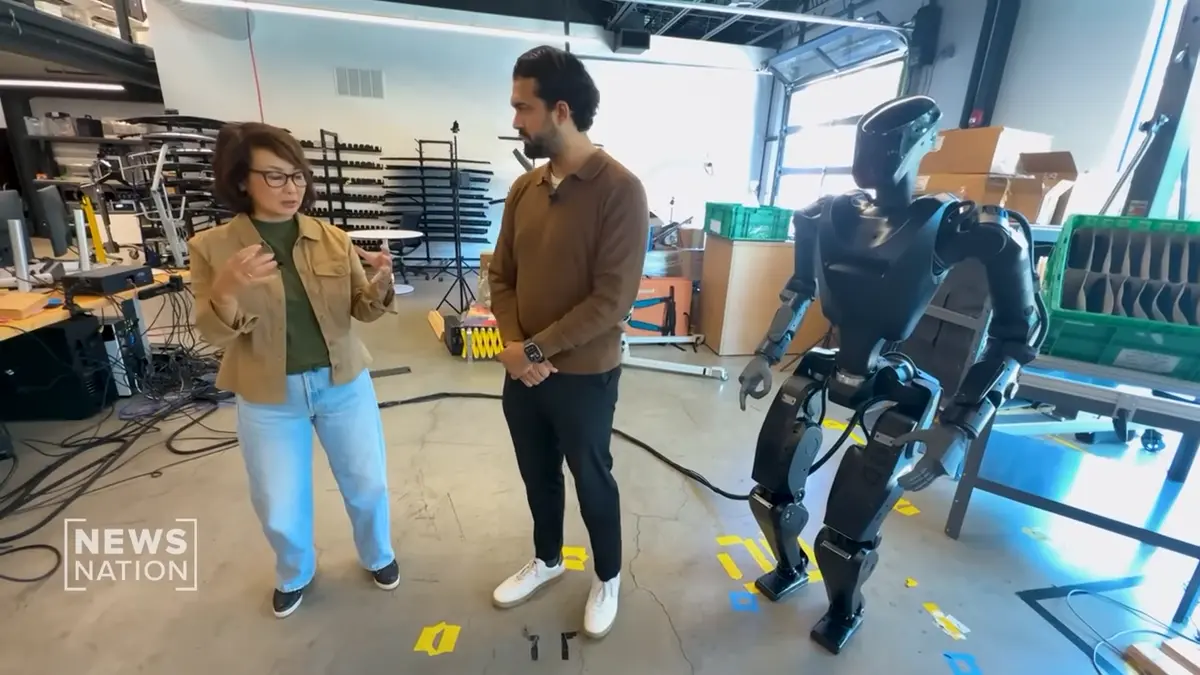
The Phantom units discussed are 5-foot-9-inch machines capable of carrying over 40 pounds. Unlike many U.S. competitors who have pledged not to weaponize their platforms, Foundation remains unapologetic about the "natural progression" toward armed robots.
Manufacturing Claims and Technical Moats
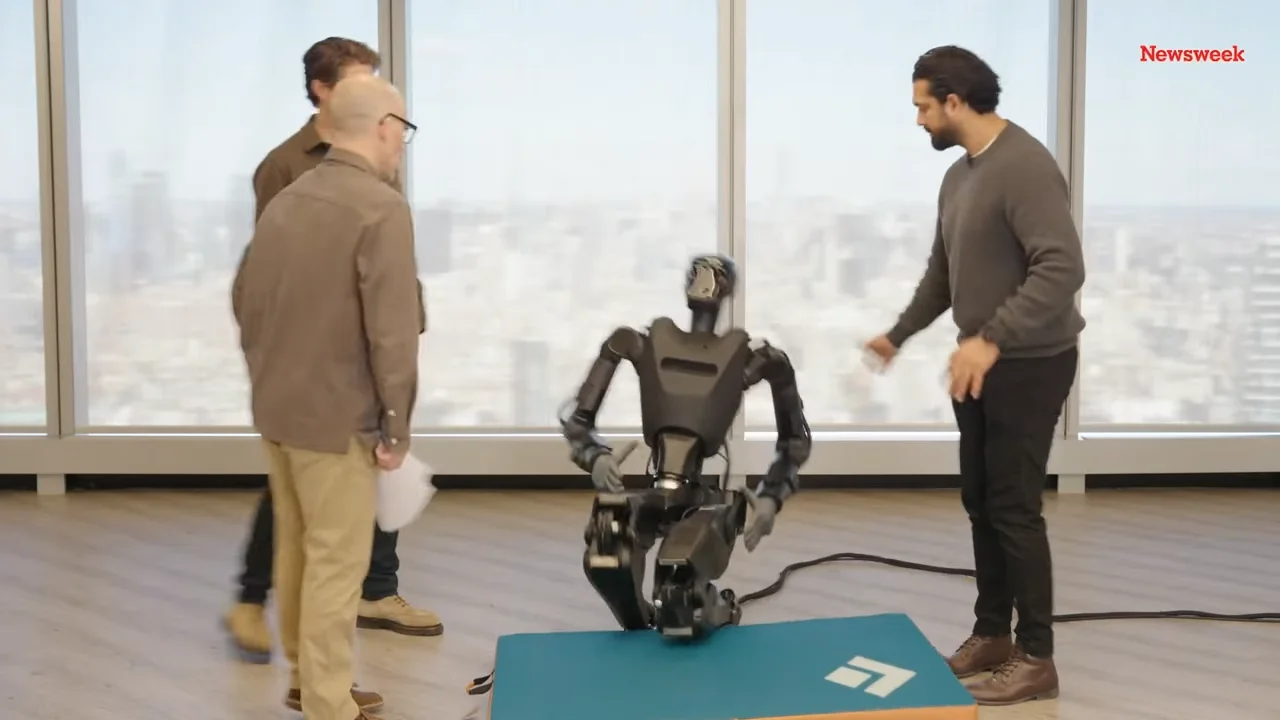
During the segment, Bartiromo requested a closer look at the robot walking behind Pathak. The Phantom unit walked into the frame and turned to face the camera, demonstrating what Pathak described as a new AI policy enabling autonomous movement of both the legs and upper body.
This motion is powered by Deep Variational Bayes Filters (DVBF), a probabilistic AI approach designed to give the robot an "intuitive understanding of physics" rather than relying on manually tuned gains. Pathak claimed that this technology allowed Foundation's robots to help build approximately 20,000 cars in U.S. factories last year.
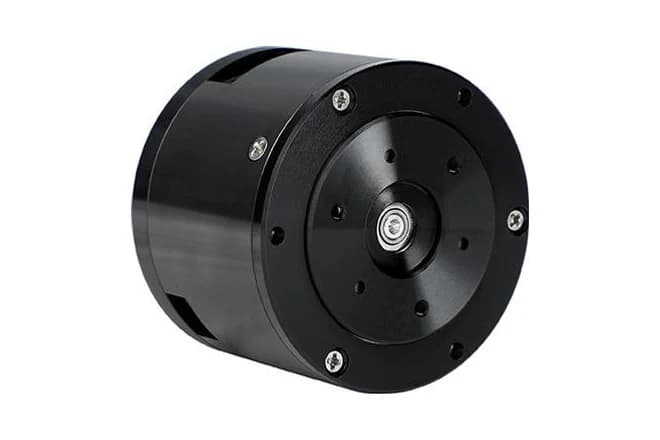
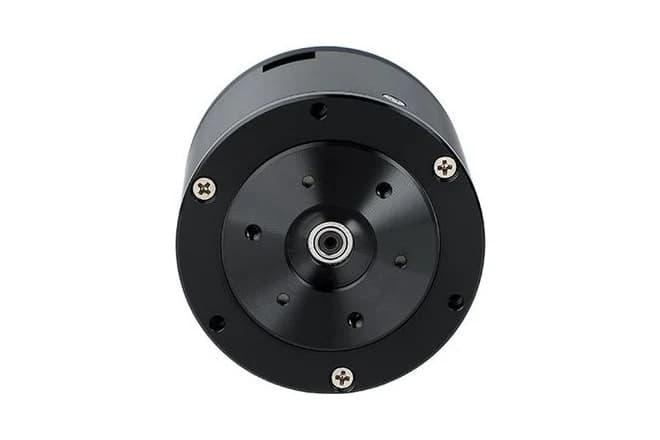
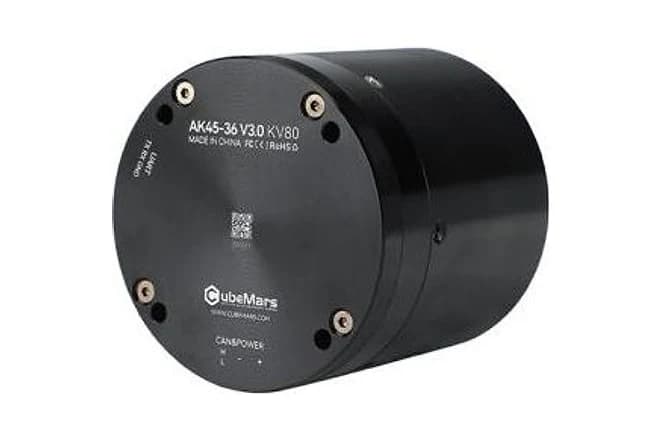
Foundation recently let CoreMemory in to their Robo Factory 1 in San Francisco, where robots are assembled using a mix of titanium rods for structural integrity and proprietary rolling contact gearboxes that claim 90-95% energy efficiency.
The Antarctica and Lunar Master Plan
The interview and Foundation’s "Master Plan" reveal ambitions that extend far beyond industrial warehouses. The company has outlined a path to achieve "$1B+ ARR" and "fleet coherence"—a state where robots coordinate in real-time like a networked GPU cluster—to fund even more radical projects.
According to the company's mission statement, profits from humanoid deployments will be used to:
- Build a base on Antarctica.
- Develop autonomous land and air transport (referred to as ATVs and "Quinjets").
- Establish self-sustaining bases on the Moon and Mars.
Pathak argues that humanoids are the essential first step because the "world is built for humans," and machines must evolve to navigate our spaces if they are to build the infrastructure required for interplanetary expansion.
A Legacy of Skepticism
Despite the polished Fox Business appearance, Foundation continues to face scrutiny. Pathak’s previous venture, Synapse, collapsed into bankruptcy in 2024, leaving tens of millions of dollars in customer funds unaccounted for. This history, combined with highly publicized hardware failures during media demonstrations, has led some industry experts to view Foundation’s aggressive manufacturing timelines and lunar goals with skepticism.
For now, Pathak remains undeterred, betting that the combination of "alien technology" hands and a willingness to embrace the defense sector will provide the execution velocity needed to outpace the competition.
Share this article
Read next
- Published on
- Reading time
- 5 min read
Watch: Inside Foundation’s Humanoid Factory and the Anatomy of a "War Machine"
- Published on
- Reading time
- 3 min read
CNET Goes Hands-On With Foundation's 'Phantom' Humanoid as CEO Discusses Arming Robots
- Published on
- Reading time
- 5 min read
Foundation Robotics CEO Details Ukraine Pilot, "Super-Heavy" Phantom 2, and Rejection of Companion Bots
- Published on
- Reading time
- 4 min read
Decoupling the Brain: Inside Foundation’s Phantom Head Assembly
- Published on
- Reading time
- 5 min read
Foundation Robotics Leans Into the "Killer App" — Literally
- Published on
- Reading time
- 4 min read
Foundation CEO Details Path to Armed Robots, Aims for 10,000-Unit Production in 2026
The weekly humanoid robotics briefing
One email a week: the launches, funding and research that mattered, with context from Humanoids Daily.
Read recent issues