- Published on
Allonic Nabs Record $7.2M Pre-Seed to Weave Robots Instead of Assembling Them
One tap, and our reporting appears more often in your Google Top Stories. It makes a real difference to a small newsroom.

Supported by RoboStrategySupport for Humanoids Daily comes from RoboStrategy
Sponsored


Investing involves risk, including possible loss of principal. Read the prospectus before investing.
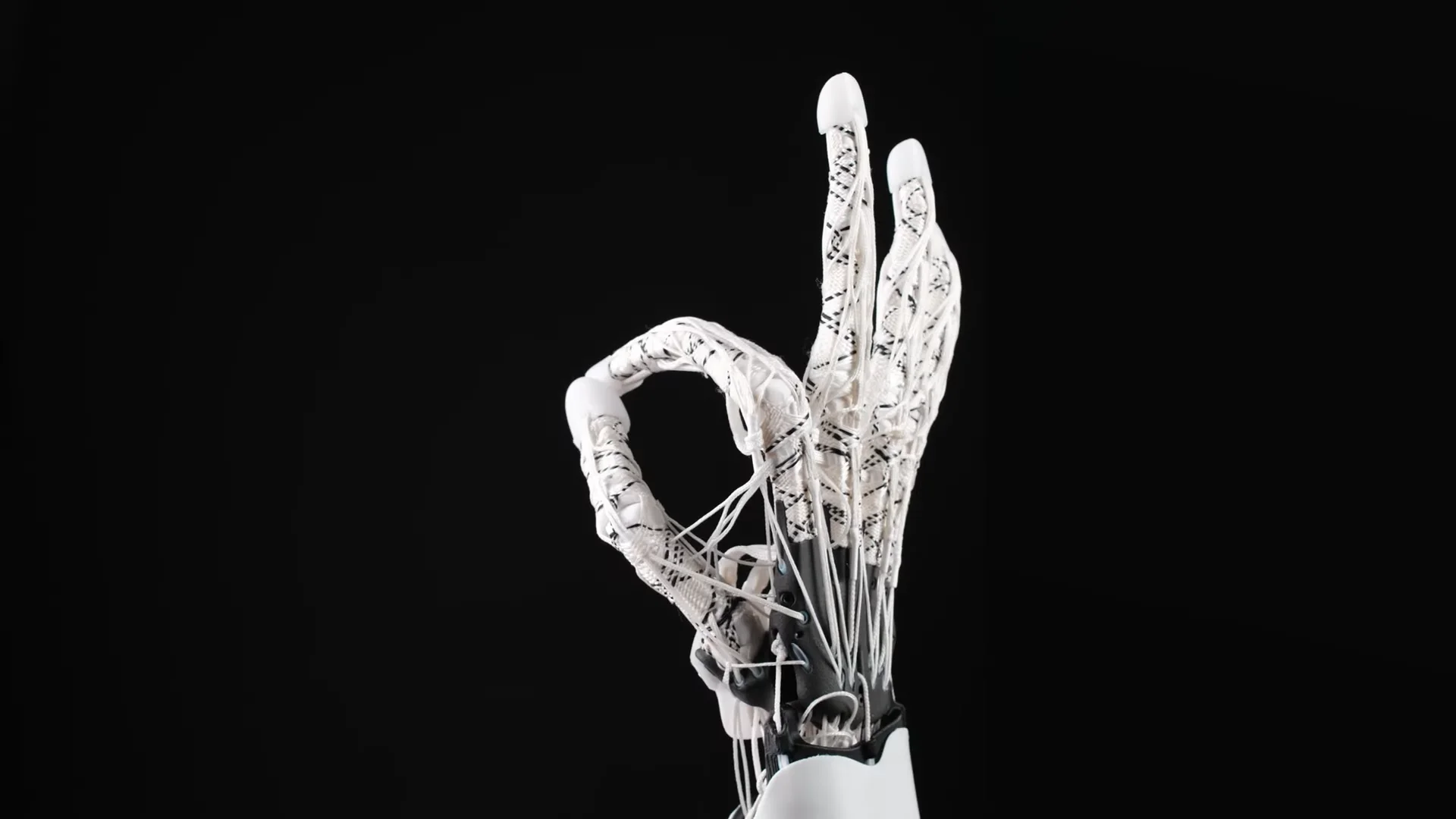
While the robotics world has been captivated by the rapid evolution of "brains"—the AI controllers—the "bodies" they inhabit have remained a stubborn bottleneck. Manufacturing a high-dexterity humanoid limb typically involves the painstaking assembly of hundreds of tiny bearings, screws, and rigid linkages.
Budapest-based startup Allonic believes the solution isn’t better assembly, but a total departure from it. The company has announced a $7.2 million pre-seed round—the largest in Hungarian history—to scale its "3D Tissue Braiding" technology, a process that weaves robotic structures as single, monolithic units.
The round was led by Visionaries Club, with participation from Day One Capital, Prototype, SDAC Ventures, TinyVC, and RoboStrategy. Notably, the round also drew support from more than a dozen angel investors from high-profile AI organizations, including OpenAI and Hugging Face.
The Hardware Bottleneck
The current industry consensus, echoed by figures like Elon Musk, is that the human hand is the ultimate hurdle for general-purpose robotics. Replicating its 27 degrees of freedom usually leads to a choice between two compromises: fragile, expensive lab prototypes that cost upwards of $25k, or simplistic grippers that lack human-level utility.
The weekly humanoid robotics briefing
One email a week: the launches, funding and research that mattered, with context from Humanoids Daily.
Read recent issuesAllonic’s co-founder and CEO, Benedek Tasi, argues that the problem is rooted in 19th-century manufacturing paradigms. "We’d spend weeks assembling hundreds of tiny parts... getting stuck with old manufacturing methods," Tasi noted regarding his early research. "The real problem wasn’t the design, it was how we were making it."
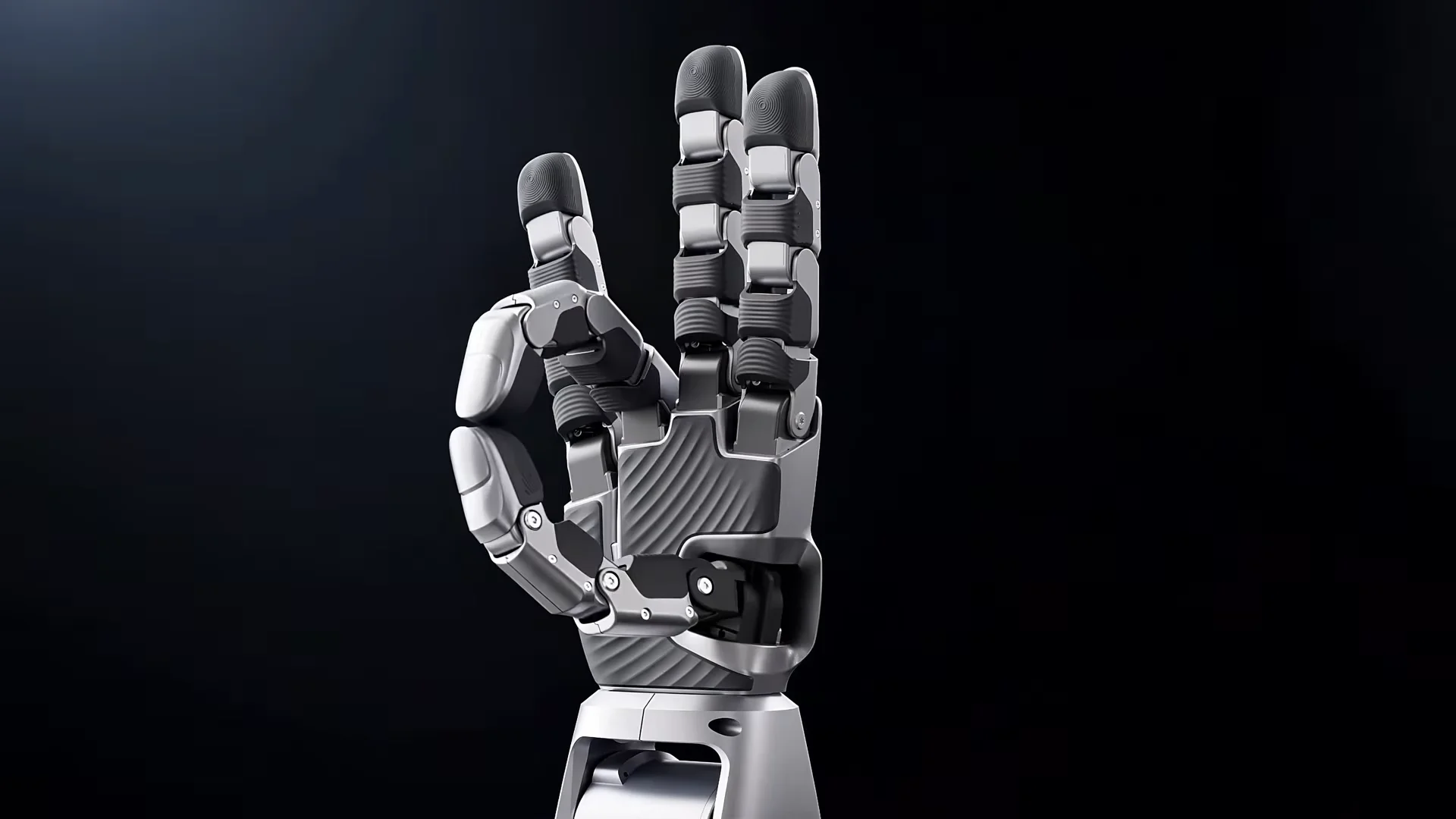
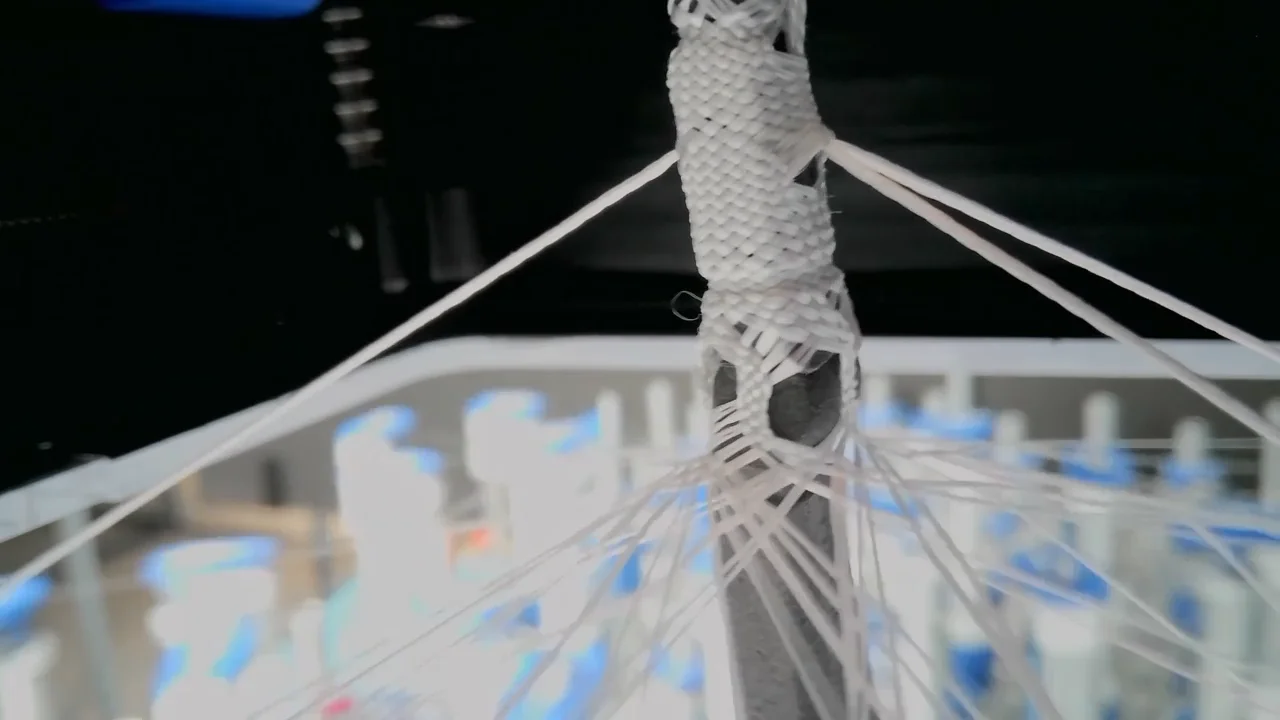
By moving away from traditional components, Allonic aims to collapse the value chain. Their process translates digital designs directly into production code, much like 3D printing. However, instead of depositing plastic or metal, Allonic’s machinery weaves high-strength fibers, elastics, and even sensors over a skeletal core to create a "soft" but powerful limb.
Joining the Tendon-Driven Movement
Allonic is not alone in its pursuit of biomimetic, "soft" hardware, but its focus is on the manufacturing layer rather than the end-product robot. Its technology aligns with a broader industry shift toward tendon-driven architectures which prioritize safety and weight.
For example, Clone Robotics recently demoed an ultra-fast robotic hand powered by hydraulic artificial muscles and "Myofiber" tendons. Similarly, the NEO humanoid robot from 1X utilizes a tendon-driven body to achieve a lightweight profile (66 pounds) and human-safe compliance.
Where Allonic differentiates itself is in speed and integration. By weaving tendons, pulleys, and guides directly into the tissue in a single automated process, the company claims it can reduce production times from weeks to minutes. "What you get out from the machinery is basically a finished product," Tasi told Sifted. "You just wire it up to the actuators and go."
Scaling the Fabricated Body
Allonic has already completed a pilot project in electronics manufacturing and is reportedly in talks with major US-based humanoid firms. The fresh $7.2 million in capital will be used to expand the team—currently 15 people—and further develop their second-generation machinery. This new hardware is reportedly 5x faster and 2x smaller than its predecessor, with a 3x increase in yarn count resolution.
While the company is starting with high-dexterity manipulators and hands, the long-term goal is to become the "manufacturing backbone" for the entire industry, potentially weaving entire robotic torsos or specialized industrial arms on demand.
As AI continues to simplify how we direct robots, Allonic is betting that the real revolution lies in simplifying how we build them. If they succeed, the next generation of humanoids might not be assembled in a factory, but woven on a loom.
Watch the Allonic MK2 hand below:
Share this article
Read next
- Published on
- Reading time
- 4 min read
Vesoma Emerges From Stealth With a Humanoid Built to Learn
- Published on
- Reading time
- 3 min read
UBTECH Brings Walker C1 to Slovenia in Balkan Expansion Push
- Published on
- Reading time
- 5 min read
KIST Chief Says Korea Can Join the US and China as a Humanoid Power
- Published on
- Reading time
- 5 min read
Odyssey Unveils Odyssey-3, With Flexion Building Humanoid Control on Its World Model
- Published on
- Reading time
- 4 min read
Munich stealth startup shows walking humanoid “Kyle,” targets early 2027 reveal
- Published on
- Reading time
- 25 min read
The Humanoids of Europe: Built by Their Customers

The weekly humanoid robotics briefing
One email a week: the launches, funding and research that mattered, with context from Humanoids Daily.
Read recent issues