- Published on
AGILINK Hits Unicorn Status: AGIBOT’s Dexterous Hand Spin-off Raises Hundreds of Millions
One tap, and our reporting appears more often in your Google Top Stories. It makes a real difference to a small newsroom.


- AGILINK, the dexterous hand spin-off of AGIBOT, has reached a valuation exceeding $1 billion following a new funding round of several hundred million yuan.
- The company has already delivered over 8,000 dexterous hands and 10,000 grippers, with nearly 1,000 units actively deployed in real-world environments.
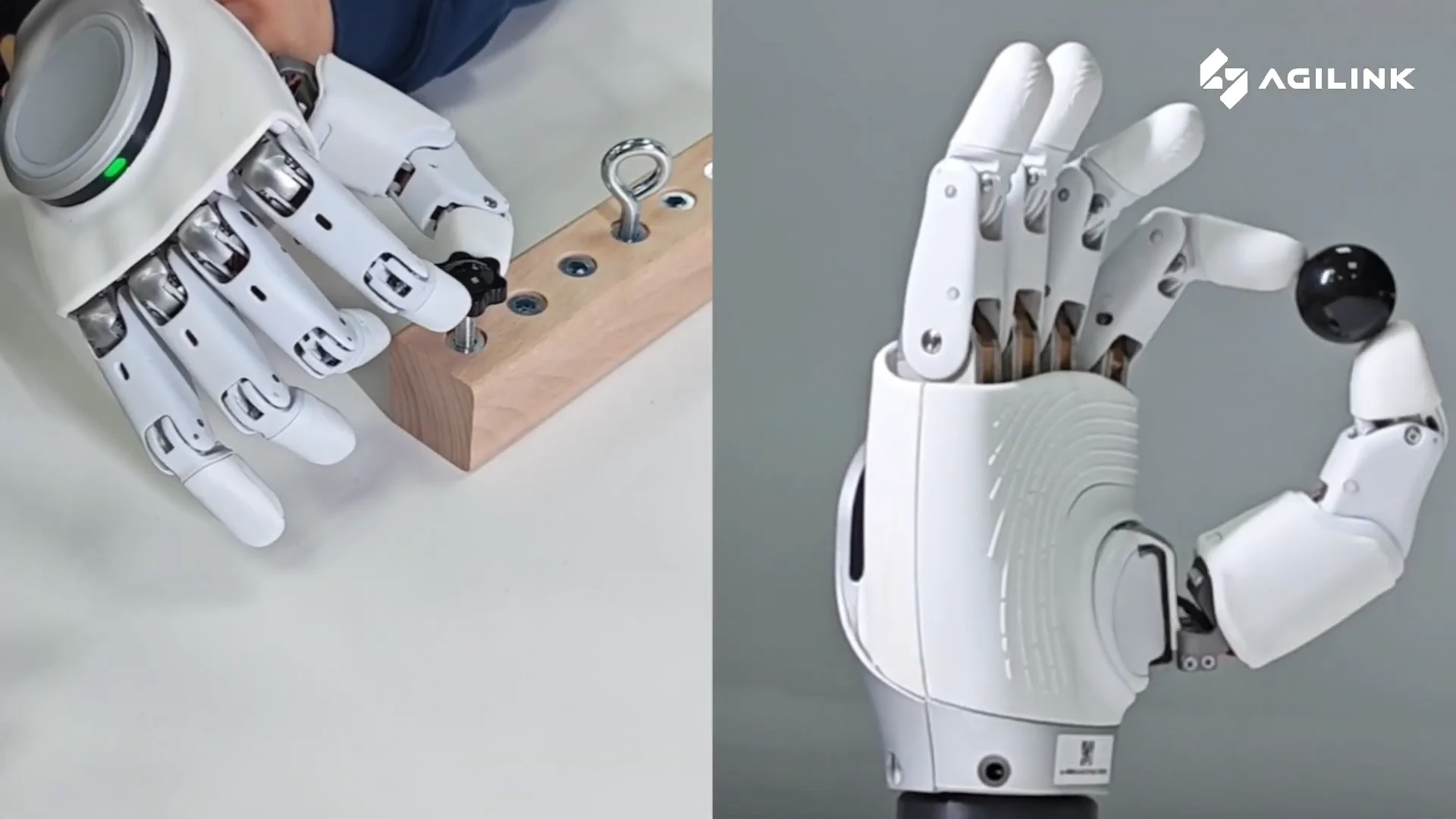
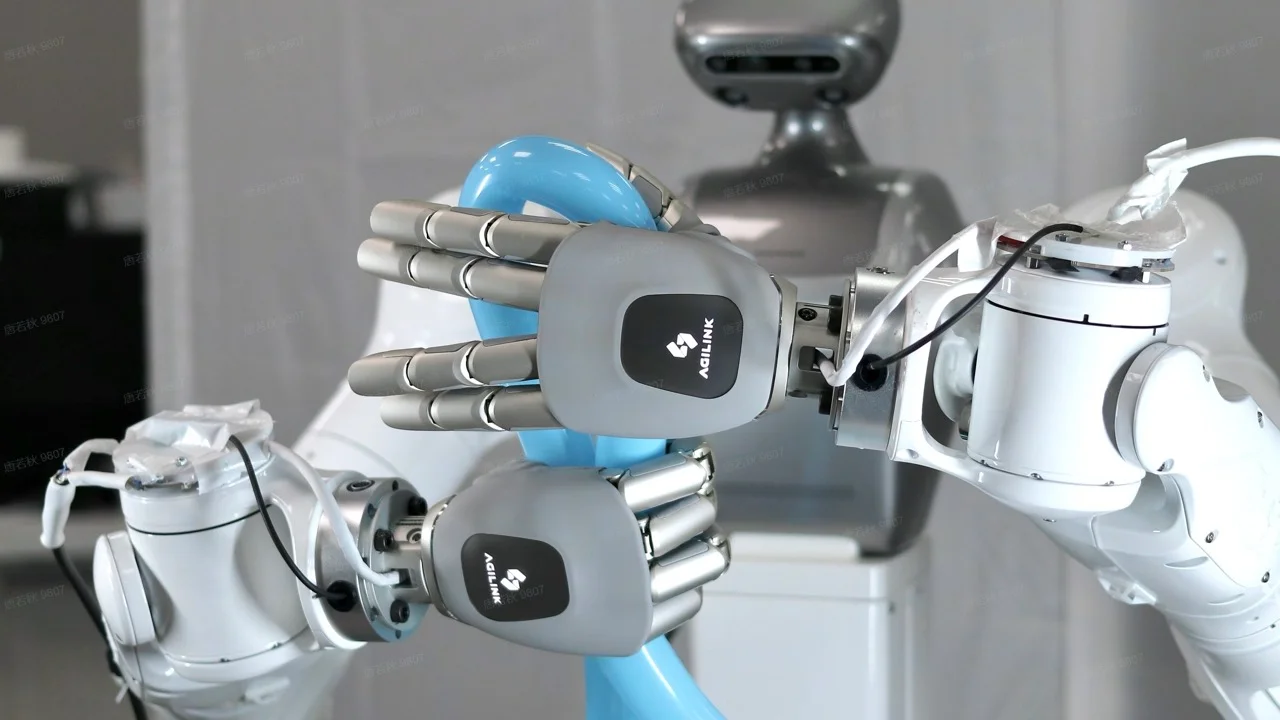
- At the core of the hardware lineup is the OmniHand 3 series, which includes a high-performance 25+ DOF Ultra-T model and a highly durable, affordable Lite model.
The robotics industry’s focus is rapidly moving from bipedal locomotion to fine manipulation. AGILINK, the dexterous hand subsidiary spun out from Chinese robotics leader AGIBOT, has officially achieved unicorn status. Following a new funding round worth hundreds of millions of yuan, the hardware manufacturer's valuation has surpassed $1 billion.
The funding, which marks AGILINK’s fourth round since registering as an independent entity in January 2026. Investors include Baidu Ventures, Yunfeng Capital, SAIC Financial Holdings, and Hillhouse Capital.
This massive capital injection arrives just weeks after parent company AGIBOT formally declared 2026 as "Deployment Year One," signaling an industry-wide pivot from showcasing technical capabilities to delivering measurable utility on the factory floor. The spin-off’s rapid scaling aligns directly with AGIBOT’s aggressive manufacturing momentum, having recently surpassed its 10,000-unit production milestone.
The OmniHand 3 Lineup: Disrupting the Hardware Floor
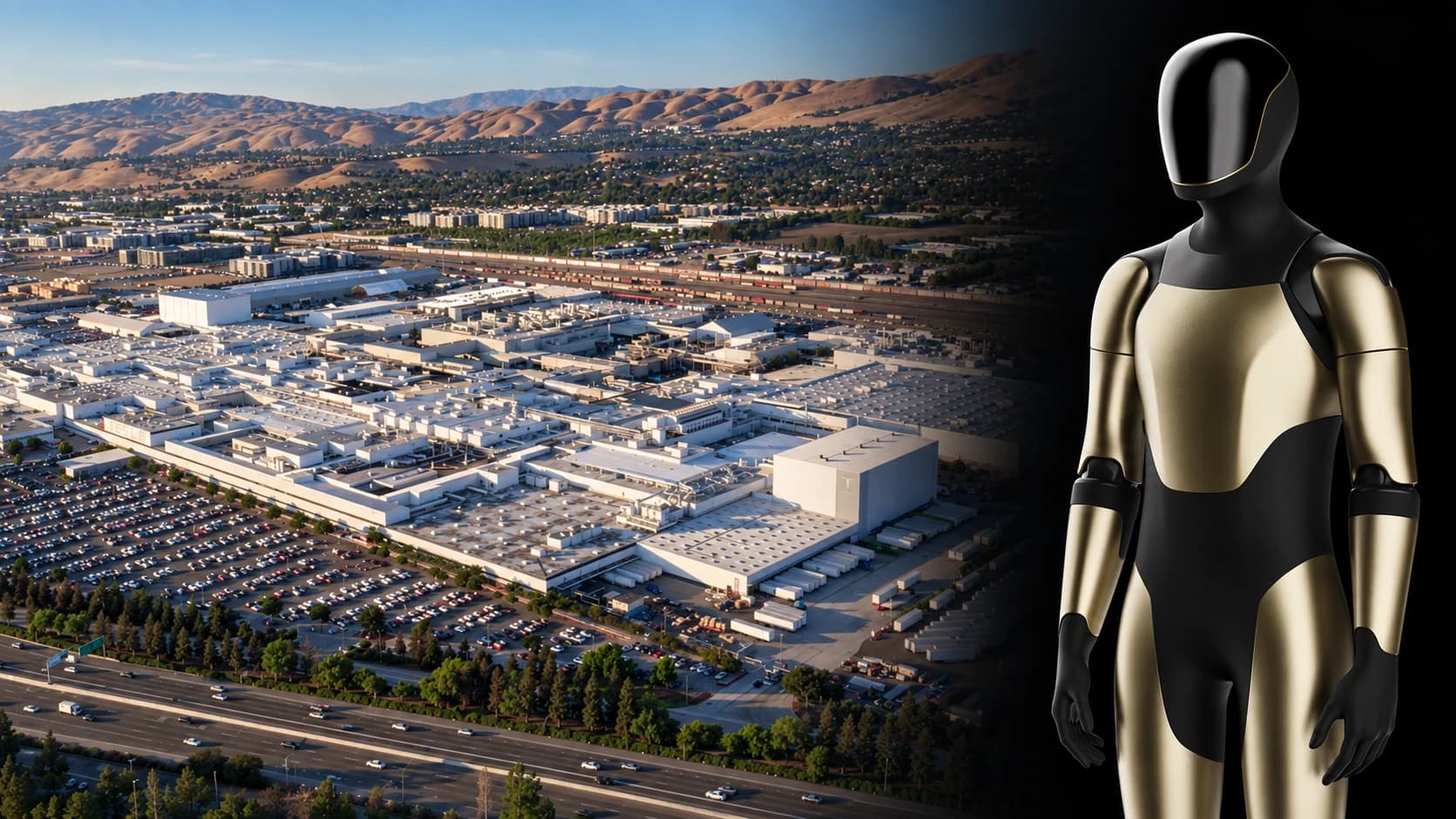
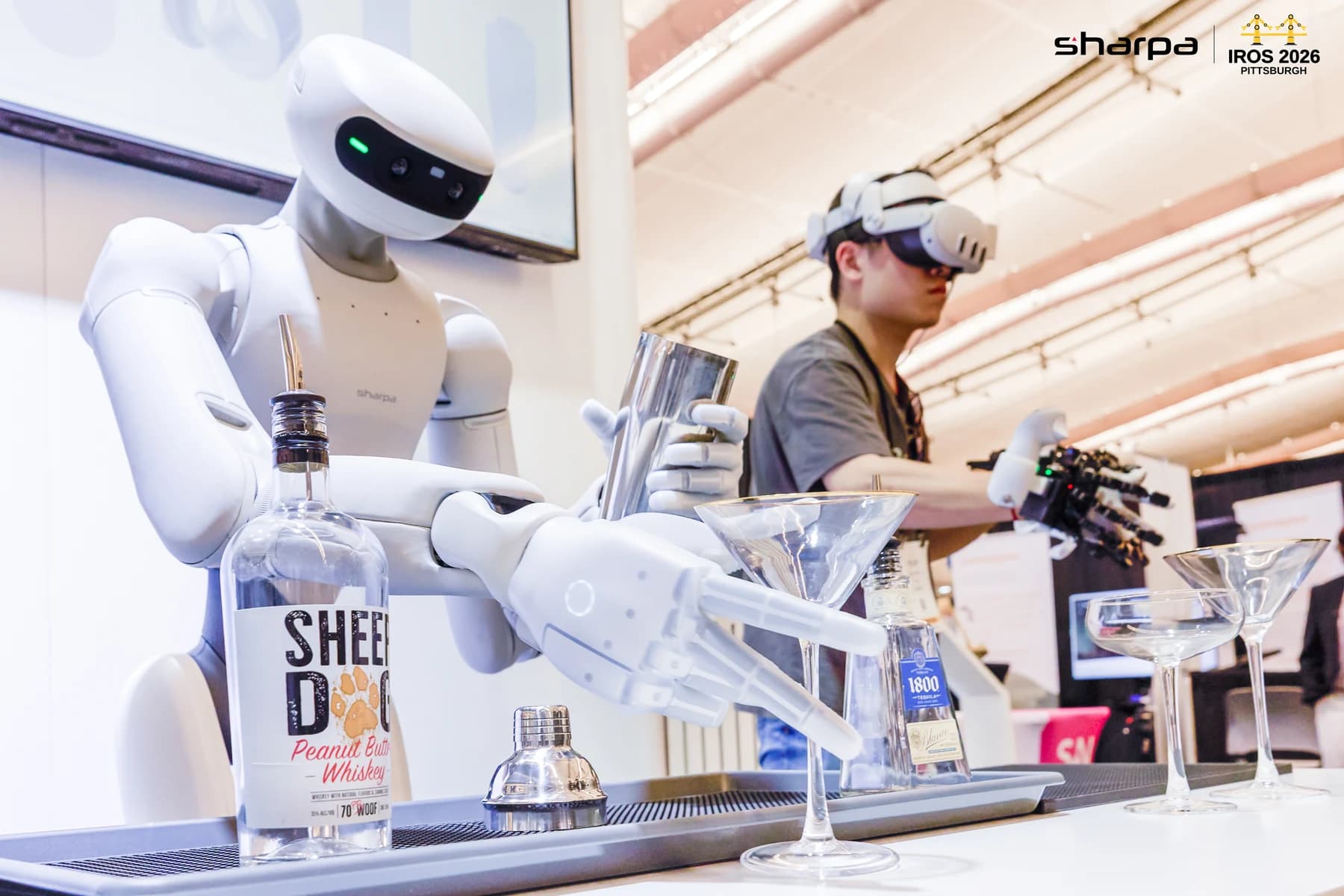
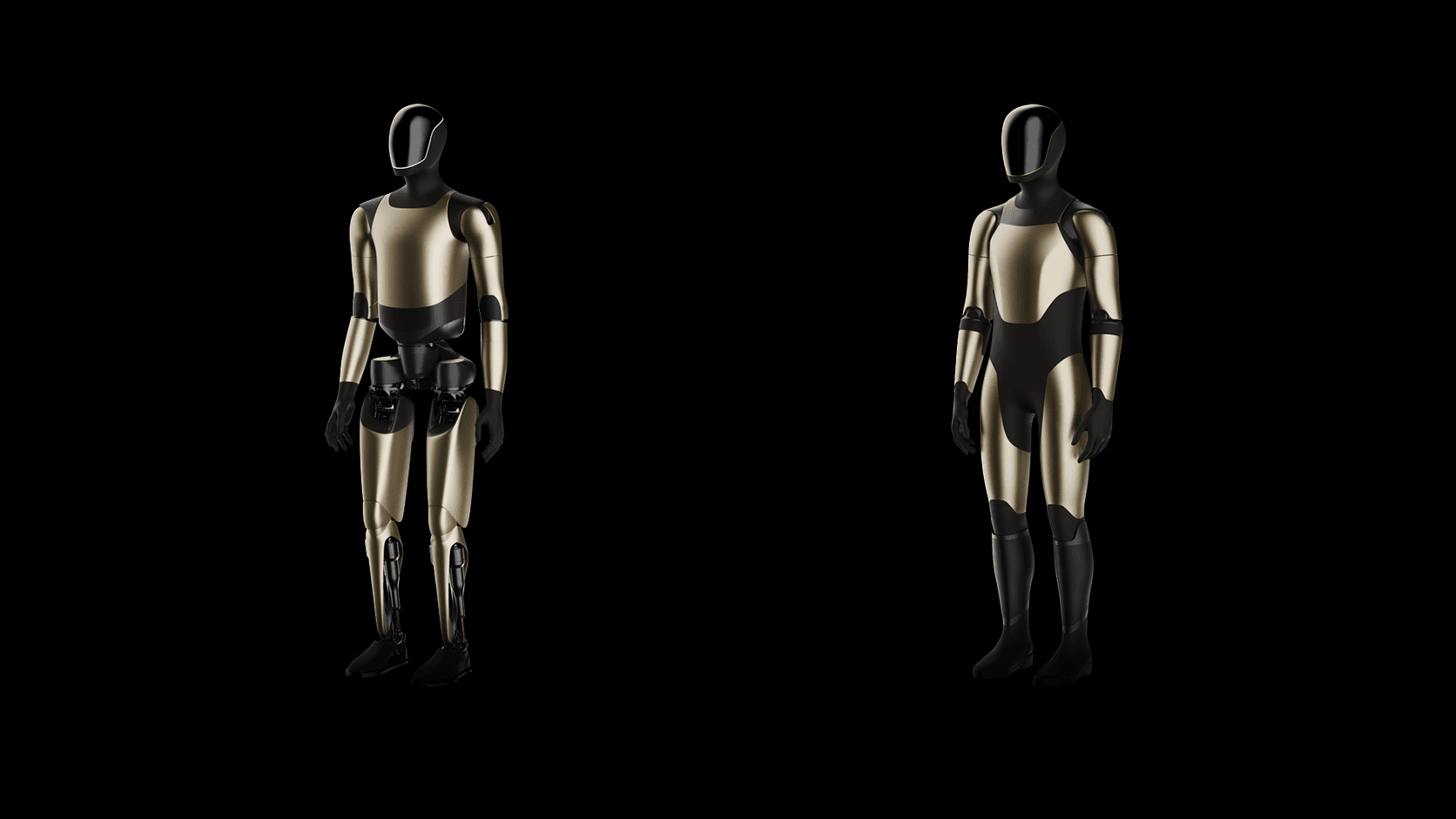
While companies like Tesla and Sharpa have focused heavily on proprietary, high-cost hands, AGILINK is pursuing a tiered, high-volume hardware strategy. The company reports it has already delivered over 8,000 dexterous hands and 10,000 grippers, with nearly 1,000 units actively working 8-hour continuous shifts in retail warehouses, pharmacies, and factories.
The weekly humanoid robotics briefing
One email a week: the launches, funding and research that mattered, with context from Humanoids Daily.
Read recent issuesThe cornerstone of this deployment is the newly unveiled OmniHand 3 series, which covers the spectrum from research-grade complexity to industrial ruggedness:
- OmniHand 3 Ultra-T: The flagship model is a next-generation dexterous hand featuring a 22+3 DOF tendon-driven system and 3D tactile sensing. Weighing under 500 grams, it supports a 5 kg payload and features a quick-release tendon system that allows for component replacement within 10 minutes—a critical feature for minimizing downtime in industrial settings.
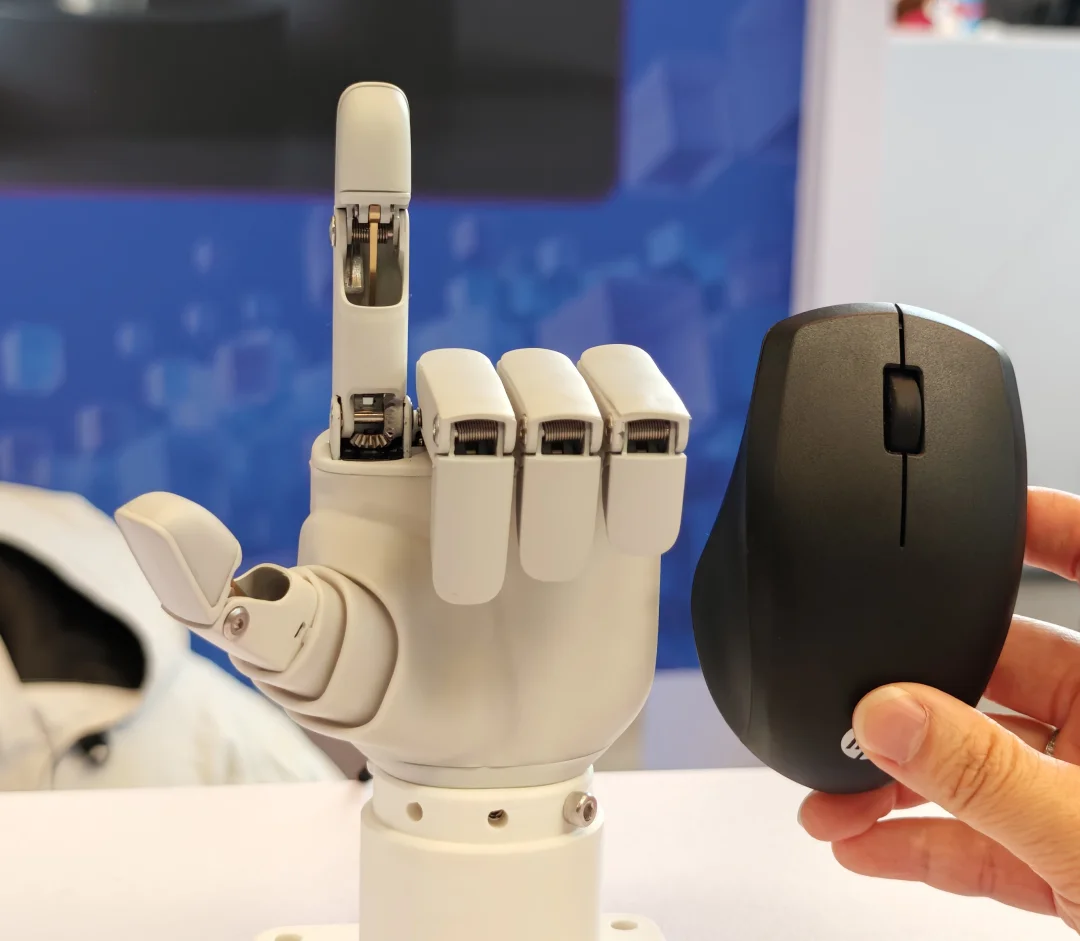
- OmniHand 3 Lite: This compact model is roughly the size of a standard computer mouse and is priced aggressively. Encased in aviation-grade metal with a molded silicone surface, it is designed to withstand severe impacts, allowing it to survive humanoid falls.
- OmniPicker 3: A heavy-duty gripper tailored for traditional industrial automation, featuring a 140N gripping force and a validated lifespan of 1 million cycles.
AGILINK founder Xiong Kun, who previously led robotics initiatives at Tencent's Robotics X Lab and IDEA Research Institute, noted that the company is actively developing both direct-drive and cable-driven architectures to balance high-precision control with physical compliance.
Software as the Next Moat
With hardware designs beginning to converge across the industry, AGILINK is utilizing its fresh capital to secure a software advantage.
Xiong asserts that the industry is transitioning from "mobile intelligence" to "operation intelligence." To bridge the current gap in robotic capabilities, AGILINK is developing specialized AI models explicitly trained for dexterous manipulation. The company also plans to release a huge dexterous operation dataset.
A Surging Domestic Ecosystem
AGILINK’s rapid ascent underscores a broader explosion in China’s embodied intelligence sector. Driven by a complete supply chain and aggressive capital backing, the domestic market, as reported by Global Times, saw over 50 financing events in the first quarter of 2026 alone, funneling approximately 20 billion yuan ($2.94 billion) into the space—a nearly 60% year-on-year increase.
Analysts point to a maturing ecosystem where full-stack humanoid development is increasingly yielding to modular specialization. Dexterous hands, which historically account for roughly 20% of a humanoid robot's total bill of materials, are widely viewed as the ultimate bottleneck for practical utility. By scaling production and slashing unit costs, AGILINK is positioning itself not just as an AGIBOT subsidiary, but as a foundational supplier for the entire global robotics industry.
A Direct-Drive Premiere at ICRA 2026
The timing of AGILINK’s massive funding round perfectly sets the stage for its upcoming appearance at the IEEE International Conference on Robotics and Automation (ICRA) in Vienna, Austria.
In a recent LinkedIn announcement, the company confirmed it will use the June event to display its complete portfolio of six dexterous manipulation systems. More significantly, AGILINK will host the world premiere of the OmniHand 3 Ultra-M, a new flagship direct-drive dexterous hand.
The Ultra-M represents the physical execution of AGILINK's dual-track hardware strategy, balancing the compliance of their cable-driven Ultra-T model with the high-precision control offered by direct-drive systems. Live demonstrations at Booth 126 will feature bimanual long-horizon manipulation, in-palm dexterity, and live visuotactile sensing—giving researchers and industry media covering the show floor a crucial, real-world look at the hardware driving the company's billion-dollar valuation.
Share this article
Read next
- Published on
- Reading time
- 4 min read
AGIBOT Tops Medal Table at 2nd World Humanoid Robot Games as Beijing Showdown Concludes
- Published on
- Reading time
- 6 min read
Beyond the Showcase: AGIBOT Expands Embodied AI Portfolio at WAIC 2026
- Published on
- Reading time
- 5 min read
Reality Check at ICRA: AGIBOT World Challenge Shifts Embodied AI from Simulation to Physical Hardware
- Published on
- Reading time
- 10 min read
The Contact Problem: How AGILINK’s New OmniHand 3 Ultra-M is Teaching Robots to Feel
- Published on
- Reading time
- 3 min read
IDC Puts H1 Humanoid Shipments Near 25,000, With AGIBOT Leading
- Published on
- Reading time
- 3 min read
AGIBOT Says A3 Ultra Is Going to Work in Hotels, Shops and Metro Inspection

The weekly humanoid robotics briefing
One email a week: the launches, funding and research that mattered, with context from Humanoids Daily.
Read recent issues