- Published on
Hugging Face Drops a $2,500 3D-Printed Humanoid for Open Robot Learning
One tap, and our reporting appears more often in your Google Top Stories. It makes a real difference to a small newsroom.



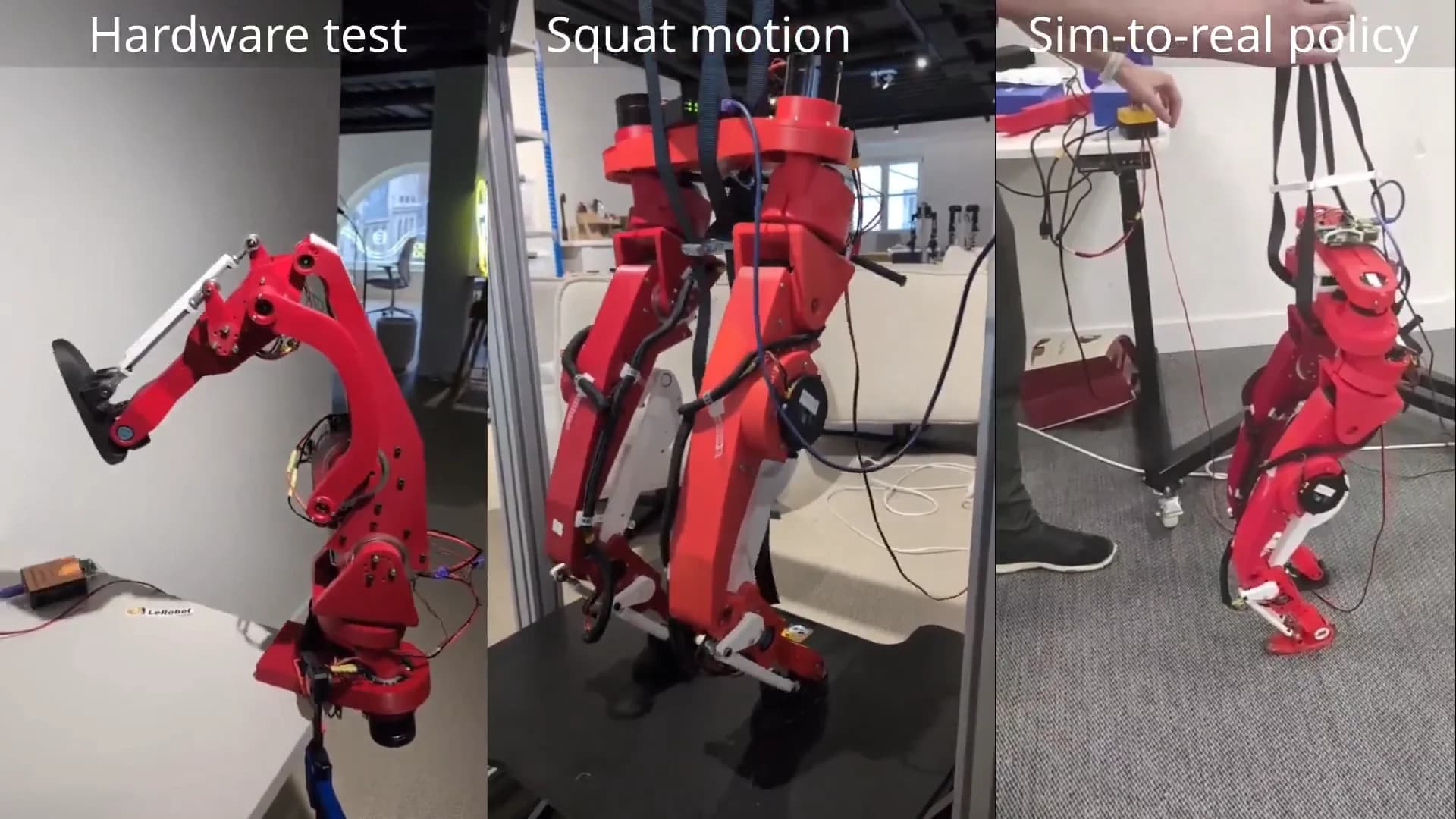
- Hugging Face's LeRobot project has launched LeRobot Humanoid, an open-source bipedal robot that can be built for approximately $2,500.
- The release is a "full-stack" ecosystem, including 3D-printable hardware files, runtime tools, simulator identification pipelines, and training environments.
- The platform is designed for rapid iteration, allowing builders to repair and modify the robot rather than relying on expensive, fragile proprietary hardware.
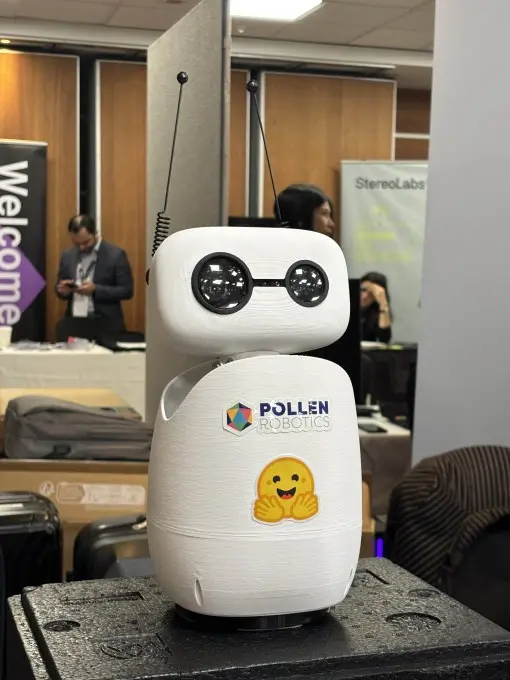
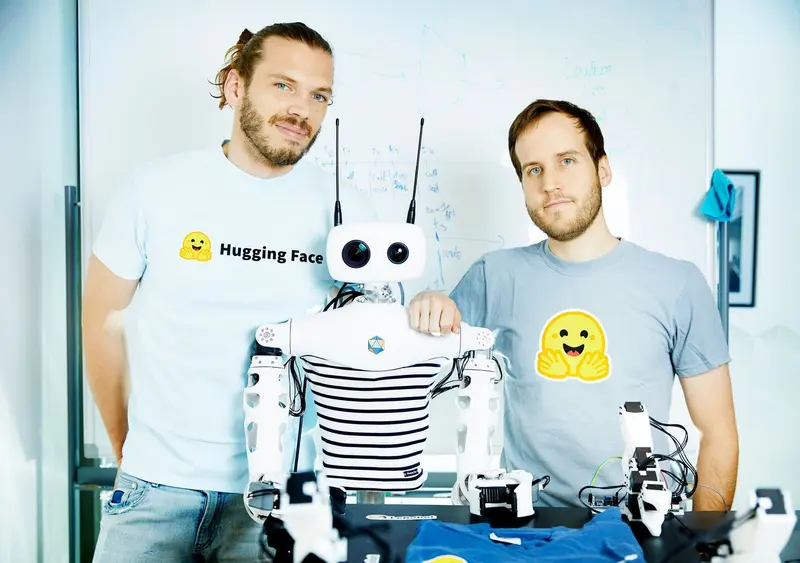
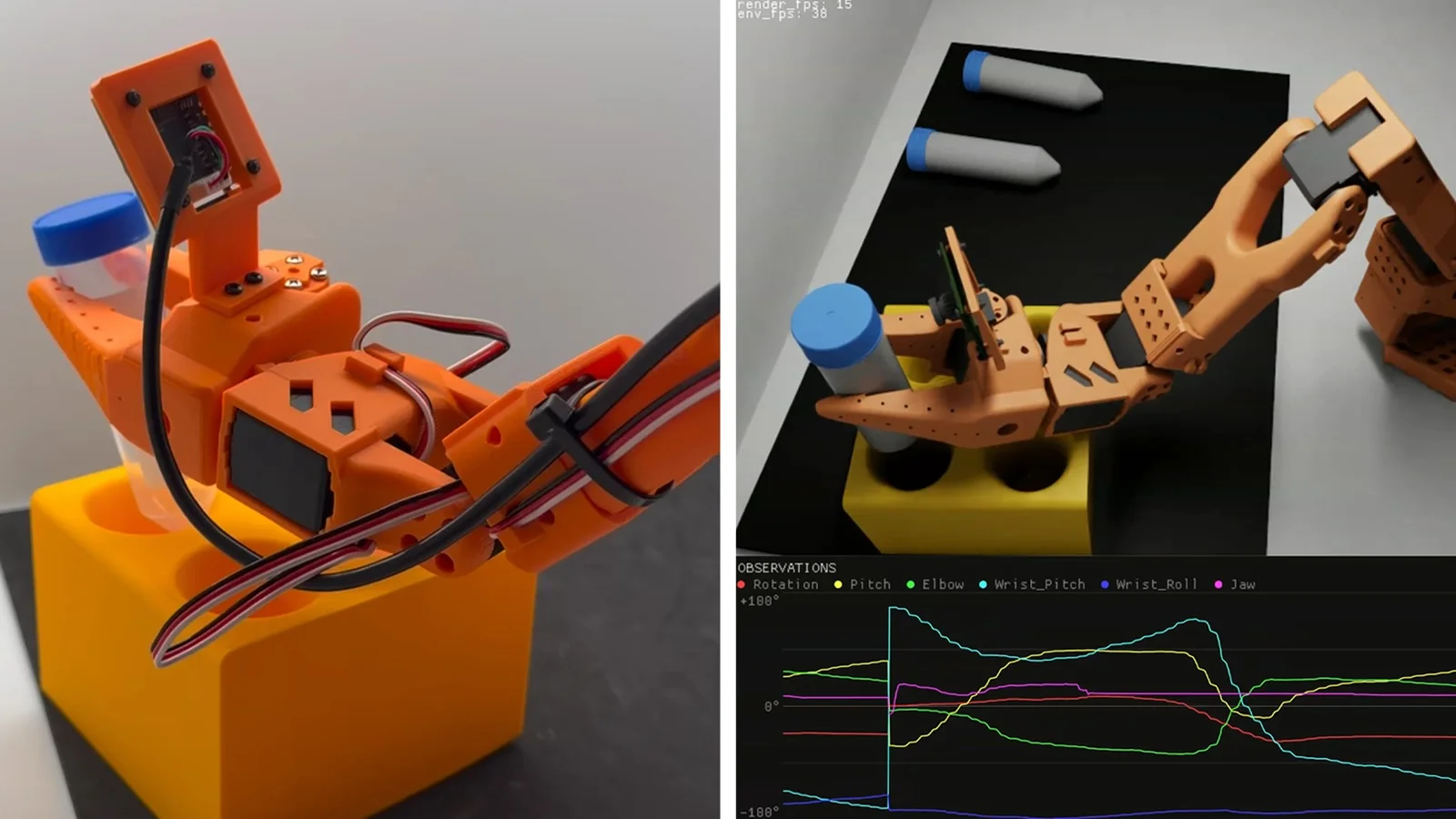
- This launch further cements Hugging Face's aggressive expansion into physical AI, following its recent acquisition of Pollen Robotics and the launch of HOPEJr.
- Currently an experimental bipedal platform, the project roadmap includes upper-body integration and more advanced whole-body capabilities.
Hugging Face is continuing its aggressive push to democratize physical AI. The company’s robotics division has officially unveiled the LeRobot Humanoid, an open-source, bipedal robot designed specifically for robot learning that can be built for roughly $2,500.
Announced via X (formerly Twitter) and detailed in a comprehensive blog post, the project aims to dismantle the primary bottleneck in open-source robotics: the lack of accessible physical platforms to test software. While researchers have long been able to train reinforcement learning policies in simulation, testing those policies in the real world often requires relying on expensive, proprietary, and notoriously fragile "black box" hardware.
The LeRobot Humanoid offers a radically different approach. It prioritizes reproducibility and repairability over cutting-edge performance.
A Full-Stack Philosophy
The LeRobot team is explicitly clear about the robot's positioning: "If you are looking for the most advanced humanoid robot, this is not it. If you are looking for a humanoid you can build, understand, repair, instrument, simulate, and use for learning experiments, this is the robot we are trying to make."
The weekly humanoid robotics briefing
One email a week: the launches, funding and research that mattered, with context from Humanoids Daily.
Read recent issuesTo achieve this, the release goes far beyond just dumping CAD files onto GitHub—a practice that often leads to "performative open-source" projects that are impossible for external teams to actually build. Instead, LeRobot is offering a full-stack ecosystem divided into five core components:
- Hardware: A complete bill of materials, 3D-printable parts, wiring documentation, and motor setup instructions.
- Design Tools: A control-oriented workflow to evaluate mechanical design choices in simulation before committing to a physical build.
- Runtime: Tools for calibration, safety checks, and control that bridge simulation and real-world hardware.
- Identification: Pipelines to replay real-world datasets in simulation, reducing the persistent sim-to-real gap by fitting better simulator parameters.
- Training Zoo: MJLab training environments integrated with the broader lerobot-legged-zoo to train locomotion policies.
This comprehensive approach mirrors a growing industry trend toward establishing "reproducible baselines" to reduce rebuild friction, similar to the strategies seen in the ROBOTO ORIGIN project and Menlo Research's Asimov v1.
The 3D-Printed Economics
The estimated $2,500 price tag is achieved by combining 3D-printed structural components with off-the-shelf hardware and affordable actuators. This low cost fundamentally shifts the development paradigm. When a structural part breaks during an aggressive locomotion test, researchers can simply print a replacement rather than waiting months for a proprietary knee joint to ship from a manufacturer.
This launch represents another significant pillar in Hugging Face's broader open-robotics strategy. Over the last year, the company has rapidly assembled the pieces needed to dominate the open-source physical AI space. From establishing the LeRobot software library to acquiring Pollen Robotics to partnering with The Robot Studio on the sub-$3,000 HOPEJr humanoid, Hugging Face is methodically building an end-to-end ecosystem for roboticists.
Experimental but Connected
Despite the polished release, the team emphasizes that the LeRobot Humanoid remains an experimental research platform. Running policies on physical hardware still requires careful calibration, low-gain testing, and a reliable power cutoff.
The current release focuses solely on the bipedal leg assembly, which the team is using for bring-up, data collection, and early locomotion experiments. Video accompanying the announcement demonstrates an early sim-to-real standing policy successfully running on the bipedal hardware. According to the roadmap, upper-body integration and more complex, whole-body behaviors are currently in development.
By providing the community with a cheap, repairable, and deeply integrated hardware target, Hugging Face is making it possible that the next major breakthrough in humanoid control policies might not come from a massive corporate lab, but from a researcher with a 3D printer and $2,500.
Share this article
Read next
- Published on
- Reading time
- 4 min read
Hugging Face Introduces Open-Source Humanoid HOPEJr and Desktop Robot Reachy Mini
- Published on
- Reading time
- 4 min read
Hugging Face Acquires Pollen Robotics, Eyes Open Source Future for Humanoid Hardware
- Published on
- Reading time
- 5 min read
BitRobot and Hugging Face Drop HIW-500: A Massive 10TB Real-Home Humanoid Dataset
- Published on
- Reading time
- 4 min read
NVIDIA and Hugging Face Standardize Open-Source Robotics Pipeline via LeRobot
- Published on
- Reading time
- 7 min read
NVIDIA Buys Hugging Face for $12.9B as Open-Source Robotics Scales Up
- Published on
- Reading time
- 4 min read
Mimic Robotics Open-Sources "mimic-video" Recipe to Accelerate Video-Action Models

The weekly humanoid robotics briefing
One email a week: the launches, funding and research that mattered, with context from Humanoids Daily.
Read recent issues