- Published on
AgiBot Rolls Out 5,000th Robot, Revealing a Mixed-Fleet Strategy
One tap, and our reporting appears more often in your Google Top Stories. It makes a real difference to a small newsroom.


Your guide
Rich Robinson
Jee Chee Ren · Executive tour
See China’s AI and robotics ecosystem first-hand.
Six days exploring AI, robotics and advanced manufacturing.
With Rich Robinson, Clinical Professor of Entrepreneurship at Peking University
Beijing · Guangzhou · Shenzhen
29 November–4 December 2026
Referral partnership · We earn a commission on referred bookings.
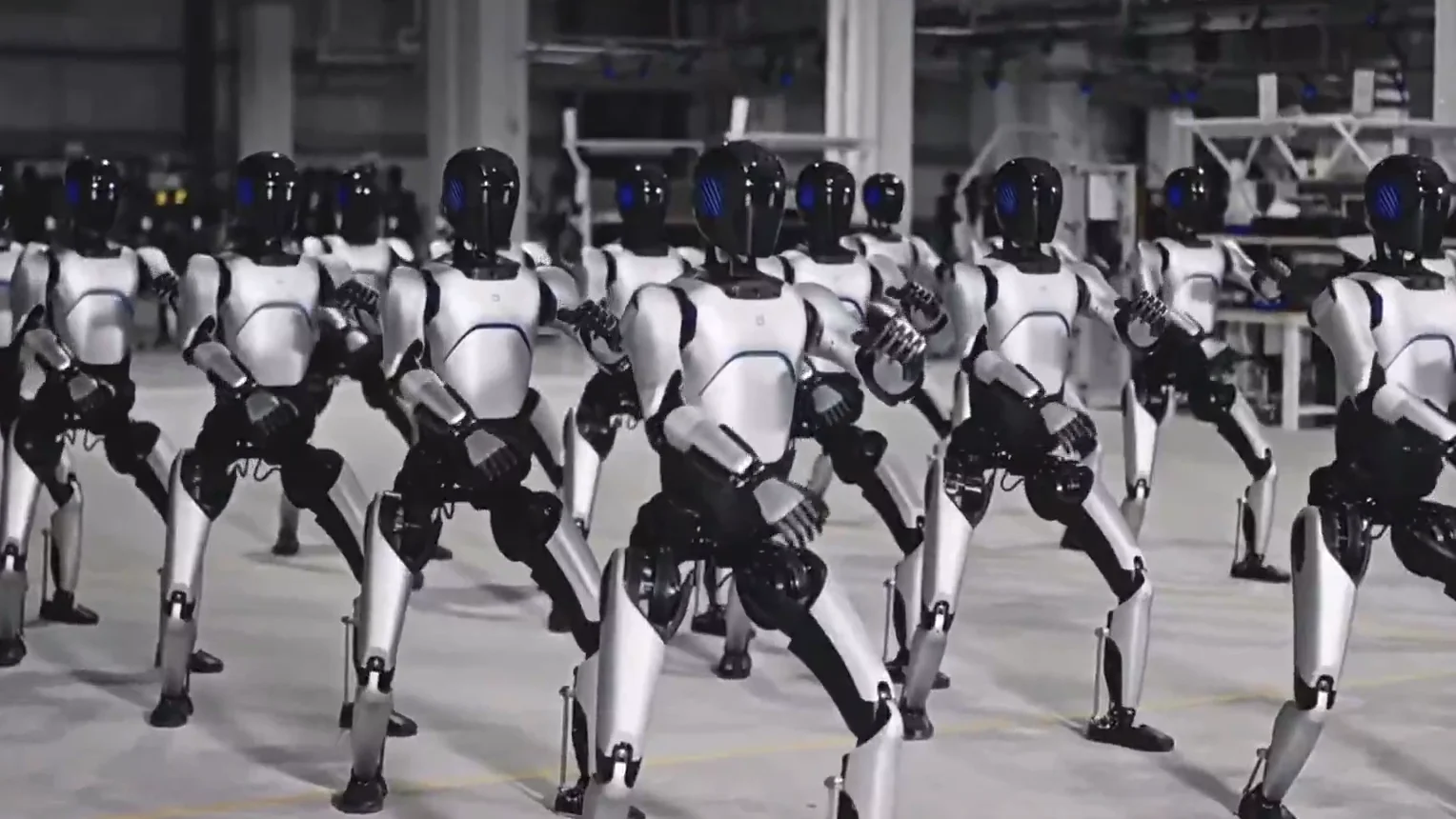
Shanghai-based AgiBot (Zhiyuan Robotics) has announced a significant manufacturing milestone, claiming to have rolled out its 5,000th mass-produced robot. The announcement, made during a livestream event at the company’s facility, offers a rare, granular look at the production volumes of a leading humanoid contender—and reveals that "mass production" involves a diverse mix of form factors rather than a single flagship android.
The milestone comes less than three years after the company was founded in February 2023, underscoring the aggressive pace of the Chinese robotics sector. It also serves as a strategic signal to investors, as reports circulate that AgiBot is planning a Hong Kong IPO in 2026.
The Breakdown: A Tale of Three Robots
While "5,000 humanoids" is the headline figure, the company provided a specific breakdown of those units, painting a clearer picture of its commercial strategy. The total volume is split across three distinct product lines:
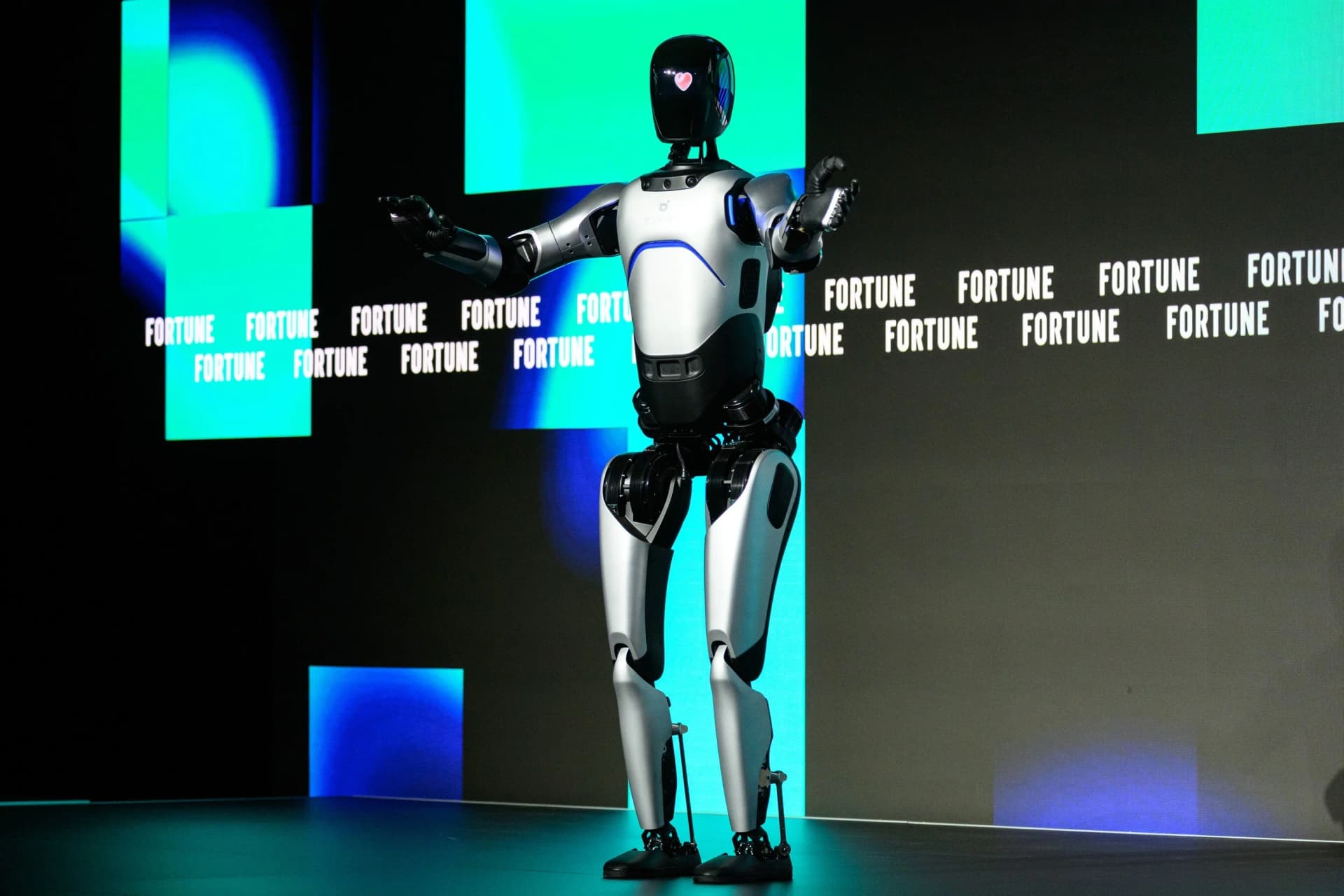
- 1,846 units of the Lingxi X-Series: These are the company’s lighter, more agile bipedal robots. The X2 model recently made headlines for its dynamic capabilities, successfully landing a Webster flip in a demonstration of balance and motion control.
- 1,742 units of the Expedition A-Series: The full-sized humanoid platform designed for more general-purpose tasks. This series recently completed a 106km autonomous trek from Suzhou to Shanghai to prove its durability.
- 1,412 units of the Genie G-Series: A task-optimized line, often featuring wheeled bases, aimed at specific industrial and logistics applications.
The 5,000th unit to roll off the line was identified as a Lingxi X2. In a move highlighting the company's crossover appeal in China, this specific robot was formally delivered to the studio of Huang Xiaoming, one of China's most recognizable actors, during the ceremony.
The weekly humanoid robotics briefing
One email a week: the launches, funding and research that mattered, with context from Humanoids Daily.
Read recent issuesSpeed vs. Scale
AgiBot’s announcement provides a sharp contrast to the timelines of its domestic competitors. Just weeks ago, rival UBTECH Robotics—a veteran player in the space—outlined a roadmap to expand production to 5,000 units in 2026. AgiBot’s claim to have hit that number today suggests it is moving at a velocity characteristic of its founder, Peng Zhihui.
A former Huawei "Genius Youth" recruit turned entrepreneur, Peng has leveraged his celebrity engineer status to attract capital and talent. As we detailed in our profile of Peng’s rise, his strategy has been "AI-first," but this production data indicates the company is rapidly solving the "hard tech" challenges of manufacturing hardware at scale.
"We are grateful to reach this milestone after years of steady effort in tackling core challenges in embodied robotics," Peng said in a statement. "Through ongoing improvements, we have enhanced the stability, reliability, and durability of our systems."
Deployment Reality
The company states its robots are currently deployed in eight commercial sectors, ranging from "intelligent manufacturing" and logistics sorting to more public-facing roles like reception services and commercial performance.
This multi-pronged approach helps explain the diversity of the fleet. While the G-Series handles the repetitive, "rigid" automation tasks often found in factories—where AgiBot recently claimed a breakthrough in reinforcement learning—the X and A series are positioned for unstructured environments and research.
Visuals released alongside the announcement depict rows of these units moving in synchronization, a common trope in the industry designed to visually reinforce the concept of scalability. However, the true test for AgiBot remains the same as it is for Tesla and Figure: converting these production numbers into active, revenue-generating labor hours in customer facilities.
With 5,000 units now reportedly built, AgiBot has moved past the prototype phase. The challenge now shifts to logistics, support, and proving that a three-year-old startup can service a fleet of thousands.
Share this article
Read next
- Published on
- Reading time
- 3 min read
IDC Puts H1 Humanoid Shipments Near 25,000, With AGIBOT Leading
- Published on
- Reading time
- 3 min read
AGIBOT Says A3 Ultra Is Going to Work in Hotels, Shops and Metro Inspection
- Published on
- Reading time
- 5 min read
AGIBOT Deepens European Push at IFA 2026 with TÜV Rheinland Certification and Tekpoint Retail Alliance
- Published on
- Reading time
- 5 min read
Minth Group and AGIBOT Launch Europe’s First Humanoid Mass Production Line in Serbia
- Published on
- Reading time
- 5 min read
AGILINK Hits Unicorn Status: AGIBOT’s Dexterous Hand Spin-off Raises Hundreds of Millions
- Published on
- Reading time
- 4 min read
State Grid’s $995 Million Bet: 8,500 Robots to Spearhead "Deployment Year One" in Energy
The weekly humanoid robotics briefing
One email a week: the launches, funding and research that mattered, with context from Humanoids Daily.
Read recent issues