- Published on
Matrix Robotics Enters the Mass Production Race with the $99,000 MATRIX-3
One tap, and our reporting appears more often in your Google Top Stories. It makes a real difference to a small newsroom.

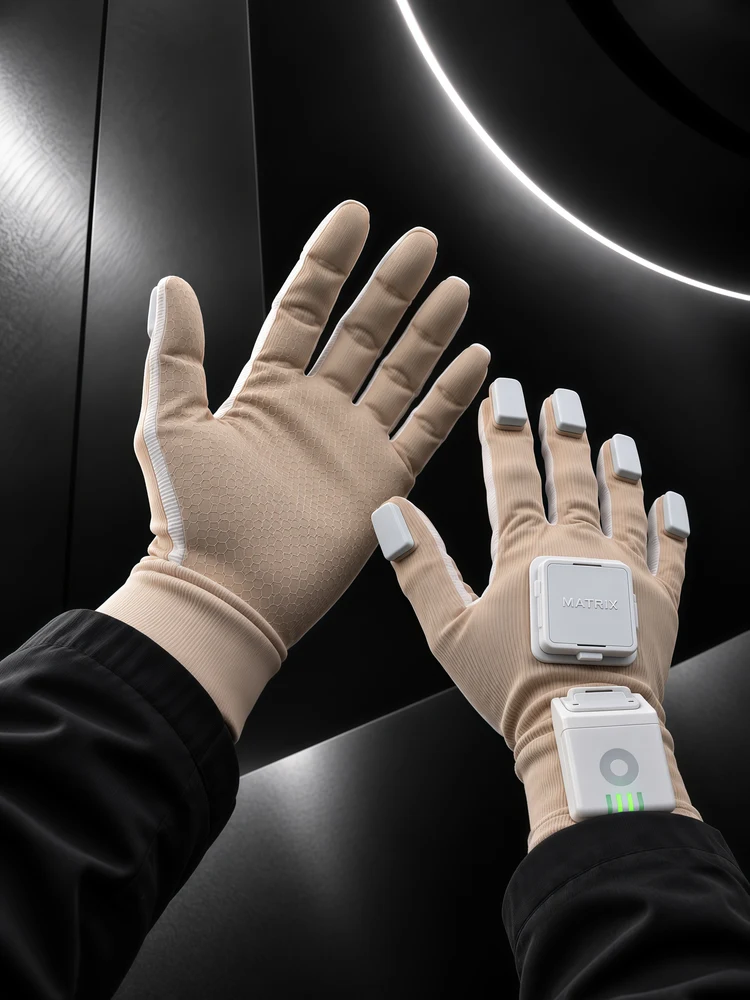
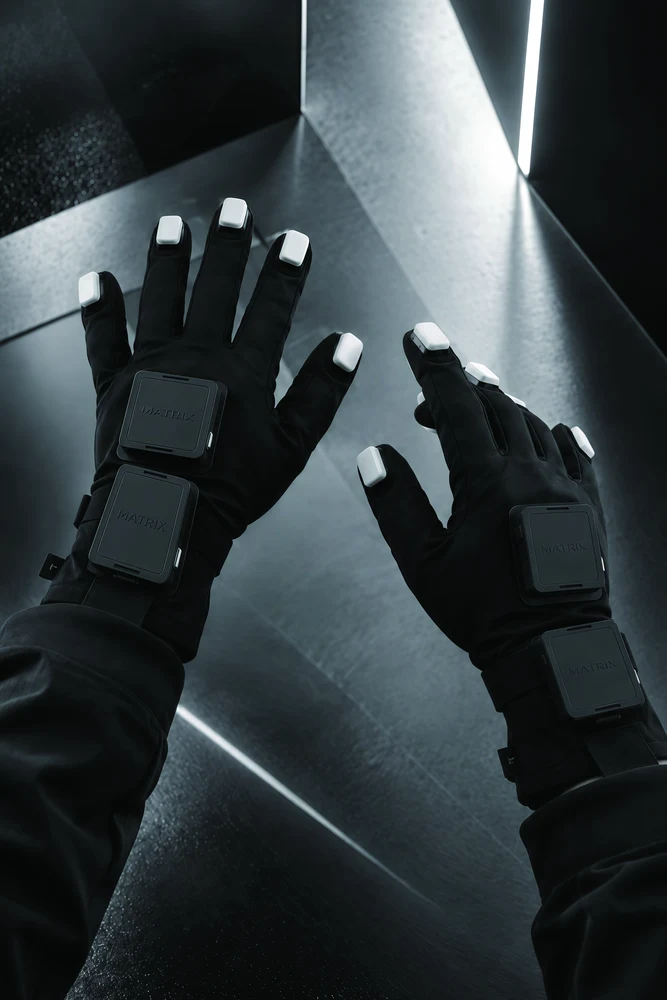

- Matrix Robotics showcased the MATRIX-3 humanoid at its AI Day 2026, demonstrating capabilities like natural language guidance, dual-robot coordination, and an impressive 30 kg payload capacity.
- The platform is equipped with 27-DoF dexterous hands, 0.1N tactile sensors, and a "3D Woven Biomimetic Skin" integrated into its WAVE physical intelligence model.
- The company's Matrix Fabrication Hall in Shanghai is targeting a first-year production capacity of 10,000 units, echoing the aggressive manufacturing scaling of competitors like AGIBOT and 1X.
- The MATRIX-3 PRO model starts at $99,000 USD, positioning it as a premium entry in the commercial market alongside a newly launched Robot-as-a-Service (RaaS) ecosystem.
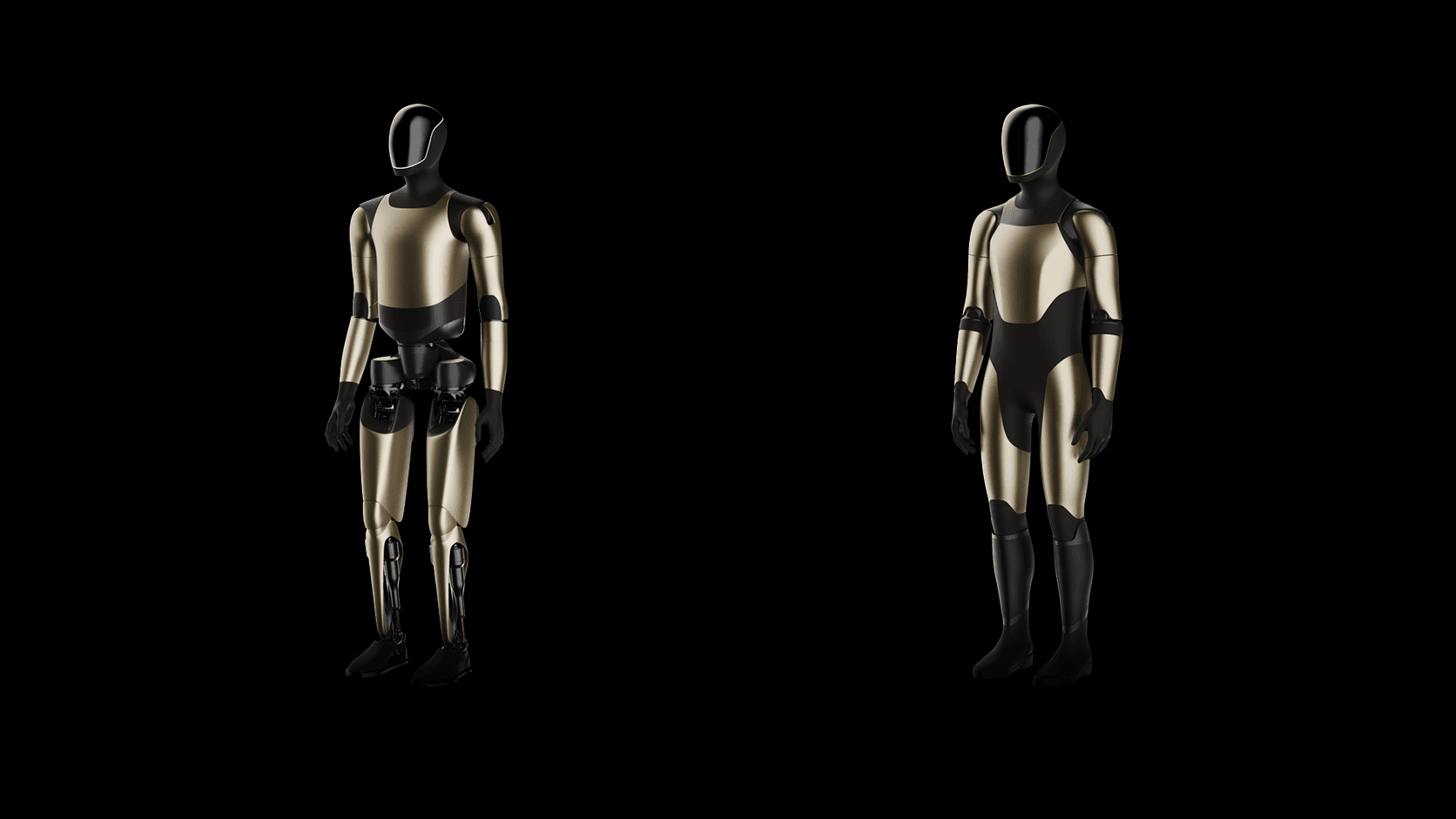
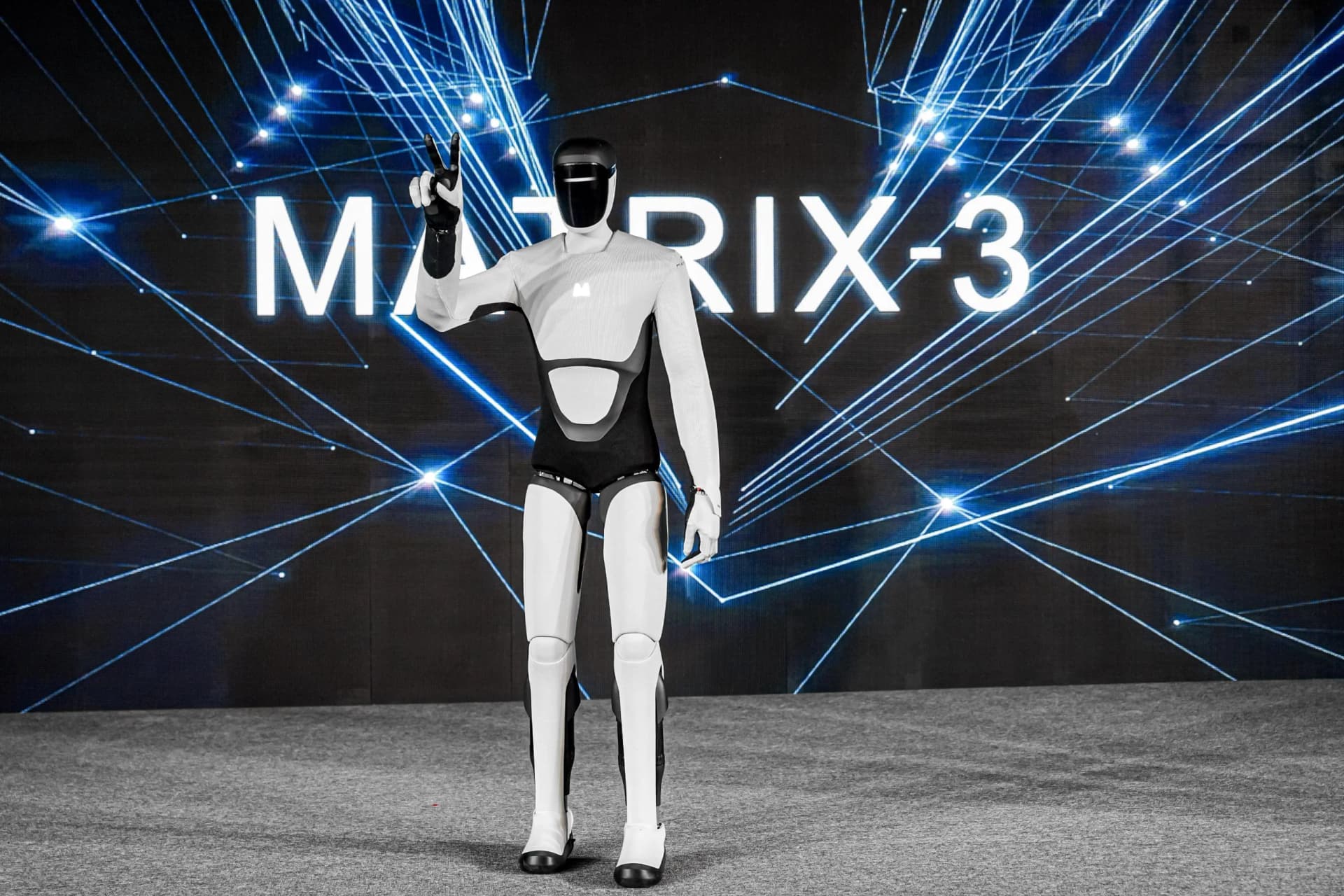
Chinese startup Matrix Robotics has officially pulled its flagship humanoid out of the lab and onto the stage. At the company’s AI Day 2026 event, the new MATRIX-3 robot made its first public appearance, walking on stage to greet the crowd and demonstrating its dexterity by handing out packages and fruit in a simulated "Matrix AI Town" exhibit.
First announced in January, the MATRIX-3 represents a significant leap from the company's previous iterations. According to today's demonstrations—which highlighted "natural language guidance" and "dual-robot coordination"—the platform is being positioned as a highly generalizable physical intelligence system. The hardware boasts serious specifications: standing 170 cm tall and weighing 65 kg, the robot can carry a 30 kg payload, operate for four hours on a single charge, and maintain a walking speed of 3.9 km/h.
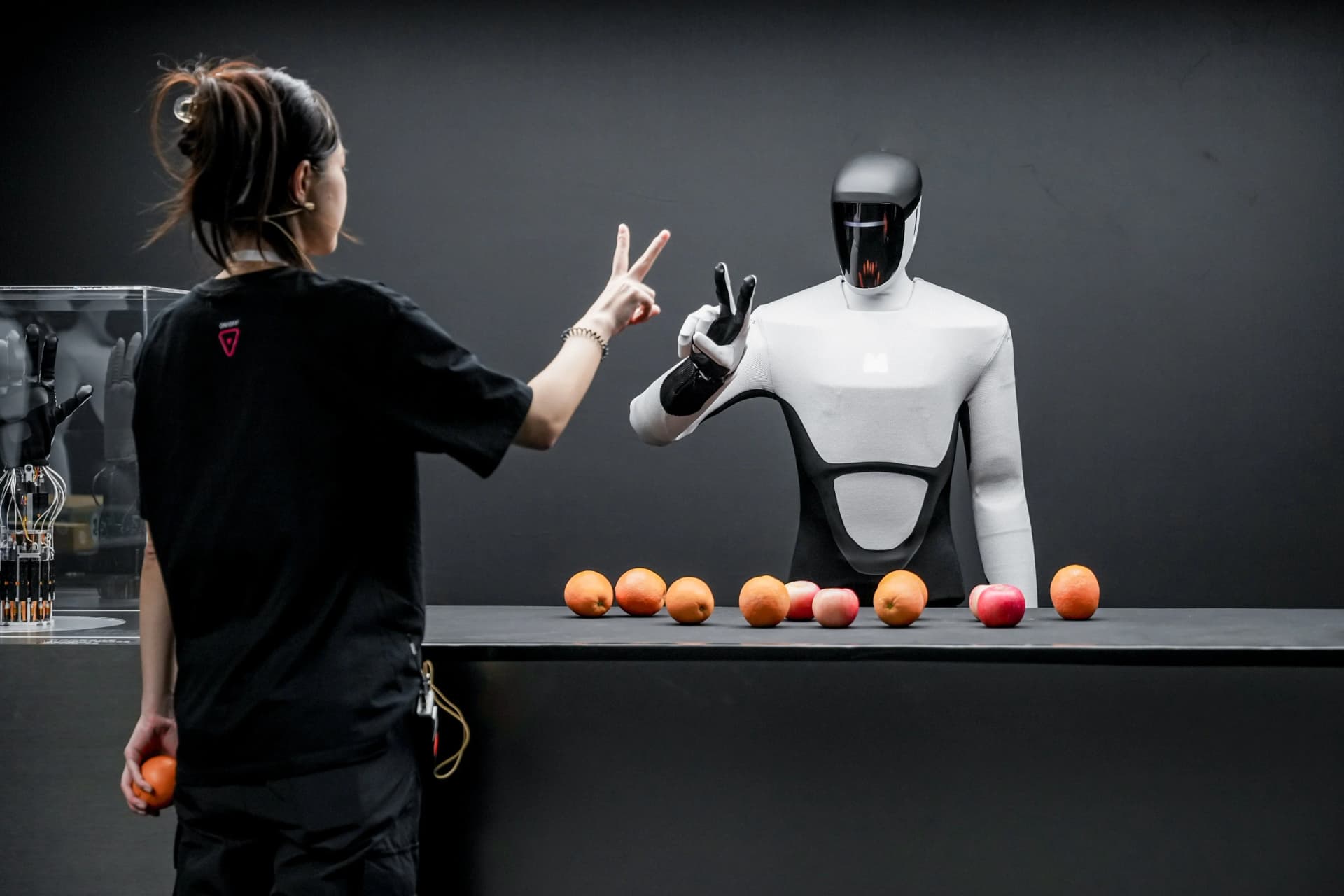
Tackling Moravec's Paradox with "Biomimetic Skin"
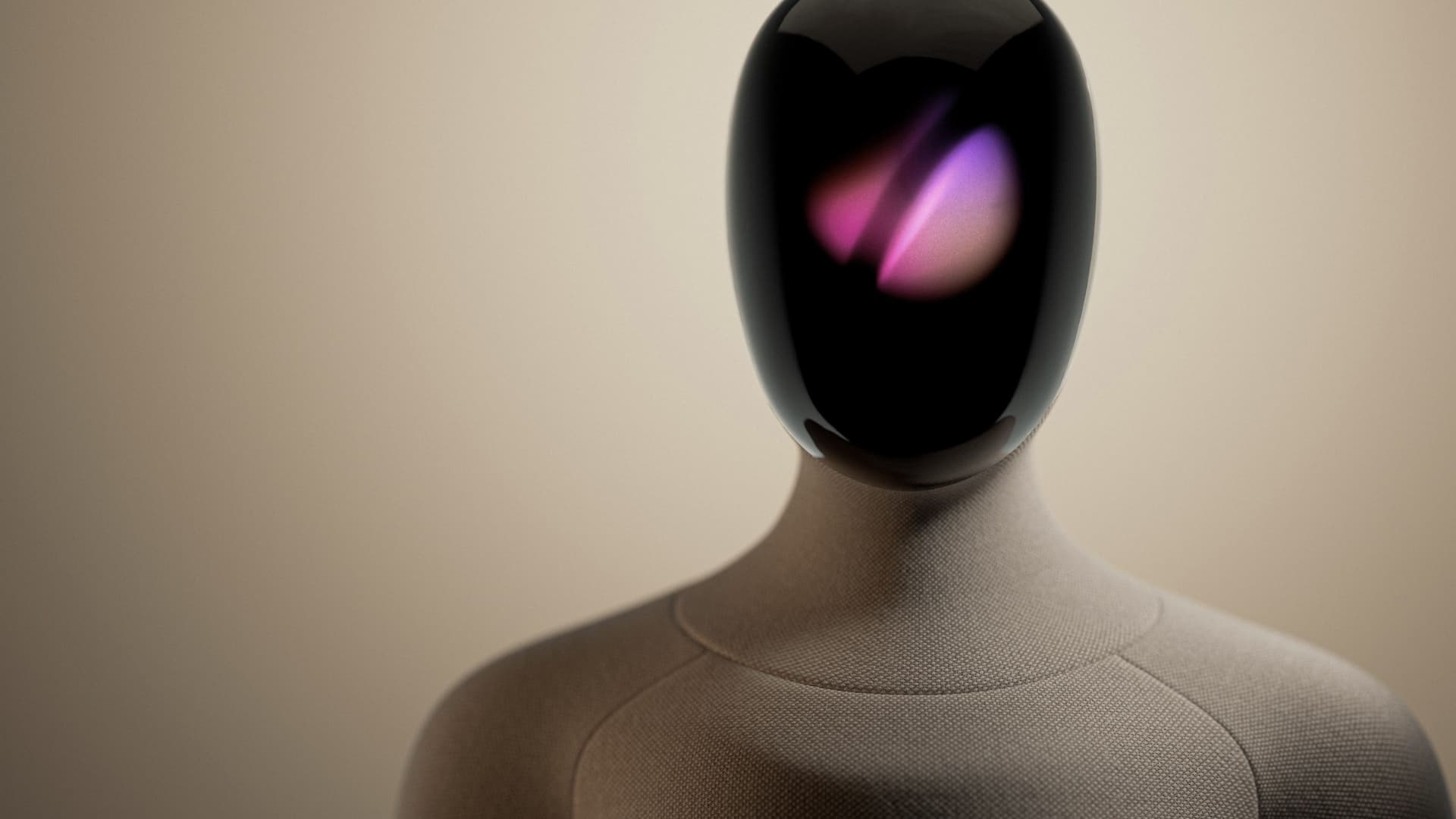
The MATRIX-3 utilizes a unique "3D Woven Biomimetic Skin." This flexible fabric covers the chassis, functioning as a distributed sensing network that cushions contact and detects impact force in real time. The robot's end-effectors—dubbed "Intuitive Hands"—feature 27 degrees of freedom (DoF) and utilize cable-driven technology to manipulate delicate objects like fabric.
The fingertips are equipped with tactile sensor arrays capable of detecting pressure as low as 0.1N. This aligns Matrix Robotics with a growing industry focus on high-fidelity tactile feedback; for instance, the newly unveiled KAI humanoid from Kinetix AI also features 0.1N sensitivity and 36-DoF hands, while Xiaomi's CyberOne V2 was recently upgraded to 27 DoF.
The weekly humanoid robotics briefing
One email a week: the launches, funding and research that mattered, with context from Humanoids Daily.
Read recent issuesMatrix Robotics claims that this hardware, combined with its proprietary CAAI computing architecture, grants the robot powerful zero-shot generalization capabilities, allowing it to adapt to unfamiliar tasks and environments without specific prior data exposure.
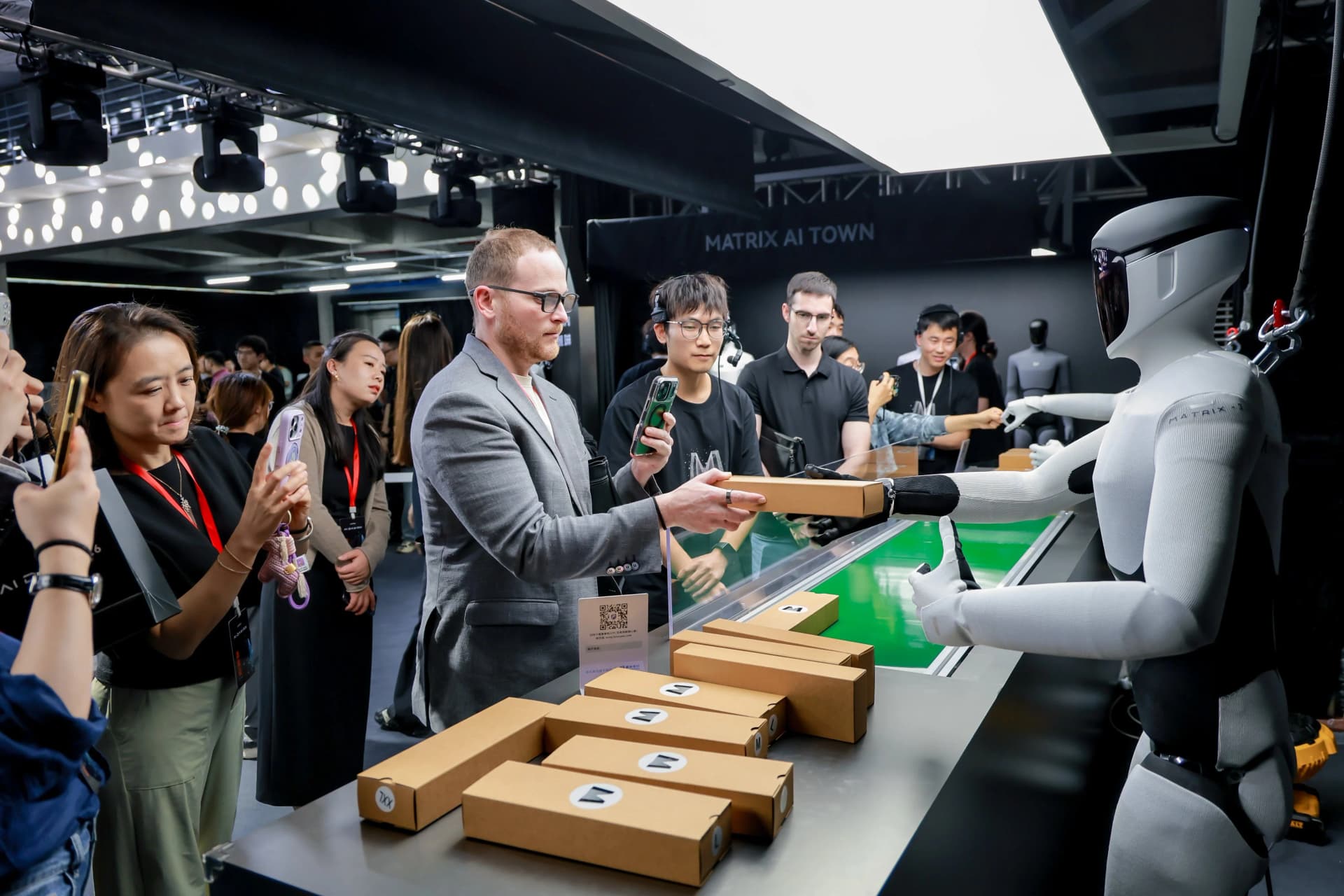
The 10,000-Unit Threshold
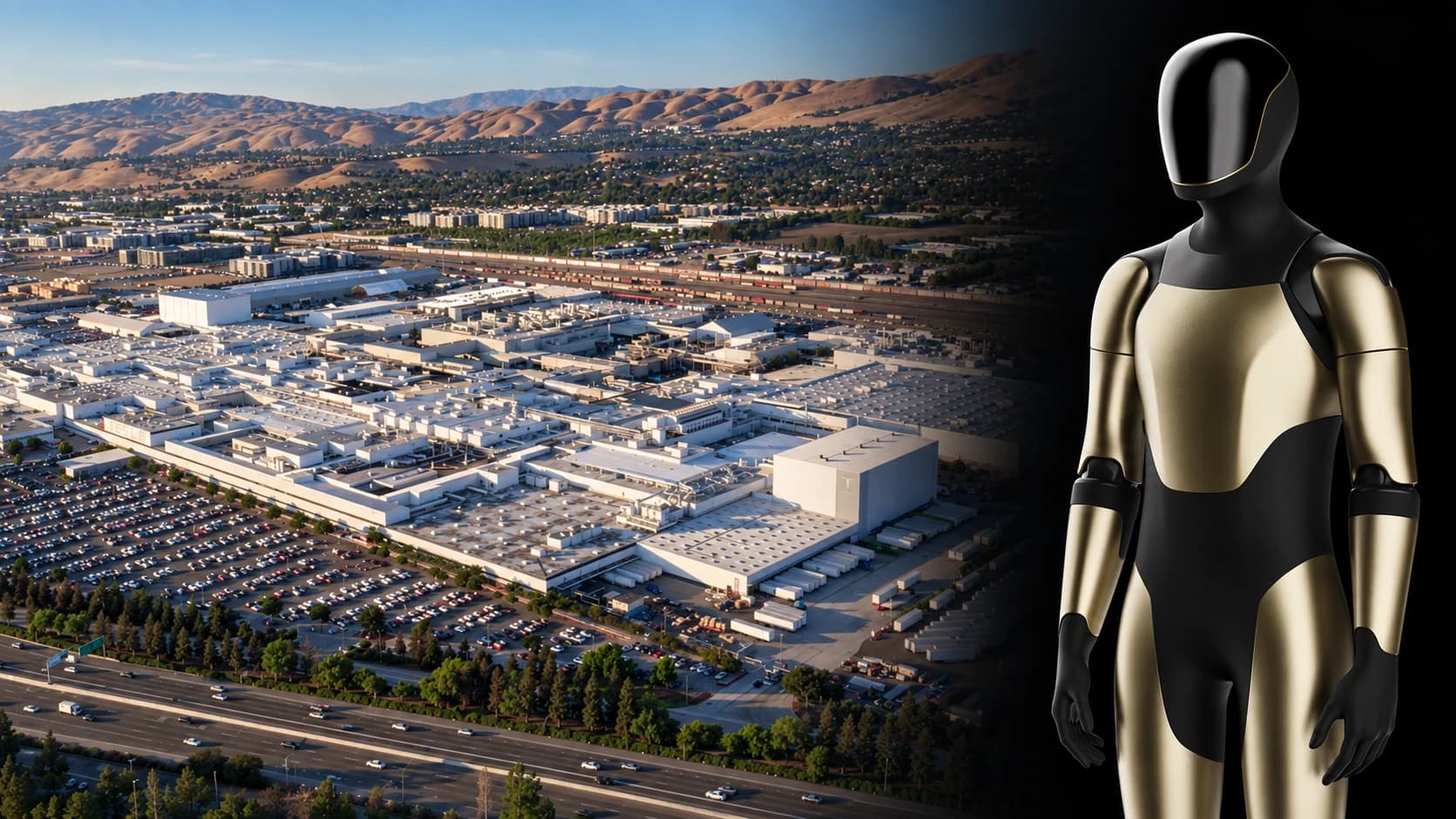
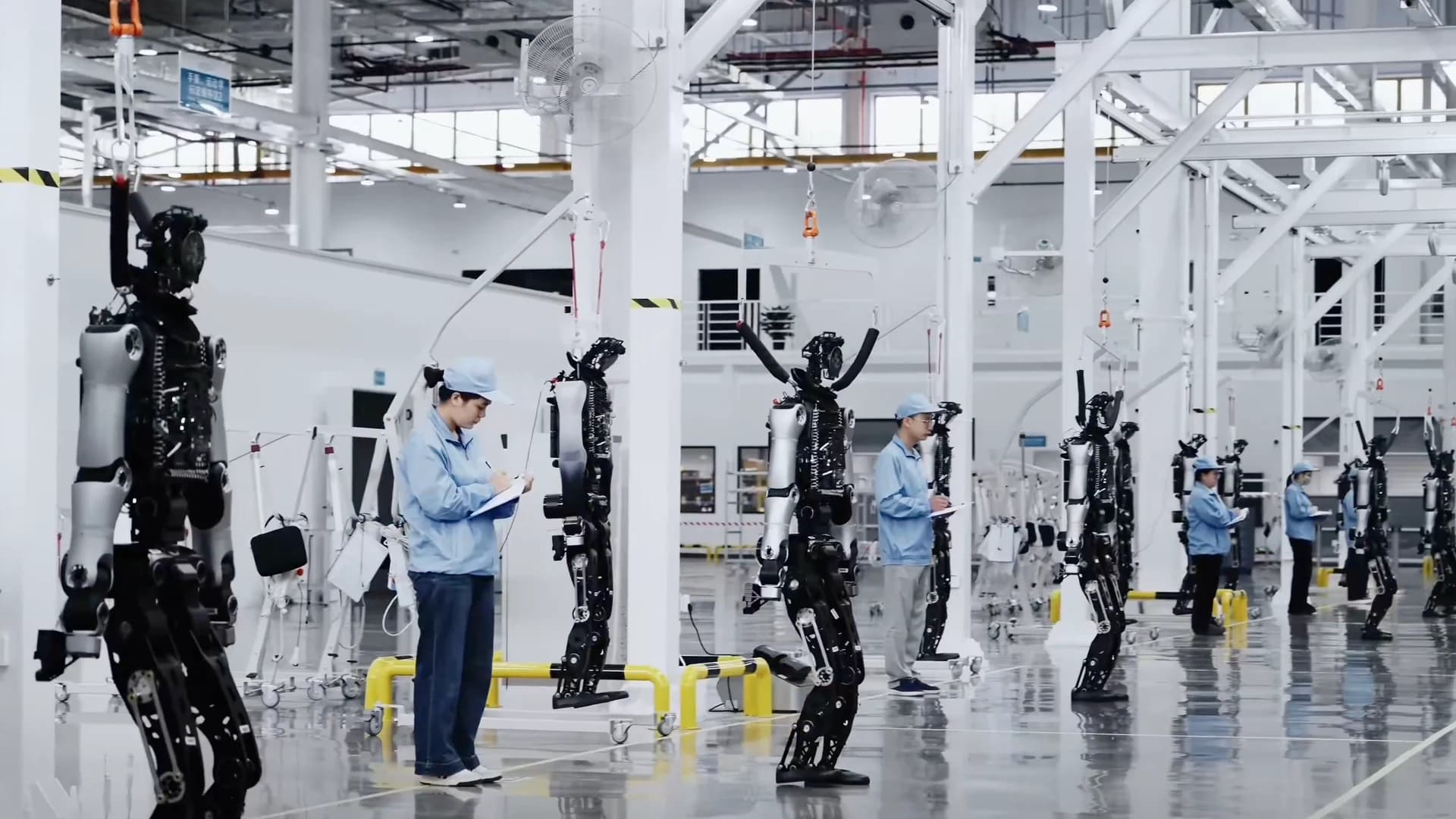
A capable robot is only half the battle; the real war in 2026 is mass manufacturing. Alongside the hardware demonstrations, Matrix Robotics released footage of its "Matrix Fabrication Hall" (MFH) in Pudong, Shanghai, showing workers assembling robots on a factory line. The company stated that MFH is targeting a first-year production capacity of 10,000 units.
Hitting a 10,000-unit capacity is quickly becoming the baseline for serious contenders in the humanoid space. Earlier this year, 1X Technologies announced its Hayward facility was ramping toward an initial capacity of 10,000 humanoids annually, a figure it claimed to have booked out in just five days. Similarly, AGIBOT confirmed it had already surpassed the 10,000-robot production milestone by March 2026.
To get these thousands of robots into customer hands, Matrix Robotics launched a Robot-as-a-Service (RaaS) ecosystem alongside an Early Access Program scheduled for mid-2026. This RaaS approach mirrors the strategy seen in Humanoid's recent multi-thousand unit deployment deal with Schaeffler. For those purchasing the hardware outright, the company noted that the MATRIX-3 PRO with the MATRIX HAND package starts at $99,000 USD.
"The philosophy of MATRIX-3 is to integrate machine intelligence into human physical spaces as naturally and safely as possible," said Allen Zhang, CEO of Matrix Robotics. "We are not trying to replicate humans, but to create a new species that extends human capabilities and handles repetitive labor."
As the humanoid industry shifts from simple technical showcases to large-scale deployment, Matrix Robotics is signaling that it has the hardware, the AI, and the factory floor to compete globally.
Watch the video below:
Share this article
Read next
- Published on
- Reading time
- 3 min read
UBTECH CEO Tours Robot Factory, Says Monthly Output Could Reach 1,500 Units
- Published on
- Reading time
- 3 min read
Astribot Brings Its $18,000 T1 Robot to North America at IROS
- Published on
- Reading time
- 3 min read
IDC Puts H1 Humanoid Shipments Near 25,000, With AGIBOT Leading
- Published on
- Reading time
- 3 min read
MindOn Targets Human Speed in New Mind-1 Robot Demo
- Published on
- Reading time
- 4 min read
AGIBOT Says 100 X2 Humanoids Are Working Across 100 ASD Retail Stores
- Published on
- Reading time
- 6 min read
Delta Intelligence Targets Energy and Infrastructure Beyond Its Household Robot Demo
The weekly humanoid robotics briefing
One email a week: the launches, funding and research that mattered, with context from Humanoids Daily.
Read recent issues